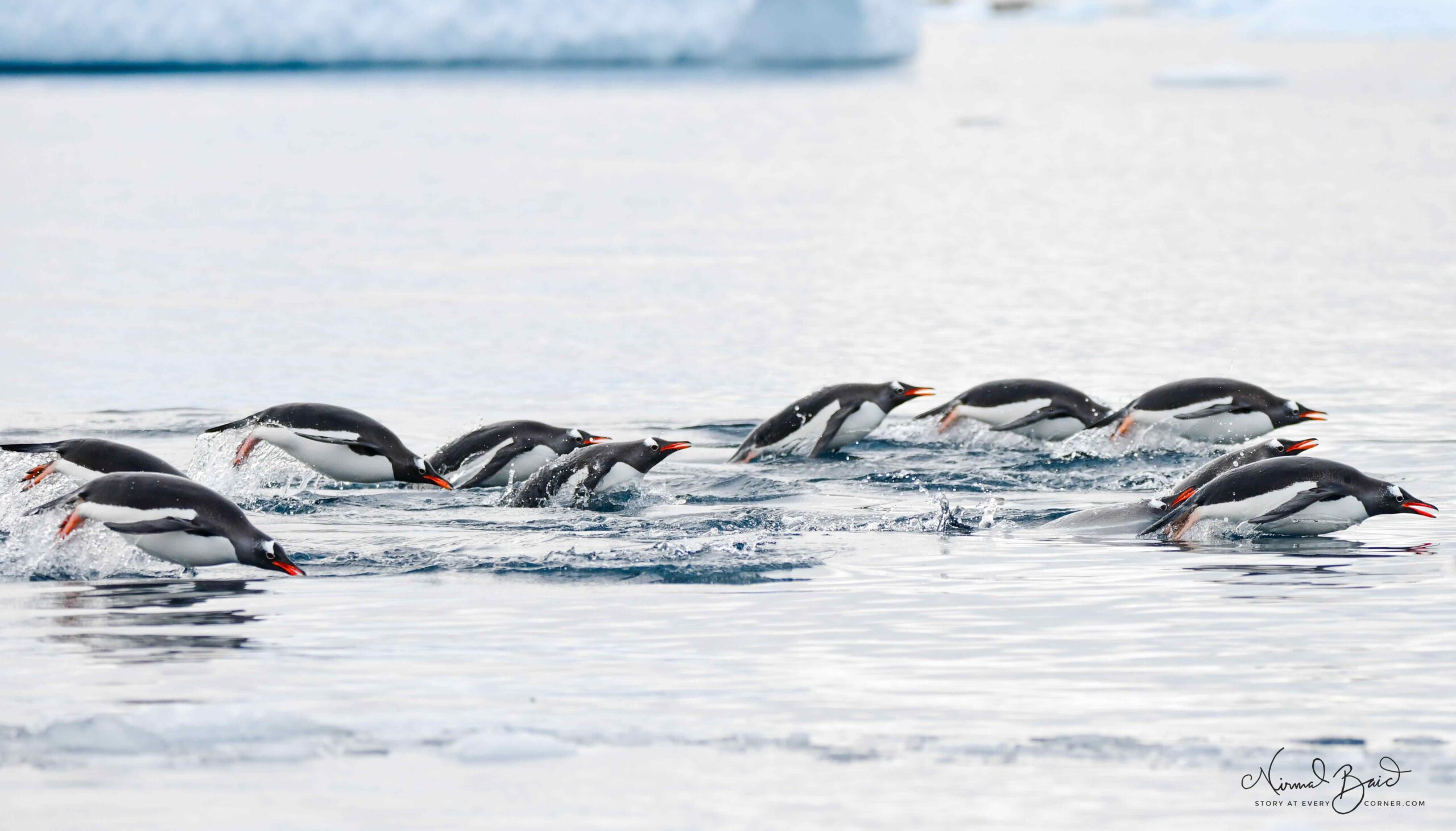
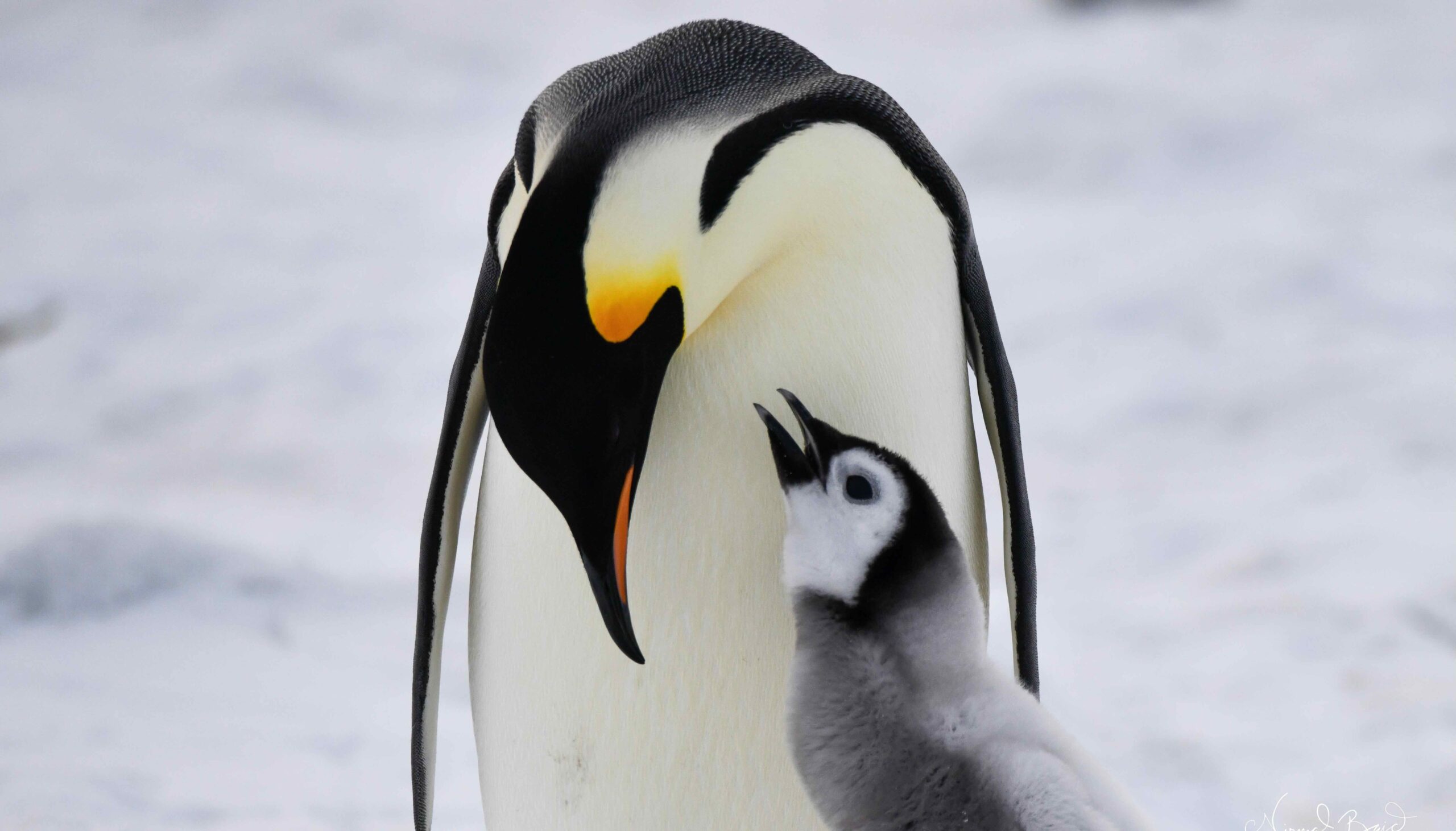
Penguins get all the attention, but Antarctica’s skies and seas are alive with some of the most extraordinary seabirds – some with wingspans that defy belief. Tens of millions of seabirds breed in the Antarctic region each year – albatrosses, petrels, skuas, terns, cormorants, and more. Many species are found nowhere else on the planet. Through these photos, we attempt to capture a few of the remarkable seabirds we witnessed on the Antarctic Peninsula and the Drake Passage.
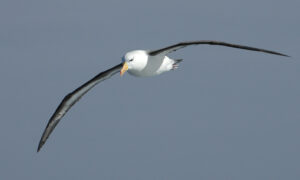
Black-browed Albatross have a massive 6-7 feet wingspan. Mostly found over the Southern Ocean. They are also seen in Antarctic and sub-Antarctic waters, with the largest population on the Falkland Islands
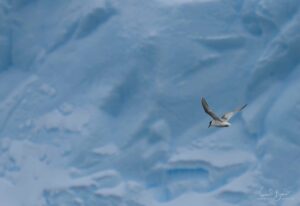
Antarctic tern is a medium-sized seabird that breeds on the Antarctic Peninsula
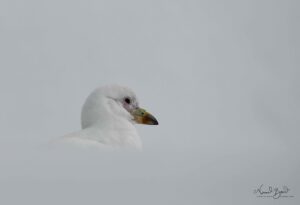
Snowy Sheathbill thrives in the harsh Antarctic environment, as a fearless, opportunistic scavenger
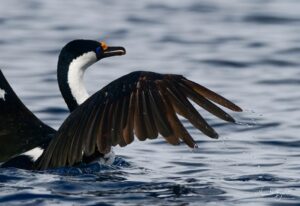
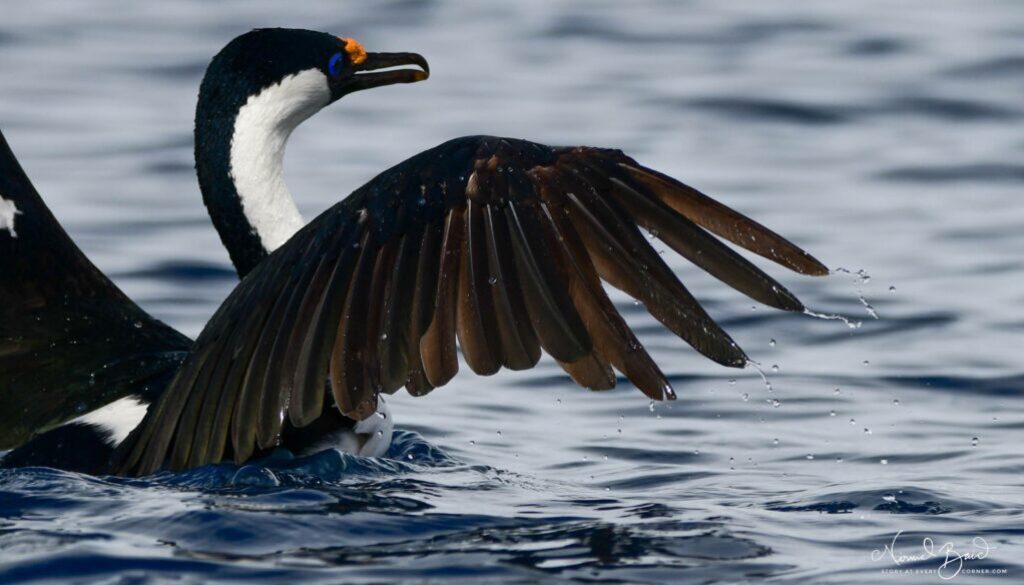
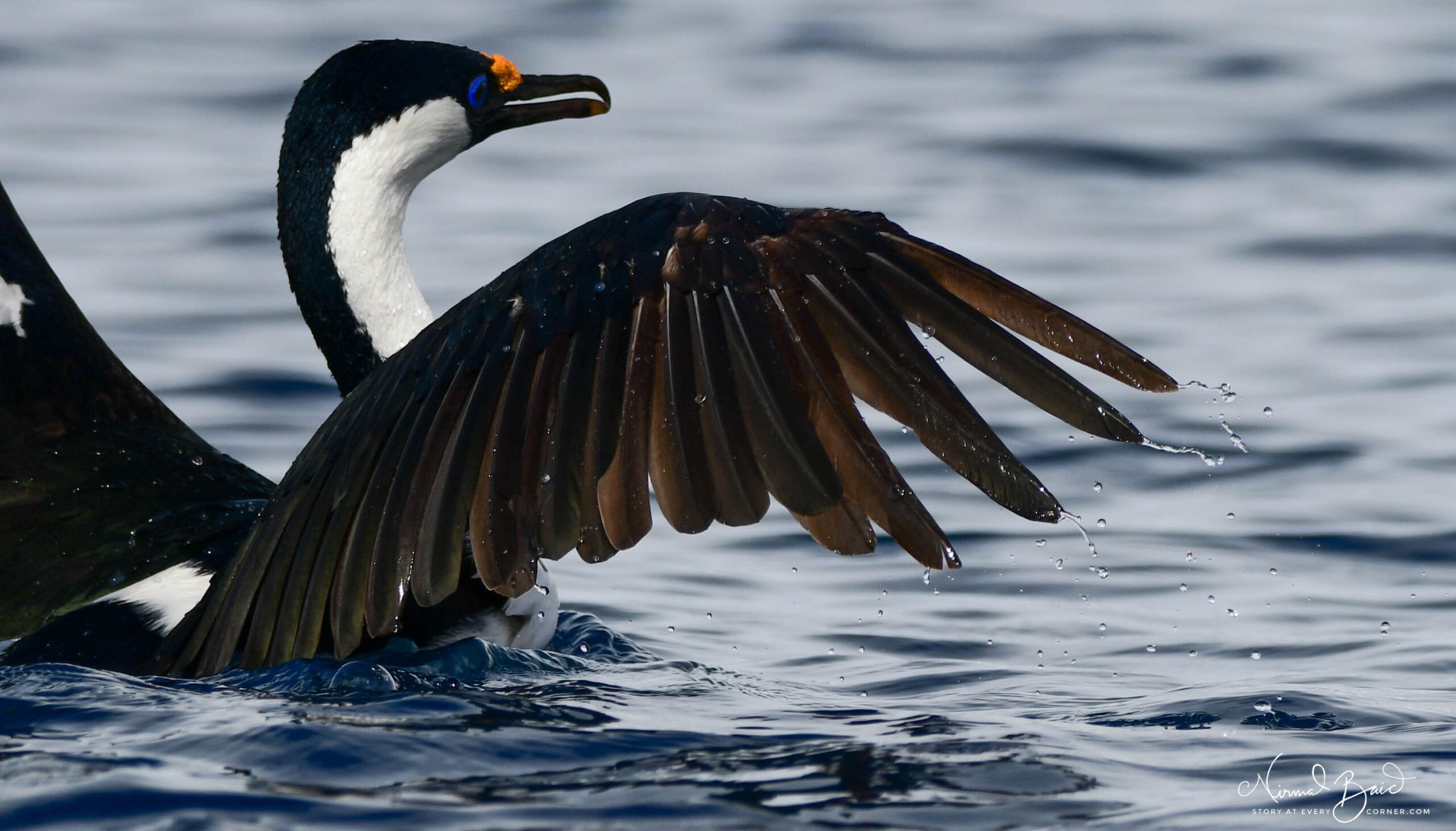
Imperial Cormorants at Neko Harbor, Antarctica, are excellent divers, reaching depths of 25-100 meters! The yellow, warty growth (caruncle) develops during mating season.
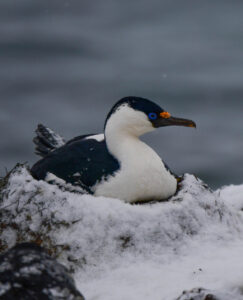
Imperial cormorant nesting at Booth Island
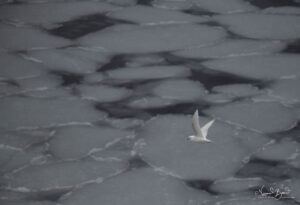
Snow Petrels over pancake ice with soft slushy edged formed by hitting each other over water just below freezing point
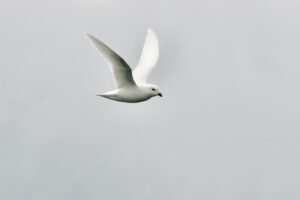
Snow petrel, the utterly gorgeous escort on the long crossings
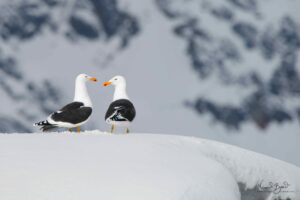
The Southern Black-backed Gull, or Dominican Gull, is the only species of gull found in Antarctica
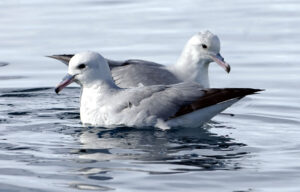
Southern Fulmar Patrels breed in dense colonies on steep, rocky, and ice-free cliffs along the Antarctic coastline and surrounding islands.
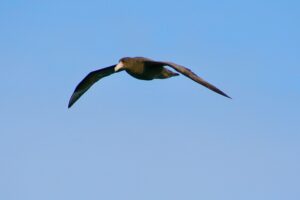
The Southern giant petrel has a massive 7-foot wingspan. As the “vulture of the sea” that cleans up carcasses. It also hunts penguin chicks.
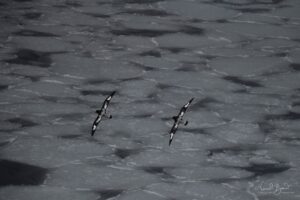
Cape Petrels often follow ships and feed in large groups – mostly feeding on krill, squid, and small fish.
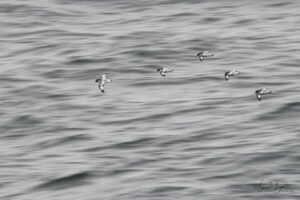
Cape Petrel in flight formation. Can you find the focal petrel?
Last Updated on February 22, 2026 by Jyoti Baid