
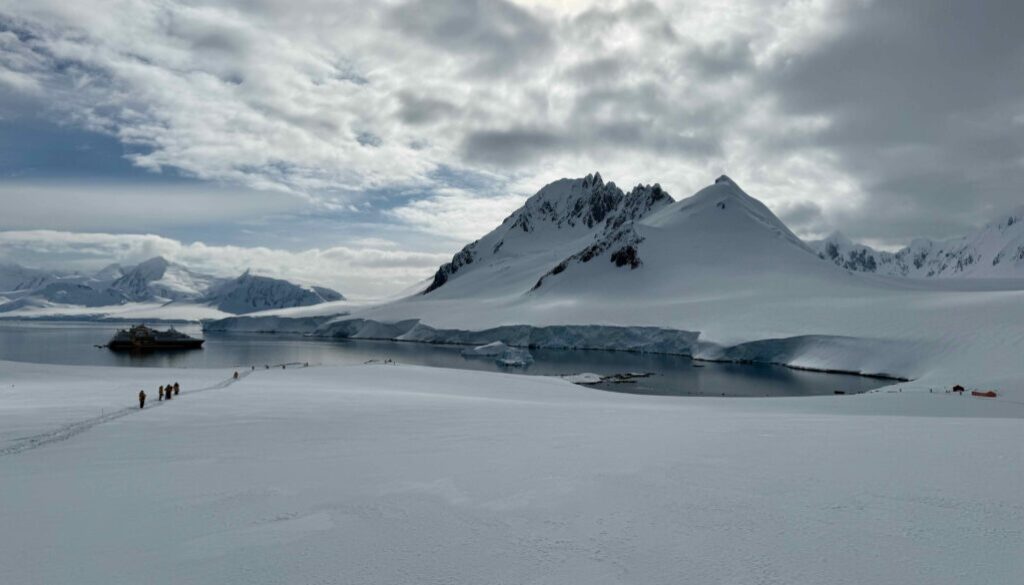
Quick Answer: The best time to visit Antarctica depends on your priorities:
- Early Season (Oct-Nov): Emperor penguins, pristine snow, fewer crowds, unpredictable ice
- Peak Season (Dec-Jan): Warmest weather, hatching chicks, most reliable conditions, ideal for first-timers
- Late Season (Feb-Mar): Peak whale watching, penguin fledging, dramatic colony dynamics
Read on for detailed insights from two Antarctic expeditions. This guide is for travelers considering an Antarctica expedition and trying to decide when to go – especially if wildlife timing, photography conditions, or emperor penguins are priorities. It’s based on two expeditions across different seasons. It covers the Antarctic Peninsula, Weddell Sea (Snow Hill), South Georgia, and the Falkland Islands. If you’re choosing between early, peak, or late season, this will help you align the timing with your travel goals.
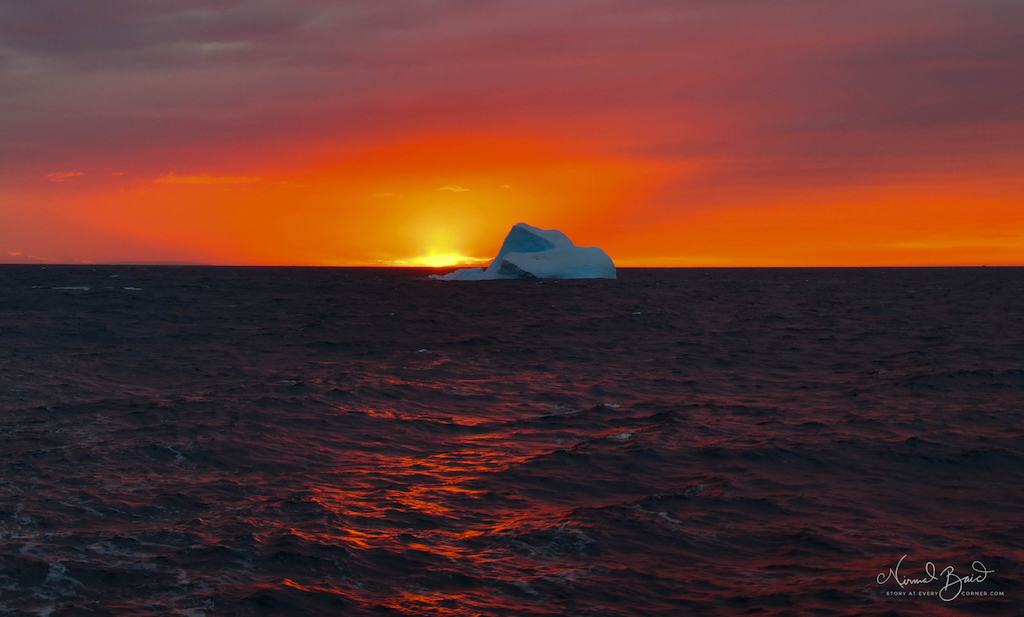
This was our second expedition to Antarctica. Many of our fellow travelers had already completed multiple Antarctic journeys, but Snow Hill Island, home to one of the most elusive emperor penguin colonies, was a first attempt for all of us. I thought I knew what to expect.
I was wrong.
Weather patterns shift without warning. Ice ignores forecasts. Routes that open one week can close entirely the next. Over time, I learned not just how Antarctica’s seasons differ, but why no season can ever be fully predictable.
What became clear very quickly through conversations with expedition leaders, helicopter pilots, scientists, and crew was this: Antarctica does not reward experience so much as humility. Let it unfold.
Here’s how I’ll break down the seasons:
- Early Season: Late October – early November
- Peak Season: Late November – January
- Late Season: February – March
- Off Season (Winter): April – September
These dates are approximate and increasingly fluid, as climate change is compressing these windows and making ice patterns less predictable than they were even five years ago.
Note: Many expeditions combine the Antarctic Peninsula with South Georgia and the Falkland Islands. Each region follows these seasonal patterns but offers unique wildlife experiences. South Georgia’s 450,000 king penguin pairs and the Falkland Islands’ diverse breeding colonies create spectacular wildlife encounters throughout the summer months.
| Season | Temperature | Daylight | Emperor Penguins | Chick Activity | Whales | Crowds | Best For |
|---|---|---|---|---|---|---|---|
| Early Oct–Nov | -10 to 0°C (14–32°F) | 20+ hours | Yes (Weddell Sea only) | Starting to hatch | Occasional | Low | Emperor penguins, pristine snow, photography |
| Peak Dec–Jan | -5 to +5°C (23–41°F) | 24 hours | No | Peak hatching | Occasional | High | First-timers, reliability, king penguins |
| Late Feb–Mar | -5 to 0°C (23–32°F) | 16–20 hours | No | Molting and fledging | Peak | Medium | Whales, orcas, dramatic wildlife |
| Winter Apr–Sep | Down to -70°C (-94°F) | 0–16 hours | No | — | — | — | Research season only |
Early Season Antarctica (Late October–November): Emperor Penguins & Pristine Landscapes
Early season is Antarctica at its most volatile and most alive.
Daylight expands rapidly and predictably, often exceeding 20 hours a day, but everything else is in motion. Sea ice begins to loosen its grip, yet new ice still forms overnight as temperatures fluctuate between -10°C and 0°C (14°F to 32°F).
During our visit in the first week of November, ice cleared just enough for our ship to navigate deep into the Weddell Sea, allowing helicopter access close to Snow Hill Island. One week later, shifting ice sealed the route entirely. The following expedition couldn’t make it through.
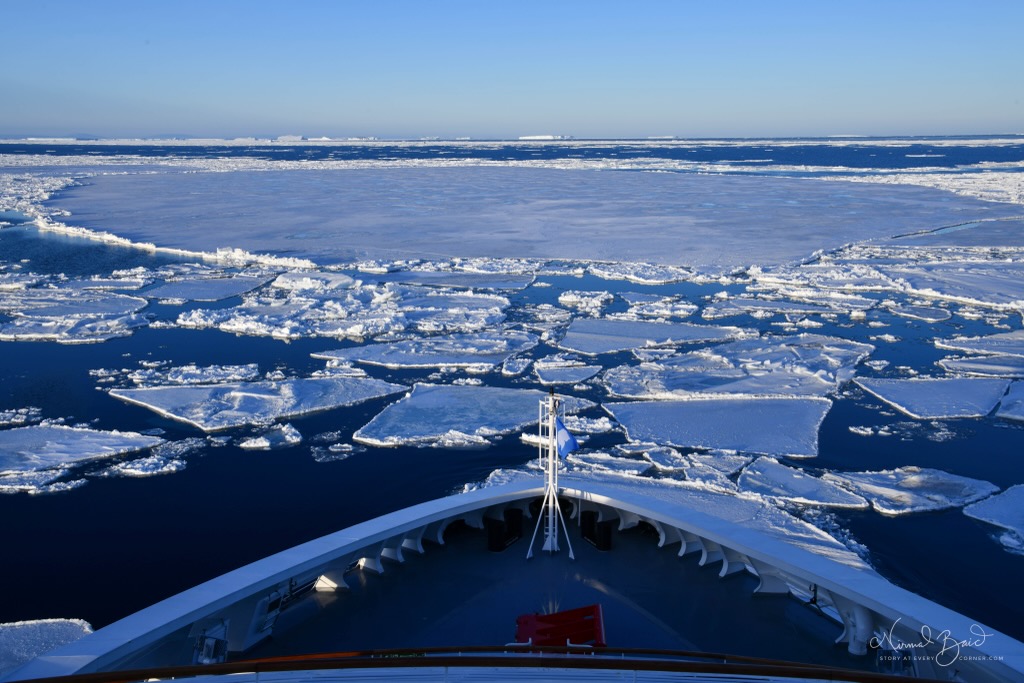
That is early season in its purest form: possibility without certainty.
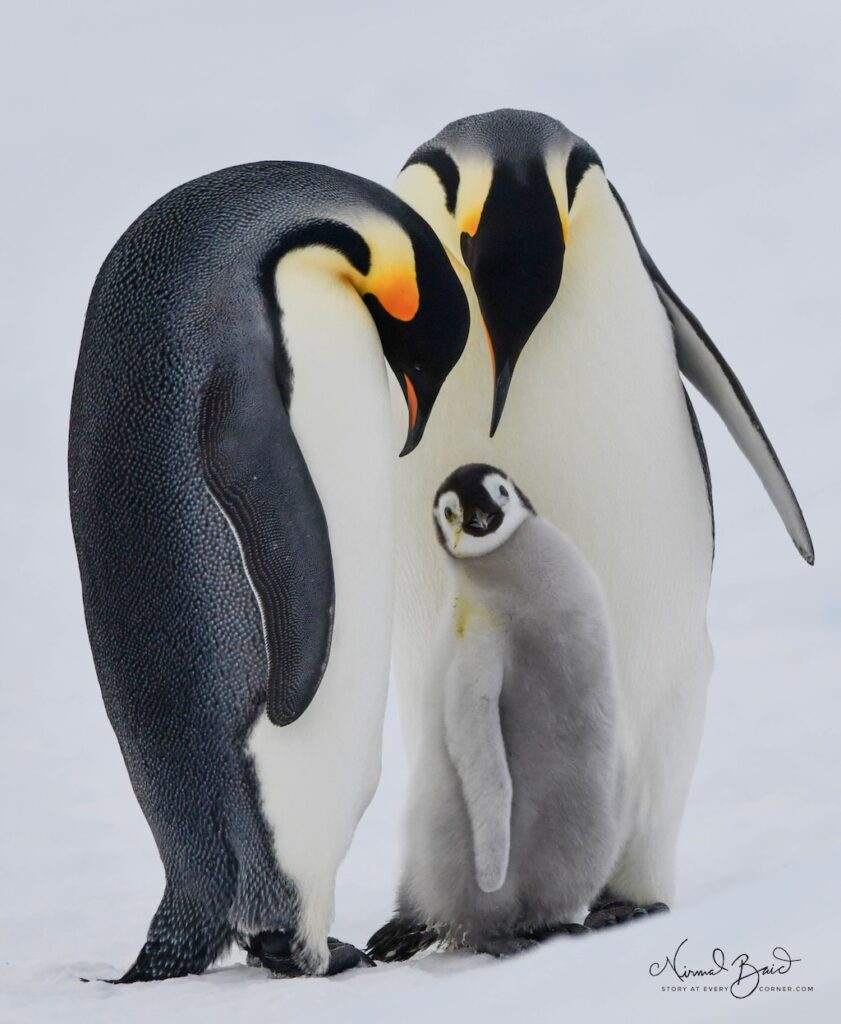
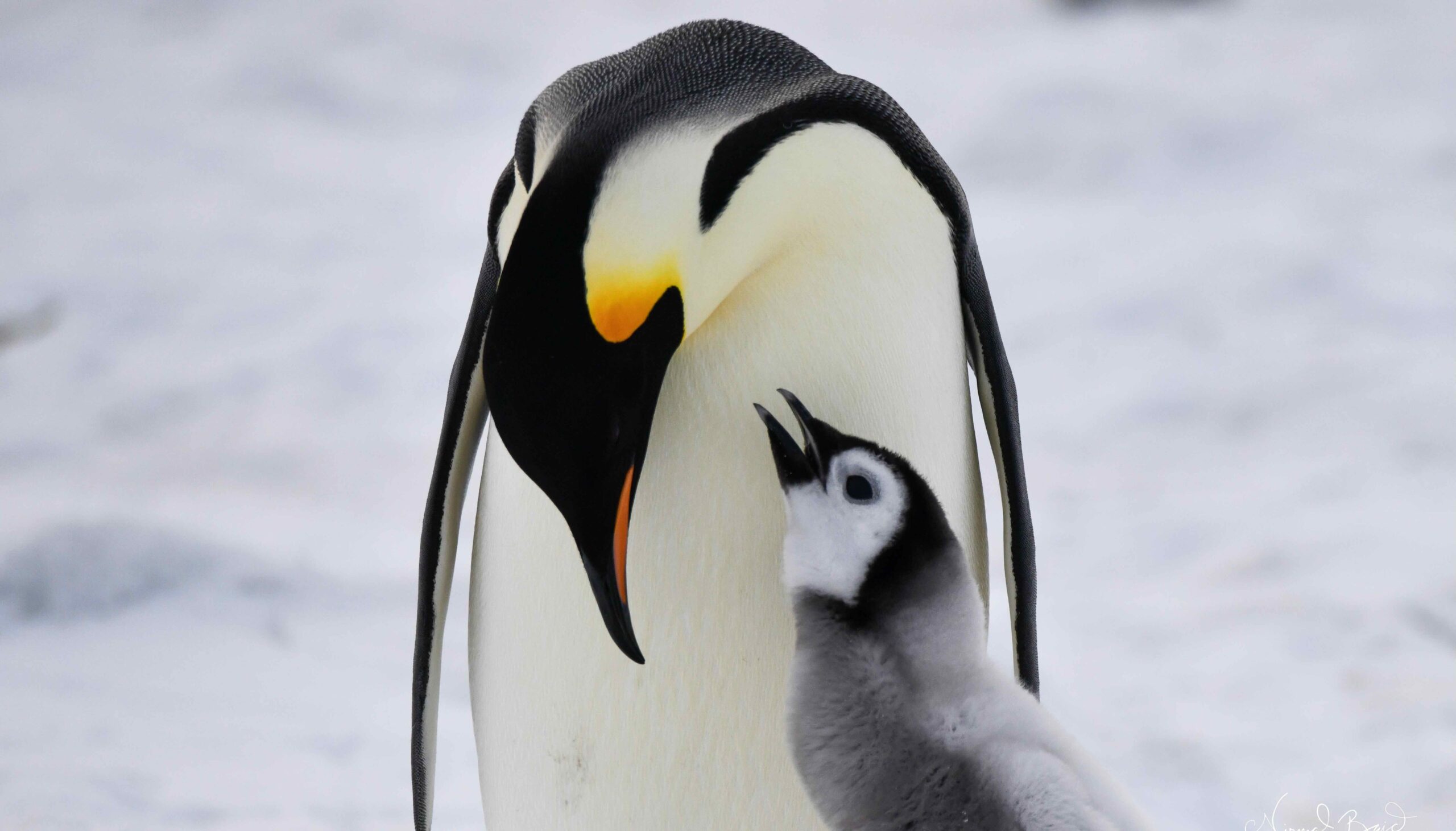
The greatest draw of early season is the chance – never a guarantee – to visit emperor penguins while adults and chicks still occupy solid sea ice. Soon after, the ice breaks apart, chicks grow stronger, and the entire colony disappears into the ocean.
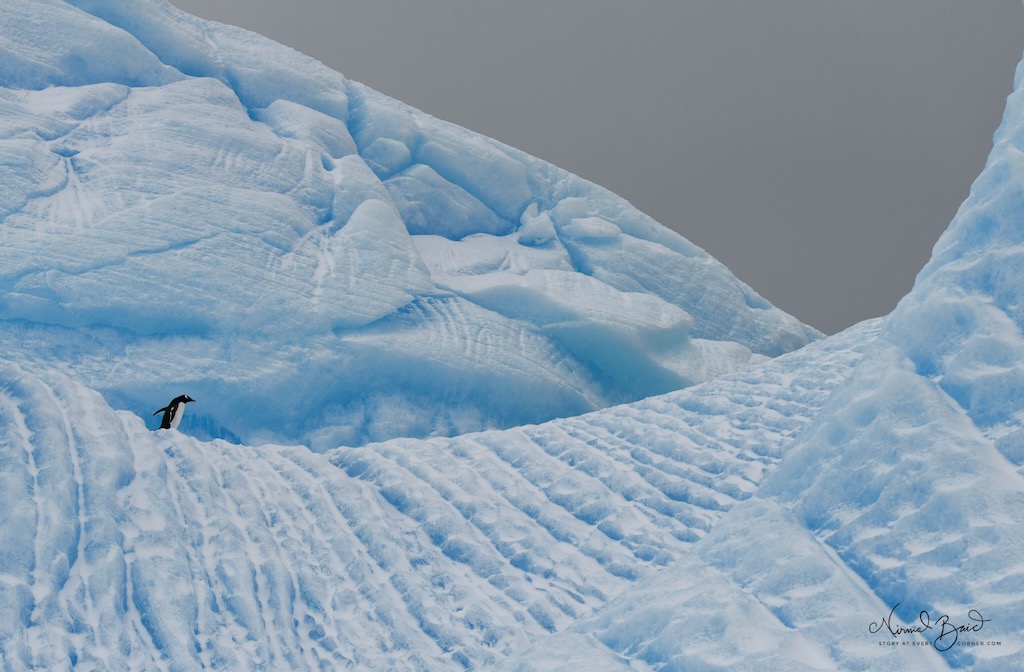
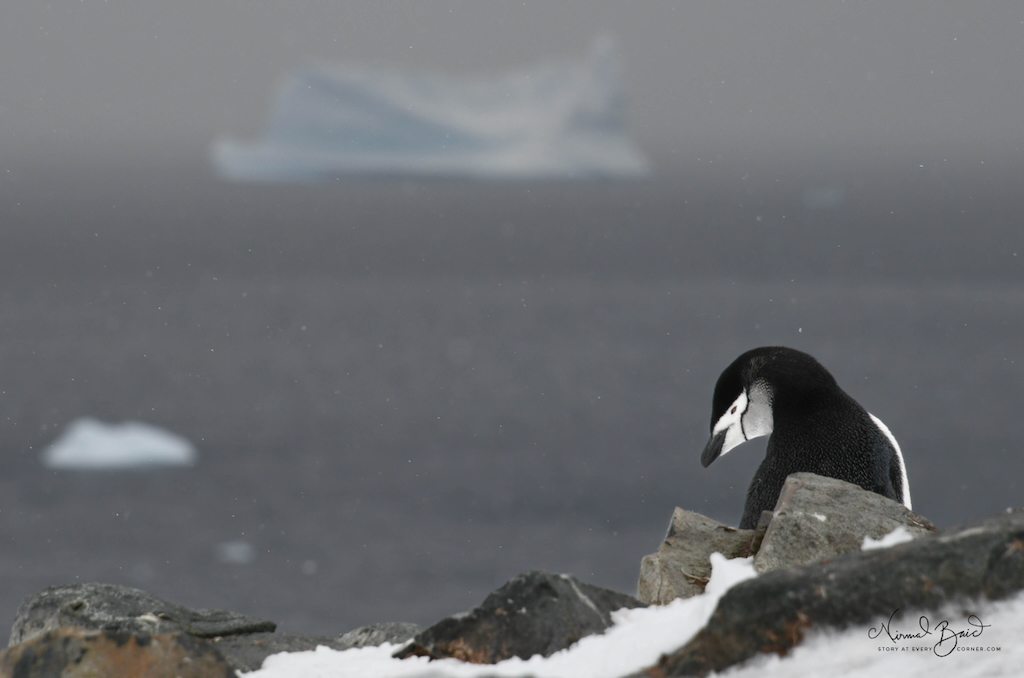
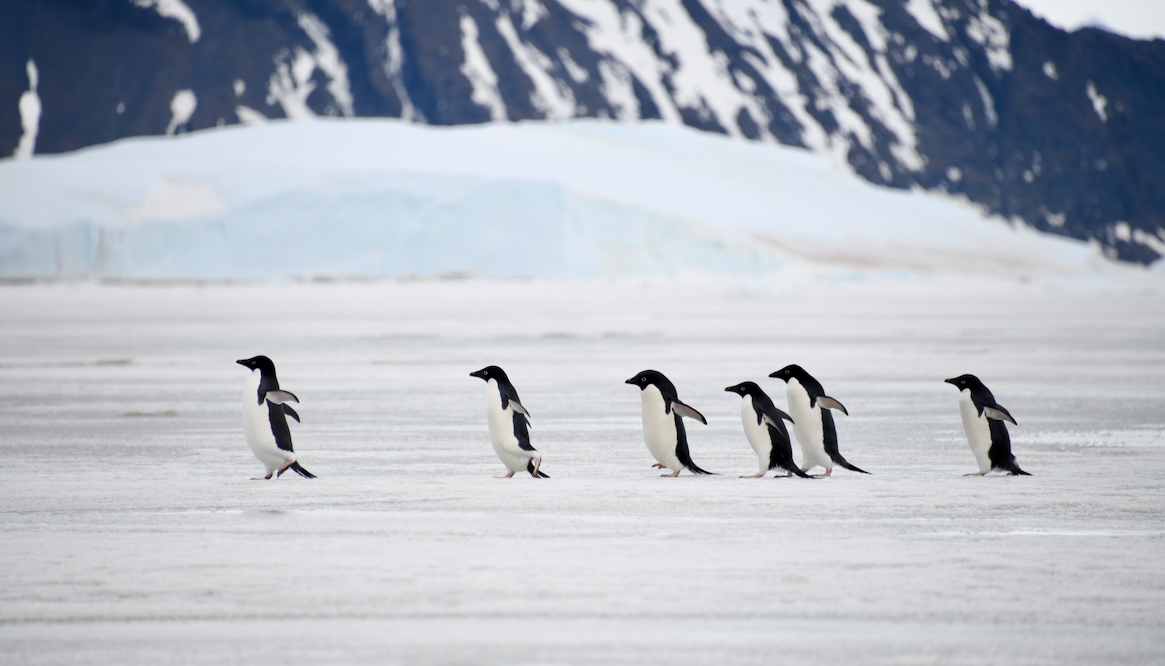
At the same time, Adélie, Gentoo, and Chinstrap penguins return to land in astonishing numbers. They arrive in endless streams, driven by instinct and urgency, racing to claim nesting sites and breed.
Males obsessively gather stones, presenting them to arriving females like love tokens. The stakes are real: no nest, no mate. No mate, no genetic legacy. Fights erupt constantly – sometimes over stolen rocks, or a glance at their girl, or sometimes for no discernible reason at all. Adélie colonies, in particular, are pure chaos. They’ll challenge anything that moves, including the occasional confused emperor chick.
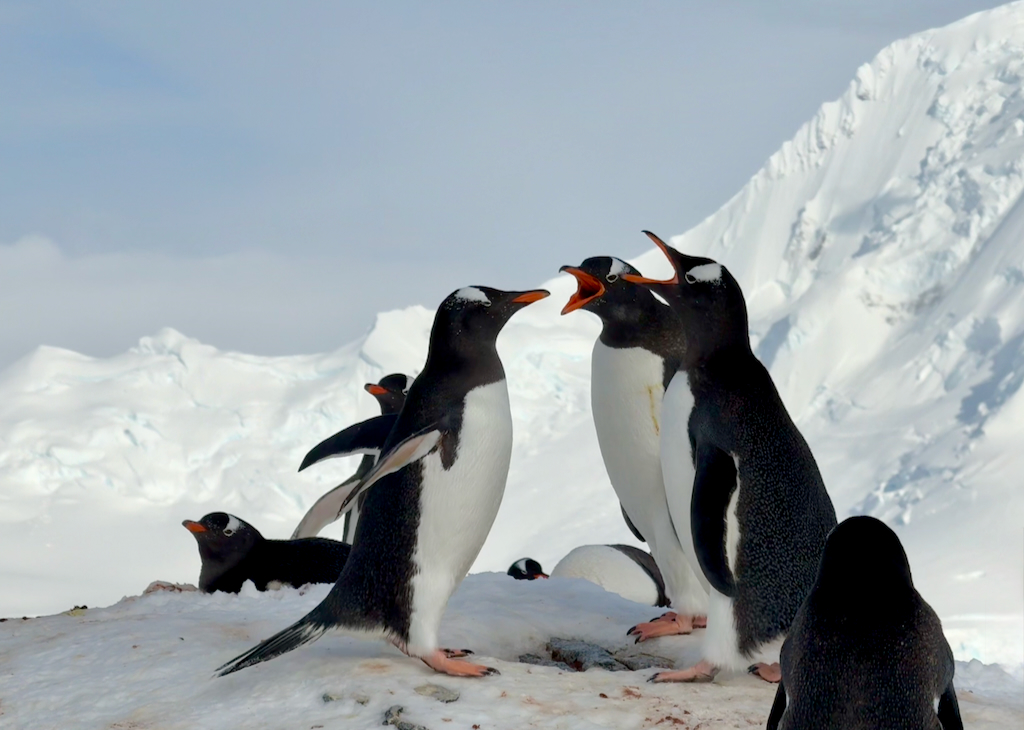
Early-season colonies feel pristine. Snow has not yet melted into mud. Fresh powder falls regularly, softening the landscape. The air is clean. The notorious Antarctic guano smell, sharp enough to trigger headaches, hasn’t arrived yet.
Weather in early season Antarctica, however, is mercurial. Within a single hour, skies can shift from heavy snowfall to piercing blue, followed by katabatic winds that cut through even the best gear. Early-season demands agility from both crew and passengers.
Our expedition leader strategically advanced the ship’s clock incrementally during the Drake Passage, allowing us to operate earlier in the day when winds were calmer and temperatures marginally more forgiving. Not every expedition does this, so he also got permits to the sites earlier in the day.
In early season, there are fewer expeditions and no big cruise liners in sight. The smaller research bases are yet to open for the summer. It’s calm as Antarctica is getting ready to wake up.
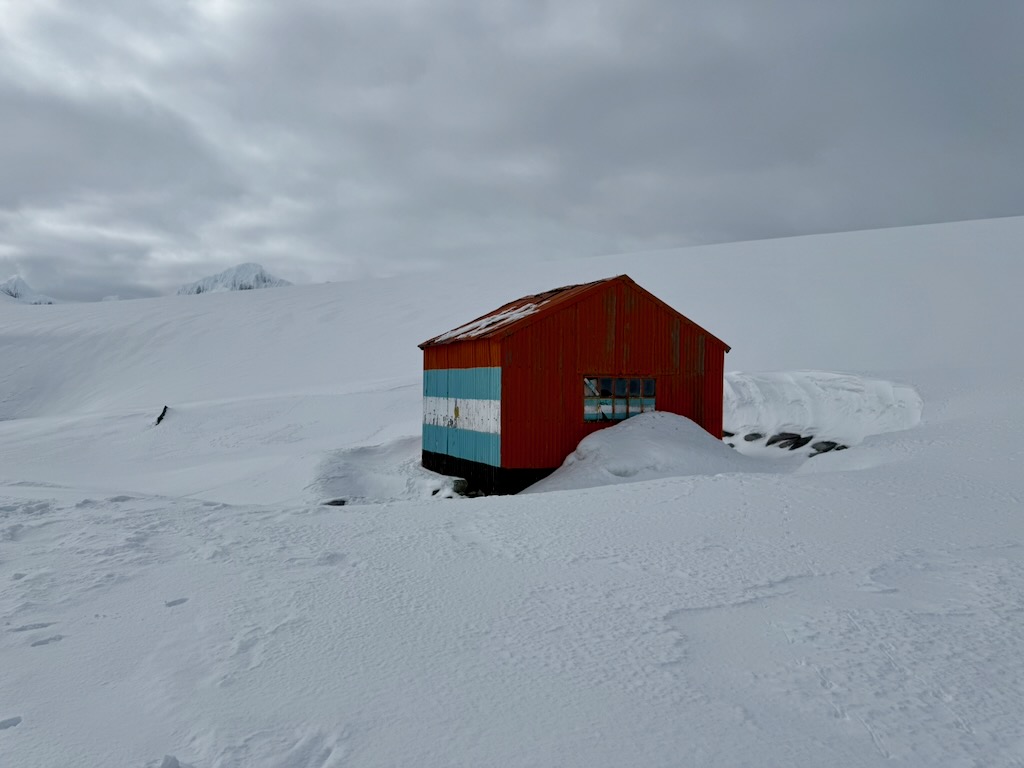
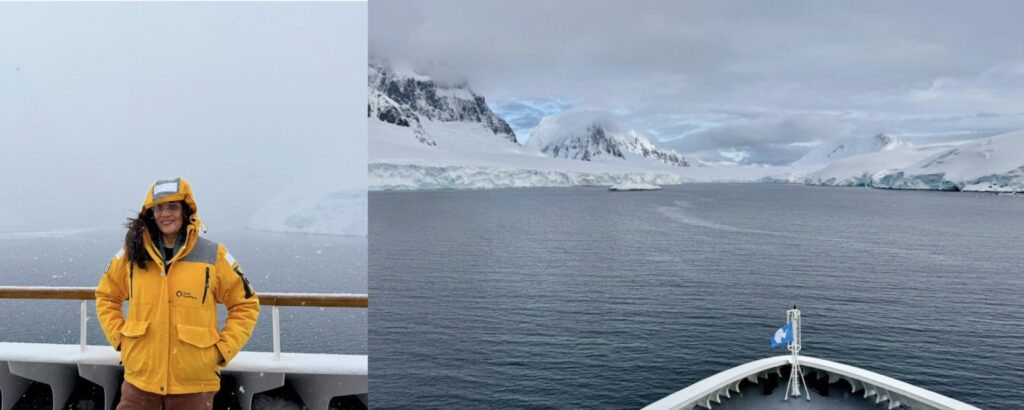
Iconic passages like the Lemaire Channel are usually ice-choked in the early season. Against the odds, we encountered a brief window when both Lemaire and Peltier Channels were navigable. It was truly a gift.
One morning, I stood on deck at 5 am watching fresh snow erase the ship’s wake behind us. Everything felt suspended between seasons – not quite winter, not quite summer. Low sun angles created stunning sunrises and sunsets, offering photographers dramatic golden-hour light that lasts for hours. That’s early season.
In South Georgia, king penguin colonies at St. Andrews Bay and Salisbury Plain explode with courtship displays. Male elephant seals battle violently for breeding territory while gentoo and macaroni penguins establish nests. The Falkland Islands see the return of rockhoppers and Magallanic penguins to their breeding burrows. Fewer fur seals mean easier beach landings.
Packing Tip: Pack electric warmers, face protection (balaclava or neck gaiter), eye shades, and windproof layers. Katabatic winds are no joke.
Early season is not forgiving. But it is raw, dramatic, and profoundly alive. It offers exceptional photography opportunities.
Peak Season Antarctica (December–January): Best Time for First-Timers
Peak season is the most forgiving and predictable time to visit Antarctica.
Temperatures reach their warmest of the year, ranging from -5°C to +5°C (23°F to 41°F), and on calm, sunny days, it’s not uncommon to strip down to a base layer. Daylight approaches 24 hours, freeing Antarctica expeditions from rigid schedules. Decks remain open late into the night.
By now, emperor penguins have returned to the sea. They won’t be seen again until autumn on the far side of winter. In their place, Adélie, Gentoo, and Chinstrap colonies settle into a steadier rhythm. Eggs hatch. Chicks appear. Parents take turns feeding and guarding their young while predatory birds circle overhead.
Leopard seals patrol shorelines with precision, timing ambushes as penguins enter and exit the water.
As snow melts, the continent reveals its less romantic side. Rocky colonies are exposed, and with them comes the unmistakable smell of guano – sharp, persistent, and unavoidable. For some visitors, gases near dense colonies can cause headaches or nausea. The trick is not to linger too long.
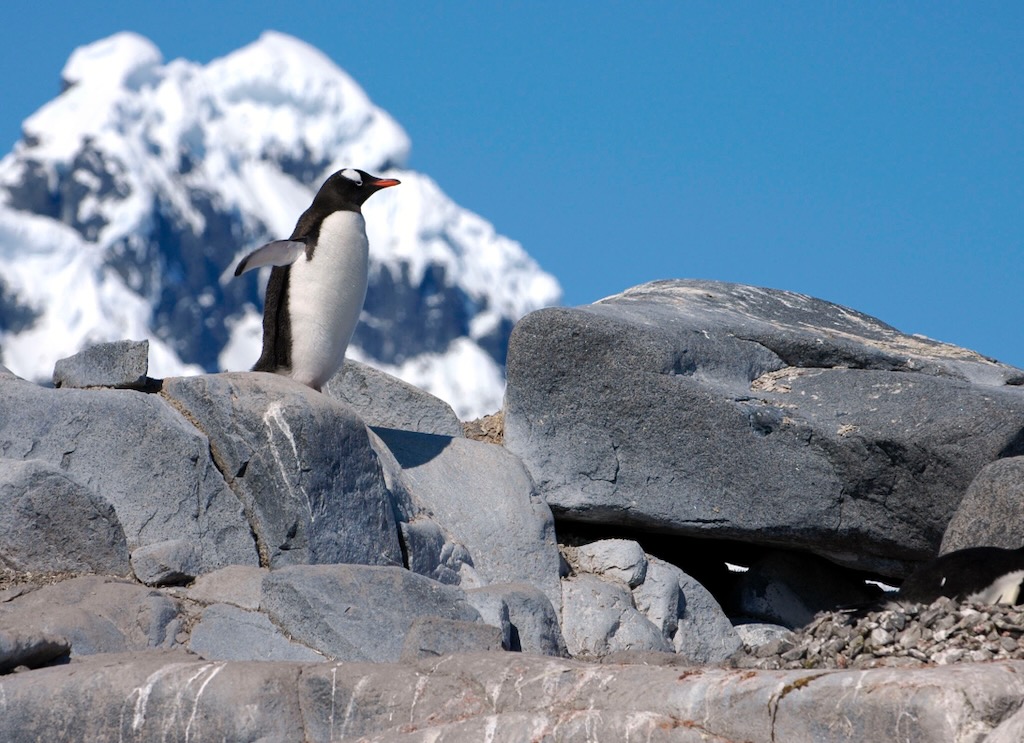
Peak season also brings increased human presence. Smaller research stations open, and in some years, visitors can send postcards from Port Lockroy. Ice formations remain spectacular, but passages like Lemaire are far more likely to be navigable.
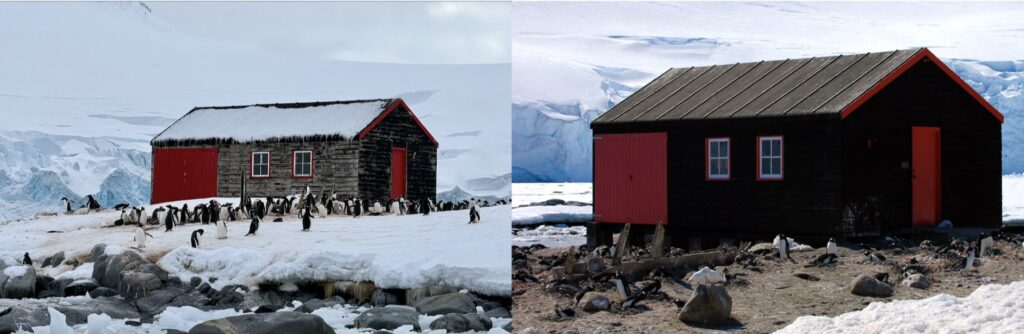
Expeditions become more reliable. Blue skies are more frequent. Helicopter flights, zodiac cruising, and even polar plunges are easier to schedule.
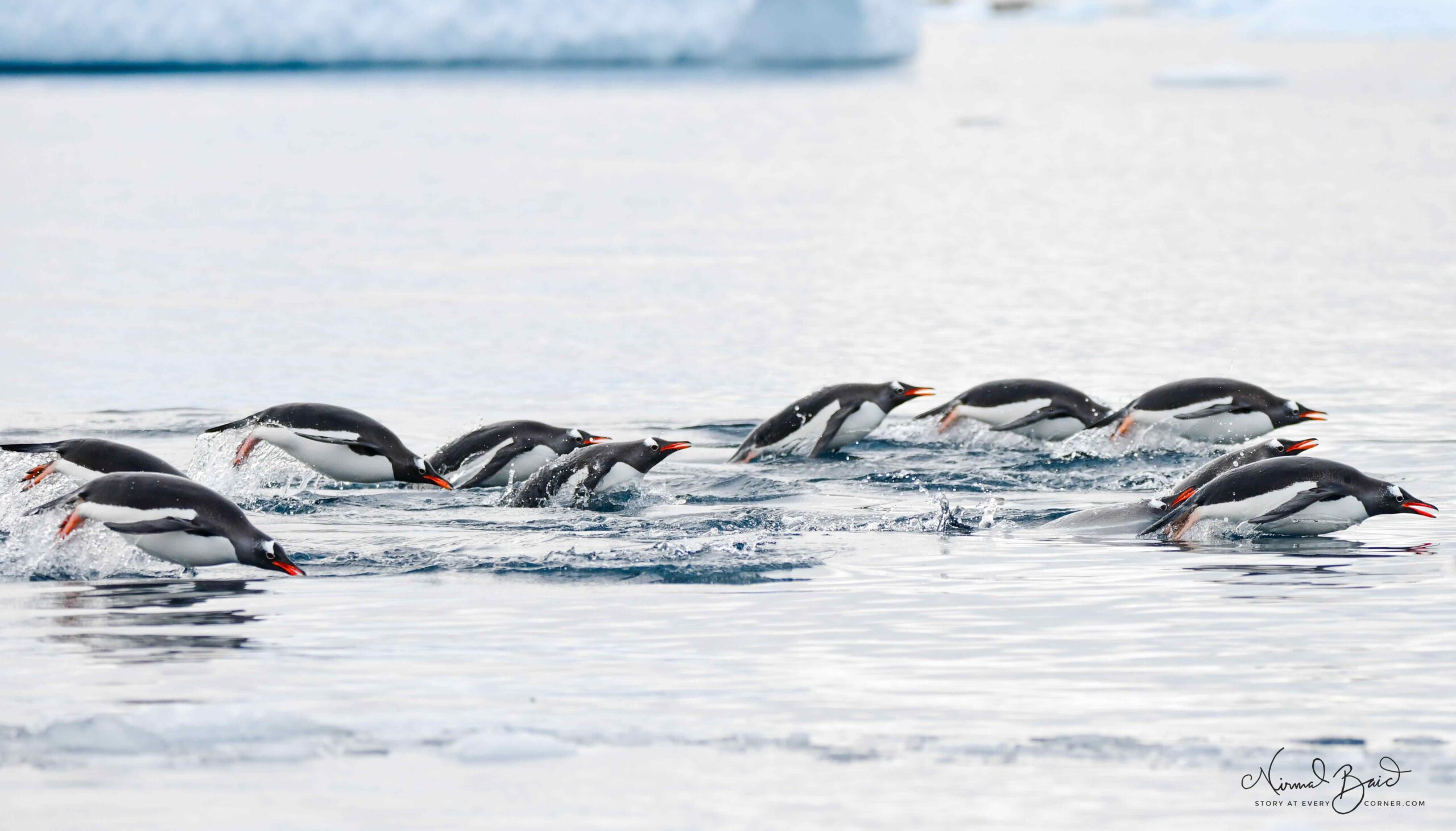
During a zodiac cruise in late December, our driver cut the engine, and we drifted in silence among icebergs while Gentoo penguins porpoised past. The sun hung motionless at 11 pm. Time felt negotiable.
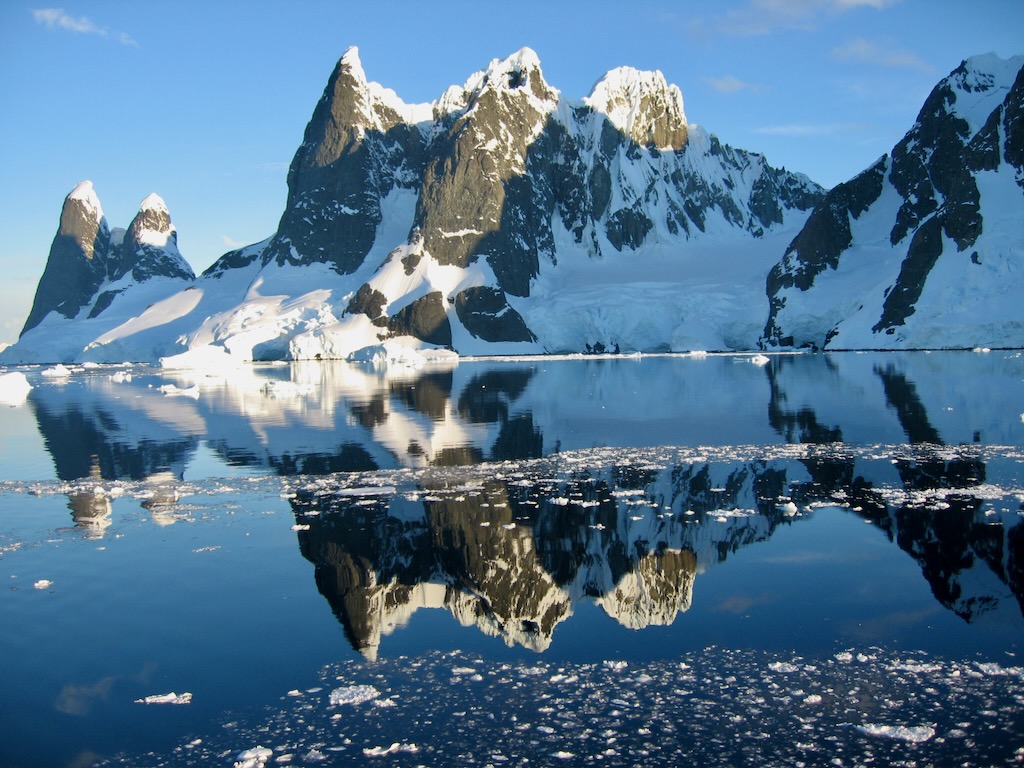
This is the highlight season for South Georgia. King penguin colonies at St. Andrews Bay reach peak activity with 150,000 breeding pairs – some incubating eggs, others feeding fluffy brown chicks. Wandering albatrosses with their 12-foot wingspans nest on Prion Island. However, fur seal breeding season means some beaches become impassable due to aggressive males. In the Falklands, penguin chicks hatch across all species, elephant seals molt on beaches, and sea lion pups make their first appearances.
Packing Tip: Bring layers you can shed since sunny days can hit +5°C and you’ll overheat in full expedition gear.
For first-time visitors especially, peak season offers the best balance of wildlife, weather, and predictability.
Late Season Antarctica (February–March): Best Time for Whale Watching
Late season, stretching from February into March, is Antarctica at its most emotionally charged.
Temperatures range from -5°C to 0°C (23°F to 32°F), and daylight decreases to 16-20 hours per day, with March losing about 15 minutes of light daily. By now, chicks are larger, bolder, and approaching independence. Many chicks and adults are molting. Its an awkward, vulnerable phase when they lose waterproof feathers and cannot yet enter the sea. Colonies are loud and chaotic, filled with impatient juveniles testing boundaries. Parents deny feedings to push chicks toward independence.
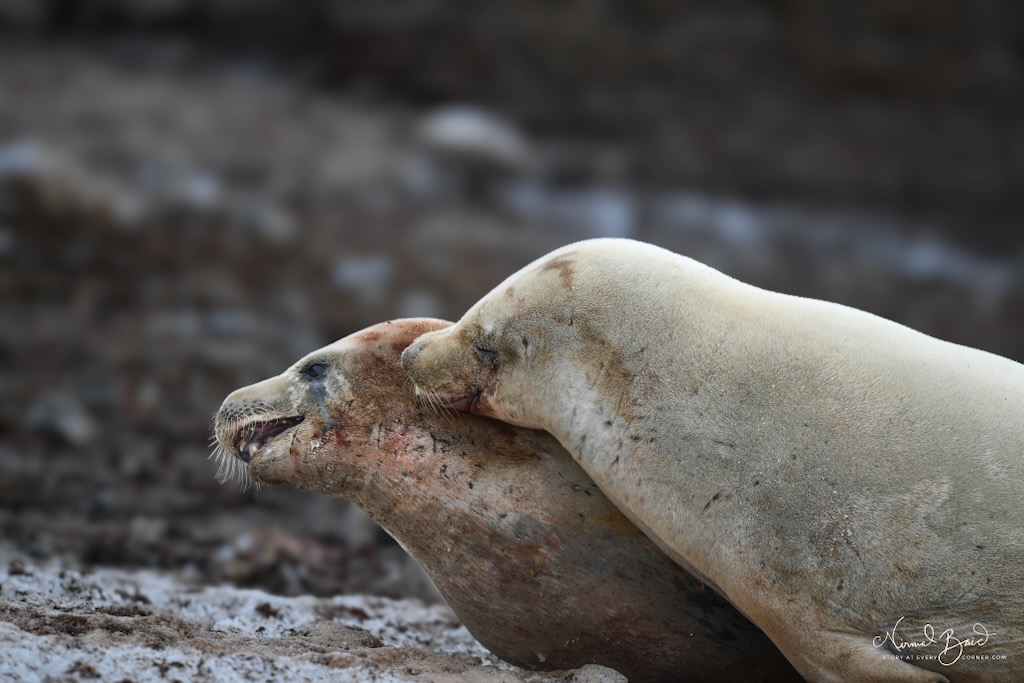
This is when predation peaks. Leopard seals concentrate near shorelines, targeting inexperienced fledglings. Skua activity increases. The drama is intense, raw, and sometimes difficult to watch. Nature is at its most unsentimental.
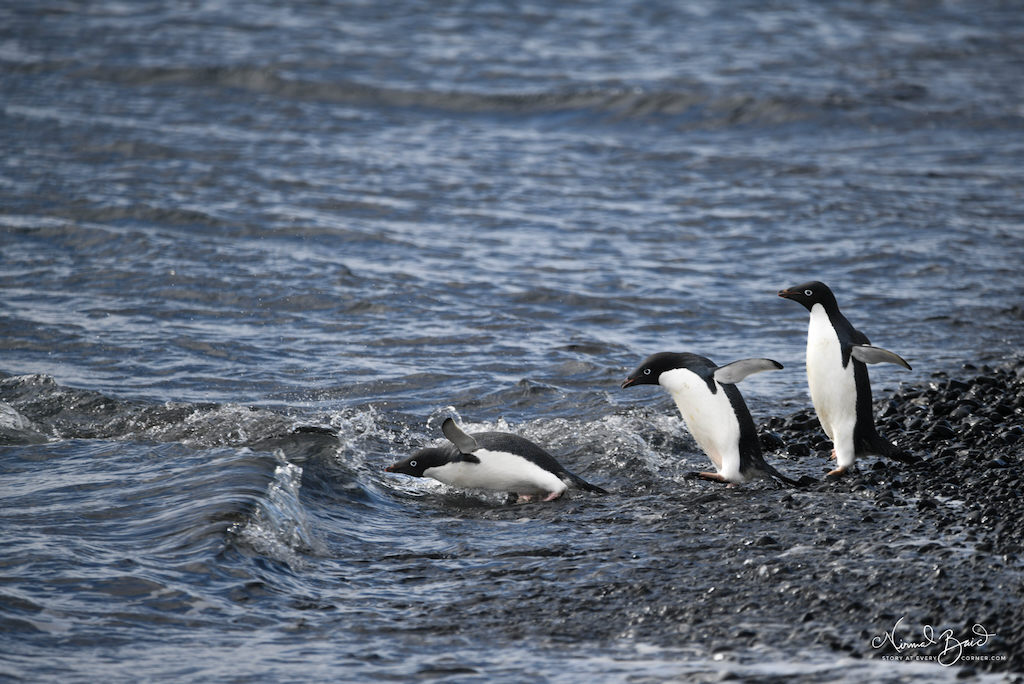
Whale sightings often increase in late season, particularly humpbacks, minkes, and orcas, as feeding grounds open and krill productivity peaks. Orcas patrol shorelines, hunting penguin fledglings and seal pups entering the water for the first time. For many marine-life enthusiasts, this is the highlight of late-season travel.
Visually, late-season Antarctica feels different. Much of the snow has melted. Rock dominates. Icebergs appear bluer, older, and more sculpted. The landscape feels less pristine but more geologically stunning. Late season also offers the best chance to cross the Antarctic Circle, as sea ice reaches its minimum extent in February.
Depending on weather patterns, fresh snow may return late in the season, briefly covering the accumulated mess of summer, almost like the continent taking a deep breath before winter. Low sun angles create stunning sunset photography opportunities in March.
There is a strong sense of closure in late season. The land empties. Colonies thin. Antarctica begins withdrawing from visitors, turning inward toward darkness and cold.
King penguin chicks in South Georgia form massive creches while parents forage at sea. Late-breeding kings are just laying eggs while early-season chicks reach their fluffiest. Fur seal pups become playful and curious, offering fantastic photo opportunities. The Scotia Sea between South Georgia and Antarctica abounds with whale sightings. In the Falklands, penguin chicks are fledging and beginning their journey to sea, while adults prepare for their own molt.
Packing Tip: Bring waterproof gear that’s already broken in. Wet, muddy landings are a real possibility.
Late season isn’t about beginnings. It’s about departure and survival.
Winter: Antarctica Alone
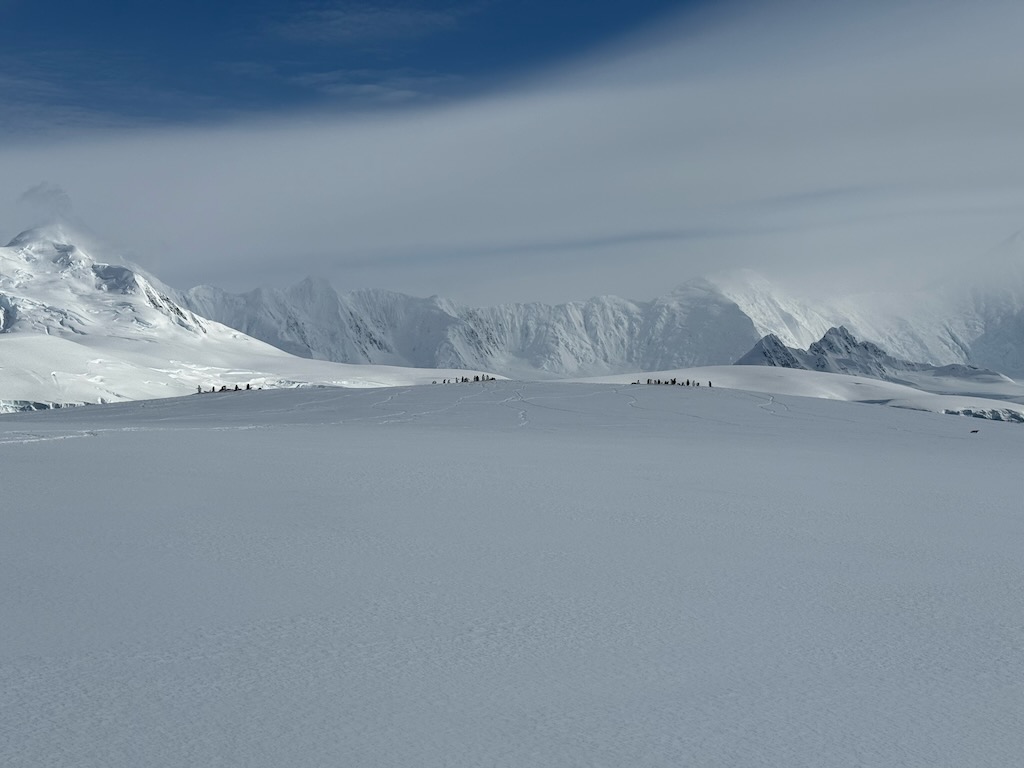
From April to September, Antarctica is effectively closed to tourism.
Darkness dominates. Blizzards reshape the continent. Temperatures on the interior plateau can plunge to -70°C (-94°F). All expedition ships retreat north, many for polar expeditions at the other end of the globe. Only a handful of large research stations remain operational through winter.
This is not a travel season. It is a survival season.
However, in the Falkland Islands, king penguins and about half the gentoo population remain year-round. Winter visitors can track down these hardy penguins and experience the islands in complete solitude, though the weather is harsh, it’s mostly dark, and services are limited.
Planning Your Antarctica Expedition
When to Book Your Antarctica Expedition
Antarctica expeditions sell out 12-18 months in advance, especially for early season Snow Hill departures (limited to 2-3 per year). Peak season offers more departure options but books the fastest. Late season sometimes has last-minute deals, but you risk missing specific wildlife windows.
Booking timeline:
- Early season: Book by January of the year before
- Peak season: Book by March-April of the year before
- Late season: Book 6-12 months ahead for best selection
Expeditions combining Antarctica with South Georgia and the Falklands typically require even earlier booking due to limited departure options and high demand.
How to Choose the Best Time to Visit Antarctica
There is no single ‘best’ time to visit Antarctica. Only the right season for your travel goal.
- Choose early season if you value rarity, pristine landscapes, and can embrace uncertainty. Emperor penguins are only visible in early season. This is usually for more veteran Antarctica visitors, photographers seeking dramatic light, or those wanting fewer crowds and the chance to see South Georgia’s beaches before aggressive fur seal territory battles make some landings difficult.
- Choose peak season if you want warmth, wildlife density, and reliability. This is most preferred for first-time visitors. King penguin colonies in South Georgia reach peak activity, and penguin chicks are hatching across the Antarctic Peninsula. The Falklands offer excellent wildlife viewing with chicks of all species visible. Drake Passage is statistically more likely to be calmer, although not guaranteed.
- Choose late season if you’re drawn to ecological drama, whales, and transition. February-March offers the best whale watching across the entire region. Humpbacks, orcas, and minkes patrol the Scotia Sea and Antarctic waters. South Georgia’s king penguin chicks are at their fluffiest. Antarctic Circle crossings become possible as sea ice recedes.
- Winter belongs to scientists – and to Antarctica itself.
Antarctica does not reward rigid expectations. It rewards presence, adaptability, and respect.
And if weather forces a change to your itinerary, which it likely will, trust that Antarctica is showing you exactly what it wants you to see.
How rough is the Drake Passage?
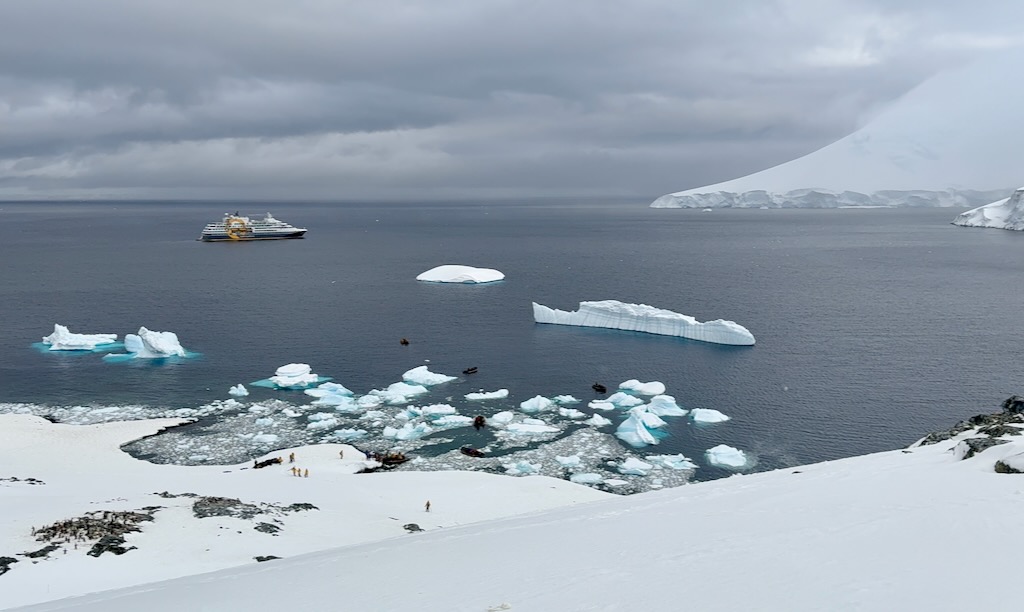
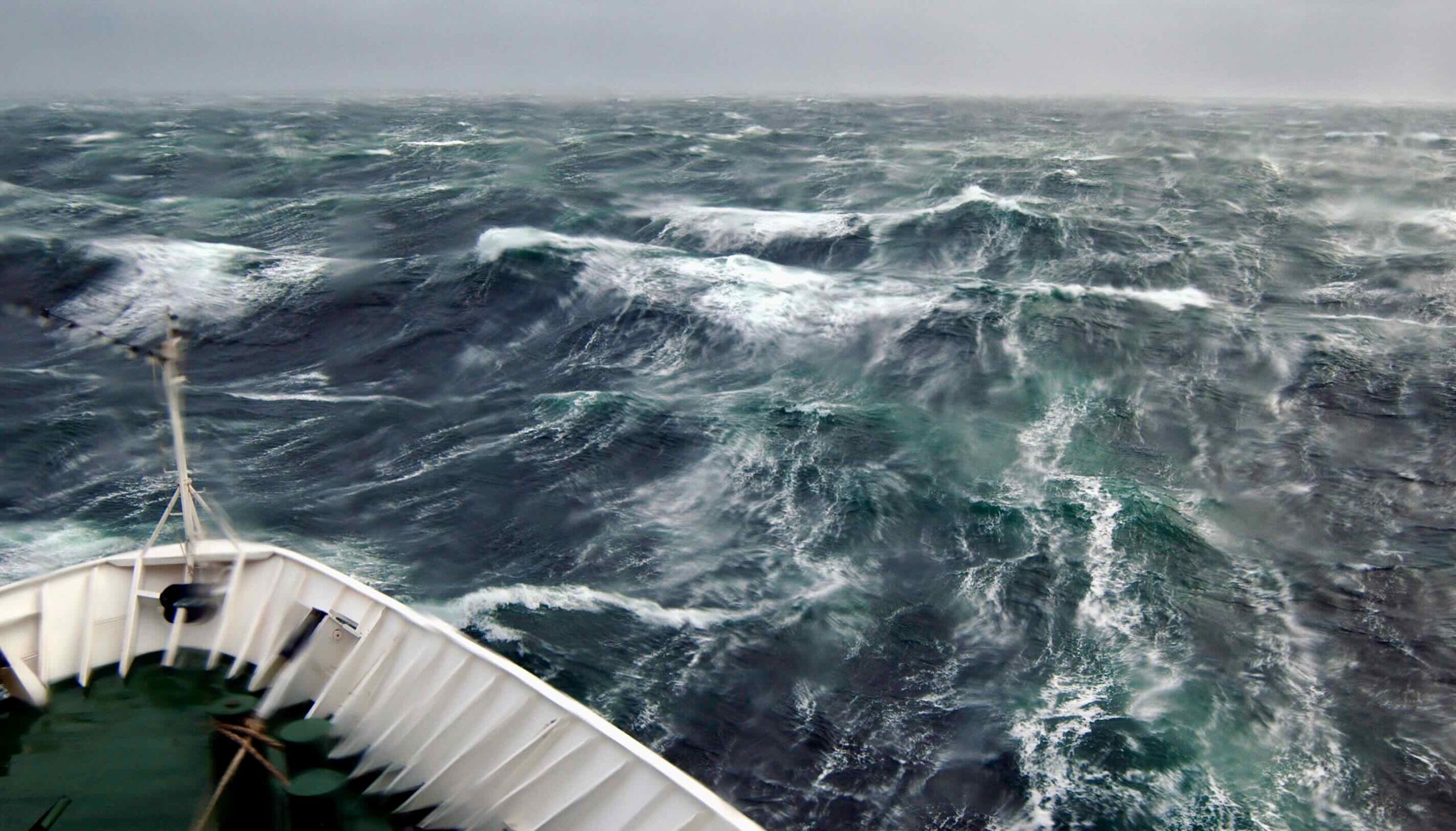
The Drake Passage crossing (1 1/2 to 2 days each way) ranges from calm Drake Lake to rough Drake Shake. You won’t know until you’re there. Peak season (Dec-Jan) generally sees calmer conditions, though nothing is guaranteed.
We have crossed the Drake Passage 4 times, and each one was completely different. Ranging from Drake Lake to Drake Shake and in between. Each was rewarding in its own way and an experience to remember forever.
Most expedition ships have stabilizers and medical staff with seasickness remedies. Starting medication 12-24 hours before departure helps. Mid-ship cabins on lower decks experience less motion.
Fly-cruise alternative: Departing from Punta Arenas, Chile, you can fly 2 hours to King George Island and skip the Drake entirely. These expeditions are shorter (7-8 days vs 10-12) but maximize time in Antarctica. But you miss the gradual transition and anticipation that make the Drake crossing part of the Antarctica experience.
The Drake Passage was memorable for the many species of birds that gracefully glided around us, the many educational lectures that prepared us for the expedition, and the connections we made while standing on the decks for hours.
How Long Should Your Antarctica Expedition Be?
Understanding expedition length requires breaking down travel time versus time in Antarctica itself. Here’s what different itineraries actually mean:
| Length | Drake Days | Antarctica Days | Best For |
|---|---|---|---|
| 7-8 Days (Fly-Cruise) |
0 days (Fly over) |
4-5 days | Tight schedules, seasickness concerns Trade-off: Higher cost, weather-dependent flights |
| 10-12 Days (Classic) |
4 days (2 each way) |
6-8 days | Most popular – Balance of time and cost, first-timers |
| 14-16 Days (+ South Georgia) |
6-8 days | 8-10 days | Wildlife enthusiasts, king penguins, comprehensive experience |
| 18-21+ Days (Extended) |
Varies | 12-16 days | Emperor penguins (Weddell Sea), Antarctic Circle, bucket-list trips |
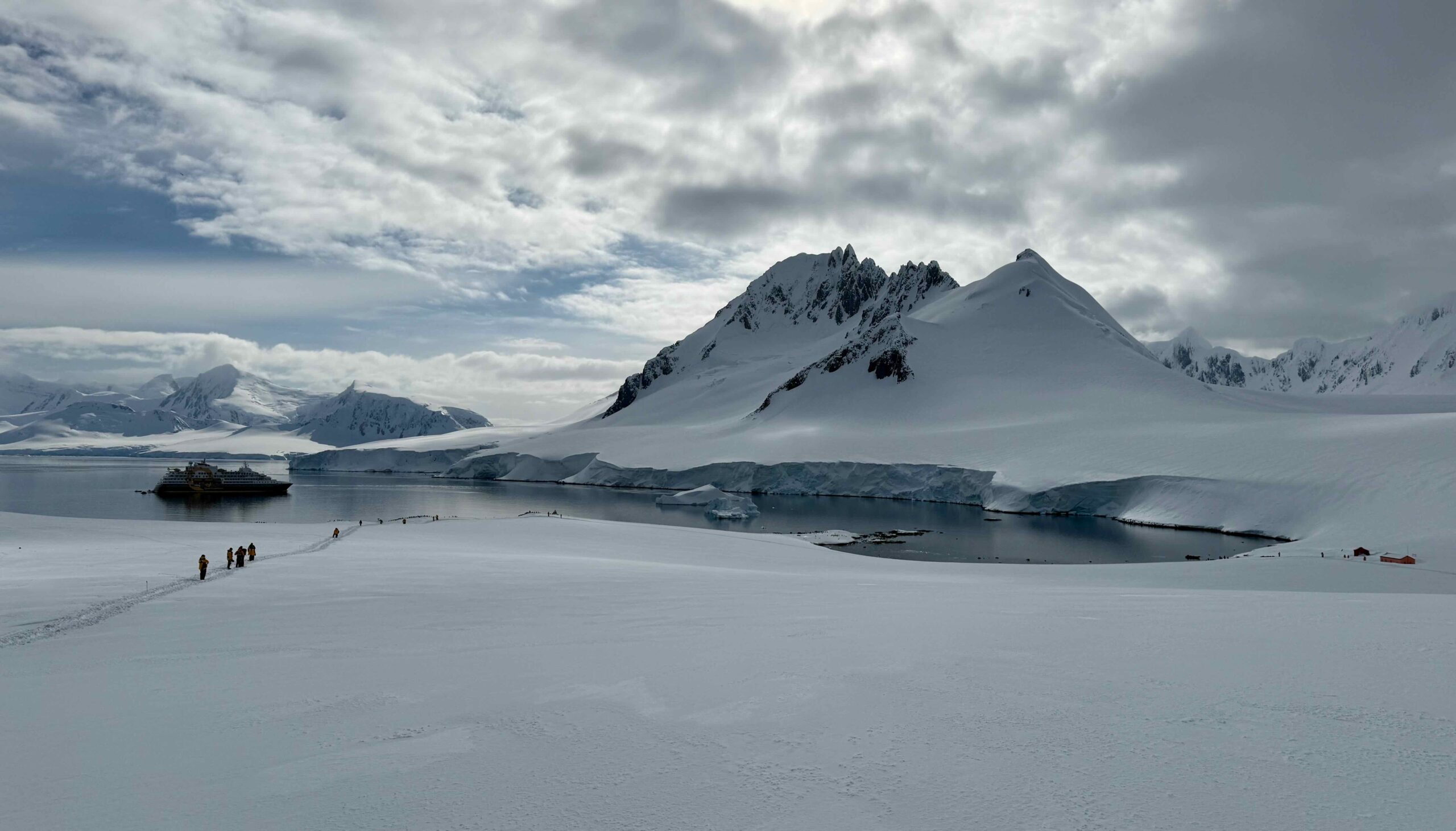
Our 10-day Antarctic Peninsula voyage was during peak season. Although we had a rough southbound sail through the Drake Passage, the peninsula presented excellent weather. Each day brought bright blue skies and crystal clear waters.
Our 18-day Snow Hill Emperor Penguin voyage was truly an expedition. Visiting the Emperor Penguin Colony was our top priority, so our expedition leader grabbed the first possible weather window, and we got lucky to visit Snow Hill on a spectacularly gorgeous day. Our activities and route thereafter evolved each day with changing weather patterns. Looking back, our daily agendas rarely materialized as planned. We barely saw Deception Island through the dense fog. But we got lucky on other days. We got to navigate Lemaire despite the early-season expedition. Drake Passage took under 36 hours each way (vs typical 48 hrs).
The mantras on board were Stay Agile and This is an expedition, not a cruise or trip.
Critical Reality: Weather Days
- No matter your expedition length, weather can cancel landings at any time. Ice blocks channels. Winds ground helicopters. Snowstorms reduce visibility to zero.
- Longer expeditions have more built-in buffer days. An 8-day trip with one weather cancellation loses 12-15% of Antarctica time. A 12-day trip loses only 8-10%.
How to Choose:
- First-timers with 10-12 vacation days: Classic Peninsula expedition
- Limited vacation time or seasickness concerns: Fly-cruise (7-8 days)
- Wildlife enthusiasts: Peninsula + South Georgia (14-16 days)
- Emperor penguin priority: Weddell Sea expedition (18-21 days, early season only)
- Bucket list, once-in-a-lifetime: Extended expedition with multiple regions
If I were to choose again, I would choose the longer expedition for two reasons. Firstly, we’re retired and time is less of a concern. Secondly, getting to Ushuaia and through the Drake Passage is a long and expensive journey. I would maximize the time in Antarctica to get the best value and weather opportunities.
Antarctica by Month (Quick Summary)
If you’re deciding based on a specific month, here’s how the season unfolds:
October: Emperor penguins are possible in the Weddell Sea, pristine snow, unstable ice.
November: Emperor access is still possible, nesting begins across the Peninsula.
December: Penguin chicks hatch, warmest stretch begins, long golden light.
January: Most reliable weather, dense wildlife activity, peak South Georgia colonies.
February: Best whale watching, Antarctic Circle crossings most likely.
March: Dramatic light, fewer ships, fledging chicks, and intense predator activity.
Want more details? Read our complete day-by-day Antarctica expedition itinerary covering the route from Ushuaia to Snow Hill Island and the Antarctic Peninsula via Drake Passage. Or dive into our story of meeting emperor penguins at Snow Hill – one of the most elusive wildlife encounters on Earth
Frequently Asked Questions About Antarctica Seasons
What is the best month to visit Antarctica?
December and January (peak season) offer the most reliable weather and wildlife viewing, making them ideal for first-time visitors. Temperatures are warmest, daylight is nearly 24 hours, and penguin chicks are hatching across the Peninsula, South Georgia, and the Falklands.
Can you see emperor penguins in peak season?
No. Emperor penguins return to sea by late November. To see emperors, you must visit in early season (October–early November) and choose a Weddell Sea expedition like Snow Hill Island. However, you can see king penguins—the second-largest penguin species—in South Georgia year-round, with peak colonies numbering 450,000 breeding pairs.
When is whale watching best in Antarctica?
Late season (February–March) offers the best whale watching as humpback, minke, and orca whales concentrate in feeding grounds throughout the Scotia Sea, around South Georgia, and along the Antarctic Peninsula. This is when krill productivity peaks and whales are most active. Orcas are particularly active hunting fledgling penguins and seal pups entering the water. We saw exceptional whale activity even in early and peak season, despite the millions slaughtered in the last century.
What’s the difference between Antarctic Peninsula, South Georgia, and Falkland Islands?
The Antarctic Peninsula is Antarctica proper, with icebergs, emperor penguins (early season only), and dramatic ice landscapes. South Georgia is a sub-Antarctic island called the ‘Serengeti of the Southern Ocean’ with 450,000 king penguin pairs, massive elephant seal colonies, and wandering albatrosses. The Falkland Islands are farther north with diverse penguin species (rockhopper, Magellanic, gentoo, and king), endemic birds, and British heritage. Many expeditions combine all three regions.
Is Antarctica accessible in winter?
No. Antarctica is closed to tourism from April to September due to extreme cold (temperatures on the interior plateau can reach -70°C), 24-hour darkness, and dangerous ice conditions. Only some scientific research stations remain operational. However, the Falkland Islands can be visited year-round, with king penguins and some gentoo penguins remaining through winter.
What should I pack for early season Antarctica?
Pack electric warmers, face protection (balaclava or neck gaiter), waterproof gloves, and windproof outer layers. Temperatures range from -10°C to 0°C (14°F to 32°F), and katabatic winds can be severe. Layering is essential. Bring camera protection gear – waterproof bags, lens covers, and extra batteries, as cold drains them quickly.
How far in advance should I book an Antarctica cruise?
Book 12-18 months in advance for the best selection. Early season Snow Hill expeditions (limited to 2-3 departures per year) require booking by January of the year before. Peak season books fastest despite having more options. Expeditions combining Antarctica, South Georgia, and the Falklands have even more limited availability.
When do penguin chicks hatch in Antarctica?
Adélie, Gentoo, and Chinstrap penguin chicks hatch primarily in peak season (December-January) on the Antarctic Peninsula and Falklands. King penguin chicks in South Georgia hatch throughout the summer, due to their 14-to 16-month breeding cycle. You will see fluffy brown chicks, regardless of when you visit, between October and March. Emperor penguin chicks hatch in July-August during the Antarctic winter, which is why they’re only visible to visitors in early season (October-November) before the ice breaks up.
Can I cross the Antarctic Circle?
Late season (February) offers the best chance to cross the Antarctic Circle at 66°33’S as sea ice reaches its minimum extent. Early and peak season routes may be blocked by ice. Only certain expedition routes attempt this crossing. Confirm with your operator if this is a priority.
Last Updated on February 19, 2026 by Jyoti Baid
More Antarctica Articles


Olivia Chen
May 13, 2026 @ 5:41 am
The idea of “Peak Season” being the best time for first-timers really resonates with me, as I’ve seen how unpredictable ice conditions can be in other destinations. As a scuba and snorkel enthusiast, I’ve learned that operator quality is crucial in such situations. I’ve found that looking for operators with a high safety record and experience in navigating icy waters can make all the difference. The parallel between the importance of timing in Antarctica and the need to consider reef conditions when planning a beach trip is something I’ve been thinking about lately, as I’ve noticed how both can greatly impact the overall experience. I wonder, how do the authors think the concept of peak season might apply to other, warmer destinations, where the focus is on marine life rather than penguins and whales?