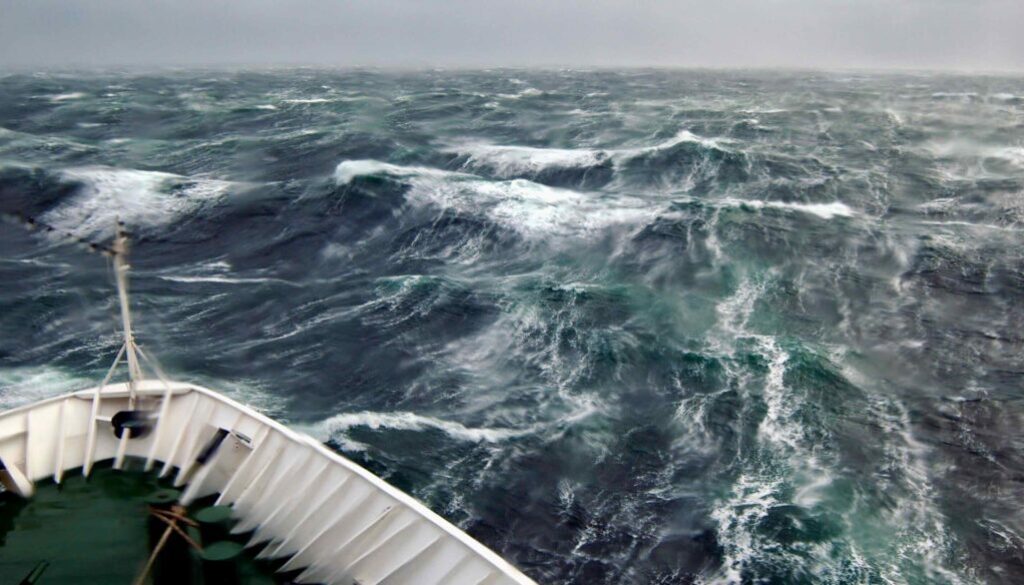
The Drake Passage is Antarctica’s gateway and gatekeeper, with 600 miles of unpredictable ocean that every expedition ship must cross. It’s been called the world’s most treacherous water, the graveyard of countless ships, and the ultimate test before Antarctica.
After crossing the Drake four times – twice in early season and twice in peak season – we can tell you it’s all of these things. And more. In this article, we share what to expect, how to manage seasickness, and why this crossing remains a key part of the Antarctica experience.
What Is the Drake Passage?
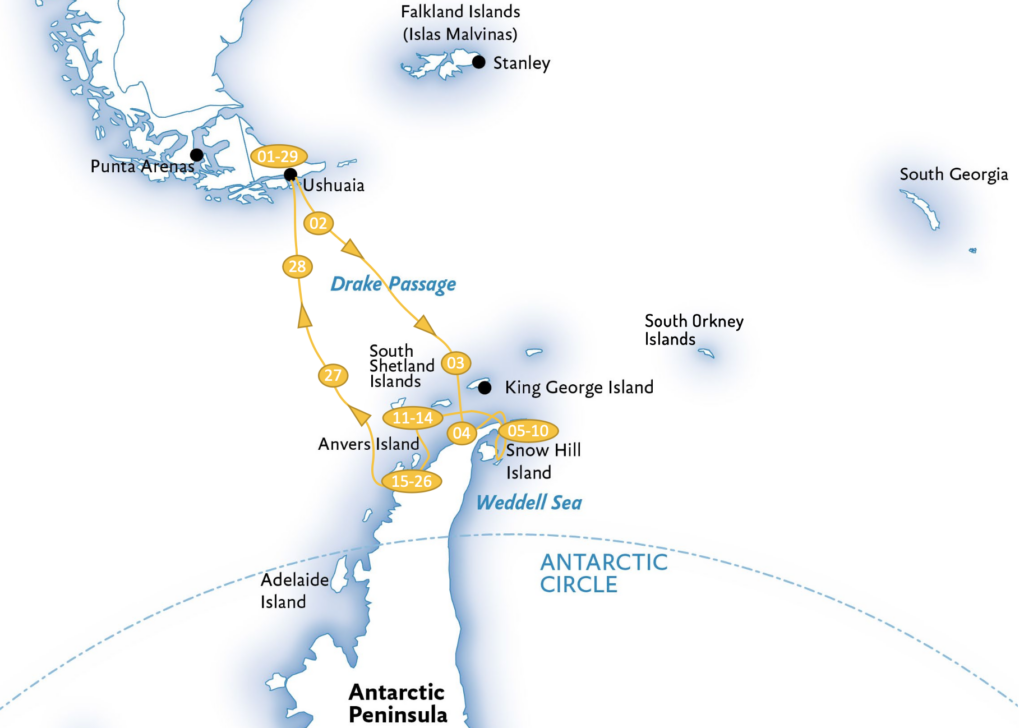
The Drake Passage is the water body between South America’s southernmost tip of Cape Horn (55°S) and Antarctica’s South Shetland Islands (63°S). At its narrowest point, it spans roughly 600 miles (1,000 kilometers).
What Makes the Drake Passage Unique?
Unlike any other ocean passage on Earth, the Drake Passage is where the Atlantic, Pacific, and Southern Oceans converge. There’s no land mass to slow the wind or break the waves. Plus Antarctic Circumpolar Current, the world’s largest ocean current, flows uninterrupted around the entire continent, funneling through this narrow gap between the continents.
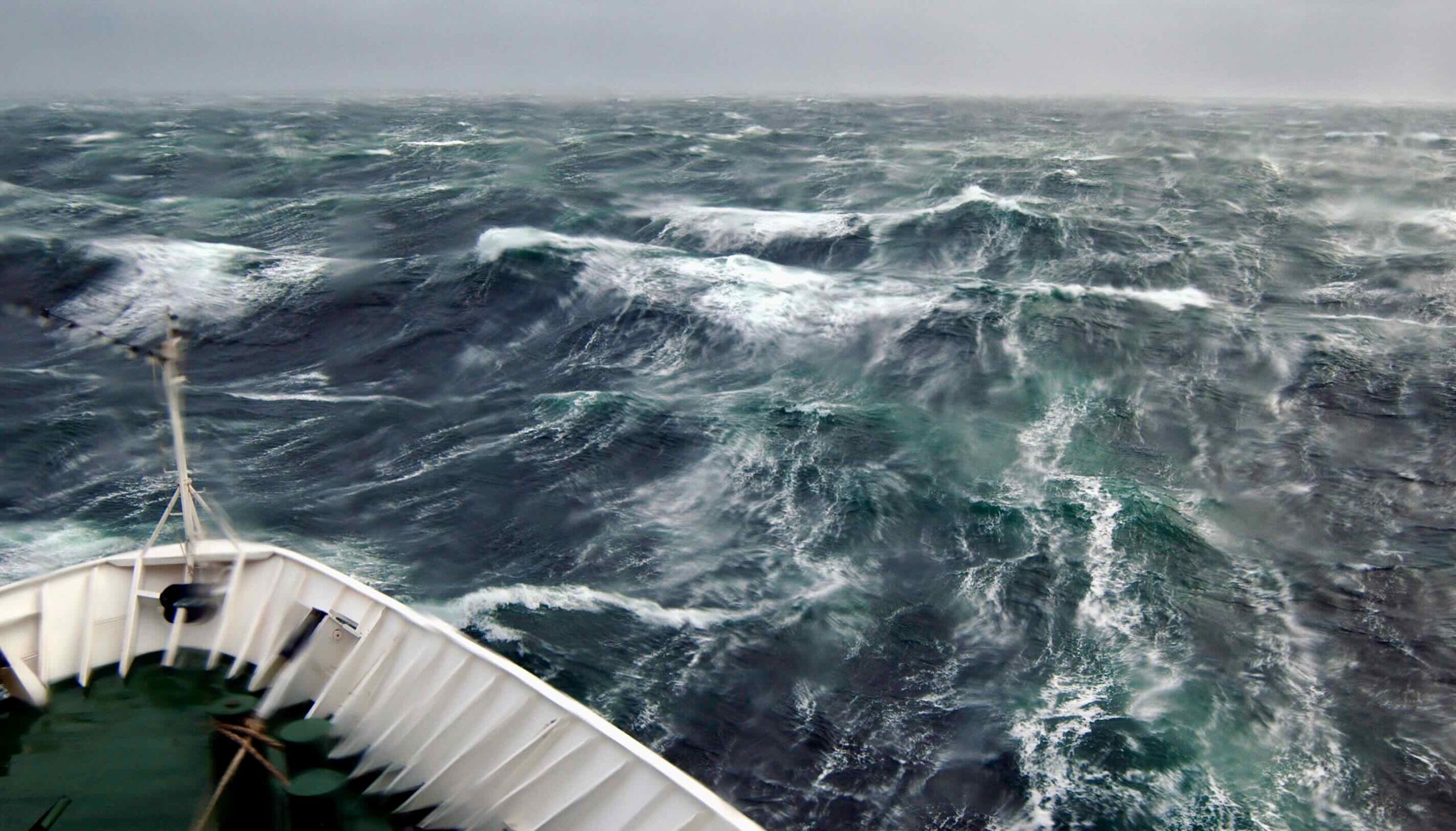
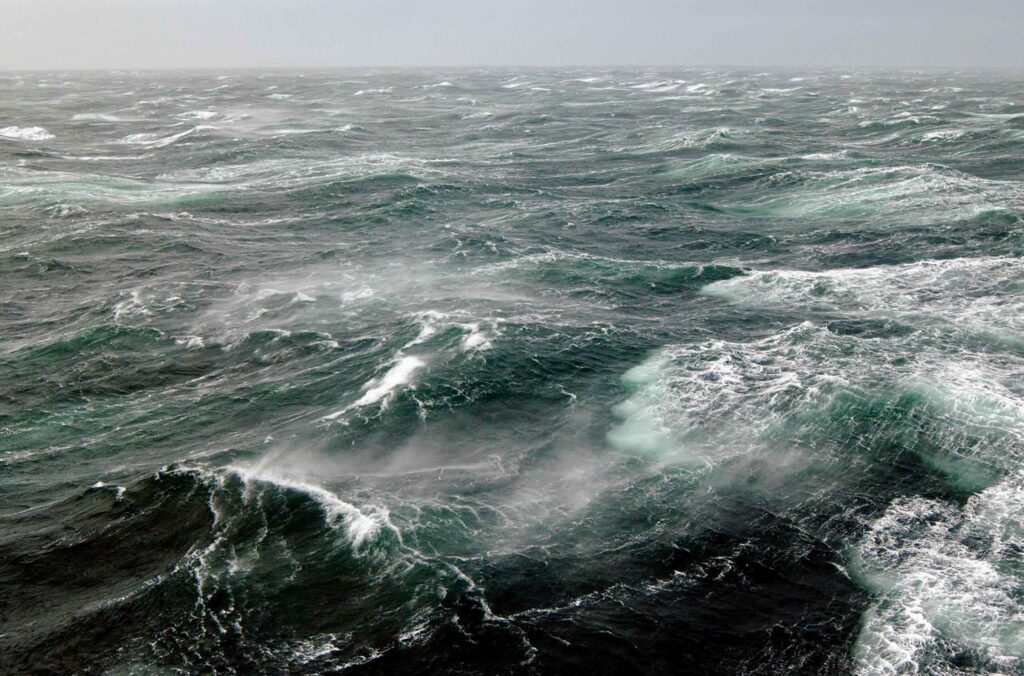
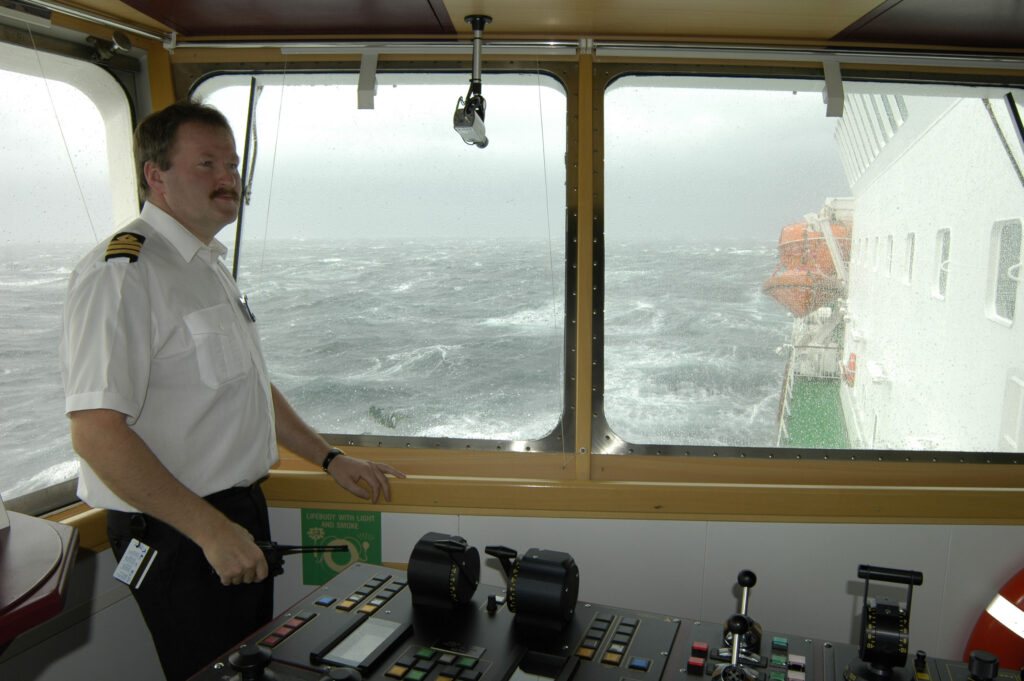
As a result, the waves can reach 13-15 meters (40-50 feet) or higher. Plus, wind can roar in harrowing speeds across open water with nothing to stop it. The weather can shift from calm to violent within hours.
The Significance:
This confluence isn’t just dramatic; it is ecologically vital. The mixing of these three oceans drives nutrient upwelling that sustains life across the Southern Ocean and beyond. Krill thrive here. Whales follow. Seabirds gather. The Drake Passage is not just a barrier; it is a biological pump that feeds the planet.
Drake Passage at a Glance
Location: Between Cape Horn (South America) and South Shetland Islands (Antarctica)
Distance: ~600 miles (1,000 km) at narrowest point
Crossing Time: 36-48 hours each way
Typical Waves: 2-7 meters. Max wave for crossing 7m. Can exceed 13-15 meters in storms
Named After: Sir Francis Drake, though he never crossed it
Ocean Current: Antarctic Circumpolar Current (world’s largest current)
Wildlife: 30+ seabird species, whales, dolphins
Best Conditions: December-January (statistically, not guaranteed)
Alternative: Fly-cruise from Punta Arenas, Chile (2-hour flight)
History of the Drake Passage
Named After Sir Francis Drake?
Sort of. The passage is named after English privateer Sir Francis Drake, whose ship was blown far south of Cape Horn in 1578. Interestingly, Drake never actually sailed through the passage bearing his name. He turned back north. But he was credited for discovering that the Atlantic and Pacific oceans met in a wide, open sea south of South America, rather than a solid landmass.
The first confirmed crossing came decades later, when Dutch explorer Willem Schouten went around Cape Horn in 1616.
The Graveyard of Ships:
Before the Panama Canal opened in 1914, the Drake Passage was the main route between the Atlantic and Pacific. Sailing ships attempting to go around Cape Horn faced westerly winds, towering waves, and icebergs. Hundreds of ships and thousands of sailors were lost.
The Chilean Navy still maintains a memorial at Cape Horn commemorating the estimated 10,000+ sailors who lost their lives attempting this crossing. It is a large steel sculpture of an albatross.
Modern Crossings:
Today’s expedition ships are purpose-built for these conditions, featuring stabilizers, ice-strengthened hulls, and advanced weather routing systems. Yet the Drake Passage still commands respect. Even modern vessels wait in Ushuaia’s Beagle Channel until waves are forecasted to be under 7 meters.
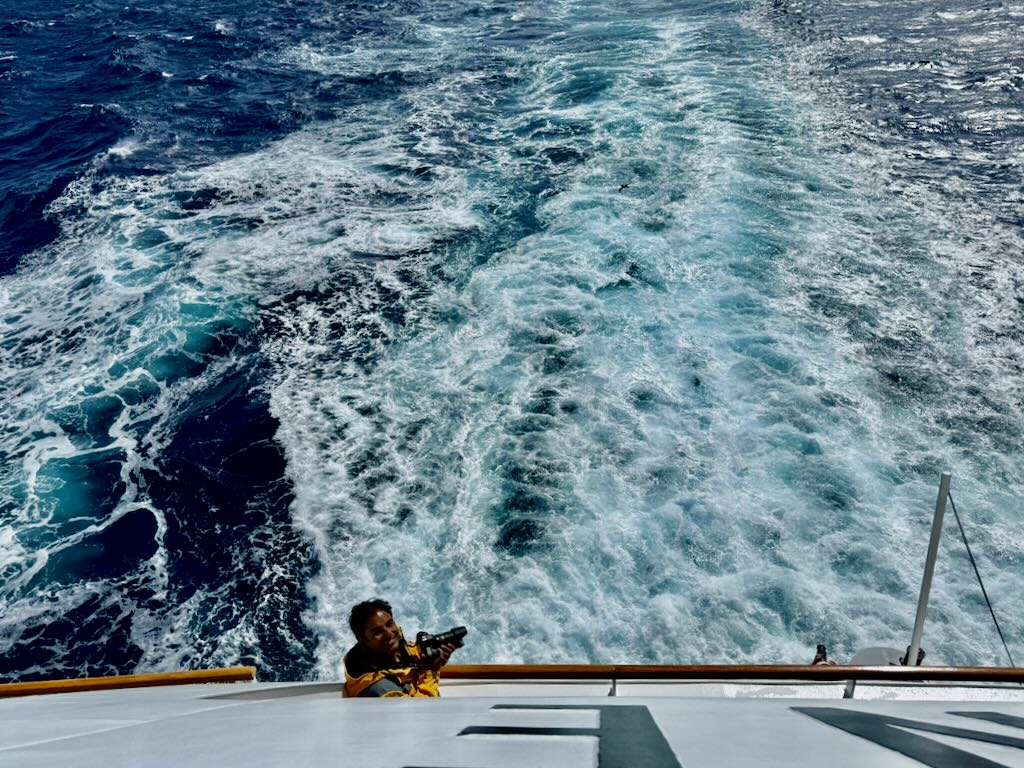
Why Is the Drake Passage So Rough?
It has the Perfect Storm Ingredients:
- Fetch: Unobstructed water means wind can build waves for thousands of miles with nothing to break them.
- The Circumpolar Current: The Antarctic Circumpolar Current flows west to east around Antarctica at 130-150 million cubic meters per second. That is 600 times the Amazon River’s flow. This massive current funnels through the narrow Drake.
- Convergence Zone: Cold Antarctic water (-2℃ to 2℃) meets the warmer sub-Antarctic water (5.6℃). The drastic difference causes turbulent conditions.
- Westerly Winds: The “Furious Fifties” and “Screaming Sixties” are persistent westerly winds that circle Antarctica, creating massive swells.
- Low-Pressure Systems: Antarctica generates powerful low-pressure systems that track through the Drake, bringing high winds and heavy seas.
As a Result:
Waves in the Drake Passage are typically 4-7 meters, but can reach 13-15 meters or higher during storms. The motion isn’t just up and down. Ships pitch, roll, and yaw simultaneously. Objects slide, so every shelf is made to secure objects. Closet doors would slam, so they have special latches. Walking becomes a full-body workout. We must give one hand to the ship, to hold on to the railings in every hallway.
What the Crossing Is Really Like: Our Experience
Late October Crossing (Southbound):
As we departed Ushuaia in late October, wave forecasts were at 4-6 meters. Respectable but manageable. Well before departure, we applied seasickness patches under our expedition physician’s guidance. The patches prevented seasickness but caused dry mouth and fatigue.
Our crossing took a day and a half. We spent the time attending lectures and safety briefings, wildlife photography basics, penguin behavior, geology, ecology, paddleboarding certification, and zodiac operations. Between sessions, we stood on deck watching the magnificent seabirds of the Drake Passage.
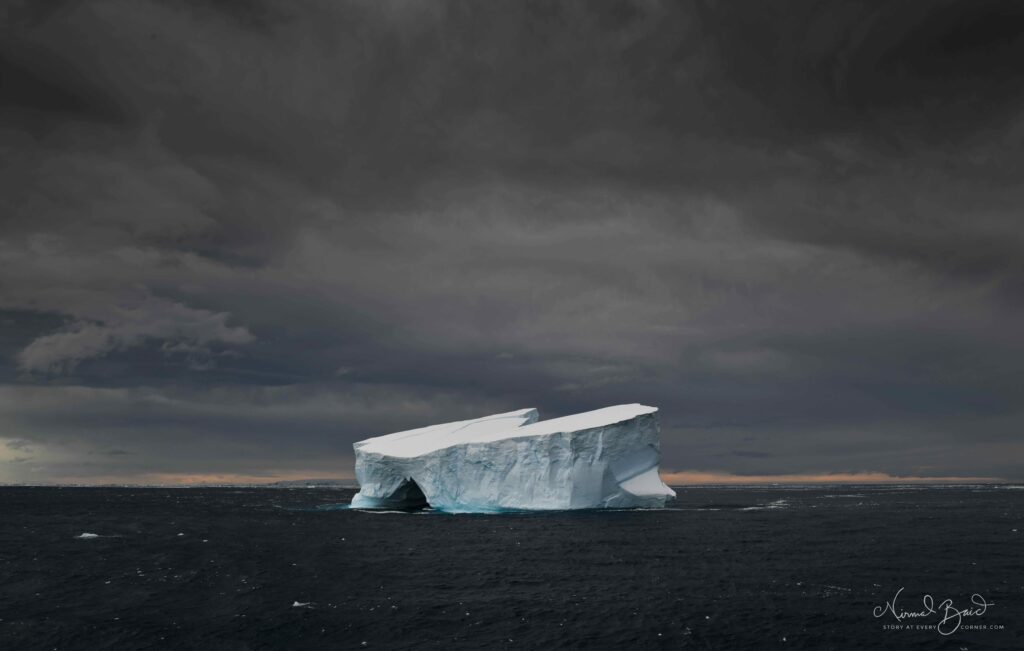
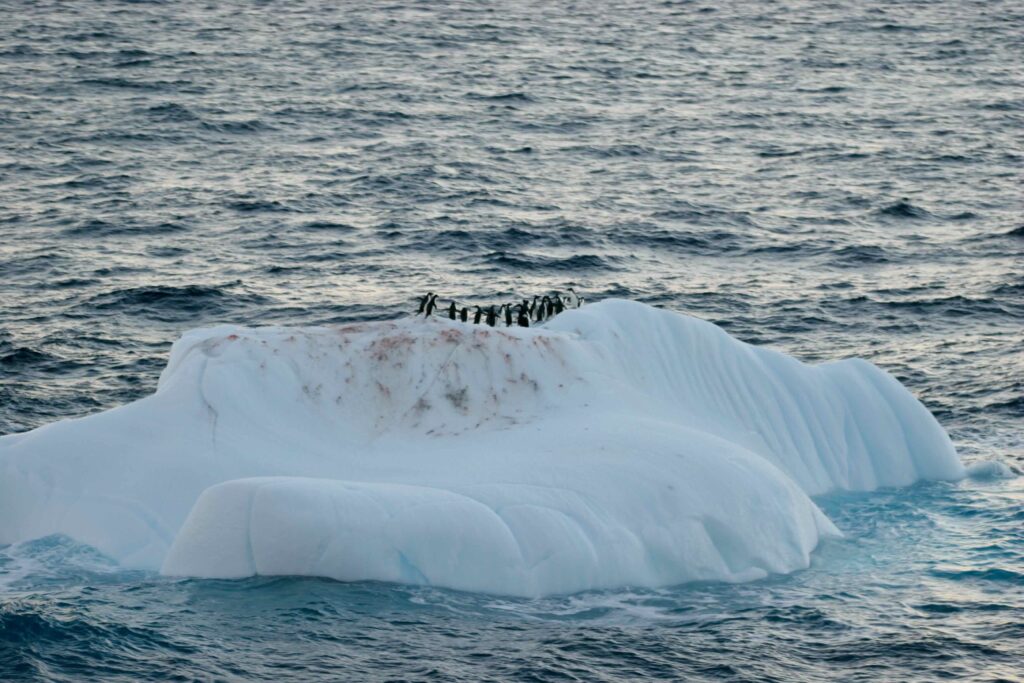
Dozens of us gathered on deck as the air temperature dropped and the water temperature plummeted. And then – The first icebergs slowly came into view. That’s when we knew we’d crossed the natural barrier and arrived in the realm of the southern continent. The arrival in Antarctica and those first iceberg sightings brought a joyful celebration. Feelings of accomplishment, relief, gratitude, and immense anticipation – all at once overwhelmed us with emotional upheaval.
It was magical.
Read all about this 18-day expedition to Antarctica –
Early November Return Crossing (Northbound):
The return crossing looked favorable. Wave forecasts showed only 2-3 meters, half the southbound height. I confidently skipped the seasickness patch.
Big mistake!
I spent the first day miserably seasick, missing the photography gallery, presentations, and dinner. I came to my senses and applied the patch. The second day was a breeze.
Late November Crossing (Southbound):
On the second day of this voyage, our ship was tossed around like a rag doll by a toddler in a full tantrum. Huge 7-meter waves relentlessly thrashed the ship. We got the true Drake Shake treatment in its full fury. Nothing stayed in the stomach. The captain was not kidding when he said, “Give one hand to the ship at all times”. We slept for much of the time, skipped meals except for a few small bites.
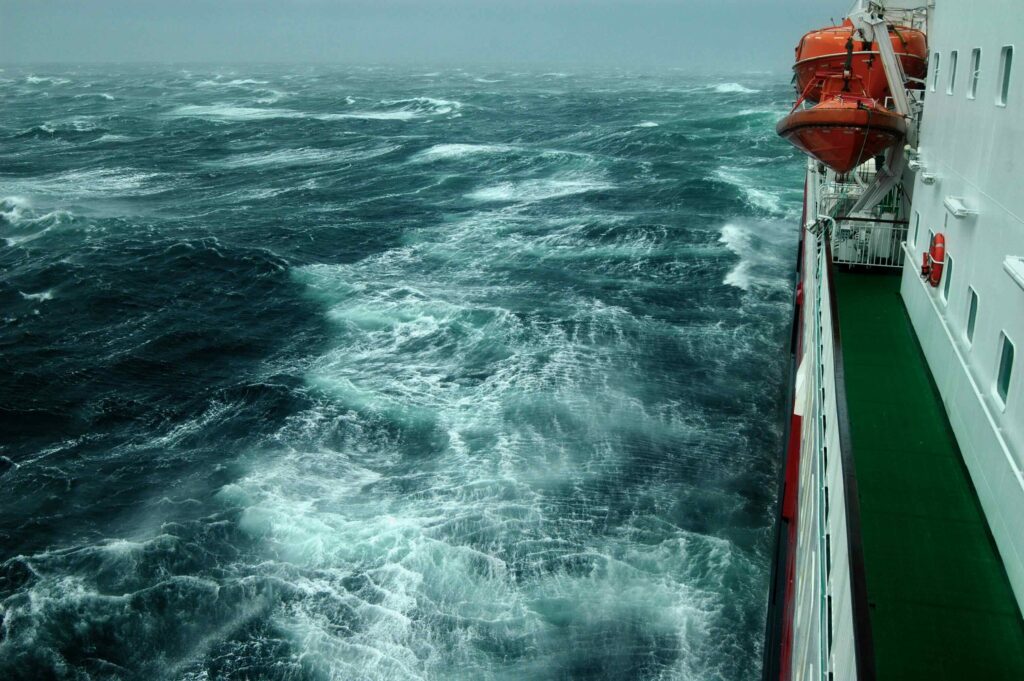
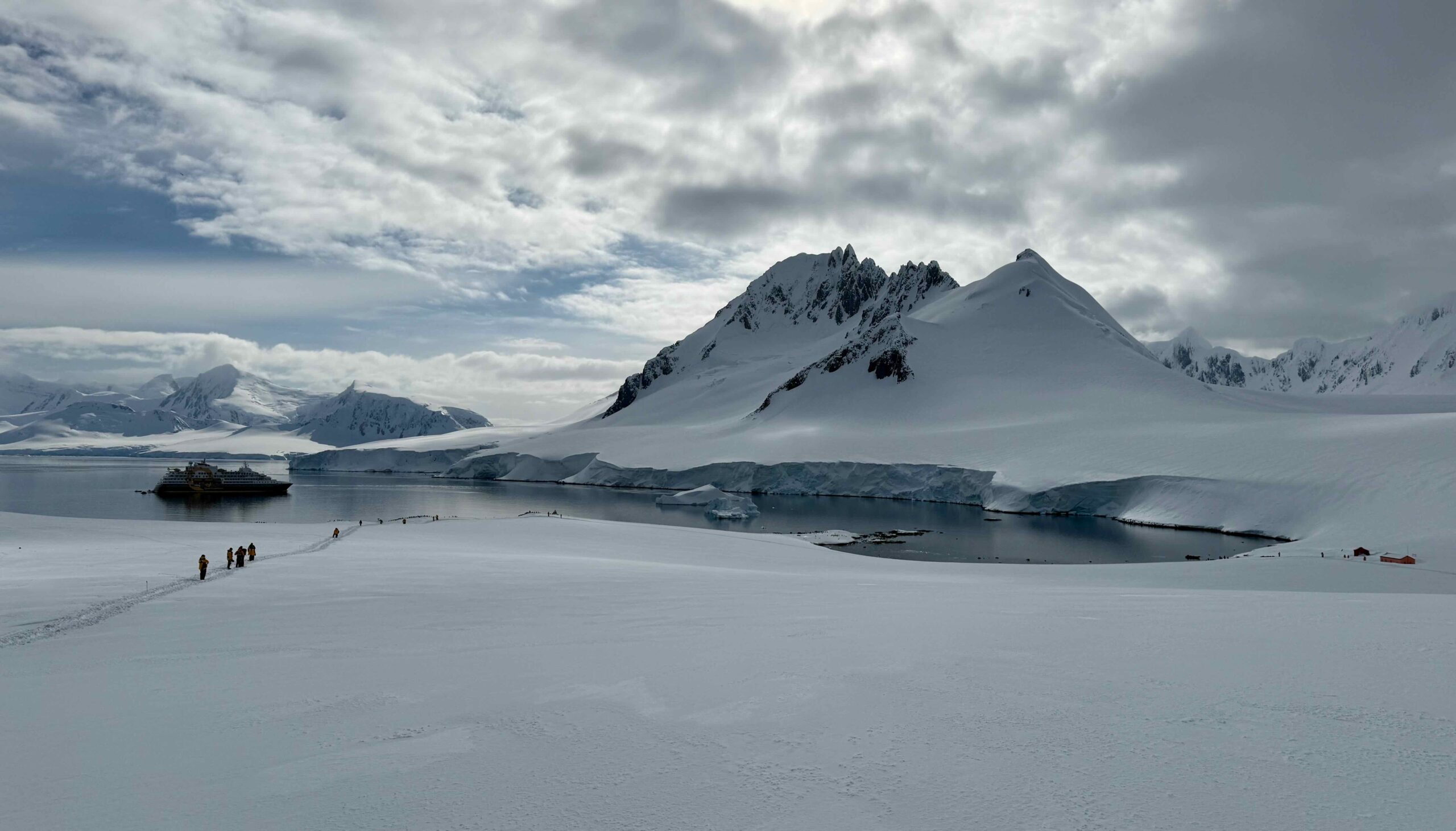
When we arrived in Antarctica, suddenly everything stood still.
Early December Crossing (Northbound):
On our way back in early December, it felt as though we had never left the southern continent. As if to compensate for the southbound journey, we were treated to the glass-like Drake Lake experience.
The Lesson:
The Drake demands respect, even when forecasts look favorable. A 2-3 meter swell was enough to lay me low without medication. The seasickness patch takes about 12 hours to reach full effectiveness. Start it before departure, not after symptoms begin.
The Reality Check:
Sometimes conditions force passengers to stay in their cabins for safety. During severe crossings, passengers are told to stay in, and staff bring the meals to the suites.
Most expedition ships won’t attempt the crossing when waves exceed 7 meters at Cape Horn. They wait in Ushuaia for conditions to improve, which can delay departures by days.
Managing Seasickness on the Drake Passage
Medication Options
Our ship had Dramamine pills available at reception 24/7, plus a full medical clinic. Here’s what we observed working for different passengers:
Scopolamine Patches (Most Effective):
- Applied 12-24 hours before departure
- Takes ~12 hours to reach full effect
- Prevents seasickness effectively
- Side effects: dry mouth, drowsiness, fatigue
- Available with a prescription in the US. Not available in all countries.
Oral Medications:
- Dramamine, meclizine, Bonine
- Taken 1 hour before departure
- Causes drowsiness
- Less effective than patches for severe conditions
Alternative Remedies:
- Acupressure wristbands with balls (Sea-Bands)
- Motion sickness glasses (with liquid levels)
- Ginger tablets
- Variable effectiveness
Cabin Location Matters
One friend had a beautiful suite on the 6th floor (the ship had 7 floors total). She struggled throughout the crossing because higher decks amplify every wave movement. Lower decks near the ship’s center experience significantly less motion.
Other Tips
- Watch the horizon
- Stay on deck when possible (fresh air helps)
- Avoid reading or screens during rough conditions
- Eat light, avoid alcohol
- Sleep if possible (time passes faster)
- Modern ship stabilizers make a huge difference
When I got sick on the return passage because I ignored to medicate, my blood pressure shot up. I lay down and watched movies until the patch took effect.
When Medication Isn’t Enough
For those with severe motion sickness, the Drake Passage can be truly miserable. Some people simply cannot tolerate the crossing, even with maximum medication. For these travelers, fly-cruise expeditions that skip the Drake entirely may be the only viable option. The flight must reveal incredible scenery beneath.

Wildlife of the Drake Passage
The Seabird Spectacle:
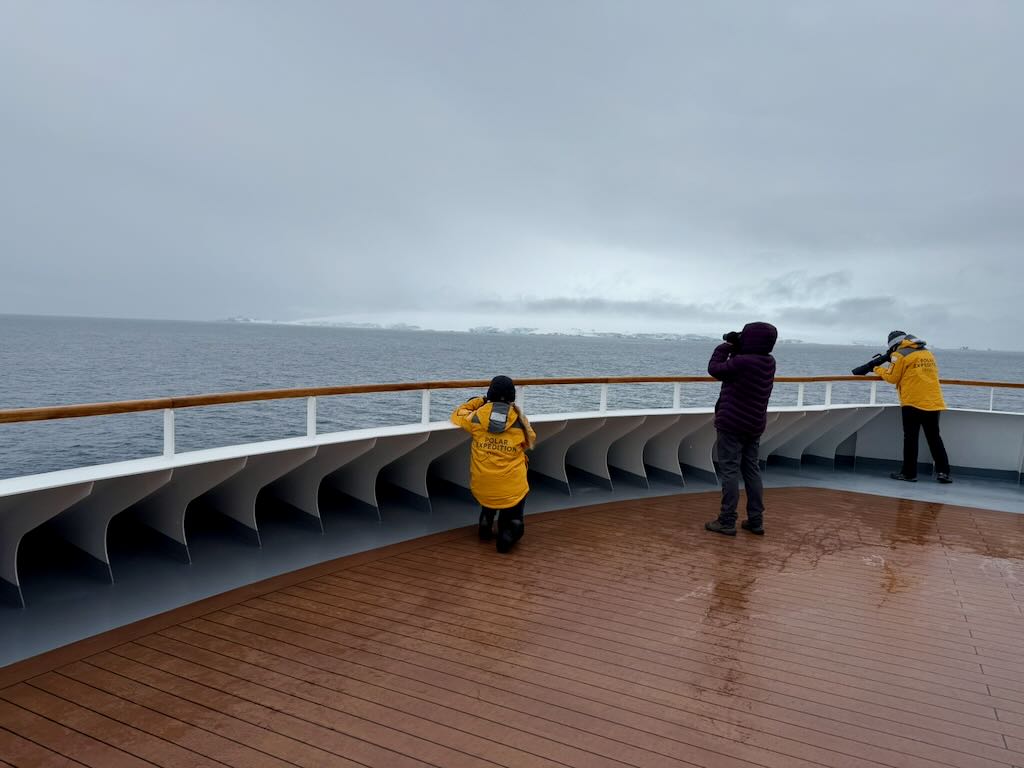
Standing on deck, feeling the ship rise and fall, watching albatross glide past – this is one of the Drake Passage’s unexpected gifts. Our expedition spotted over 30 species of seabirds on the crossing, many found nowhere else on Earth – not in Antarctica, not in the Americas. Only here, in this wild stretch of ocean.

Species we found in the Drake Passage
Our expedition got to see all of these birds in the Drake Passage at least once –
Albatrosses have the largest wingspan of all birds. They glide for hours without flapping, riding wind currents mere feet above the waves
- Wandering Albatross has a 12-foot wingspan, the largest flying bird on Earth.
- Southern Royal Albatross is one of the world’s largest seabirds, with a massive >3-meter wingspan, predominantly white plumage, and a pinkish bill
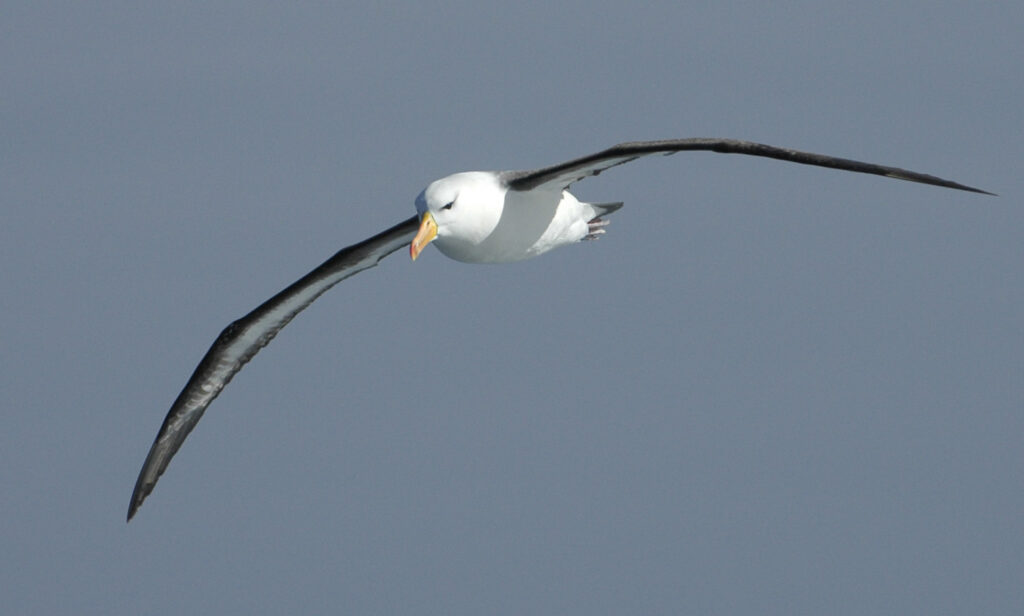
- Black-browed Albatross has a dark “eyebrow” marking and graceful flight
- Grey-headed Albatross has a distinctive grey head, yellow and black bill
- Light-mantled Albatross has an all-over grey coloring, elegant soaring
Petrels are long-winged, tube-nosed seabirds that spend most of their lives in the open ocean, coming ashore only to breed in colonies.
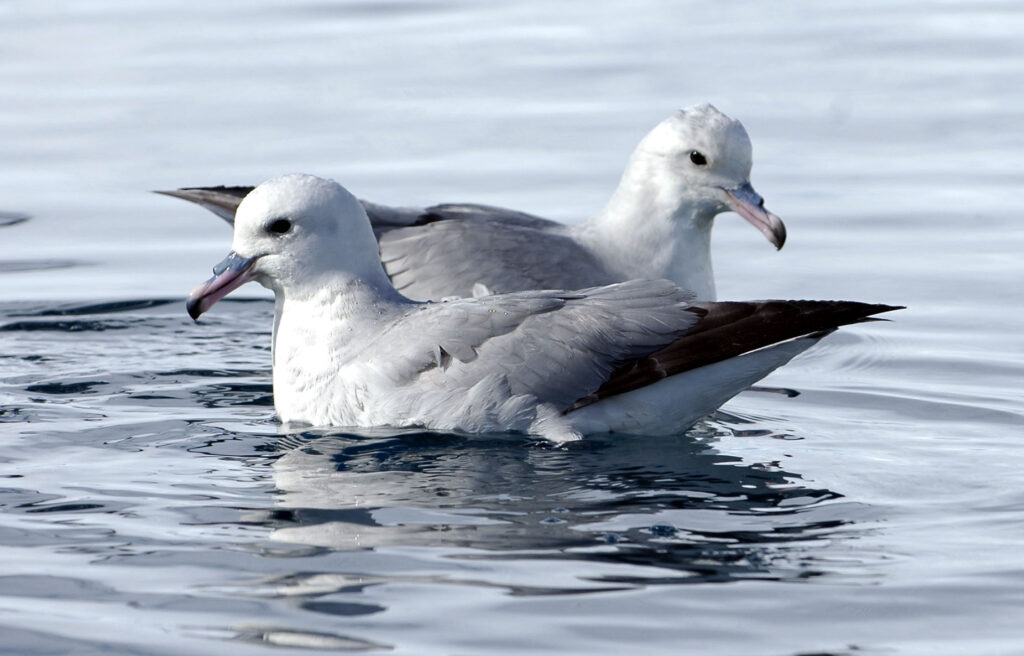
- Southern Fulmar (petrel) is a common, pale grey and white Antarctic seabird. It has a pink-and-black bill.
- Cape Petrels have checkered black and white wings, and common in the Drake
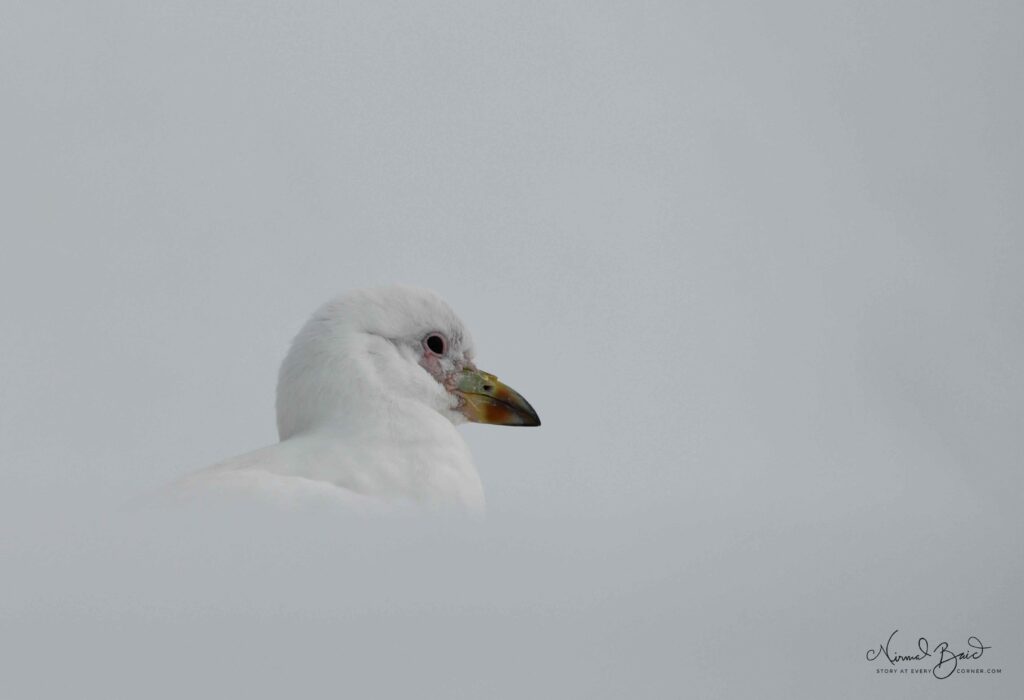
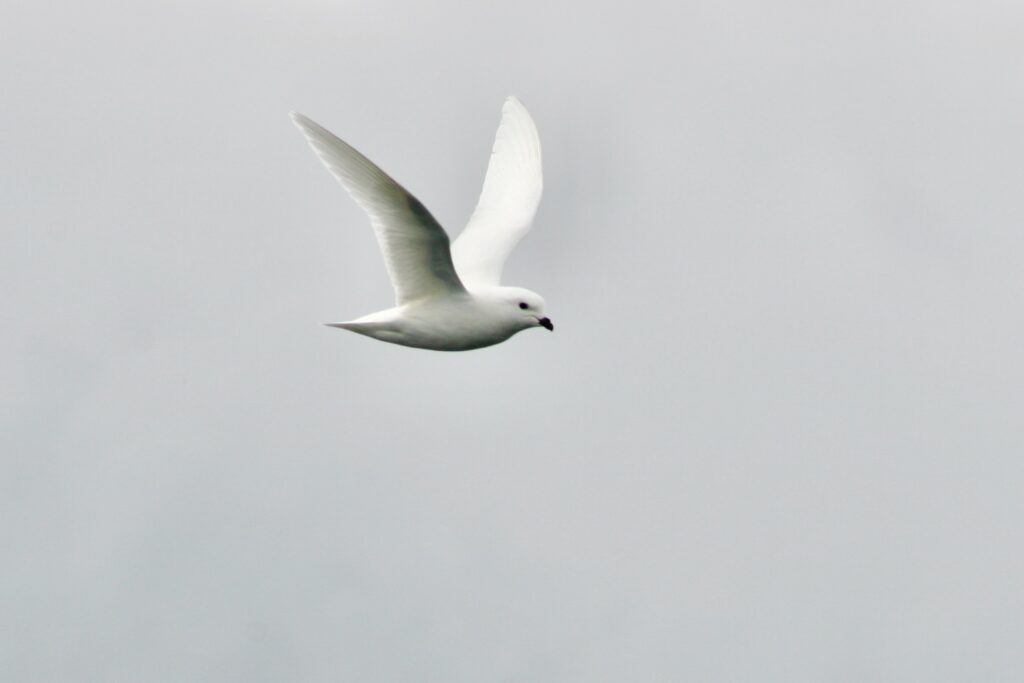
- Snow Petrels are pure white, matching the white background. Found in Drake and closer to Antarctica
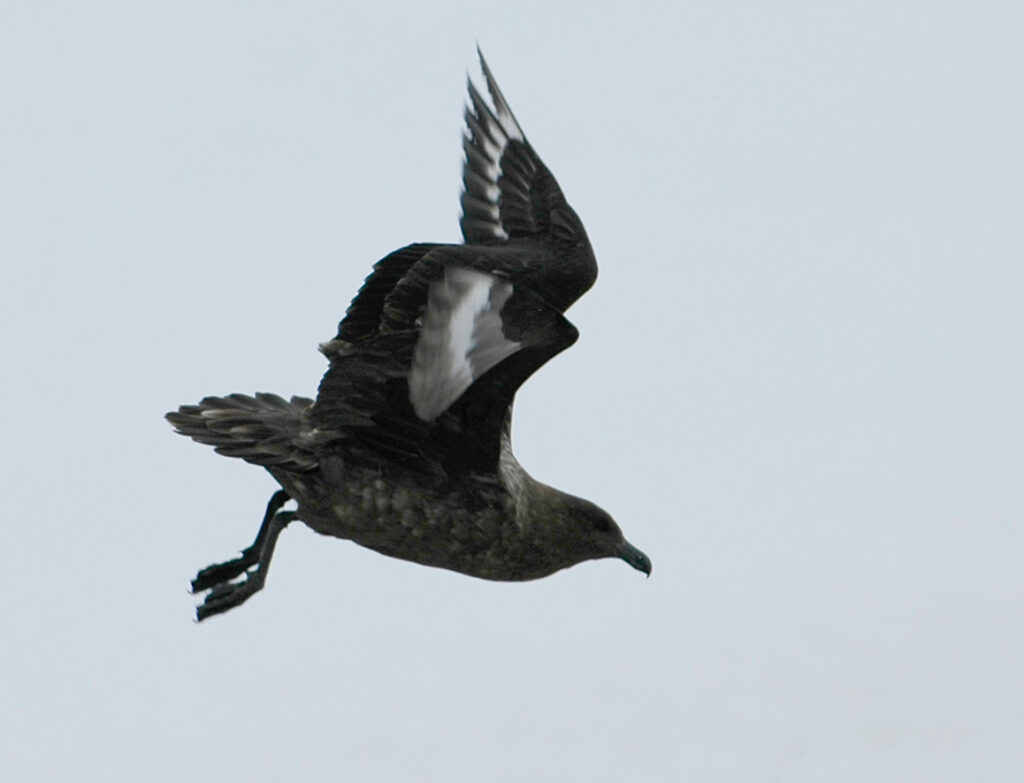
- Southern Giant Petrels are massive seabirds and aggressive scavengers
- Antarctic Petrels are brown and white and found near the ice edge

Other Seabirds:
- Shearwaters (Sooty Shearwater and White-chinned Petrel) – skimming wave surfaces
- Prions (Antarctic Prion, Slender-billed Prion, Blue Petrel) – Small, abundant, difficult to identify from the ship
- Skuas are aggressive predators and pirates
- Storm-petrels (Wilson’s Storm Petrel, Black-bellied Storm Petrel) are tiny birds that appear to “walk” on water
- Diving petrels (Common Diving Petrel)
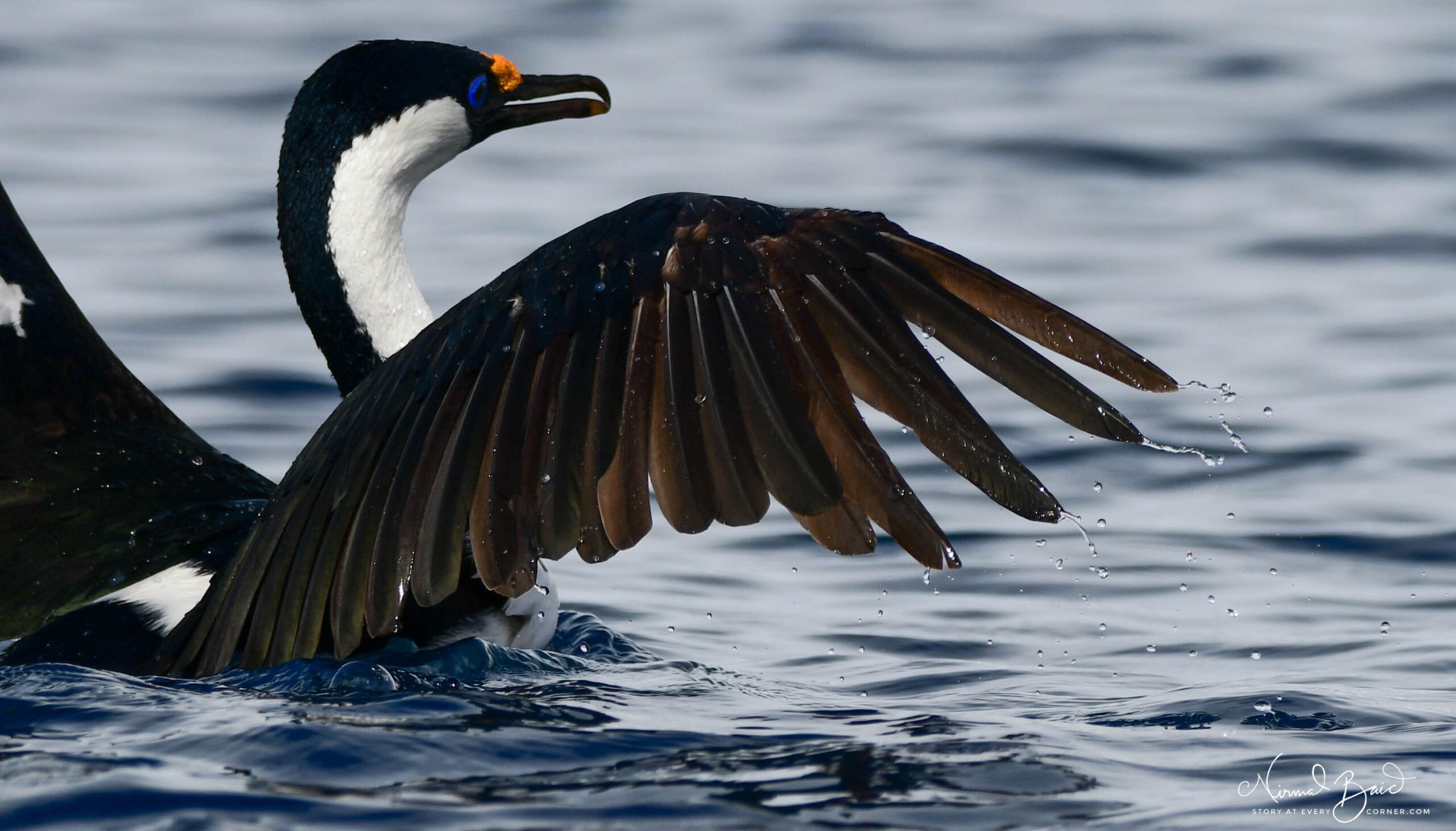
- Shags (Imperial Shag, Rock Shag)
- Other Skuas, Turns, and Gulls
Whales and Dolphins:
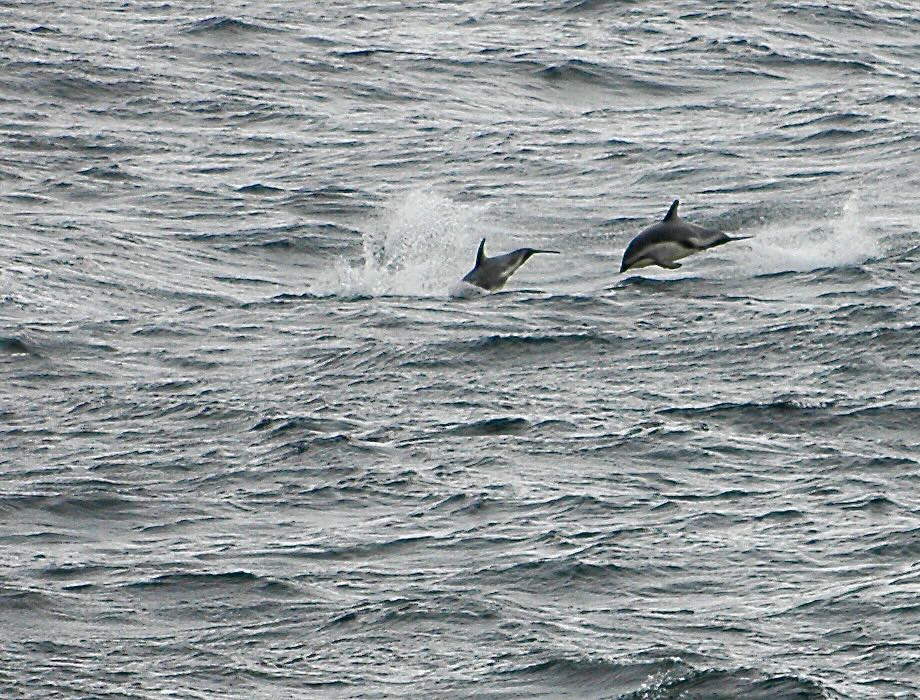
While less common than seabirds, cetacean sightings do occur. We saw some dolphins in peak season in the Drake Passage, but no cetaceans in the early season.
- Humpback whales migrate to/from Antarctic feeding grounds
- Fin whales are fast swimmers, the second-largest whale species
- Sei whales are also occasionally sighted
- Hourglass dolphins have a distinctive black and white pattern, and are Drake Passage specialists
- Peale’s dolphins are nearshore species sometimes seen near Cape Horn
The Wildlife Experience
There’s something profound about watching albatross glide effortlessly over 10-meter swells while you’re gripping railings just to stay upright. These birds evolved for this environment. They thrive in conditions that challenge our most advanced ships.
The Drake Passage isn’t just a crossing. It’s a wildlife sanctuary. The nutrient-rich waters support massive food chains. The confluence of currents creates feeding grounds. This is where Antarctica begins, ecologically, long before you see your first iceberg.
Drake Lake vs. Drake Shake: Statistical Patterns
The Two Faces of Drake
The same 600 miles of ocean has earned two very different nicknames based on conditions:
Drake Lake
- Calm to moderate seas (1-4 meters)
- Glassy conditions possible
- Easy crossing, minimal seasickness
- The ship moves smoothly
- Full programming operates normally
- Passengers are comfortable on deck
Drake Shake:
- Rough to very rough seas (5-10+ meters)
- Heavy swells, wind
- Challenging crossing, widespread seasickness
- The ship pitches and rolls significantly
- Some programming may be cancelled
- Passengers are confined to their suites during the worst conditions
When Are Calmer Crossings More Likely?
Peak season (December-January) statistically sees calmer conditions, though nothing is guaranteed. The Drake Passage is fundamentally unpredictable. Low-pressure systems can move through at any time.
Our Experience
For us, passage through the Drake Passage has been unlike any other experience. We have experienced the entire range of wave experiences over the Drake Passage –
- Late November southbond: 6+ meters. Experienced the full Drake Shake lying in bed
- Early December northbound: This was a full Drake Lake experience. We walked about as if we were still in continental Antarctica
- Late October southbound: 4-6 meters. This was manageable with full programming
- Early November northbound: 2-3 meters. This looked easy, but required medication
There is no saying what we will experience next time or what you will experience.
Read all about visiting Antarctica in different seasons from our personal experiences –
The Reality:
You won’t know which Drake you’ll get until you’re there. Weather forecasts extend 5 to 7 days out, so by departure day, you’ll have a reasonable idea. But conditions can shift mid-crossing. The captain and expedition leader were constantly changing plans to avoid bad weather or take advantage of good weather conditions, as described in our day-to-day itinerary of Antarctica.
Many expedition veterans say you haven’t truly experienced Antarctica until you’ve had both – the Drake Lake that lulls you into calm anticipation, and the Drake Shake that reminds you nature doesn’t care about your itinerary.
Flying Over the Drake: The Alternative

Fly-Cruise Expeditions:
If the Drake Passage crossing is a dealbreaker, whether due to severe motion sickness, limited time, or simply preference, fly-cruise expeditions offer an alternative route to Antarctica.
How It Works:
- Arrive at the Punta Arenas, Chile, airport in the morning and wait for the flight time.
- Fly from Punta Arenas, to King George Island (2 hours)
- Board expedition ship already in Antarctic waters
- Cruise the Antarctic Peninsula (4-5 days)
- Fly back to Punta Arenas
The Advantages:
- Skip the Drake entirely (both directions)
- Maximize days in Antarctica per vacation day
- Avoid seasickness concerns
- Shorter overall trip (7-8 days vs 10-12)
- More time on the Peninsula per day away from home
The Disadvantages:
- Cost: Typically 20-30% more expensive than sail crossings
- Weather dependency: Flights can be delayed or cancelled. Our expedition leader, who ran fly-cruise operations, said weather cancellations and major itinerary disruptions are common. He wouldn’t recommend this option for that reason alone.
- Limited availability: Fewer departures, books up quickly
- Missing the transition: You teleport from Chile to Antarctica in 2 hours
- Shorter total experience: 7-8 days total vs 10-12 days
- No Drake wildlife: You miss the seabird spectacle
- No “earning it”: The psychological journey is part of Antarctica
Who Should Consider Flying:
For travelers with genuine medical concerns about sea crossings, flying may be the only viable option to experience Antarctica. One of our cousins is planning a fly-cruise expedition due to severe motion sickness. She doesn’t think patches and medication would suffice for her.
Our Take:
For most travelers, sailing the Drake is integral to the Antarctica experience. But if motion sickness is severe enough to ruin the entire expedition, flying makes sense. Better to see Antarctica via air bridge than to suffer through the Drake and arrive too miserable to enjoy the destination.
Why the Drake Passage Matters
The Psychological Journey:
Many expeditioners, including us, come to see the Drake crossing as integral to the Antarctica experience. There’s something profound about two days at sea, watching albatross glide past, feeling the ship rise and fall, leaving civilization behind.
The roughness tests you, yes. But it also prepares you.
The Gradual Transition:
Antarctica isn’t meant to be reached instantly. The Drake creates a buffer, a decompression zone where lectures orient you, safety briefings prepare you, and the ocean itself shifts your mindset from everyday concerns to focused presence.
By the time you sight your first iceberg, you’ve earned Antarctica in a way that flying cannot replicate.
The Moment of Arrival:
I will forever remember standing on deck, watching the albatross, petrels, and shearwaters – 30+ different seabird species, many of which exist only on the Drake Passage. There was something magical about dozens of us standing there together, feeling the air temperature change as the water temperature plummeted, watching the first icebergs slowly come into view.
That’s when we knew we had crossed the natural barrier and arrived in the realm of the southern continent – Antarctica.
You can’t get that moment from a plane window.
The Ecological Gateway:
The Drake Passage isn’t just a geographical crossing. It’s an ecological transition zone. The Antarctic Convergence, where cold Antarctic water meets warmer sub-Antarctic water, typically occurs within the Drake Passage.
Cross this line, and everything changes:
- Water temperature drops several degrees
- Sea color shifts to deeper blue
- Ice appears
- Antarctic species replace sub-Antarctic species
- The air feels different
This isn’t arbitrary. It is the biological boundary of Antarctica. Biologically and geologically, the continent begins here, not at the shoreline.
Planning Your Drake Passage Crossing
Best Time for Calmer Conditions:
December-January (peak Antarctic summer) statistically offers the best chance for calmer crossings, though the Drake is never guaranteed calm. Even in peak season, expect 3-5 meter swells as normal conditions.
What to Pack:
- Seasickness medication (start 12-24 hours before departure)
- Warm layers for deck time (wind chill is significant)
- Binoculars for seabird watching. Our deck also has binoculars to borrow.
- A camera with a telephoto lens for seabird photos
- Books or entertainment for cabin time if conditions are rough. Our ship had a library and books for sale.
- Snacks likeginger candies, crackers, easy-to-digest items
How to Prepare:
- Consult your doctor and the ship’s doctor before departure
- Start the medication regimen before sailing. Don’t wait for symptoms
- Choose cabin location carefully. The lower center suites has the least motion sickness
- Plan to be flexible. Programming may change based on conditions.
- Embrace the uncertainty. It is part of the Antarctica adventure in any season.
What to Expect Onboard:
Modern expedition ships handle the Drake Passage well:
- Stabilizers reduce roll significantly
- Medical facilities with seasickness remedies
- Experienced crew who’ve crossed the Drake many times
- Programming – lectures, briefings, films to prepare
- Observation decks for wildlife viewing (when safe)
- Flexible scheduling to adapt to weather conditions
Drake Passage by Season
October-November (Early Season)
- Rougher conditions are more likely
- Plenty of daylight for seabird watching
- Stunning sunsets depending on the cloudy conditions
- Sea ice may still be present near Antarctica
- Fewer ships, although I’m not sure if it matters on the Drake
- Our experience: 4-6 meters southbound, 2-3 meters northbound
December-January (Peak Season)
- Statistically calmer conditions (but never guaranteed)
- 24-hour daylight near Antarctica
- Most expedition departures
- Still expect 3-5 meter swells as normal
February-March (Late Season)
- Increasing variability
- Daylight decreases especially in March
- Excellent whale sightings in the Drake waters
- Weather starts becoming less stable
The Truth:
Seasonal patterns are real but not reliable. The Drake Passage generates its own weather and doesn’t follow predictable calendars. You might get Drake Lake in October or Drake Shake in January. The only certainty is uncertainty.

Frequently Asked Questions About the Drake Passage
How long does it take to cross the Drake Passage?
36-48 hours each way, depending on ship speed and conditions. Faster ships (12-14 knots) cross in 36-40 hours. Slower or weather-delayed crossings can take up to 48 hours. You’ll cross twice. Once southbound to Antarctica and once northbound returning to South America.
Is the Drake Passage the roughest ocean?
The Drake Passage is among the roughest regularly traveled ocean passages. Other contenders include the North Atlantic in winter and passages around Cape Horn. But the Drake’s combination of fetch (unobstructed distance), strong currents, and convergence of three oceans makes it uniquely challenging.
Can you avoid the Drake Passage?
Yes, via fly-cruise expeditions from Punta Arenas, Chile. You fly 2 hours to King George Island and board the ship in Antarctic waters. Trade-offs include higher cost, weather-dependent flights, and missing the crossing experience.
What happens if conditions are too rough?
Ships wait in Ushuaia for conditions to improve rather than departing into dangerous seas. Most won’t sail if waves exceed 7 meters at Cape Horn. Once underway, the captain may alter course to avoid the worst conditions or reduce speed for safety.
How big are the waves in the Drake Passage?
Typical conditions: 4-7 meters (13-23 feet). Storm conditions: 10-15+ meters (33-50+ feet). Each of our crossings has been different – 6+ meters, 4-5 meters, 2-3 meters, and Drake Lake.
When is the Drake Passage calmest?
December-January statistically sees calmer conditions, though nothing is guaranteed. Even in peak season, expect 3-5 meter swells. The Drake Passage is fundamentally unpredictable.
Do you see wildlife on the Drake Passage?
Yes! Over 30 seabird species, including albatross, petrels, shearwaters, and more. Whales and dolphins are occasionally sighted. Many species are found only on the Drake, not in Antarctica or South America. The seabird watching can be spectacular.
Will I get seasick on the Drake Passage?
Many people do, even in moderate conditions. Start medication 12-24 hours before departure. Choose cabins on lower decks near the ship’s center. Some crew and guests on our ship took no medication and were fine while others suffered despite seasickness pills.
Why is the Drake Passage important?
Ecologically, it’s where three oceans meet, driving nutrient upwelling that sustains Southern Ocean life. Historically, it was the primary route between the Atlantic and Pacific before the Panama Canal. For Antarctica travelers, it’s a psychological gateway. The crossing prepares you and makes you earn the destination in a way that flying cannot replicate.
How does the ship’s stabilizer work?
Modern expedition ships have fins that extend from the hull below the waterline. These stabilizers automatically adjust to counteract roll (side-to-side motion). They significantly reduce but don’t eliminate motion in rough seas.

The Drake Passage: Final Thoughts
The Drake Passage is Antarctica’s gatekeeper. 600 miles test your resolve, humble your ambitions, and ultimately deepen your appreciation for the continent beyond.
It’s where three oceans meet and fight. Where winds scream unimpeded across water. Where albatross reign, and icebergs first appear on the horizon. Where 10,000+ sailors lie beneath the waves, and where modern ships still wait for permission to pass.
After four crossings – calm and rough, medicated and not, southbound and northbound, I can tell you this: the Drake Passage is not something to “get through.” It’s something to experience.
Will it be rough? Probably.
Will you get seasick? Maybe.
Will you question your decision? Possibly.
Will you remember it forever? Absolutely.
Because by the time you stand on deck watching the first icebergs appear, feeling the air change, knowing you’ve crossed one of Earth’s most formidable barriers, you won’t be thinking about the seasickness or the rough waves or the two days at sea.
You’ll be thinking: I earned this. I’m here. This is Antarctica.
And that moment, that magical, hard-won moment, is worth every wave.

Ready to plan your Antarctica expedition? Read our complete guide to choosing the best time to visit Antarctica based on wildlife, weather, and your personal priorities, or explore our day-by-day Snow Hill and Antarctic Peninsula itinerary for detailed planning.
Last Updated on February 19, 2026 by Jyoti Baid
More Antarctica Articles