
Last Updated on February 22, 2026 by Jyoti
There are wildlife moments you hope for, and then there are moments you don’t quite allow yourself to believe will happen, because believing feels like tempting fate. Meeting Emperor penguins was clearly in the second category.
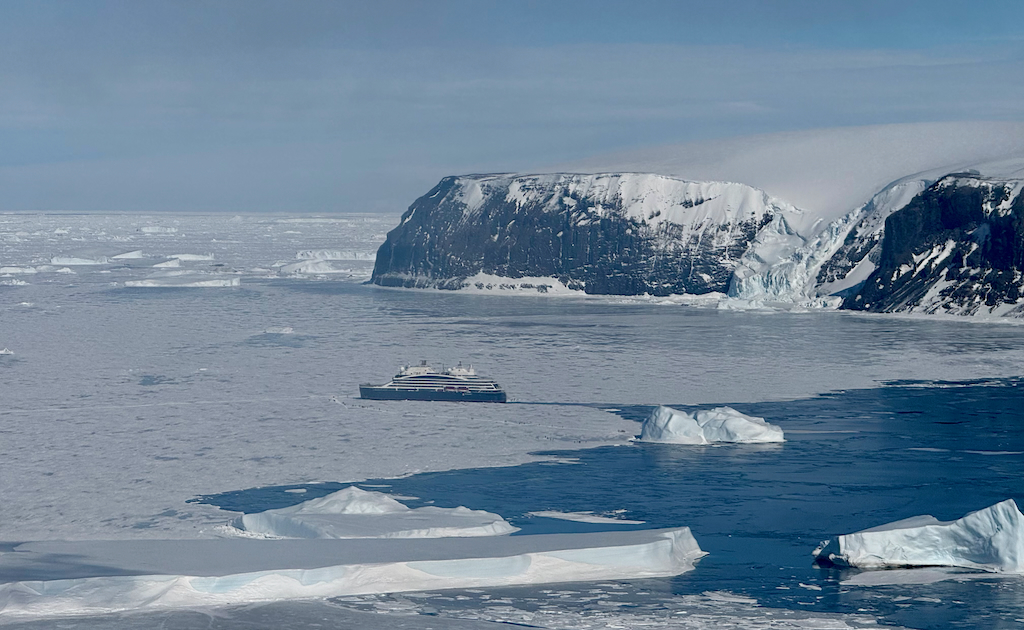
Snow Hill Island, deep in the Weddell Sea, is one of the most accessible Emperor penguin colonies, yet one of the hardest places to reach on Earth. Ice conditions change constantly. Winds can ground helicopters for days. In some seasons, no expedition reaches there. The year before ours, none did.
So when our ship turned south, and the word Snow Hill began appearing in briefings, excitement brewed beneath the surface, tempered by caution. No one took it for granted. Not the crew. Not the expedition leader. And certainly not us. “Stay agile” was the mantra on board.
This Snow Hill landing was part of a rare, helicopter-supported Antarctica expedition. You can see the full day-by-day Antarctica expedition itinerary, including the Weddell Sea, Antarctic Peninsula, and all landings.
Contents
Antarctica Decides: Entering the Weddell Sea
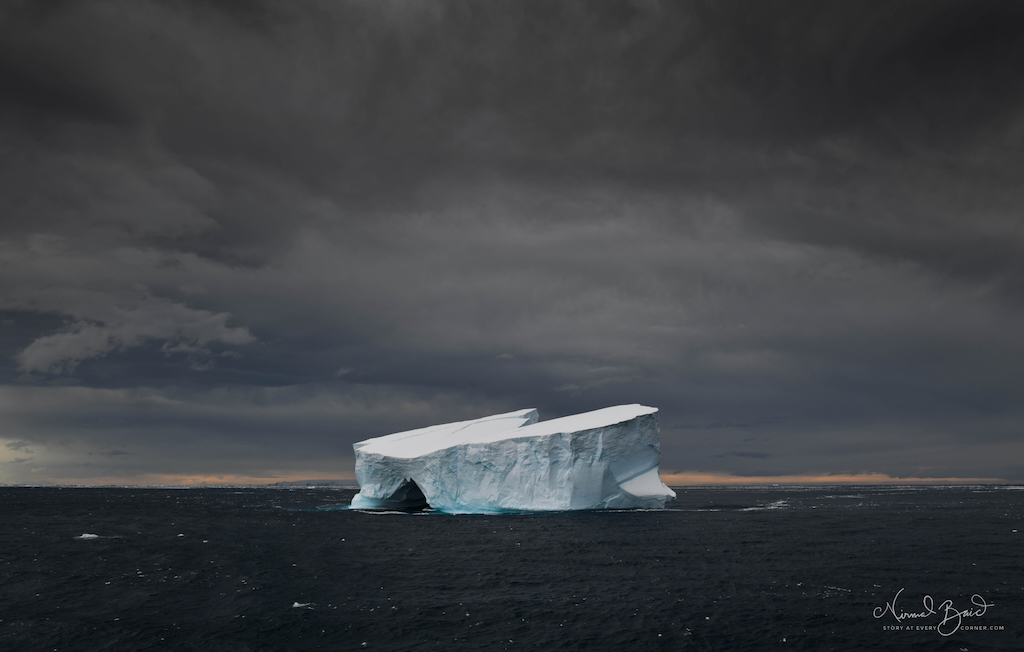
If the Antarctic Peninsula feels dramatic and alive, the Weddell Sea feels action-packed, an ice dance choreographed to enchant. It also holds iconic stories of valor, like the legendary Shackleton expedition. An attempt trapped and locked in by shifting ice for two years! Antarctica decides.
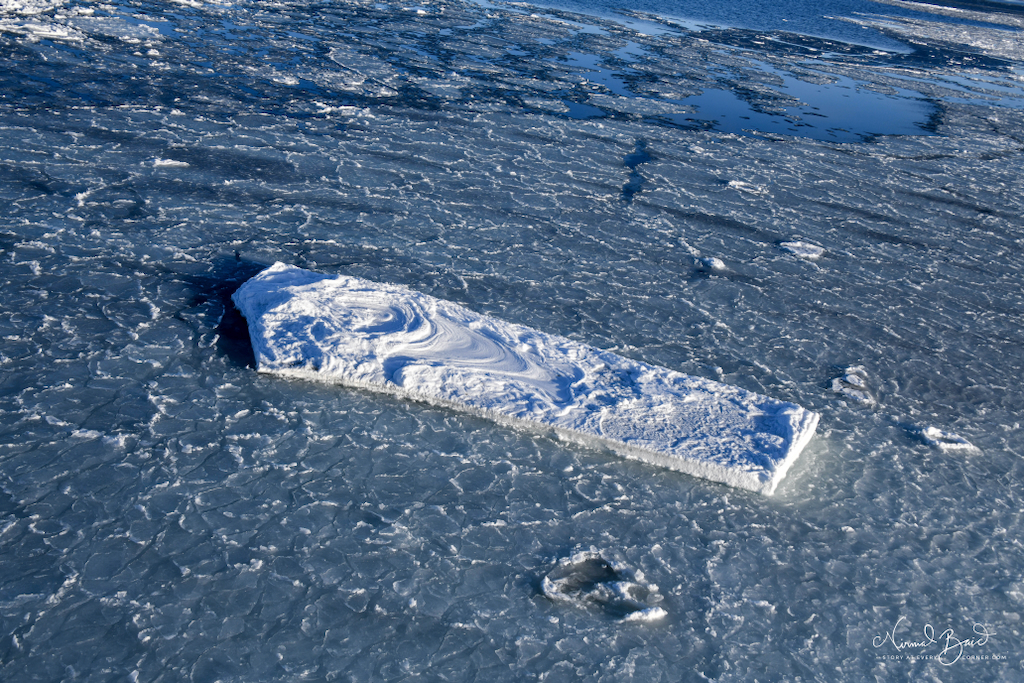
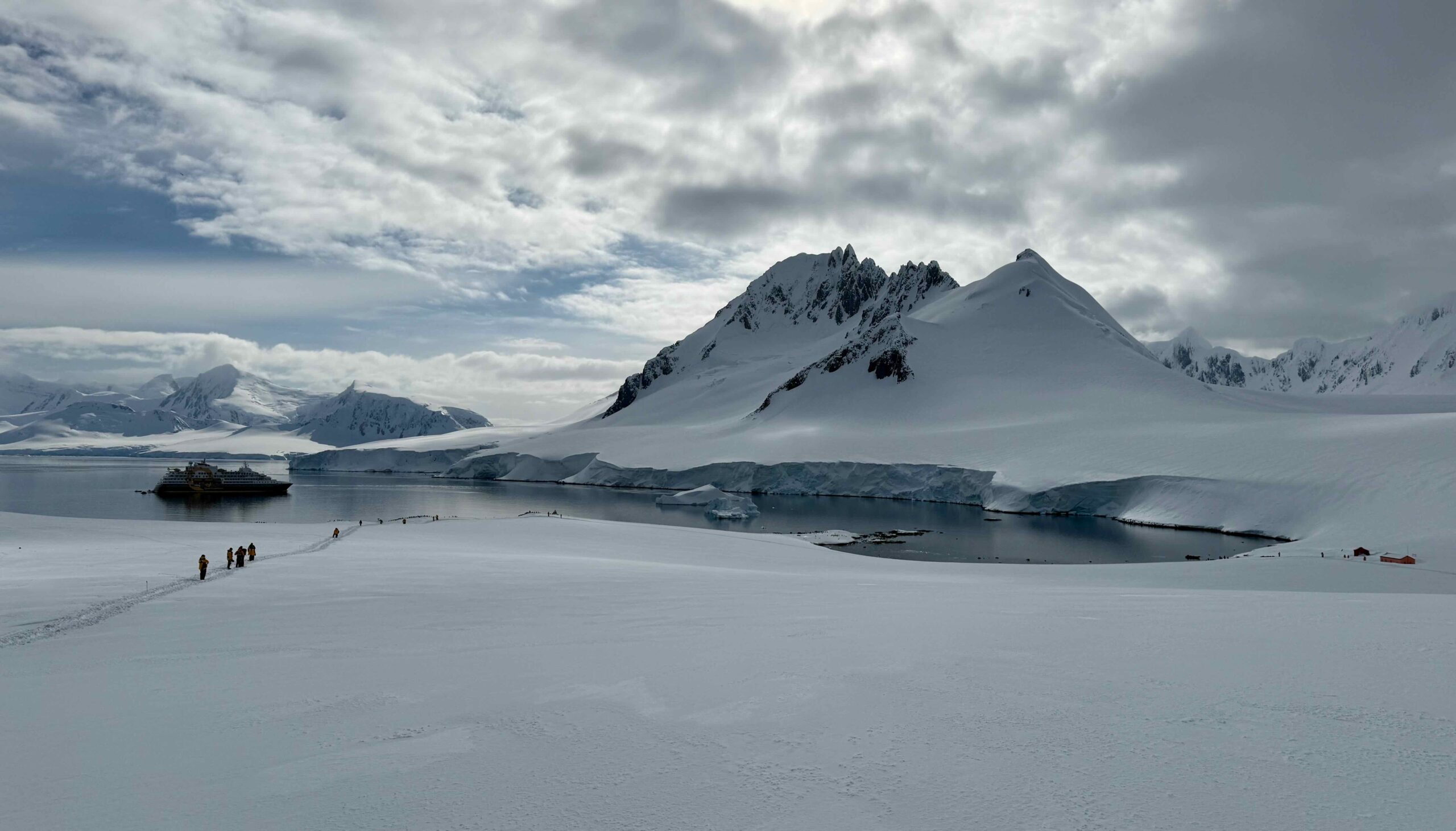
From the island, ice stretches outward in every direction, forming mosaics of ice, dramatized with light and space. This is the edge of fast ice – sea ice that’s been fastened to land for over a year, and it is here that Emperor penguins arrive to breed. They arrive in the brutal Antarctic autumn, find stable fast ice, endure the darkest and coldest months on Earth, and raise their chicks through winter until they are ready to swim in early summer.
It is an improbable reality that defies all odds of survival.
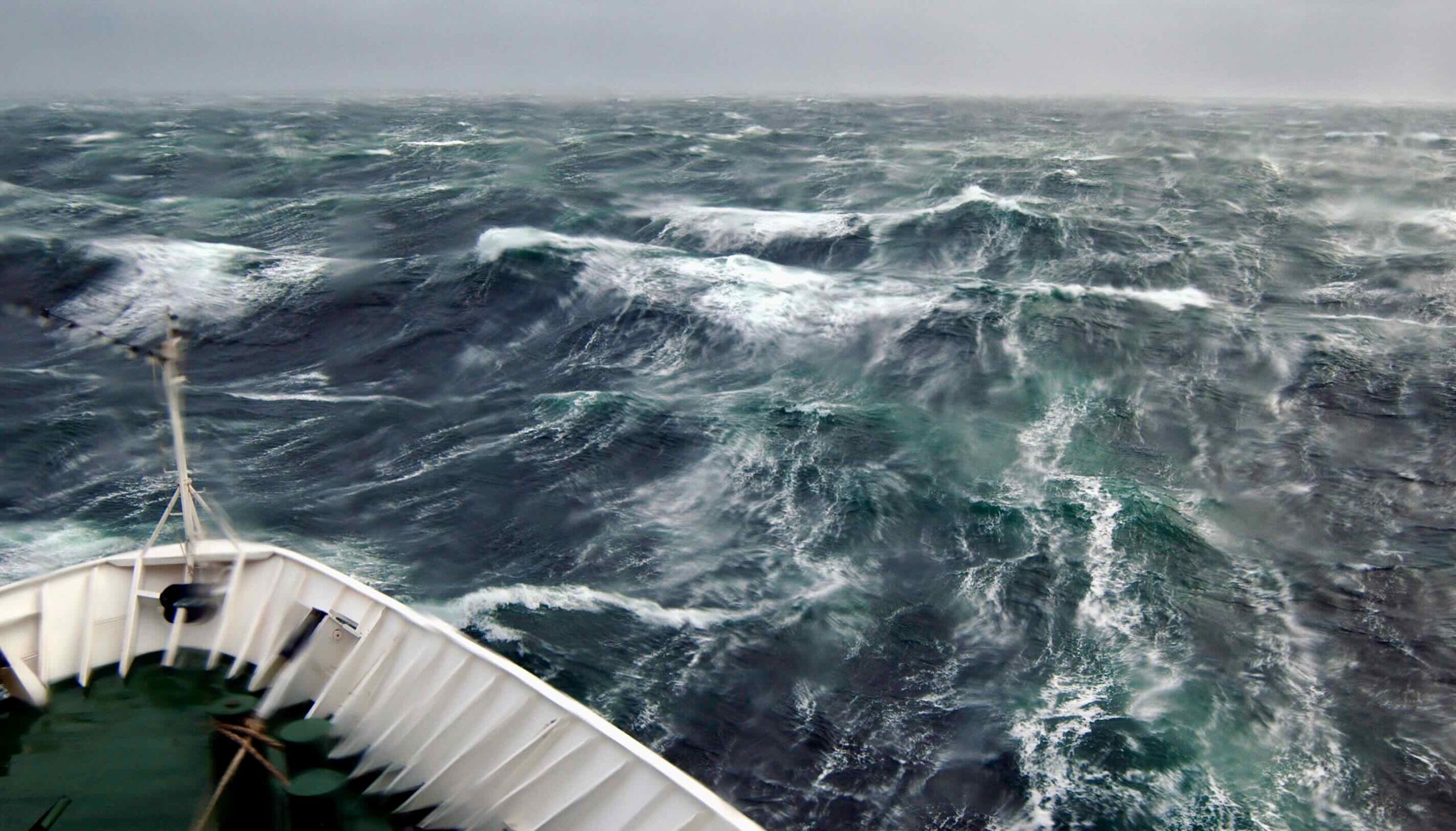
Our visit isn’t guaranteed either. Everything depends on the weather. And the extreme weather in Antarctica answers to no one.
The Longest Night
The night before our planned visit, almost no one slept.
Briefings ran late as the expedition team reviewed wind charts, satellite images, and ice conditions. Helicopters had been grounded earlier due to high winds. Plans shifted. Wake-up times moved. The margin for error shrank.
By evening, we were told to be ready for a 4 am start. Stay Agile was the mantra.
We laid out our layers with care: thermal base layers, wool, dry suits, parkas, balaclavas, gloves, socks, shoes, sunglasses, and electronics fully charged. Everything was checked and rechecked. There was a quiet seriousness to it – not fear, exactly, but respect. Snow Hill is never guaranteed.
Outside, the ship sat locked in ice under a low, restless sky.
First Light, First Flight
At 4 a.m., the announcement came. “Ladies and Gentlemen, Good morning. Goooood morning. Overnight Ultramarine… Outside temperature is…” You could hear the excitement in Ryan’s voice.
Breakfast. Helicopter operations pending. We were ever so close to our goal.
The crew was already ahead of us, flown out in darkness to assess ice thickness, locate the colony, mark safe routes, and establish a landing zone. Only when everything is confirmed would passengers be allowed to follow.

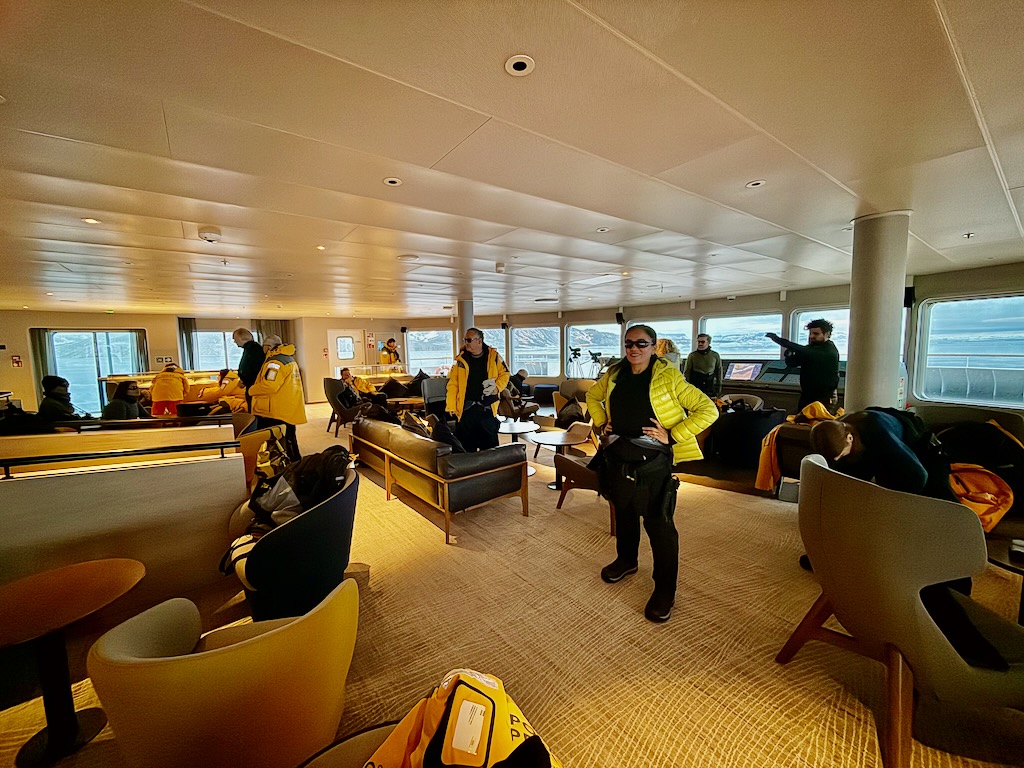
When our group, the Albatross, was finally called, the atmosphere shifted instantly. We moved with practiced calm, layering up, checking gear, and boarding in small groups.
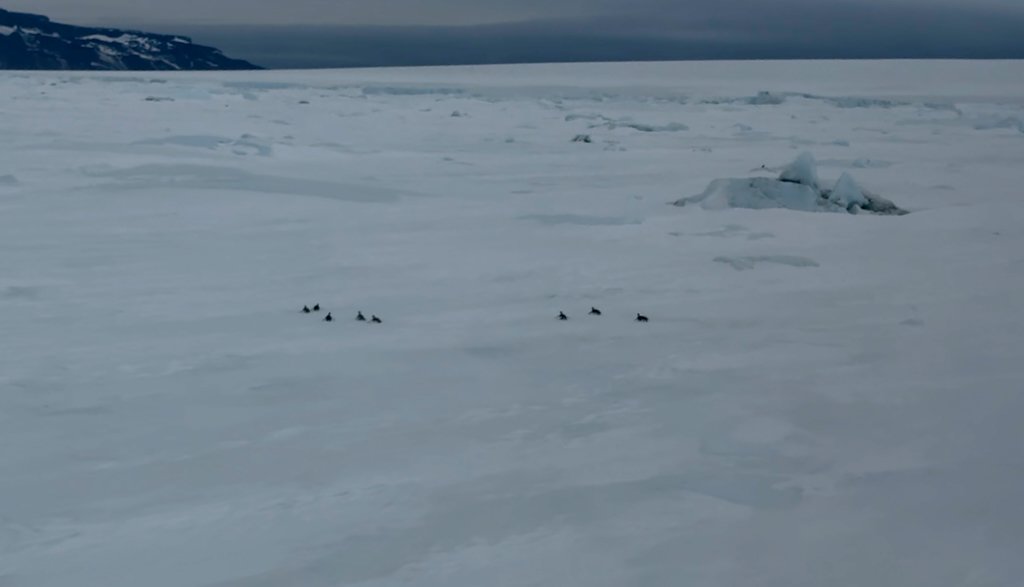
The helicopters were warm inside, designed for safety, efficiency, and comfort. As we lifted off, Antarctica unfolded beneath us – ice in every shade of white and blue, cracks glowing turquoise, shadows stretching long across the frozen sea.
Then, below us, movement!
Arrival at the Colony
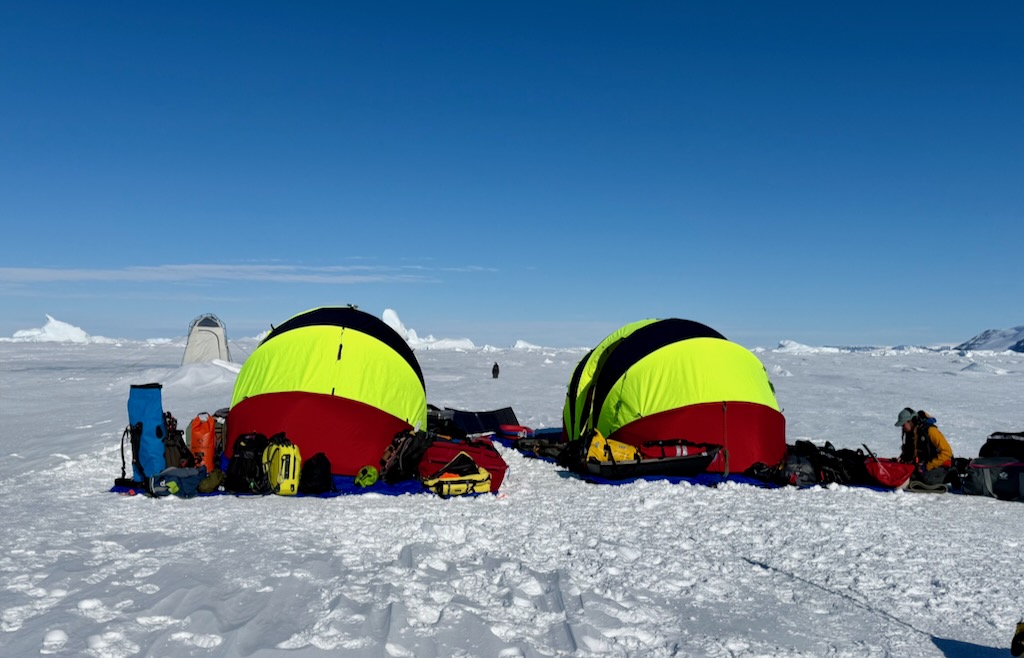
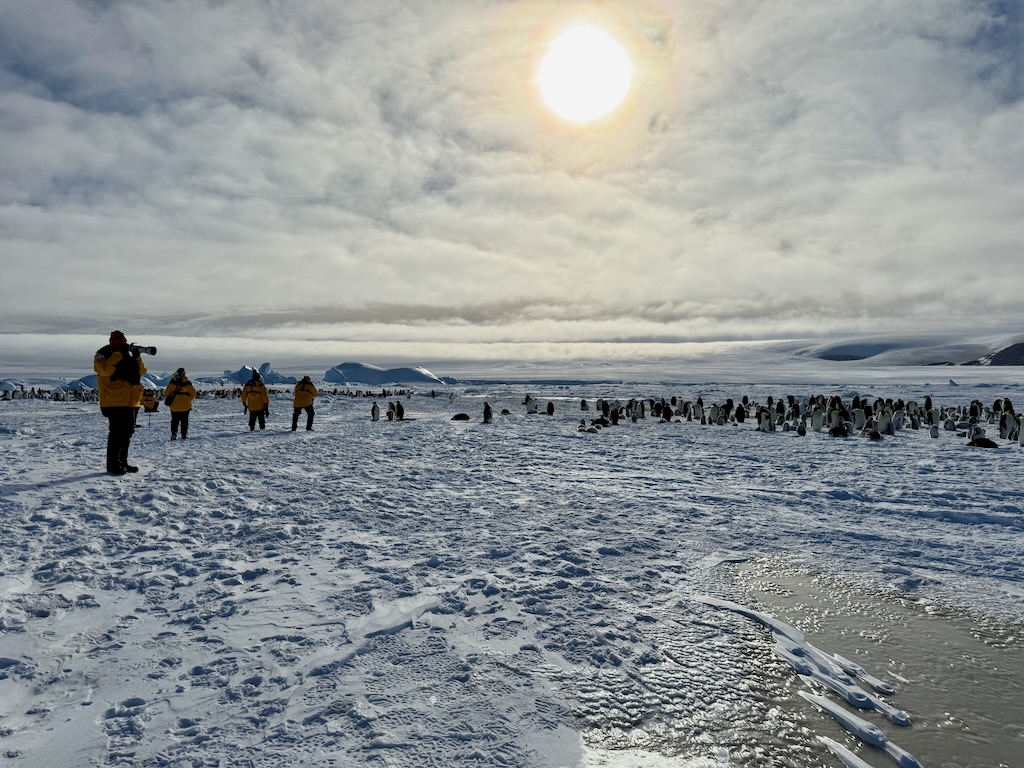
The landing was quiet. No applause. No cheering. Just hearts pounding louder than the helicopter blades.
We were given clear instructions: follow the flagged route, don’t stop for single penguins, and return by the designated time. Emperor penguins have places to be; back off if they get curious. Feeding chicks is not optional, and our presence had to interfere as little as possible.
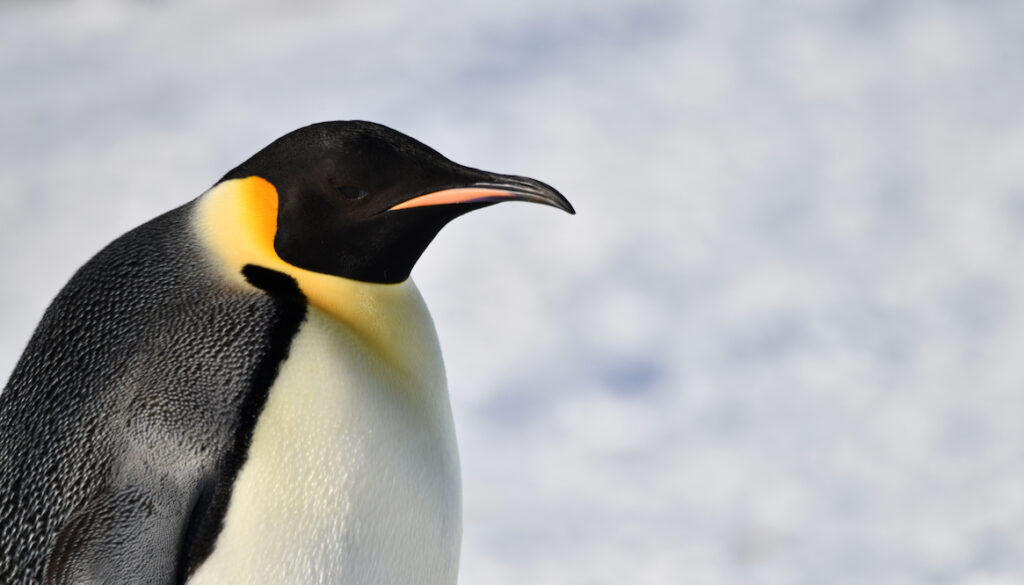
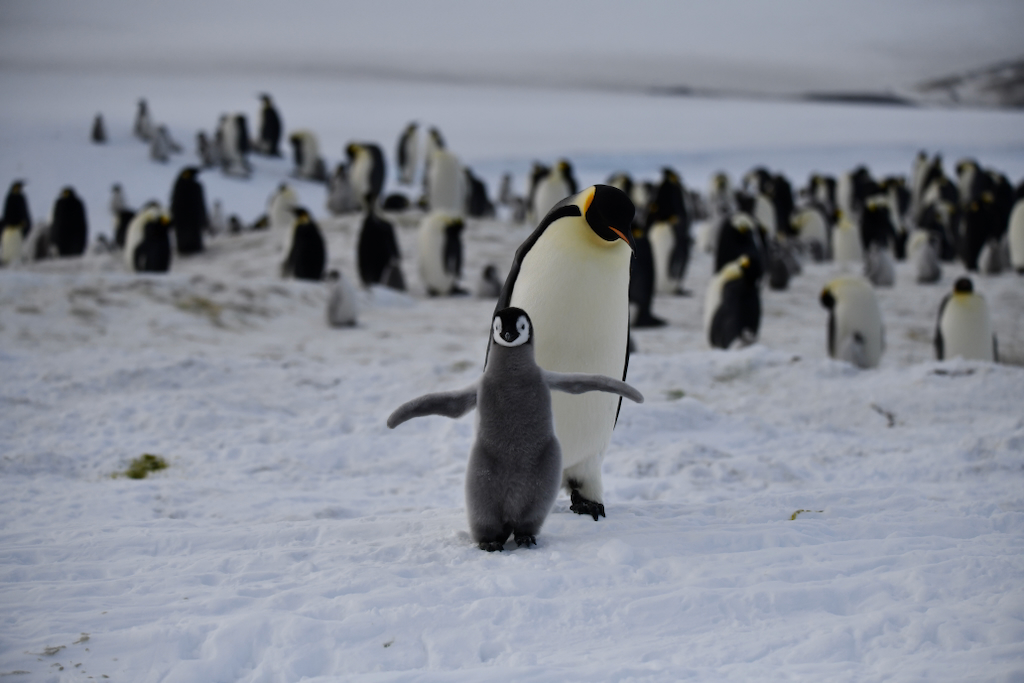
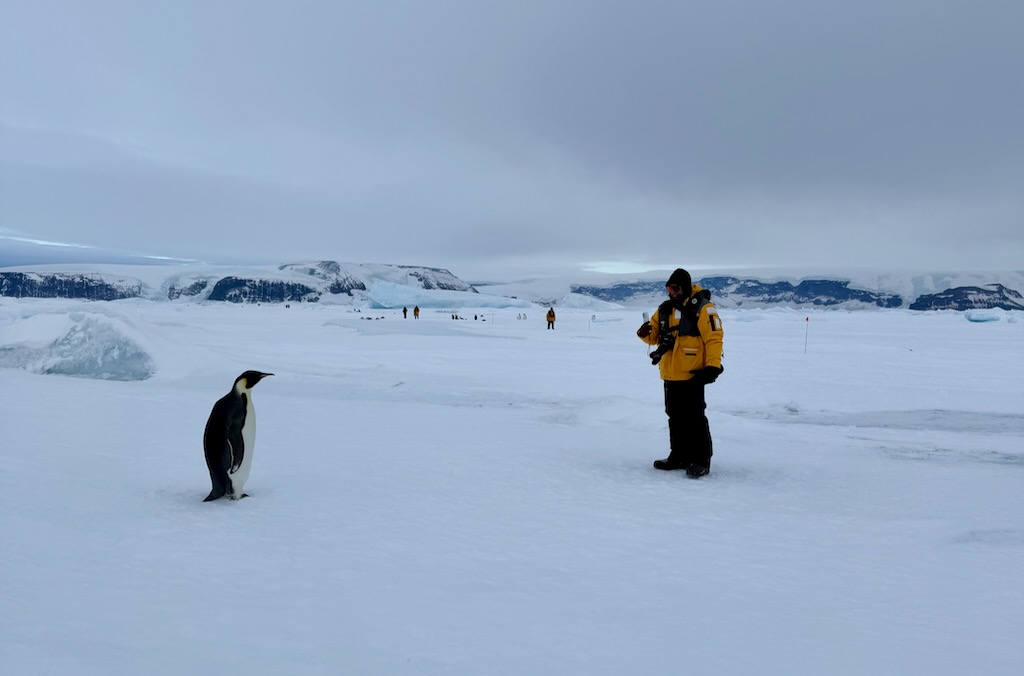
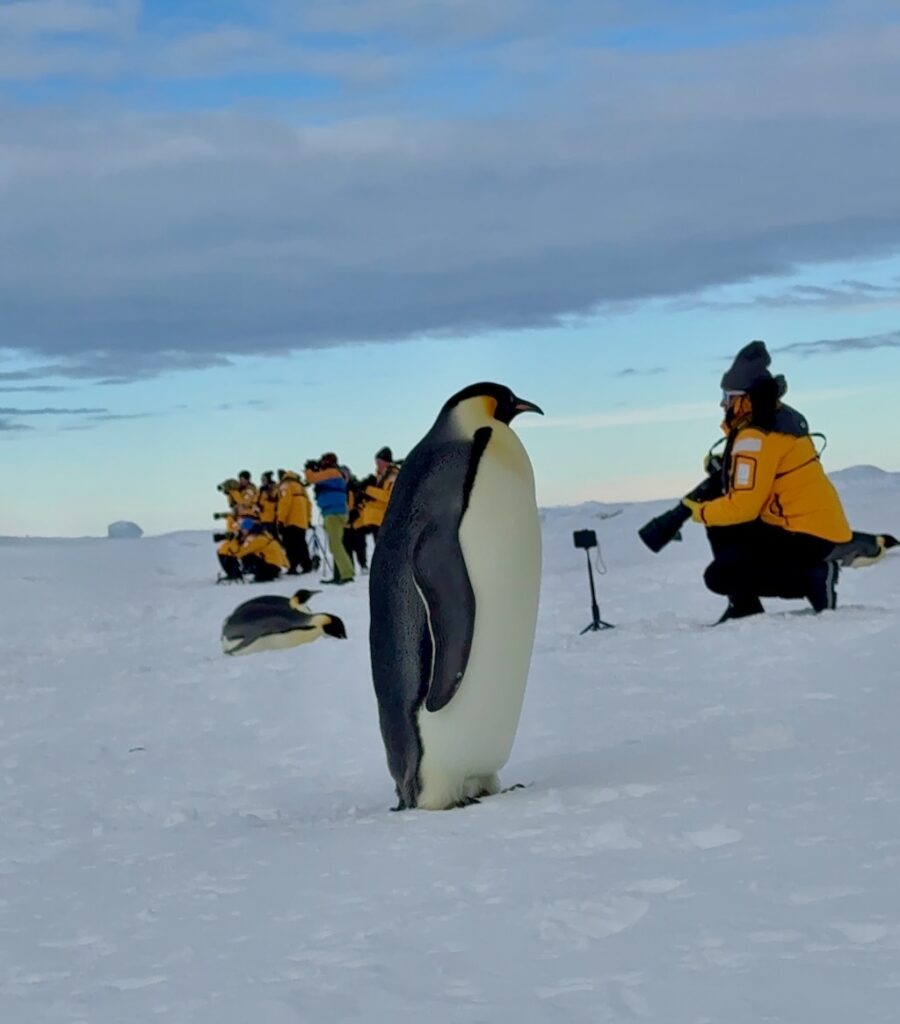
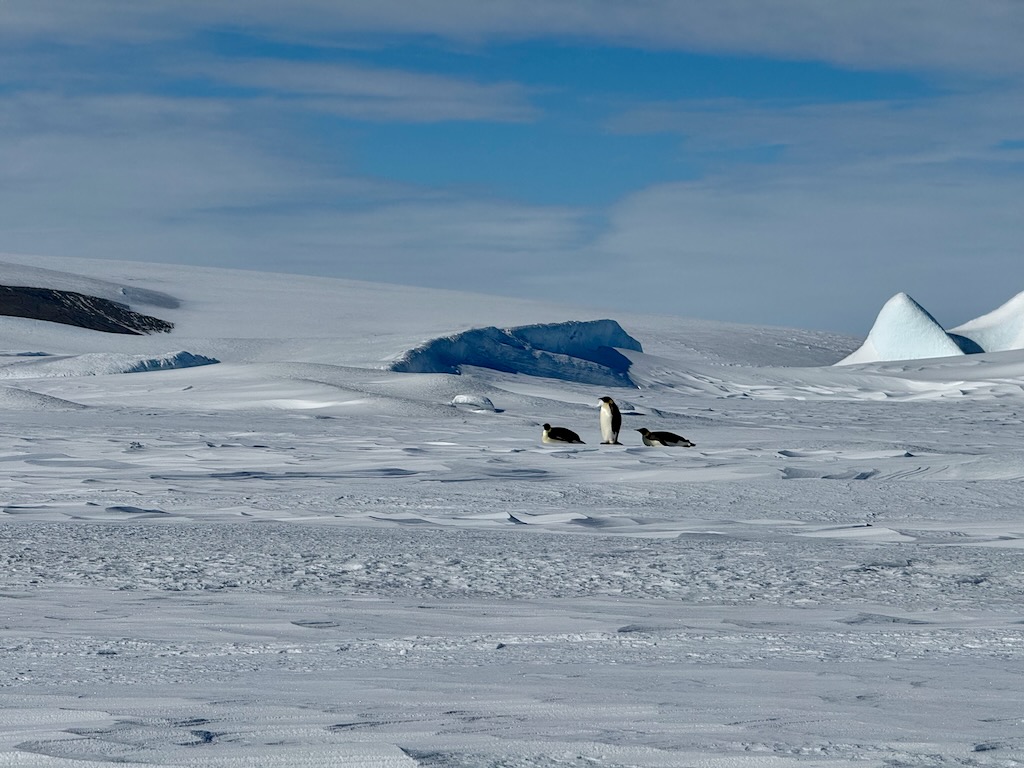
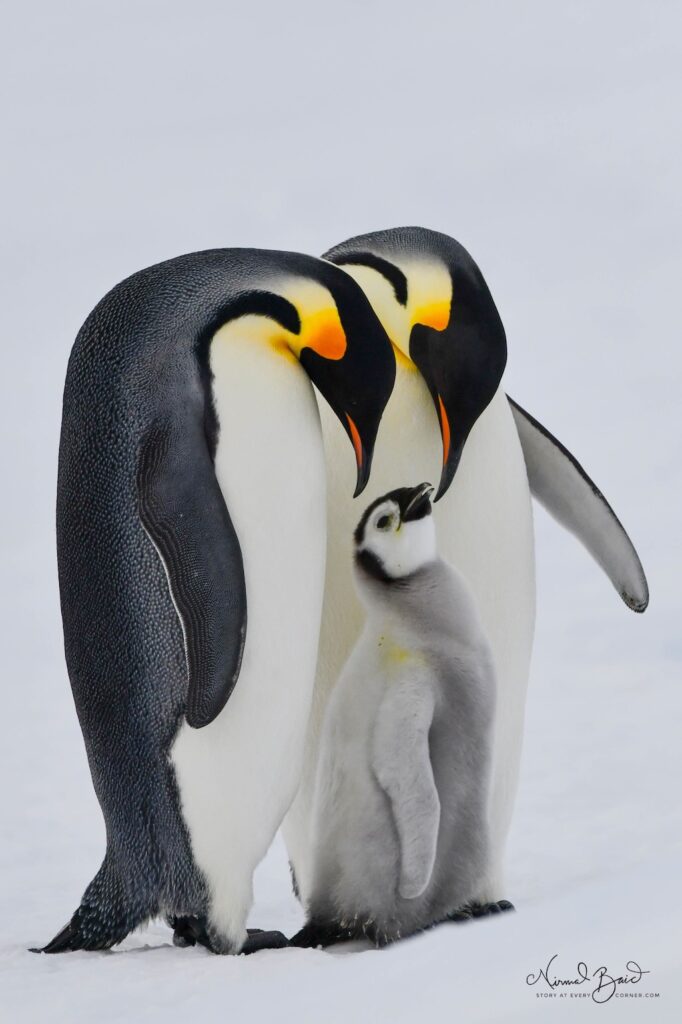
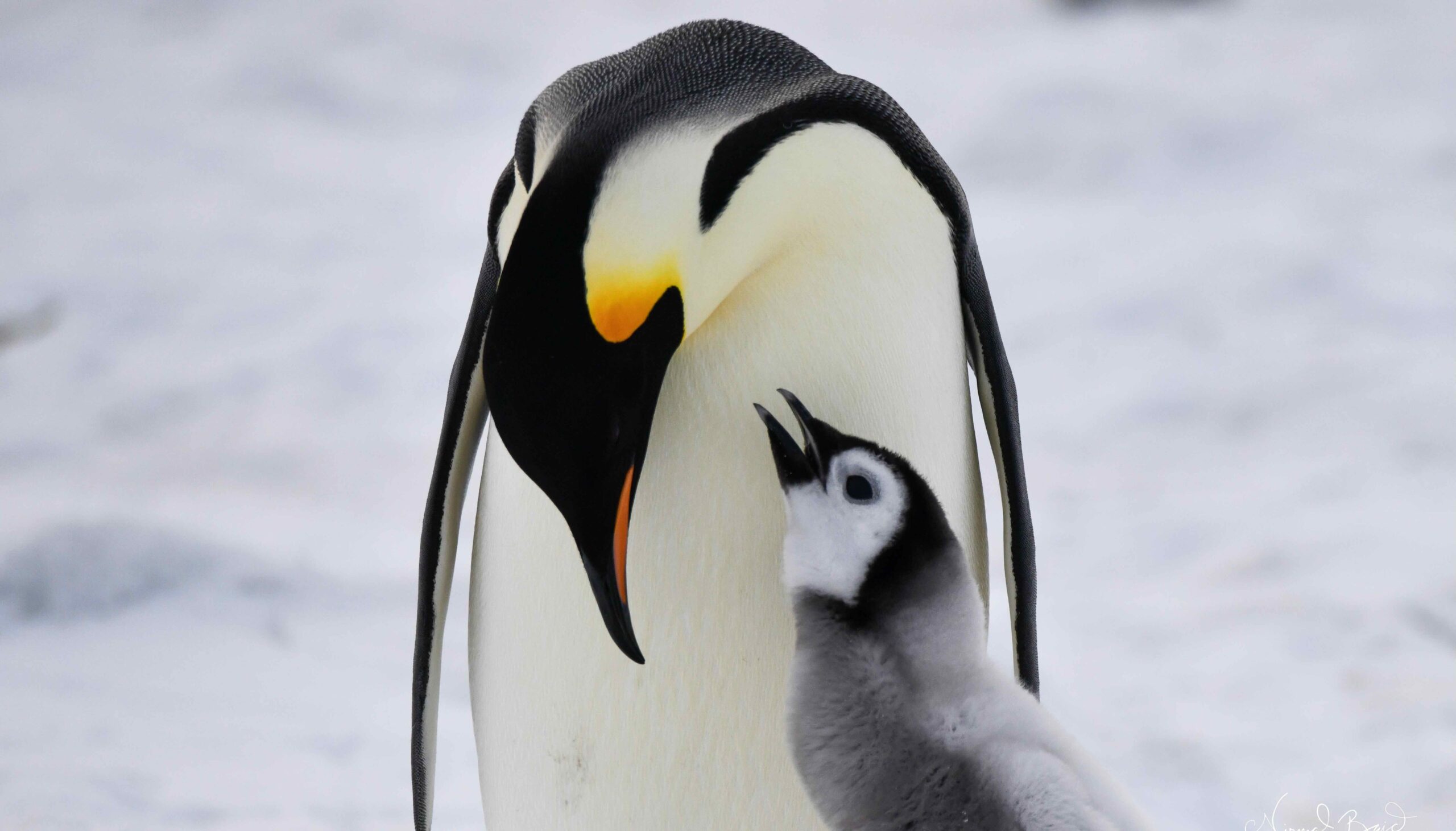
And then, almost immediately, they approached us. A small group of Emperors waddled forward, curious, upright, unhurried. Their posture mirrored ours so closely it was impossible not to smile. Black backs, white chests, soft yellow markings – far more vivid than photographs suggest.
It felt less like observing wildlife and more like being cautiously inspected.

Life Inside an Emperor Penguin Colony
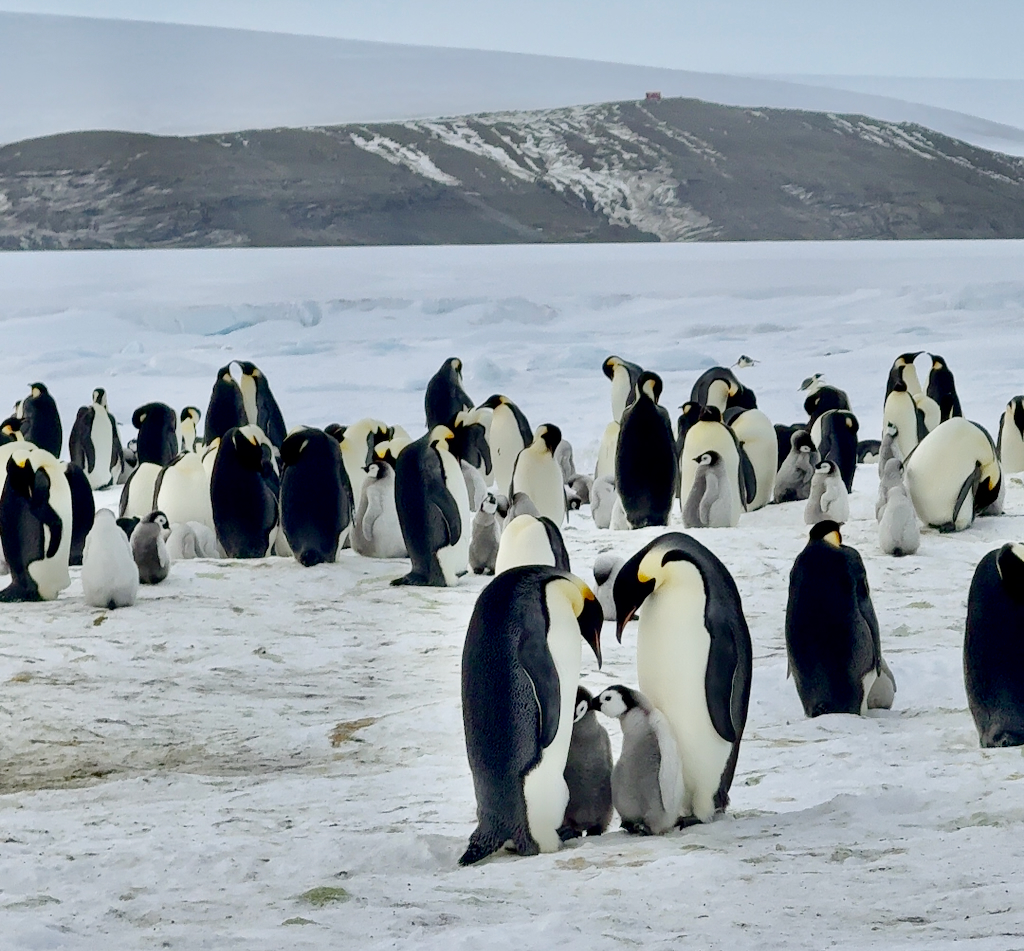
By early November, the Snow Hill colony had spread into several smaller groups. Some clusters held more chicks than others, but all were alive with a sound – joyous cacophony of calls between parents and young, constant movement, and an undercurrent of purpose.
Emperor penguins are the largest penguin species on Earth, standing up to four feet tall and weighing over 40 kilograms. They are uniquely adapted to survive Antarctic winters, with densely packed feathers, thick fat layers, and the ability to slow their metabolism during fasting.
Males endure the harshest stretch. After females lay a single egg, they transfer it to the male’s feet and leave for the sea. For over two months, males incubate the egg through darkness, storms, and temperatures that can drop below –50°C.
Standing among chicks already growing strong, it was impossible not to think of what it took to get them here. But it was easy to forget the labor in the playfulness of the chicks.
Emperor Penguin Fun Facts
Penguins have fascinated humans for centuries. A few brave scientists and photographers have studied them up close through Antarctica’s seasons. Experts on board our ship shared hours of captivating lectures on every aspect of penguin lives, and the unique lives of the Emperor penguins. Understanding Emperor penguins made the encounter deeper and more emotional. Here are a few of the things we learned –
- Emperor penguins breed exclusively on fast ice, unlike other penguins. Recently, they have been observed using glacier ice, perhaps as an adaptation to a warming planet.
- Chicks hatch in winter and must survive months before the ice breaks. Parents take turns foraging and feeding the chicks through spring and early summer.
- Mothers create the egg and drain all reserves, giving most nutrients to their solo egg.
- Fathers keep the egg warm – on their feet and under the coat – for two months. They fast, standing upright. They collaborate with other fathers to huddle and do the slow dance to stay warm in the savage Antarctica winter storms.
- Parents and chicks recognize each other mostly by voice. Their early voice training is crucial. It also explains the noisy colonies.
- Once parents leave after the final feed, chicks molt and get their adult coats. They also lose their baby voice. So a parent will have no way to recognize a child, ever.
- Chicks find their way to the sea together as peers. They also learn to feed and survive predators by themselves.
- Young adults swim and travel at sea for 4-5 years before returning to have their own offspring. They may return to the same place or join a new colony. They and a group of other Emperor penguins may even start a new colony.
- The parenting hormone (Prolactin or PRL) runs high in breeding parents. It compels parents to fast for months and travel long distances to bring food for the chicks.
- Kidnapping in Emperor penguins is a deadly outcome of high prolactin and failed breeding (dropped egg, dead chick, etc). These adults can chase down an unattended chick, eventually crushing the little one under a pile of orphaned parents.
- Of all penguin species, the Emperor penguins are the least likely to have the same mate again. They remember the previous partner’s voice, but it’s not easy to find them in large colonies. Without a nest to bring them together, how could they waste precious time looking for a mate? It’s an evolutionary trait to aid successful breeding.
- Emperor penguins are a diving machine. Adults can dive over 500 meters and hold their breath for more than 20 minutes.

Notoriously Low Survival Rate
Emperor penguins work harder than any species on the planet to breed and raise the next generation, yet the chick’s first year survival rate is notoriously low at only 10-25%. Why is that? – because of early ice melt, predators, starvation, weather, etc.
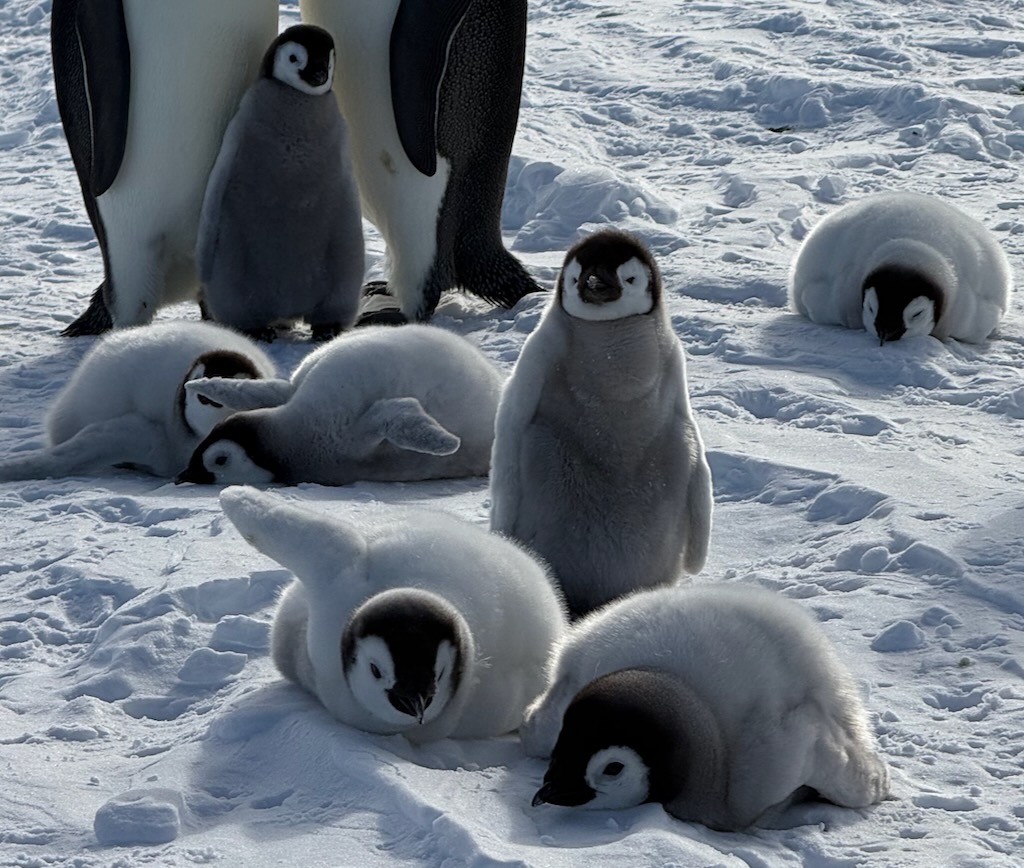
Stakes are high in Antarctica. Mortal risks exist at each stage.
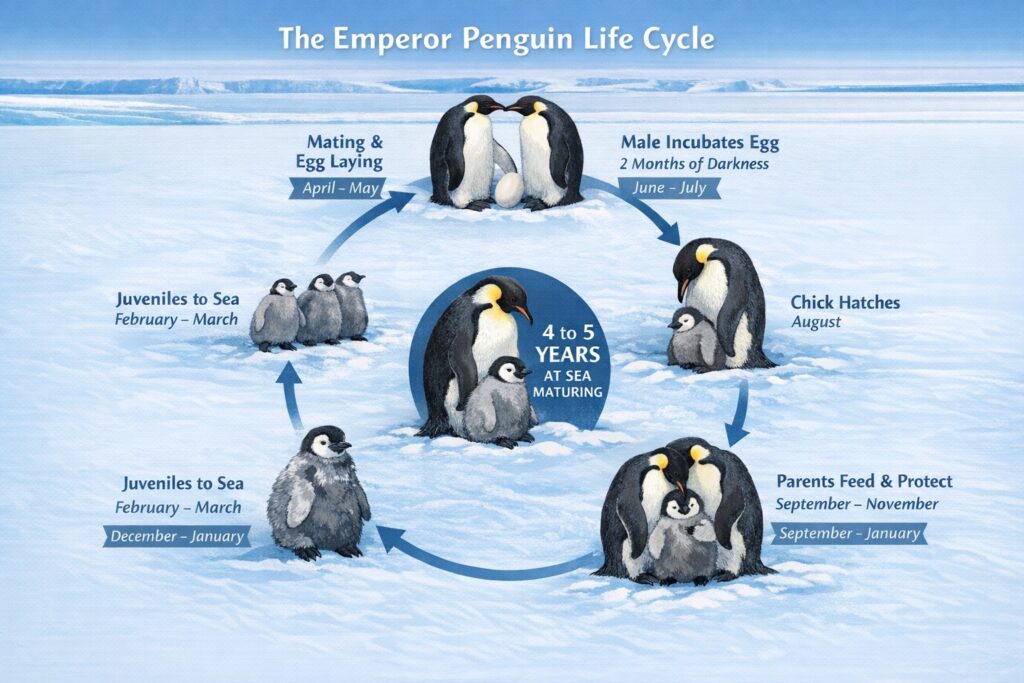
The rare ones to survive must be the luckiest, smartest, bravest, and strongest. They defied the odds at every phase –
- In the first several weeks, if the egg or chick is exposed to the cold, it will freeze to death. So, partners have been seen practicing egg passing using a chunk of ice.
- Sea Ice is essential for emperor penguin breeding. But when it melts or breaks up too early, chicks freeze or drown since waterproof feathers have yet to come. Rising temperatures and reduced sea ice have caused catastrophic breeding failures in recent years. Some colonies, including Snow Hill, have seen 100% chick loss.
- Considering that emperor penguins have to breed far from water and thin ice, the feeding trips to sea are difficult. If a parent is lost to predators (leopard seals, orcas), it is a death sentence for the chick. One parent cannot provide sufficient food or protection.
- By November, chicks are old enough to explore with friends. They can get lost, separated from friends, or go too far. If they get stuck in icy mountains or a storm rolls in, they freeze to death.
- In December/January, parents leave the chicks at the colony. Chicks have to find their way to the sea and food with friends. When they first enter the water, leopard seals, orcas, and others await to feast.
- If a chick is born even a bit late or doesn’t grow as expected, it will not be large enough or not shed its baby fur by departure time, causing death.
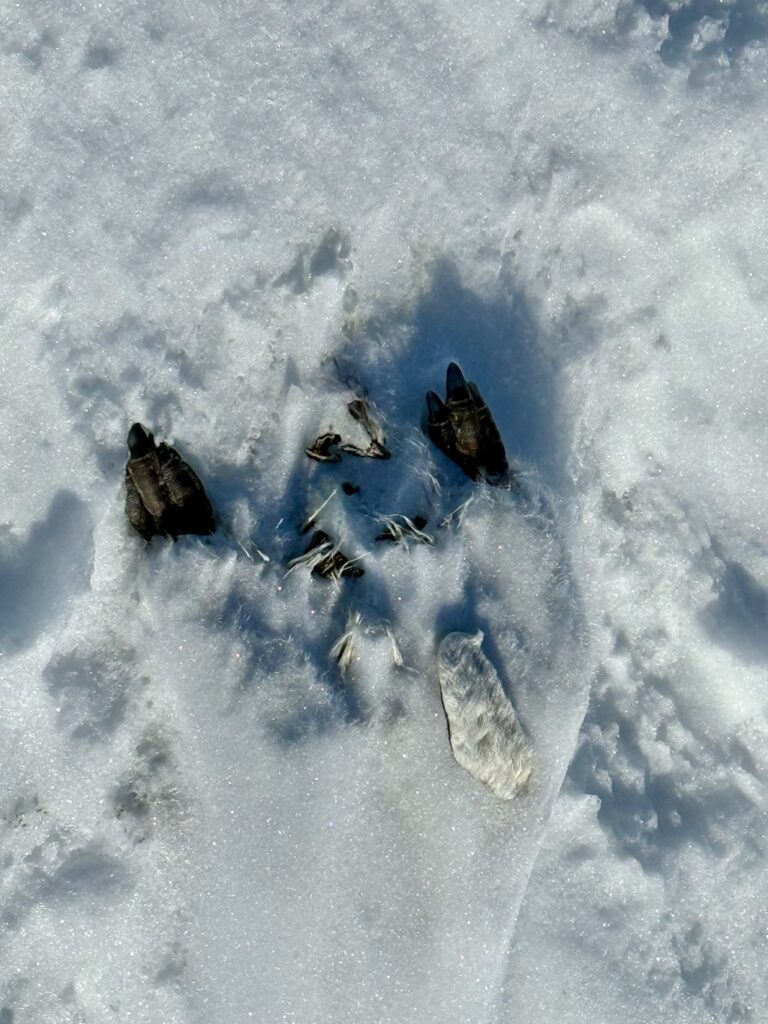
Knowing the treacherous journey of survival, adult Emperor penguins leave me in complete awe and respect.
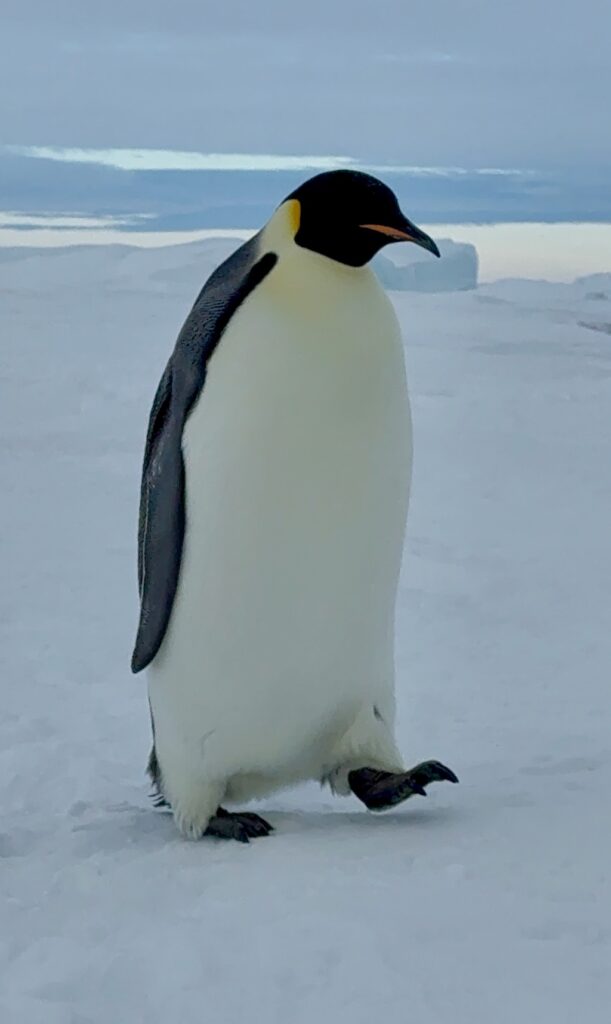
A Privilege, Not a Performance
What struck me most was how calm the birds were.
There was no panic, no chaos. The penguins went about their lives as if we were simply another odd presence – strange, tall, poorly dressed penguins who couldn’t quite waddle correctly.
We followed strict rules: no kneeling, no sitting, no food, no water, no waste. Every boot and tripod had been disinfected. It might sound harsh, but not once did it feel restrictive.
This place does not belong to us. And being allowed to stand there, even briefly, felt like a privilege that carried responsibility.
Who is Inspecting Who?
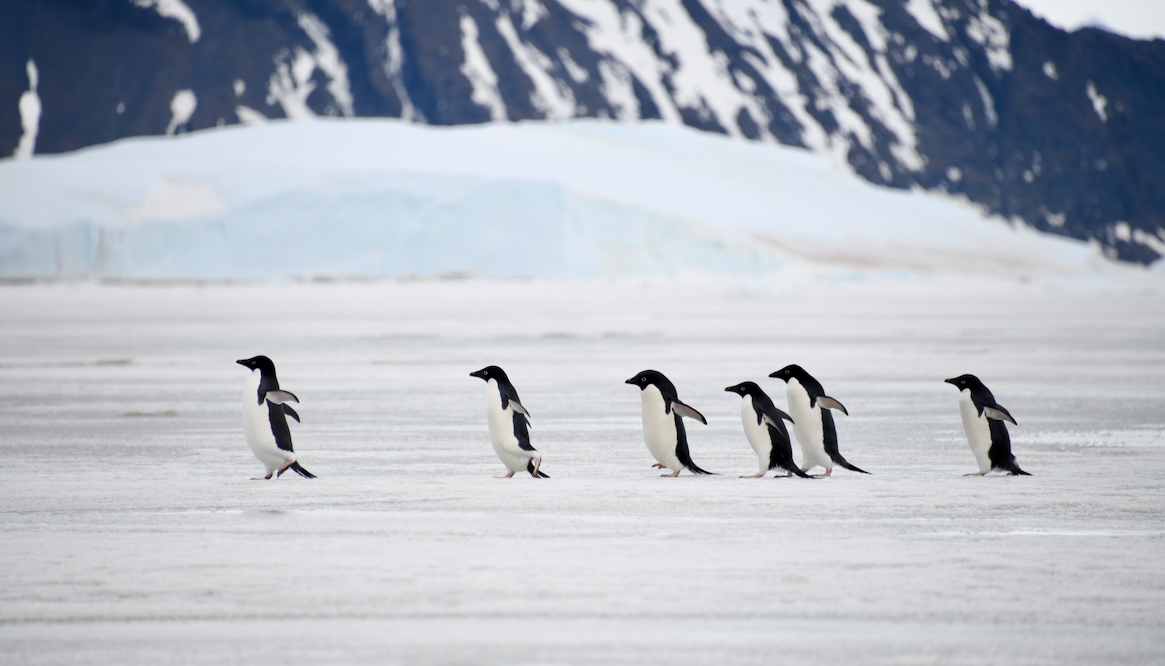
Penguins don’t run away from humans; instead, they keep pushing forward to observe us closer. One time during the day, a few penguins saw us standing in line for the helicopter. Well, they formed a line parallel to ours.
Why Snow Hill Matters
In a world where wildlife encounters are increasingly curated and controlled, Snow Hill remains stubbornly difficult. And that difficulty protects it.
Emperor penguins remind us that life can thrive under extreme conditions if we allow it the space to do so.
Antarctica doesn’t need us. But we need places like this to remind us what nature would create if humans let it be.
Curious how Snow Hill fits into a complete Antarctica journey? Read the full Antarctica expedition itinerary, from the Drake Passage to the Weddell Sea and beyond.
Knowing It Won’t Be Repeated
As our return time approached, a quiet urgency settled in. We took final looks. Final photos. Final moments to simply stand and absorb.
Very few people will ever come here. Fewer still will come a second time.
And that knowledge sharpened everything – the colors, the sounds, the way the wind moved across the ice.
Antarctica does that. It doesn’t ask to be remembered. It simply stays with you.
Snow Hill does not invite return visits. And that is precisely why it matters.
The weather window to visit Snow Hill Emperor Penguins is narrow and only in the unpredictable early-season. Ice does not open up every year to all passage to Snow Hill in time to visit the Emperors.
Antarctica Articles
Charu
December 30, 2025 @ 2:39 pm
Im in awe of your storytelling that transports me as an immersive experience. The Emperor penguins and the South Africa ones are so much in detail and amazing. Thanks to your adventures n explorations I enjoy to add it to my travel wanderlust tours..
Jyoti
December 31, 2025 @ 2:04 pm
Thank you Charu! I’m looking forward to re-living these experiences through your stories next time.