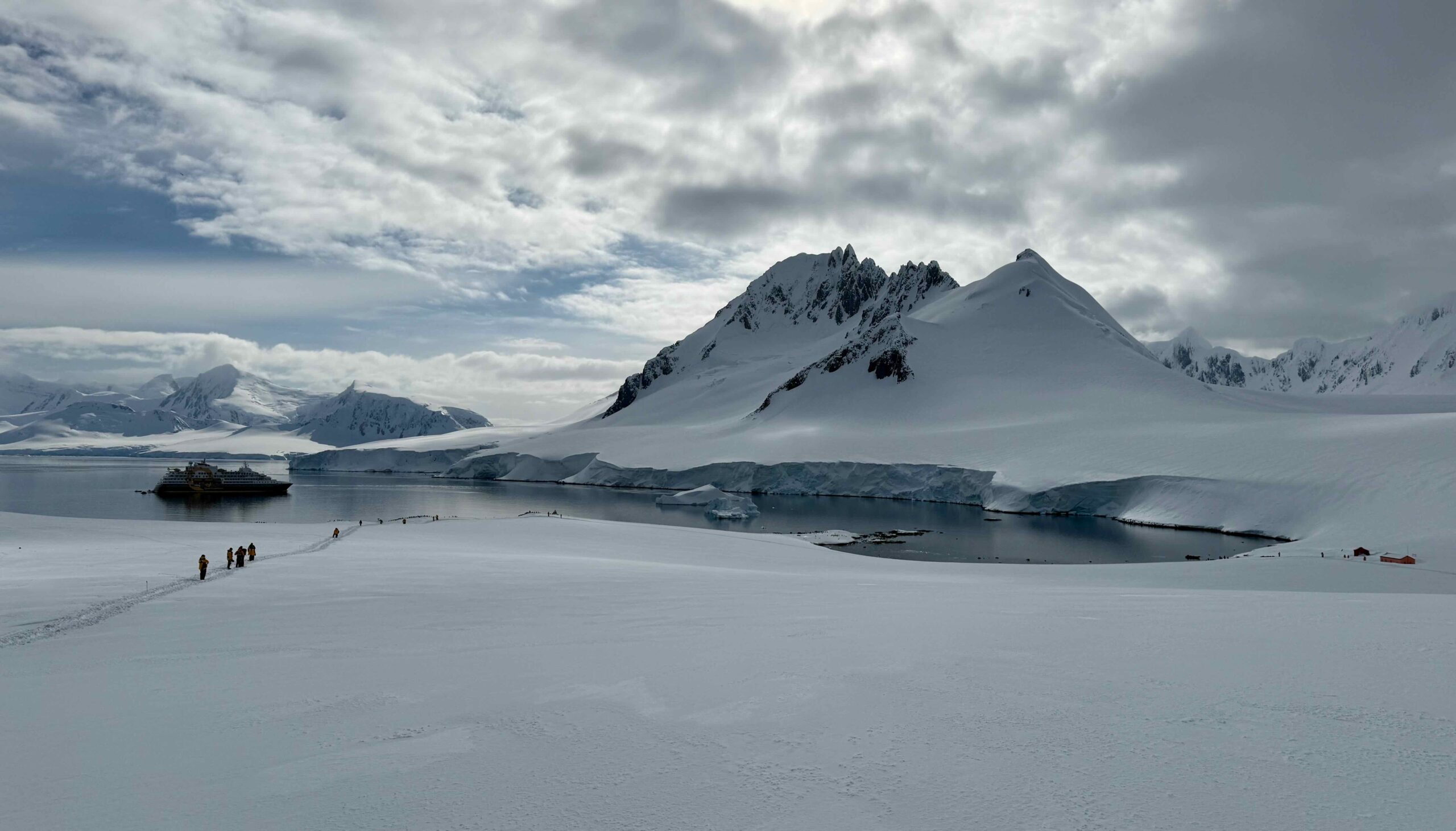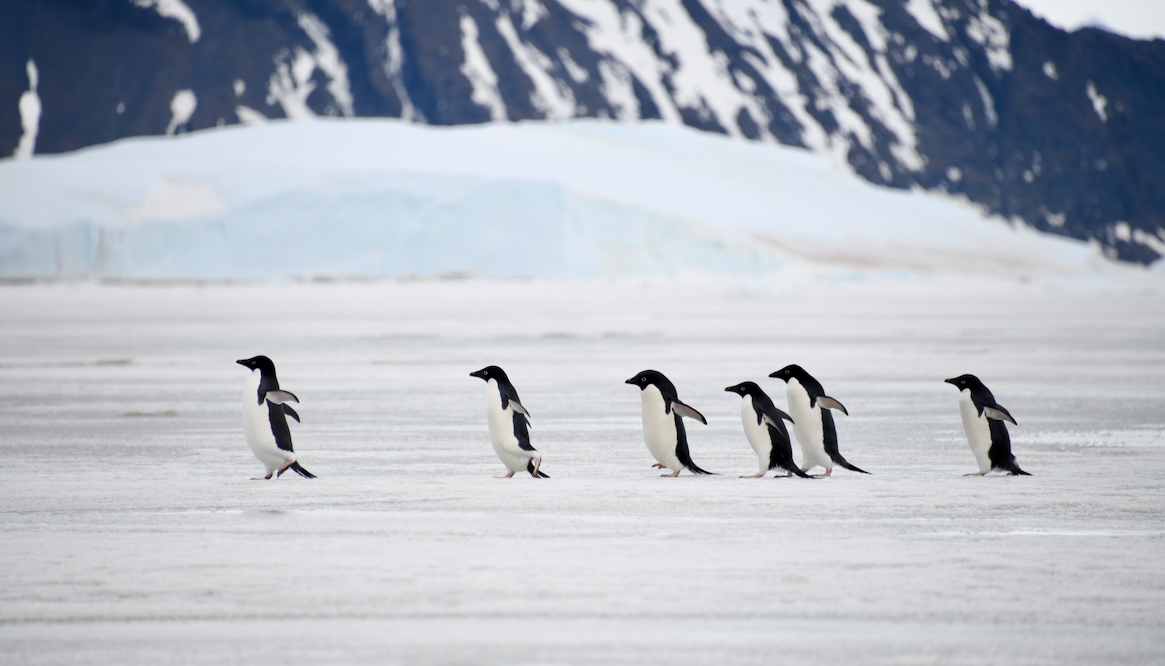
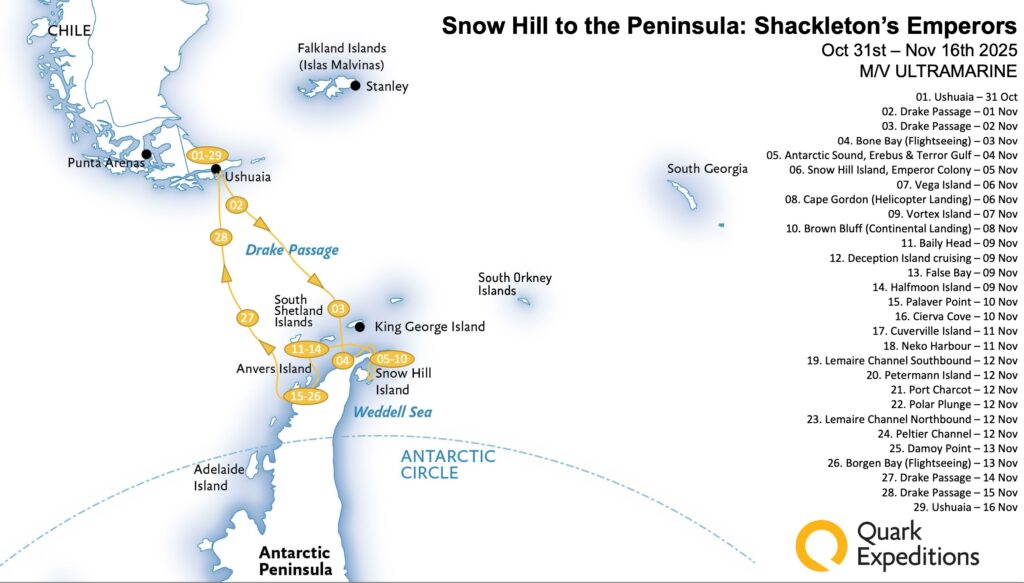
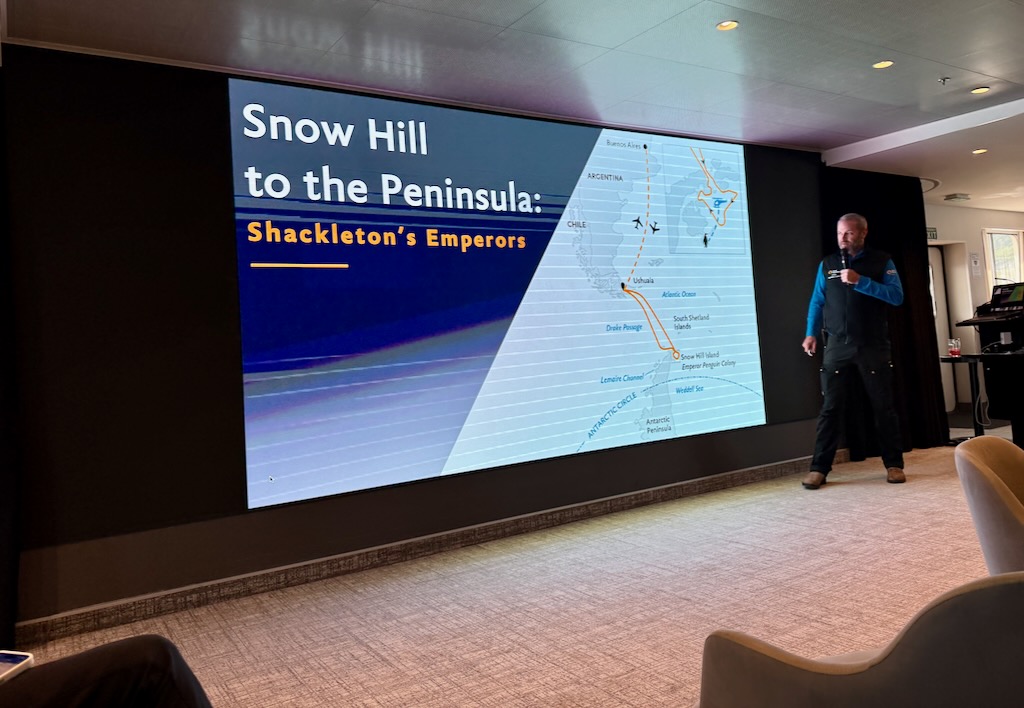
This day-by-day Antarctica expedition itinerary documents our unique route from Ushuaia to Snow Hill Island to the Antarctic Peninsula. Unlike typical Peninsula-only voyages, this expedition combined helicopter landings, deep ice navigation, and a successful visit to an Emperor penguin colony – an outcome that does not occur every season. Designed for future planners, photographers, and wildlife enthusiasts, this itinerary shows what can happen when ice, weather, and expertise align – while making clear that Antarctica ultimately decides.
This detailed Antarctica expedition itinerary covers 17 days from Ushuaia to the Weddell Sea, Snow Hill Island, and the Antarctic Peninsula, including helicopter landings, zodiac cruises, and daily wildlife encounters. It is especially relevant for travelers researching Emperor penguin expeditions, early-season Antarctica cruises, and helicopter-supported polar voyages.
Structure of a Typical Day on our Antarctic Expedition
Our typical day on this expedition was a combination of –
- Activities like zodiac cruise, hike, paddle boarding, kayaking, helicopter ride, etc.
- Educational presentation or lectures on all topics related to the expedition, like penguins, birds, seals, whales, ice, geology, history, etc.
- Photography classes, reviews, and shares with Paul Goldstein, Michelle Sole, and Dave Merron.
- Evening recap of the day with information on what we saw in Antarctica that day; Showcase of best photos of the day from onboard photographers and crew; and weather chart reviews from at least three sources, and plans for the following day.
- Exercise like yoga in the gym or Paulates, a stretching and strengthening workout with Paul.
- Elaborate breakfast, lunch, tea time, snack time, and usually sit-down dinner with some staples and many unique creations from global cuisines. They had ample vegan choices and even Indian meals.
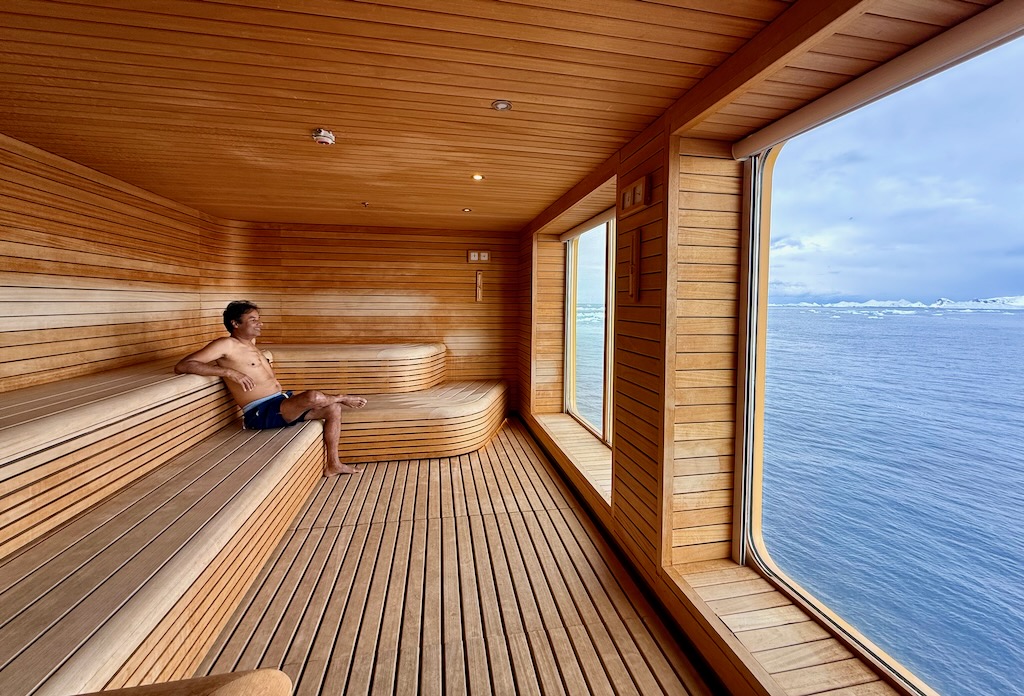
During free time, we would hang out in the Panoramic lounge and cafe on the 7th floor, or other areas, visit the spa & sauna, workout in the gym, or go shopping in the polar boutique for reasonably priced, excellent Antarctica merchandise.
I’ll organize each day around day-specific activities, presentations, and location descriptions as provided by the expedition team while leaving out the common elements. The Presentations section is collapsed by default. Please expand the section by clicking on the + sign on the right if you’re interested in learning about educational activities.
Day 0 – Buenos Aires: Travel to the End of the World
Region: Buenos Aires, Argentina
Date: October 30th, 2025
On our voyage, most travelers flew into Buenos Aires before Day 0 and met the expedition team. There, they were introduced to the city, and together they took the charter flight to Ushuaia on Day 1.
We arrived earlier in Buenos Aires on October 23rd, as part of our round-the-world ticket with Star Alliance. It was one of the many flights on a 3-month trip where we applied our natural long-haul flight protocols. We explored Buenos Aires for a week before heading to Ushuaia on October 29th. So we got 2-3 days to enjoy Ushuaia, which in itself is a destination in the Patagonia region.
Day 1 – Ushuaia: The Gateway to a Rare Early-Season Antarctic Expedition
Region: Ushuaia, Argentina
Date: October 31st, 2025
Overview
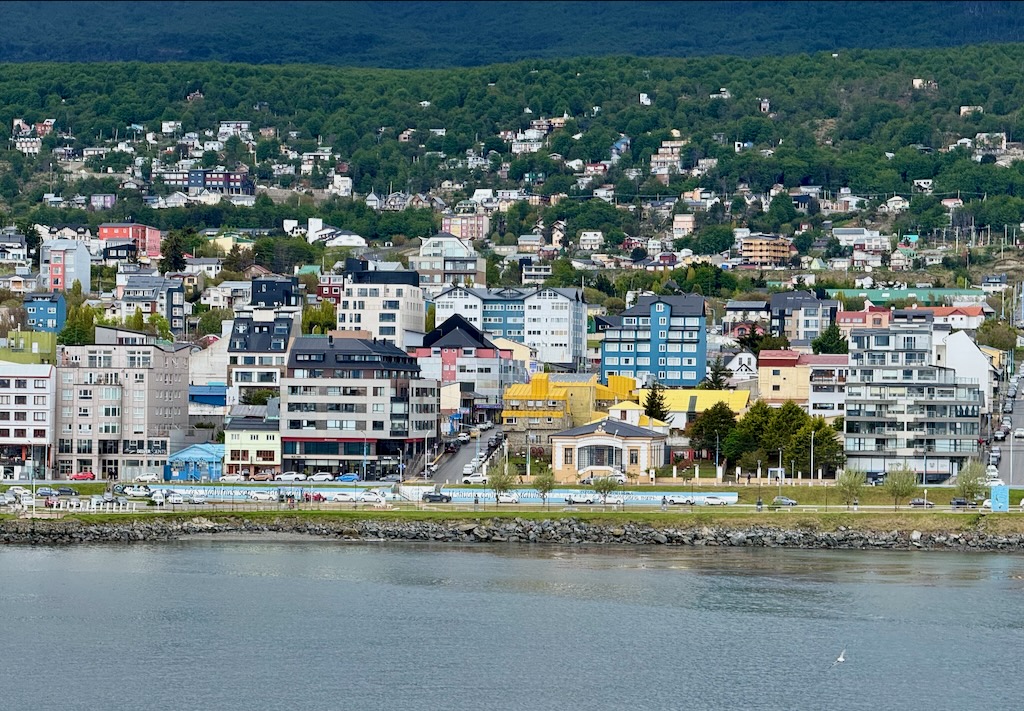
After spending a week in Buenos Aires and 2 days in Ushuaia, we boarded the ship in Ushuaia harbor, with chilly late afternoon drizzles but warm beaming faces. This was the first, early-season, sailing with the primary goal to see the Emperor penguins on Snow Hill Island, before they leave for the seas. Everyone, including the crew, was pumped up.
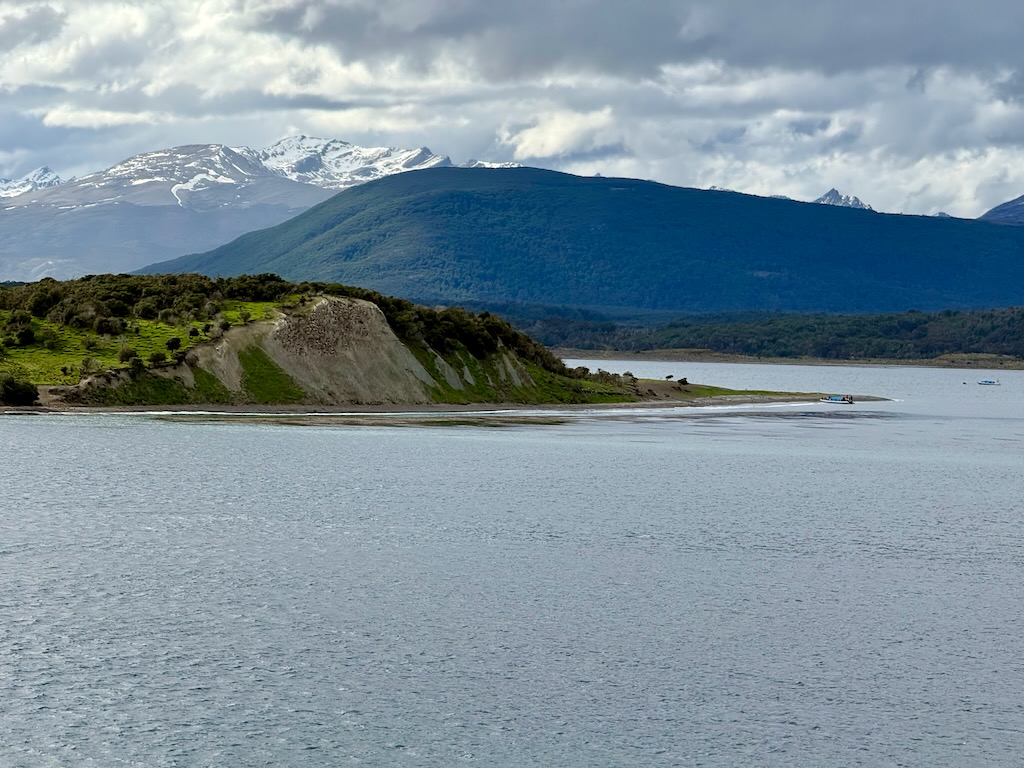
The ship departed Ushuaia via the Beagle Channel later that evening. The scenic Beagle Channel, a destination in its own right, is also home to exotic wildlife like the Magellanic penguins, Gentoo penguins, and many birds.
Activities
Our first evening focused on settling in comfortably with –
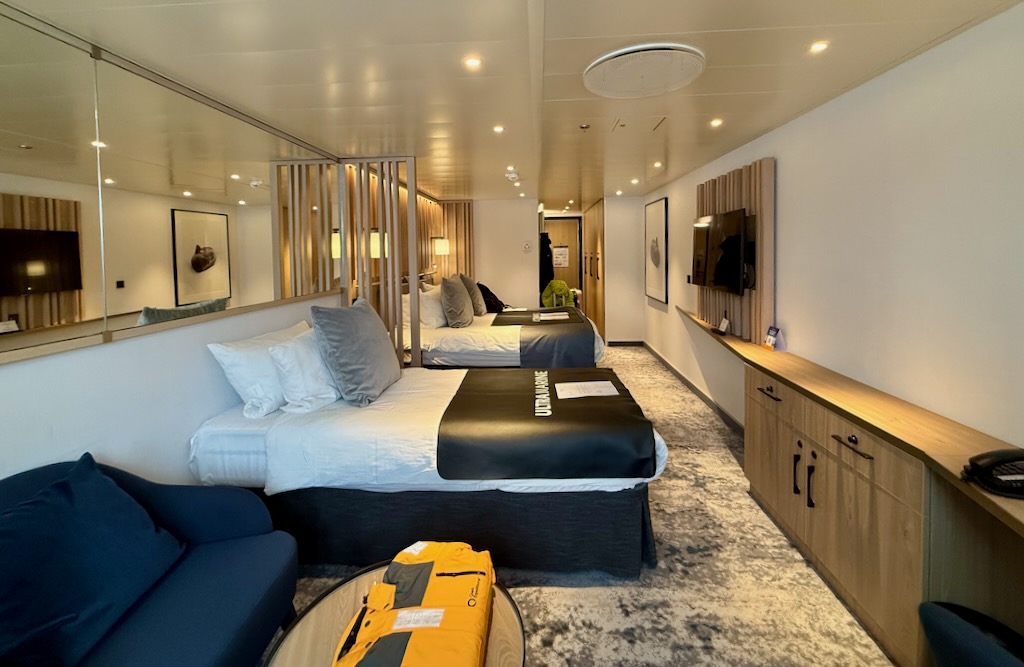
- Cabin orientation, luggage arrival, and unpacking
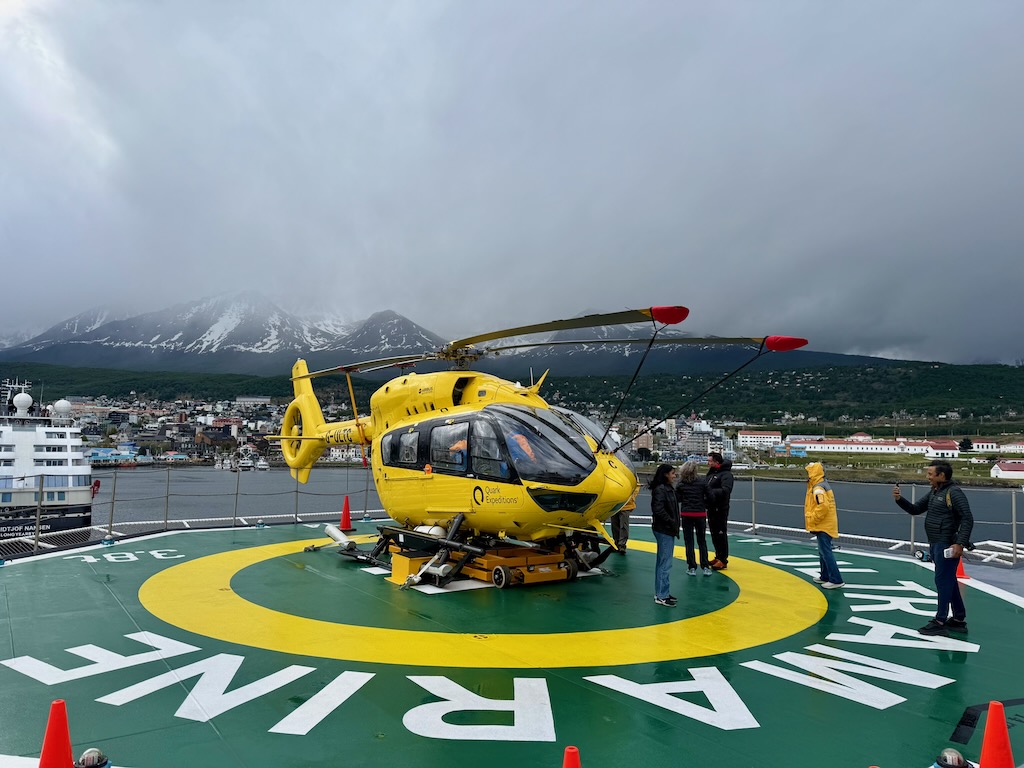
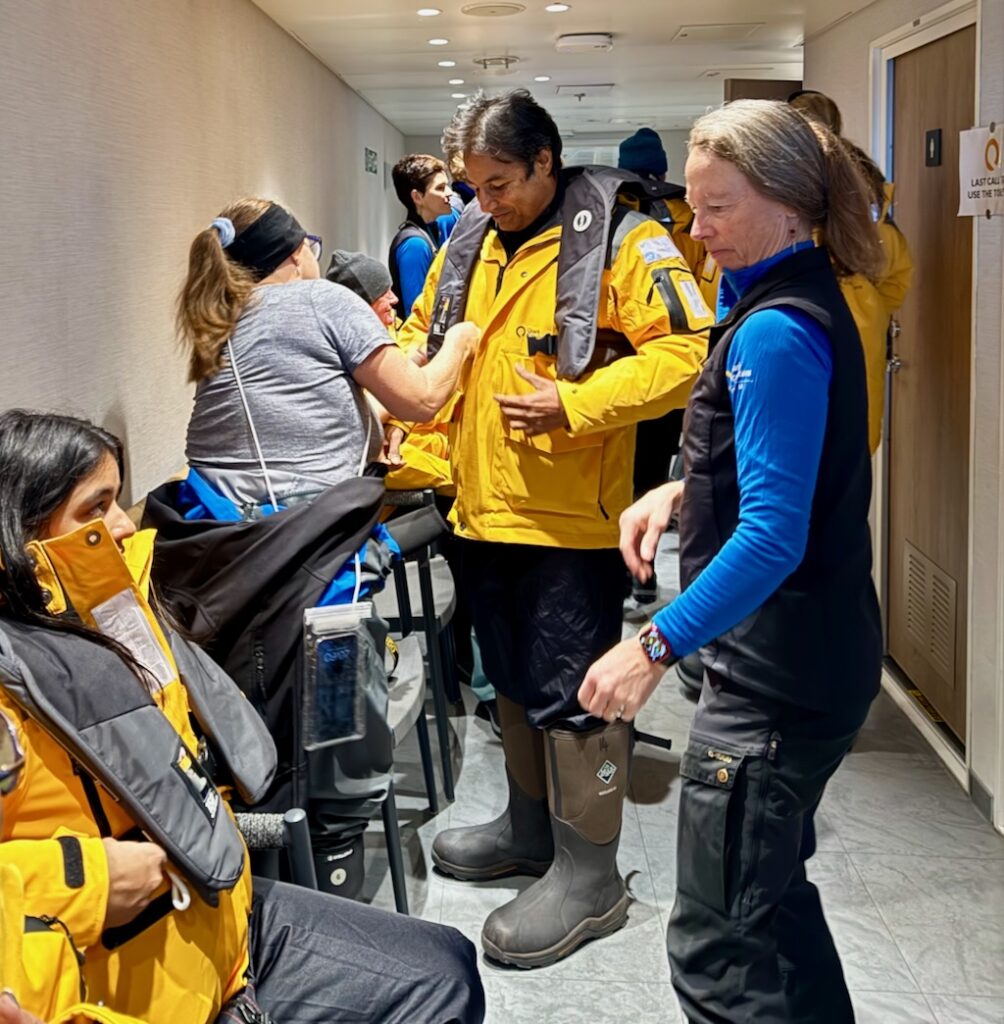
- Expedition gear distribution (boots, parkas, drysuits)
- Mandatory safety briefing and lifeboat drill
- We consulted with the doctor and applied the motion sickness patches.
- Our expedition leader, Ryan, introduced the voyage objectives and emphasized safety, flexibility, and environmental responsibility as core principles. “Stay Agile” was the mantra for this voyage to Antarctica because plans will pivot at any moment, based on weather antics.
Day 2 – Drake Passage
Region: At Sea
Date: November 1st
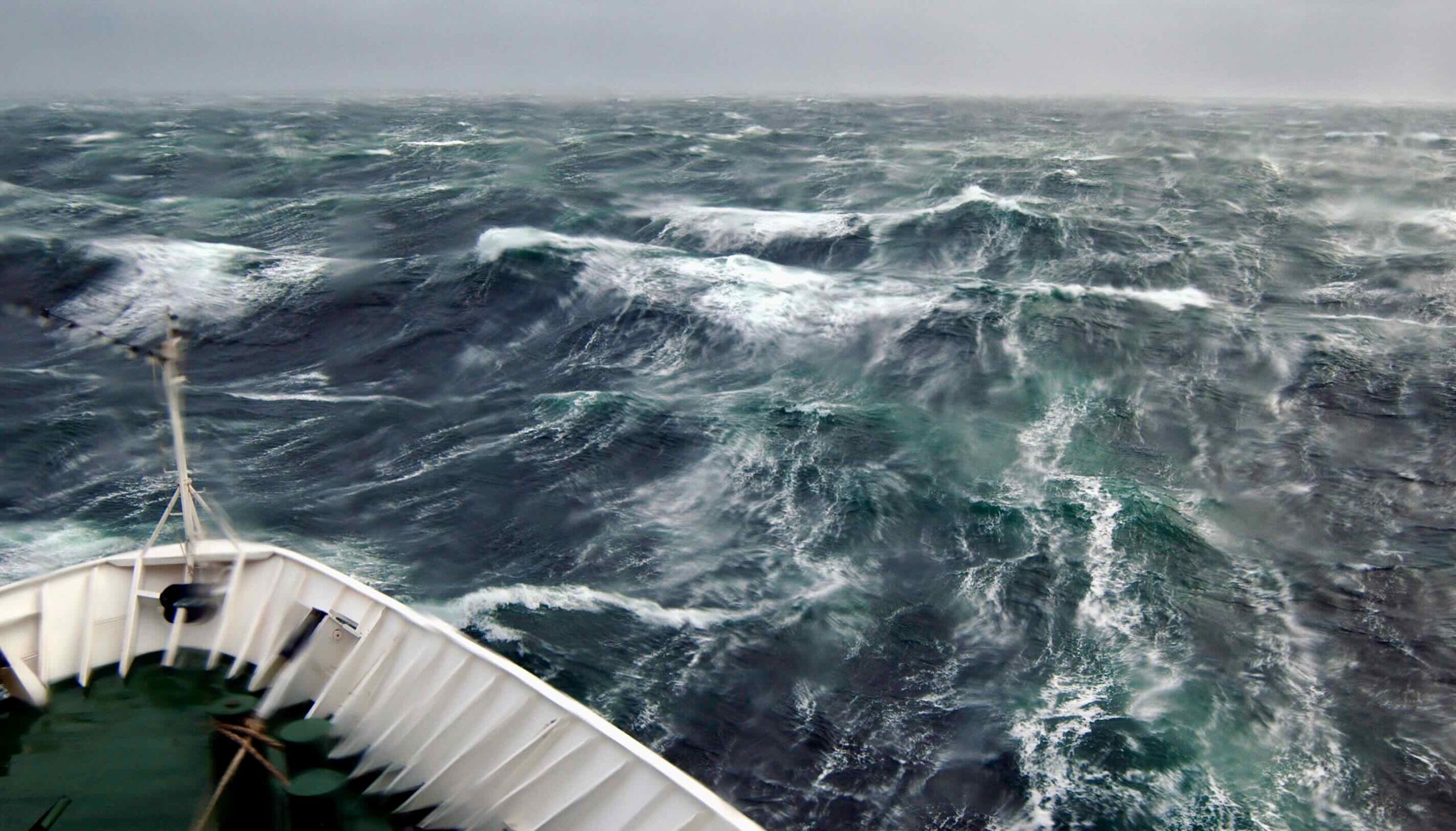
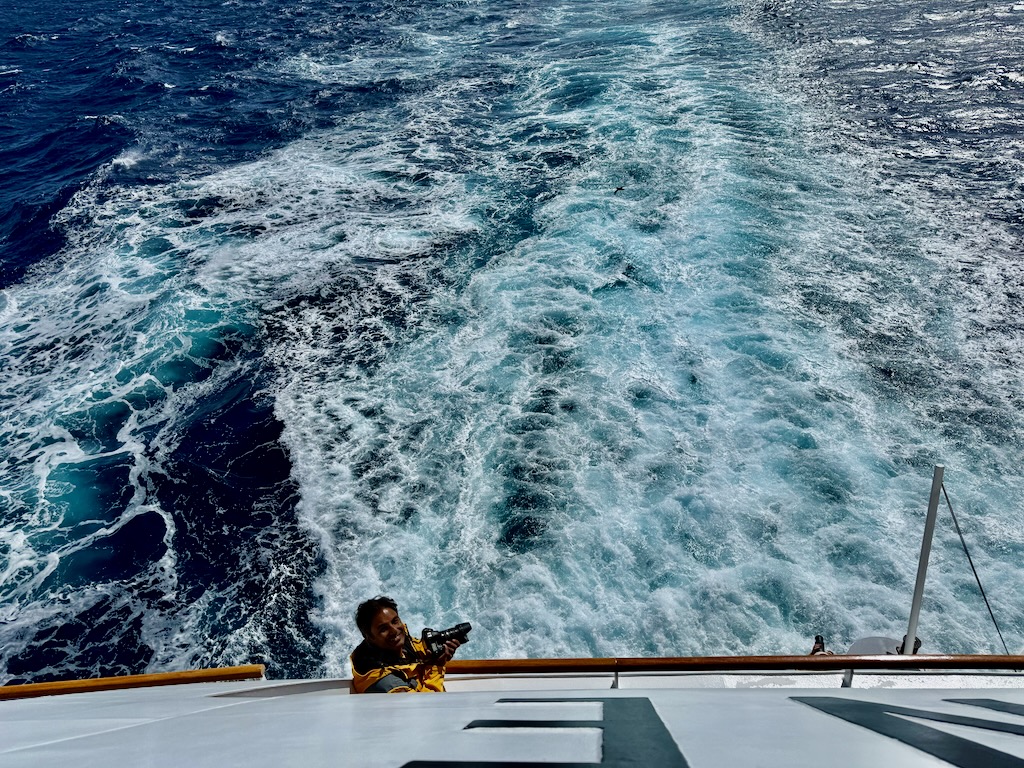
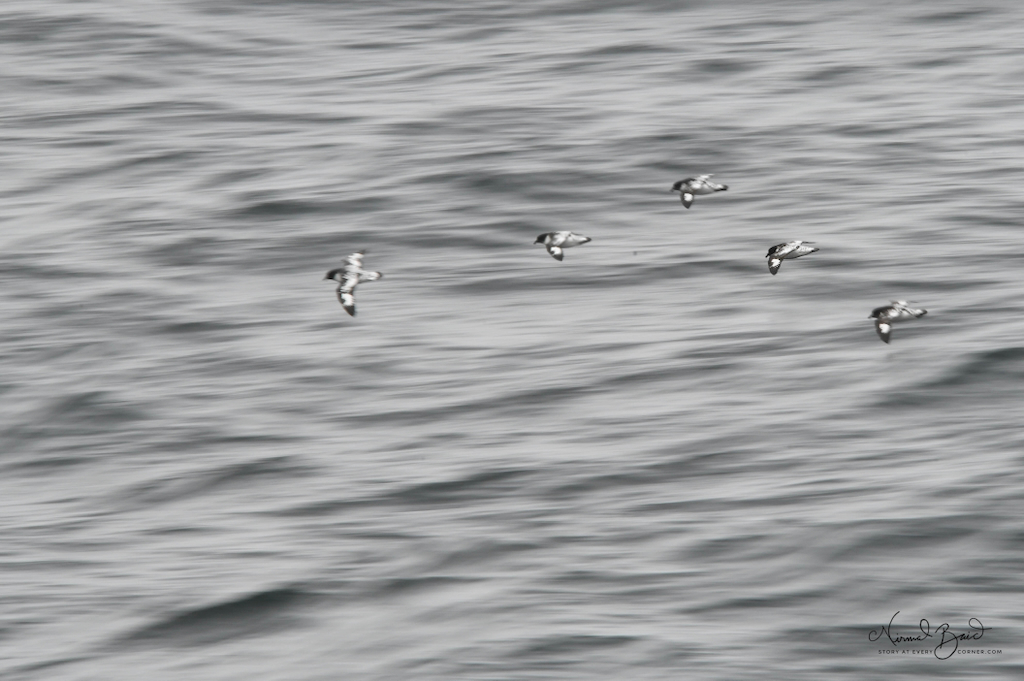
We woke up on the open waters of the Drake Passage, with waves at a moderate 4 meters high. Onboard programming filled the day while we acclimated to sea conditions. The motion sickness patches were working wonders.
Activities
We spent much of the day on decks enjoying the open seas and watching the Southern sea birds like albatrosses, petrels, shearwaters, and penguins.
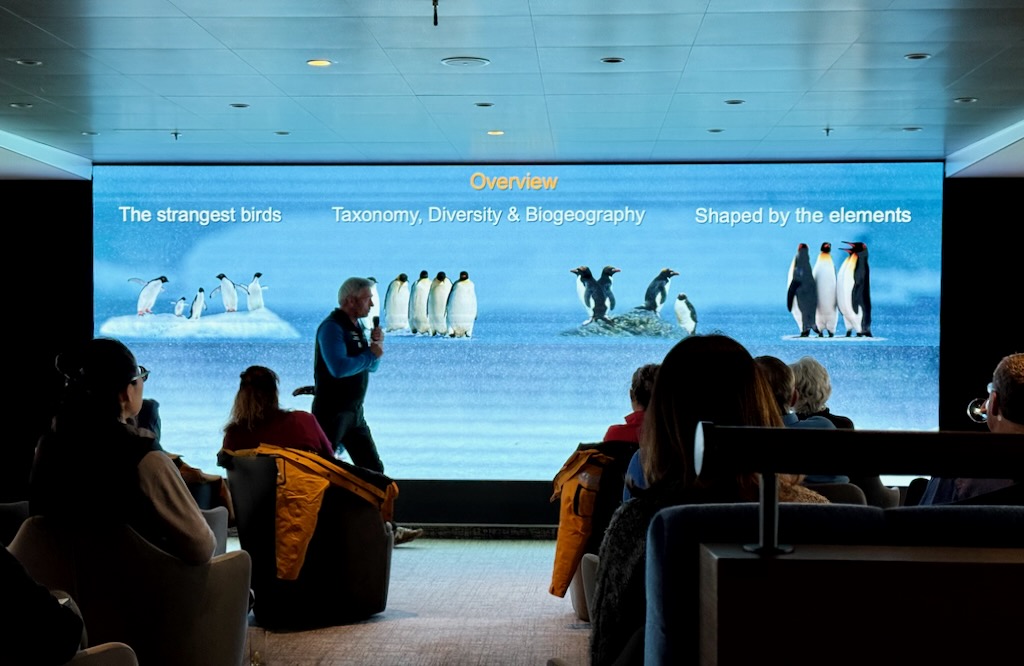
- Lecture: Penguins – A Natural History by Fabrice Genevois, an Ornithologist
- Photography 101
- Mandatory IAATO, paddle program, and zodiac safety briefing
- Captain’s welcome and expedition team introductions
This day set the educational and logistics foundation for the experiences that lay ahead.
Day 3 – Approaching Antarctica
Region: Southern Ocean
Date: November 2nd
Activities
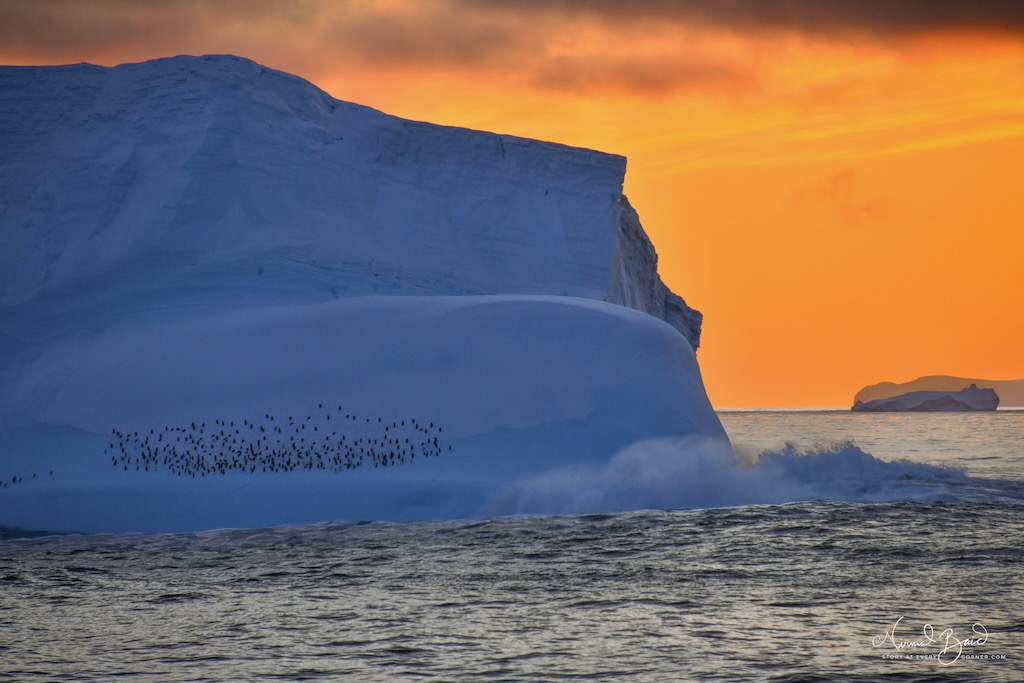
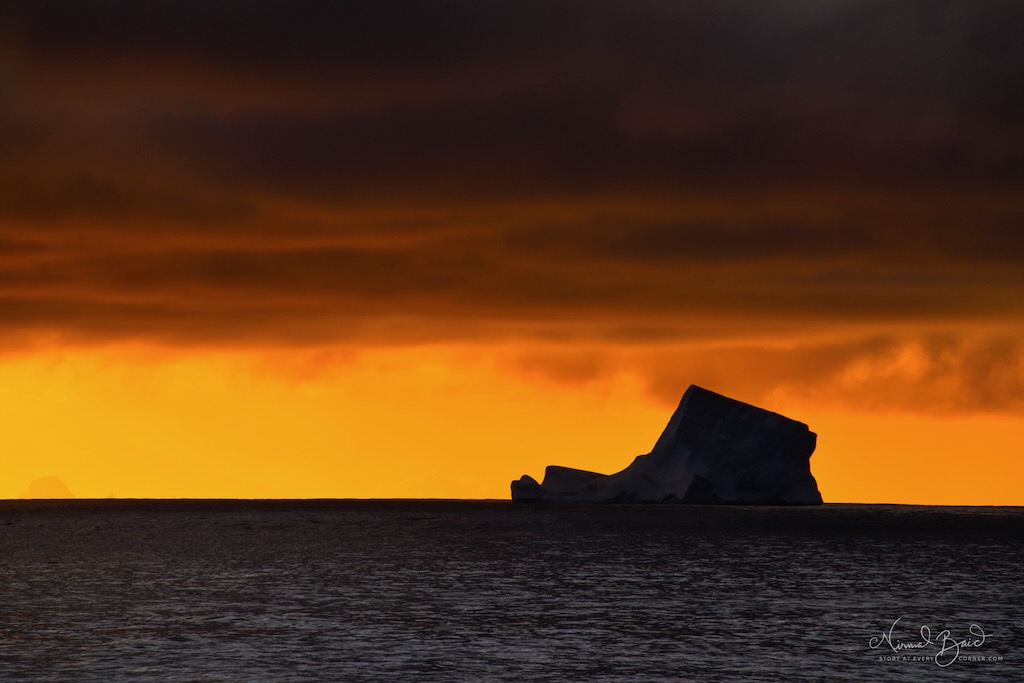
As the ship sailed south, we spent extended time on deck observing the many seabirds and the first Antarctic ice. We guessed the timing for our first sizable iceberg encounter and watched like hawks.
- Lecture: Antarctica – Discovering the Land of Our Dreams by Miko Golachowski, a Historian
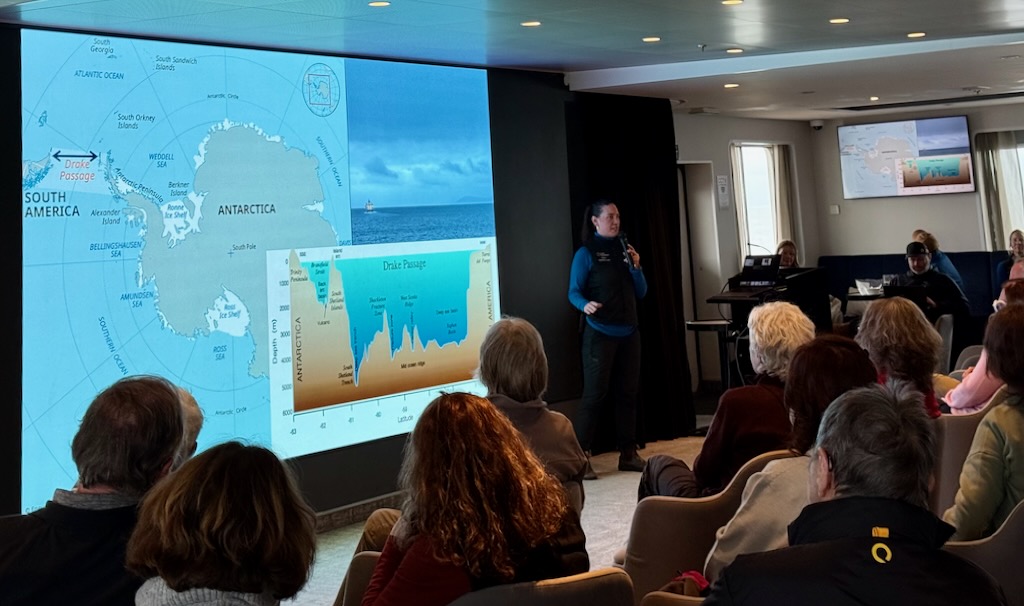
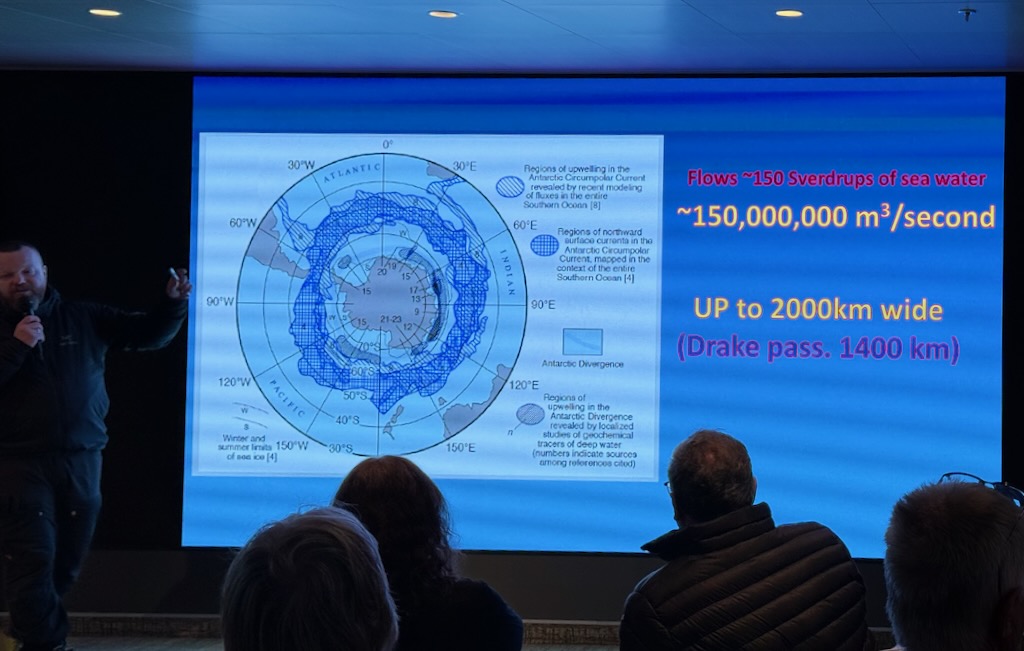
- Drake Passage and Oceans around Antarctica by Sofia Fredriksson, a Geologist
- Photography 102
- Mandatory helicopter safety briefing
Day 4 – Bone Bay: First Helicopter Operations Over Antarctic Ice
Region: Northern Antarctic Peninsula
Date: November 3rd
Overview
Bone Bay is a rectangular inlet on the north shore of the Trinity Peninsula, near the tip of the Antarctic Peninsula. It is named after Thomas M. Bone, a midshipman on the brig Williams, which was used in exploring the South Shetland Islands and Bransfield Strait in 1820.
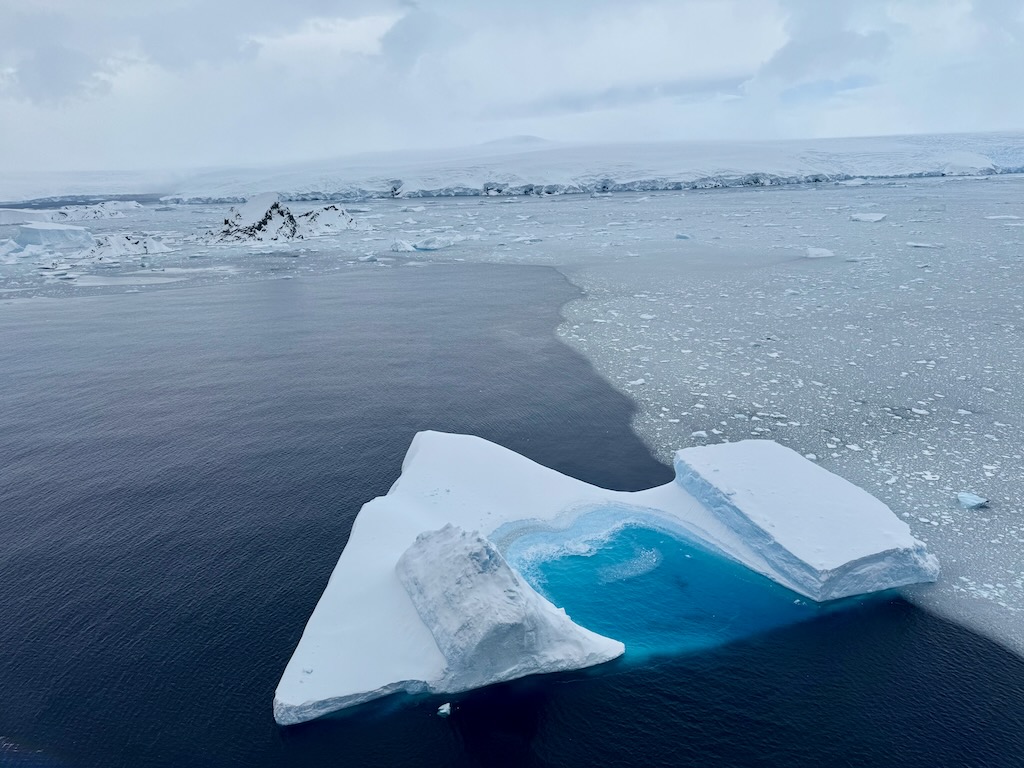
This was our first full day surrounded by the surreal Antarctic ice on land and water, in many shapes, sizes, and textures.
Activities
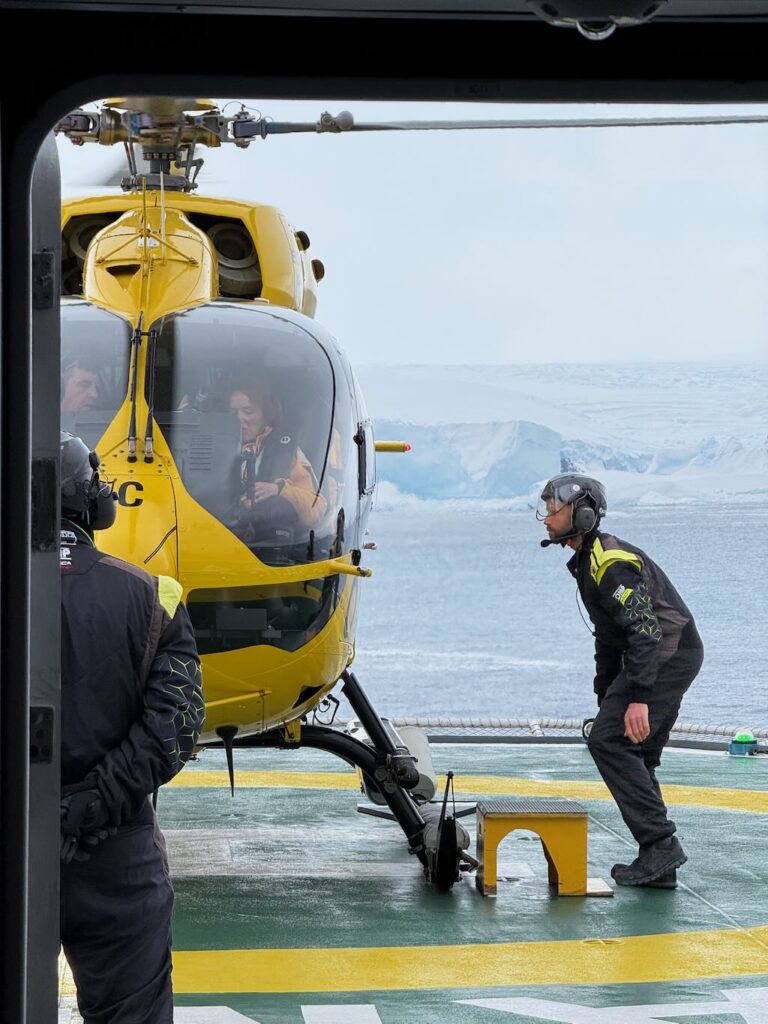
- 9 am: Flightseeing over glaciers and ice-filled waters of Bone Bay. The flightseeing also served as a full dress rehearsal for future flights.
- The ship maneuvered through stunning polar ice formations.
- Lecture: Biology and natural boundaries with Antarctica in the center by Grigory Tsidulko, a Marine biologist
Day 5 – Pilgrimage Toward Snow Hill
Region: Weddell Sea (En Route)
Date: November 4th
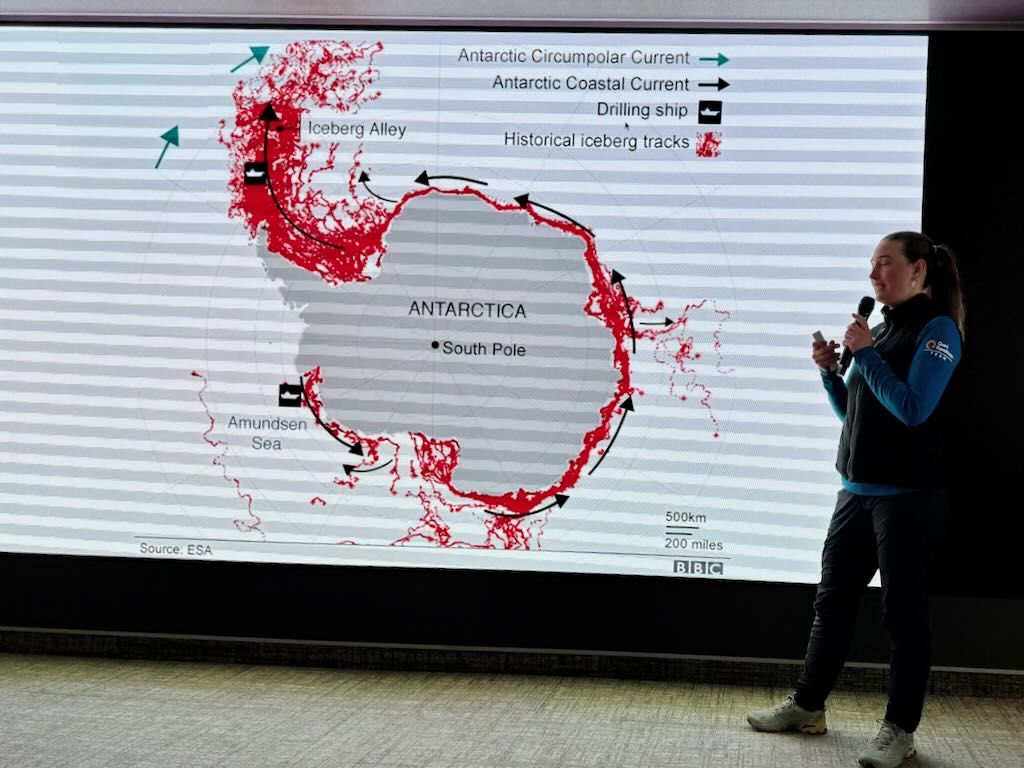
Today was a day at sea and dedicated to preparation for Snow Hill Island. The unique environment in the Weddell Sea showcases ice in all its stages, from frazil/grease ice, nilas, pancakes/young ice, first-year ice, all the way to glaciers.
Activity
- Sailed through Antarctic Sound, Erebus and Terror Gulf
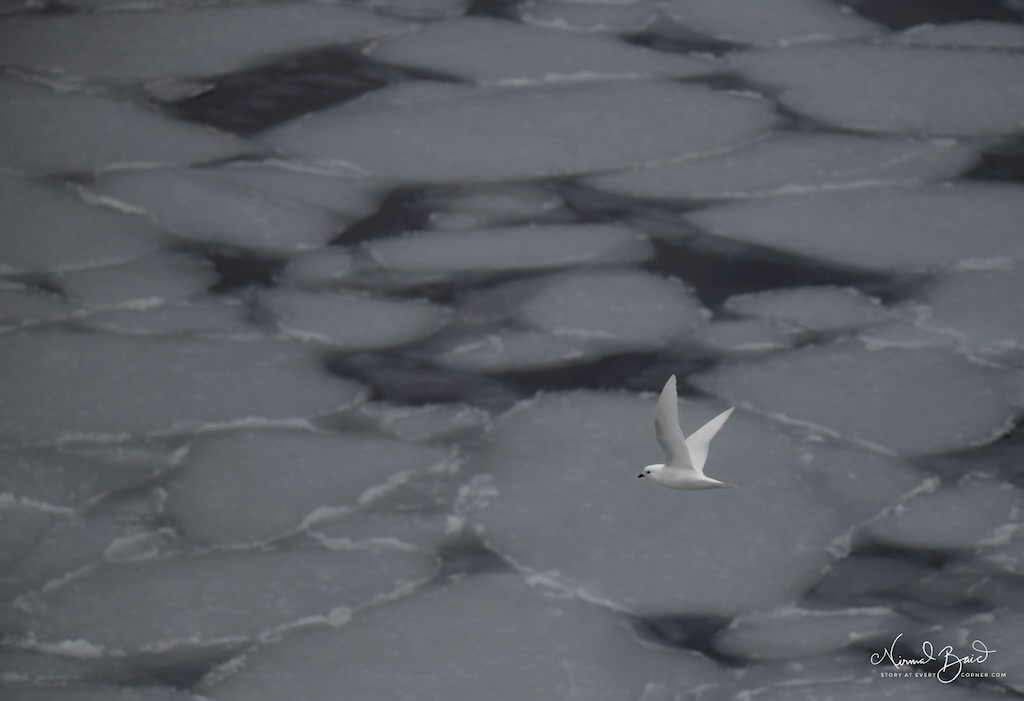
Today’s presentations built our shared understanding of the biological and historical significance of the Weddell Sea and Snow Hill.
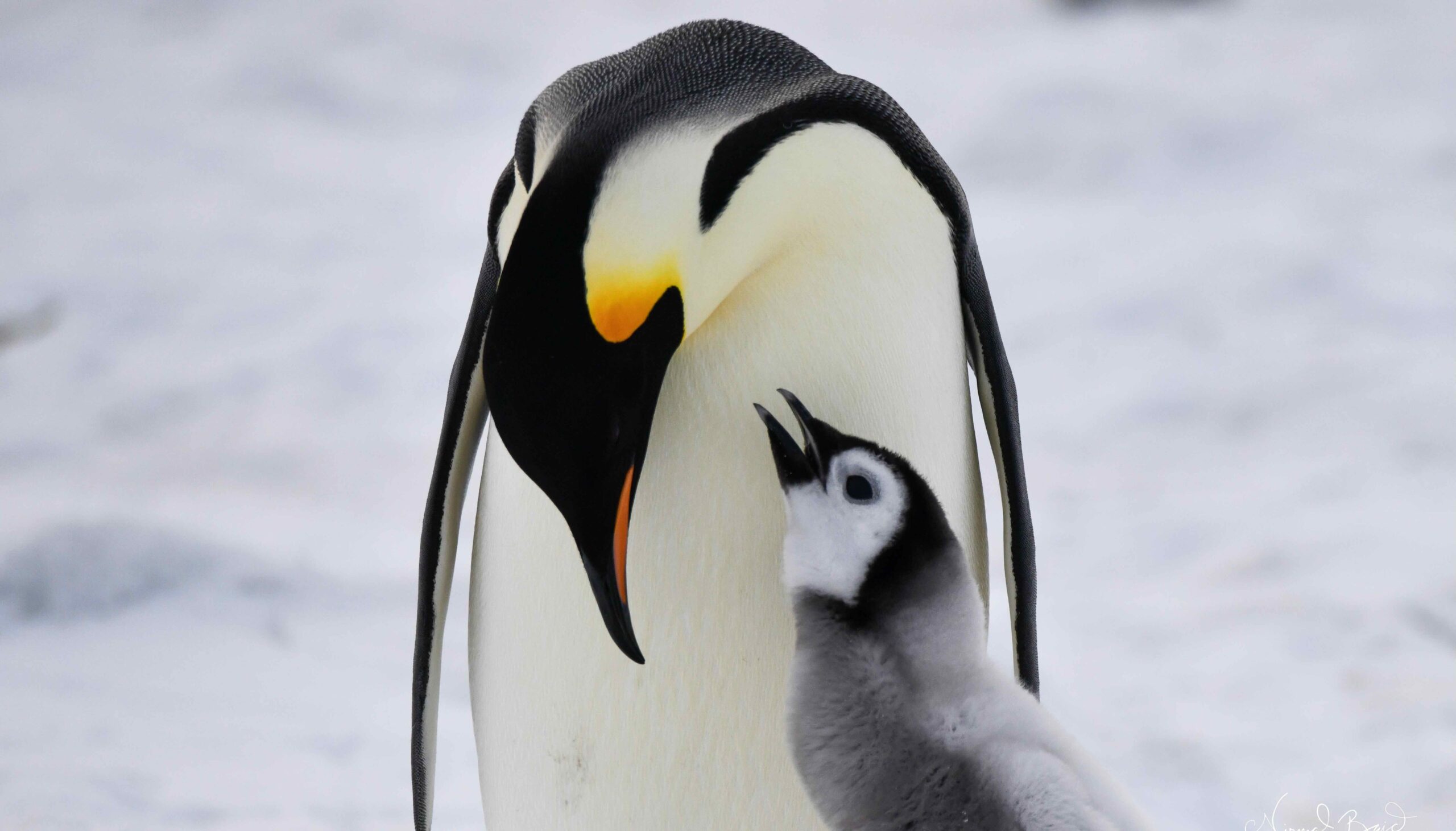
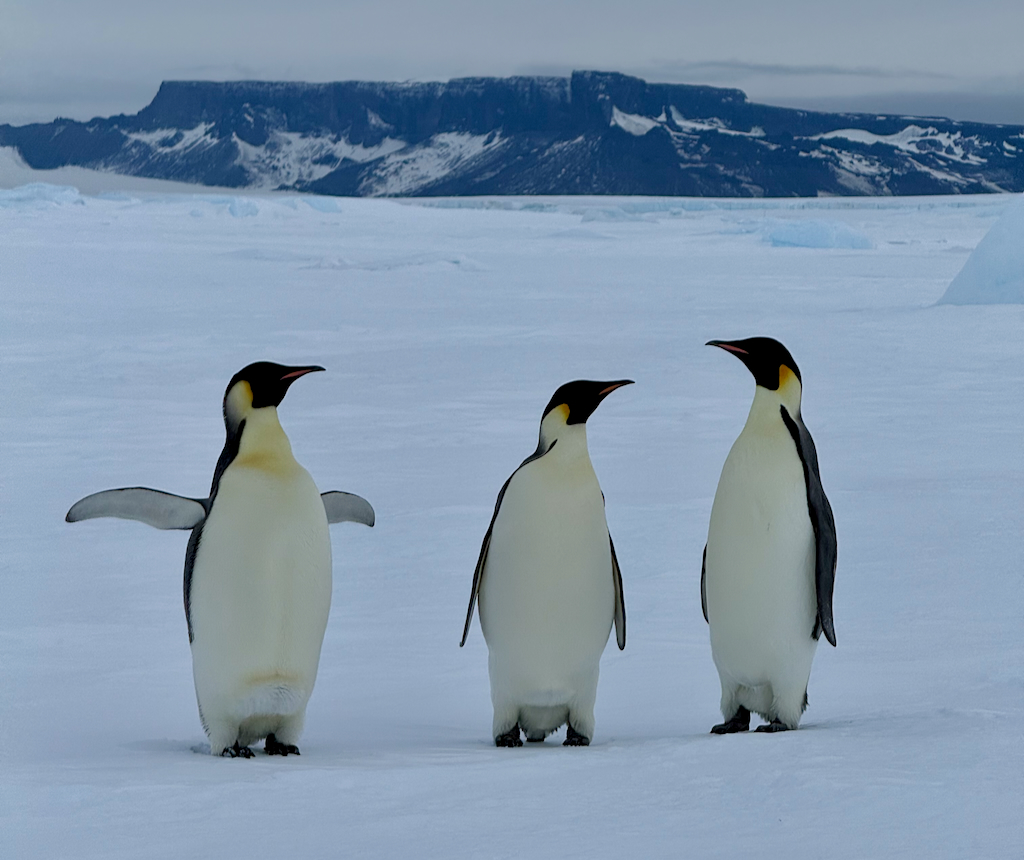
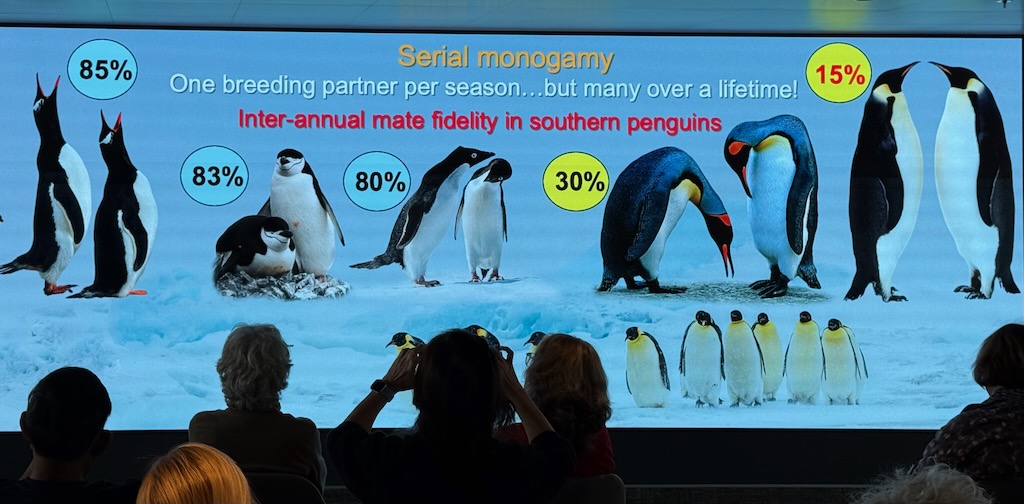
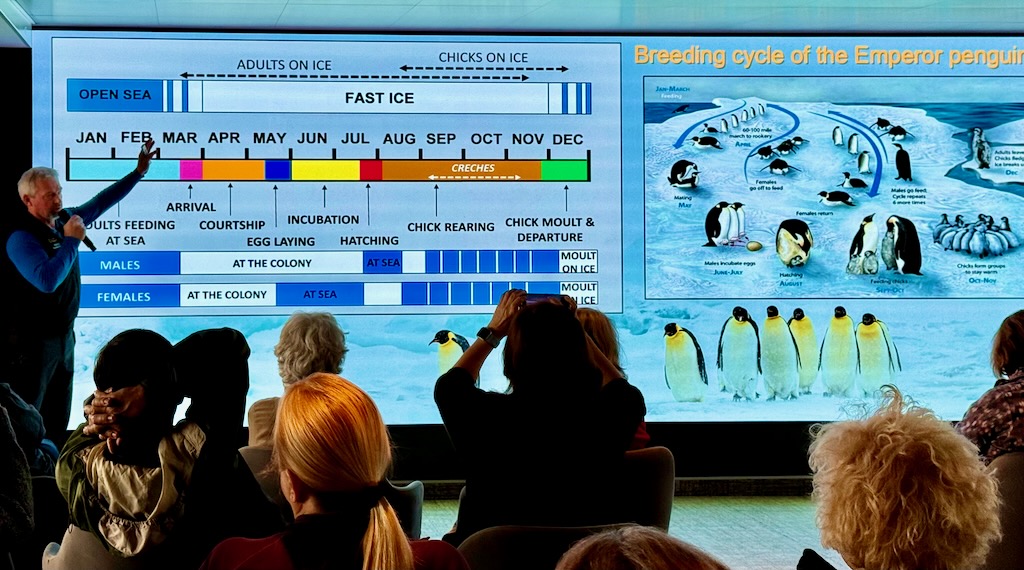
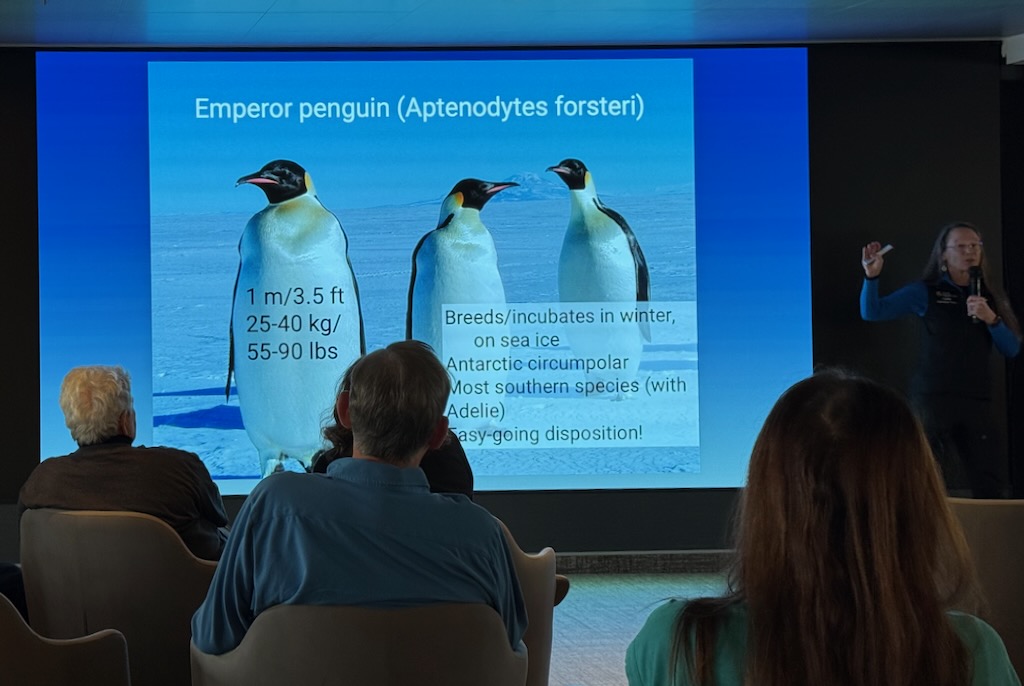
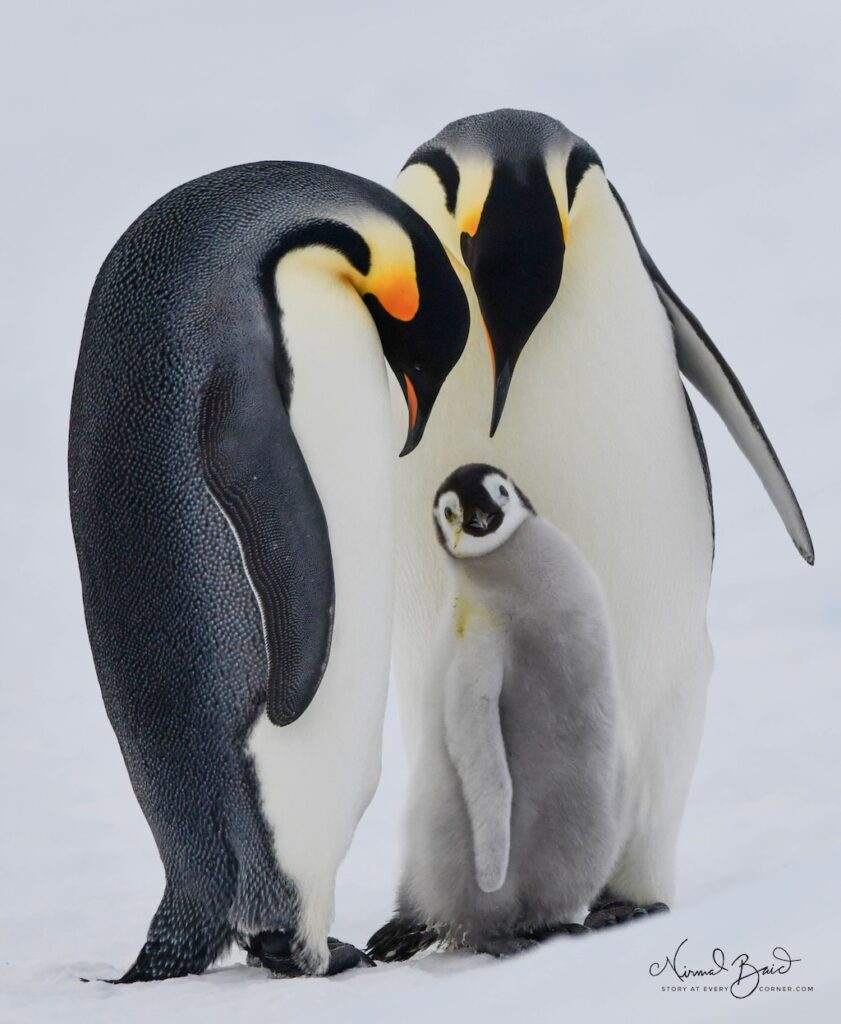
- Lecture: Seasons of the Monarch: A Year in the Life of the Emperor Penguin by Fabrice. The Emperor penguin, Antarctica’s most iconic resident, breeds during the harsh winter on sea ice. Perfectly adapted to extreme conditions, it lives entirely on ice and never sets foot on land
- Expedition briefings on ice, wind, and helicopter operations
- Photography 103
Day 6 – Snow Hill Island: Visiting One of Antarctica’s Most Elusive Wildlife Sites
Region: Weddell Sea
Date: November 5th
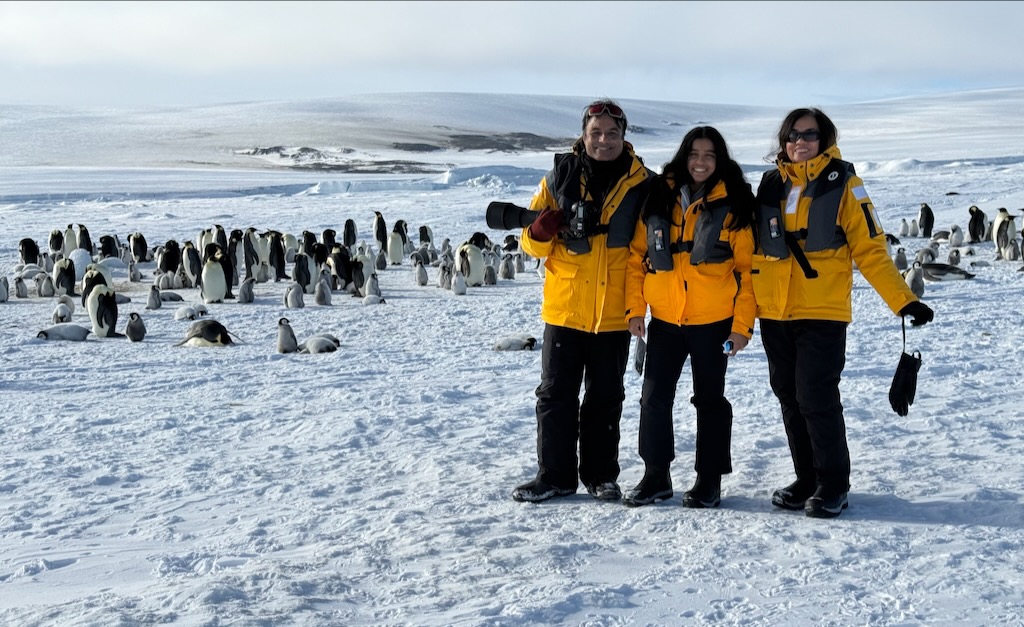
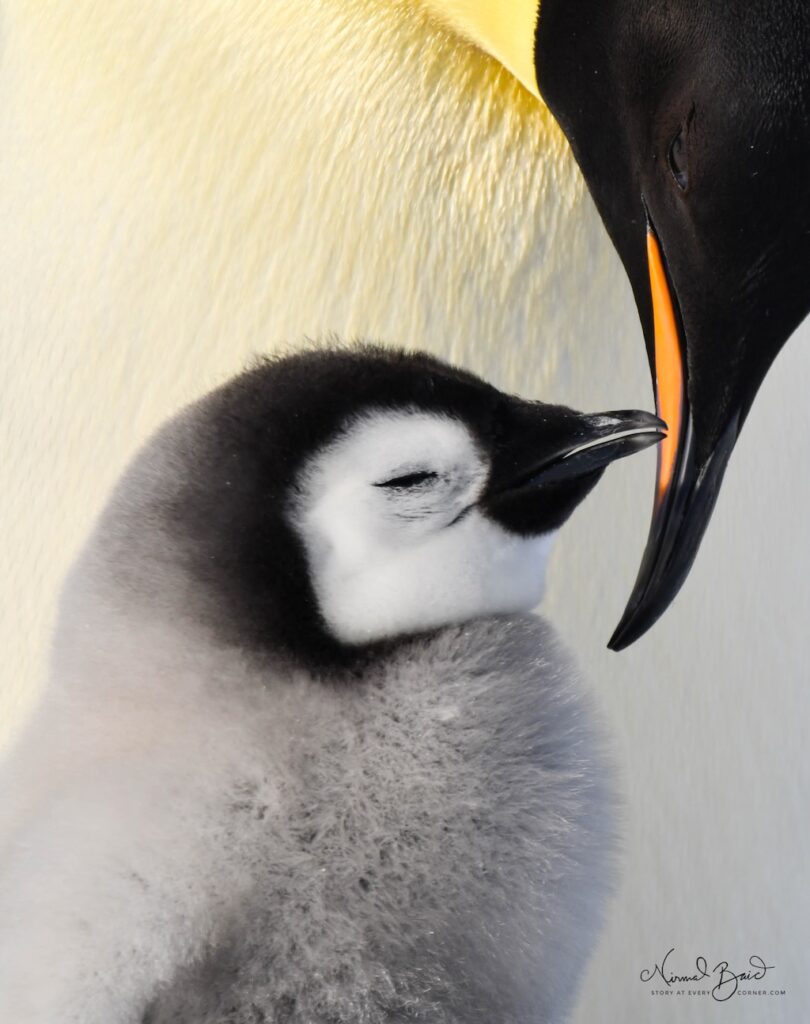
Today was the highlight of the expedition. With early-morning helicopter operations, we landed on fast ice near Snow Hill Island and the Emperor penguin colony.
Overview
Why Snow Hill Is Scientifically Important
We learned about Snow Hill, a breathtaking, snow-capped island in the Weddell Sea. The sparkling gem was discovered in 1843 by British explorer James Clark Ross and was named for its striking snow-covered hills that stood out against the bare rock of nearby Seymour Island. The island lies off the east coast of the Antarctic Peninsula and measures 33 km long and 12 km wide.
What we didn’t get to see, but heard on the expedition that beneath the snow lies a treasure trove of geological history. The island’s soft, ancient sedimentary layers hold rich marine fossils, including ammonites, mollusks, and brachiopods – evidence that the island was once covered by ocean. Most remarkable are the penguin fossils found nearby. They belong to the giant penguin species, estimated to be two meters or ~7 feet tall!
For some good news, Aerial photography measurements indicate that the Snow Hill colony is growing. They’ve estimated over 5,000 adult pairs in the past few years. However, climate conditions significantly impact reproductive success from one season to the next. In several recent years, 100% of the chicks were lost to early ice melt.
Read the full Snow Hill experience at → Meeting the Emperor Penguins at Snow Hill
Activities
- 4 am: Snow Hill Island flight and hike with the Emperors
In the evening, we got more context from the experts on what we had seen during the day. Lectures included –
- Science of polar ice, icebergs, and their paths by Sofia
- History of Antarctic explorations by Miko
- Historic photography in Antarctica by Michelle, a Photographer
- Snow Hill’s discovery and geological history
- Emperor penguin population monitoring via aerial surveys
Day 7 – Erebus & Terror Gulf – Vega Island
Region: Weddell Sea
Date: November 6th
Activities
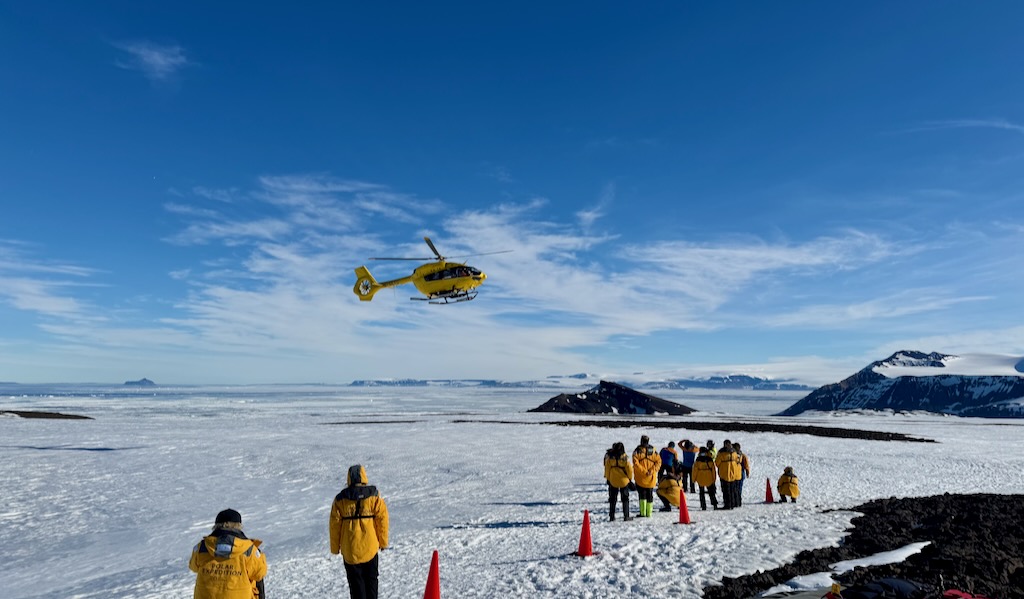
Ice surrounded our ship in all directions, making it impossible to get out on zodiacs as planned, so we took to the skies! It was a great opportunity to enjoy a clear blue sky with no wind.
- 10 am: Ship cruising near Vega Island
- 3 pm: Helicopter flight on Cape Gordon for a hike to the top of Vega Island and 360-degree views.
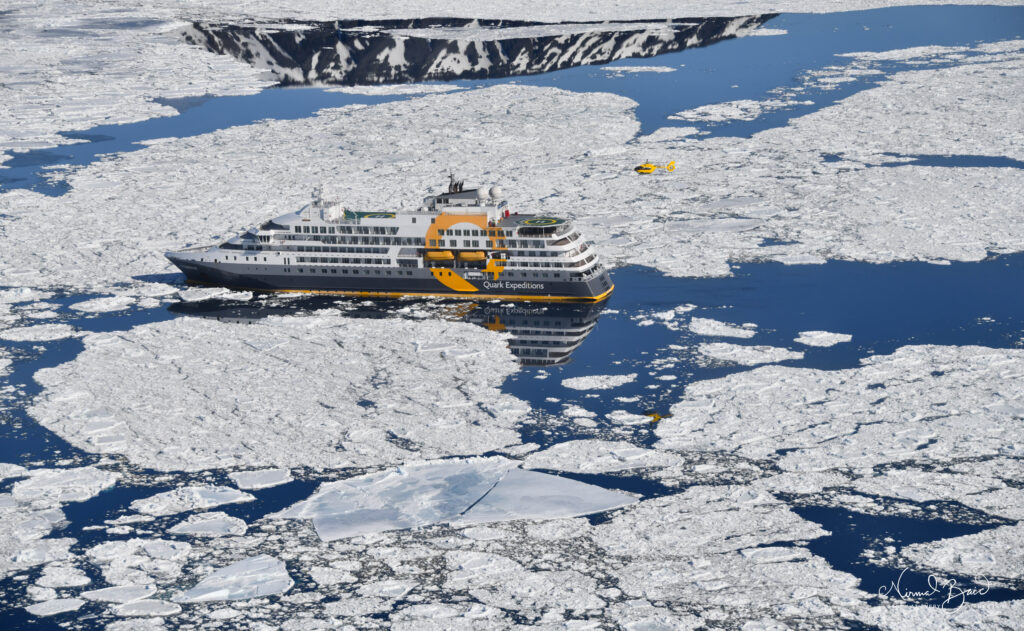
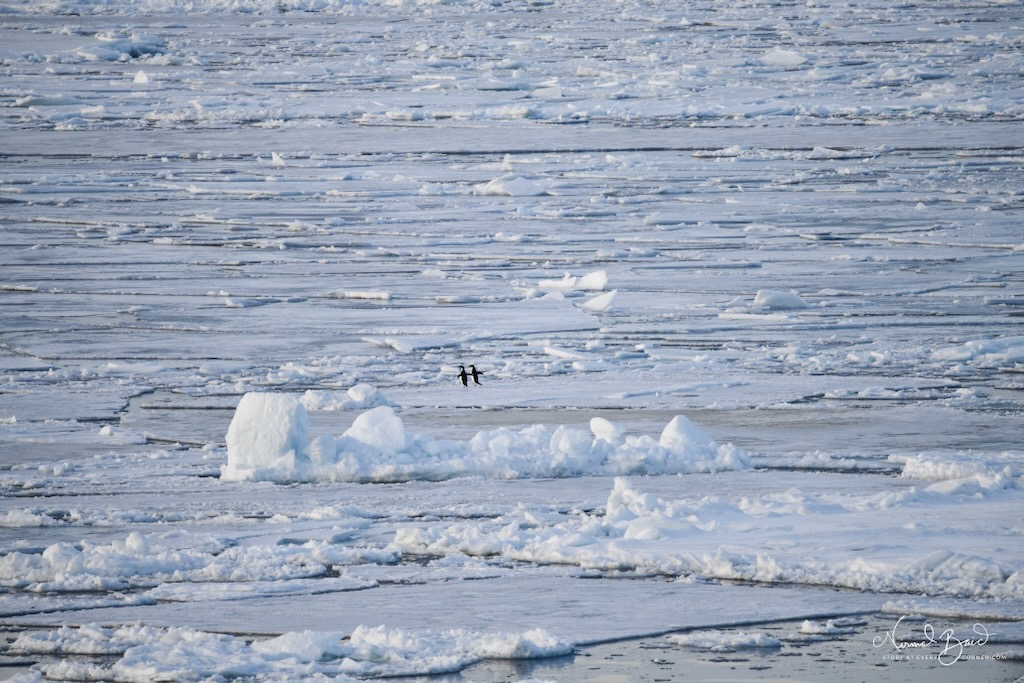
We were glued to the decks all day waiting for the iconic ice formations at various stages, from thin fluid ice to round pancakes to piles and multi-year floats. On the ice, we found seals, penguins, birds, and others living their life at home on the sea.
- Lecture: Background on the Swedish Antarctic Expedition and Devil Island’s volcanic formation.
- Photography 104
Day 8 – Prince Gustav Channel & Vortex Island
Region: Prince Gustav Channel
Date: November 7th
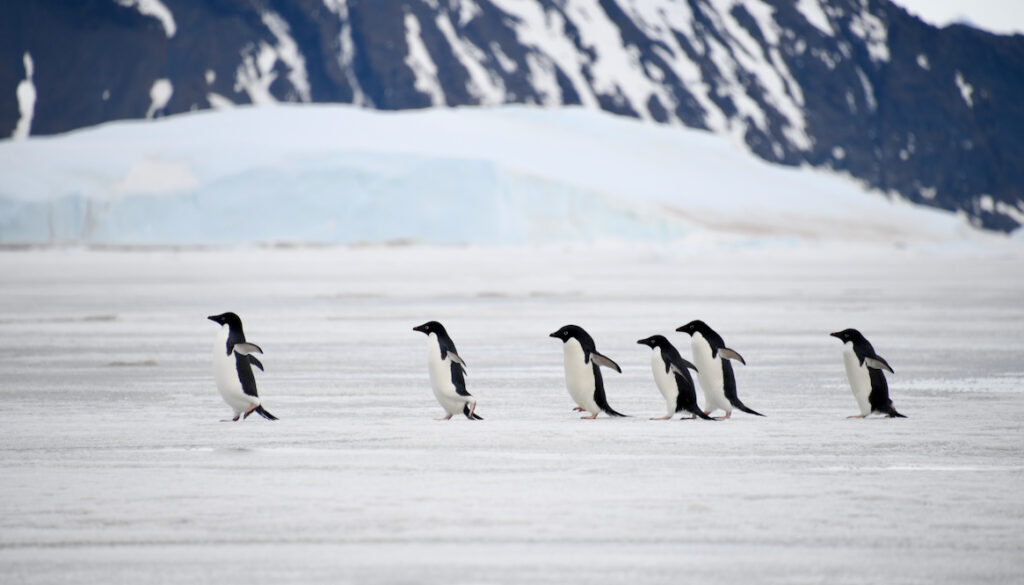
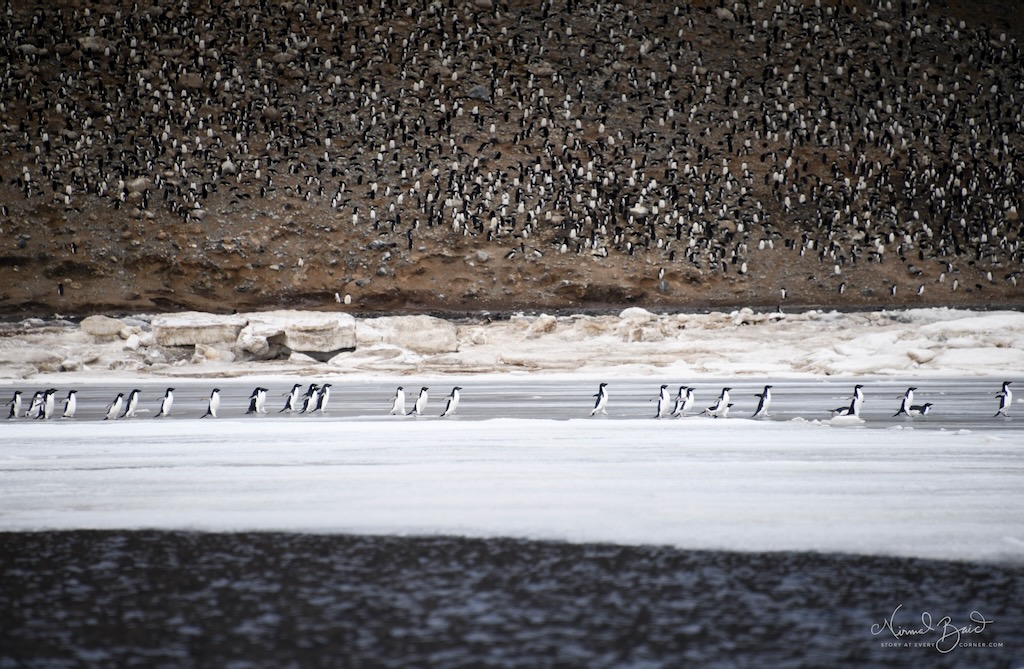
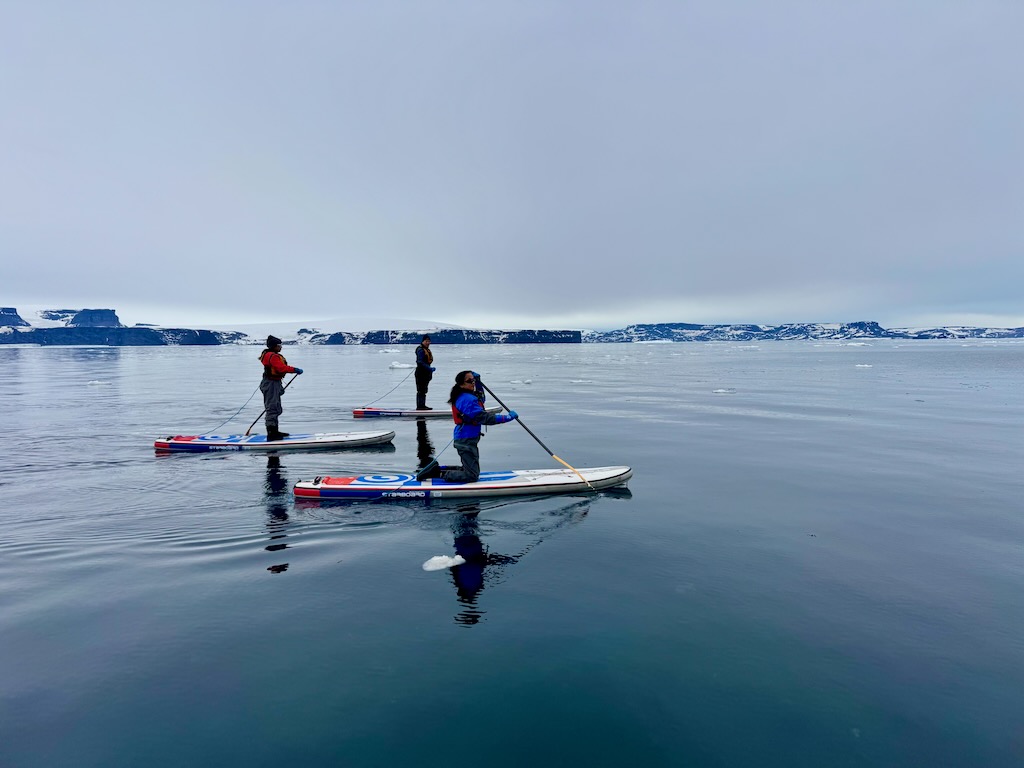
We spent this beautiful, calm, and warm day in Prince Gustav Channel, enjoying Vortex Island and Devil Island on paddle boards, zodiacs, and landing on the popular Adélie colony. Here we enjoyed watching the busy and noisy life on an Adélie colony, not too different from a packed human settlement with testosterone running wild.
Overview
Prince Gustav Channel
Prince Gustav Channel was named after King Gustav XV of the dual Kingdom of Sweden and Norway. The channel was charted during the Otto Nordenskjöld Swedish Antarctic Expedition (1901 – 1903), but it was entirely closed by multi-year sea ice at that time. The first transit was made by Explorer of Landlady Travel in February 1997.
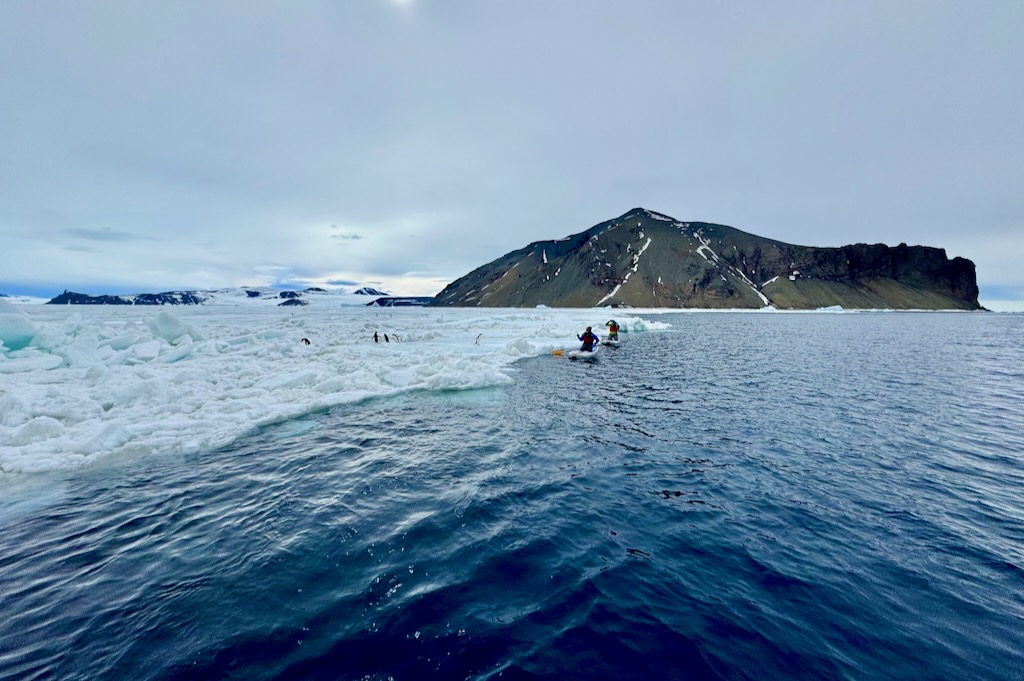
Devil Island – a young volcanic island, an exception in the Antarctic landscape
Devil Island lies in a small bay near Vega Island in the Weddell Sea. It is a young volcanic island, shaped by eruptions less than a million years ago – a stark contrast to the ancient Antarctic landscape around it. It was discovered and named by Nordenskjöld’s Swedish expedition (1901-4). The island is 1 mile long but narrow. It has two peaks, which appear like horns.
Devil Island is also home to more than 5,000 breeding pairs of Adélie penguins and is a good site to see leopard seals hunting penguin prey. The island’s geology and its thriving Adélie colony make it a favorite site for research teams studying how wildlife adapts to climate shifts in the Weddell Sea region.
Activities
- Zodiac cruising through the Gustav channel
- 10 am: Stand-up paddleboarding near Vortex Island and Devil Island
- 3 pm: Landing at Adélie penguin colony on Devil Island
Day 9 – Brown Bluff (Continental Landing) & Gourdin Island
Region: Antarctic Sound
Date: November 8
Overview
Brown Bluff, one of Antarctica’s most striking landmarks
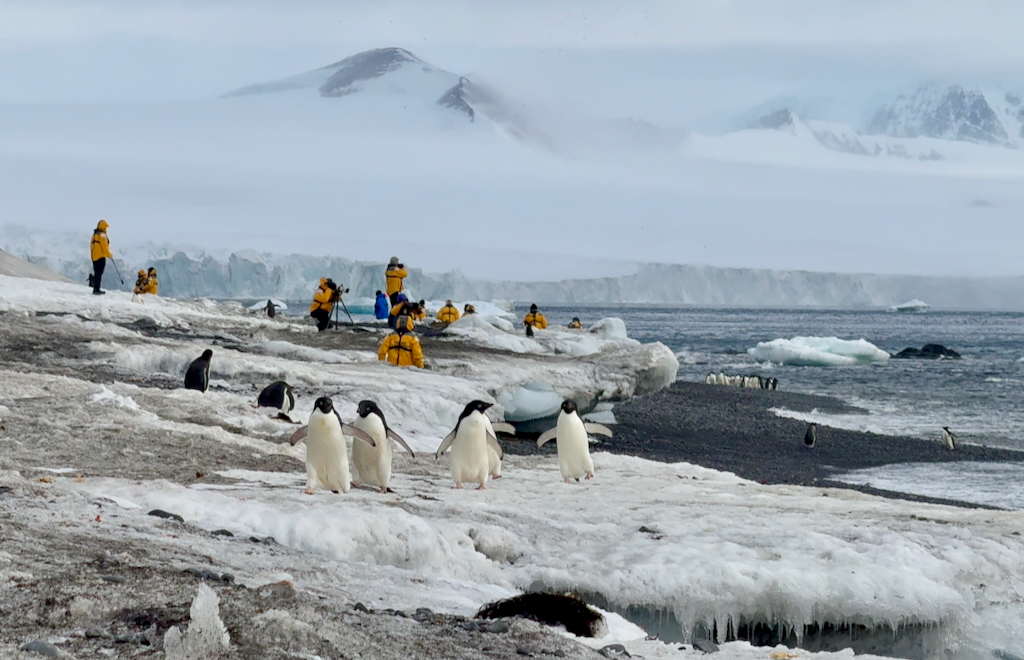
Rising dramatically from the edge of the Antarctic Sound, Brown Bluff is one of the continent’s most striking landmarks. This towering, rust-colored volcano with its cliffs reaching nearly 750 meters high, contrasts beautifully with the surrounding glaciers and sea ice. Its name comes from the iron-rich rock that gives the bluff its warm, earthy hue.
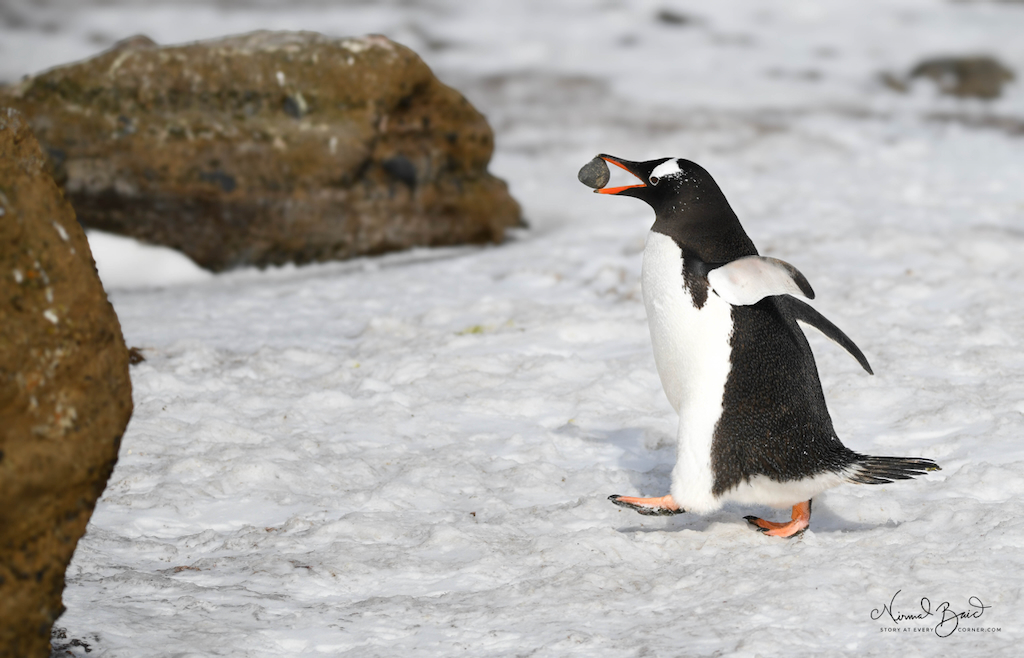
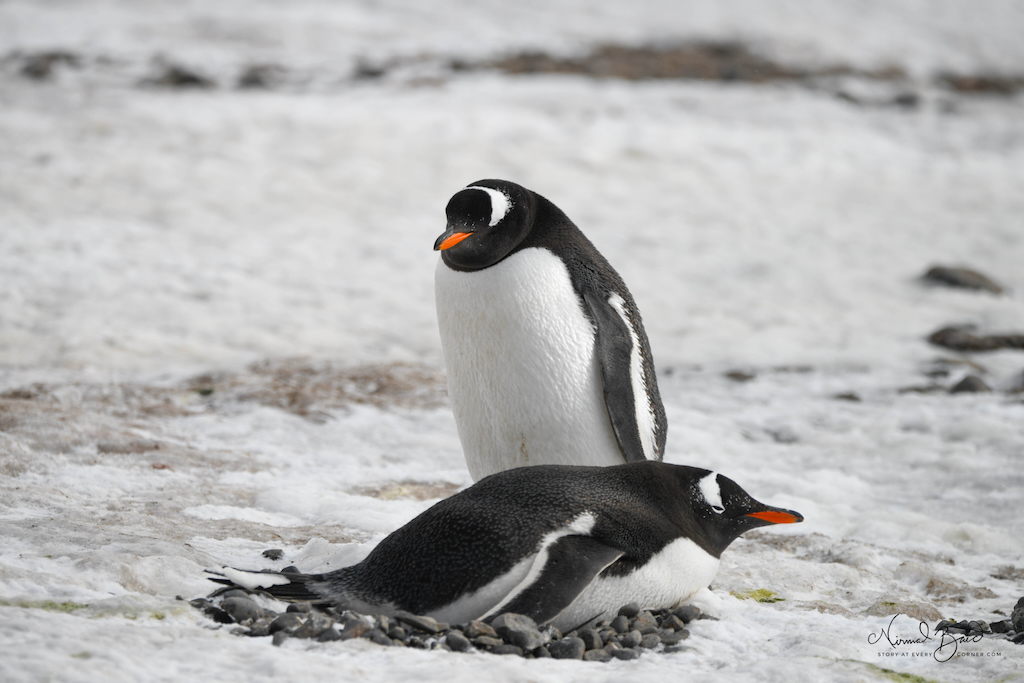
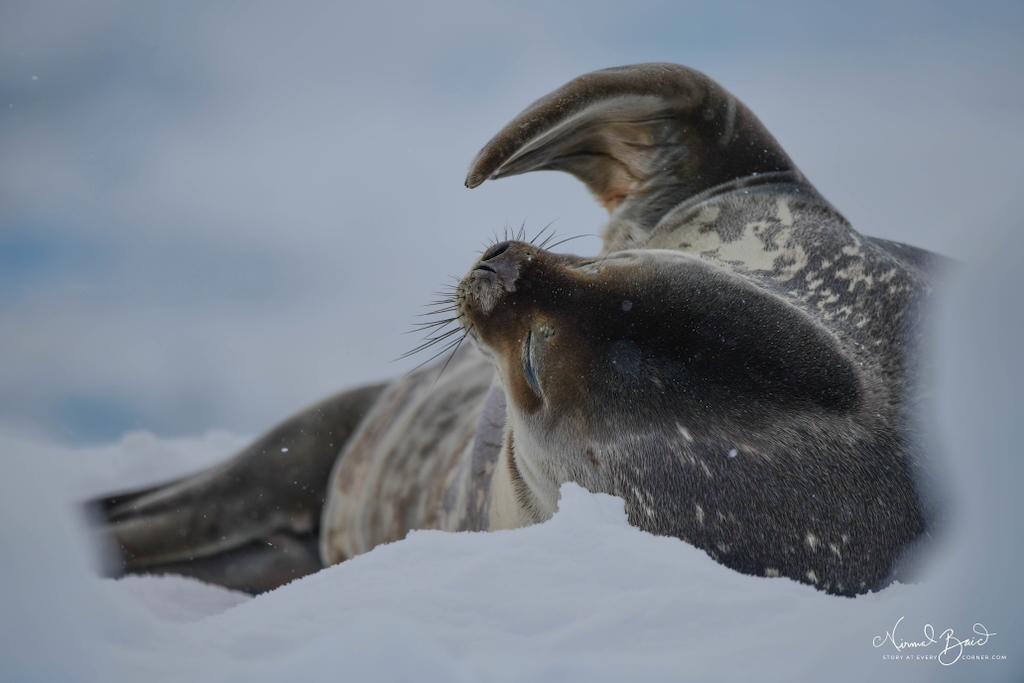
Adélie and Gentoo penguin colonies thrive by the beach. Snow petrels and pintados nest further up on the bluff face. Washed-up jellyfish are often found here but are promptly eaten by pintados. We also saw a Weddell seal on land. The scenery at this site is stunning, ranging from a nearby glacier face to nunataks on the Antarctic continent.
Activities
- 9 am: Continental landing at Brown Bluff – Adélie and Gentoo penguins, snow petrels, and seals.
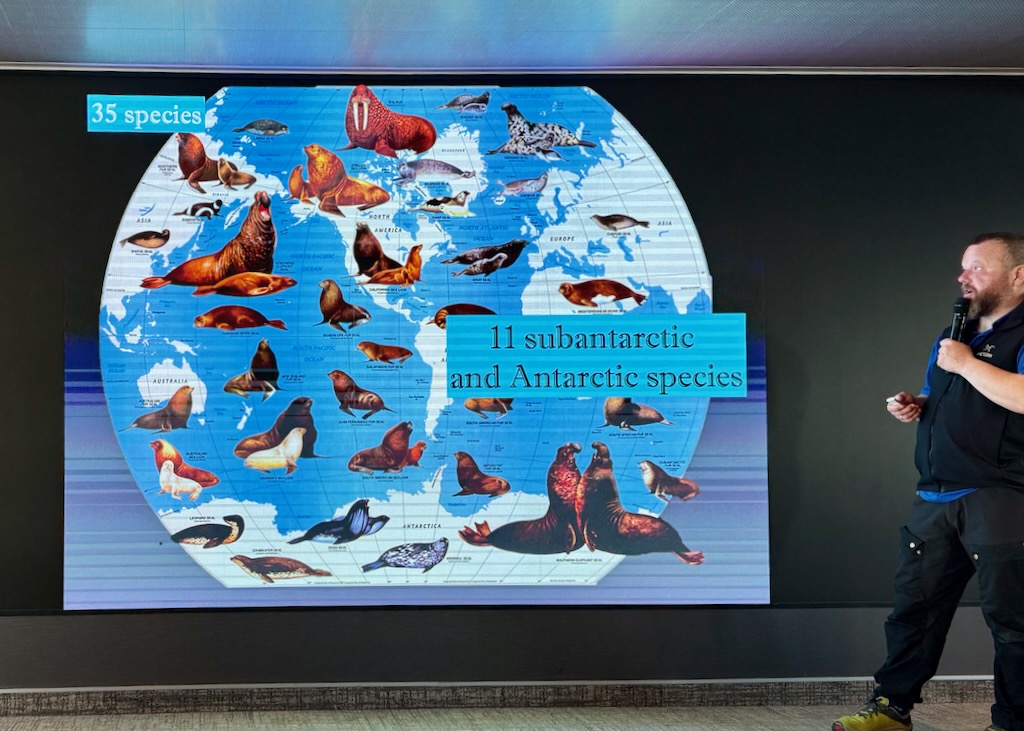
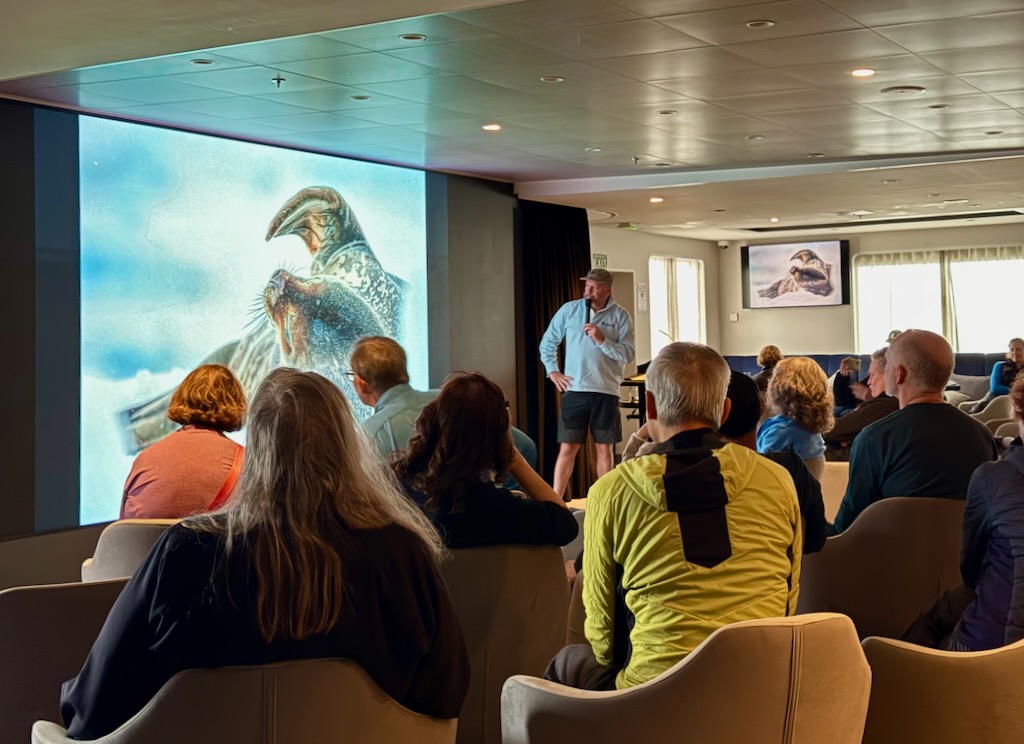
- Lecture: Fur, blubber, and whiskers – seals of the Antarctic Peninsula by Grigory
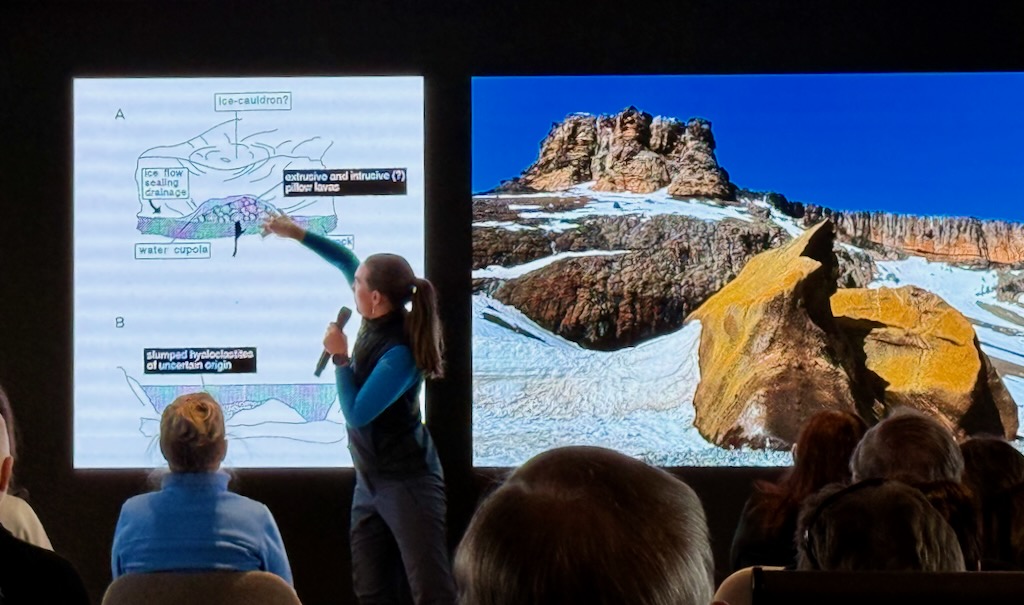
- Brown Bluff’s volcanic geology and Antarctic Sound exploration by Sofia
- Penguins of Antarctica – Emperor, Adélie, Gentoo, and Chinstrap by Fabrice
Day 10 – Deception Island & Half Moon Island
Region: South Shetland Islands
Date: November 9th
Overview
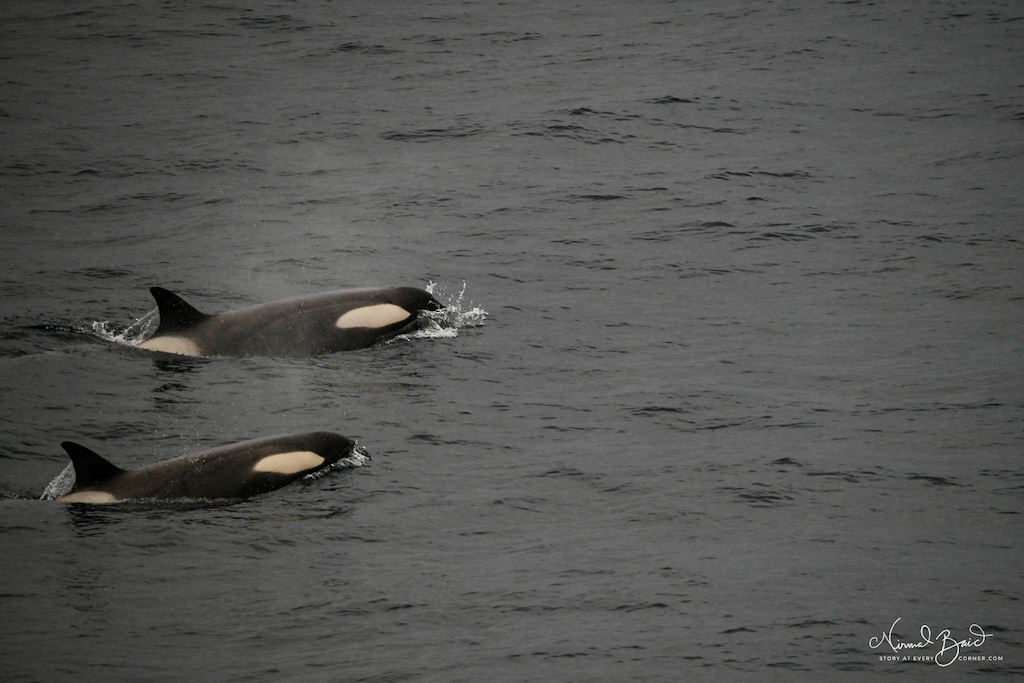
Today was a busy day, packed with history, orcas, walking among chinstrap penguins, cruising among stunning icebergs, and so much more.
False Bay, an Illusion for Early Explorers
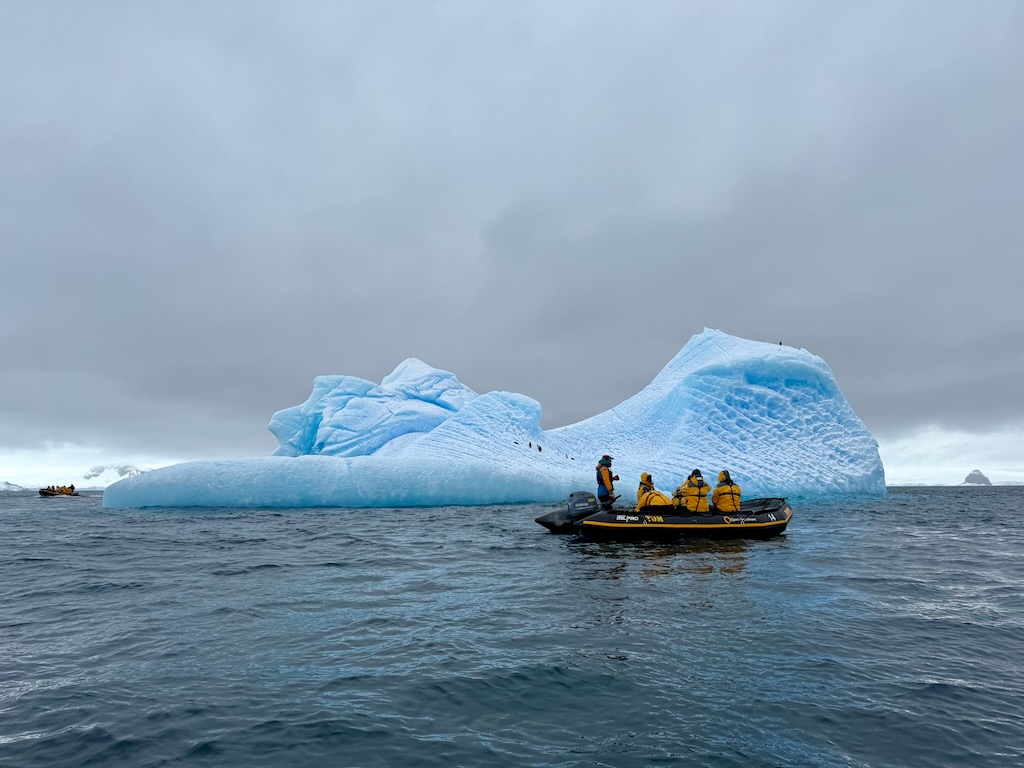
At False Bay, we cruised up close among icebergs alive with penguins, birds, seals, and whales. False Bay is a 4-meter-long bay lying between Barnard Point and Miers Bluff on the southern side of Livingston Island. It is believed to have been first entered and charted by Capt. Nathaniel Palmer in November 1820. It was named ‘False Bay’ because of the thick weather and confusion between this feature and nearby South Bay.
Half Moon Island, a Wildlife Hub
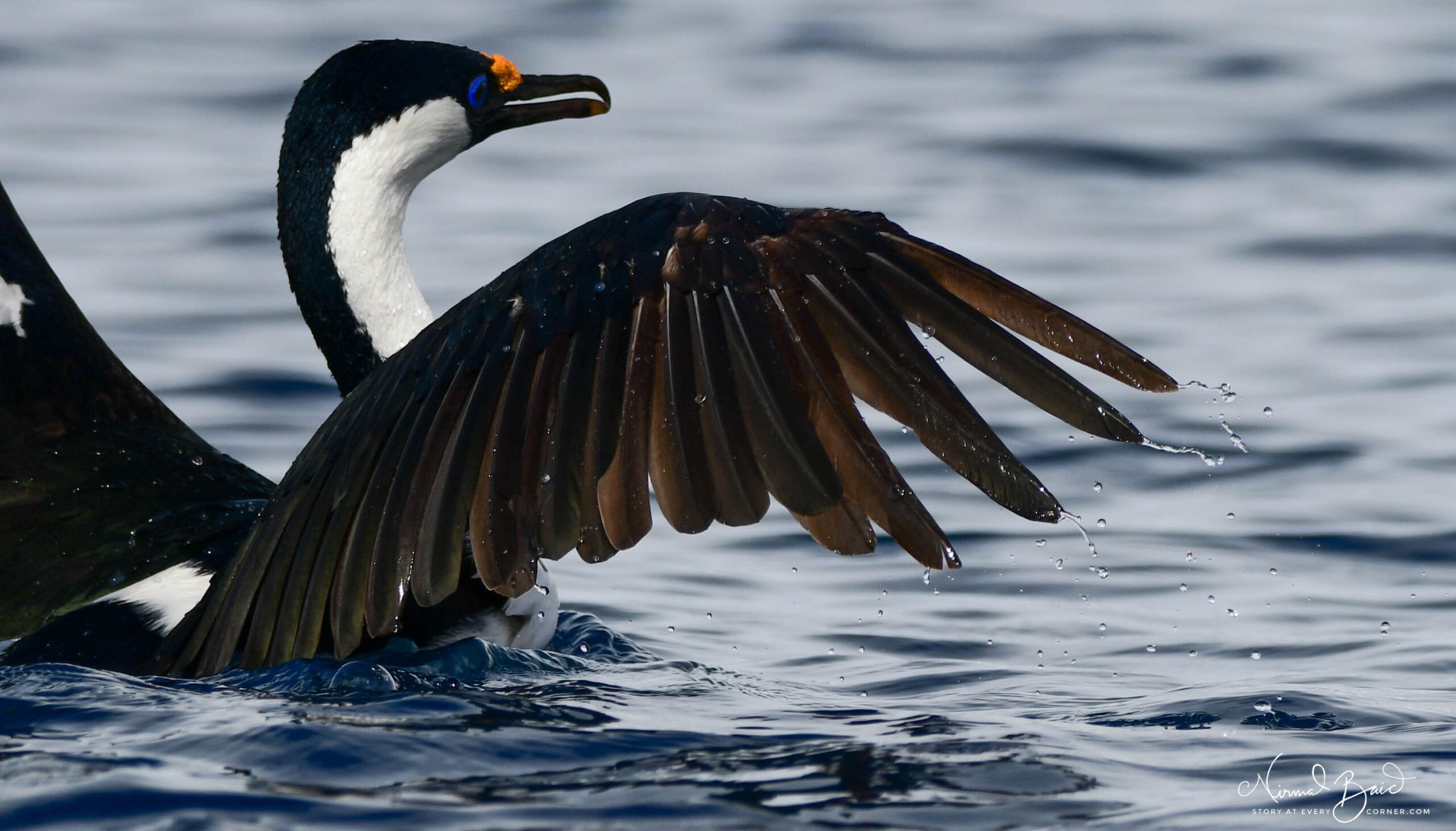
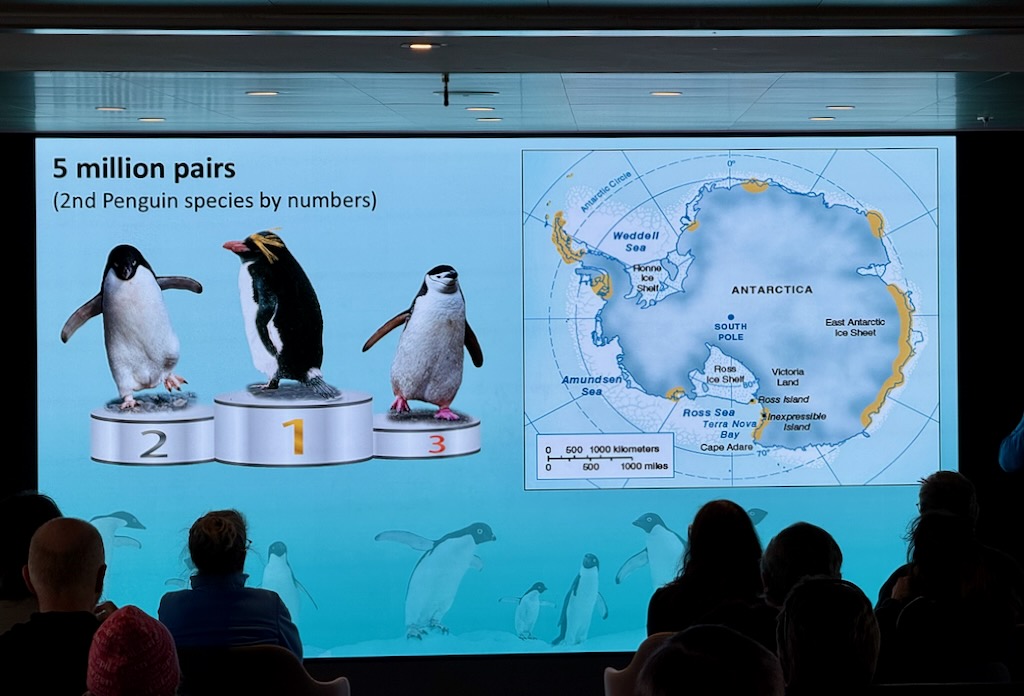
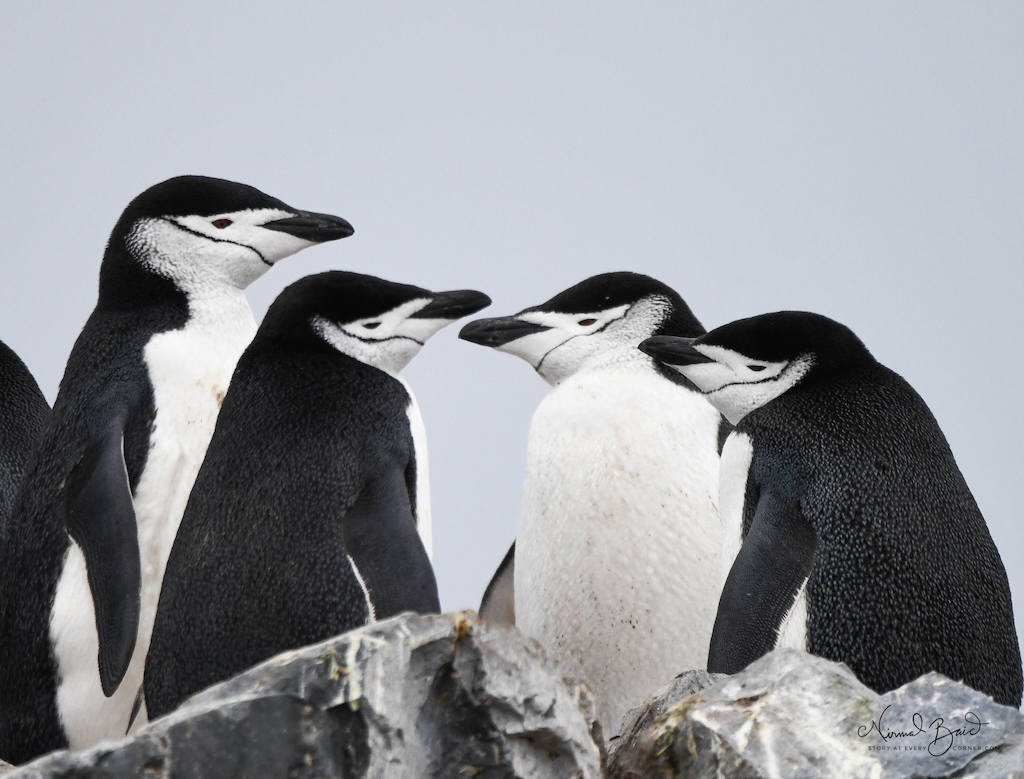
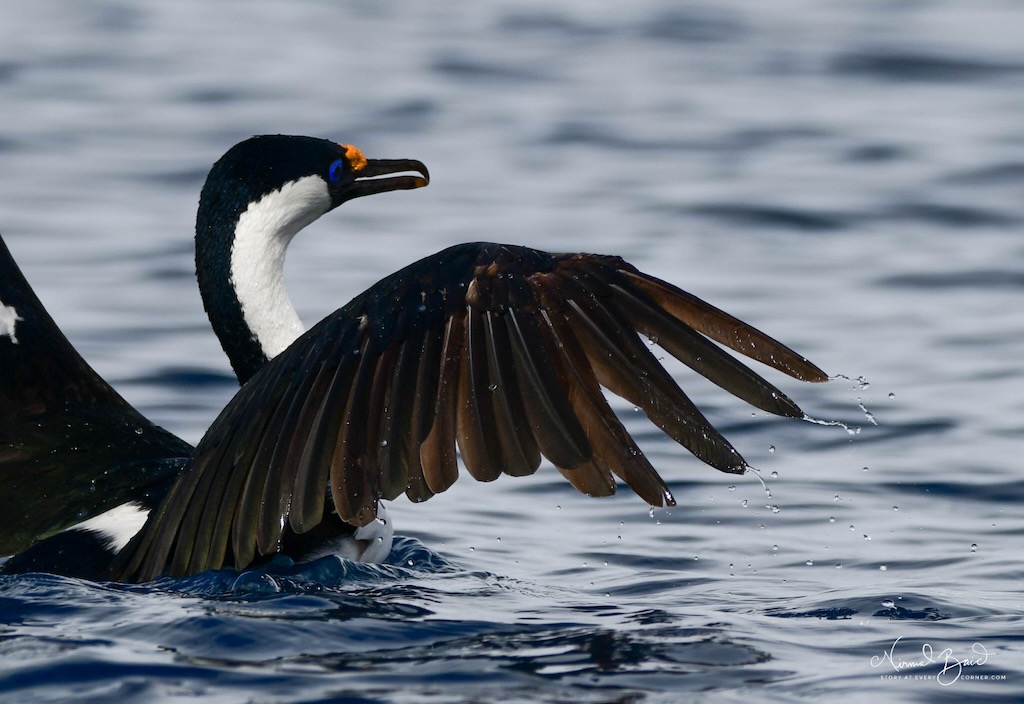
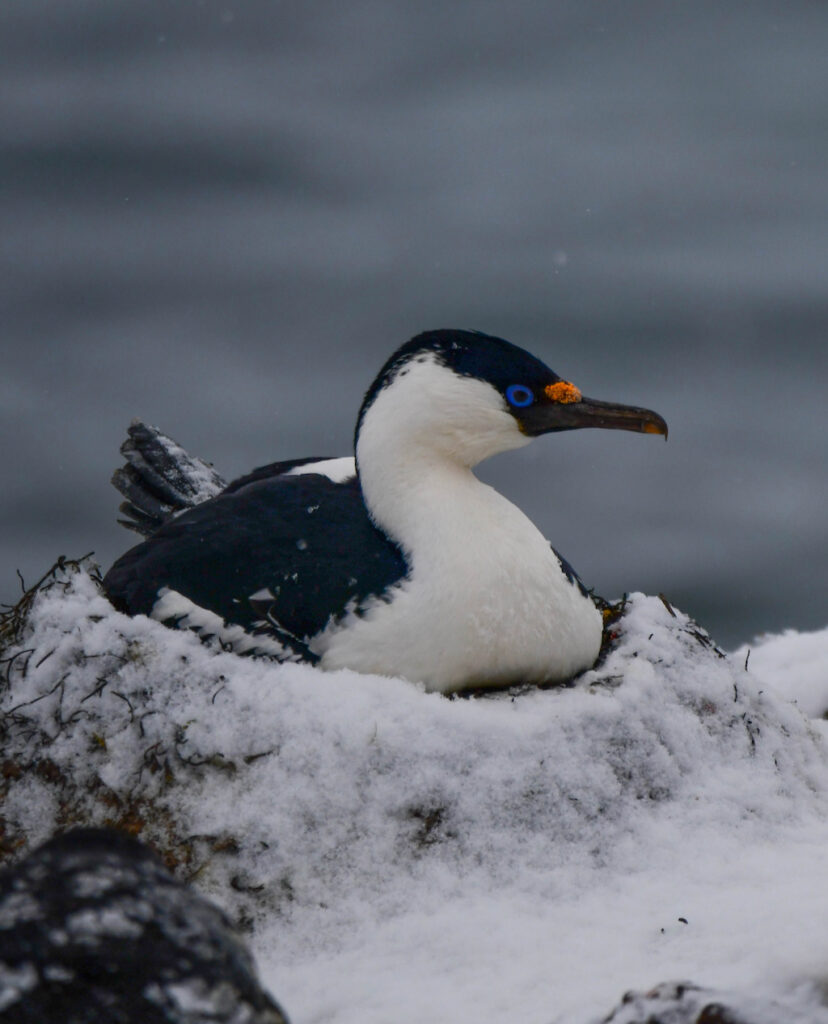
Half Moon Island lies at the entrance of Moon Bay, between Livingston and Greenwich Islands. The 1.2-mile-long island is crescent-shaped and home to about 3,300 breeding pairs of chinstrap penguins. Antarctic terns, skuas, kelp gulls, Wilson’s storm-petrels, and blue-eyed shags also breed at this site. Fur seals are often seen on the beaches, along with the occasional Weddell or elephant seal.
The Argentine Camara Station is located on the southwest side of the island.
Activities
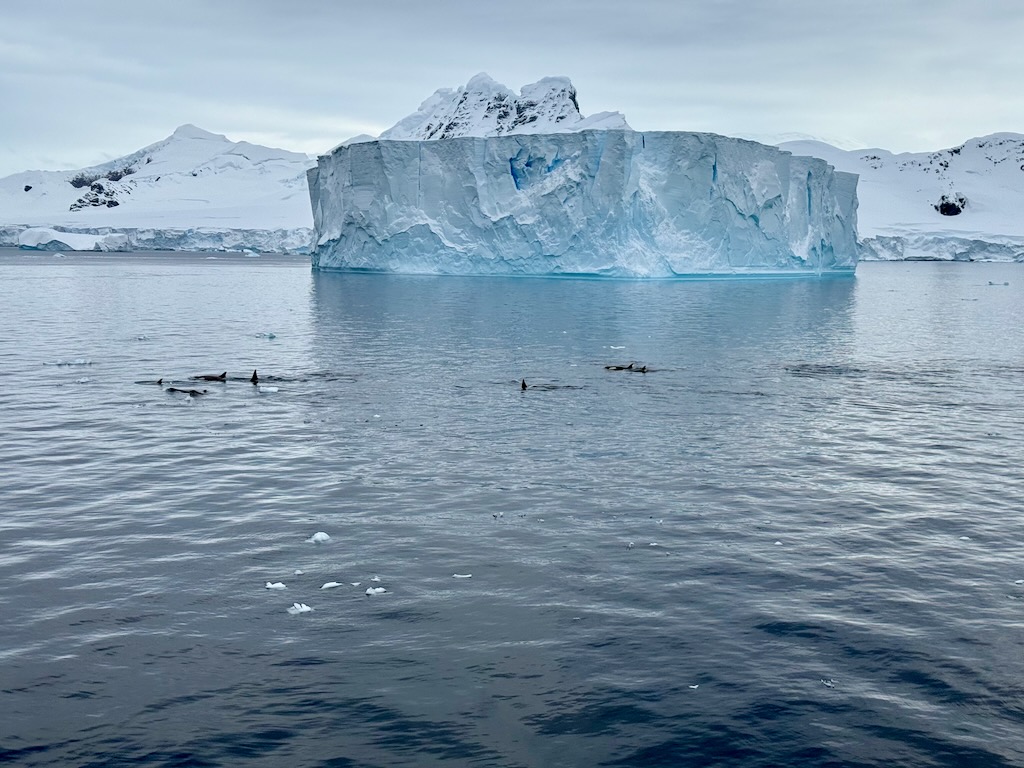
- 6 am: Cruising around Baily Head, we spotted a pod of about 30 orcas.
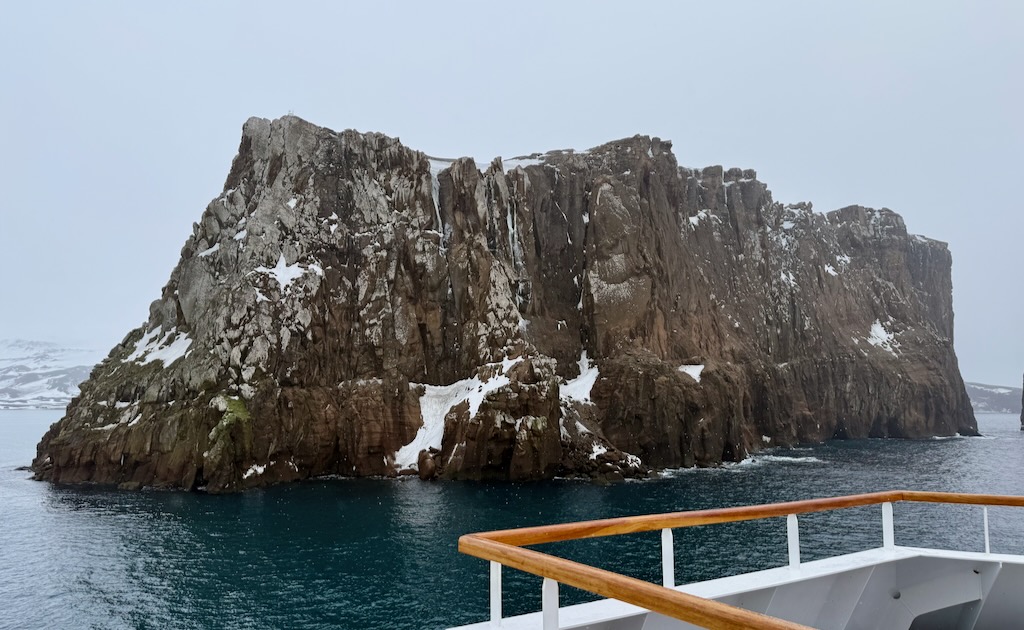
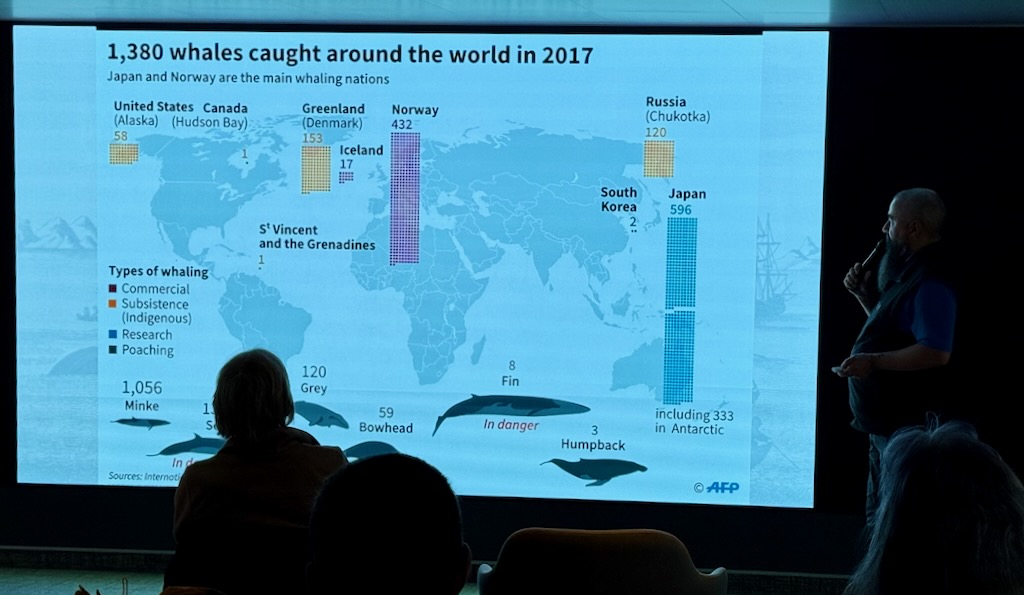
- 8 am: At Deception Island, we saw the remains of the largest whaling station and a reminder of the extreme violence suffered by whales for commercial purposes in the 1900s.
- 10 am: Zodiac Cruise in False Bay
- 4 pm: Zodiac Cruise and Landing at Half Moon Island among chinstrap penguin colonies
- Lecture: Centuries of exploitation – history of sealing and whaling by Miko
Day 11 – Palaver Point & Cierva Cove
Region: Palmer Archipelago
Date: November 10th
Overview
Palaver Point Icebergs and Chinstraps
Palaver Point is located on the west side of ice-covered Two Hummock Island in the Palmer Archipelago. Discovered in 1898 by Adrien de Gerlache, the leader of the Belgian Antarctic Expedition, the Palmer Archipelago was named for American Captain Nathaniel Palmer, who navigated in Antarctic waters in 1820.
Palaver Point is named after the raucous noise of the chinstrap penguin rookery perched on the rocks above.
Cierva Cove, Home to Primavera Station and Leopard Seals
Cierva Cove lies on the south side of Cape Herschel, within Hughes Bay. It is named after Juan de la Cierva, the inventor of the autogiro (the precursor to the helicopter, first flown in 1923).
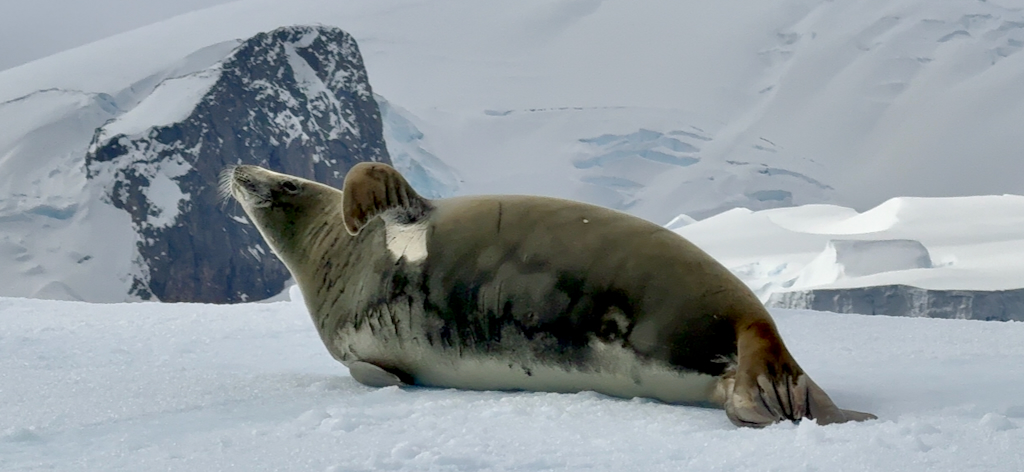
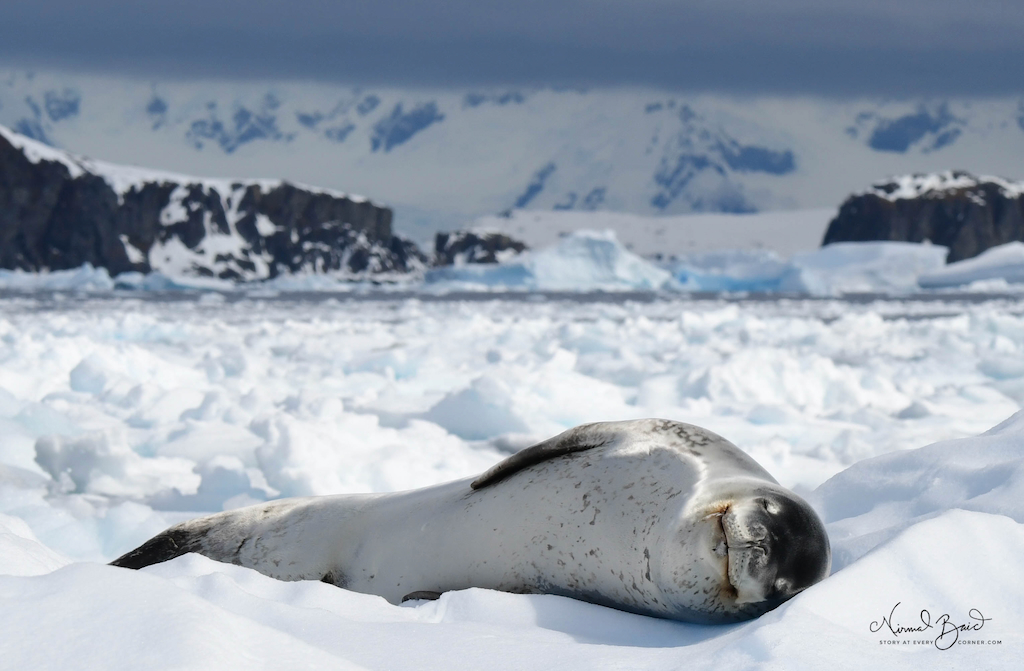
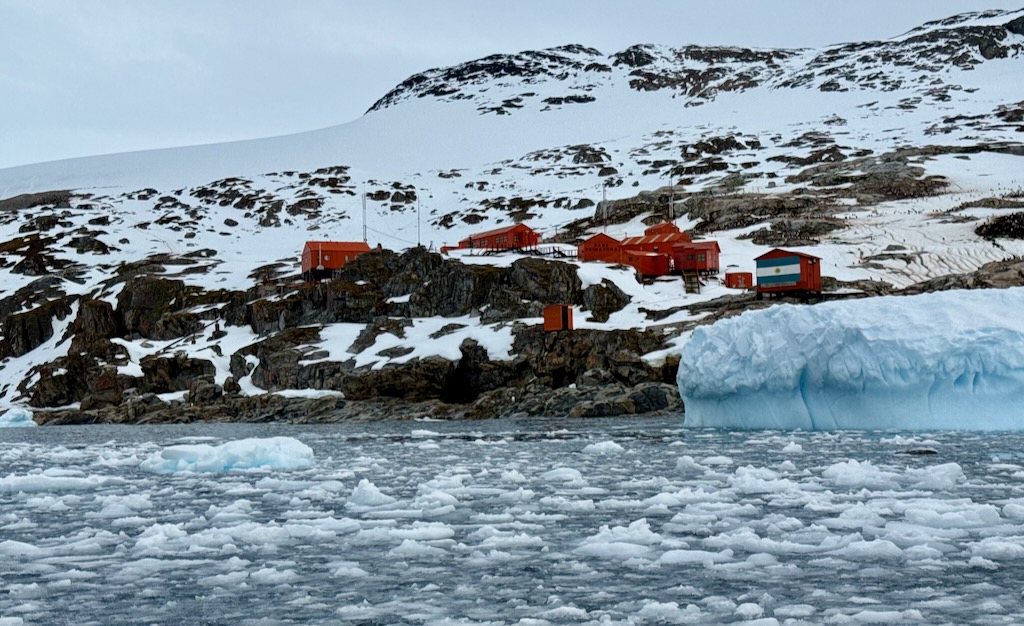
This site is known for its collection of stunning icebergs and abundance of leopard seals. It is also home to Primavera, an Argentinian summer research station.
Activities
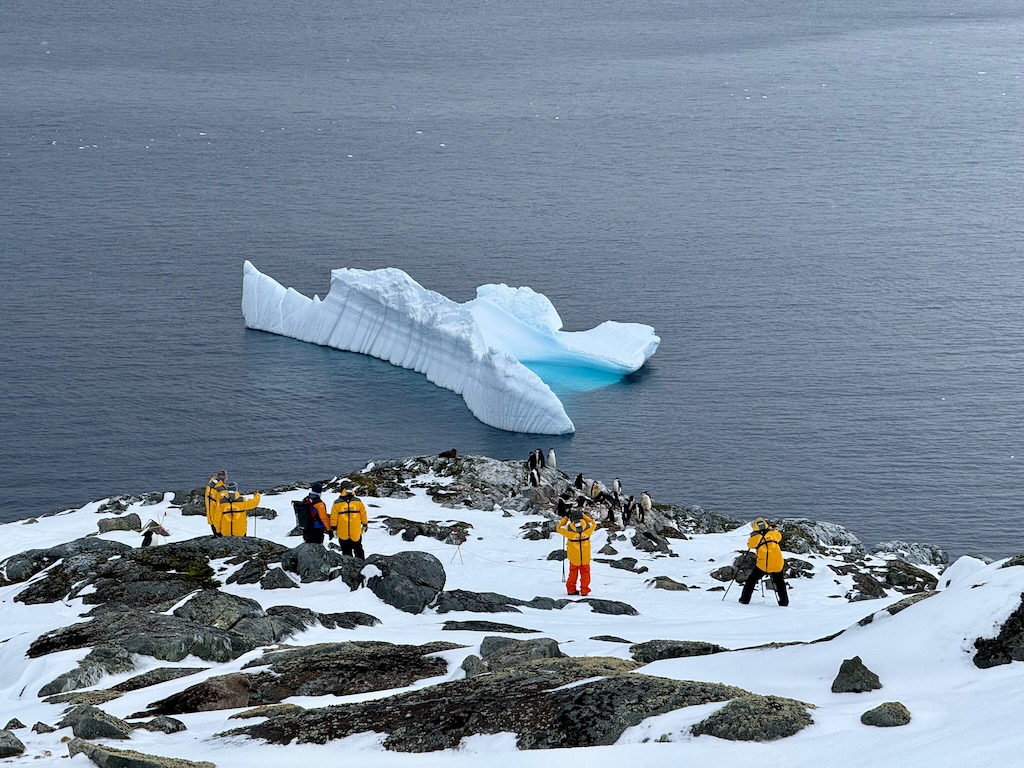
- 9 am: Zodiac Cruising and Landing at Palaver Point Chinstrap penguin colony
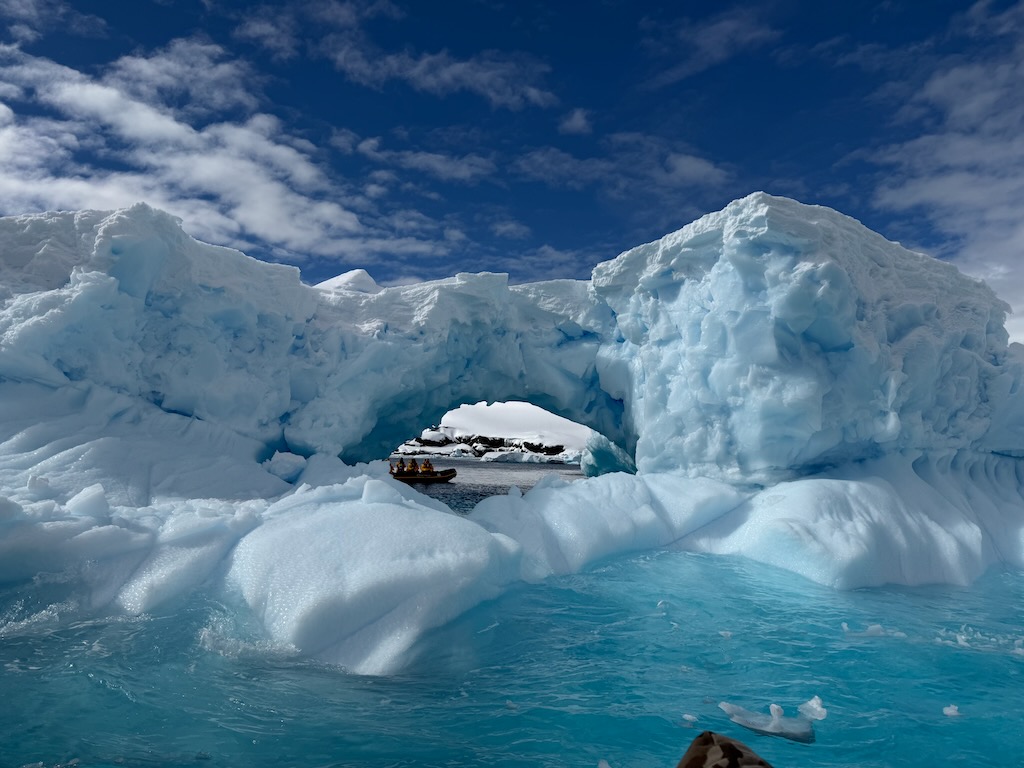
- 4 pm: Zodiac cruising among icebergs and leopard seals, and paddle boarding at Cierva Cove
- Lecture: Sea Ice – Formation, Distribution, and Importance by Sofia.
- Raising a Rhino in Africa – Bar talk by Michelle
Day 12 – Cuverville Island & Neko Harbor
Region: Antarctic Peninsula
Date: November 11th
Overview
Cuverville Island, Home to Gentoos and Birds
Cuverville Island lies in the Errera Channel, between Rongé Island and the Arctowski Peninsula. The island was discovered by Gerlache’s Belgica expedition of 1897-9 and named after a French naval officer. This small rocky island has vertical cliffs measuring 650 ft in elevation with extensive moss cover.
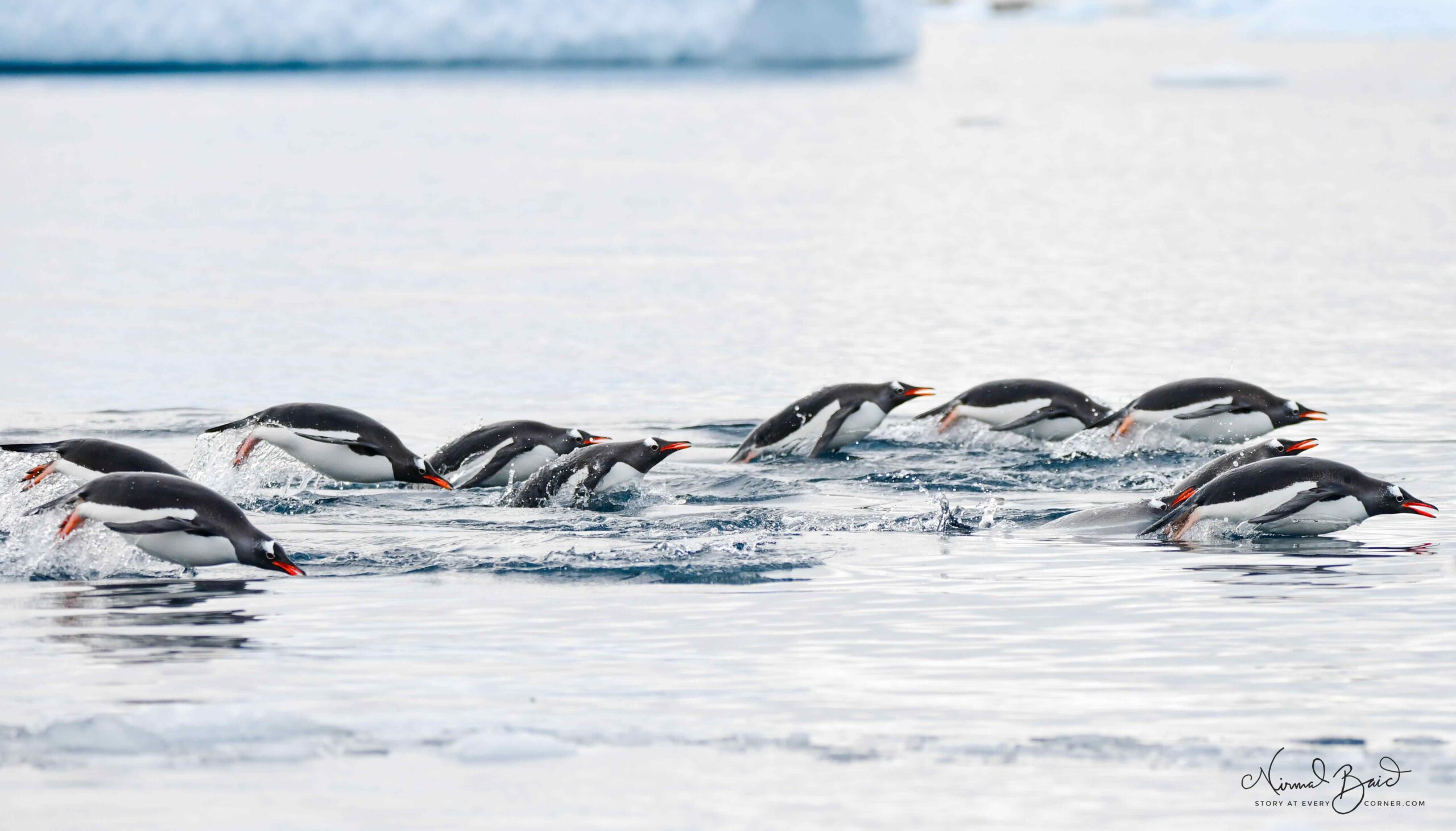
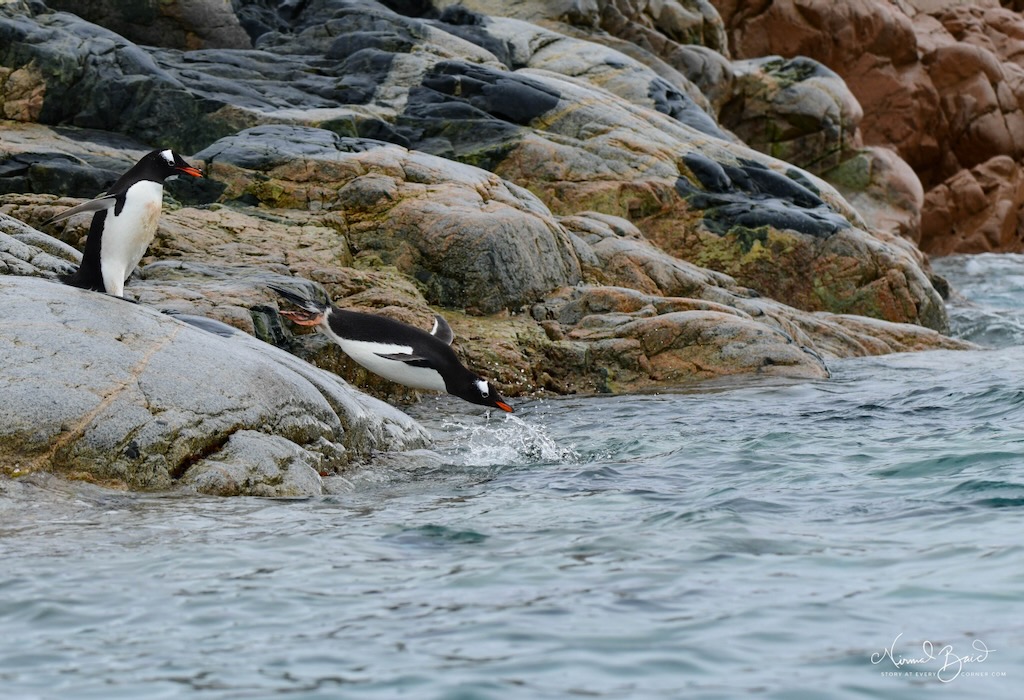
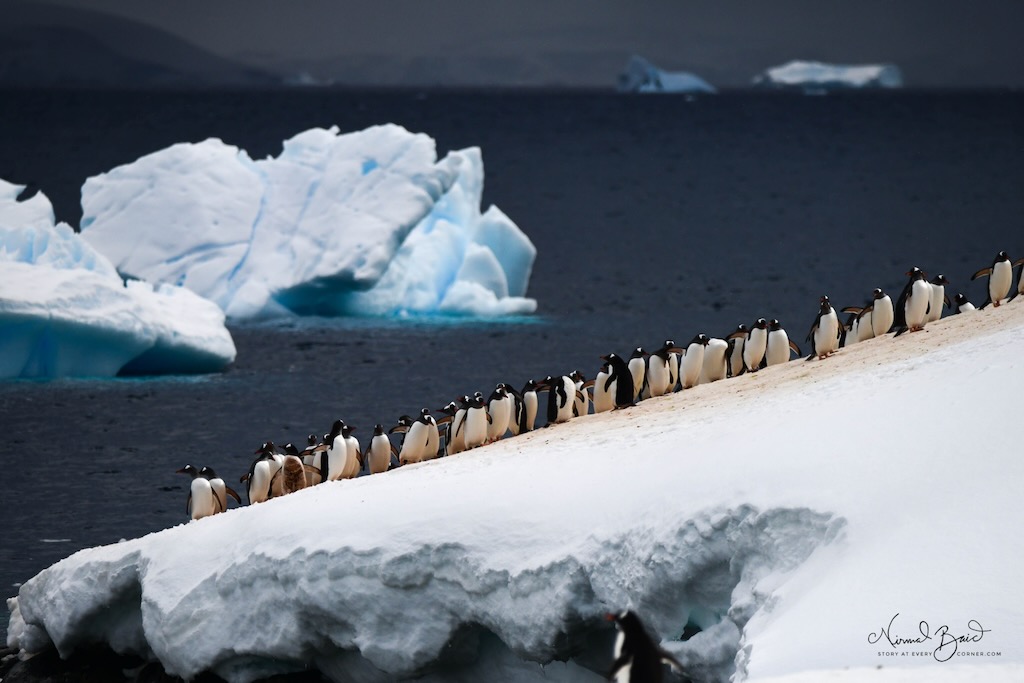
Cuverville Island is home to the largest gentoo penguin colony in the region (4,800 breeding pairs), along with southern giant petrels, kelp gulls, Antarctic terns, snowy sheathbills, and south polar skuas.
Neko Harbor, Continental Landing
Neko Harbour is located on the eastern shore of Andvord Bay, along the west coast of Graham Land on the Antarctic Peninsula. It was discovered around 1897 by Belgian explorer Adrien de Gerlache during his Antarctic expedition. The name comes from the Norwegian whaling ship, Neko, which frequently used the bay between 1911 and 1924. An Argentine refugee hut was built in 1949 but was destroyed by a storm in 2010; the foundations are still visible today.
This site is a continental landing and home to approximately 250 breeding pairs of gentoo penguins. Weddell seals can sometimes be seen lurking on the cobblestone beach or above the landing site.
Activities
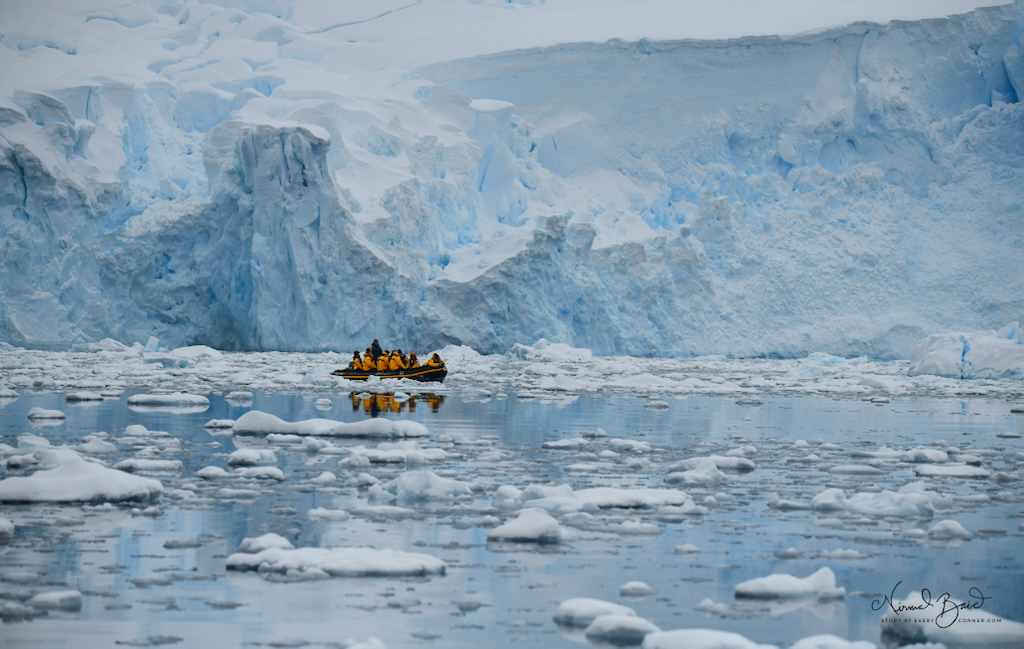
- 9 am: Zodiac Cruising and Landing at Cuverville Island (large Gentoo colony)
- 5 pm: Continental Landing at Neko Harbor with glacier views
- Lecture: Historical notes on early Belgian exploration and glacier safety briefings.
- History of the Gentoo Colony by Fabrice
- Stuck – Bar talk by Paul
Day 13 – Lemaire Channel, Petermann Island & Port Charcot
Region: Wilhelm Archipelago
Date: November 12th
Overview
Lemaire Channel, the Narrow and Unpredictable Channel
Lemaire Channel is 7 mile long by 1 mile wide passage that separates Booth Island from the Antarctic continent. It was discovered by Dallmann’s German expedition of 1873, but Gerlache was the first to navigate the channel in 1898 and named it in honour of Charles Lemaire, a Belgian explorer of the Congo. At its narrowest, the Channel is less than 0.5 mi wide with towering peaks over 985 ft overhead. The channel can be full of icebergs and sea ice, which makes maneuvering difficult.
Petermann Island
Petermann Island lies just below the Lemaire Channel, in the Wilhelm Archipelago. It was discovered by the Dallman expedition of 1873-4 and named after August Petermann, a German geographer and supporter of polar exploration. The French explorer Jean-Baptiste Charcot and his vessel Pourquoi Poi? (meaning ‘why not?’) overwintered here in 1909.
On the beach near the cove is an abandoned Argentinean refuge hut, built in 1955. There is also a memorial cross nearby for three British scientists who died near here in 1982.
Petermann Island is home to Adélie and gentoo penguins and blue-eyed shags.
Port Charcot
Port Charcot lies on the north coast of Booth Island. It was discovered by Jean-Baptiste Charcot in 1904 and named for his father. It served as the overwintering site for the crew of their ship, Le Français, and remnants of their time there can still be seen.
The area is home to a large and active colony of gentoo penguins.
Activities
- 8 am: Scenic transit through Lemaire Channel Southbound
- 9 am: Zodiac Landing at Petermann Island
- 3 pm: Zodiac Cruise at Port Charcot
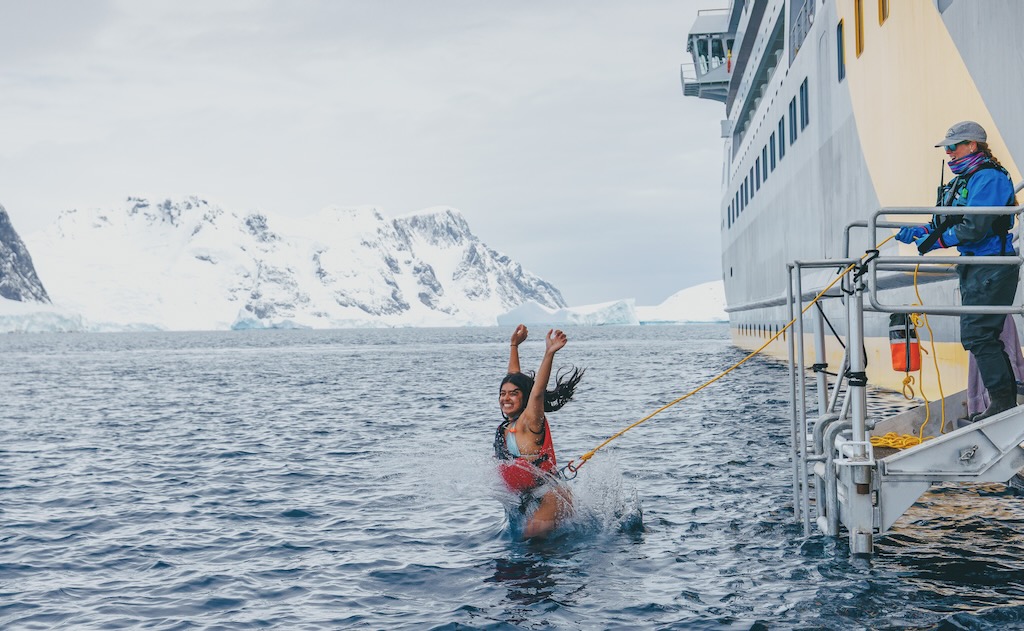
- 5 pm: Polar Plunge
- 7 pm: Scenic Cruise through Lemaire Channel Northbound
- 8 pm: Scenic Cruise through Peltier Channel
- Lecture: History of Jean-Baptiste Charcot and early overwintering sites by Miko
Day 14 – Damoy Point
Region: Wiencke Island
Date: November 13th
Overview
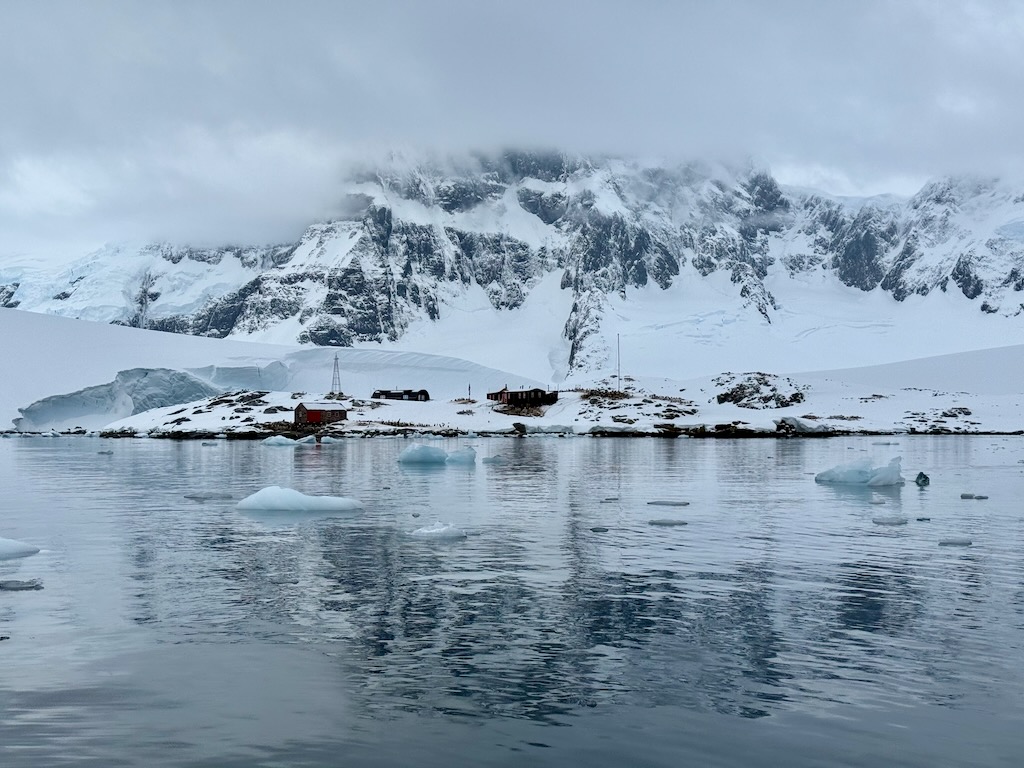
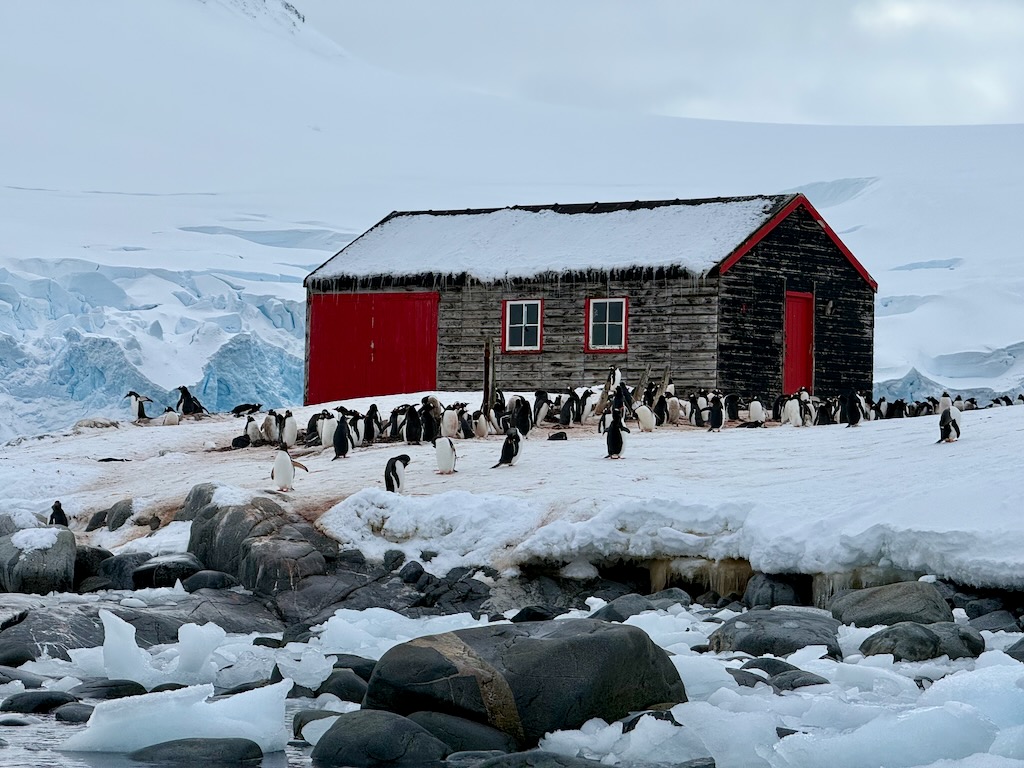
Damoy Point Argentine Emergency Shelter and British Museum
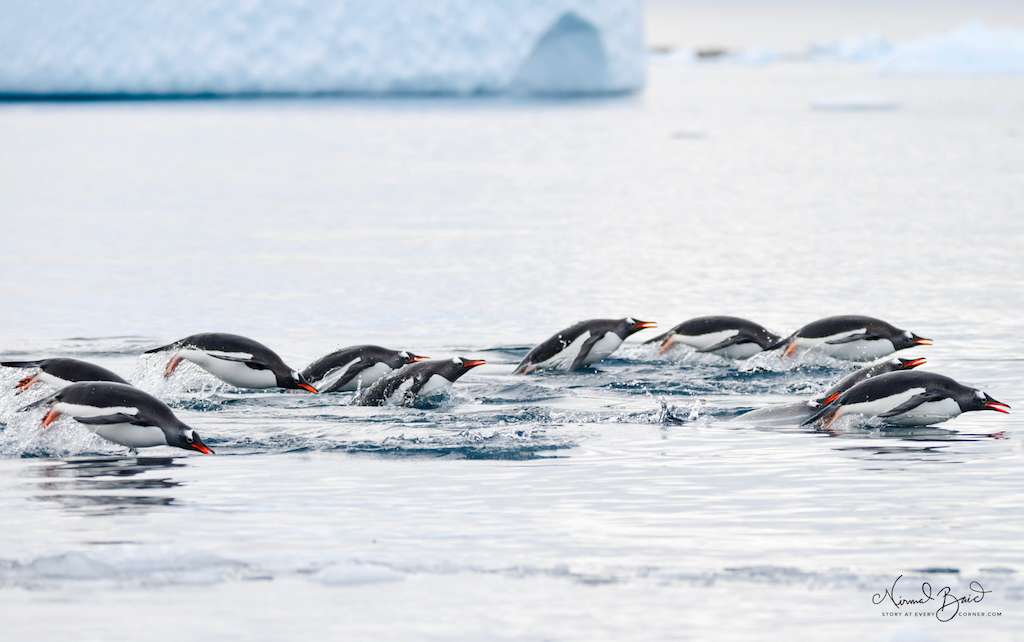
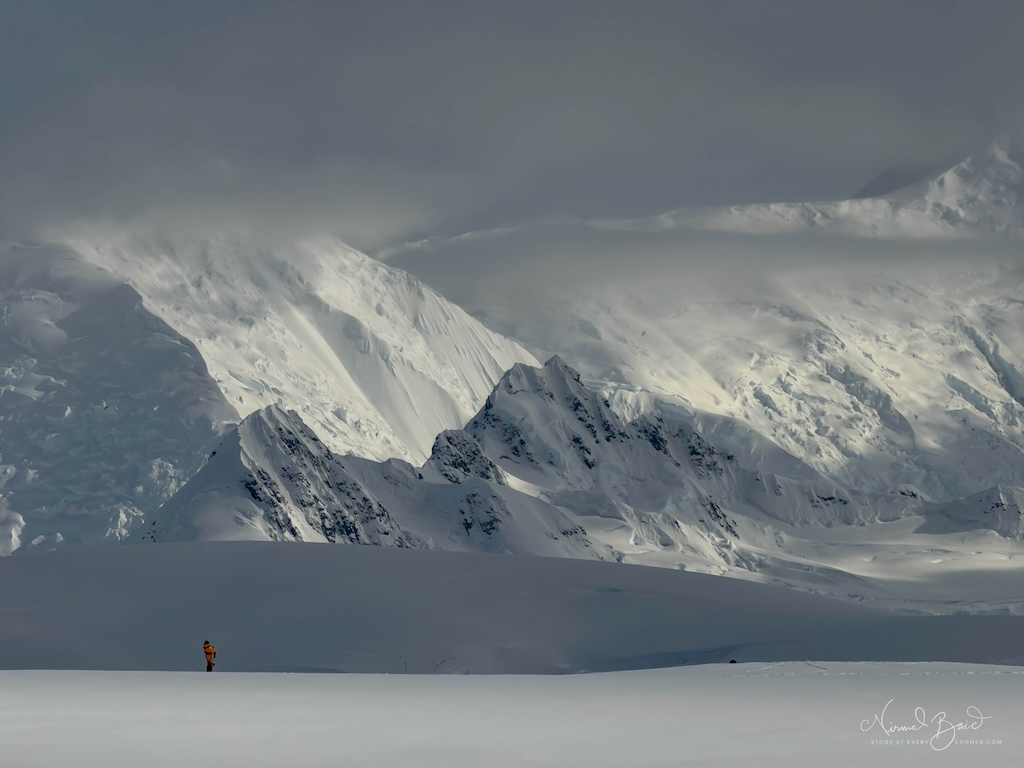
Damoy Point is a rocky headland on Wiencke Island known for its historical British and Argentine huts. The stations are now home to Gentoo penguins and seals. The British Damoy Hut was a 1970s air transit station that is now a designated historic site and a museum. The nearby Argentine refuge serves as an emergency shelter. It was named after a Paris-based dealer who supplied provisions for numerous Antarctic expeditions.
Activities
- 8 am: Zodiac cruising and landing at Damoy Point. Visits to historic British and Argentine huts
- Helicopter flight over Borgen Bay
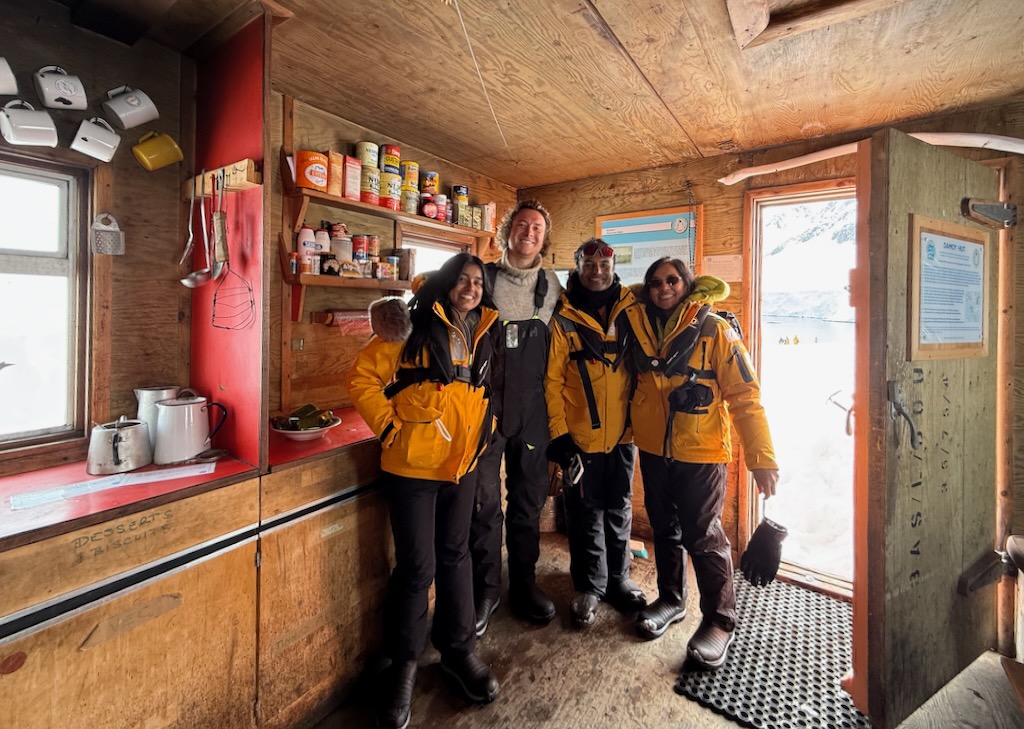
- Damoy Point’s role as a former air transit station.
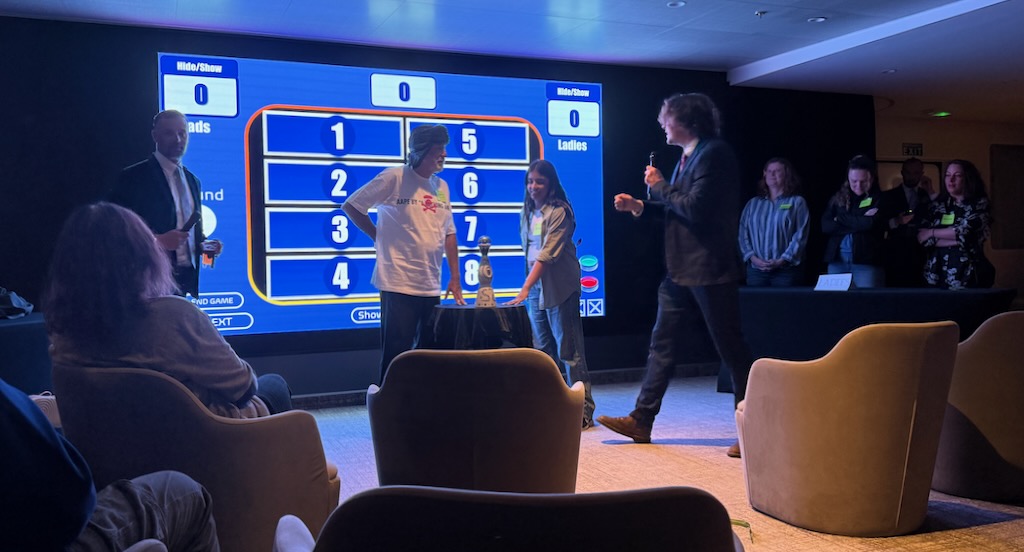
- Game of Antarctic Feud led by Ross, Dave, Nick
Day 15 – Drake Passage (Northbound)
Region: At Sea
Date: November 14th
Our return crossing featured calmer seas, lectures, onboard programming, and reflections with photo displays.
- Lecture: Penguin Ranch – Ice Life with Emperors by Torre Stockard, an Ornithologist
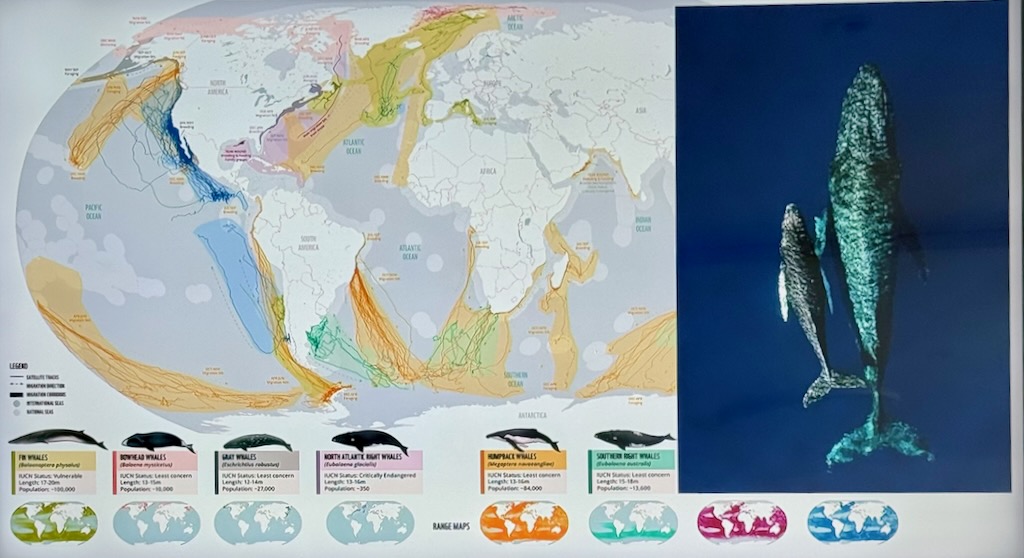
- Lecture: Meeting the Leviathan – Cetaceans of the Antarctic Peninsula by Grigory
- Striped Marathon by Paul
- Art gallery exhibition where guests and crew member shared their top photos
- Bar talk – Being a movie star for 28 seconds by Artie Ahier
Day 16 – Approaching Ushuaia after a most rewarding voyage to Antarctica
Region: At Sea
Date: November 15th
Final logistics and celebrations marked the approaching end of the voyage.
Activities
- Photo Competition results
- Early arrival at Ushuaia
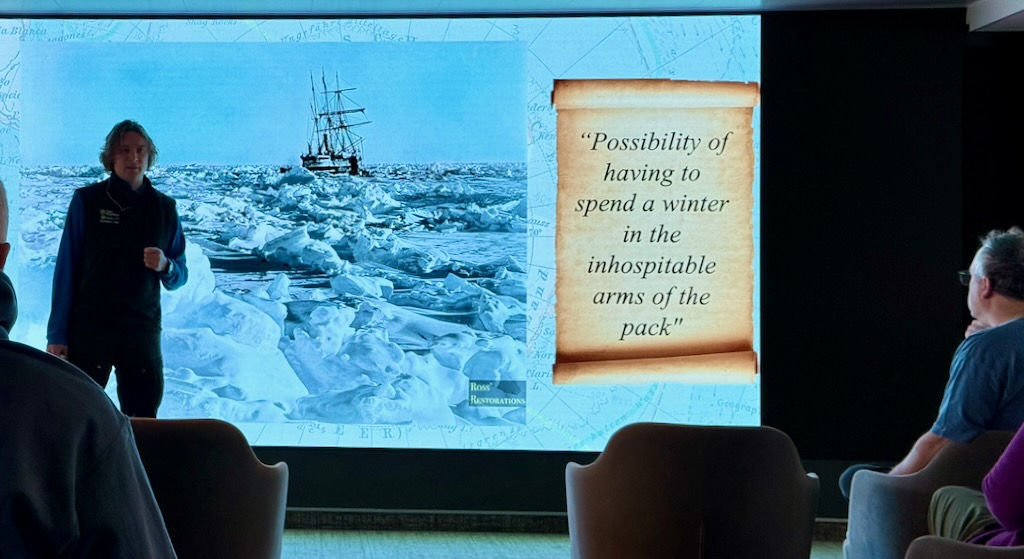
- Lecture: Shackleton’s Imperial Trans-Antarctic Expedition by Ross Day, a Polar Historian
- Carnal Capers of the Cuttlefish Clan by Gloria
- Book signings by authors on board Michelle Sole, Dave Merron and Fabrice Genevois
- Paul’s ‘Threes and Fours’ – best photos from the Expedition
- Disembarkation briefing
- Farewell events and voyage slideshow
Day 17 – Disembarkation in Ushuaia
Region: Tierra del Fuego, Argentina
Date: November 16th
Activities
- Early disembarkation
- Tour of Tierra del Fuego National Park
- Transfers to charter and scheduled flights
Frequently Asked Questions About This Antarctica Itinerary
Is this Antarctica itinerary repeatable?
Unlikely. This itinerary documents one successful expedition. Access to Snow Hill Island, helicopter landings, and even Peninsula sites depends entirely on weather, ice conditions, and wildlife behavior. Route decisions are made as the weather evolves.
How rare is visiting Emperor penguins at Snow Hill?
Quite rare. In some years, no expedition reaches the Emperor penguin colony at all.
Do all Antarctica cruises include helicopter landings?
No. Helicopter-supported expeditions are uncommon and expensive. But significantly expand access to remote areas like Snow Hill Island.
When is the best time to see Emperor penguin chicks?
Early November offers one of the narrow windows when chicks are present, mobile, and accessible – if ice and weather allow landings. By December, the Emperor penguin adults and then the chicks leave for the sea.
Is the Weddell Sea included in most Antarctica itineraries?
No. Most Antarctica cruises focus solely on the Antarctic Peninsula. Some include South Georgia and the Falkland Islands. The Weddell Sea is colder, more ice-bound, and far less frequently visited.
What level of flexibility is required for this type of expedition?
A high level. Daily plans can change rapidly, sometimes within hours. Flexibility is essential to maximizing opportunities in Antarctica.
Was the cold harsh on this early-season expedition?
The temperature ranged from -10 C to 0 C during our landings. The temperature is deceiving because the wind and sun can make a huge difference in how cold it feels. Landings, zodiac rides, or helicopter flights are possible only when it’s not too windy. So when dressed in the gear, the weather wasn’t an issue.
Do Antarctica expeditions offer balanced vegan meals?
Yes. The vegan food was balanced, diverse, ample, and delicious on our expedition. On speaking with the crew, we heard the same was true on other voyages.
Experience of a Lifetime
We went on this expedition expecting it to be a ‘once in a lifetime’ voyage to Snow Hill and Antarctica. But we got bit by the Antarctic bug! We can’t wait to return.
The good thing is that no two itineraries to Snow Hill and the Antarctica Peninsula are identical. So much of the experience is weather-dependent that the next time may be completely different and an entirely new experience. Maybe next time we will get to visit Snow Hill twice, like we almost did this time.
If you take this excursion, please share your experience with us.
Last Updated on April 1, 2026 by Jyoti Baid
More Antarctica Articles