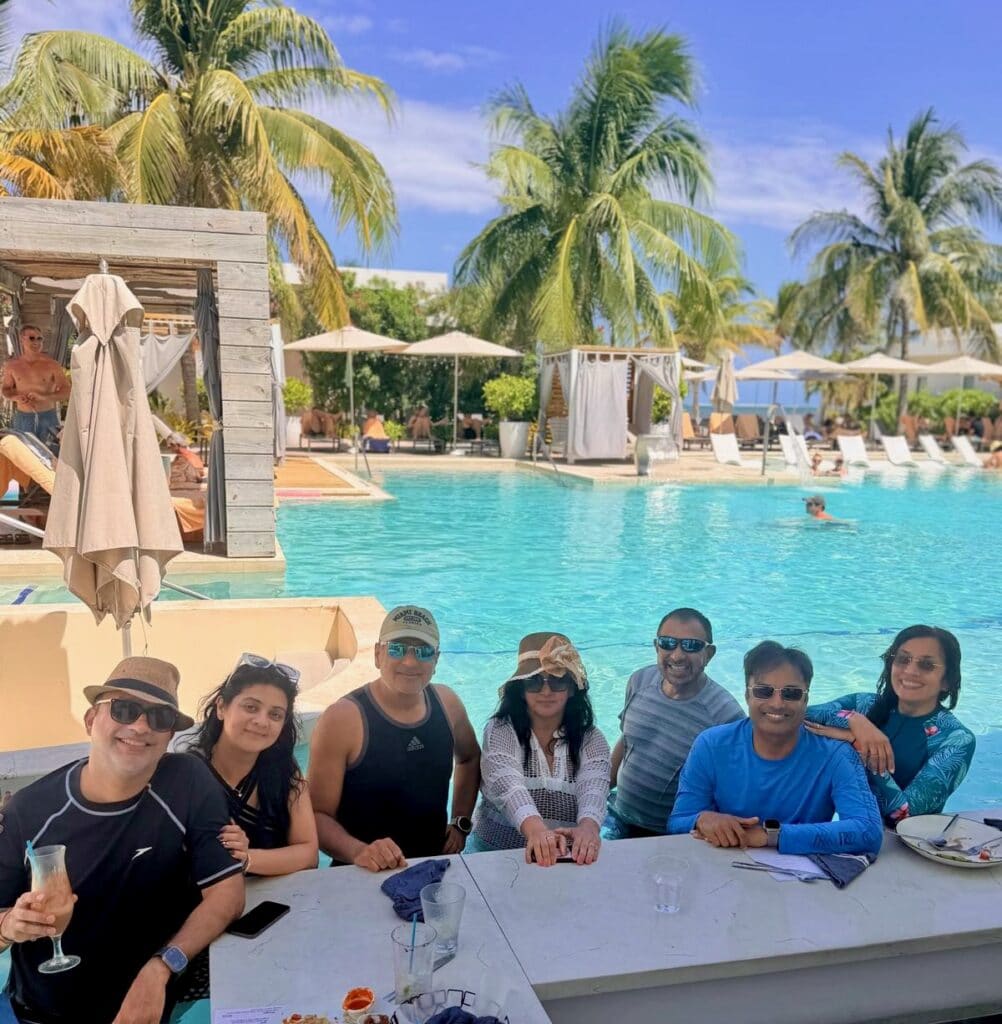
After a fabulous Indian wedding in Cancun, eight of us friends continued our trip south to San Pedro in Belize. We expected a relaxing time with friends. But who knew we would swim inches from sharks or come eye to eye with stingrays and a great barracuda. Or, admire the graceful green sea turtles swimming right below us.
Our neighborhood has built something special over the past decade: a community of empty nesters who say yes to things. Over the years, groups of us have done the Tour du Mont Blanc, the Inca Trail to Machu Picchu, the Grand Canyon rim-to-river-to-rim, and more together. We travel, we dance, we party, and we show up for each other at the drop of a hat. Our research on longevity in Morocco and the Harvard study show how community and connection are key to strengthening healthspan.
Our last visit to the Belize mainland 20 years ago was packed with activities and culture. This time, in San Pedro, we wanted it to be a bit more relaxed with a couple of snorkeling trips and a sunset cruise, and nothing else. A lot more hanging out together and enjoying everything this small island has to offer.
San Pedro, Belize at a Glance
| Island | Ambergris Caye, Belize |
| Best time to visit | November to May (dry season); we visited April |
| Getting there | Fly to Belize City, then 14-min Tropic Air or Maya Island Air hop to San Pedro |
| Getting Around | Taxi or golf cart, both available for rent at the hotel. |
| Currency | Belize Dollar (2 BZD = 1 USD); US dollars and cards accepted everywhere |
| Top Snorkeling | Hol Chan (marine life, nurse sharks), Mexico Rocks (calm, shallow, beginners), Shark Ray Alley (nurse sharks), Stingray Alley (stingreys, nurse sharks) |
| Beyond Snorkeling | Scuba diving, Great Blue Hole day trip, river wildlife cruise (Lamanai), zip-lining, cave tubing, Maya ruins, kayaking, paddleboarding, sport fishing |
| Plant-Based Travel | Excellent: Oh! Bombai, Blue Water Grill, Vista Rooftop Lounge, Sea Salt at the hotel, Elvi’s Kitchen |
| Trip length | 4 days (3 nights minimum; 1 week ideal for Blue Hole day trip) |
Getting to San Pedro: The Journey is the Destination
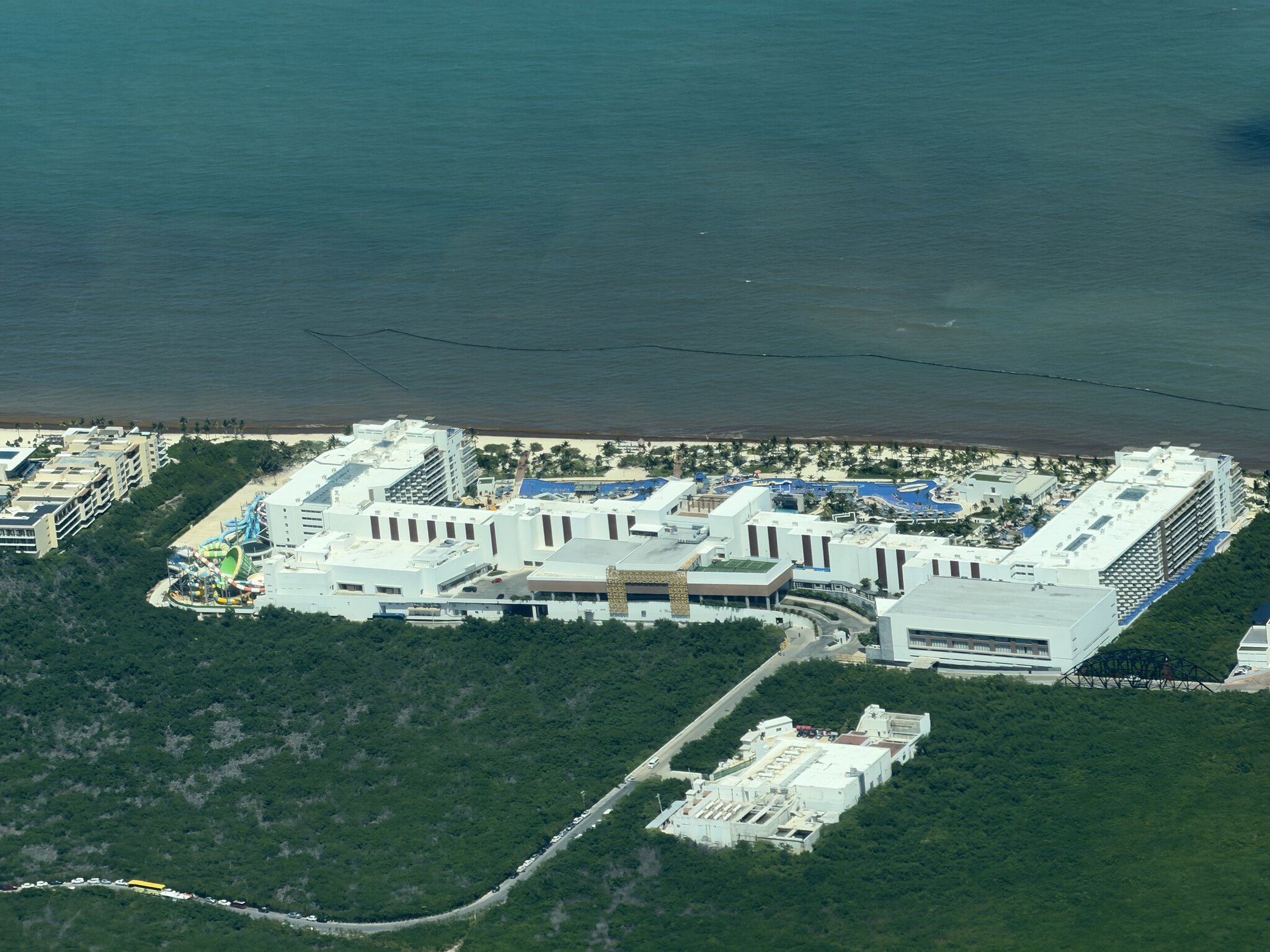
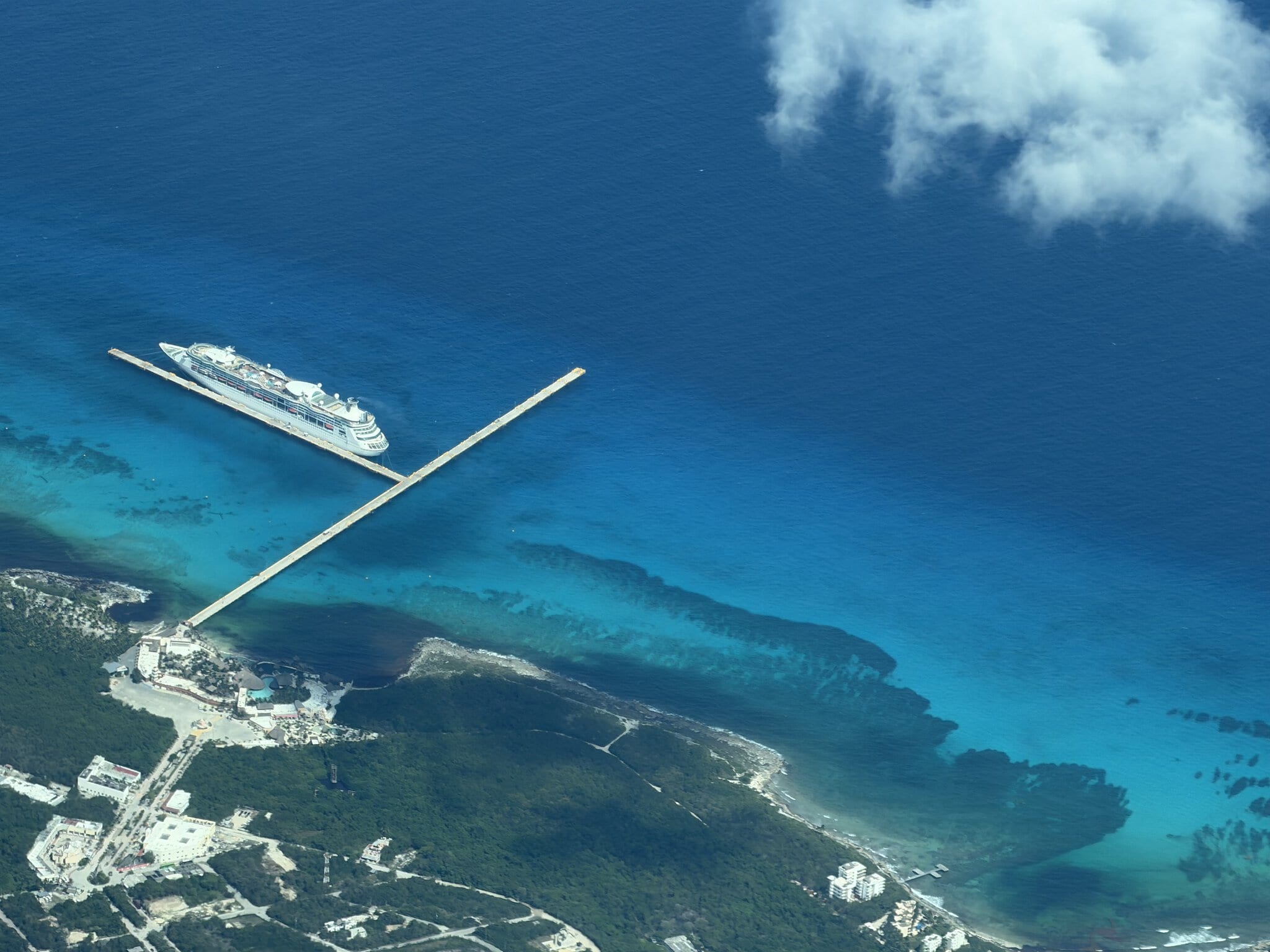
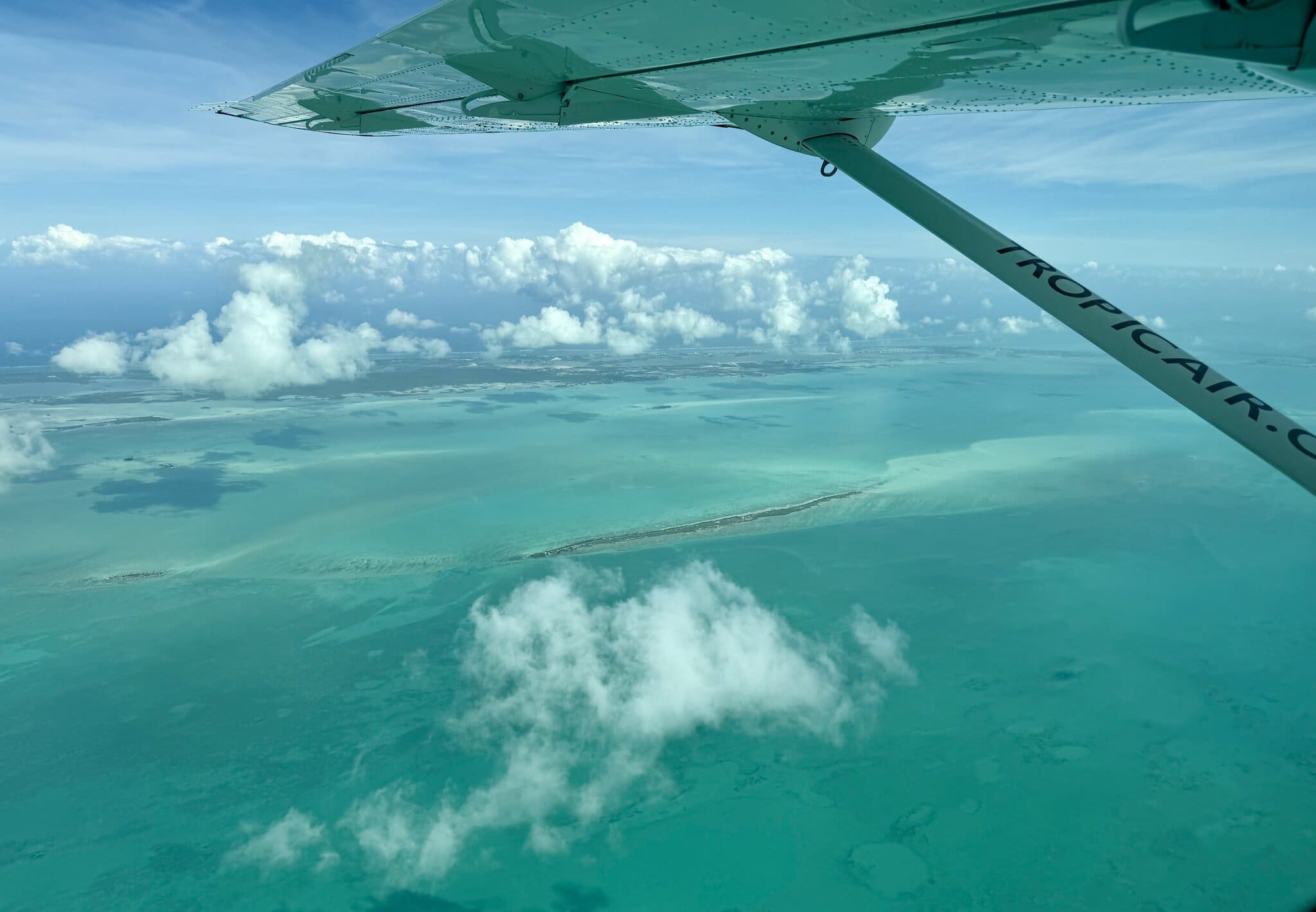
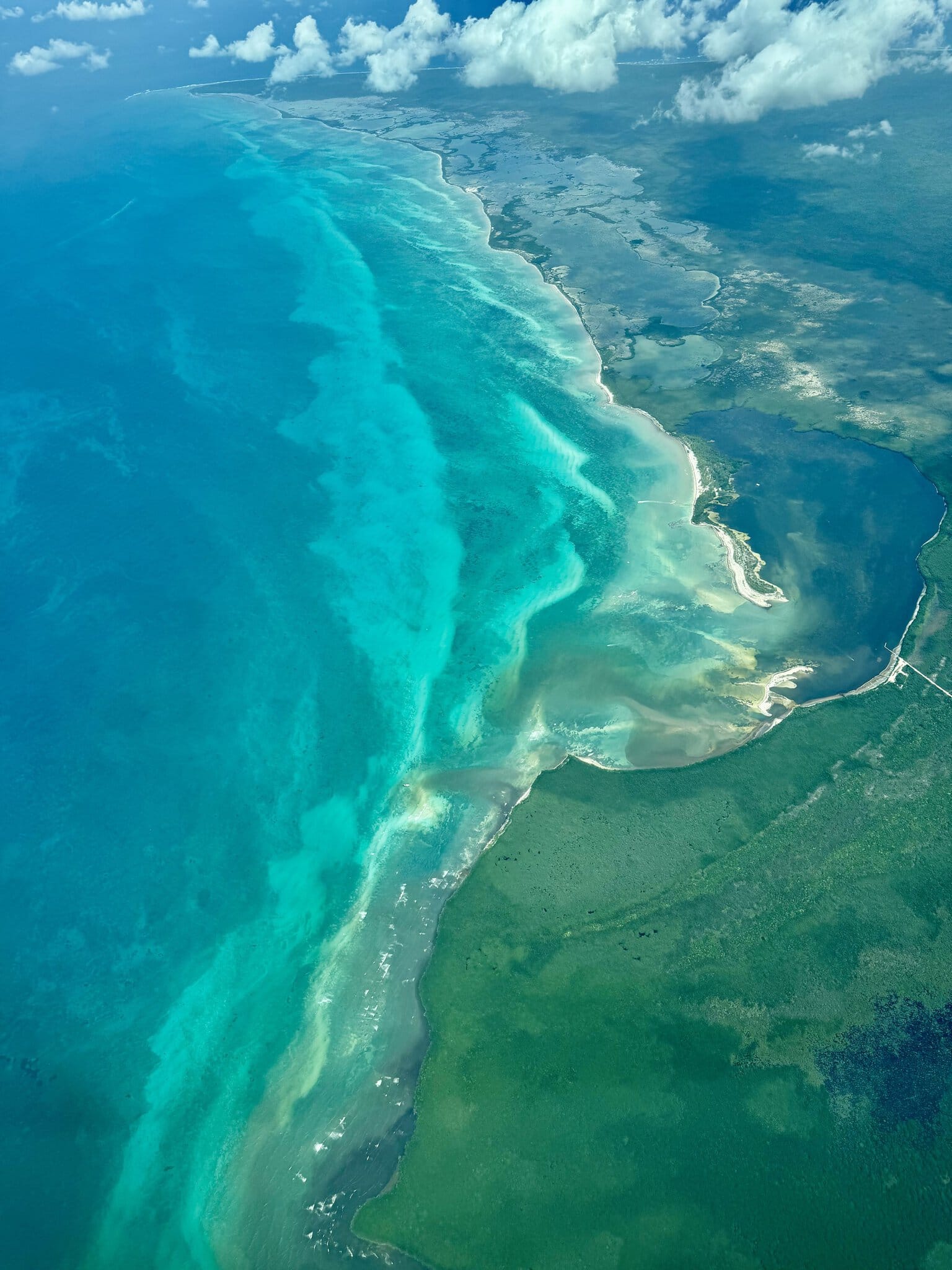
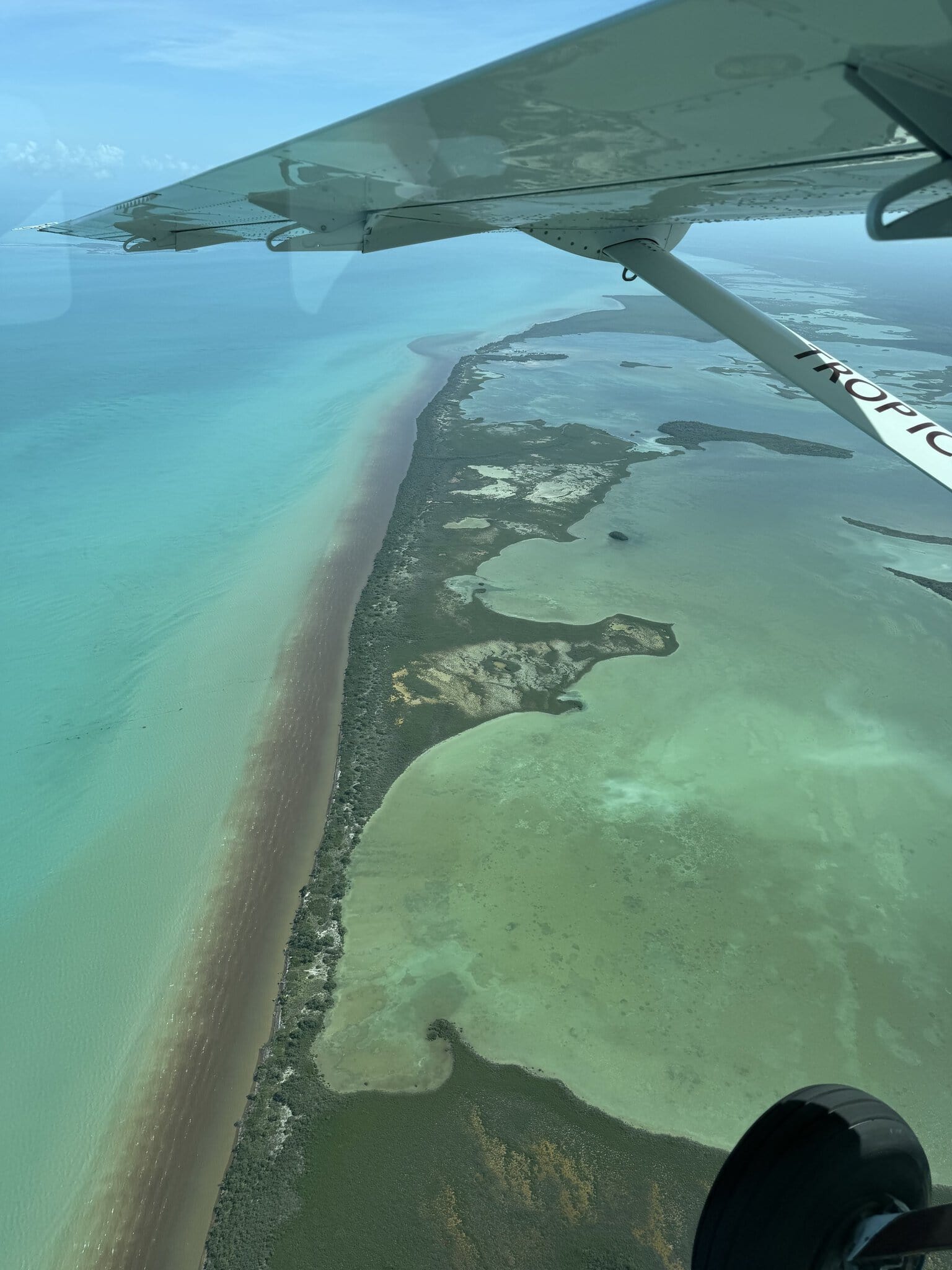
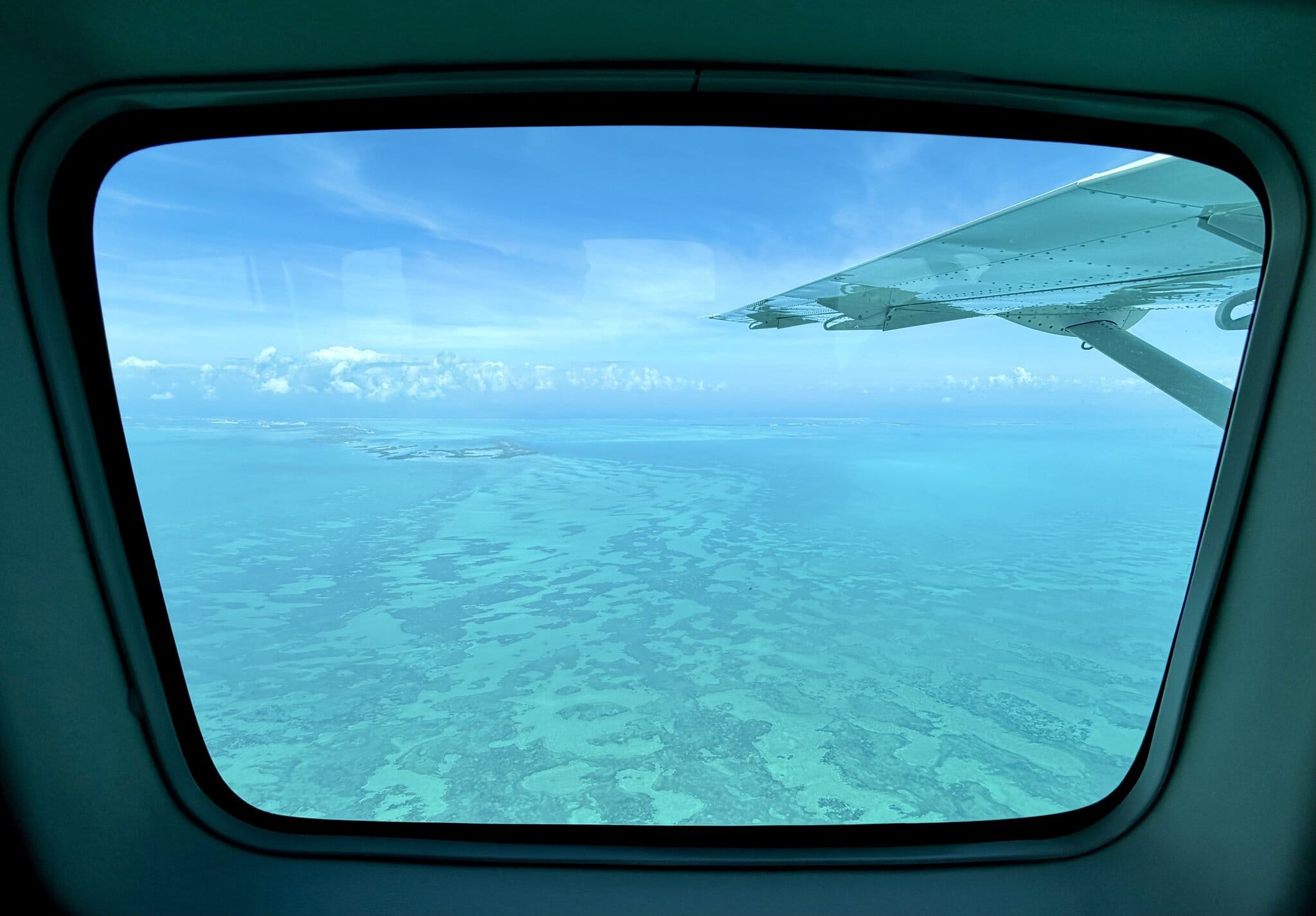
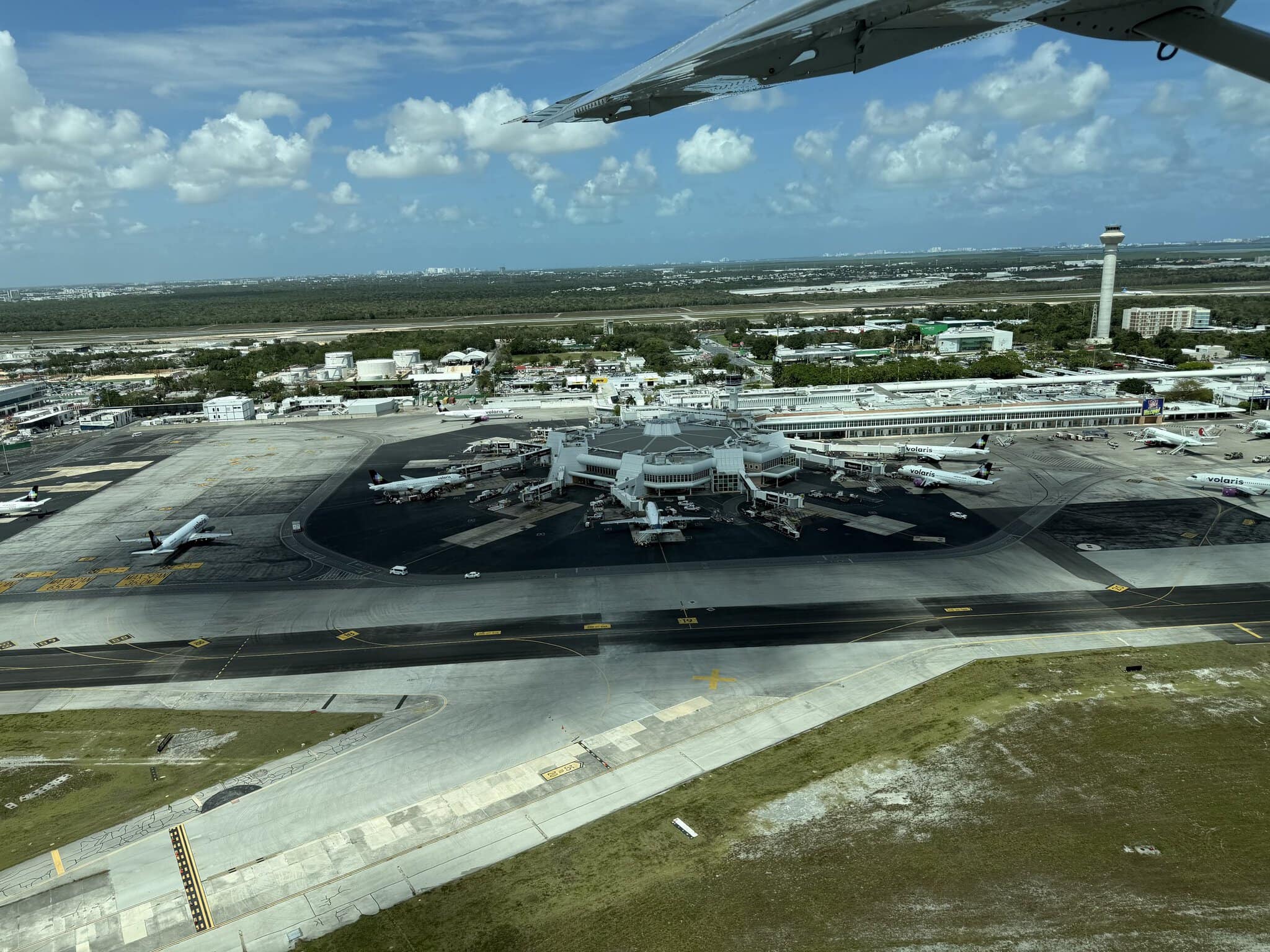
We expected the Cancun to Belize City flight to be routine. It was not. Our 12-seater aircraft followed the Mexican coast for the full 90 minutes, starting over a long stretch of resorts and golf courses. Beyond the light-colored coastal reef lay the reef line, marked by persistent waves that broke over the shallow coral, then over the darker blue ocean. The ocean’s deep blue was interrupted only by Cozumel, tiny islands, and shallow reefs. The tapestry of colors, many of them not even in our vocabulary, blew my mind. I couldn’t blink and miss a moment of the vista.
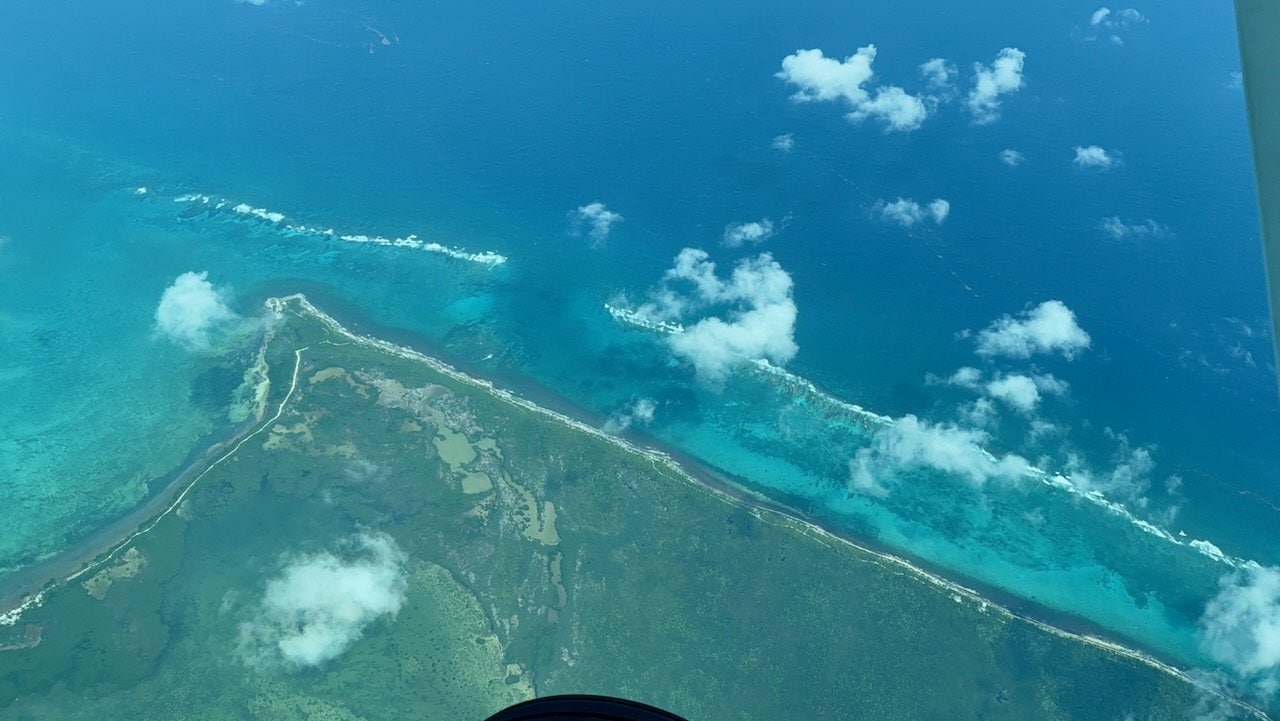
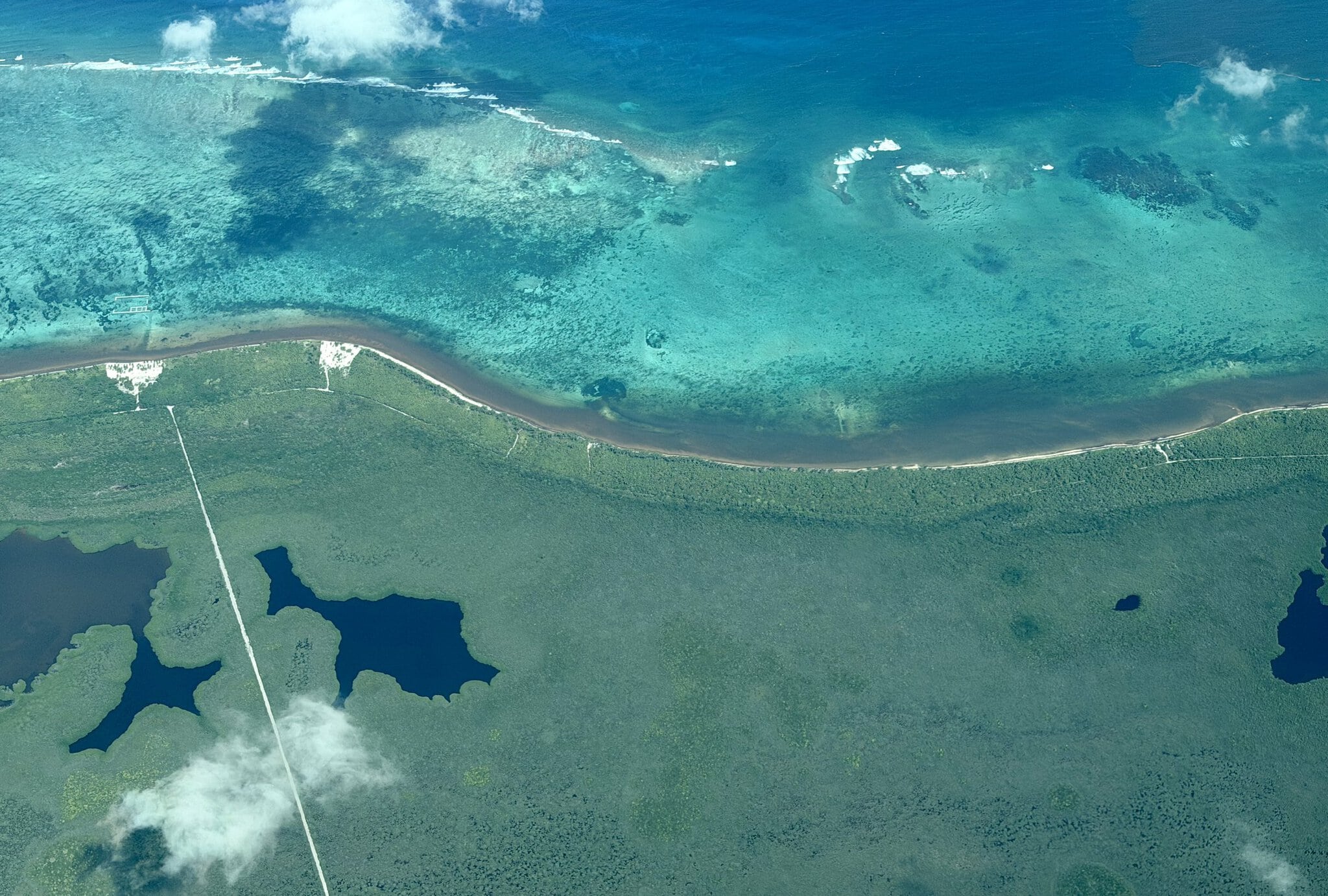
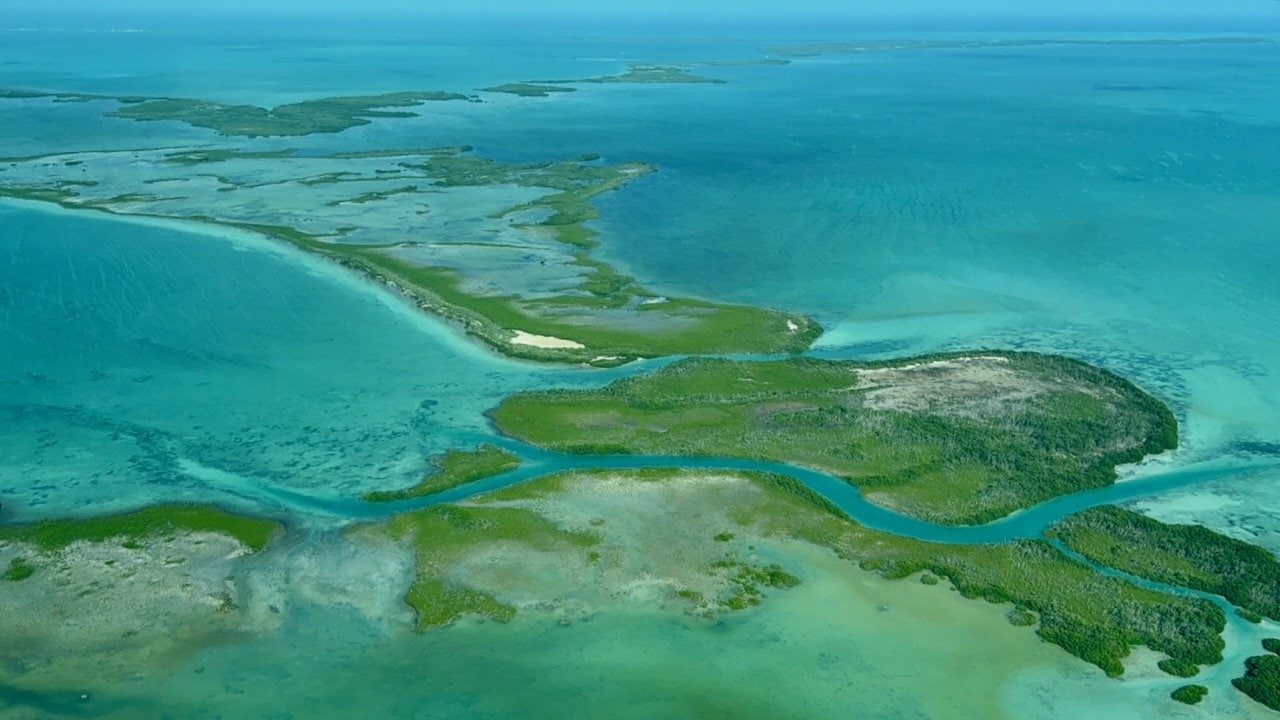
After a brief immigration process, we flew from Belize City to San Pedro, a short 14-minute flight. I figured this would be a bonus after the coastal flight. But below the aircraft, the Belize Barrier Reef unfolded like a canvas painted by the greatest master artist. Channels of deep cobalt cut between shallow turquoise flats. Dark patches of coral clustered against ribbons of white sand. Turtle grass meadows glowed pale green in the shallows. I filmed the entire flight and Nirmal took some amazing shots.
Arriving in San Pedro: The Airport in the Middle of Town
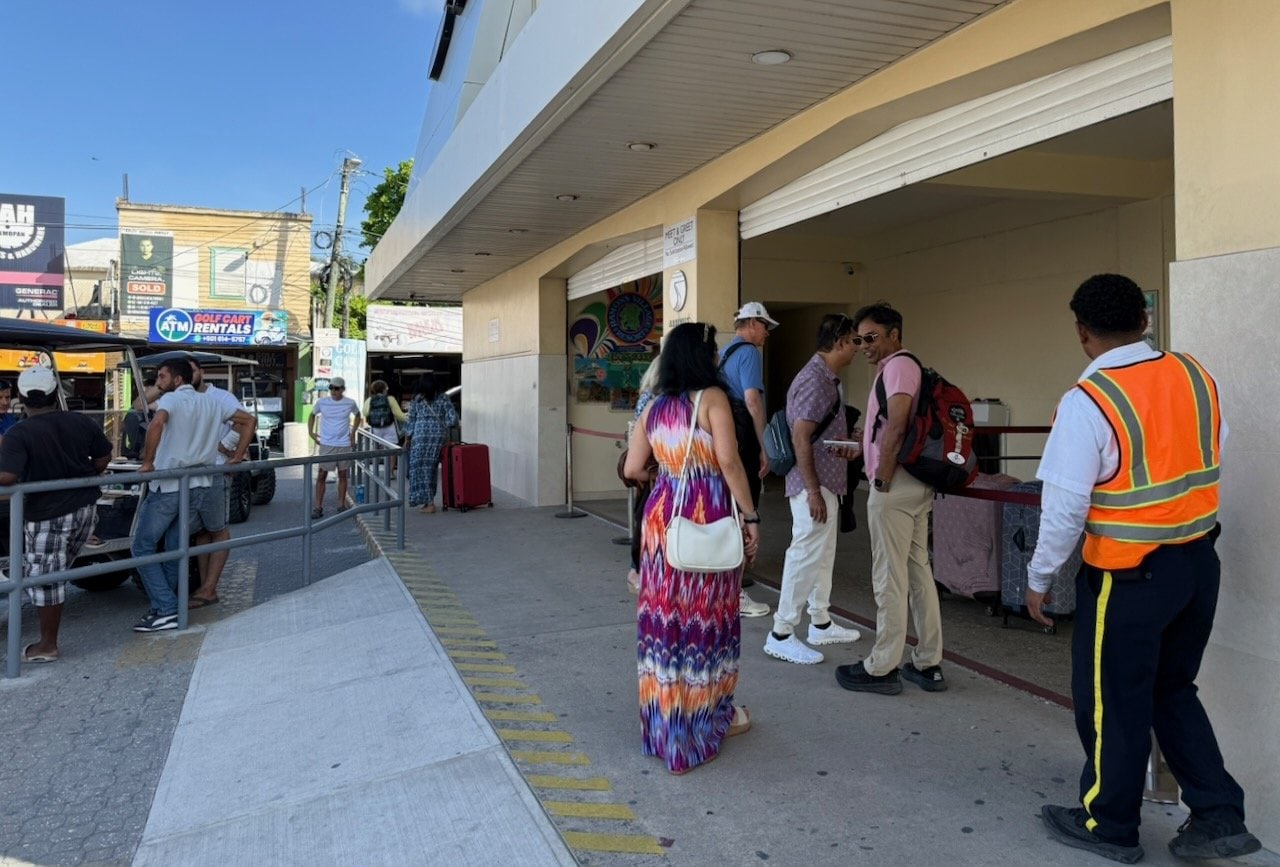
Nothing fully prepared me for landing, though. San Pedro’s airport sits right in the middle of town. We walked out of the terminal, and there it all was: a golf cart rental shop directly across the narrow street, taxis, and small shops right at the luggage claim. The whole thing reminded me of tiny train stations in the middle of small Indian towns. The airport reminded me of the tiny but very pretty Kruger National Park airport in Skukuza. As the taxi driver reminded us, everything moves on island time.
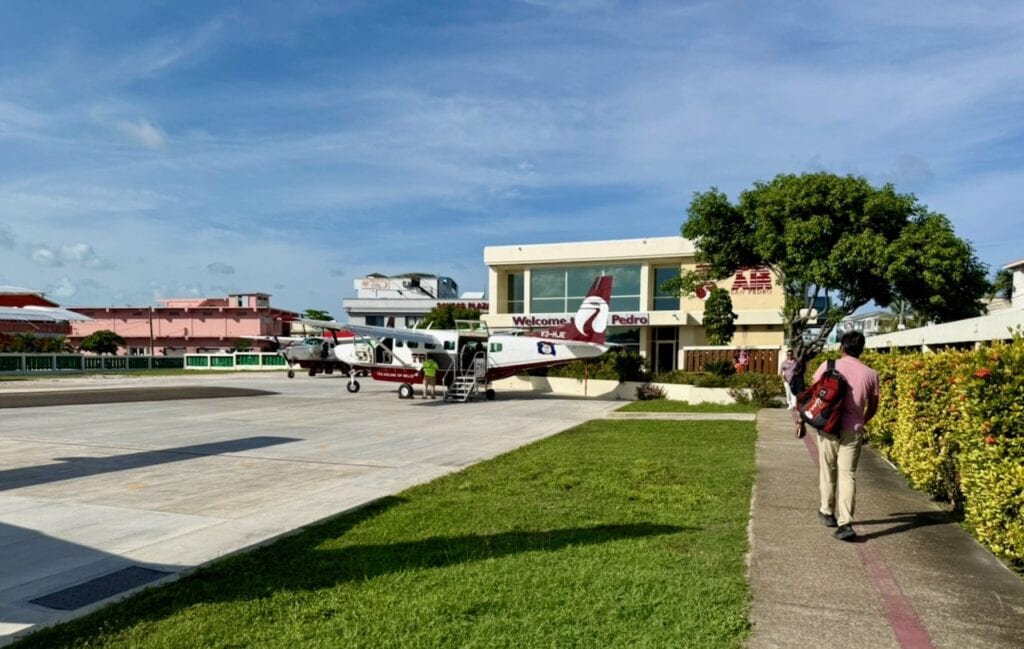
San Pedro sits on the southern tip of Ambergris Caye, Belize’s largest island. Getting around town means golf carts, taxis, or walking. The roads are full of golf carts. Rental companies are everywhere, and parking lots fill up. The gas-burning carts make the main roads noticeably smelly. For longer distances or getting to the hotel from town, taxis are the cleaner and more comfortable option.
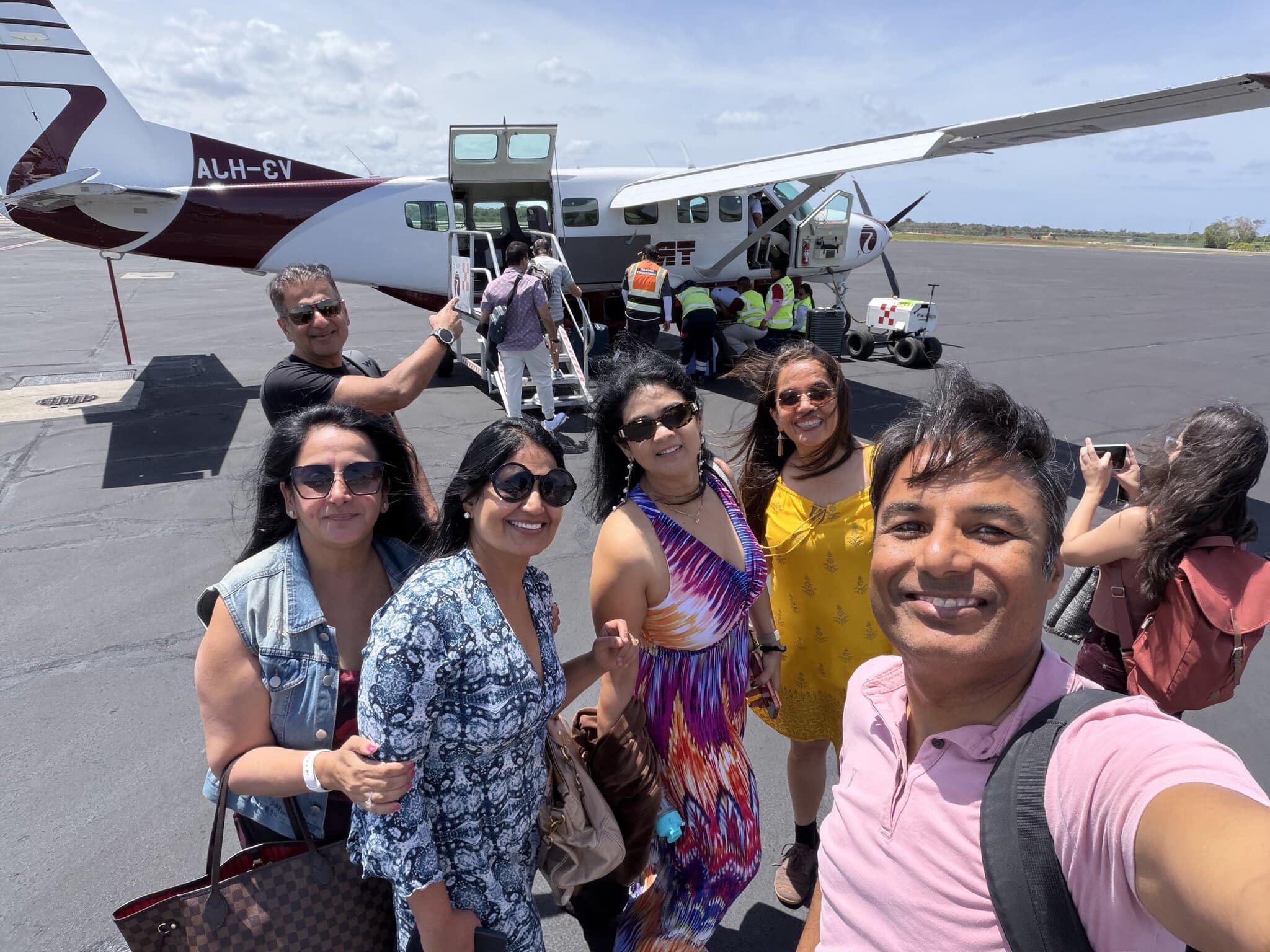
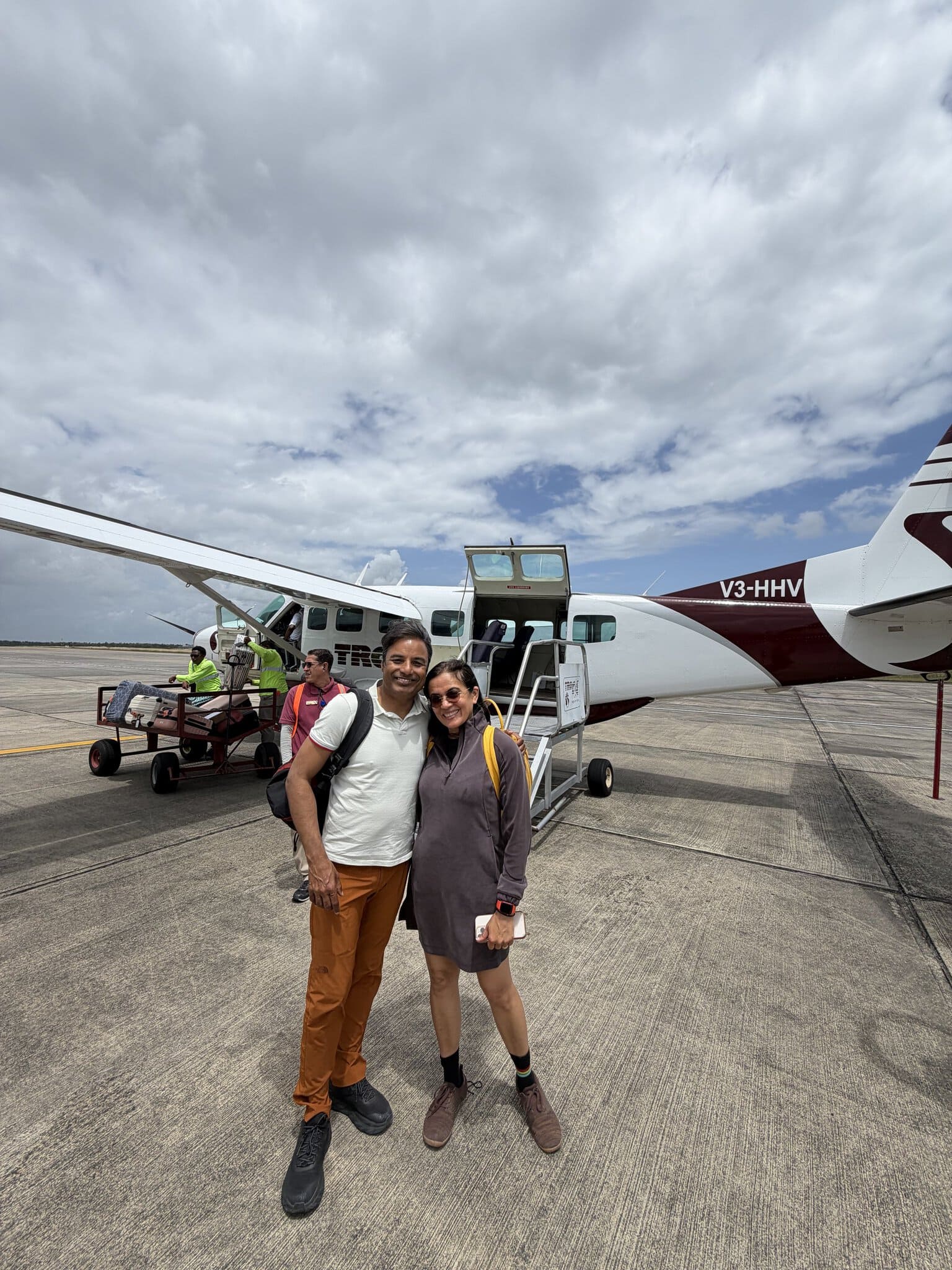
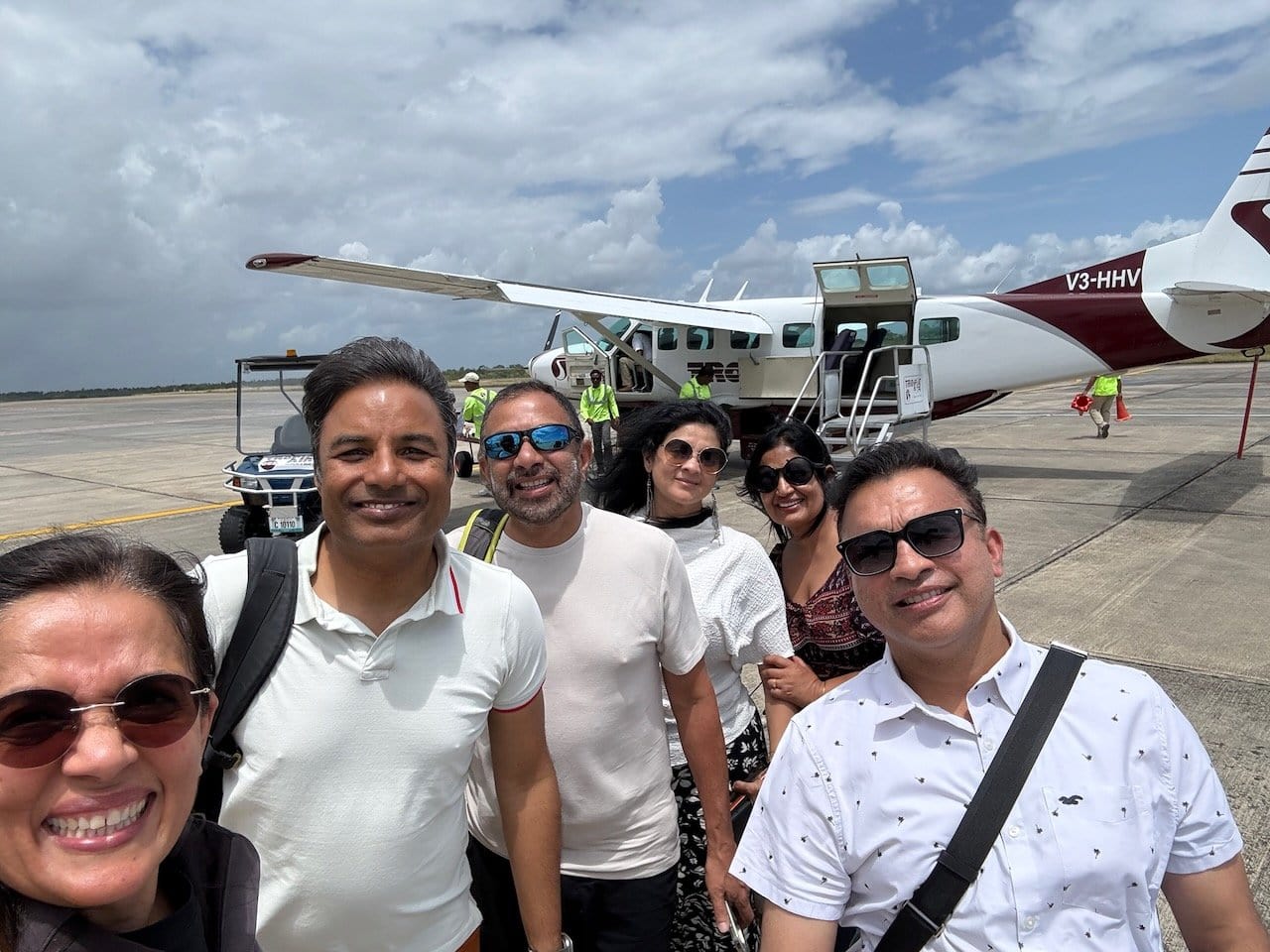
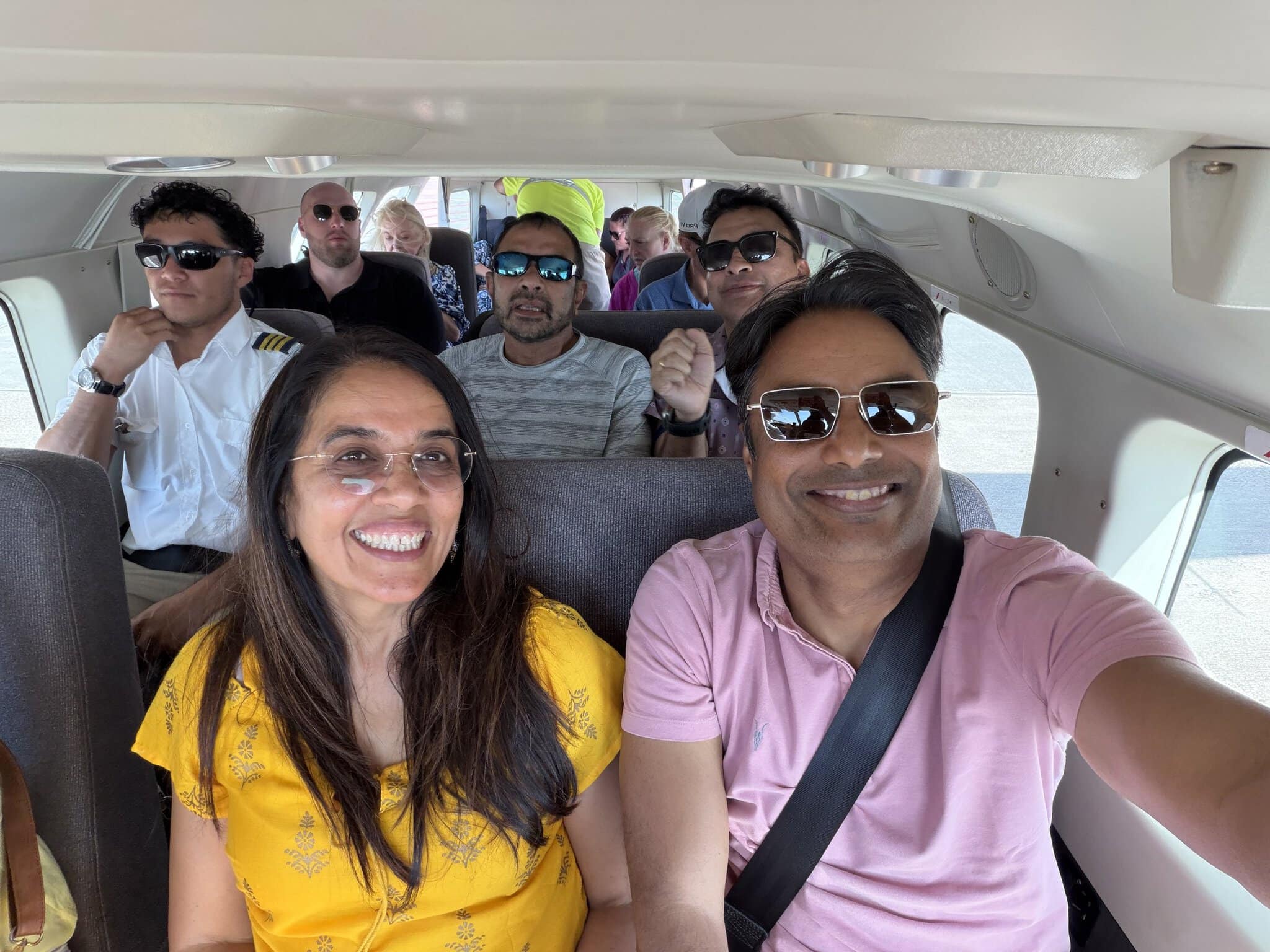
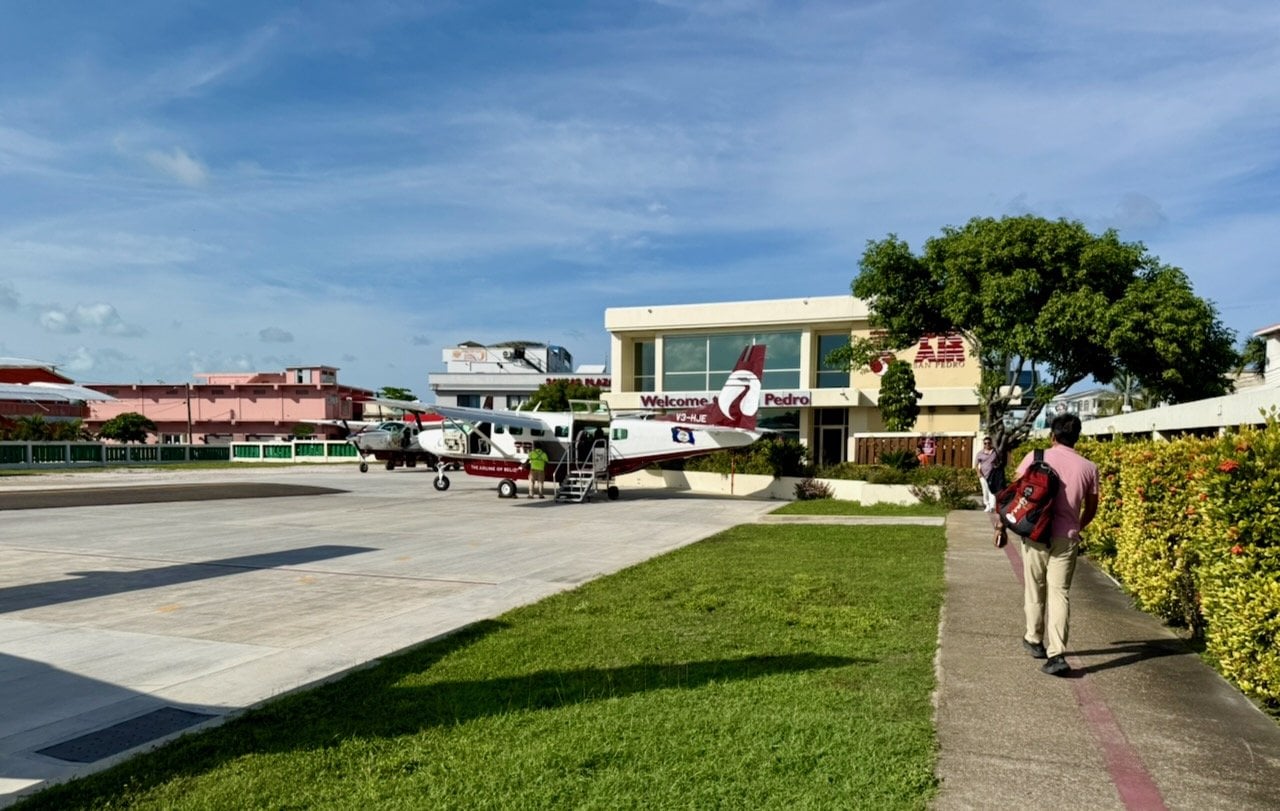
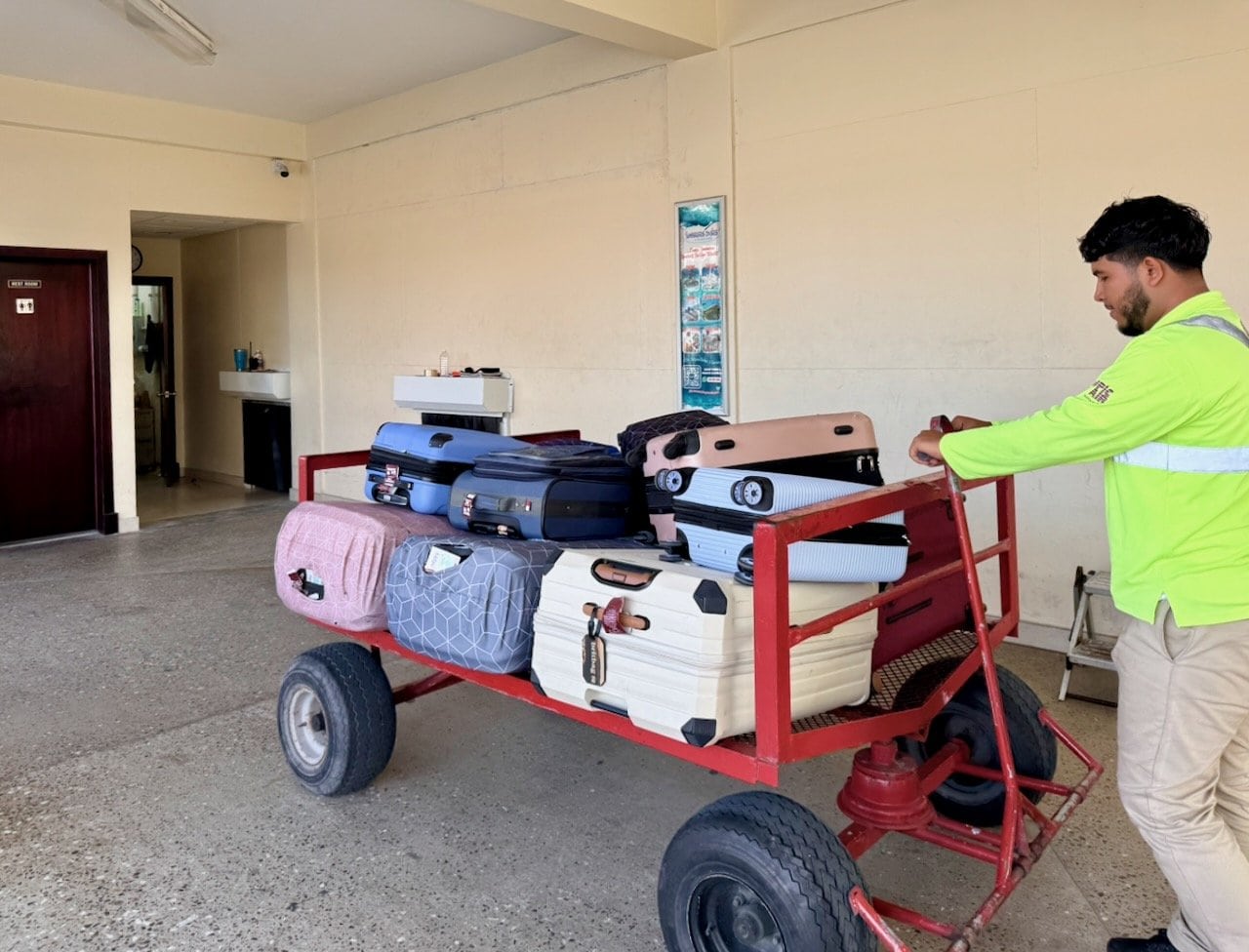
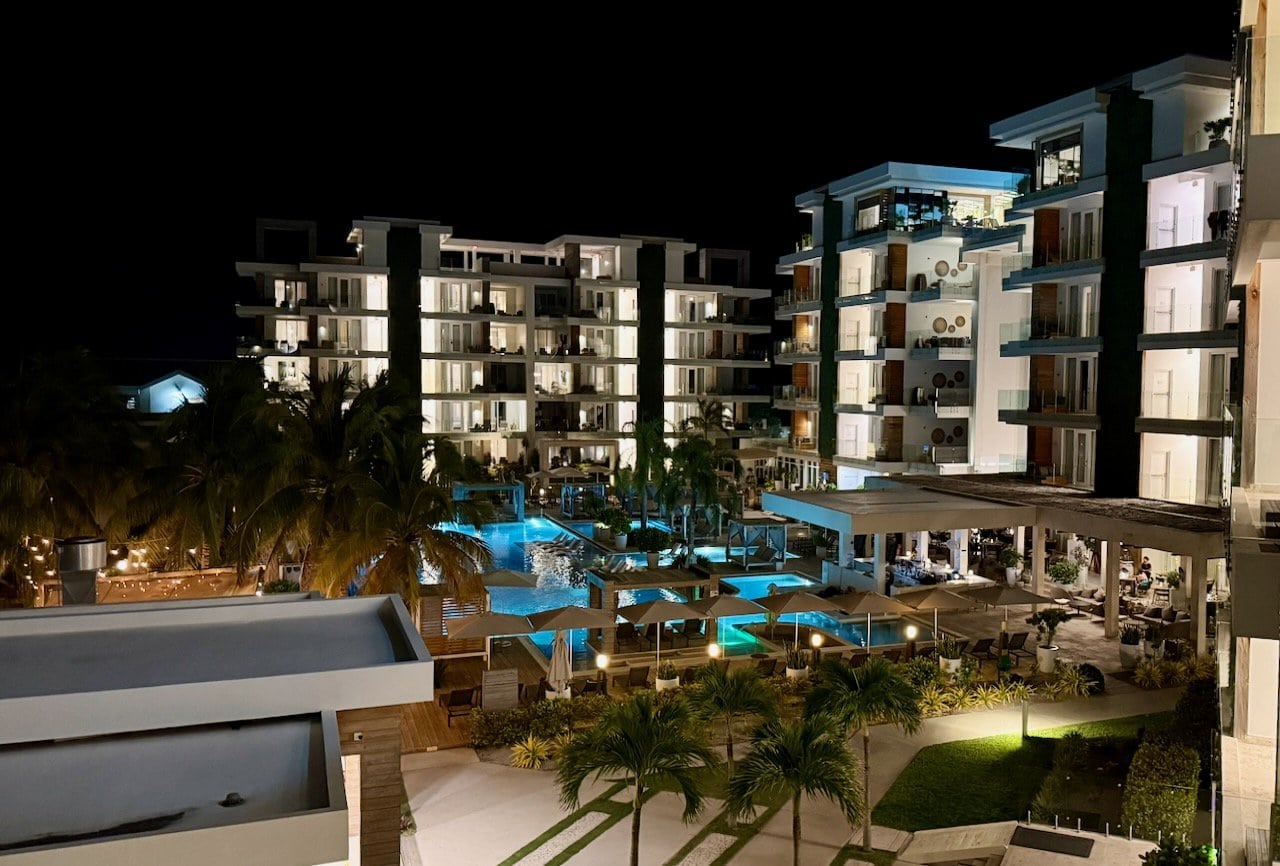
We stayed at the Alaia Belize, a Marriott Autograph Collection property, and the first Marriott on the island. Three pools, a full spa, six dining venues, and a dock that puts the reef within minutes. The Tropic Air staff called the hotel as we boarded the flight to arrange transfers on arrival. The concierge desk handled all our excursions, golf carts, and taxi bookings. All our tours were private for our group of eight.
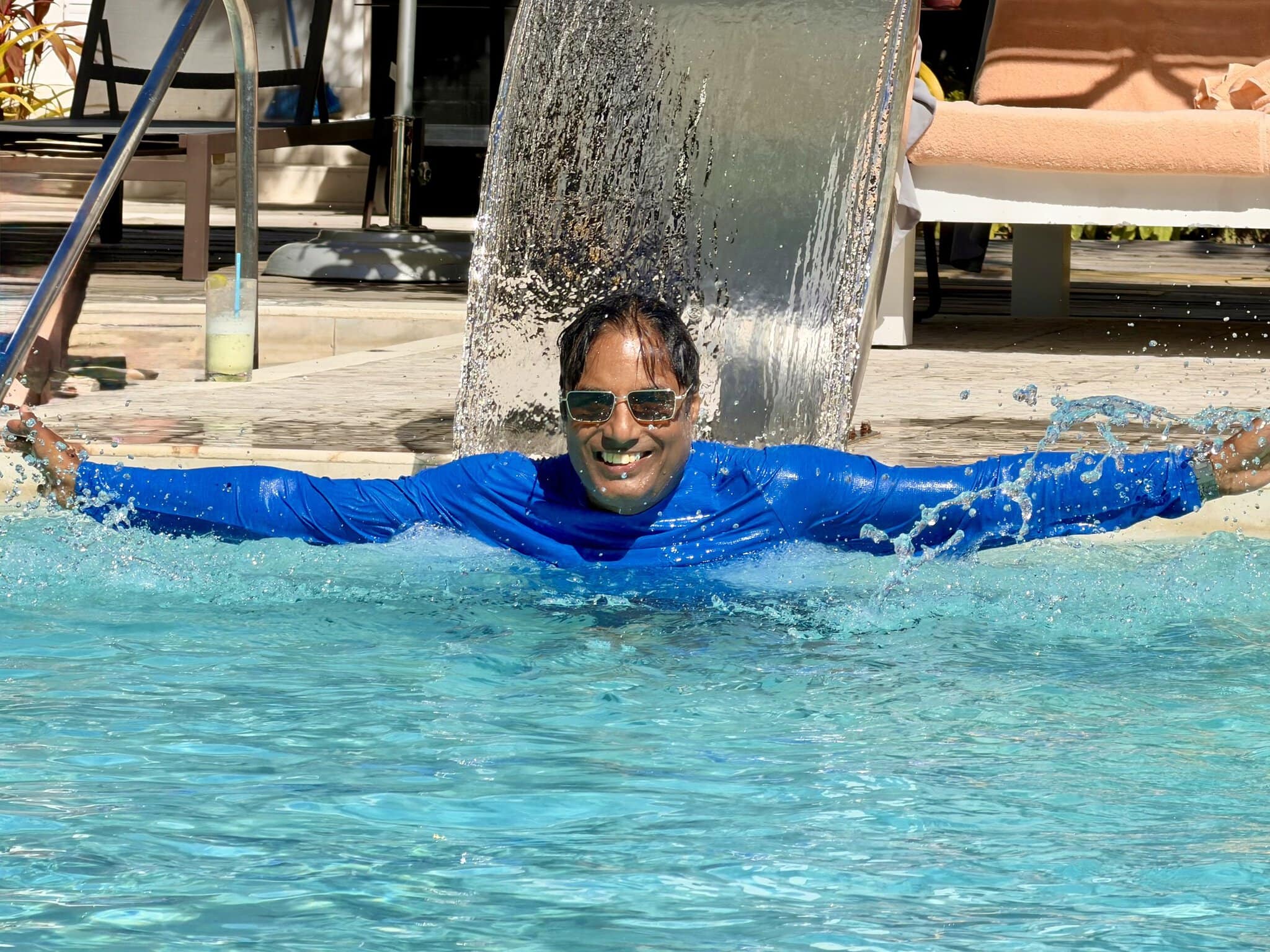
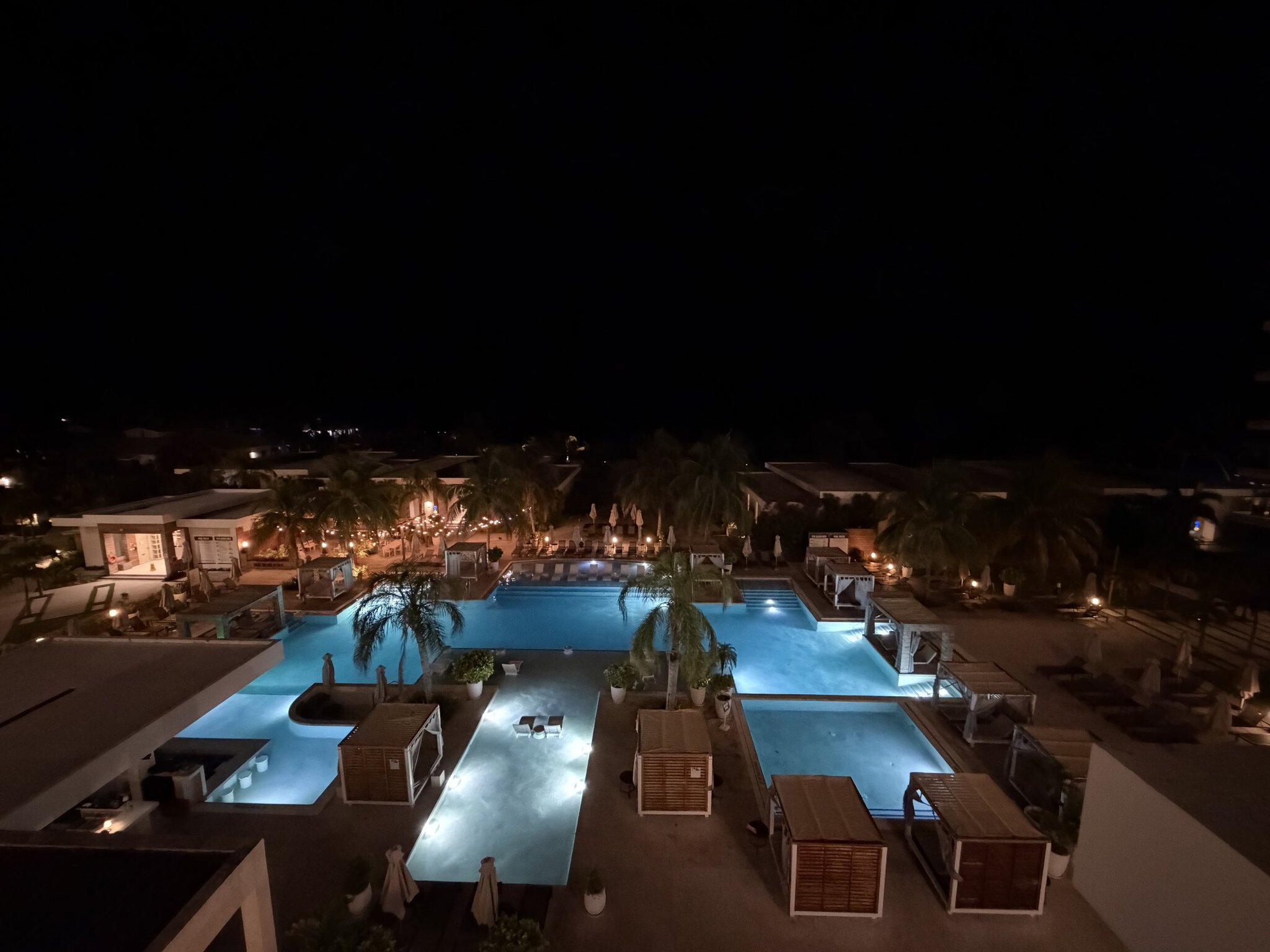
Snorkeling San Pedro, Belize: Hol Chan, Shark Ray Alley, and Mexico Rocks
On our first morning in San Pedro, we took the popular snorkeling tour to Hol Chan and Shark Ray Alley. We loved it so much that the next day, we did another half-day snorkeling adventure to Mexico Rocks and Stingray Alley.
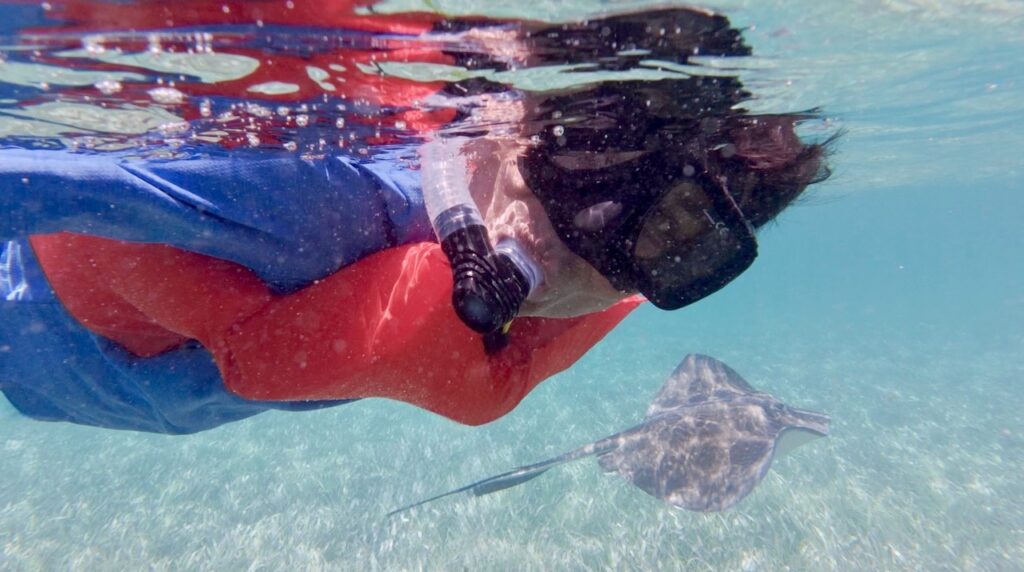
Hol Chan Marine Reserve
After breakfast at the hotel, we were on the water by 9 a.m., heading to Hol Chan, which means “little channel” in Maya. Hol Chan Marine Reserve, the first of its kind in Central America, sits about four miles south of San Pedro along the second-largest barrier reef system in the world. It is home to over 160 fish species, nearly 40 coral species, and three sea turtle species.
The guide explained the tide before we got in. In low tide, the current at Hol Chan runs outward through the channel toward the open ocean, strong enough to sweep a swimmer out if they drift too close to the reef line. We were there during high tide, which reverses that dynamic: the current pushes inward, back toward the safety of the barrier reef. That meant we could swim all the way to the channel’s edge and watch the marine life without risk of being carried out.
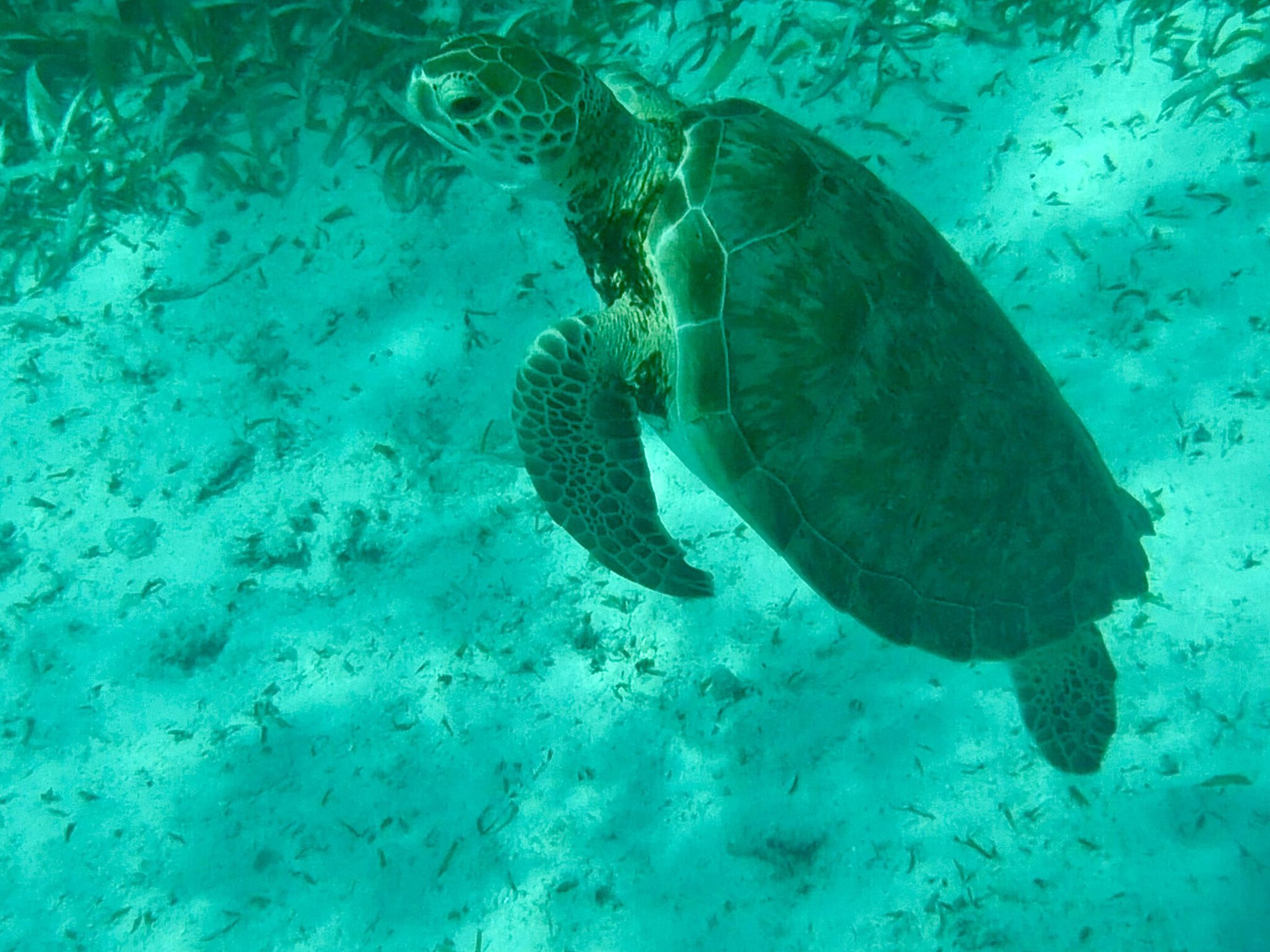
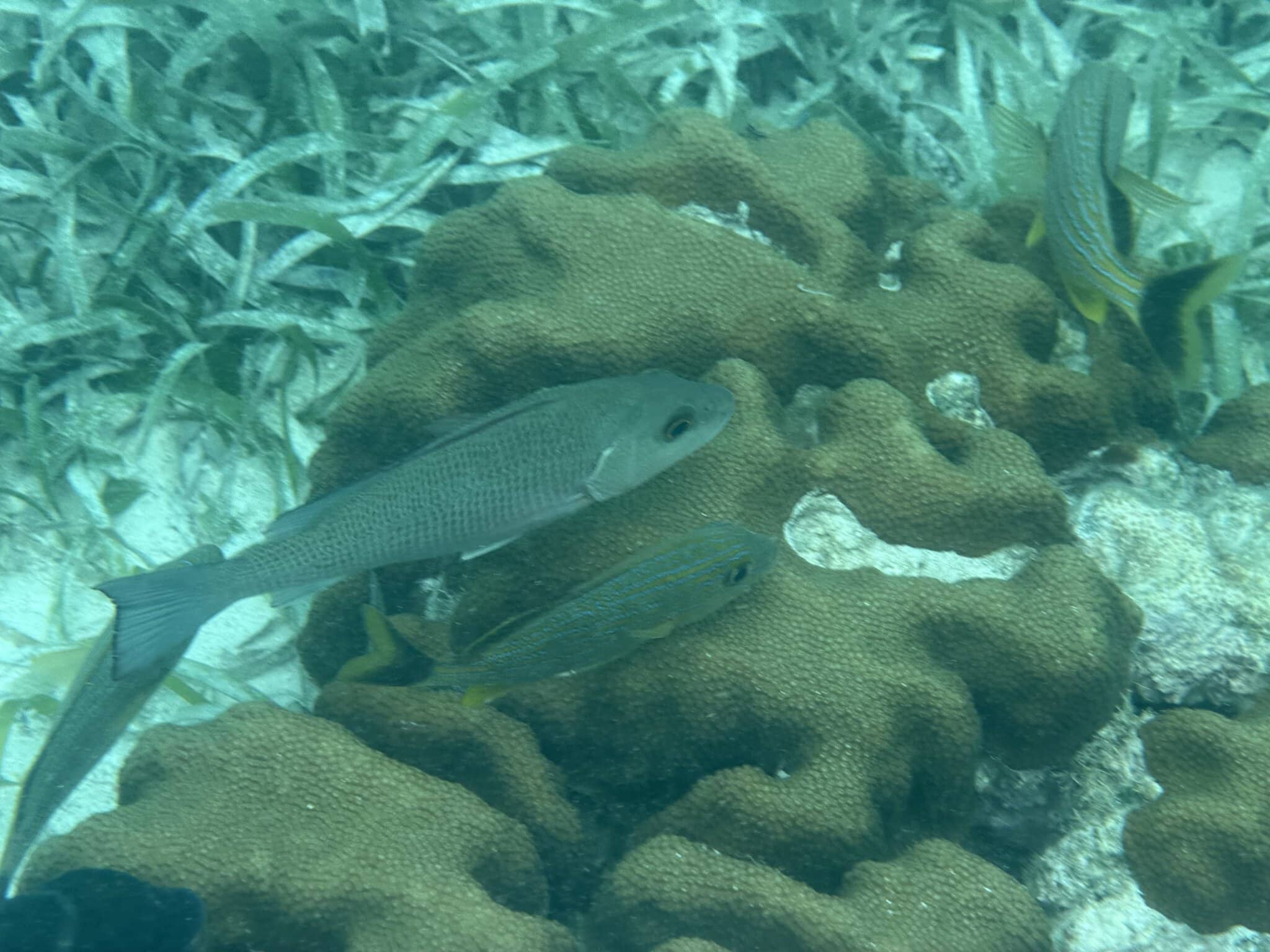
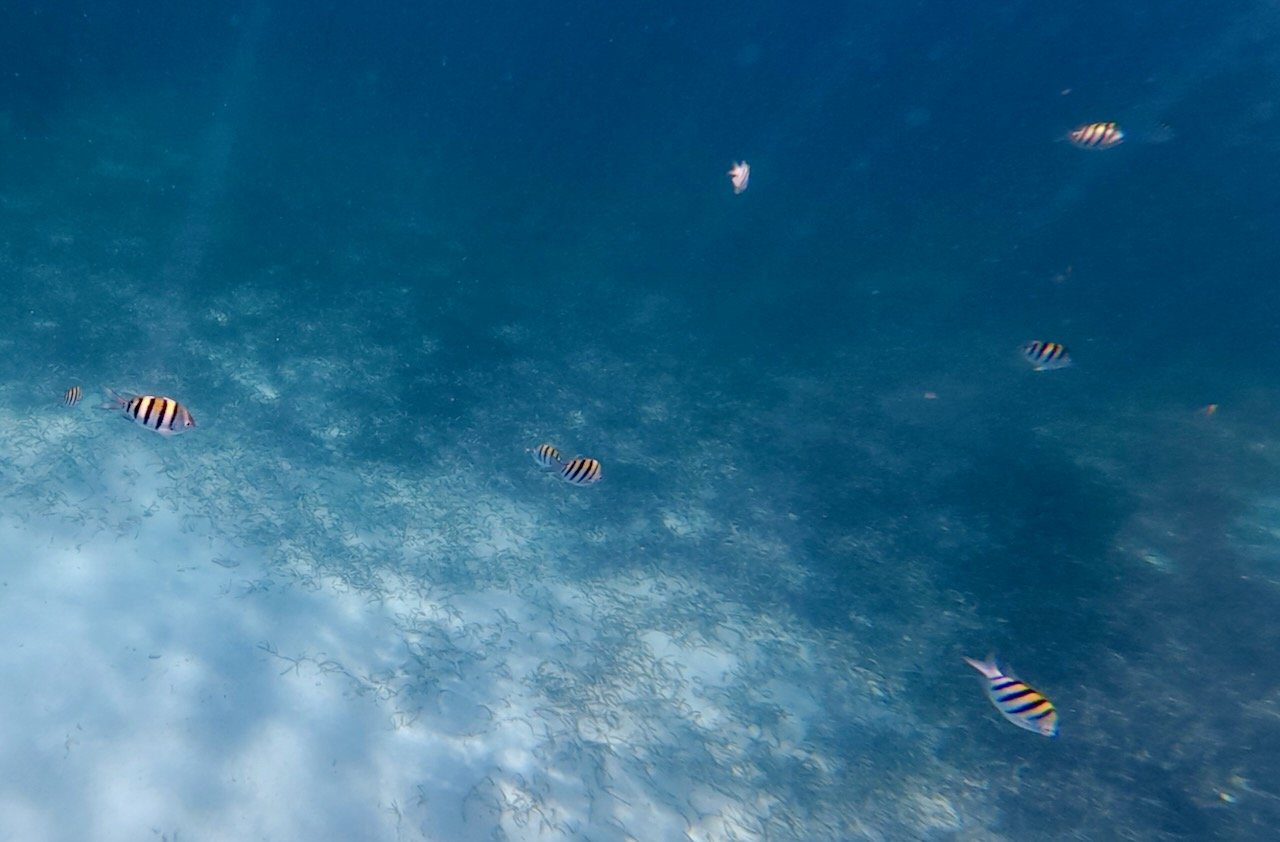
The long silver sheets of turtle grass and the darker, spaghetti-like stingray grass spread across the sandy floor below us. This is what draws the wildlife in. We saw green sea turtles grazing on the ocean grass and occasionally gliding to the surface to breathe. One came so close I had to back off to give it space. Gray snappers moved in slow arcs, and schools of sergeant majors, those small striped damselfish that appear everywhere on Caribbean reefs. A great barracuda held its position mid-water, watching us with the confident authority.
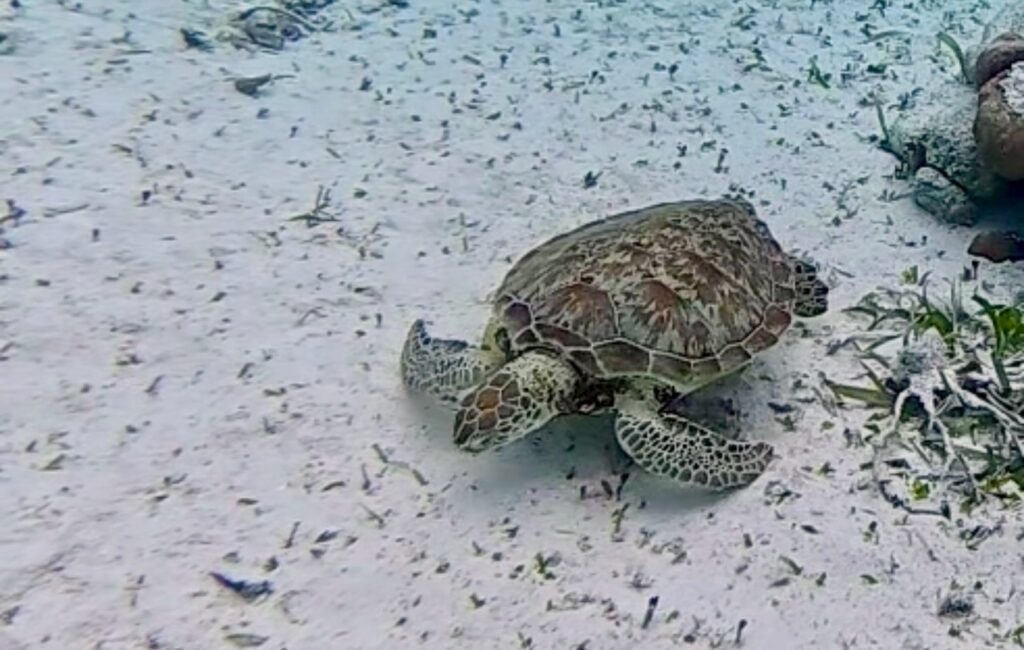
The current was strong, so the guides kept us from going out of sight. They held on to the two non-swimmers in the group. Even though I usually take off on my own exploring the wildlife and losing track of the group, this time the current was strong enough that I stayed close, mostly. We didn’t want to repeat the Florida Keys snorkel where I drifted so far from the vessel into the ocean that everyone on the boat panicked and screamed.
Shark Ray Alley: Home of the Nurse Sharks
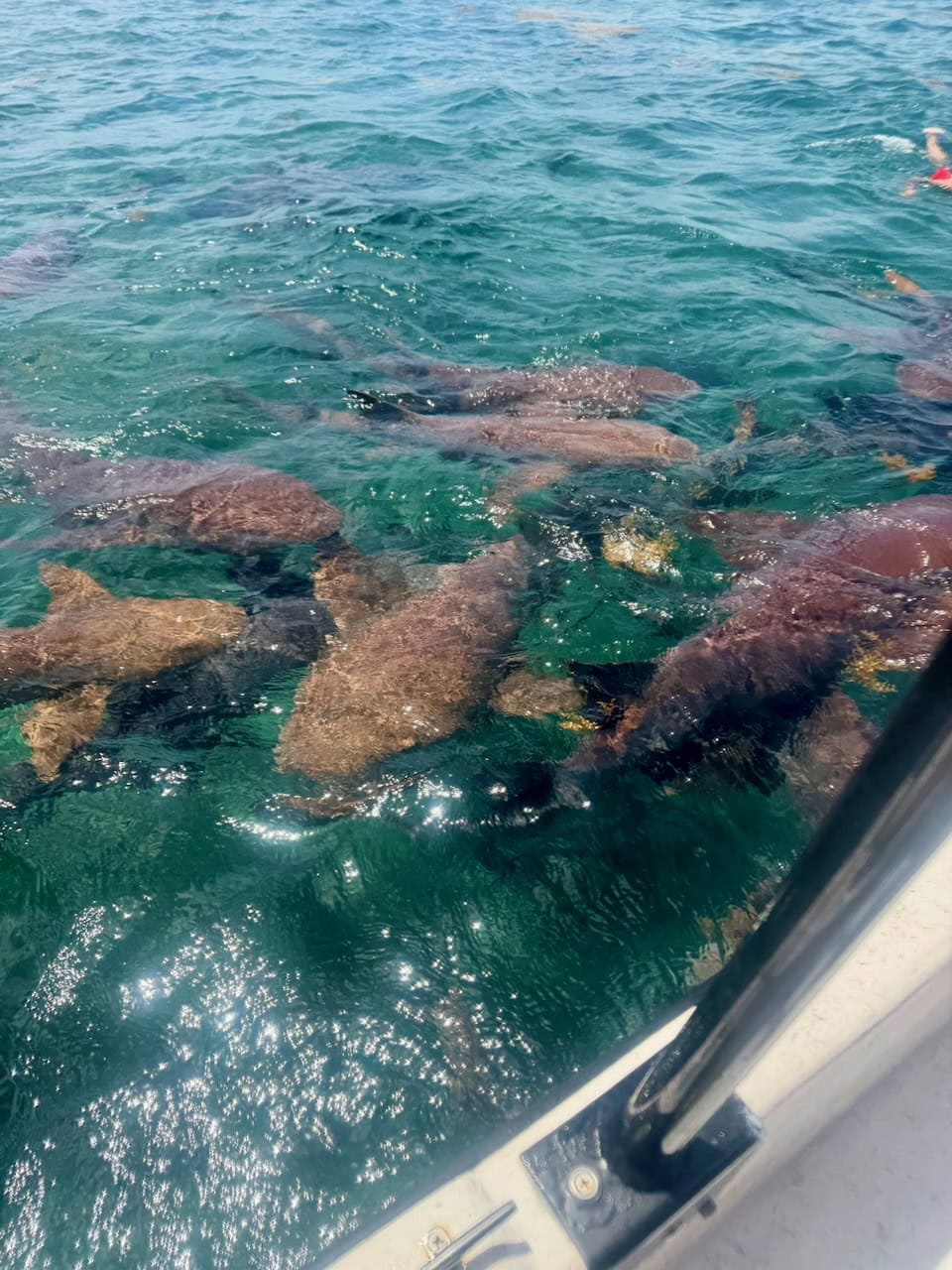
From Hol Chan, we motored over to Shark Ray Alley, which sits inside the same reserve. The nurse sharks hear the boat engine and come for treats. Within seconds of arriving, the water around the hull was crowded with them, circling alongside large jacks that had learned the same lesson.
The guide gave us the gear and we jumped in the middle of dozens of sharks. One mother shark had two babies swimming close to her. I had never seen so many sharks together. The current had pushed me away, but they effortlessly stayed close to our boat. I’m glad I got to see them from several feet away, while others were so close I thought they would block the sharks. But the sharks know how to swim without collisions. All the sharks, fish, and humans packed together, gracefully swimming in the crystal-clear water, is a magical sight I can never forget.
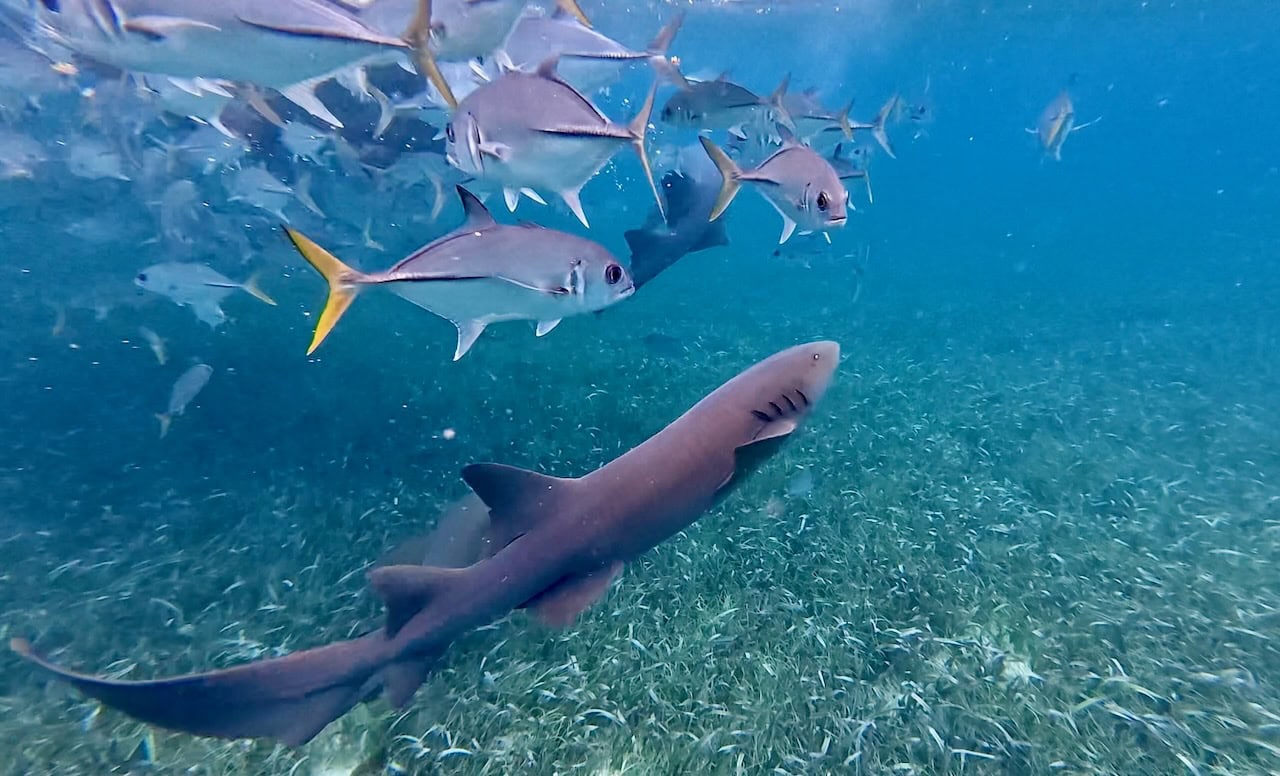
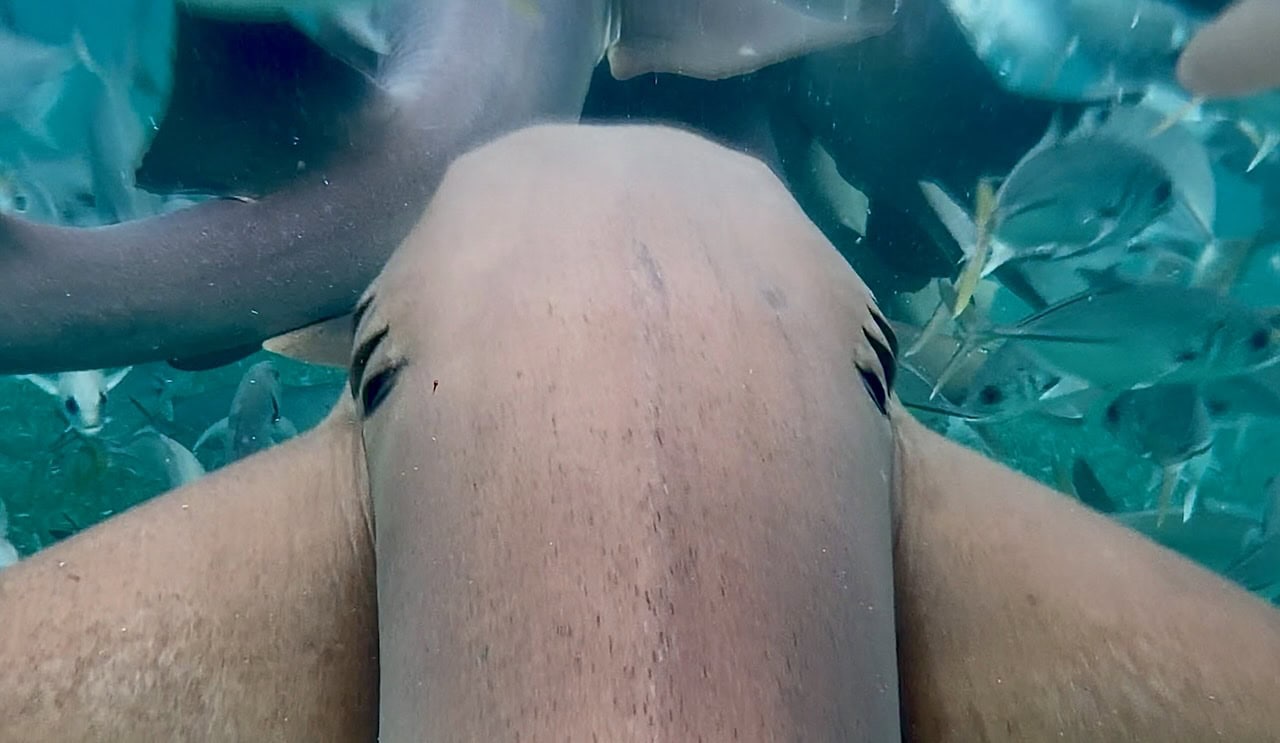
Nurse sharks are docile bottom-feeders. Up close, they are slow and unhurried, which is precisely what makes photographing them manageable. After the initial frenzy around the boat, the sharks drifted and the water settled. We swam with the nurse sharks in their habitat, as long as the rules allowed.
Snorkeling at both sites is capped at 30 to 45 minutes in the water, which keeps the reserve from being loved to death. We were back at the hotel pool by noon for some yummy vegan food.
Mexico Rocks and Stingray Alley
On Wednesday morning, we headed north. Not all the way to Bacalar Chico National Park and Marine Reserve at the Mexican border, where we originally wanted to go, but 15 minutes away to Mexico Rocks and Stingray Alley.
Mexico Rocks is about six miles north of San Pedro and became part of the Hol Chan Marine Reserve in 2015. Fewer operators run tours up here, so we had the water largely to ourselves. The character of this site is completely different from Hol Chan: roughly 100 patch reefs clustered on a limestone ridge, predominantly boulder star coral, in water just 8 to 16 feet deep, behind the coral reef barrier. No open-ocean channel means no current to manage. Several people in our group who had kept their lifejackets on the day before chose to swim without them here.
The coral formations were more colorful than at Hol Chan, and the variety of fish was striking. We saw schools of bar jacks, silver with vivid yellow-tipped tails, moving in tight formation just below the surface. A midnight parrotfish, deep black-blue with an iridescent sheen, moved slowly along the sandy bottom. Mutton snappers cruised the turtle grass. Sergeant majors were everywhere. A great barracuda held its spot mid-reef, making the same unnerving eye contact they always seem to make.
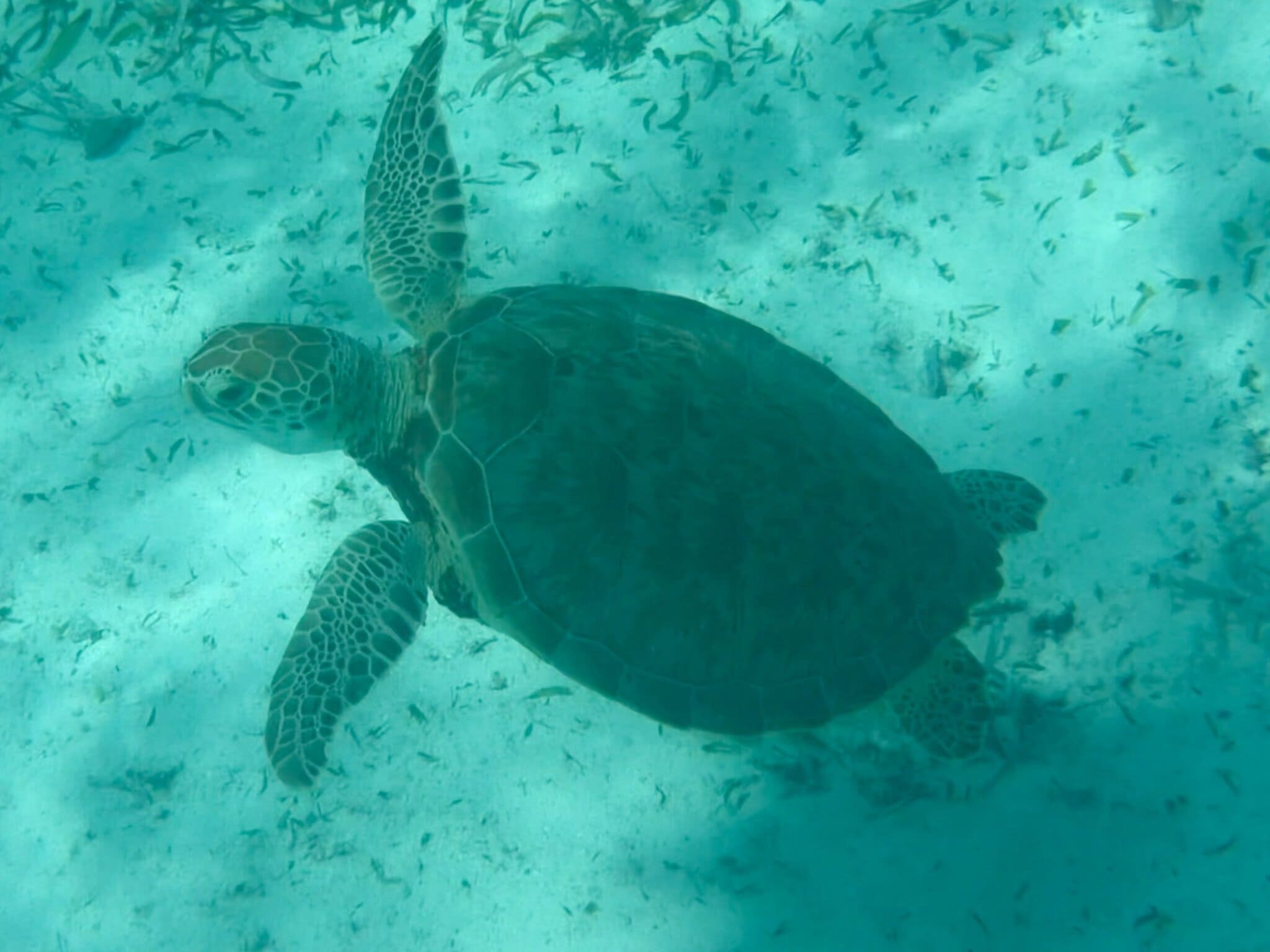
By this point, everyone was more comfortable and more playful in the water. We could take some fun underwater videos. We also spotted two green sea turtles here: one gliding above the seagrass meadow, another resting on the sand below us and grazing, as if we were not there. Since my first encounter with these gentle giants in the Galapagos, the sight of turtles swimming evokes an awe I can’t describe. I could stay and watch for hours, but it was time to leave.
Stingray Alley
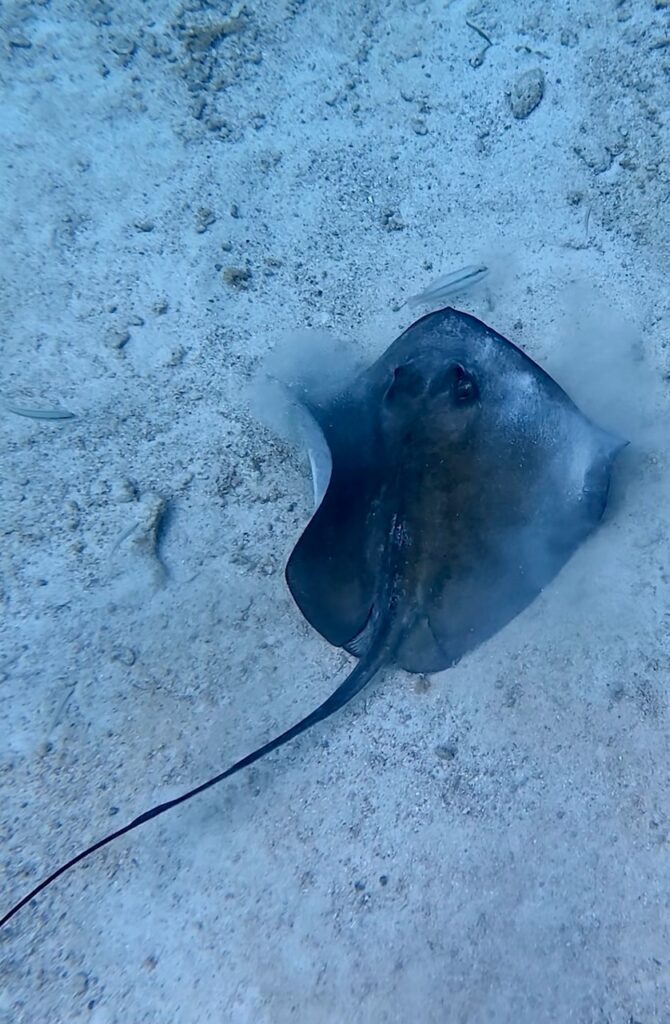
If sea turtles are my absolute favorite to watch underwater, stingrays are close up there. To watch and swim with dozens of them is absolutely magical. The stingrays swam just above the sandy bottom and the grass, in all shapes and sizes. They went in circles, lines, and clusters, as if gracefully dancing to well-rehearsed choreography, like ballerinas on stage. I was most surprised by the large, beautiful eyes on top of their bodies. As they swam, they made eye contact and kept looking at us. I wonder what they thought of us swimming a few feet above them.
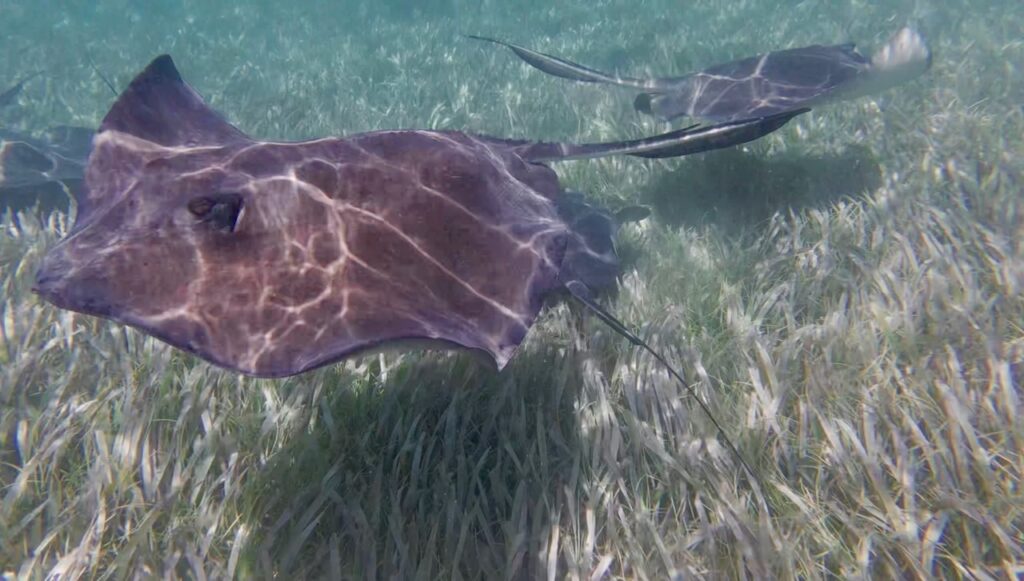
Then came the nurse sharks, just swimming at the bottom, seemingly curious about us. It was a sight to behold. We almost forgot to see the many huge, absolutely enormous conch shells lying still on the sandy-grassy floor. The guide explained that it was not conch season and these were empty shells.
After a wonderful morning on the water, we returned to the hotel. The staff recommended Blue Water Grill for lunch, a beachside restaurant in town. The food was perfect for eight hungry people after the workout.
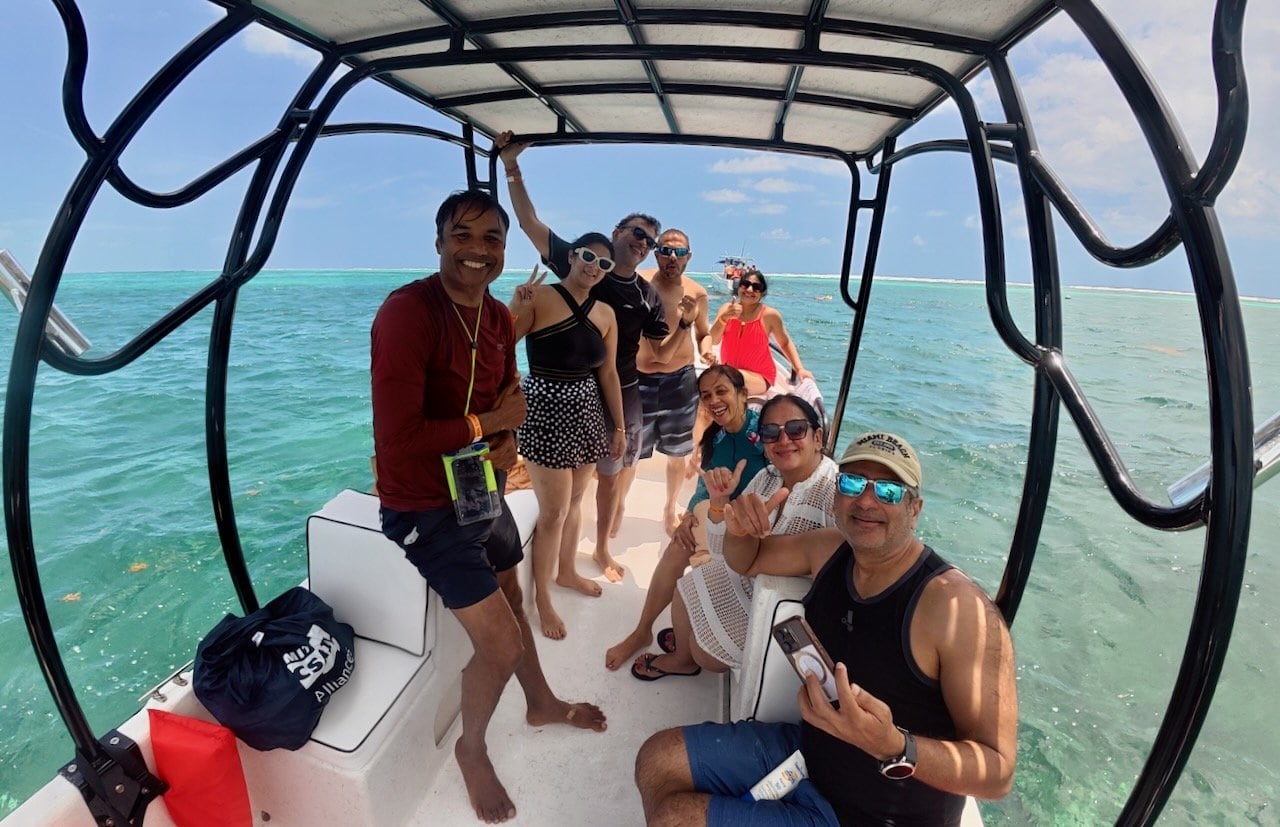
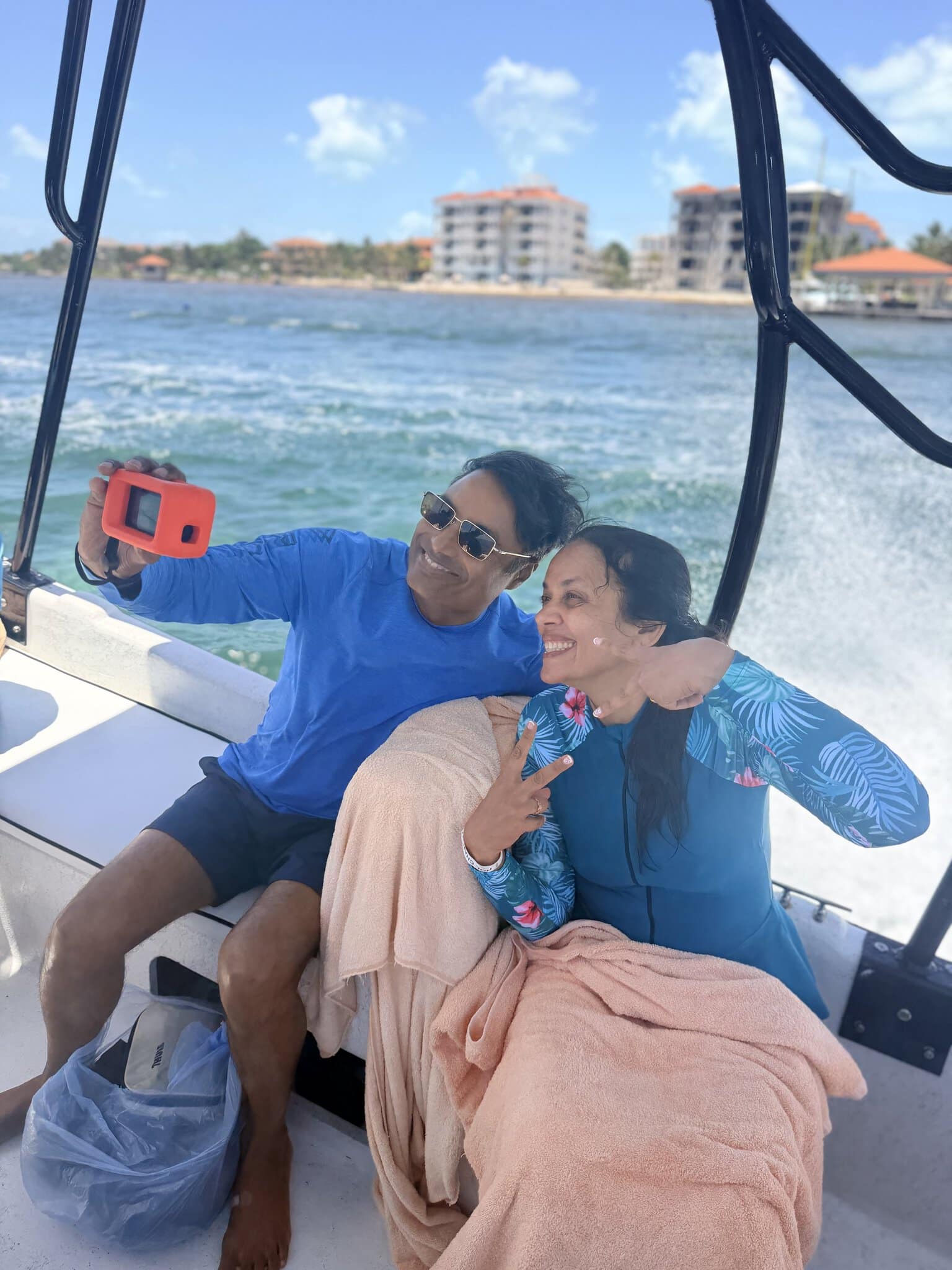
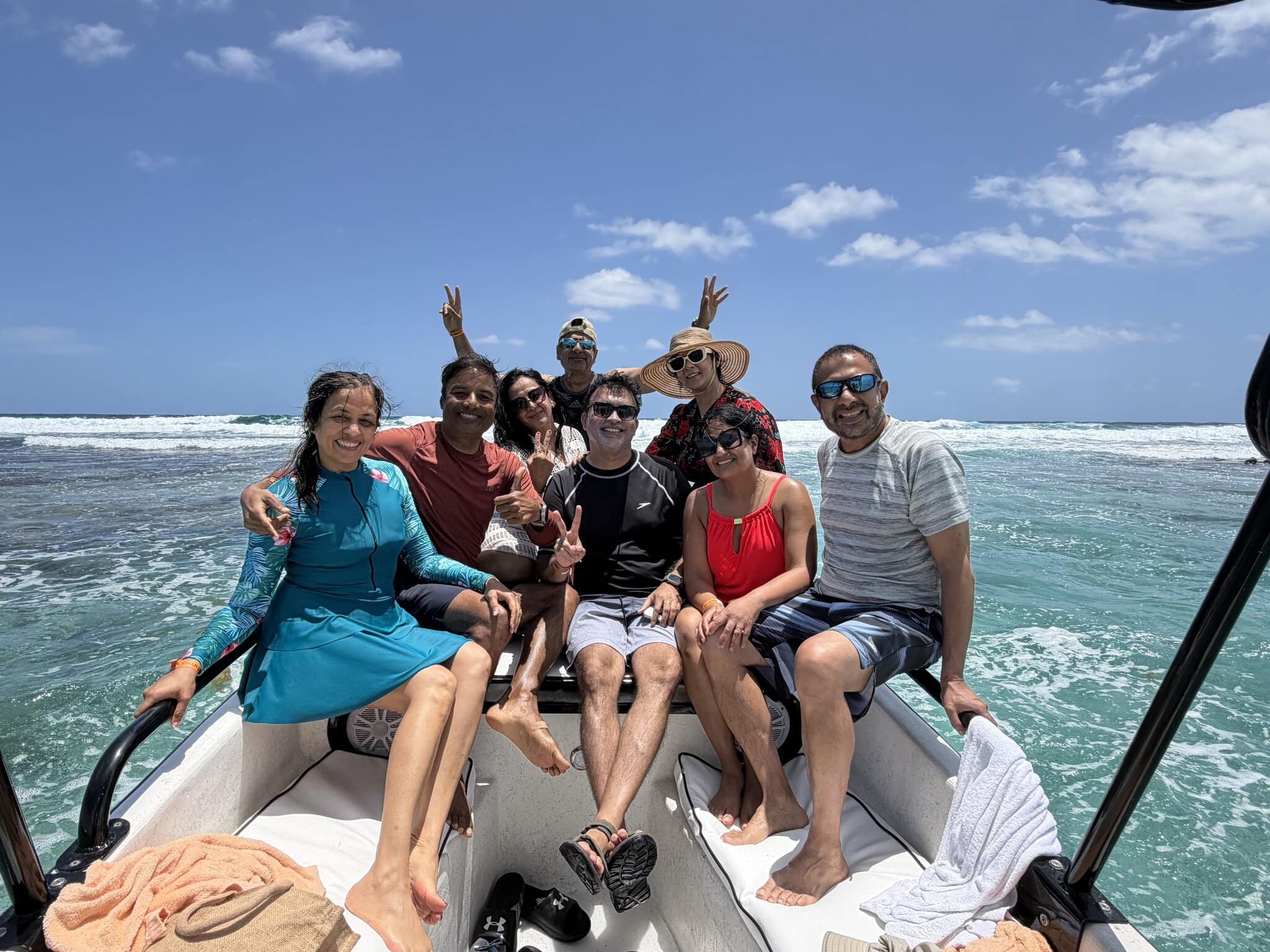
The Caribbean Sunset Cruise: A Moment to Slow Down
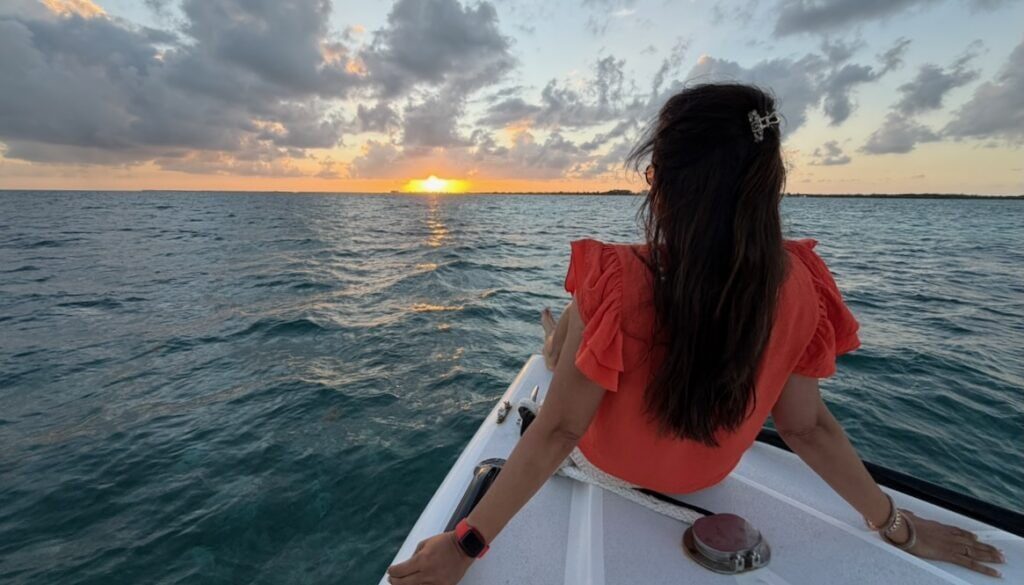
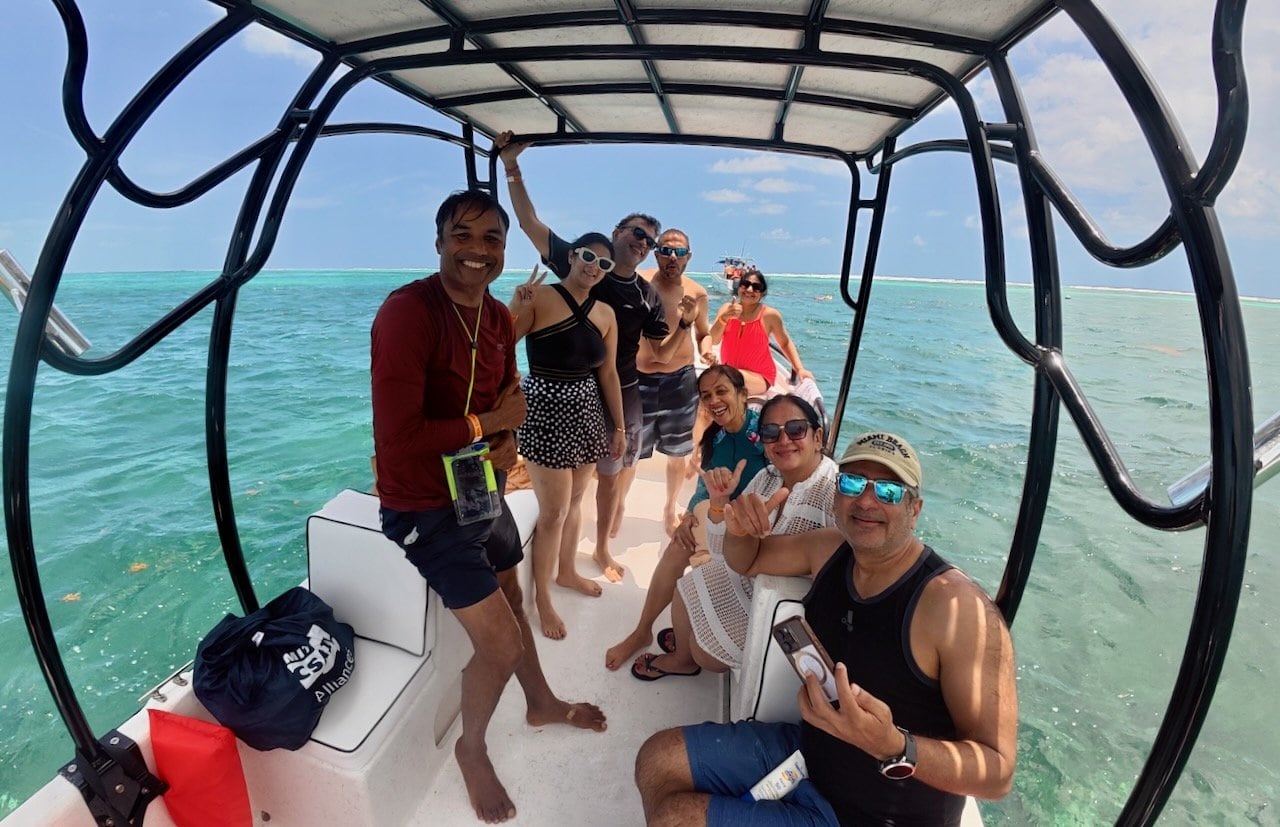
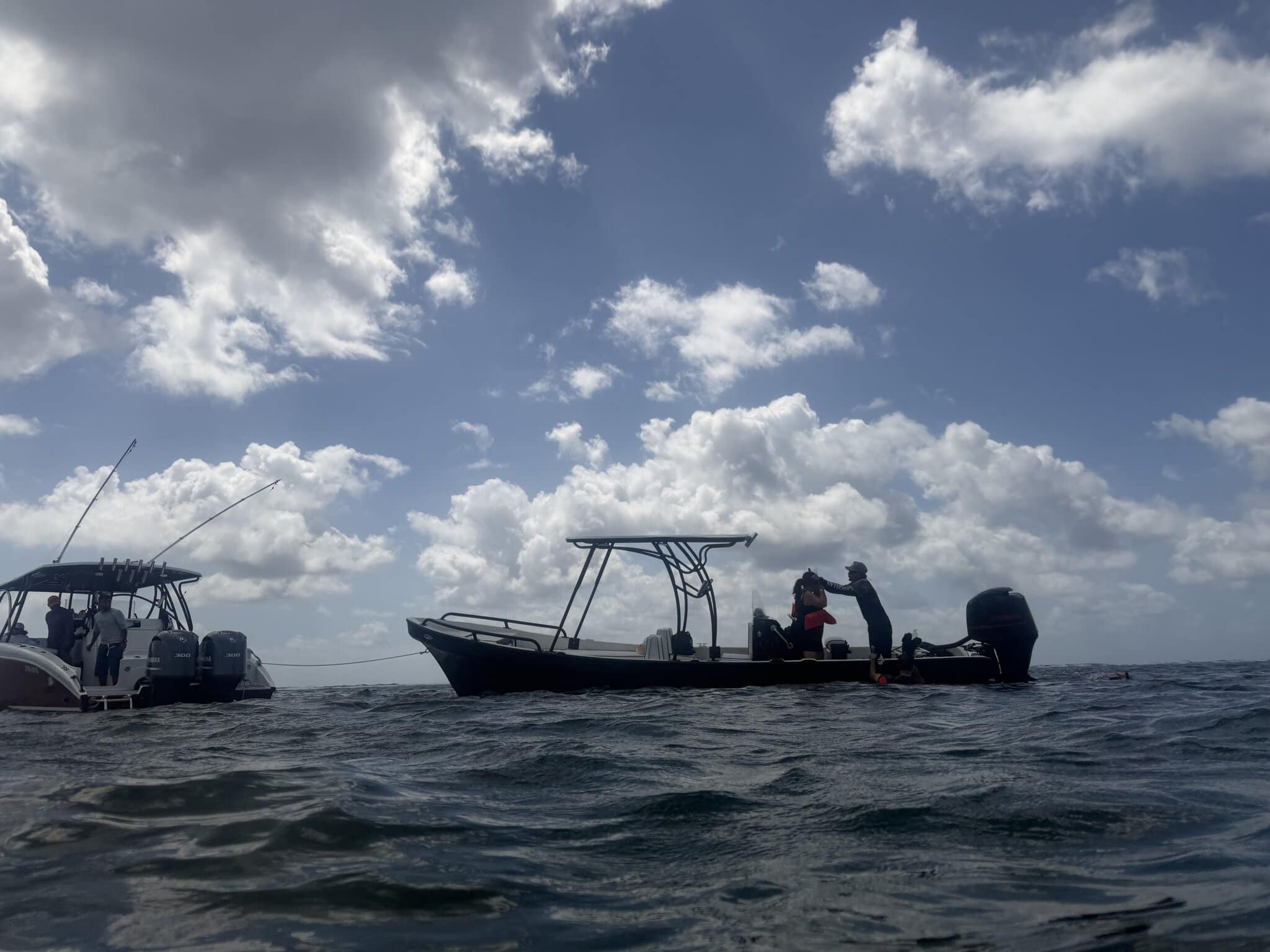
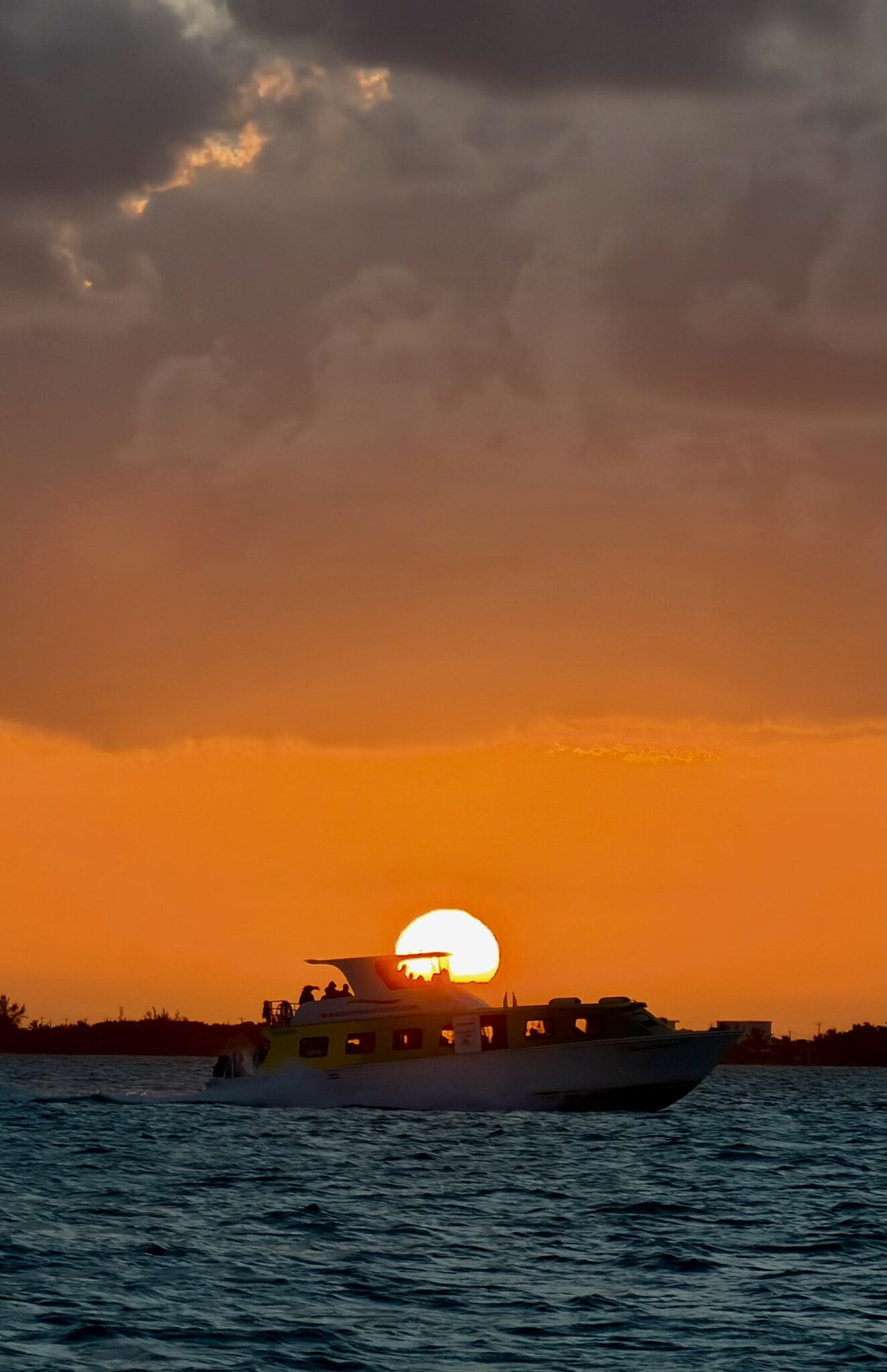
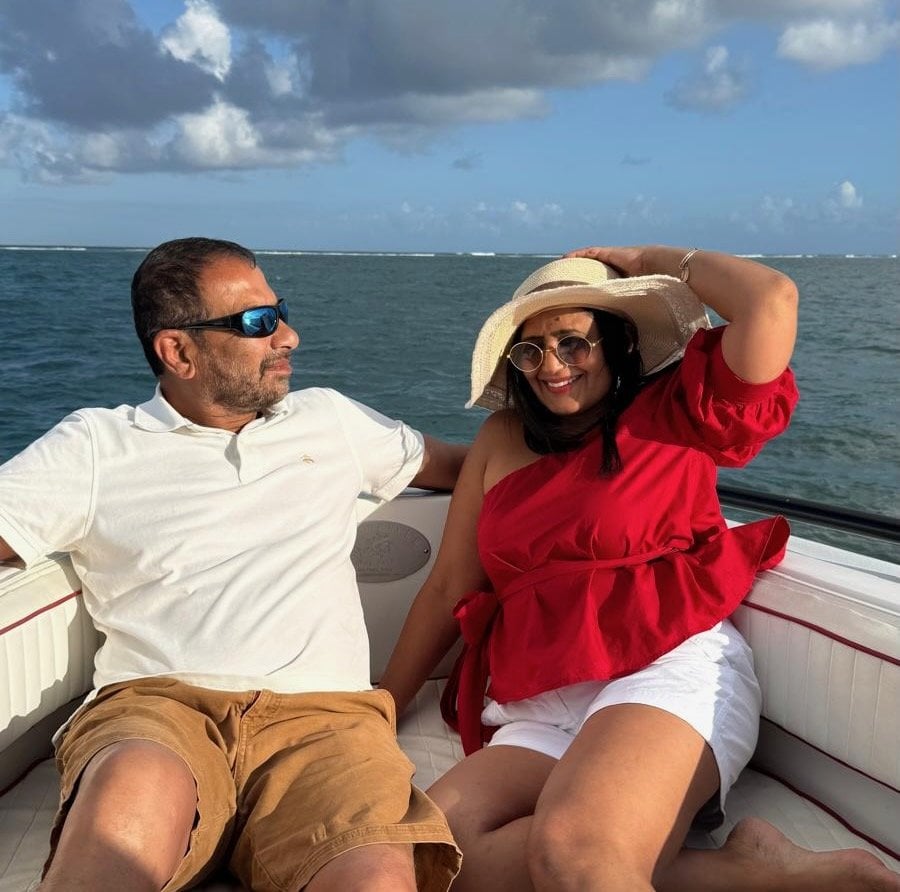
Wednesday evening, we chartered a boat to party at sunset. The vessel was larger and more comfortable than the morning snorkeling excursion boats, with cushioned seating and a snack buffet spread.
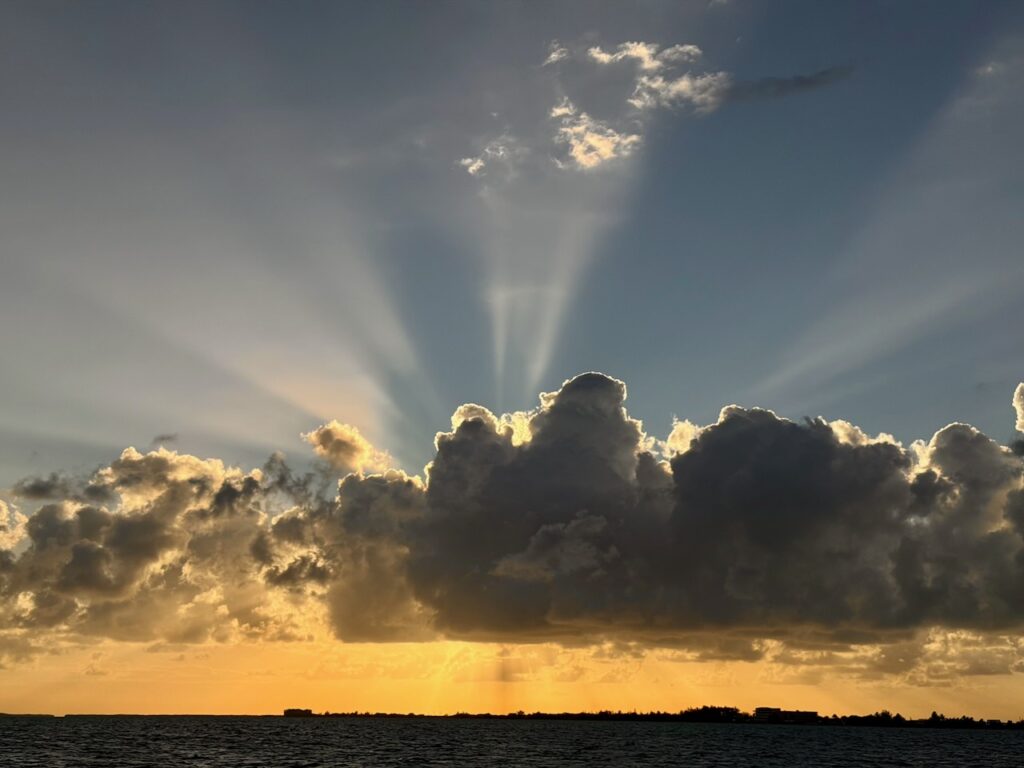
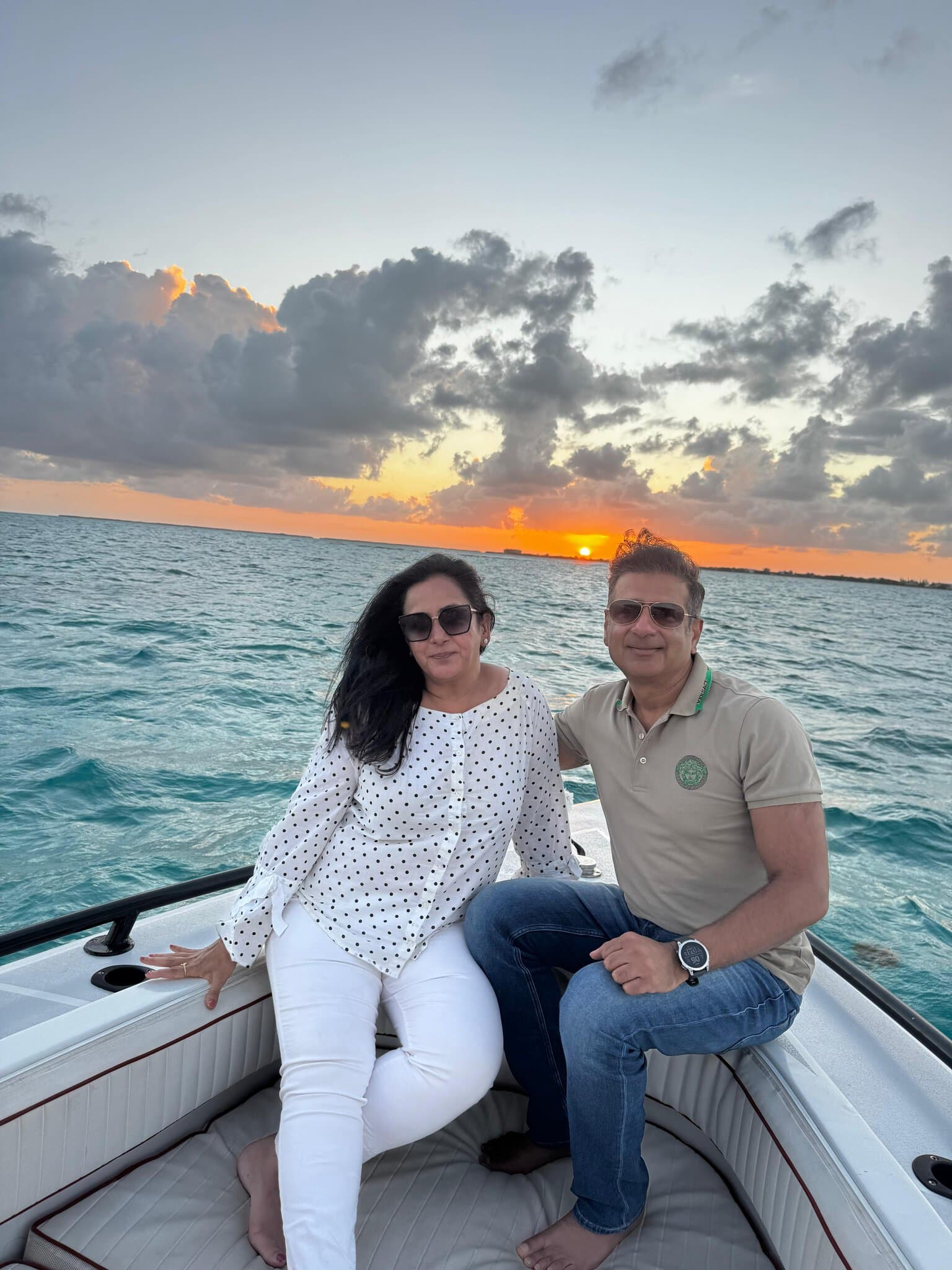
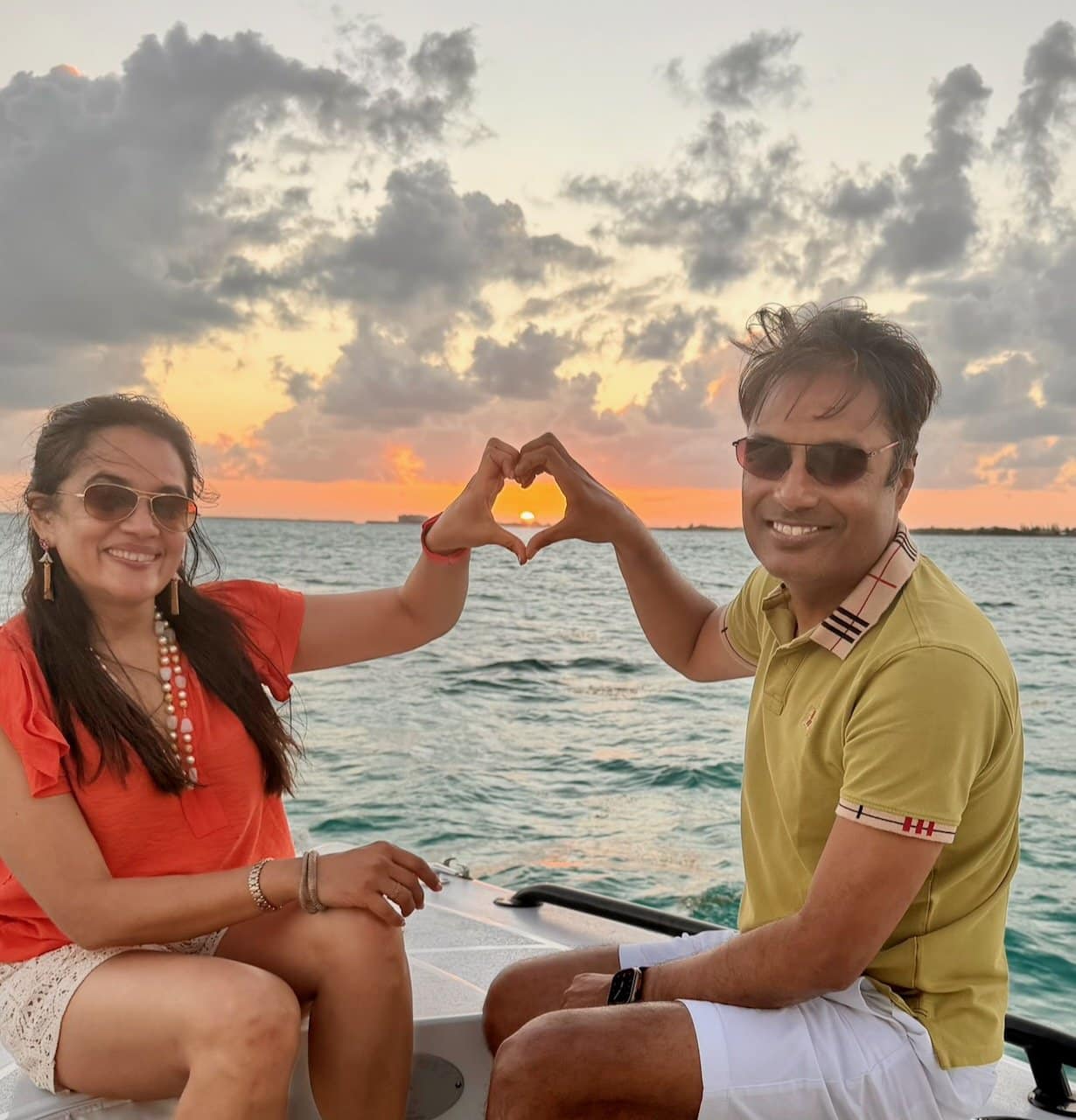
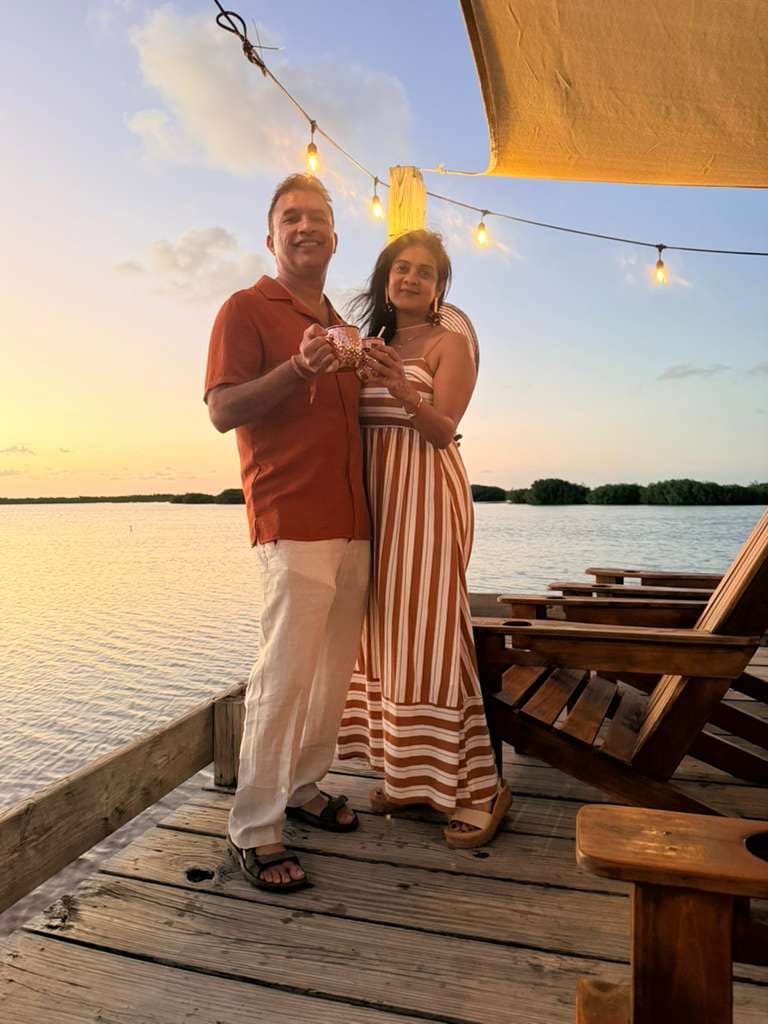
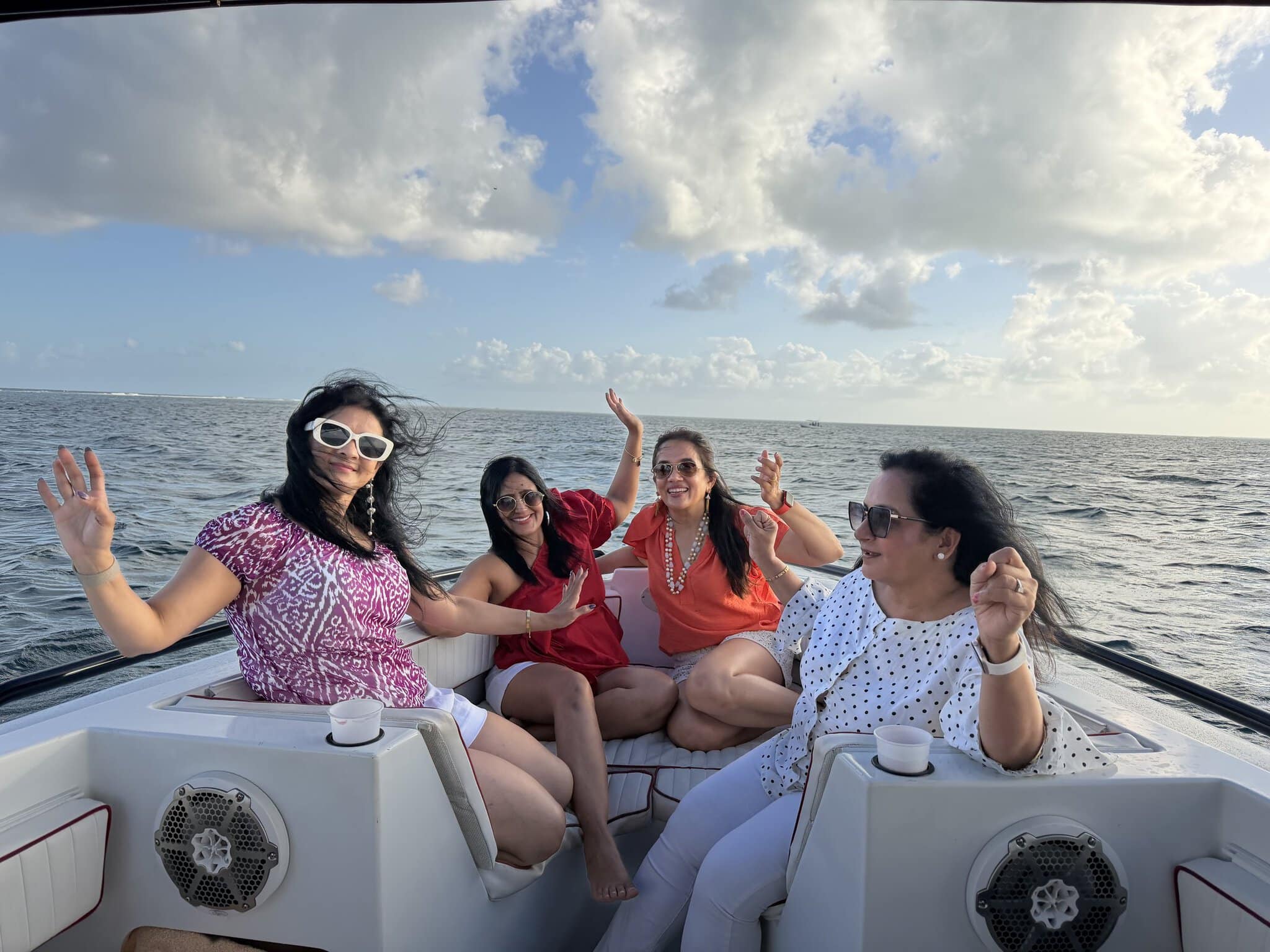
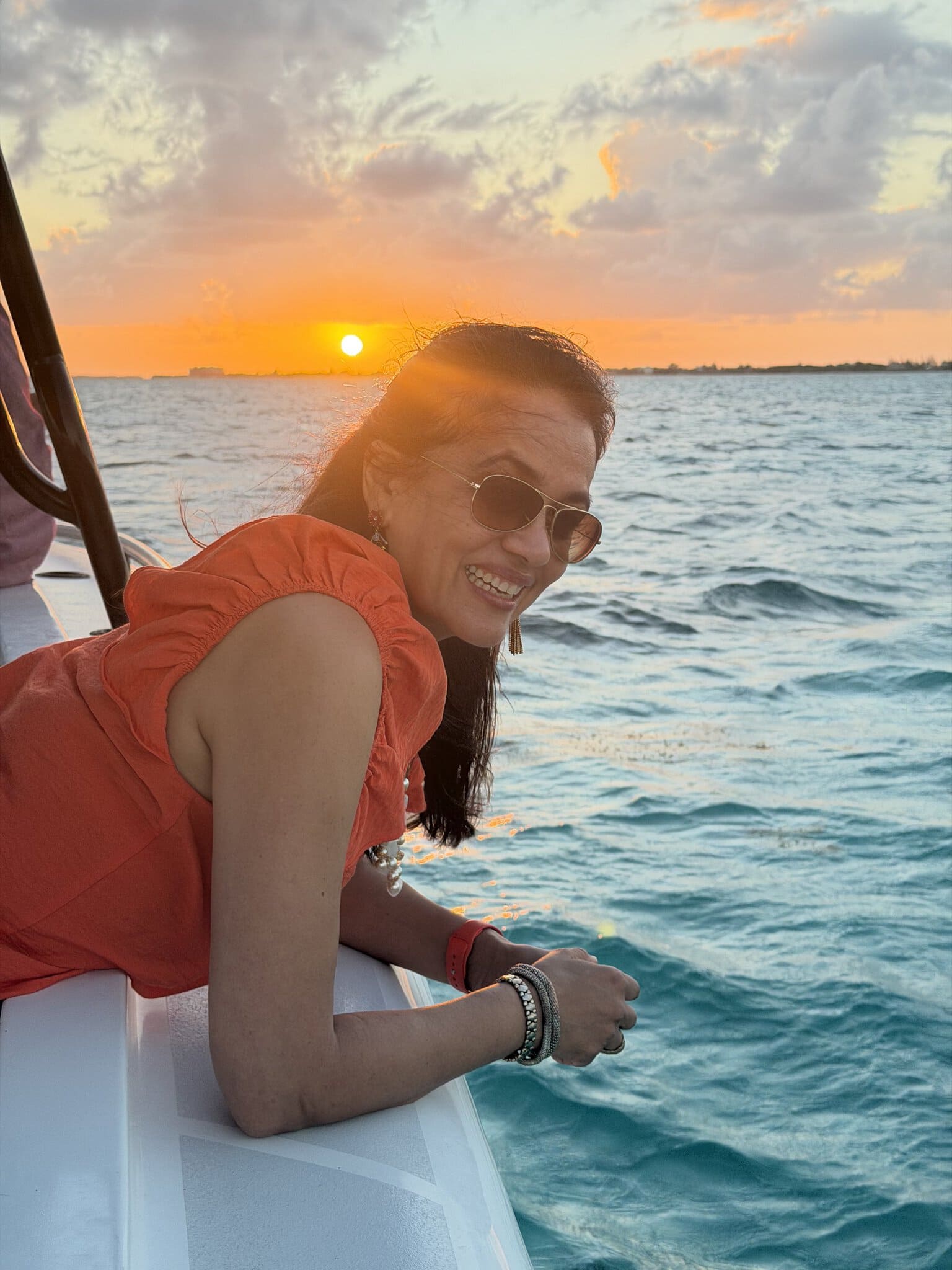
Initially, we danced to soft Hindi music, with snacks and drinks, just us and a sailboat far on the horizon, surrounded by the light turquoise water of the reefs, gently patting the vessel. The boat got into a romantic mood, sensing and feeling the moment here and now. It made for deep reflective thoughts, discussions, and lovely photos. The cool breeze in the warm Caribbean waters felt refreshing.
As the sky turned from blue to golden to orange and then to purple, we slowed down and settled into our spots to take in the special moment. Each of us felt it deeply. I found myself on the bow, a few feet above the shallow reef. It felt like I was gliding through the cool Caribbean air. It’s a feeling I will carry for a long time.
Vegan Food in San Pedro, Belize: Better than Expected
Before this trip, we were cautiously optimistic about traveling plant-based in Belize. Little did we know that we were in for a treat.
Our group of eight included two vegans and three vegetarians, and every single meal was genuinely excellent. Not “there are options,” not “they were accommodating.” Excellent. For anyone traveling plant-based, San Pedro in 2026 is a real destination.
Sea Salt at the hotel (breakfast, included with the stay): Once the team understood our group’s dietary needs, they added daily vegan options to the buffet: beans, roasted potatoes, and hot dishes alongside the continental spread, fresh fruit, and an oatmeal bar. They also offered made-to-order dishes like vegan tacos, burritos, and loaded avocado toasts, just as our friends got omelets.
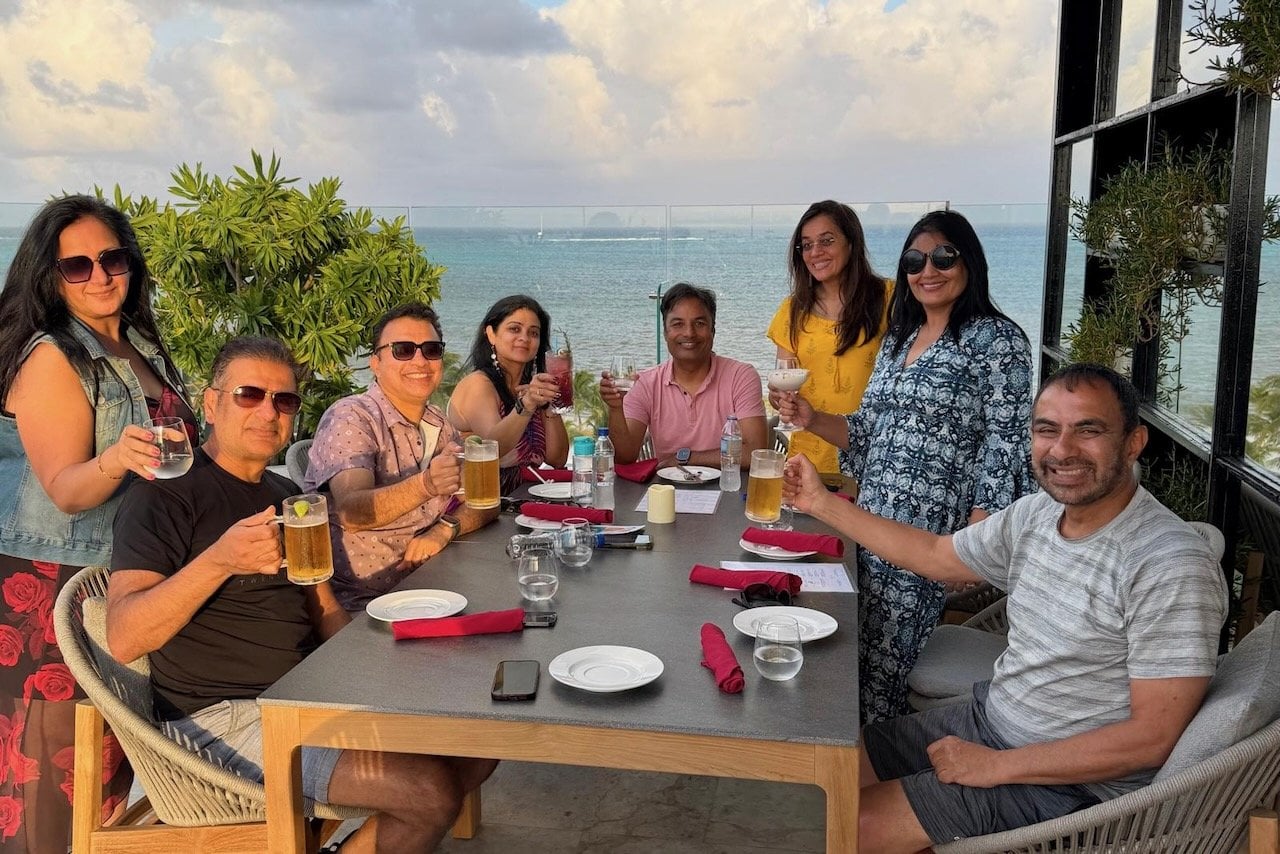
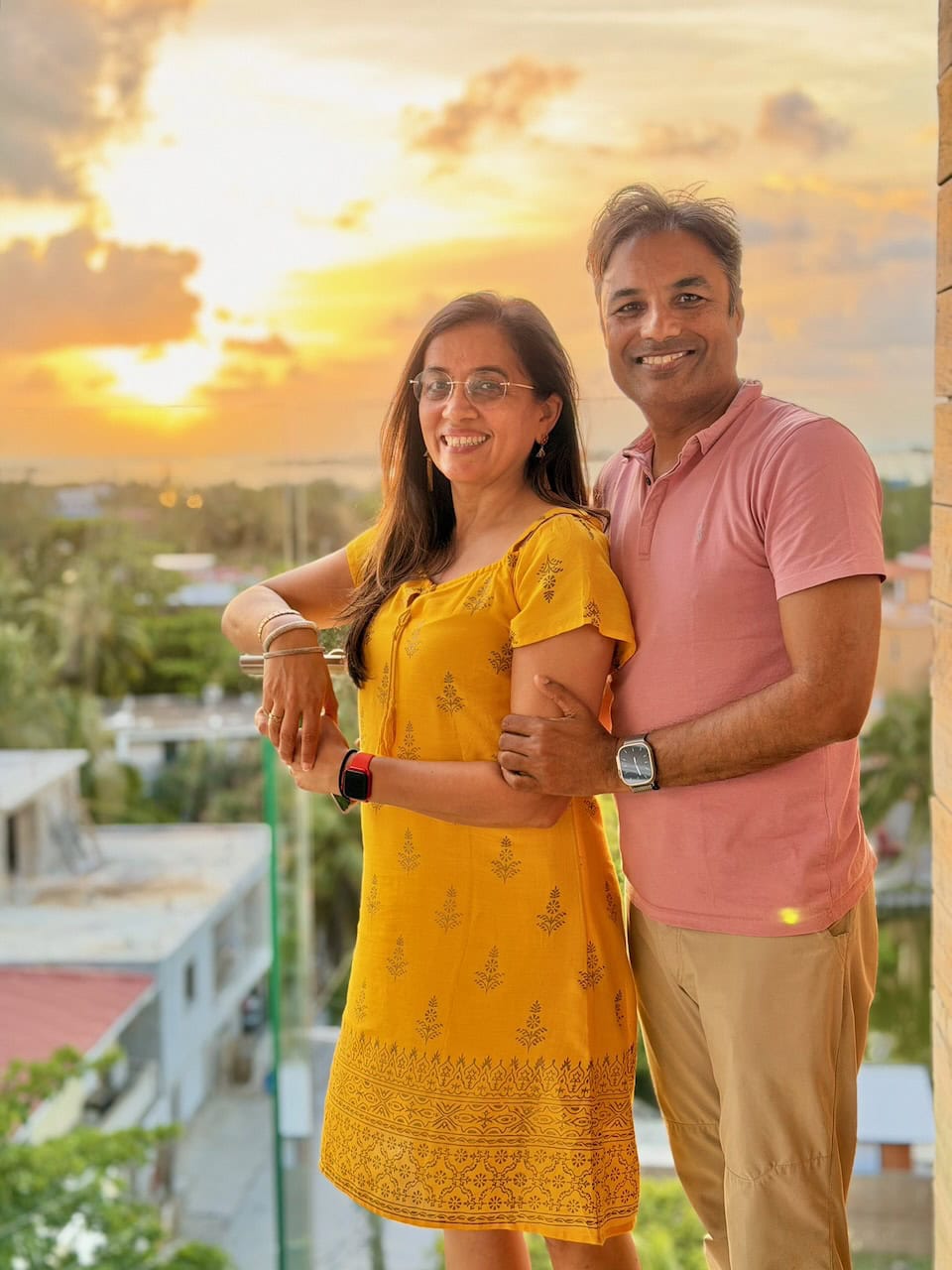
Vista Rooftop Lounge (Monday dinner): The hotel’s rooftop sushi restaurant has an infinity pool, panoramic Caribbean views at sunset, a white sandy beach view, and a chef who came to our table to understand our needs. The result was a custom vegan maki roll, a poke bowl, and a teriyaki dish, alongside soy edamame. The setting matched the food.
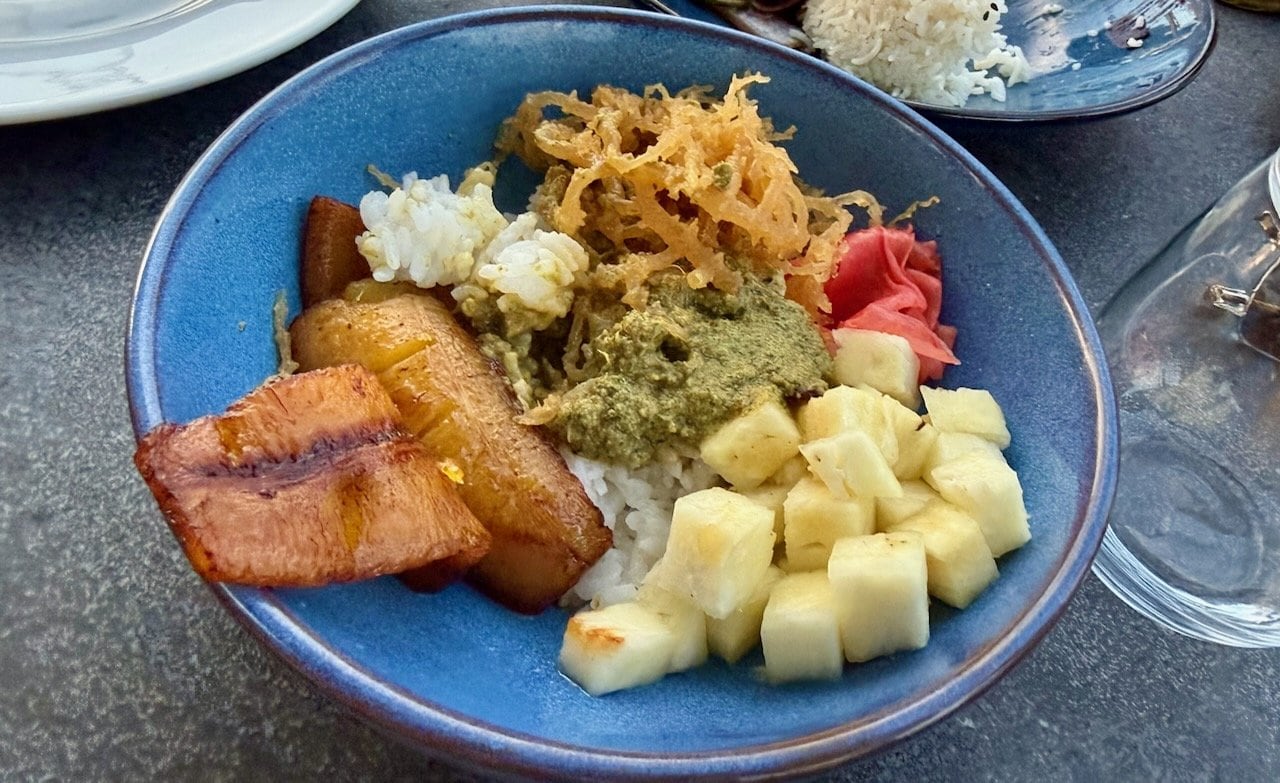
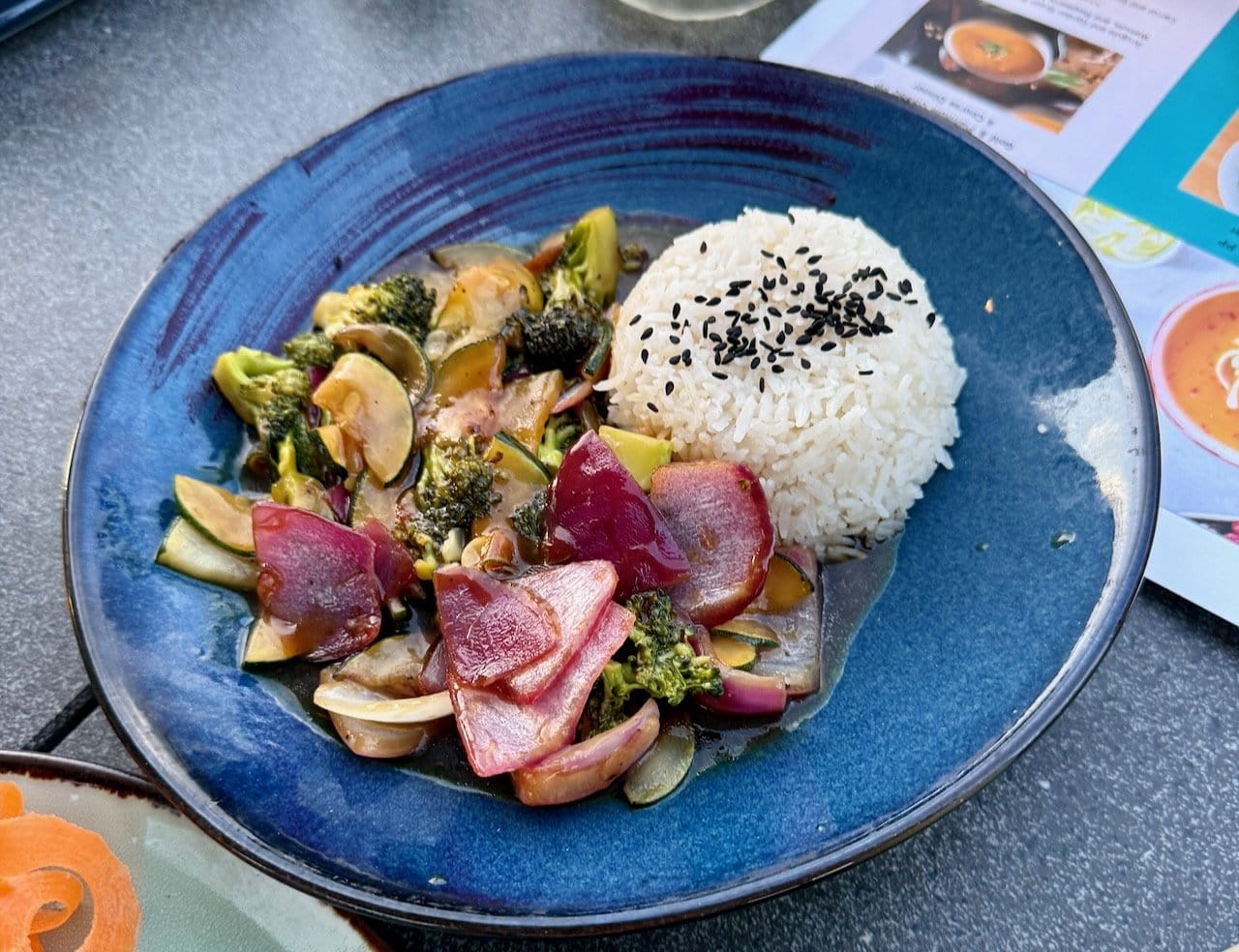
Pool bar at the hotel (Tuesday lunch, after Hol Chan): The veggie risotto, tacos, burritos, and salads were all excellent. A casual midday meal after a morning in the water, and it was just as good as a restaurant meal.
Elvi’s Kitchen (Tuesday dinner): Founded in 1974 by Doña Elvia Staines, Elvi’s grew from a tiny hole-in-the-wall burger stand into one of Belize’s most recognized restaurants, now run by Doña Elvia’s daughter, Chef Jennie Staines. Doña Elvia passed away in early 2025 at 92. Her legacy lives on with every dish.
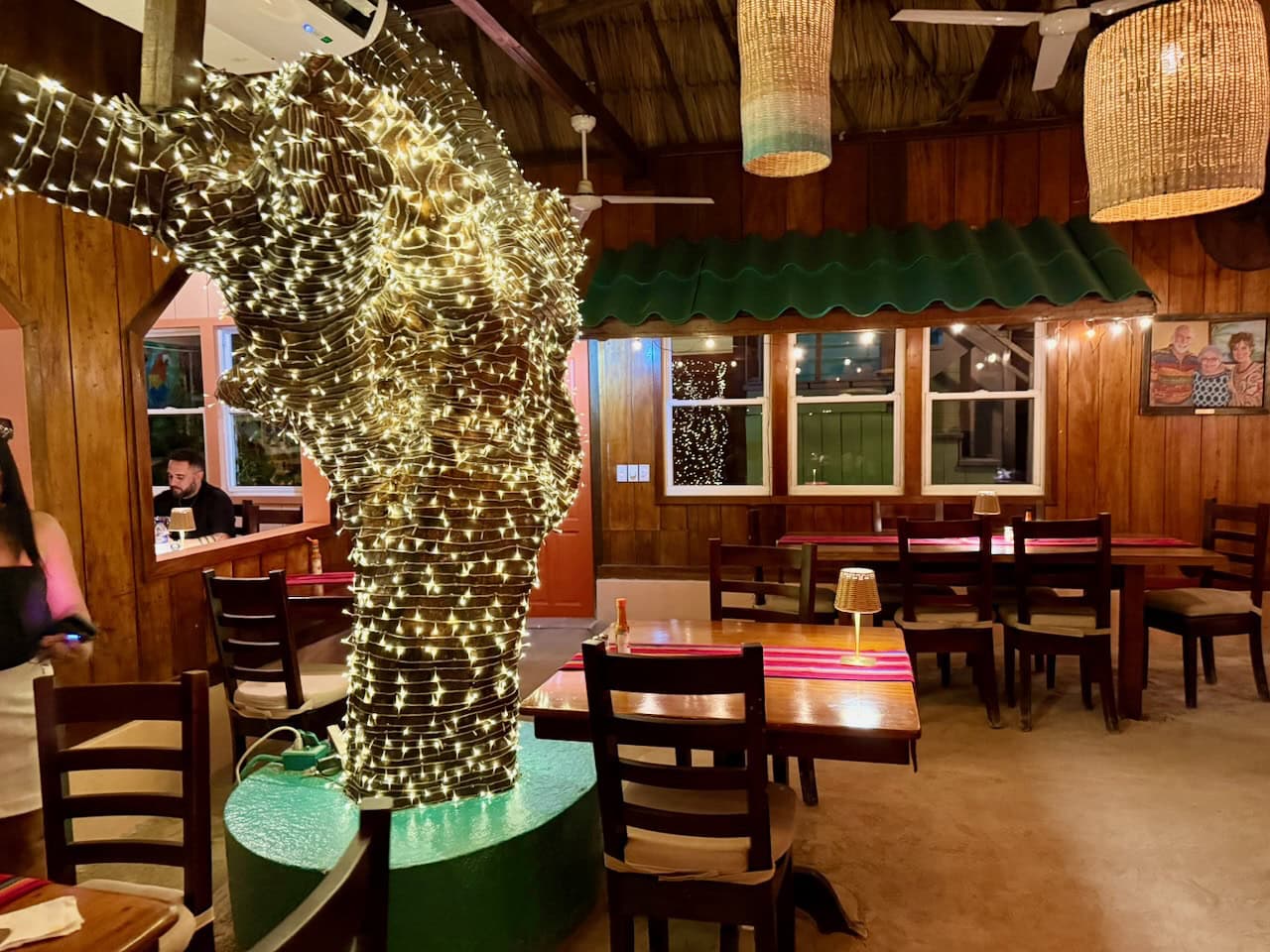
The restaurant is built around a massive flamboyant tree that grows up through the roof of the open-air dining room. The floor is soft white beach sand. It has been serving the island since 1974 and is widely considered its oldest restaurant. We had a vegetable curry and a udon noodle dish, and the table finished both completely. They also served dessert and sang joyously to celebrate two birthdays in our group.
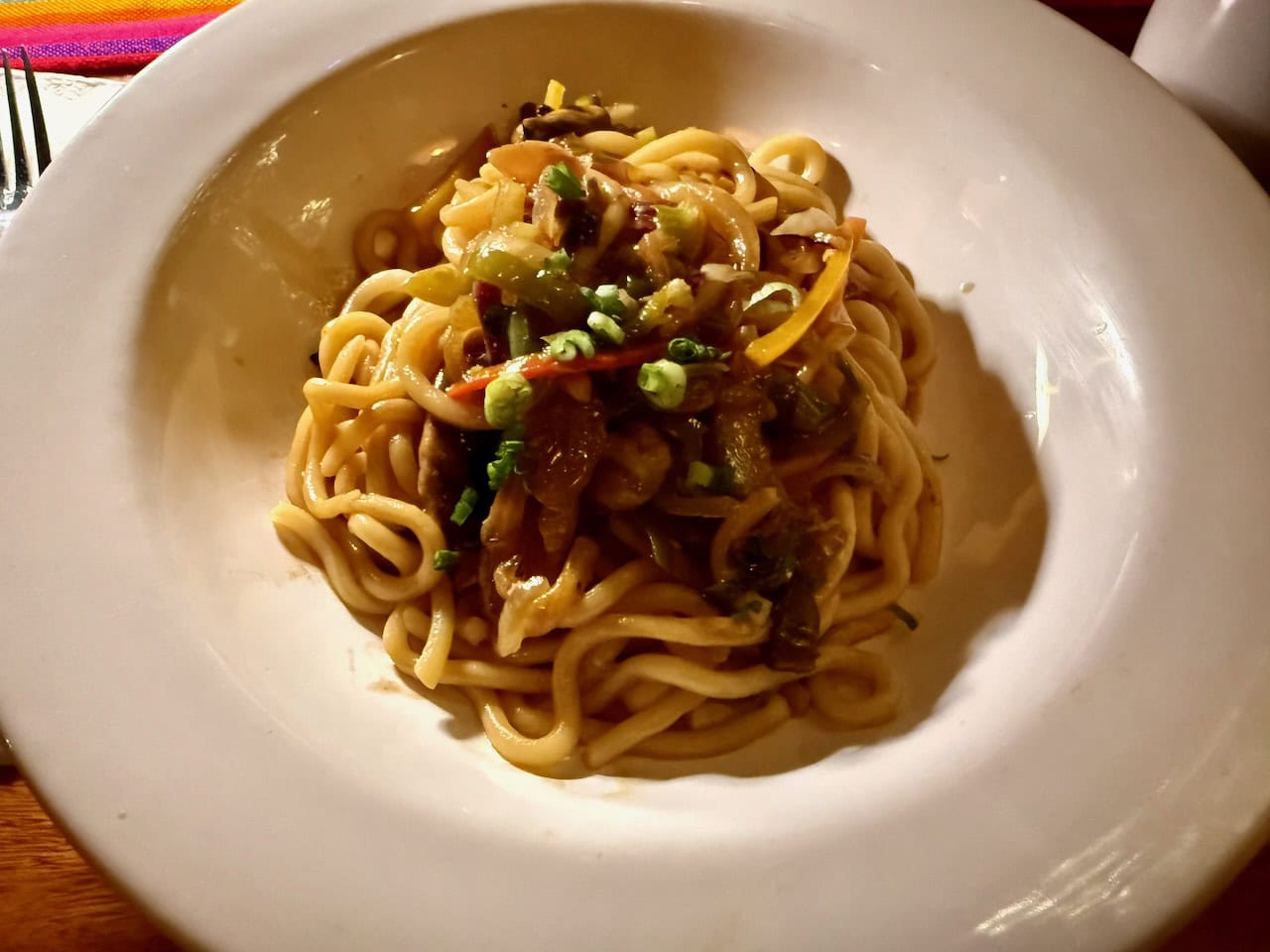
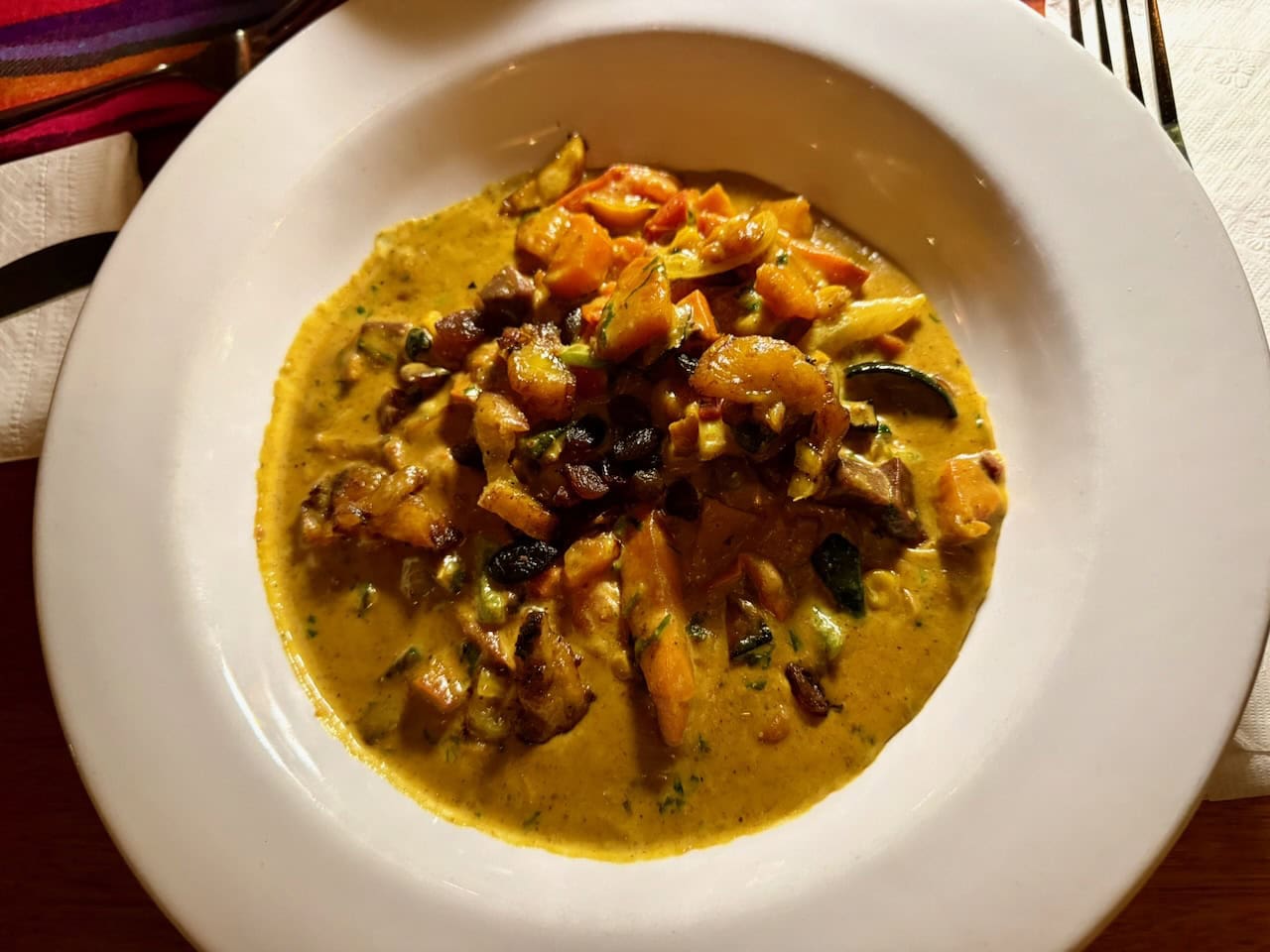
Blue Water Grill (Wednesday lunch, after Mexico Rocks): Located on a covered deck at the Sunbreeze Hotel on the white-sand beach, it has an upscale beach-bar feel. It has a separate vegan menu. The vegetable pasta and the thin-crust pizza were both excellent. The hotel was empty, but the restaurant’s upper deck was full. We got a section to ourselves overlooking the sea, palm trees, and beach games.
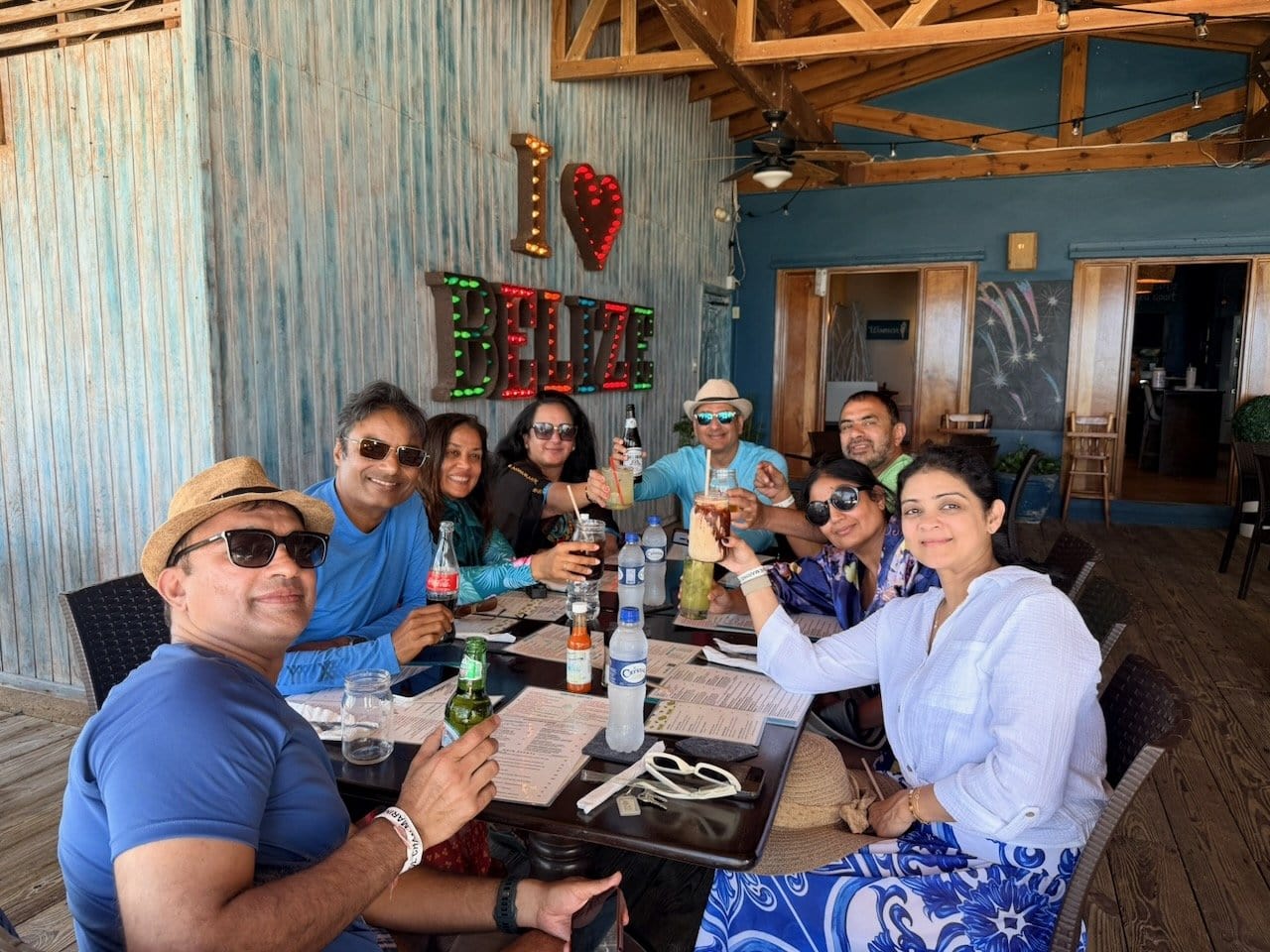
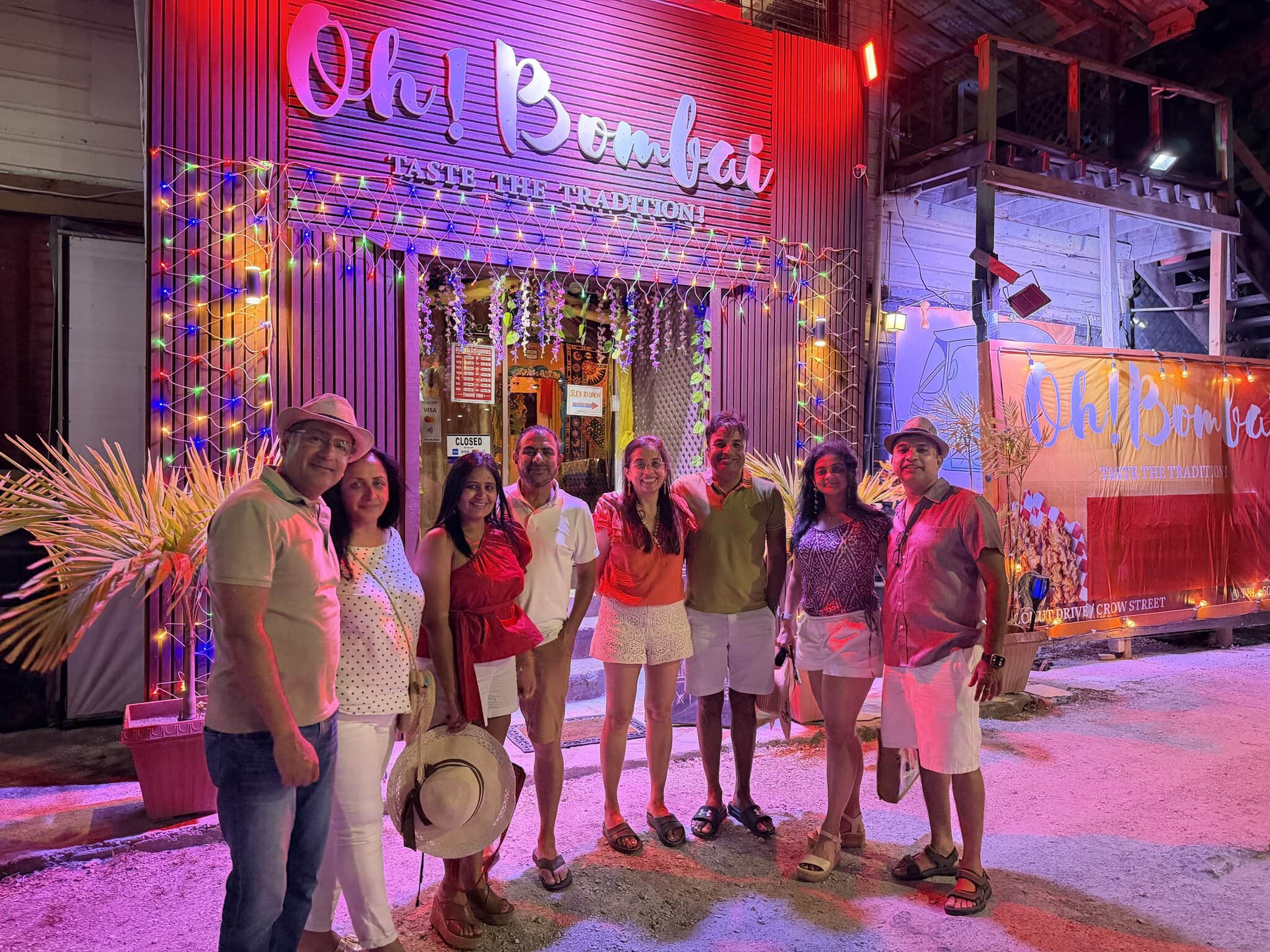
Oh! Bombai (Wednesday dinner): Varun Kumar opened Oh! Bombai in August 2022. He had spent 17 years working at a casino in Belize, far from his family in India. He eventually decided to build something of his own. The restaurant is his attempt to share authentic Indian cooking with a small Caribbean island, and it’s working. In just a short time, the restaurant has received raving reviews for its authentic cooking.
We ordered pakoda, daal, a cauliflower sabzi, and tandoori roti. Our group of eight Indian-Americans walked in with high expectations and left having raved about every dish. For anyone traveling with an Indian palate, Oh! Bombai is not a consolation prize. It is the real thing.
The Truck Stop (food truck park): We ran out of dining windows for the container food truck stop, which offers many cuisines in one compound. Next trip.
A Belize City Tour in a 3-hour Layover
On our way home, we had a three-hour layover in Belize City. We rented a taxi SUV whose driver gave us a driving tour of the city: the important buildings, the history, stories of the place, and photo stops. The highlight was St. John’s Cathedral.
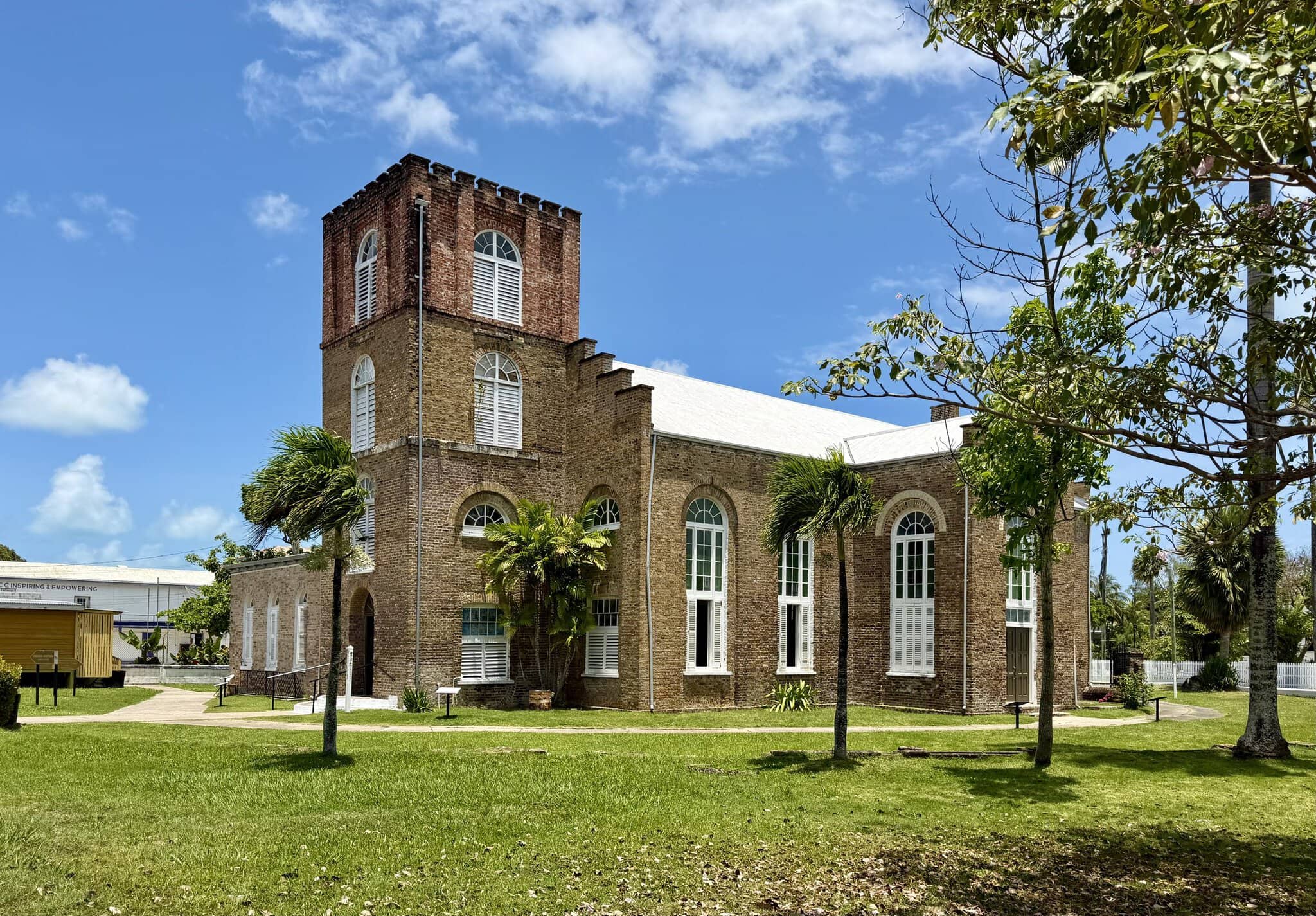
Built in 1812, St. John’s Cathedral is the oldest Anglican cathedral in Central America. The bricks were brought in as ballast from England: ships needed weight to stay stable at sea on the journey, and bricks served that purpose. On the way back, the ships were loaded with massive Belizean mahogany, which was used to build important buildings in London. Eventually, the colonial trade stripped the mahogany completely. With nothing left for Britain to take, Belize negotiated its freedom. It is one of those stories that adds perspective to the country’s history. The brick cathedral is not just beautiful, it’s a record of what was taken.
The driver shared stories of harmonious diversity in Belize. English, Spanish, and Creole are commonly spoken in Belize. The largest ethnic groups are Mestizos (approx. 50-53%), Creoles (25-30%), Maya (10-11%), and Garifuna (6%), but Mennonites, East Indians, Chinese, and Europeans also thrive here. Belize is considered a “melting pot” with high rates of interracial marriage and cultural blending.
The driver brought us back to the airport with plenty of time to spare. We got a surprisingly delicious, healthy, and freshly made lunch at the airport.
If you have a layover in Belize City, hire a taxi for a city tour. Our driver asked for USD$100, a fair fare. He delivered more than we expected in that short 3-hour layover.
Shooting Underwater: DJI Osmo Action 5 Pro Settings for the Belize Reef
This was our first snorkeling trip with a dedicated underwater camera, and it made a world of difference. Although the iPhone with a waterproof case has worked well across the Galapagos, Brazil, Hawaii, Thailand, and Okinawa, nothing beats the clarity of a purpose-built action cam for underwater footage. My biggest recommendation: ask Claude to generate specific settings for your location before you go.
Here is what worked at Hol Chan and Mexico Rocks. The improvement in footage from Day 1 to Day 2 was due to adjustments to the settings.
VIDEO SETTINGS
| Resolution | 4K / 16:9 |
| Frame rate | 60 fps standard; 120 fps for slow-motion reef shots. I switched from 30 fps to 60 fps because of disk space concerns, and 60 fps helped slow down some scenes beautifully. |
| Stabilization | RockSteady 3.0 on. Essential when moving through water. |
| Field of view | Wide (not Standard/Dewarp). In Standard/Dewarp, everything outside the center frame goes soft and warped. Wide retains much better detail in tropical snorkeling. This was a change I made for Day 2. |
| Color profile | Auto / standard mode. DJI’s underwater color science is the best of any action cam on the market. D-Log M is an option if you want to grade in post. |
MANUAL EXPOSURE (SHALLOW SNORKELING, 3–10M, BRIGHT BELIZE SUN)
| ISO | 100-800 |
| ND Filter | ND8–ND16, depending on brightness. I don’t have one yet; it’s on the list for next time. |
| White Balance | 5000K manual. Locks your color so it doesn’t shift as you change angle. |
| Shutter | 2× your frame rate: 1/120 at 60 fps, 1/240 at 120 fps. |
BELIZE-SPECIFIC TIPS
- Use a floating case and lanyard, for the wrist or neck, in case the camera slips. The tripod stick is great when you’re above water, but I find it inconvenient to carry when swimming.
- Skip the additional waterproof case, which will get in the way of good photography. The underwater camera will be sufficient if handled properly.
- Don’t cover the color temperature sensor. It’s built into the “O” of the logo on the front. It corrects color underwater and reduces flicker as your angle changes.
- After snorkeling, remove the camera from its magnetic mount and floating cage before freshwater soaking to flush out trapped salt.
- Light conditions: In Belize’s shallow, bright water (Hol Chan is only 8–30ft), you’ll have excellent light. Keep ISO low and let the ND filter control exposure.
Travel for Longevity: Activity, Rest, Nature, and Community
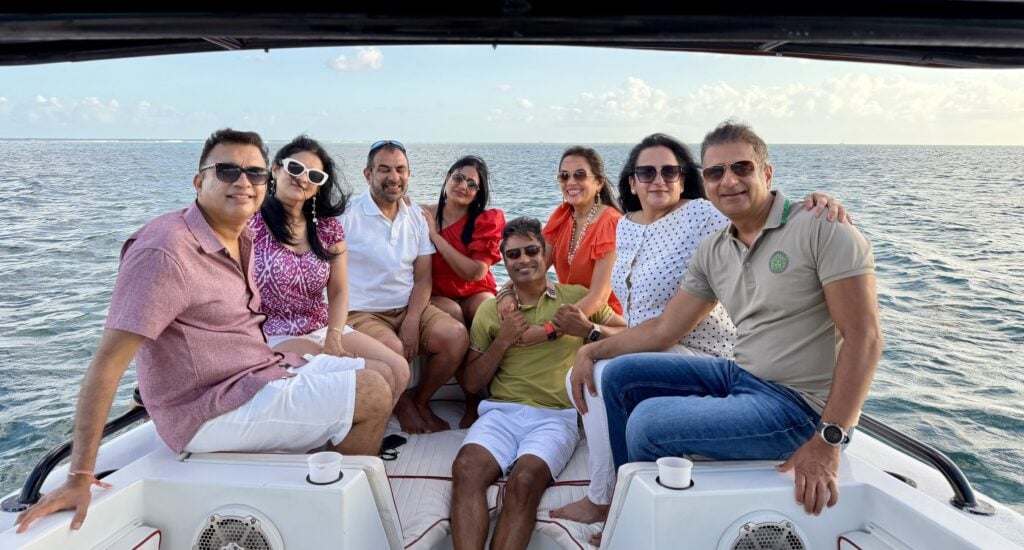
Historically, empty nesting is one of the hardest phases of life. The big shift and the new phase come with many emotional challenges. We’re lucky to have found a like-minded group of active, adventurous, health-conscious friends in this phase of life. Our neighborhood groups have hiked the Tour du Mont Blanc, trekked the Inca Trail to Machu Picchu, crossed the Grand Canyon rim-to-rim, and are heading to the Scottish Highlands and the Dolomites this summer for hikes. We travel actively, we stay healthy, and we have built a community that keeps showing up for active experiences together.
San Pedro was perfectly suited for a long-term travel lifestyle. The activity level is high enough to feel meaningful: two mornings in open water, navigating currents, shooting footage underwater, and swimming with nurse sharks. The sunset cruise, on the other hand, was truly an experience in slowing down. This was an excellent balance of activity, leisure, good food, connections, and laughter.
The physical demands are real but very accessible. No one was left behind. We had guides for non-swimmers so everyone could enjoy the wildlife. Our diet and rest preferences were respected. We ate together and enjoyed each other’s company. Played games and bonded. It is the best outcome for building community and health in this new phase of life.
Frequently Asked Questions
How do you get to San Pedro?
Fly into Philip S.W. Goldson International Airport in Belize City. Then there are two options: (a) a 14-minute flight on Tropic Air or Maya Island Air, or (b) a 90-minute water taxi. The water taxi is cheaper, but the flight is worth the premium for the aerial views alone. Other guests mentioned that they took the water taxi, and it was rough.
How do you get around in San Pedro
San Pedro is car-free except for taxis and golf carts. Golf carts are available everywhere, but the gas-burning ones make the main roads smelly. Golf carts can be fun to ride, so we rented one on one day. For a short stay focused on excursions, taxis are the easier choice.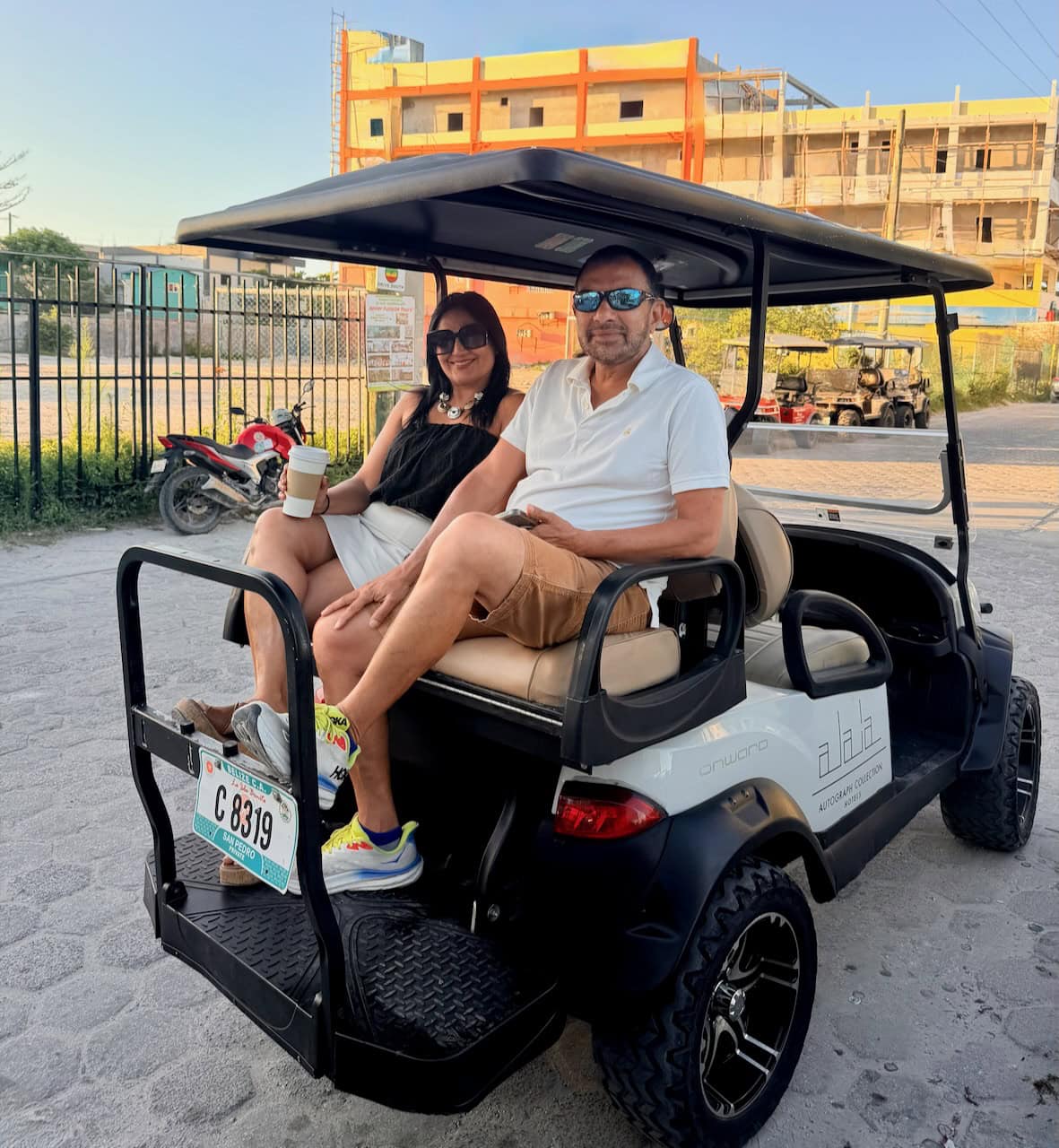
Is San Pedro good for snorkeling beginners?
Yes. Both Hol Chan Marine Reserve and Mexico Rocks are accessible to non-swimmers and first-timers. Our guides stayed in the water with those who need support. We had requested that in advance. Mexico Rocks, with calm, shallow water (8–16ft) and no current, is a good starting point.
Is Shark Ray Alley safe?
Yes. The nurse sharks at Shark Ray Alley are docile bottom-feeders fully accustomed to people. In the lesser-visited areas, they are more curious. Irrespective of the location, they are naturally peaceful creatures, unlike the Hollywood version.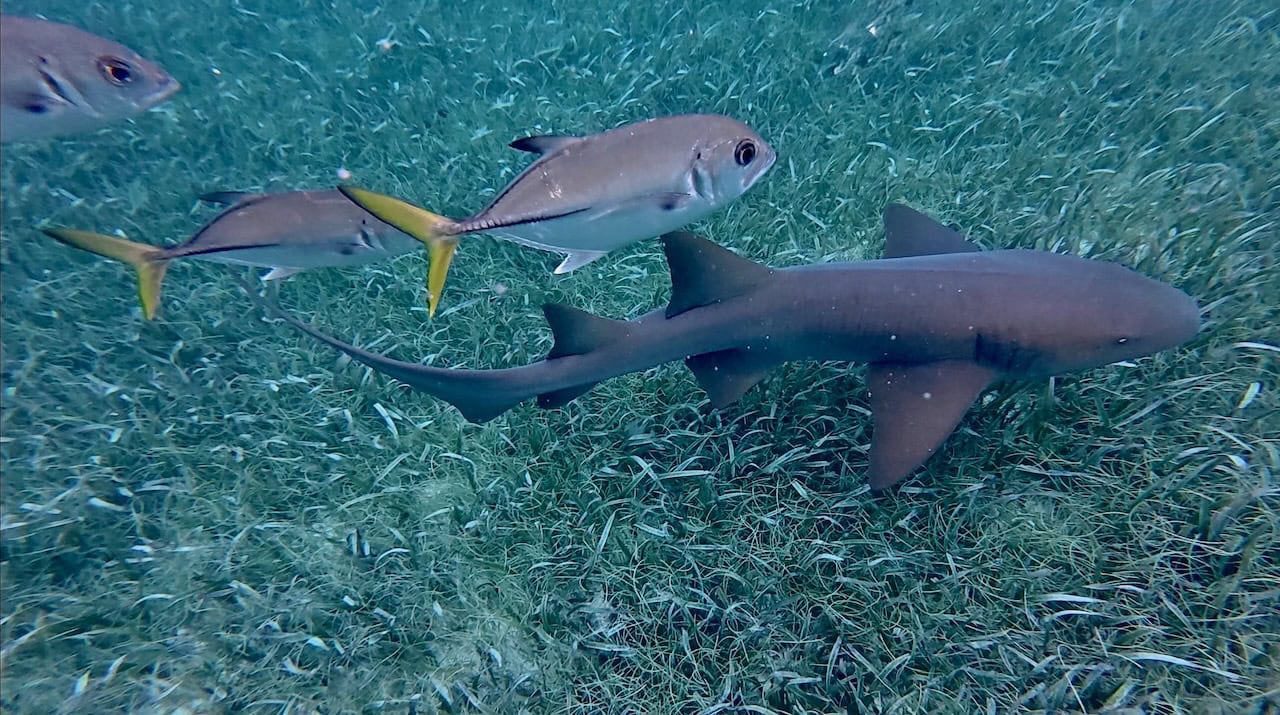
What is Mexico Rocks snorkeling like?
Mexico Rocks is a shallow patch reef about six miles north of San Pedro, protected as part of the Hol Chan Marine Reserve since 2015. It has fewer visitors than Hol Chan, no current, shallow water, and is excellent for beginners and underwater photography.
Which snorkeling site is right for me?
Each site has a distinct character. Hol Chan Marine Reserve, south of San Pedro, is the most dynamic and the most popular site. It has a deep channel with strong tidal currents and abundant marine life (sea turtles, barracudas, snappers), and it is near Shark Ray Alley for a nurse shark encounter.
Mexico Rocks, north of San Pedro, is shallower (8–16ft), has no current, and features dense patch reefs with exceptional coral variety and fish diversity. It is ideal for beginners and non-swimmers, with guides. Stingray Alley offers a similar up-close encounter with stingrays and the occasional nurse shark on the sandy bottom. Either tour can be done in half a day.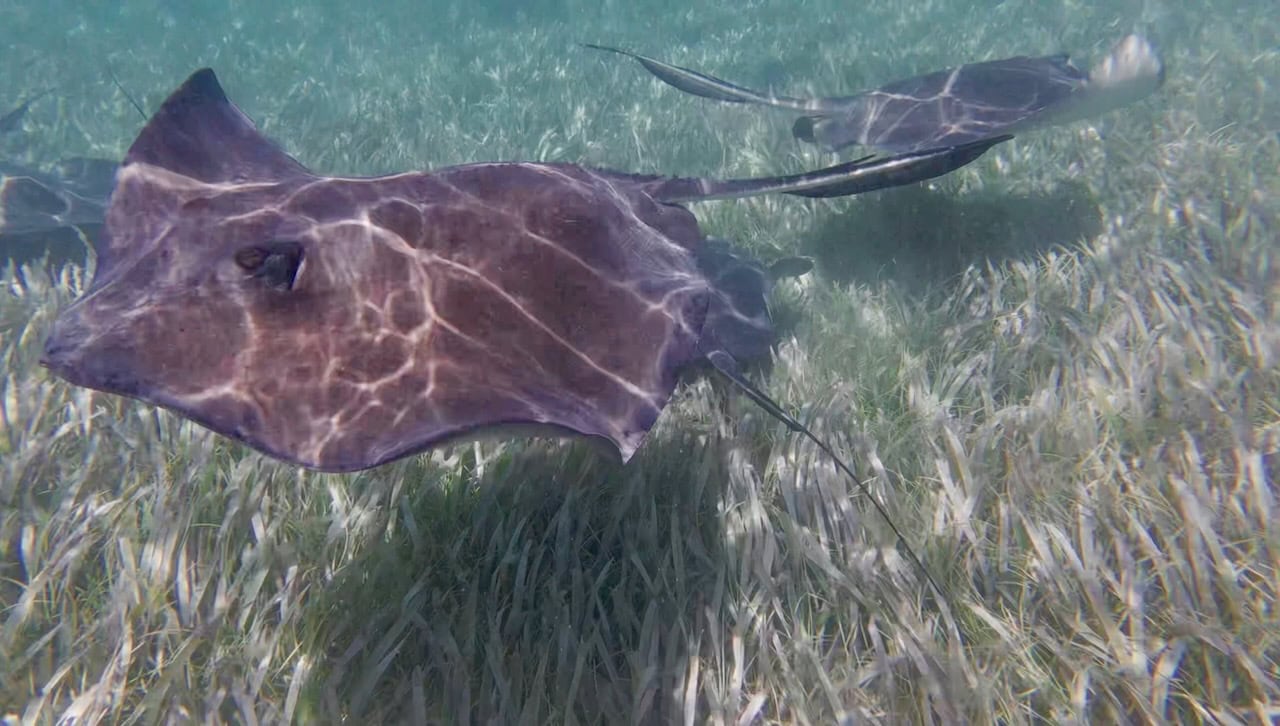
What else is there to do in Belize beyond snorkeling?
Belize is compact but remarkably varied. On and around San Pedro: scuba diving on the Belize Barrier Reef (a UNESCO World Heritage Site and one of the world’s top dive destinations), kayaking, paddleboarding, sport fishing, and sunset cruises. Day trips from San Pedro include the Great Blue Hole, a 1,000ft-wide underwater sinkhole and one of the world’s most iconic dive sites, and Bacalar Chico National Park at the northern tip of Ambergris Caye. On the mainland: the New River wildlife cruise to Lamanai combines a river journey through wetlands rich with crocodiles, manatees, and birds with a Maya temple complex still partially reclaimed by jungle. Cave tubing through the Actun Tunichil Muknal (ATM) cave system and zip-lining in the Cayo District are popular half-day trips. Xunantunich and Caracol are the other major Maya sites worth the drive. A full week in Belize makes most of this accessible.
Where should you book excursions?
Book through your hotel concierge rather than online aggregators. The operators the hotel uses are vetted and more motivated to strive for an excellent experience. For groups, the private tour format makes a big difference.
What is the currency in Belize?
The Belize Dollar, fixed at 2 BZD to 1 USD. US dollars and credit cards are accepted everywhere in San Pedro.
How long do you need in San Pedro?
Four days cover two snorkeling excursions, a sunset cruise, and a thorough food exploration. Three days is a workable minimum. A full week allows for day trips to the Great Blue Hole, Bacalar Chico National Park, and mainland Belize for the Lamanai river cruise, cave tubing, and the Maya ruins at Xunantunich and Caracol.
Is San Pedro, Belize, vegan-friendly?
Yes. More than we expected at a Caribbean destination. Strong options include Oh! Bombai (authentic Indian), Blue Water Grill (separate vegan menu), and Sea Salt (made-to-order vegan dishes at breakfast). Elvi’s Kitchen and the hotel pool bar also handled vegan orders easily. See the full food section above for details.
How do you beat jet lag naturally when crossing time zones?
Check our approach to beating jet lag naturally after long travel days.
What’s the best time to visit Belize?
Belize’s dry season runs from November through May. Water clarity is at its best, sea conditions are calm, and the flights over the reef are reliably clear. We visited in April. My neighbor on the flight back was from Salt Lake City. He owns a home near San Pedro and said the weather is excellent year-round.
What DJI Osmo settings work best for snorkeling in Belize?
4K / 60fps, RockSteady 3.0 on, Wide field of view (not Standard/Dewarp), standard color profile, white balance 5000K manual. Full settings table above.
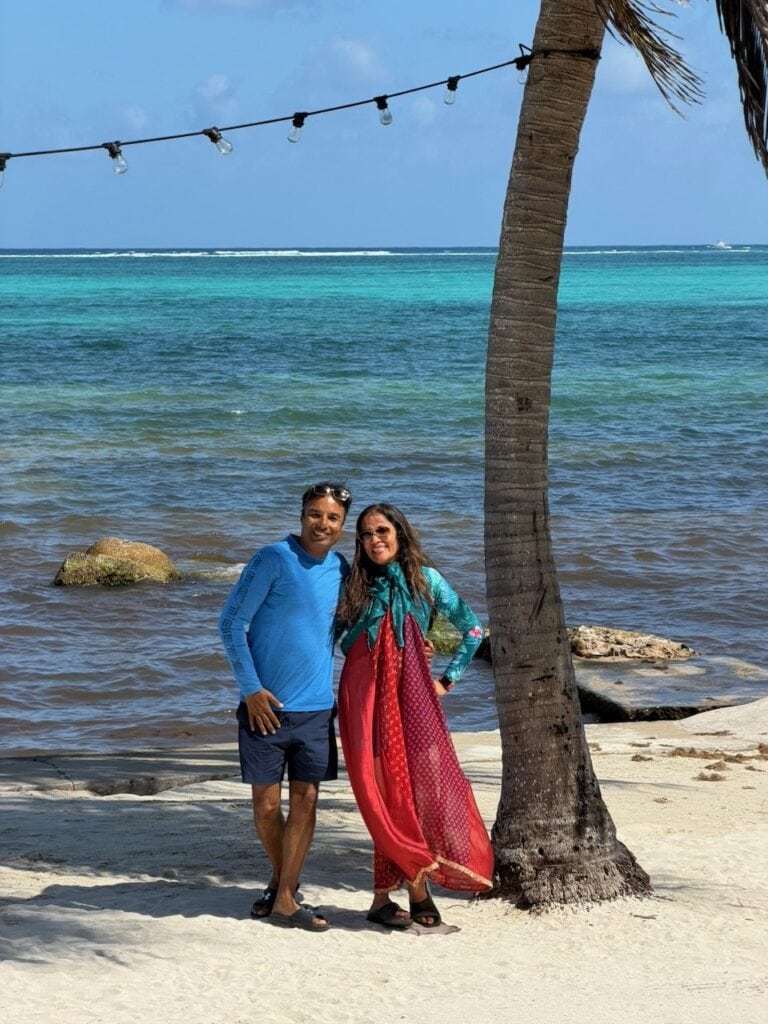
Have questions about planning a group trip to San Pedro? Leave a comment below.
Last Updated on April 25, 2026 by Jyoti Baid