
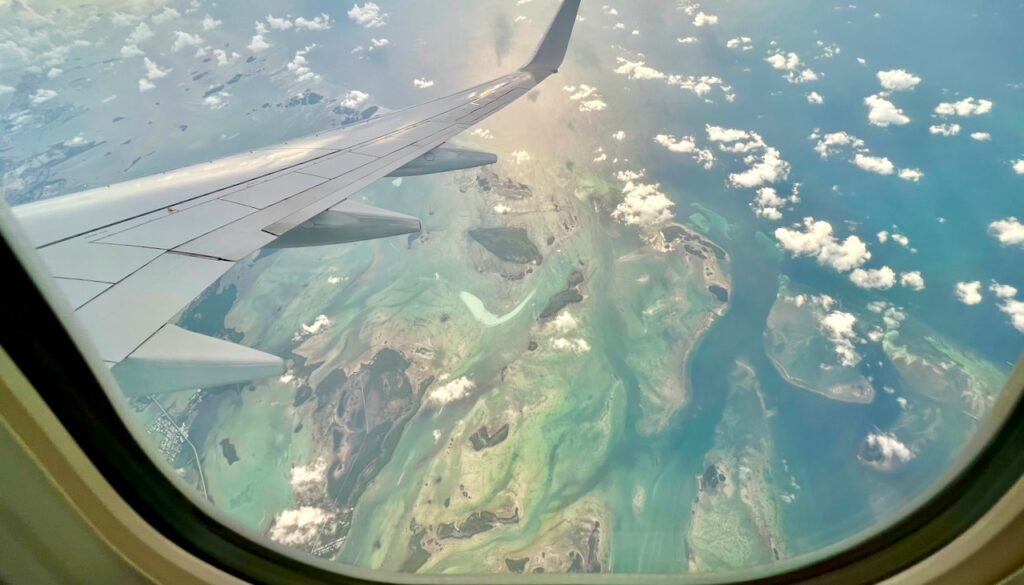
This post covers the natural jet lag protocol we’ve refined over 30+ years and 130+ countries of long-haul flights. No medication, no melatonin, no sleep aids. Written for health-conscious travelers who want a practical, earned system they can use on their next long-haul flight.
After decades of crossing time zones, from San Francisco to Nairobi, to Kathmandu, to Buenos Aires, we’ve tried almost every jet lag approach that exists. What I’ve landed on is a system built from real flights, real fatigue, and a lot of iteration.
I am deeply inspired by the research of David Sinclair on lifespan, Peter Attia on healthspan, Satchin Panda on circadian rhythms, Andrew Huberman on neuroscience, Matthew Walker on sleep architecture, and Rhonda Patrick on sauna and cold exposure. However, this is not the Huberman protocol. These are personal applications of techniques taught by these researchers, applied in real life and on real travels. As we grow older, long-haul travel and substance dependence age us faster. Our experiments inspire us to double down on the basics of natural circadian rhythms.
We strive to build resilience within and minimize reliance on substances to override the body’s messages. Decades of frequent long-haul travel have only confirmed that this is the right call.
Our Natural Jet Lag Protocol at a Glance
| Approach | Natural, no medication, no supplements |
| Works best for | Leisure travelers with flexibility on arrival day |
| Typical reset time | 1 to 2 days for most routes; 3 to 4 days for extreme differences (San Francisco to India) |
| On the Flight | Maximize sleep, meditate at takeoff, fast or eat light, hydrate consistently, no alcohol, screens after sleep, move at every opportunity |
| First 48 hours | Natural light immediately, anchor to local mealtimes, walk during daylight, hydrate, massage if possible, Vipassana lying down if sleep won’t come |
| Diet | Whole food plant-based throughout |
| Meditation | Vipassana or scanning practice on flight and on arrival if sleep is difficult |
| Key pillars | Sleep, sunlight, meditation, circadian eating, fasting, hydration, no alcohol, movement, limited screens |
| Footwear | Wide toe box, zero drop, flat sole to minimize circulation issues. Reduce confinement. |

Here’s our process in brief. This article covers all the steps and more in much details
Our natural jet lag protocol after 30 years of long-haul travel. These are the simple steps we follow
- Eat before boarding
Have a proper meal at the airport or in the lounge so you board satisfied. Tell the crew not to wake you for food or drinks.
- Unwind and set up for sleep
Change clothes, apply skincare, put on an eye mask and earplugs, and request turndown service if available. Some people use melatonin as a helper.
- Meditate at takeoff
Even 15 to 20 minutes of Vipassana, watching the breath, or body-scanning meditation at the start of the flight creates a grounding that the rest of the flight follows.
- Pre-order plant-based food
Order your meal in advance. While others flip through the menu, you fall asleep. You already chose.
- Fast or eat light in the air
Prioritize sleep over food. Let the body use the flight for cellular repair rather than digestion.
- Hydrate consistently
Fill a water bottle before boarding and ask for refills. Drink throughout the flight. No sugary drinks or alcohol.
- Avoid alcohol entirely
Alcohol disrupts sleep architecture, amplifies dehydration, and works against every other part of this protocol.
- Sequence screens after sleep
Sleep first. Watch a film after you’ve rested. Be strategic with screen time.
- Move at every opportunity
Calf raises, back stretches, and aisle walks on every restroom trip. Use resistance bands if movement is limited.
- Get into natural light on arrival
Got outdoors. Natural light is your friend. Sunlight on the retina is the primary circadian reset signal.
- Anchor to local mealtimes
Eat at the destination time from the first meal. Food timing signals the body what time zone it is in.
How to Sleep on a Long-Haul Flight
Should You Try to Sleep on Destination Time?
The most common jet lag advice involves carefully calculating your destination time zone and forcing your body to align before or during the flight. We tried that. It added stress and didn’t reliably work.
Our approach is simpler: maximize sleep on the plane, full stop. Don’t calculate. Don’t overanalyze. Sleep when your body is able to.

Before boarding, we eat a proper meal at the airport or in the lounge so we’re not hungry right after takeoff. The Turkish Airlines lounge in Istanbul is one of our favorites anywhere in the world, but the principle holds regardless of airline or airport. This removes the temptation to stay awake for the meal service.
We always pre-order vegan food. We usually fly United since our home base is a United hub, but the vegan meal can be particularly bad. We all know that meals taste bad in the air, which at least helps reduce food anticipation and allows us to sleep in peace. If you are new to eating plant-based while traveling, our plant-based travel guide covers how we manage this over decades, including what to pack, which cuisines work best, and how to communicate your diet in any language.
We tell the cabin crew not to wake us for food or drinks. This is worth doing explicitly and early. A polite note at boarding saves a lot of sleep interruptions.
How Do You Set Up for Sleep on a Long-Haul Flight?
We board early. Early boarding means overhead bin space, time to get organized, and no rushing. We set up for sleep before the doors even close.
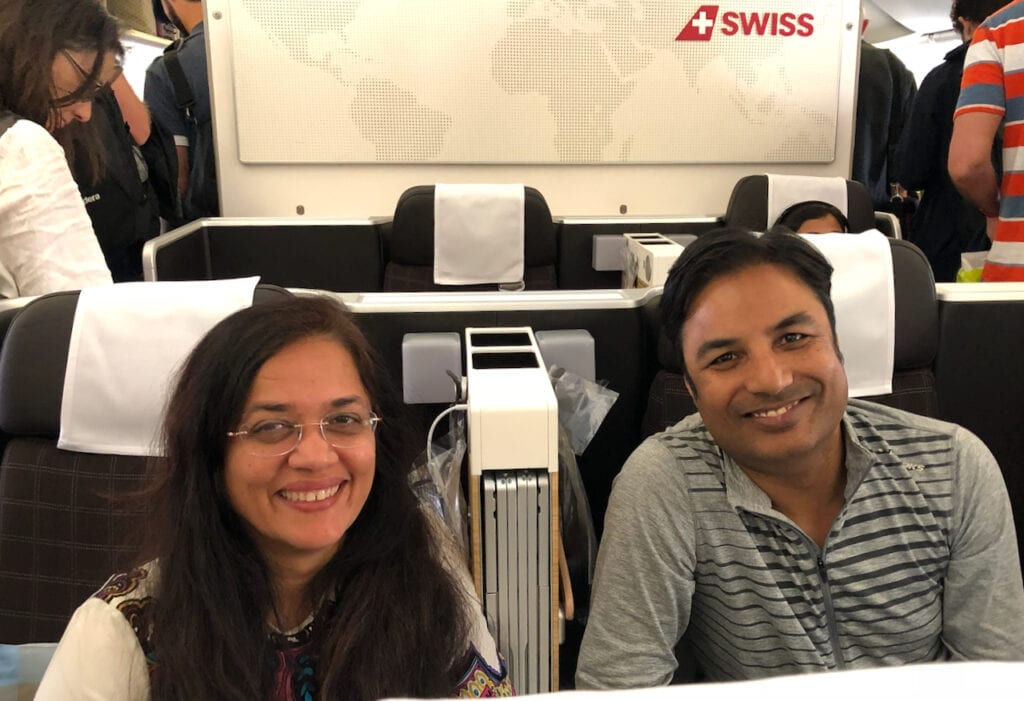
My in-flight sleep setup: I find this routine helpful in relaxing –
- Change into comfortable clothes or airline-provided sleepwear in business class.
- Remove shoes and socks. Heat builds in the feet during long flights and disrupts sleep. Keep a blanket for body warmth, but let the feet breathe.
- Use slippers for any restroom trips.
- In economy class, I use an Everlasting Comfort foot hammock that hooks onto the tray table. It makes a real difference for circulation and comfort.
- Use an eye mask to keep out all light, even during meal service or from neighboring screens’ glow.
- Earplugs to keep out noise from neighbors, crew, babies, anything really.
- Apply Therabody skin mist and lotion before settling. Cabin air at altitude is genuinely dehydrating, and waking up with parched skin and a headache is avoidable.
- Fill a water bottle before boarding and keep it within reach. Especially in economy, don’t depend on cabin crew for water and keep refilling the bottle throughout the flight.
- Minimize screens. I postpone any film watching until after sleeping.
- Request turndown service if available. Some business class cabins will make your bed before takeoff if you ask.
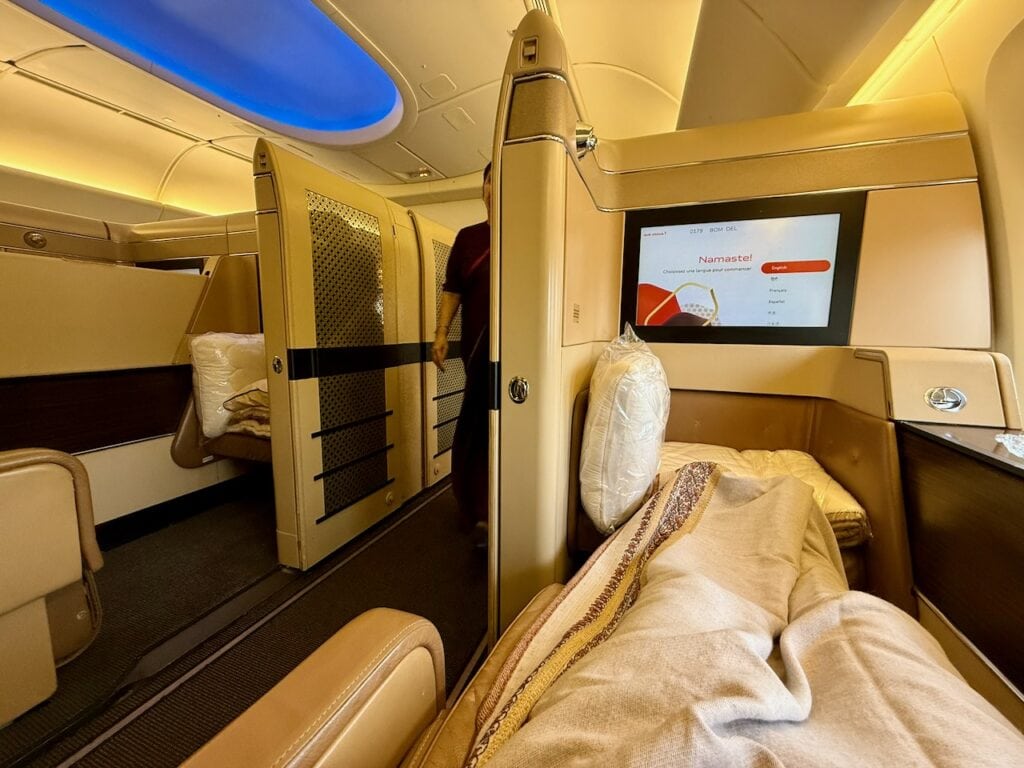
For me, takeoff is a natural sleep inducer. Something about the engine hum, the pressure change, the darkness of the mask. The takeoff and a bit of meditation knock me out every single time.
How Does Meditation Help with Jet Lag?
Meditation at 35,000 Feet
This is where Vipassana is indispensable on long-haul flights. The technique is well-suited to the conditions: you’re already still, the world is already distant, there’s nothing to do but observe breath and sensation. I meditate on long and short flights to the Caribbean. It deepens meditation practice and reliably helps transition into sleep. A win-win choice.
If you’re not a Vipassana practitioner, the principle still applies. Any genuine meditative practice, or even slow, intentional breathing, uses the same mechanism.
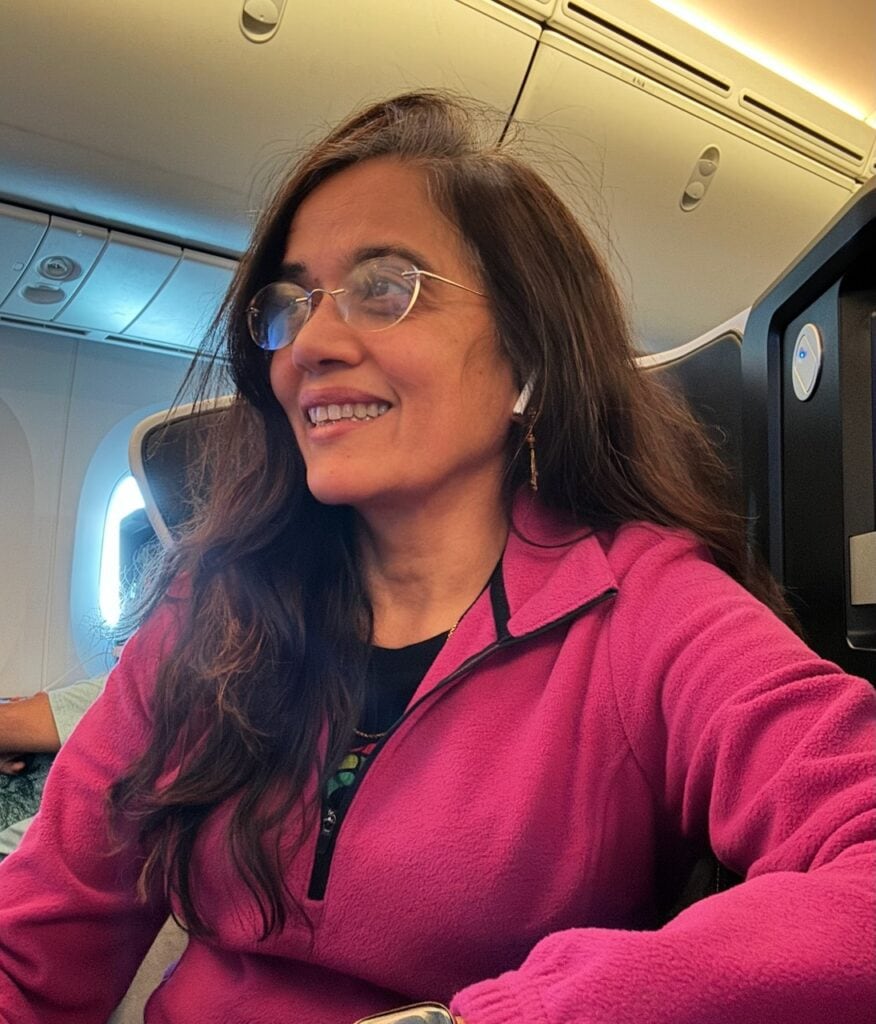
On our way back from Tokyo on a Zip Air flight, they don’t serve any meals or provide any comfort kits or blankets, even in business class with lie-flat seats. This worked perfectly for simply lying down and meditating. I couldn’t sleep last time, so I simply meditated. The body rested in the lying position, and the mind was refreshed in meditation. Even though the jet lag from Tokyo to San Francisco is brutal, I did okay upon landing.
Meditation during takeoff is worth practicing as a standalone technique. Even 15 to 20 minutes of Vipassana at the start of a flight creates a grounding that the rest of the flight follows.
How Do You Eat Plant-Based on a Long-Haul Flight?
Order in-Flight Meals Ahead
Pre-ordering vegan meals on any long-haul flight is absolutely essential for us. It fits with our approach to eating plant-based food while traveling. Standard meal service is designed around meat-based options, and the plant-based meal is absent altogether. Some airlines, such as Air India, Cathay, and Singapore, offer vegetarian options on South Asian routes, but rarely do they offer a vegan option.
Beyond quality, ordering ahead removes a decision. While others flip through the menu, I fall asleep. I had already chosen.
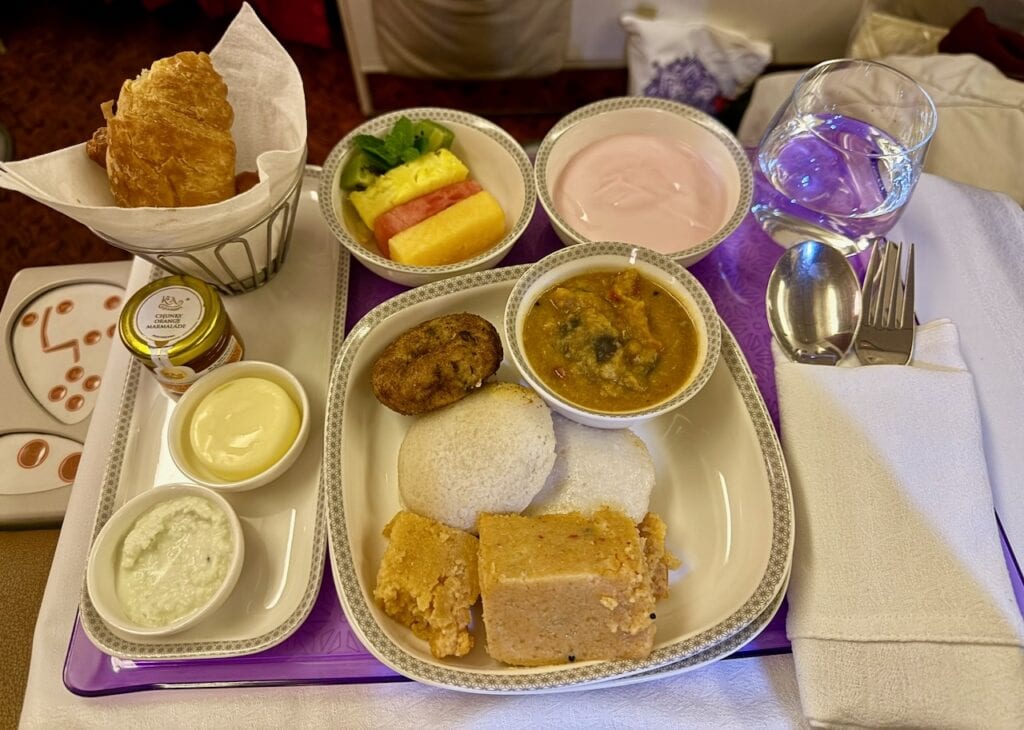
Sometimes airlines can surprise us even on short-haul flights. Recently, I traveled from Nagaland to New Delhi after the Hornbill festival. There was no vegan option at the tiny Dimapur airport. I ordered the vegan roll on IndiGo when booking the flight. The roll was surprisingly tasty and filling. With a whole lentil-based filling and well-balanced flavors, I actually cleaned it out. Their blue tea came with a cute box of perfectly roasted cashews and cost only Rs 250 ($3) as an in-flight order.
Favorite Healthy Snacks From Home
On a long flight, eating something you actually like, when your body actually wants it, matters more than most people think.
Nirmal always packs his own snacks, and this habit has saved us on more than a few long flights. On the last leg of our round-the-world return from Antarctica, Buenos Aires to Houston, the vegan meal was completely missed. While I slept through it with my mask and earplugs on, Nirmal took out the snack bag, asked the flight attendant for hot water, and made a cup of T’s Tan Tan miso ramen we had picked up in Tokyo earlier. Indian cashews and sweet Afghan raisins topped as dessert. It was, he reports, delicious and satisfying.
Tell the Attendant Not to Wake You
This single instruction, clearly given at boarding for long-haul travel, goes a long way. The crew is trained to gently wake every passenger for service. A polite, explicit request to be skipped changes the entire night. We make it every time.
Should You Fast on a Long-Haul Flight?
According to Dr. David Sinclair, long-haul flights expose us to high levels of radiation that damage our DNA. His personal protocol involves fasting on flights, which triggers autophagy – the body’s cellular repair process. (Yoshinori Ohsumi received the 2016 Nobel Prize for discovering the mechanisms of autophagy, a cellular self-eating process that breaks down and recycles damaged components when deprived of new protein from food.)
DNA damage treated with autophagy, as Dr. Sinclair explains, is the perfect recipe for starting the healing process, providing immediate energy and a longer healthspan.
We understand that fasting on a long flight is not for everyone. But the underlying principle is accessible to all of us: prioritize sleep over food, eat intentionally rather than out of boredom or habit, and let the body do its repair work.
On arrival, we follow an intermittent fasting window: brunch around 10, a second meal around 4, nothing after that. This eating window turns out to be a powerful tool for resetting the circadian clock. Food timing signals to the body what time it is, almost as powerfully as light does. Our consistent IF pattern gives us a reliable anchor that travels with us.
If we arrive in the middle of the night, we prioritize sleep and anchor to local mealtimes the next morning. Let the first proper meal signal where you are.
When traveling from San Francisco to Mumbai, I usually arrive in the morning. Mummy always sends my favorite foods with Papa for our 3-hour drive home. I’m hungry and eat heartily around noon.
How Much Water Should You Drink on a Long-Haul Flight?
Deliberate hydration is one of the simplest and most underused tools for managing long-haul travel. Cabin air at altitude is extraordinarily dry, and the dehydration that accumulates over a 12- to 16-hour flight can linger for days.
I fill a water bottle before boarding and keep it within reach throughout the flight. In the economy, especially, you cannot rely on cabin crew to keep you hydrated through the night. On business class, this is easier, but the habit is the same. I drink consistently, not just when thirsty.
The same principle applies on arrival. We keep drinking. The dehydration from the flight doesn’t resolve itself in an hour.
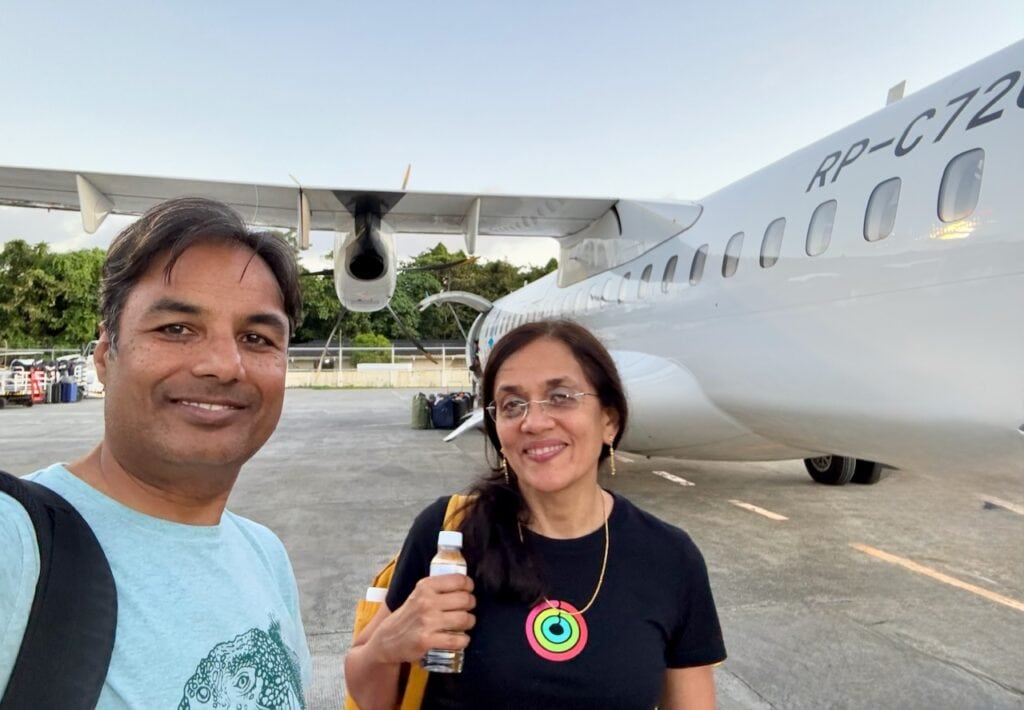
I don’t consume any sugary drinks on the flight. For a while, I drank tomato juice with a wedge of lime. Lately, I’m loving green tea or blue tea when I wake up.
Does Alcohol Make Jet Lag Worse?
We have a simple rule: no alcohol, ever. These days, every study not funded by the industry has found alcohol to be a toxin.
This is not about discipline for its own sake. Alcohol at altitude hits harder than on the ground, disrupts sleep architecture even when it initially induces drowsiness, and amplifies the dehydration that the cabin environment is already creating. It is directly opposed to everything we’re trying to do on a long flight.
The same rule applies on arrival day. The body is already managing a significant physiological transition. Adding alcohol to that process makes every part of it harder.
How to Manage Screen Time on Long-Haul Flights
Screens are not banned on my flights; they’re sequenced. The distinction makes all the difference.
I sleep first. Nirmal often watches a film or two before sleeping. Neither of us is scrolling mindlessly or watching back-to-back films through the night. The goal is to get the body to sleep as early in the flight as possible, which means screens go down at boarding or shortly after.
After sleeping, the calculus changes. Screen time in the second half of a long flight, once the body has had its rest, is far less disruptive. A film on the descent is a fun indulgence and sometimes helps me wake up and get ready for the day.

I also use long flights to write. A sixteen-hour crossing with no meetings, no interruptions, and nothing to do but think turns out to be one of the most productive writing environments I know.
Reading on a device works similarly. The point is intentionality: choose what the screen time is for, and let that purpose guide when and how much to use it. On a recent series of flights, I read On Writing Well by William Zinsser. It really connected me to my writing style. It validated and inspired me to write simply.
How to Stay Active on a Long-Haul Flight
Does Moving on the Plane Actually Help?
They say sitting is the new smoking for the body. Staying still for ten or sixteen hours is genuinely stressful on the circulatory system and the spine. We don’t do a dedicated in-flight workout. I’m usually sleeping, and Nirmal is watching something. But we do move.
Exercises I Do on the Plane
On restroom trips, we take an extra walk in the aisle and do calf raises and back stretches. On the seat, I do ankle lifts, toe pointing, finger exercises, and basic upper body stretches.
I carry Therabands resistance bands, which can be used for seated or standing strength work almost anywhere. I’ve used them on flights a handful of times. Mostly, the restroom trips and small movements have been sufficient.
The Right Footwear
A few years ago, I watched Dr. Courtney Conley, a foot and gait specialist and founder of Gait Happens, on the Diary of a CEO with Steven Bartlett. Her argument is simple: most shoes compress the toe box, restricting circulation and causing structural damage over time. The fix is shoes that are wide at the toe, flat from heel to toe, and flexible. So when my trainer recommended WHITIN zero-drop barefoot flats in 2024, I got them right away and wear them on every trip and every day. Besides, they slip in and out easily when needed, unlike my hiking shoes.
What Should You Do in the First 48 Hours After a Long-Haul Flight?
The flight is the foundation. The first two days determine whether jet lag clears or lingers. Often, I have plenty of energy for the first couple of days, and I can skip sleep. But I’ve learned that, if I accumulate the backlog, I will crash, and jet lag will set in on day 3 or even later. Here are a few lessons learned by experience –
| Action | Why it matters |
|---|---|
| Get into natural light and sunshine immediately | Sunlight on the retina is the primary circadian reset signal, as explained by Dr. Andrew Huberman. |
| Anchor to local meal times from the first meal | Food timing signals the body what time zone it is in. |
| Maintain feeding times or your intermittent fasting schedule | Consistent eating window accelerates circadian reset, as found by Dr. Satchin Panda. |
| Walk during daylight, in nature if possible | Movement in light compounds the reset |
| Drink water consistently | Flight dehydration carries over longer than most expect |
| Find fresh cold press juice | Dense micronutrients on arrival day noticeably help energy |
| Massage if time permits | Accelerates physical recovery from the flight |
| No alcohol, heavy food, sugar, or processed food | Each disrupts sleep architecture or amplifies fatigue |
| Vipassana lying down if sleep won’t come at night | Produces rest even when sleep won’t come |
Sunshine and natural light first. Get outside as soon as possible after landing. Sunlight hitting the retina is the primary signal that resets the circadian clock. As Dr. Huberman often repeats, the most important thing we can do is get a morning walk and an evening walk. When we’re traveling to most destinations, this is easy. We’re out and about from the first day, which is exactly what the body needs. When it isn’t possible because we’ve landed in a dense city or need to go directly indoors, we at least open all the window coverings or stand on a balcony if there is one. Any direct outdoor light is better than none.
When I return home with a huge jet lag, sleep hits hard in the late afternoon, especially now that I’m not working in the office. I can’t risk putting my head down for even a few minutes, or I won’t wake up for hours. I head into the backyard to get some direct sunshine or call a friend over for a neighborhood walk. The walk-and-talk is perfect for catching up, and it erases jet lag like magic.
Eat at the arrival time zone from the first meal. If we land locally in the middle of the night, we prioritize sleep and anchor to local mealtimes the next morning. Don’t eat at 3 am destination time because your body thinks it’s noon. Let the first proper meal signal where you are. I try to maintain my IF window of brunch at 10, second meal by 5 pm, nothing after.
If we can’t sleep on arrival and it’s the middle of the night, Vipassana lying down is the fallback. It doesn’t always produce sleep, but it produces rest, and it’s far better than lying awake in frustration.
This was the hardest when the kids were little. They needed meals in the middle of the night. Even if I didn’t get jet lag, their pattern made me jet-lagged within a few days.
No alcohol, no heavy food, no sugar, no processed food. The body is already managing a significant physiological transition. Alcohol disrupts sleep architecture. Heavy food diverts energy toward digestion. Sugar spikes and crashes amplify the fatigue that jet lag brings.
I try to eat whole foods at home, but it’s nearly impossible when traveling. Arriving in India, though, has a simple solution: a meal of idlis, chutney, and sambar is available at any airport for under $5. Simple, fermented, healthy, and rarely anything highly processed.
Fresh cold-pressed green juice. We look for juice shops wherever we land. A dense hit of micronutrients like beets, ginger, and greens on arrival day genuinely seems to help. It could be a placebo. We don’t care. It works.
We love Joe & The Juice in SFO, but when I saw it in Iceland, I was initially surprised. Lately, I’ve seen this chain of healthy fast food pop up in airports worldwide. They have juice shots, juices, smoothies, and avocado sandwiches, to name a few.
In Buenos Aires, we rented an apartment in Palermo for a week before heading on an Antarctic expedition. At the end of the block was a corner produce shop. The friendly owner made delicious juices for us every day. We’ve found these in Argentina, Mexico, and many cities in Europe.
Walk during the day, in nature if possible. Movement in daylight anchors the circadian system and dissipates the restless energy that accompanies jet lag.
Massage if time permits. Nirmal always prioritizes massages when traveling. Initially, I didn’t quite get the point of wasting time at the destination. But decades ago, the fantastic massage in a tropical paradise in Siem Reap, Cambodia, after a tiring flight, completely changed my mind.
A massage on arrival day noticeably accelerates recovery when available. Usually, when we’re staying at hotels or resorts, there is an in-house spa. We book treatments as soon as we arrive, sometimes days before if the spa is too popular. Other times, like recently in Praslin, Seychelles, we stayed at a tiny boutique resort which didn’t have its own spa. They recommended a professional massage next door, and it worked great.
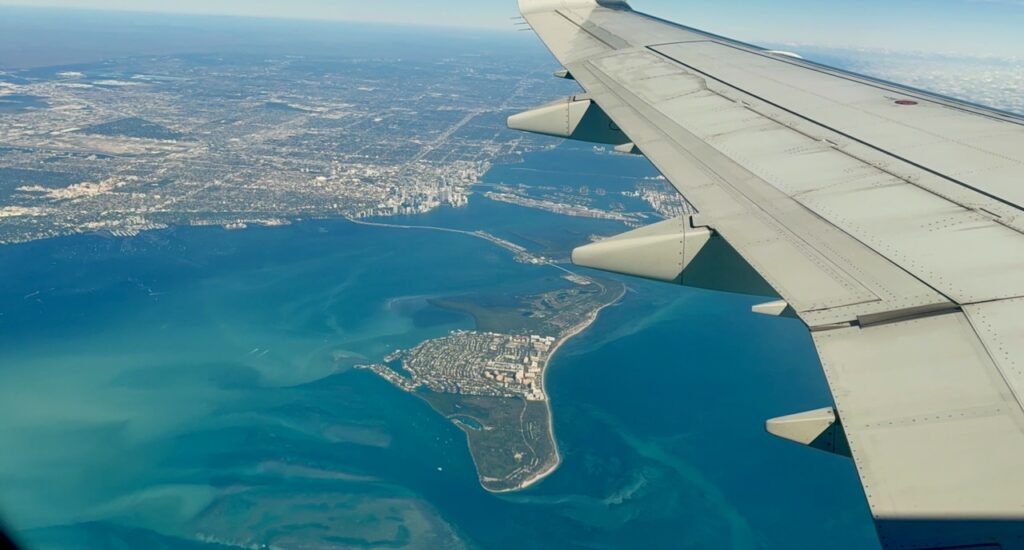
How Long Does Jet Lag Last on Ultra Long Timeshifts like San Francisco to India Flights?
To be honest, our system works well for most long-haul routes. But India, which we travel to regularly, is in a different category.
The time difference from San Francisco is 12 to 14 hours. It is almost exactly the other side of the globe. There’s no good direction to approach it. And when we visit India, we’re typically staying with family, spending more time indoors than we would on a trip built around exploration. Our dense urban environments don’t offer easy access to green space or long walks in nature.
The honest result: jet lag in India can take three days or more to clear. We don’t fight it. We rest when we need to, anchor meal times, get outside when we can, and let the body catch up on its own schedule. Sometimes all we need is to get home and let things take their own course. Family understands that, and no one worries about it.
What Do Other Long-Haul Travelers Use for Jet Lag?
Our protocol is deliberately medication-free and supplement-free. But we travel with curious minds, and over the years, friends, fellow travelers, and researchers have shared tools that work for them. We include them here as a starting point for research if you’d like to explore further.
A Pilot Friend’s Protocol
In my first Vipassana service course, I met a meditator. Seeing her instantly felt different. I knew I had known her, really well. Maybe we’ve been dhamma sisters for many lifetimes.
She is a pilot, the only female pilot I’ve met, and a dear friend. So when we were heading for our first 3-month-long round-the-world trip, I asked for her advice. She generously gave me many tips and tools she and other professionals use to manage more frequent long-haul flights than I ever will. I was surprised by the simplicity of things like Vipassana at takeoff as a passenger, and by tools like Flykitt that professionals rely on.
Crew schedules are brutal in a way that leisure travel never quite matches, and professional aircrew probably have access to medically supervised options that are well studied in their context. Professionals must use more advanced tools and medication: specific timing of sleep aids, prescription interventions, and careful pharmacological management of the circadian cycle. It has to work for them.
Here are a few tools that my friends and trainer recommend –
Compression Socks
Many long-haul travelers swear by compression socks to improve circulation, particularly on flights over 10 hours. We’ve never had significant swelling in our feet. The foot hammock, lie-flat seats, and shoes-off habit seem to handle it for us. But compression socks are widely recommended and worth trying if circulation is a concern for you.
Acupressure Tape
Acupressure tape is another option that’s come up in conversations with fellow travelers. My trainer mentioned it as worth trying for circulation during long flights. I haven’t tried it myself, but it sits in the same category: low-risk, non-pharmaceutical, worth knowing about.
Melatonin
Not everyone is wired the same way when it comes to sleep. I know I am lucky. For most travelers, it is a real challenge, and that is where a few other tools come in.
My friend Yogi (@abhiyogi on X) recently flew from Mumbai to Ottawa, one of the longest east-to-west crossings you can make. She uses Webber Naturals Extra Strength Melatonin, a sublingual tablet that dissolves under the tongue for faster absorption. She takes two 5mg tablets as recommended on the product for jet lag, about 30 minutes before her intended sleep window. She told me it made a noticeable difference compared to previous trips on the same route.
Melatonin is a hormone your body produces naturally to signal sleep. It is widely available, non-habit-forming at standard doses, and has solid research supporting its use for eastward travel in particular. That said, dosage matters more than most people realize. The CDC recommends starting at 0.5 mg to 1 mg, noting that higher doses do not necessarily produce better results and that timing relative to your destination time zone matters as much as the amount. Yogi’s protocol works for her, but if you are new to melatonin, starting lower and adjusting is the more cautious approach.
As always, check with your doctor before adding anything new, especially if you take other medications or have a health condition.
Flykitt
Flykitt is a system that combines timed supplements, blue-light-blocking glasses, and a personalized app that tells you exactly when to take each supplement, when to seek or avoid light, and when to eat and sleep – all based on the specific travel route. It was originally developed for Navy SEALs and fighter pilots and has since been adopted by pro sports teams and endurance athletes. Delta Airlines has a partnership in development.
The science behind it maps directly to the same circadian levers our natural protocol uses: light timing, food timing, and inflammation management, but with pharmaceutical and supplement assistance layered on top. For travelers who need to hit the ground running and can’t afford two days of adjustment, it’s one of the more credible options in the market.
LifeWave X39 and IceWave Patches
LifeWave makes phototherapy patches that sit on the skin and are claimed to work by reflecting the body’s own infrared light at specific wavelengths. The IceWave patch is positioned for pain relief. The X39 is the flagship, with claims around stem cell activation and general wellness.
The clinical evidence for the stem cell activation mechanism is contested. Independent researchers have raised questions about the study quality and proposed mechanism. We include it here because it has a following among long-haul travelers, and some people report meaningful results, particularly for pain management on long flights. Worth researching with that context in mind.
Why Does This Natural Jet Lag Protocol Actually Work?
We’re not scientists. But the researchers we follow, like Sinclair, Attia, Panda, Huberman, Walker, and others, cover the underlying mechanisms with enough clarity that the principles are accessible to anyone.
The circadian clock resets primarily through light, secondarily through food timing, and is disrupted by alcohol, artificial light at night, and irregular eating. Every element of our protocol addresses one of those levers. Nothing exotic. Just leveraging the fundamentals, which is why this natural jet lag protocol has remained consistent across 30 years.
What 30+ years adds is the confidence to ignore the things that don’t matter. We don’t stress about perfect sleep timing on the plane. We don’t track sleep with a device. We sleep when we’re tired, eat when we’ve landed, get into sunlight, drink water, and move. The system is simple enough to execute at the end of a 16-hour flight.
Frequently Asked Questions about Natural Jet Lag Protocol
How long does jet lag last?
For most routes, jet lag lasts roughly one day per time zone crossed, though this varies by individual and direction of travel. Westward travel is generally easier because your body naturally leans toward a slightly longer day. Essentially, delaying sleep is easier than advancing it. Eastward travel across many zones can take longer. For us, most routes are clear in 1 to 2 days. San Francisco to India, nearly 13 hours of difference, can take 3 to 4 days, particularly when we’re indoors more and moving less than usual.
Is jet lag worse flying east or west?
Eastward travel is harder for most people. The human circadian clock naturally runs slightly longer than 24 hours, which means delaying sleep (flying west) is easier than advancing it (flying east). Research suggests the body adapts roughly 90 minutes per day after westward travel but only about an hour per day after eastward travel. That said, the direction matters less than the total time difference and how well you set up your protocol on the flight and arrival day.
Does fasting on a long-haul flight actually help with jet lag?
Dr. David Sinclair advocates fasting on flights because long-haul travel exposes the body to elevated radiation levels that damage DNA, and fasting triggers autophagy – the cellular repair process that cleans up that damage. Beyond the cellular argument, fasting on a flight removes the temptation to stay awake for meal service. The timing of your first meal upon arrival becomes a powerful circadian reset signal in the arrival time zone. We don’t fast strictly, but we sleep through meals and eat intentionally rather than out of boredom or just because the crew served food.
Can intermittent fasting help reset the body clock after a long flight?
Yes, and this is one of the most underused tools for jet lag recovery. Dr. Satchin Panda’s research shows that the timing of food is one of the most powerful external signals the body uses to calibrate its internal clock. Eating at the arrival time zone from your first meal, and maintaining a consistent eating window, like we eat brunch at 10 and a second meal at 4, anchors the body to local time almost as powerfully as light exposure does. We practice this both on the flight and on arrival.
Does alcohol make jet lag worse?
Yes, significantly. Alcohol at altitude hits harder than on the ground, disrupts sleep architecture even when it helps you fall asleep initially, and amplifies the cabin dehydration that’s already working against you. Every element of jet lag recovery depends on sleep quality, hydration, and circadian alignment. Alcohol degrades all three simultaneously. We have a simple rule: no alcohol on any flight, and none on the day of arrival either.
What is the best thing to do immediately after landing to beat jet lag?
If you’re arriving during the day, get into sunlight as quickly as possible. Sunlight hitting the retina is the primary signal that resets the circadian clock. This is a well-established finding in Andrew Huberman’s work on the biology of light and circadian rhythms. Don’t go straight to the hotel, pull the curtains, and crash. Go outside. If that isn’t possible because you’ve landed in a dense city or need to go indoors directly, open all the blinds and stand on a balcony. Any direct outdoor light is better than none. After sunlight, anchor your eating to local time and keep drinking water.
Does melatonin help with jet lag?
Melatonin can help, but timing is critical, and the margin for error is small. Taking it at the wrong time can actually worsen adaptation. We don’t use melatonin and haven’t needed to across 30+ years and hundreds of flights. That said, the research supports its use as a useful tool when timed correctly relative to your destination time zone. Low doses of 0.5 to 1 mg, taken close to the target bedtime at your destination, are generally considered more effective than higher doses. If you’re considering melatonin, talk to a doctor who understands travel medicine before your first use.
How do you stay healthy eating plant-based on long-haul flights?
Pre-order a vegan meal when you book. Don’t rely on the standard meal trolley. Beyond the pre-order, pack your own snacks: things you actually want to eat, that your taste buds like, and your body is familiar with. We carry Indian cashews, dried fruit, and miso packets for hot water. Avoid the processed snacks in the snack bags. Hydrate with water and herbal tea, and skip the sugary drinks and alcohol entirely. Arriving well-nourished and hydrated makes a significant difference to how the first 48 hours feel.
Does age affect how bad jet lag feels?
Research shows mixed results, but generally older travelers report that jet lag is more disruptive, particularly to sleep quality and alertness. The rate of adaptation doesn’t appear to change dramatically by age, but the subjective experience of disruption tends to be more pronounced. Our experience mirrors this: at 45+ years, travel lifestyle habits matter more than they did at 30. The fundamentals (light, food timing, sleep, movement, no alcohol) become more important as the body’s resilience to disruption naturally changes with age.

Last Updated on June 14, 2026 by Jyoti Baid