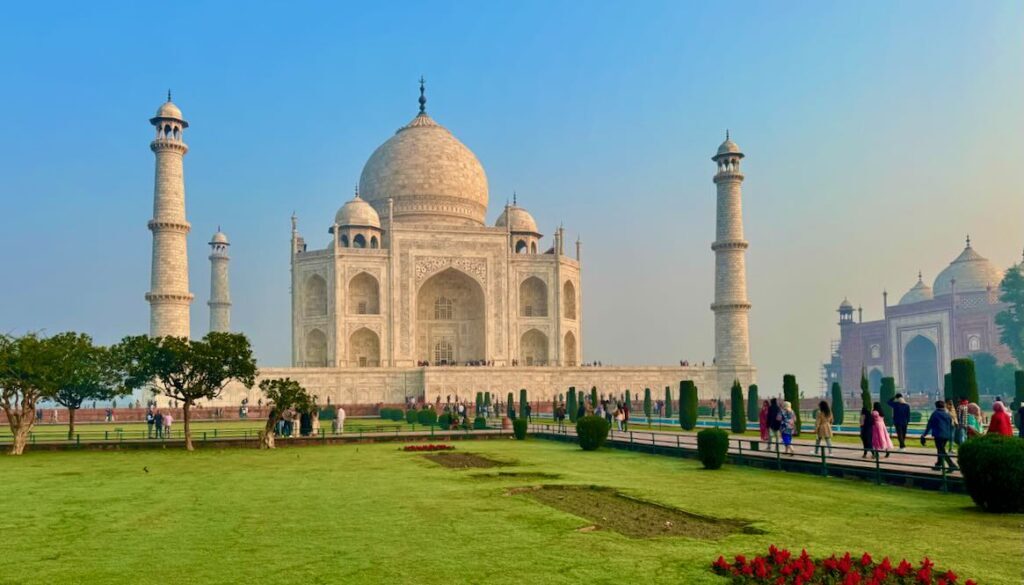
On my third opportunity, I figured out how to create a magical experience at the Taj Mahal – a wonder of the world with beauty beyond imagination. In this article, I share the tips and lessons I learned so you can make the most of your trip.
As we all know, the Taj Mahal is an ivory-white marble mausoleum on the banks of the river Yamuna in Agra, Uttar Pradesh, India. It was commissioned in 1631 by the fifth Mughal emperor, Shah Jahan to house the tomb of his childhood sweetheart and beloved wife, Mumtaz Mahal. The tomb called the Taj Mahal, is the centrepiece of the 42-acre Taj Mahal complex. In addition, the Taj complex houses a mosque and a guest house, set in formal gardens bounded on three sides by walls.
Needless to say, this astoundingly gorgeous beauty is busy – visited by 70,000 people a day. Each visitor arrives to soak in its magnificence, at least once in their lifetime. So to get intimate with the Taj Mahal and to enjoy it to the fullest, it’s best to plan and use some of the tips and tricks I’ve learned in my three visits to the Taj Mahal.
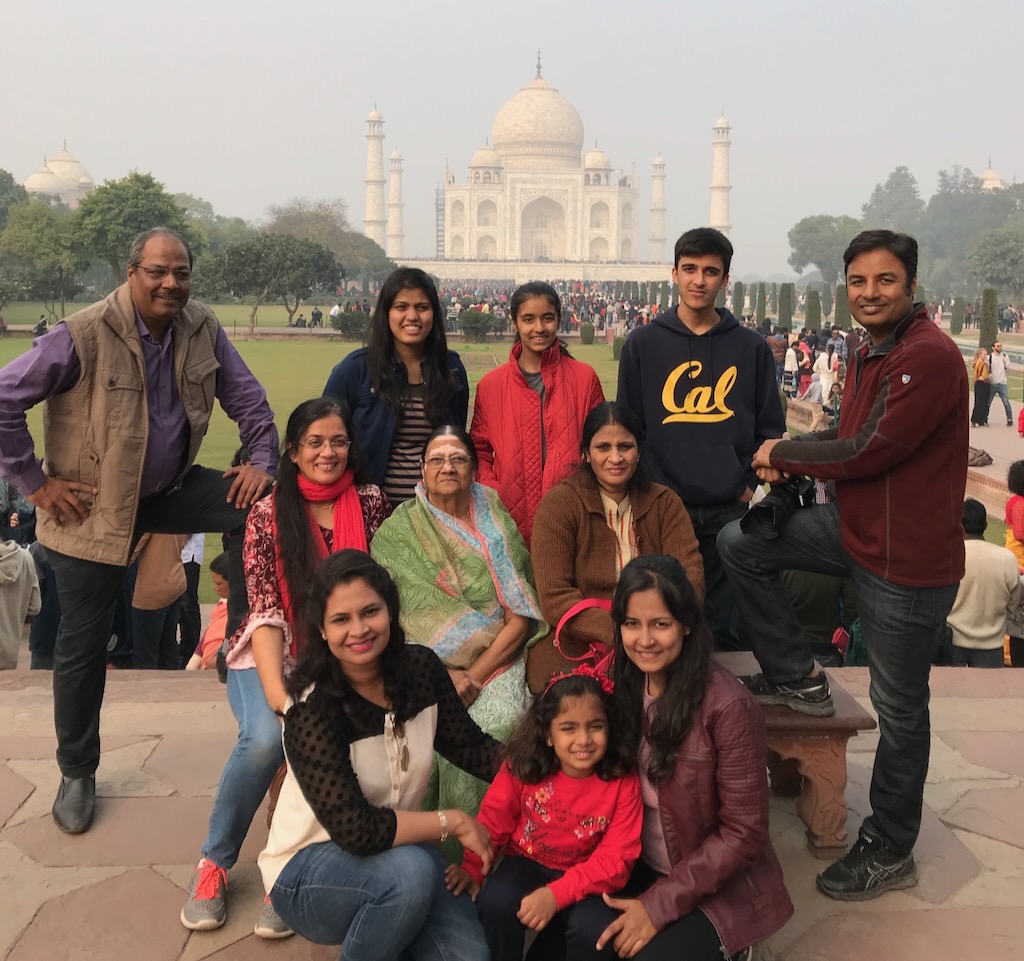
My first visit was in 1981 as part of a school trip and I was just a kid in a large group but I still remember how completely in awe I was of the Taj Mahal. The second visit was with family, on possibly the busiest day of 2017.
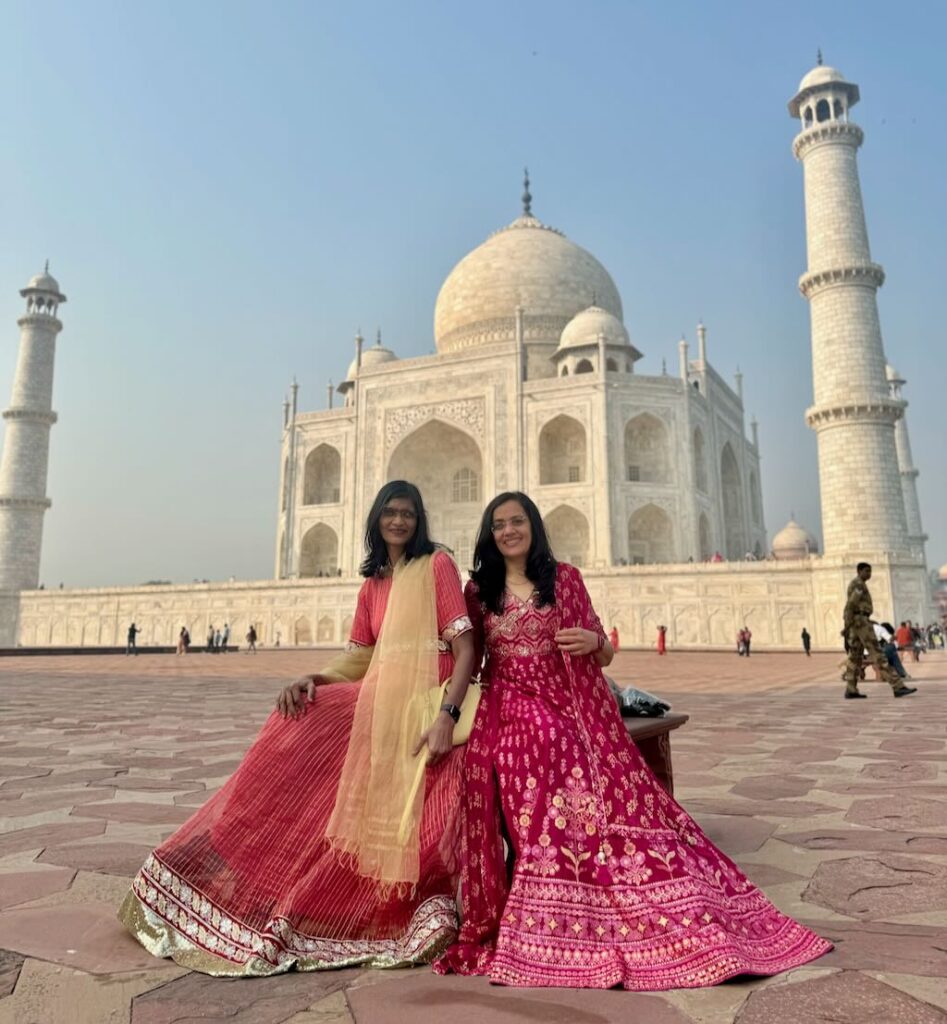
My most recent visit was in December 2023 with my sister, as part of her birthday trip. With some research and planning, it was a spectacular experience.
Here are some tips based on my personal experiences.
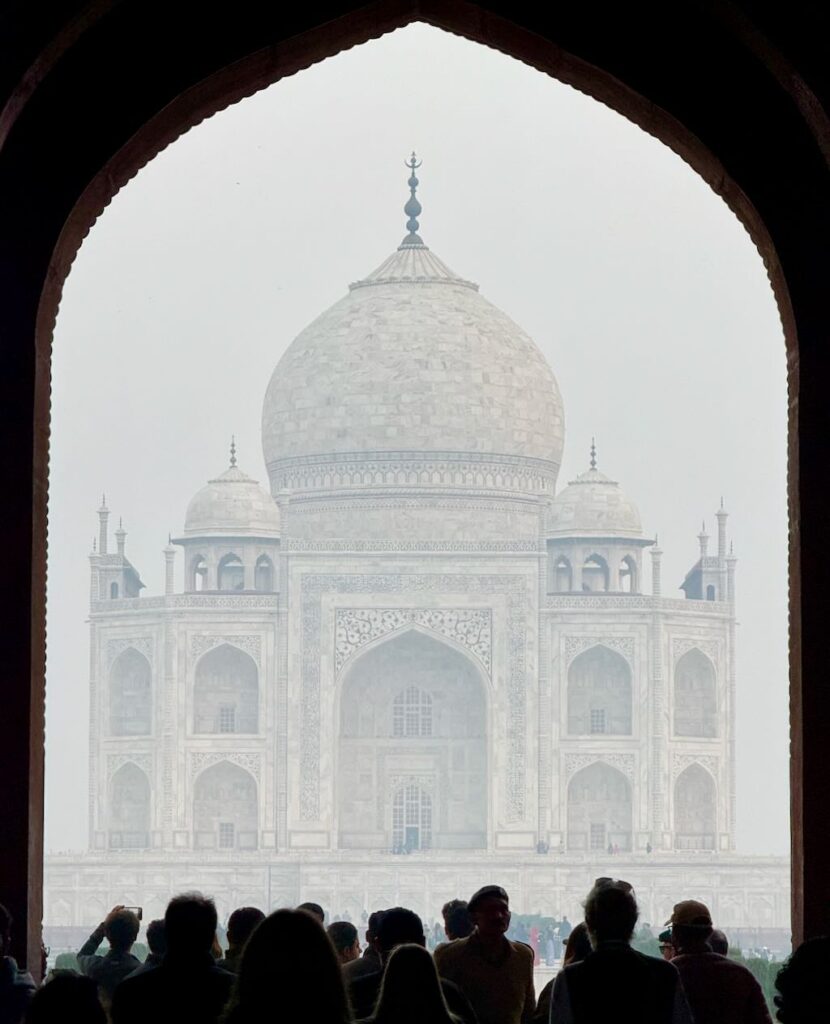
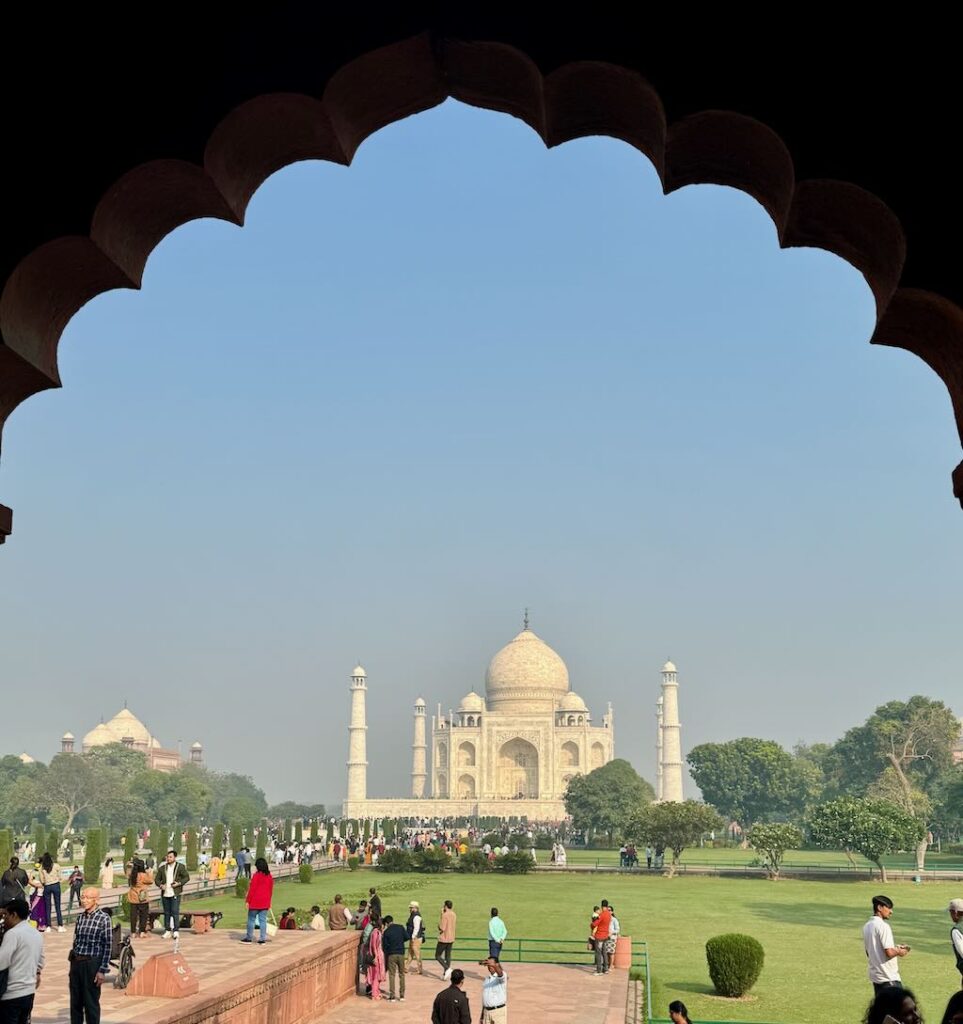
Be Prepared: Even after seeing thousands of photos of the Taj Mahal, nothing prepares you for the moment when the marble monument slowly appears through the gateway. Its one of those moments that will be etched in your brain forever.
When to visit the Taj Mahal
Best season to visit the Taj Mahal
Visit Agra in winter (October-February) for pleasant weather. But avoid major holidays like Diwali when it’s crowded with Indian visitors or Christmas & New Year holidays when it’s crowded with Indian and international travelers. When we visited in early December, the weather was perfect and the crowds were enough to feel like you’re in a lively place but not crowded.
The Best Time to arrive at the Taj Mahal
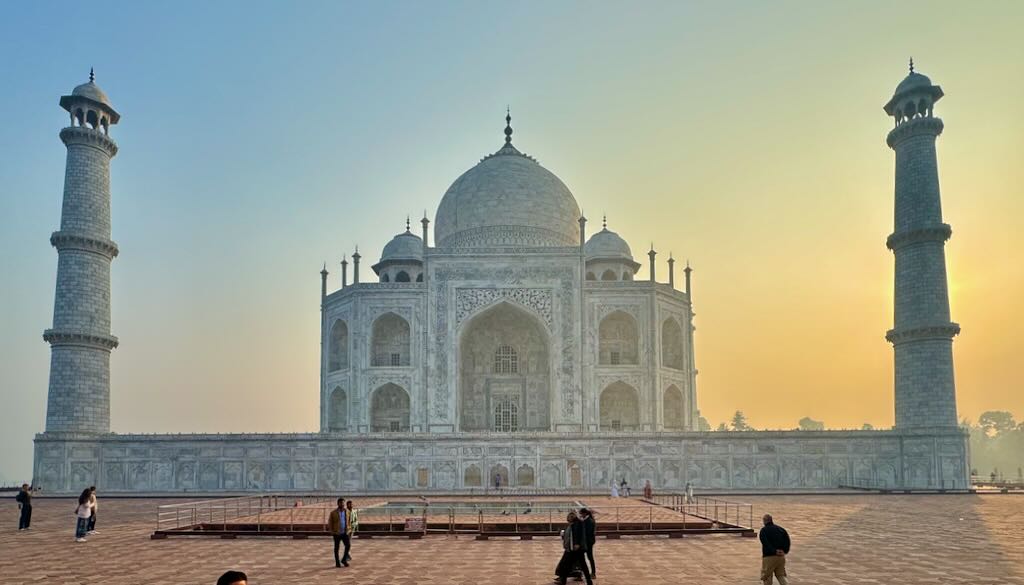
Arrive at the Taj Mahal at its earliest opening time (ideally before sunrise) to get the most romantic vibe with light fog gradually unveiling the Taj Mahal. As a bonus, at dawn, the sky is colored with hues of yellow and orange.
The local guides advised us to arrive at the Taj Mahal around 9 am, by which time the early risers (mostly international tourists) would be leaving and domestic tourists wouldn’t arrive until after 10 am. The guides also said that there is no sunrise and even no visibility in winter, which was the case on my previous visit. We decided to check the fog weather forecast and follow advice on travel blogs instead.
We were rewarded with the most magical views of the Taj Mahal.
Since the Taj Mahal attracts many visitors in the morning, some say that it is quieter to arrive in the afternoon, as crowds are leaving the Taj Mahal. You might catch the golden hour at sunset if the fog doesn’t roll in.
Taj Mahal Closures
The Taj Mahal is closed on Fridays. Some say it’s closed because too many people start worshipping at the Taj on Fridays and others say it’s closed to allow Muslims to pray at the mosque in the Taj Mahal. Either way, do not plan to visit the Taj Mahal on a Friday.
If you’re going to be in Agra on a Friday, there is a lot more to do. But be sure to stay on Thursday or Saturday to visit the Taj Mahal. As expected, Saturdays are busier because of local weekend visitors and pent-up demand from Friday.
Busiest days at the Taj Mahal
The Taj Mahal is the busiest during certain times and you craft the ideal time around these times –
- Holidays like Diwali, Christmas, and New Year bring in the most crowds.
- Cooler months (October to March) are busier because the heat during the rest of the year is unbearable for most visitors. However, domestic travelers also take to the Taj Mahal during the summer break at school.
- Saturdays are busier because the Taj Mahal is closed on Fridays.
I can honestly say that we’ve visited the Taj Mahal on its busiest day of 2017, possibly one of the busiest and foggiest days ever – Saturday, December 30th – which is a perfect collision of pre-pandemic travel, winter, New Year holiday, and, mid-day Saturday. That day, we spent several hours in the line. When we finally got it, the Taj Mahal was completely packed. We had to skip the upper level and the inside because the lines were extremely long and we ran out of time.
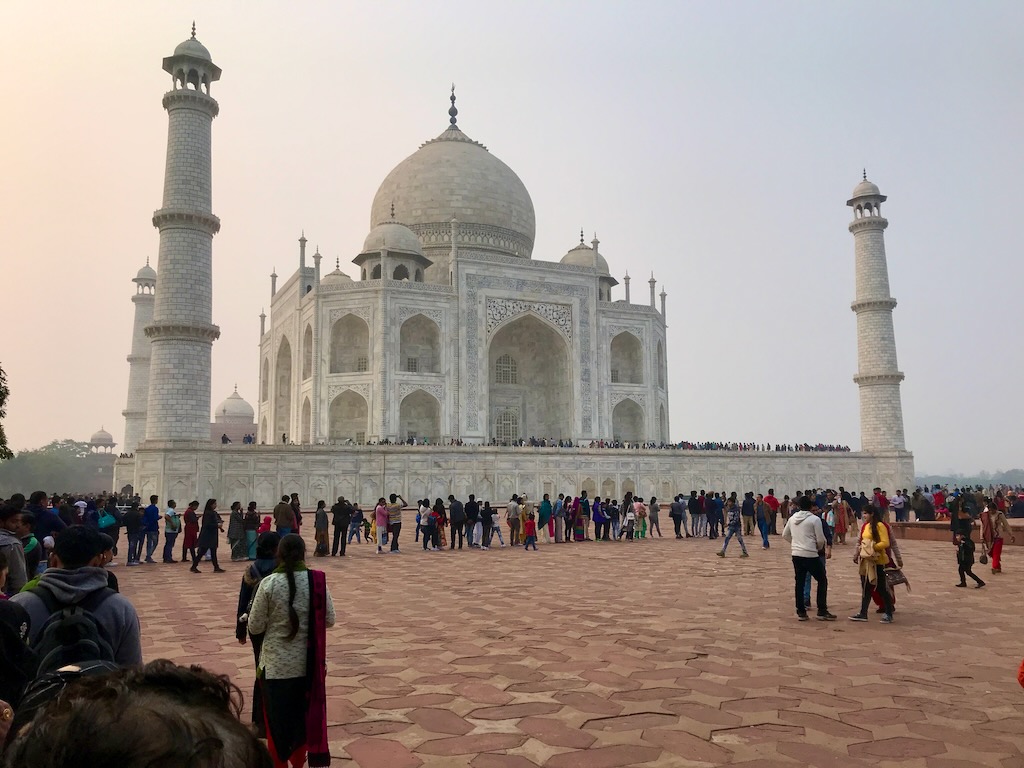
On my third trip, we visited on Saturday post-pandemic, between Diwali and Christmas peaks. It was early December so the weather was perfect. We arrived very early in the morning. There were virtually no lines anywhere.
Logistics for getting to the Taj Mahal
Getting into the Taj Mahal is quite streamlined, but knowing the process can help tremendously in making it a breeze. Trust me when I say that not knowing the process can create a complete nightmare.
Buy tickets online
Taj Mahal is notorious for long lines – to buy the ticket on-site, followed by long lines for security checks. To skip the ticket purchase line, buy the ticket online up to a week in advance. You will need to decide the date and time slot (AM or PM). Each time slot is for 3 hours only. Online purchase is also slightly discounted.
Be sure to buy both tickets – for the complex entrance and the main platform to get to the mausoleum.
You can buy tickets for the Taj Mahal at the official ticket sites – asi.payumoney.com.
If you’re in Agra around full moon be sure to get tickets for a 30-minute viewing of the magical, glowing Taj under the moon at the Taj Mahal official site. The website also has valuable information about the monument and the surrounding region.
How to get to Agra
Agra is a small city in Northern India, but it is very easily accessible from the metros via car, bus, tour, flight, or train. Most people arrive in Agra from Delhi, the capital of India. Many visit the must-do tourist triangle of Delhi, Jaipur, and Agra, along with Jaisalmer and the temples of Jaisalmer. You probably have a tour organizer taking care of logistics. But if that’s not the case, here are some ways to get to Agra –
- Car: Agra is a 3-4 hour drive from Delhi and Jaipur (check Feroz Shah Kotla, a hidden gem in Delhi). One can rent a car & driver to drive one way or the entire itinerary. You just have to be careful to rent the vehicle from a trusted source. A critical thing to remember is to never drive after dark in winter because Delhi & Agra are notorious for winter fog, with almost no visibility. This causes tons of accidents every year. We made the mistake once when driving from Agra to Delhi. We had our cousin’s driver & car, but we delayed him when leaving Agra. He miraculously got us home safely, despite the extremely dense fog.
- Flight: Agra has a tiny Air Force airport with a few domestic flights. There was a tiny section for international arrivals but it was not in use. This time we flew from Mumbai to Agra. It was the most efficient and comfortable to get to Agra.
- Bus Tour: With a little Google search, you’ll find tons of day tours from Delhi to the Taj Mahal. Typically on our trips, we pick the activities or tours based on Trip Advisor reviews. I haven’t tried that in Agra but I can’t imagine going all the way to India and taking a rushed bus tour to see the Taj Mahal. You’ll miss all the other fantastic historical sites of Arga.
- Intercity Bus: Intercity buses are quite popular in India. I’ve taken a bus 3 decades ago from Delhi to Shimla. I’m not a big fan but I’m sure there are nice luxury buses or even sleeper buses between Delhi/Jaipur and Agra.
- Rideshare apps: Rideshare apps picked in popularity in India but I came across a weird phenomenon this year. Every time we booked a rideshare vehicle on this trip, the driver called or came to tell us to use the taxi directly for a higher price. The argument was that the rideshare app charges too little and then keeps a cut. So the drivers just use the app to get a customer and then deal outside the app. They happily canceled the ride if we didn’t pay as demanded. So the rideshare price was essentially a joke in Agra, Ajmer, and Udaipur this time but maybe it is different between Delhi & Agra.
- Train: Agra is well-connected to cities across India by train. The train will likely be the least expensive. While most trains can be slower, the Gatimaan Express is the fastest train between Delhi and Agra, covering the distance in about 1 hour and 40 minutes. Trains can be very interesting because it is the preferred transport for the locals, so you get a glimpse of local life. We took a train from Agra to Ajmer this time. It was clean and comfortable. But surprisingly, that particular train did not have any meal service, despite the long trip. People brought their dinner along.
Which Taj Mahal Gate to Use
There are three gates for the Taj Mahal – East, West, and South, as shown at the bottom of my diagram below –
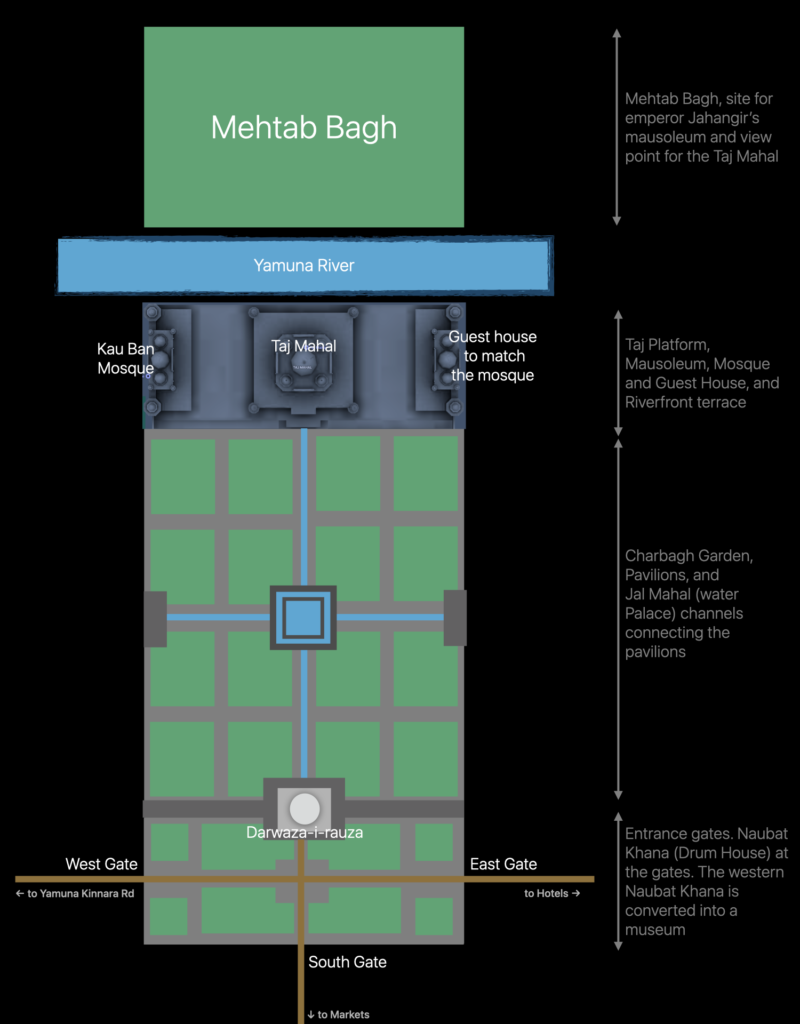
The East Gate is the most popular among tourists as it is closest to the nice hotels in Agra. It is also known as the “Royal Gate”. I’ve heard that is relatively more crowded for sunrise, which brings mostly passionate and international tourists. We used the East gate in 2023 and it took about 5-10 minutes to get through.
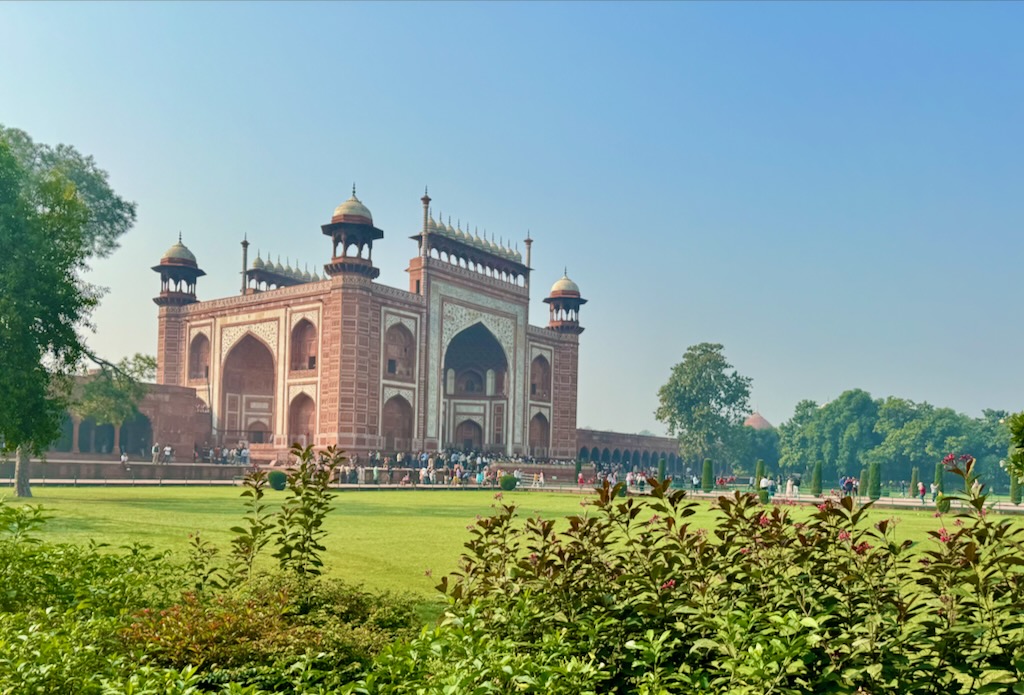
The West gate is mostly used by locals and is known to have some of the longest lines throughout the day, except early in the morning since most Indians only start coming in after 10 am. The Western Gate is also known as the “Great Gate”. Back in 1981 we likely used the West gate with main road access for buses.
Historically, the South Gate was known as the “Main Entrance” and is located near the heart of the bazaar. This was the site of the ancient Taj Ganji, originally a bazaar and caravanserai, with only traces preserved. We used the South Gate in 2017, hoping for a quick entry, but it still took a few hours. The South Gate is now exit-only and closed to entry.
Walk or Electric Transport to the Taj Mahal
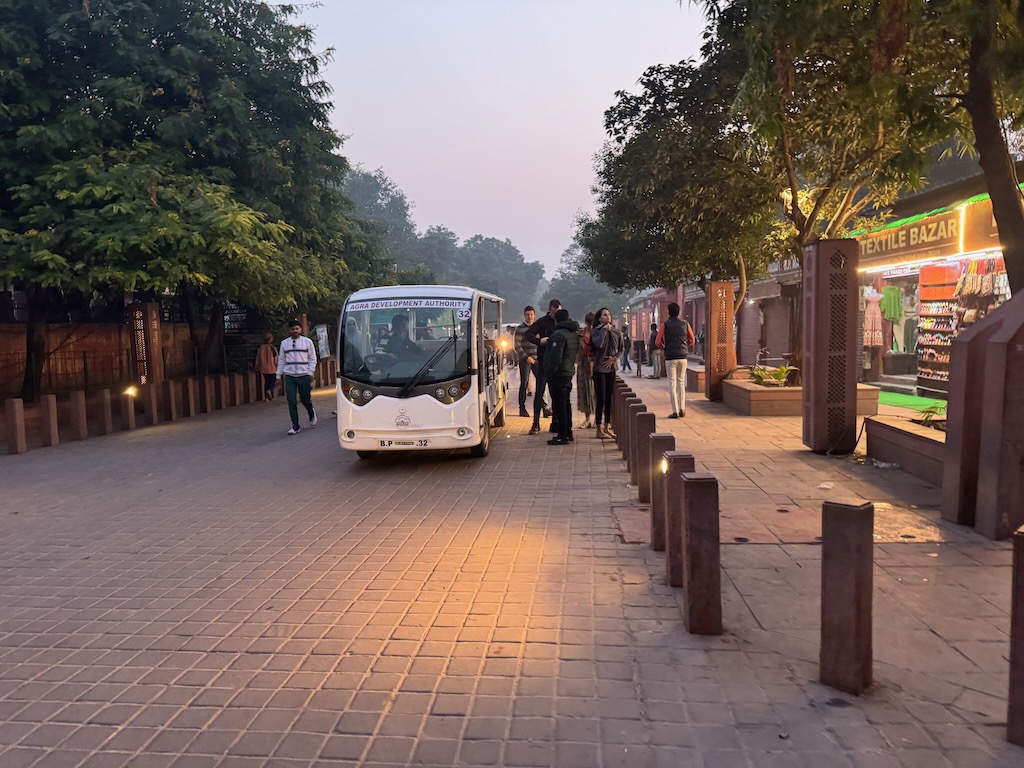
Cars or rickshaws are not allowed close to the Taj Mahal, to prevent pollution debris on the ivory-white marble of the Taj Mahal. For the last kilometer or so one has to take electric transport or walk.
We took the electric transport each way. Other blogs mention that they may be scamming us, but that may be in the past.
Save the Taj Mahal ticket
Your tickets will be checked at the exit, so be sure to save them for ready access later. This ensures visitors exit within their 3-hour ticket time slot.
Check the Weather Forecast
Check the weather app for weather forecasts, including fog forecasts. The weather can make or break the Taj Mahal experience. It gets extremely hot in summer, rainy during monsoon, and foggy in winter. The weather app can help you time the visit in all seasons.
What to Bring to the Taj Mahal
Travel light to the Taj Mahal. You’ll want to bring a phone and a wallet. Maybe a camera and jacket on a winter morning. You must bring a valid ID. Nothing else is needed.
Bonus tip – If you don’t have a bag, you’ll skip the bag scan line and save time.
Large backpacks, food, tripods, and battery packs are prohibited. Security screening at the entrance is thorough and they disallow any prohibited items. Everyone goes through a body scan and all bags are searched thoroughly.
If you must bring a large bag, you can rent a locker to store items before getting in line.
We had a bag for our puffy jackets which were needed for the cool morning. One of the benefits of having a guide was that he carried our bag during the visit.
Wear good Walking Shoes at the Taj Mahal
There is quite a bit of walking inside the Taj Mahal complex. Wearing comfortable walking shoes can make the trip more enjoyable.
Also, if you choose to walk from the parking lot, the shoes will come in handy.
Bring Shoe Covers to Visit the Taj Mahal Mausoleum
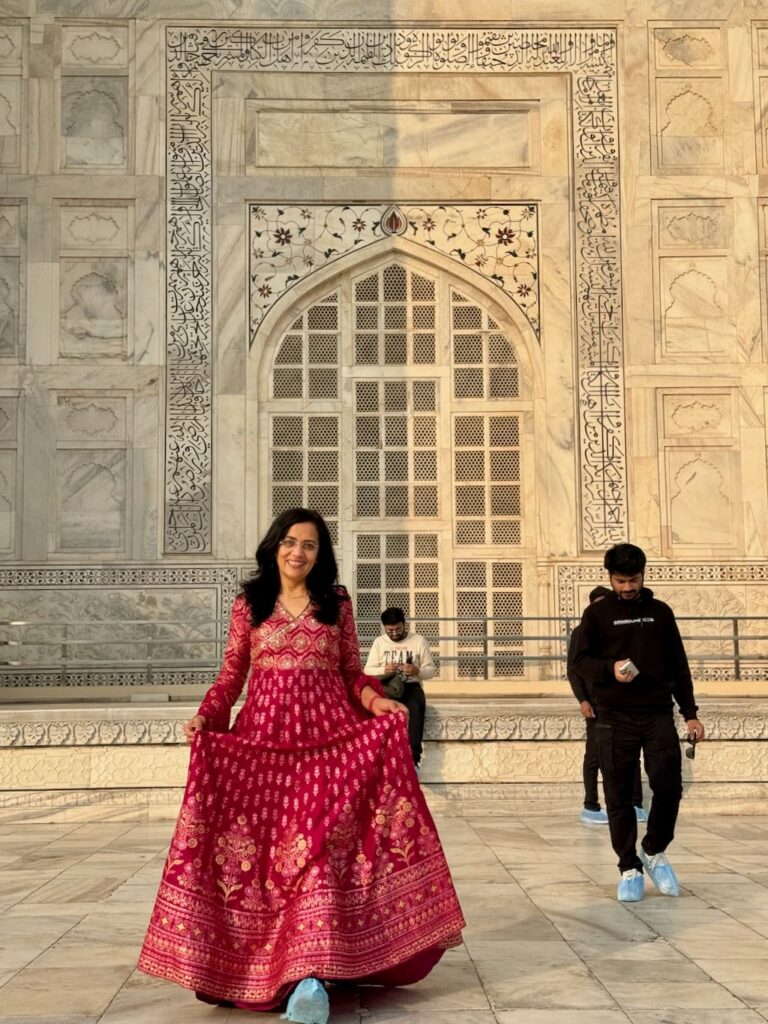
Shoe covers are mandatory on the Taj Mahal platform. They will be checked along with the mausoleum entrance ticket.
If you’re using an international ticket, a shoe cover is provided. But if you have an Indian ticket, be sure to bring shoe covers. They can also be purchased at the stalls on the walk to the Taj Mahal. I saw our guide purchase them for us after the car dropped us at the Taj Mahal parking lot.
Rules to Abide by at the Taj Mahal
The Taj Mahal is a revered site, a Mausoleum. It is exceptionally clean, especially for an Indian monument. It is not a place for hundreds of people to take funky tick-tock-style shots and post videos with random music. To prevent people from defaming this special place with junk and funky digital posts, the Taj Mahal is filled with security guards. The moment you break a rule, a guard will be on your case. They will make you permanently delete every disallowed shot or fine, or use other deterrence to ensure you’re not breaking the rules.
The rules are listed on the Taj Mahal website. But it doesn’t seem to list some of the rules that we only discovered on-site. For example, I was taking a small panning video, and instantly a guard appeared. He made me delete the video and also delete it from the ‘Recently Deleted’ folder so I won’t be able to recover it. The rules site made no mention of video or posing rules, but the guides are supposed to know the ground rules, so the guard yelled at our guide.
Here are some of the rules we learned from our guide and the security guards. There may be others that I didn’t find out.
- No videos anywhere in the Taj Mahal.
- No tripods.
- No twirls or spins with dresses or scarves.
- No pull & release of dresses or scarves.
- No food or drink in the Taj Mahal complex. Water is ok.
- No photography of any kind inside the Taj Mahal main mausoleum.
Our guide said that the Taj Mahal authorities even monitor social media posts. They will file FIRs and hunt down rule breakers. I don’t know how much of it is true. But essentially, they mean business.
Who to Hire at a Taj Mahal Visit
As soon as you arrive in Agra or the Taj Mahal, you will notice a plethora of choices of certified guides, drivers, photographers, and sellers of all types. It can be overwhelming. So let’s simplify a bit.
It’s my opinion that the vendors can enhance the experience but one has to be careful in picking the provider because a bad one can ruin the experience.
They may try to hustle and make a buck. That’s entrepreneurial India. Unfortunately, some will take it too far. So choose wisely and remember that the Indian economy is fueled by small, independent businesses. By hiring these providers you are directly supporting an individual who will work to give you a great experience.
They can bring context to your visit through personal stories, and their unique perspectives on the current state of affairs. With the payment, you might be funding their child’s education or medical bills or just bringing dinner to families. Unless you’re on a tight budget, I believe that hiring help and paying for fair work (without getting cheated) is a good way to make the world a better place.
Do You Need a Guide for the Taj Mahal?
Having a guide is a personal preference, most of the time. Some people like to read up on the history before the visit and enjoy the sites without the conversation. For others, the in-person historical context and stories enhance the experience. The interaction allows you to ask questions about the history and the present times. It makes the place more memorable and meaningful. We debated hiring the guide until going to bed the night before.
We decided to hire the guide for his on-the-spot stories but also for his photography skills and his knowledge of the best spots. I’m so glad we did. Remember, tripods are not allowed in the Taj Mahal and other visitors are too busy to take photos of you or your family. As a bonus, he also carried our bag of jackets which we took off within minutes of entering the Taj Mahal. We got to walk about hands-free.
So our guide served as a photographer, bag carrier, shoe cover giver, and guide who shared stories of the Taj Mahal, its people, construction, and the history behind it.
Guides can quote different rates and one may negotiate. We hired a guide from the hotel for our entire stay. He charged us IRS 600 per monument in 2023, which is barely USD $7, for as much time as we needed.
Guides love to take customer shopping or hire photographs because they get a commission from some vendors. They push hard to just take a look even if you’re not buying. They know that once you see the handicrafts, you’re sure to buy something. The shopping is pretty good but also be savvy and not be tricked. Be clear about which stores you’re visiting and don’t let them take you elsewhere. Your time is precious too and you can tip them instead of buying something you don’t want.
Overall, we think having a guide added to our experience.
Do you need a Professional Photographer for the Taj Mahal?
Hiring a photographer is quite optional. Our guide very highly recommended or insisted that we hire a photographer. Here are some of our positive and negative experiences –
- (+) The photographer knew exactly the right spots, angles, and framing. The photographers work together to ensure their clients get pictures without too many other tourists.
- (+/-) He did a decent job, taking all the standard shots but nothing exceptional.
- (-) He was in a hurry. After all, there were tens of thousands of others in need of photographers. We could have slowed him down if we had more time.
- (-) We couldn’t proof the photos on little the camera screen the way we could on the phone.
- (-) Even when the photos look nice on the tiny camera screen, on my laptop screen they look blurry, eyes closed, and filled with issues. But I found a few usable photos.
- (-) The photos we (or our guide) took were more unique and interesting because of my research and our ability to re-take photos until we got it just right.
The photographer quoted about IRS 75 per photo or IRS 3,200 per person for the entire set of prints and digital photos. Plus a larger print for each of us. I’m not sure how standard the price was and how much we were ripped. I’m sure the guide got a big cut and maybe that’s the real reason why he pushed for the photographer. Anyway, I’m okay with him making the extra buck for his day’s work.
If you hire a photographer at the Taj Mahal, I highly recommend you take the time to pick a few good shots instead of the full package. We didn’t have the time so we took the package. You might want to budget an additional half an hour and save on all the unnecessary shots.
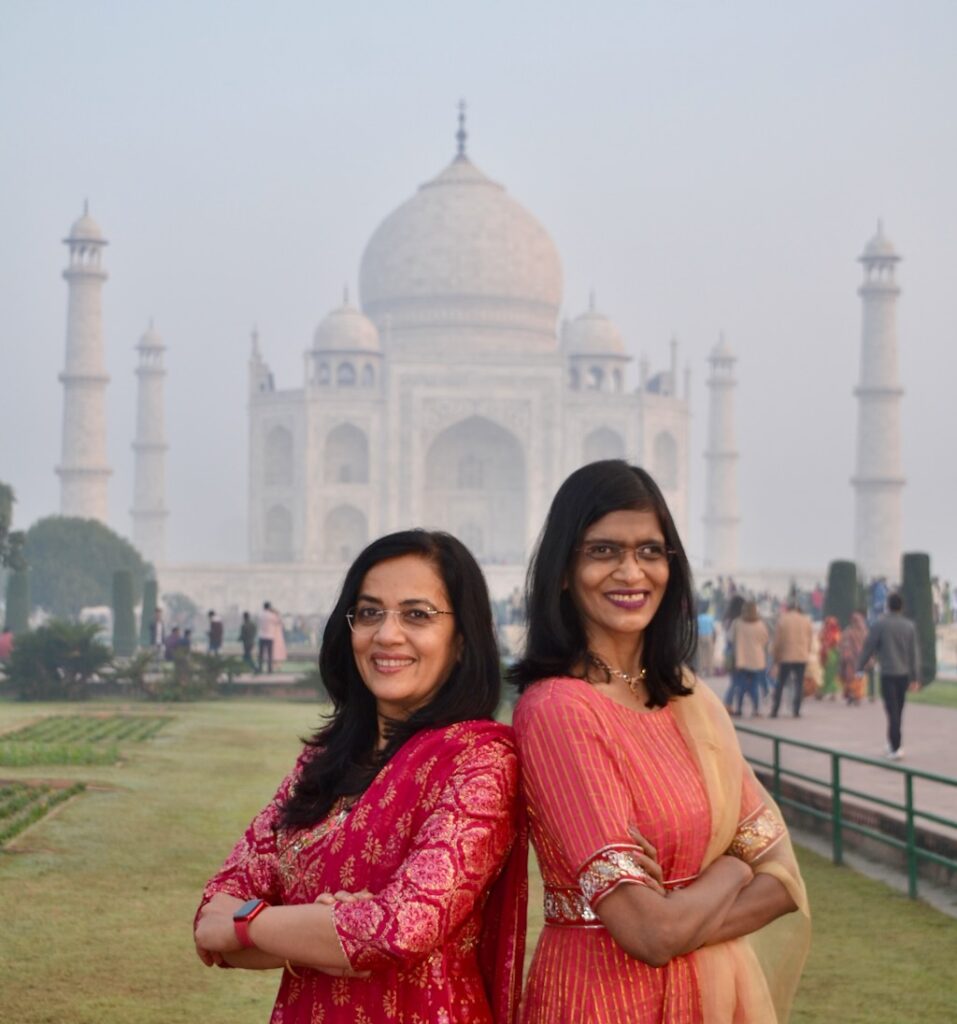
The photo below is one of the best ones of us together, taken by the professional photographer, on his big camera. But the photographer in you will notice the flaws in composition and the blurriness in the subjects. We could easily weed out 80% of the photos for blurryness, mis-composition, closed eyes, etc.
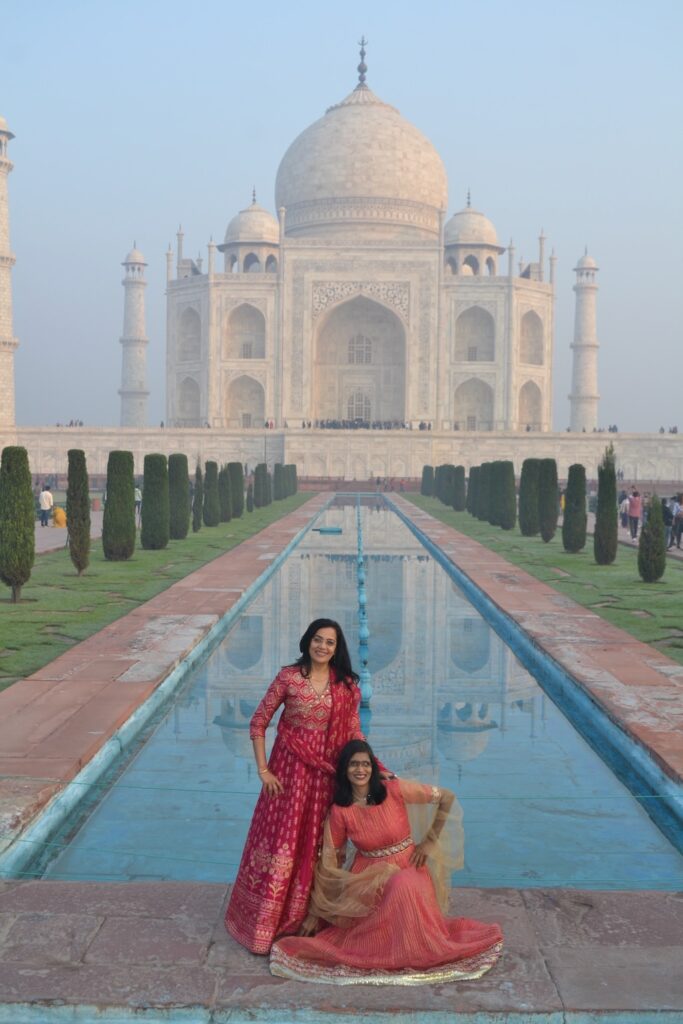
We hired the photographer as insurance, and because we didn’t want to regret not having any good photos. I think we got a few good photos but I’ll be wiser next time.
Do you need a Car & Driver for the Taj Mahal?
You have a few options to get to the Taj Mahal – hotel shuttle, car & driver, auto-rickshaw, or walk. They will drop you up to the Taj Mahal parking lot, about a kilometer from the entrance.
To decide you can ask yourself a few questions
- Does your hotel offer free shuttles?
- Are you only visiting the Taj Mahal that day? Or are you visiting a few other sites that will need transportation?
- Are you comfortable flagging down rickshaws after each stop and possibly feeling ripped? Are you comfortable haggling for a price each time or be generous to give the rickshaw its asking price?
- The rickshaws will probably ask you more if you’re an international tourist. I did everything to fit in as a local. I got by most of the time. But it’s not very easy in Agra where they can tell non-locals apart in a glance.
After our Taj Mahal visit, we had planned a couple of shopping stops and then we needed a train drop-off with all our luggage. We felt it was more convenient, safer, and about the same cost to hire the car for the day as multiple taxis or rickshaws.
We used the same driver for our entire 3-day stay, so we knew each other well. Since the driver was from the hotel, he was extra nice. We gave good feedback to the hotel and a nice tip. A win-win outcome.
Taj Mahal Photography Tips
You’re likely visiting the Taj Mahal once in a lifetime, like most of us. It’s one of the most stunning and unforgettable monuments in the world. You will capture many memories in your mind and feelings in your heart. You might want to also capture photos to refresh memories for decades to come, or to share with friends and family. If photos are not your thing, feel free to skip this section.
Here are a few photo planning tips just for you –
Dress for the occasion
While there is no published dress code for the Taj Mahal, at least none that I’ve heard of. One should be respectful of the culture – cover the shoulders, knees, and all body parts in between. Wear good shoes for walking and shoe covers to protect the marble floors.
On my third trip, we put the extra effort to mark the occasion and honor the magnificent beauty of the Taj Mahal. Initially, I felt overdressed, but once we arrived, it felt wonderful and respectful towards the dazzling monument. Also, the pictures in proper outfits are a lot nicer than a simple pair of jeans, as on my previous trip. We were not alone. Several others dressed for the special occasion… after all it’s not every day that you visit the one and only Taj Mahal. It helped that we were heading to a wedding and had some outfits to choose from.

Plan your Photo Shots at the Taj Mahal
It’s not every day that one visits the Taj Mahal. So I spent 5 minutes on Instagram. I picked a few favorite shots to take during our visit to the Taj Mahal. You can go minimal or as creative as you like. Our guide immediately recognized the spots and angles for the shots. He also enforced the photography rules, after all, they are made to honor the Taj Mahal.
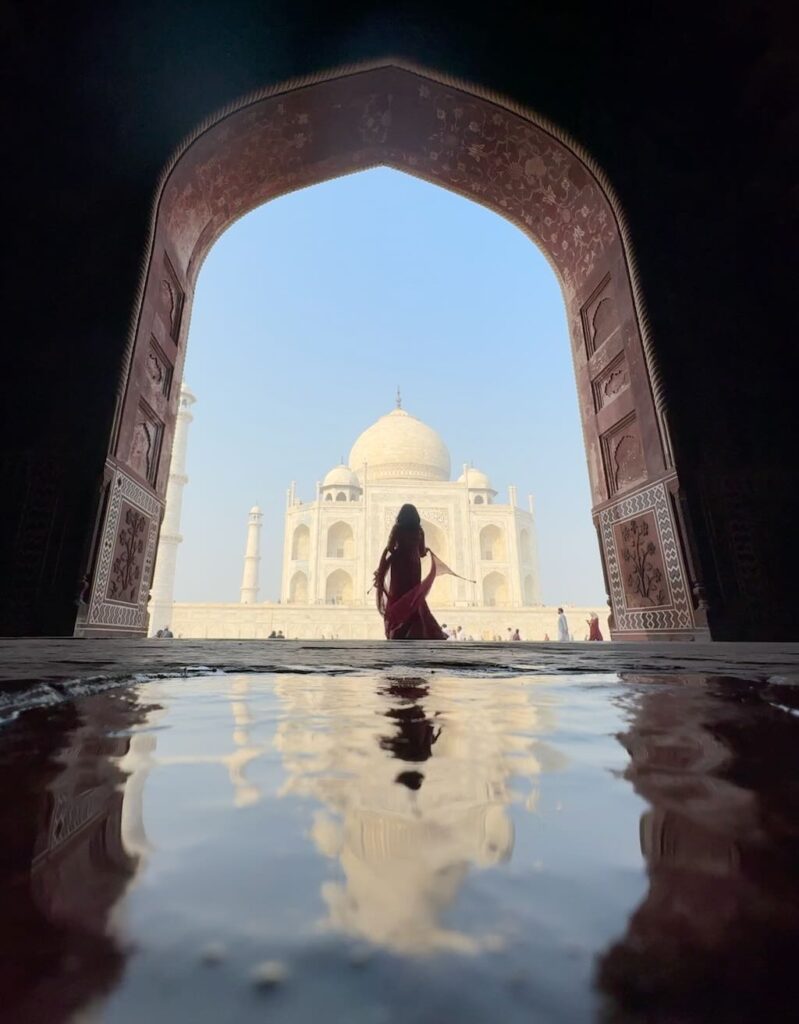
Photograph at the Jal Mahal, at Diana’s bench
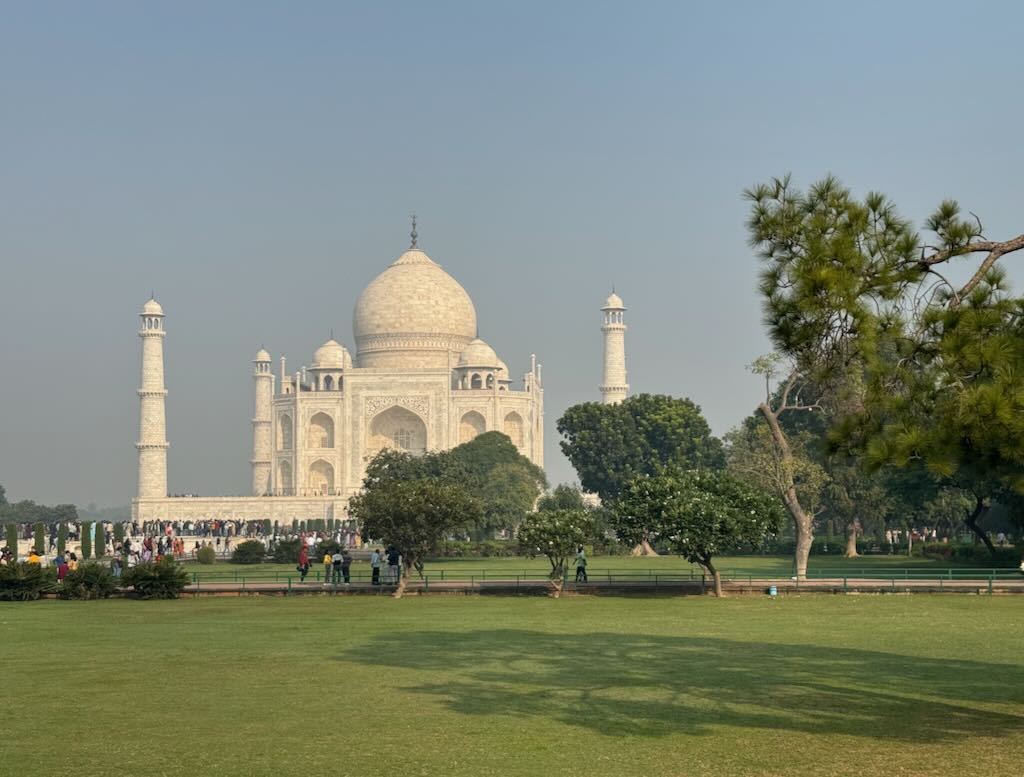
Almost everyone will head to the central pool for a photo with the famous ‘Diana’s bench’ and the crystal clear water in the pool. So it is very hard to avoid people. It’s best to go with the flow and incorporate everyone into the photo.
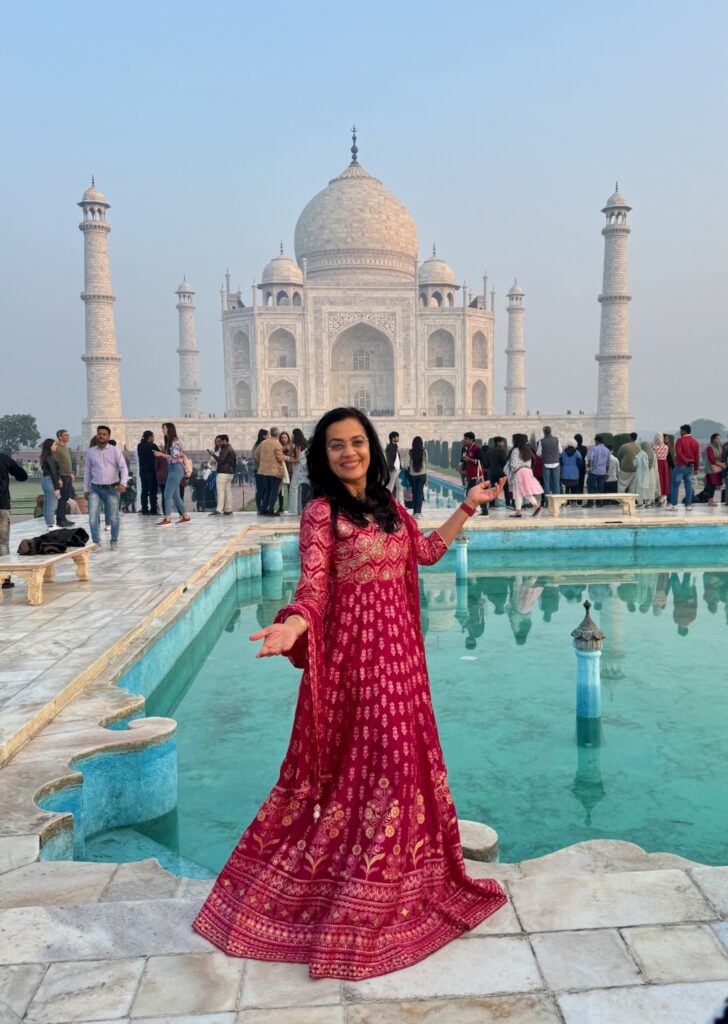
The marble bench on the right side of the photo was made famous by Princess Diana, later Prince William, and Kate. Every celebrity takes a photo at this bench.
One can sometimes sneak in a quick shot of the imposing Taj Mahal structure with its reflection in the pools. But I had to be very prepared. I literally took the following shot in 5 seconds. The live photo feature on iPhone was a game changer.
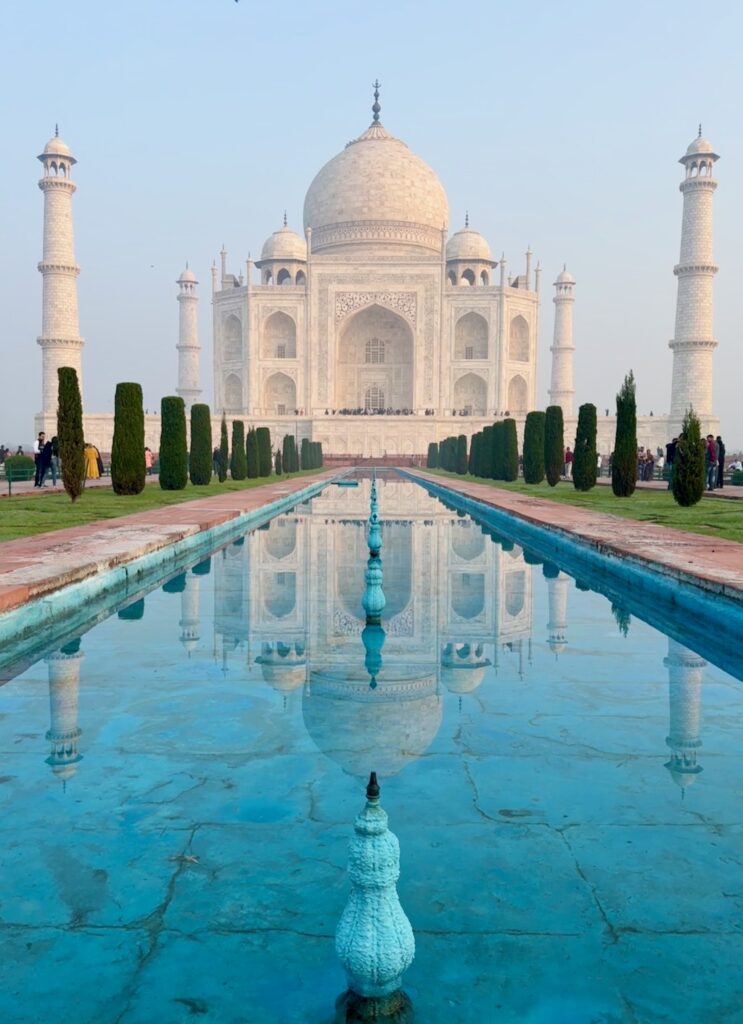
My photo of the Taj Mahal, with its reflection in the Jal Mahal, taken from Diana’s bench, is one of my favorites.
Photograph the Taj Mahal from All Sides
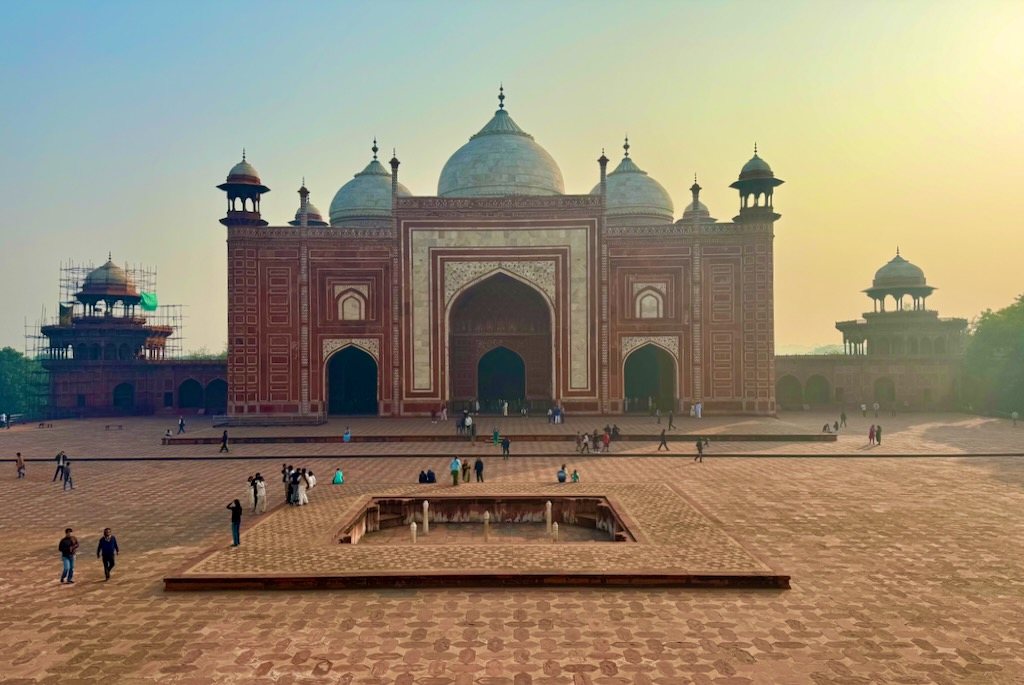
The Taj Mahal is symmetrical and identical from all four sides. Most people photograph only from the entrance side. So it’s easier to find open space without the crowds – from the mosque and guest house sides.
Bonus tip: Photograph the Taj from under the Guest house archway for some dramatic effects.
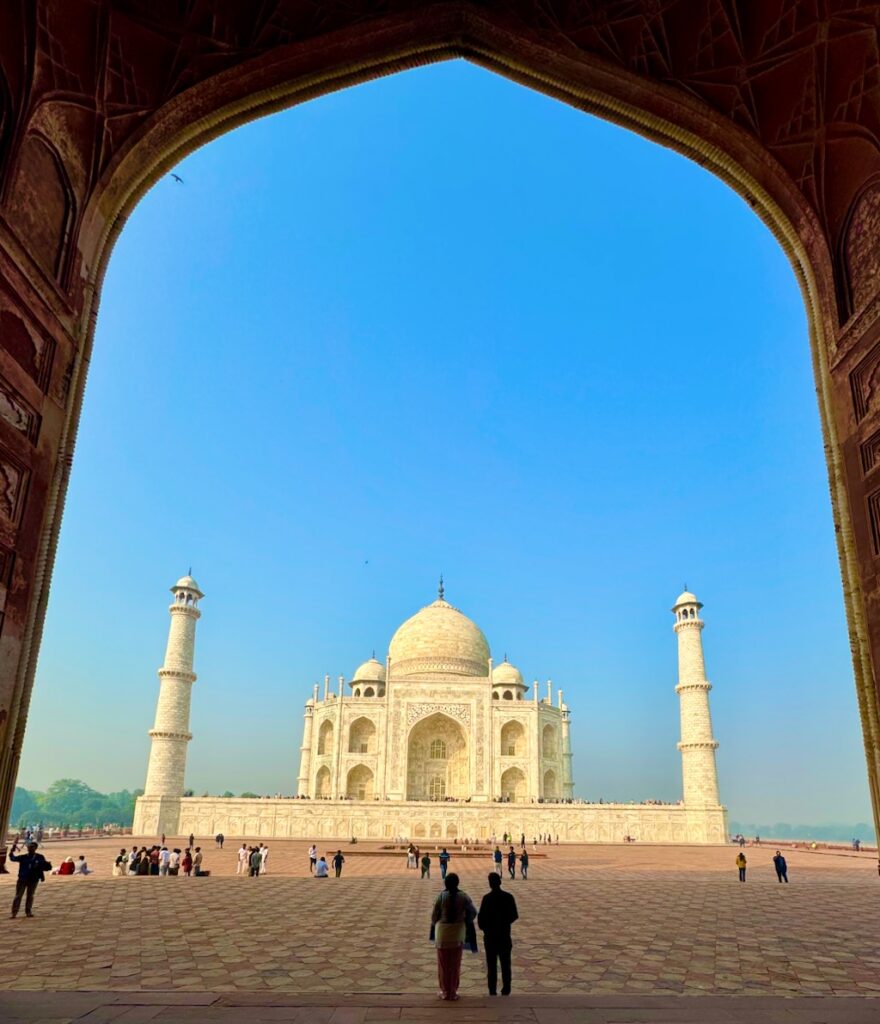
Don’t miss to check out the other angles such as the corners, garden edges, or under the many arches.
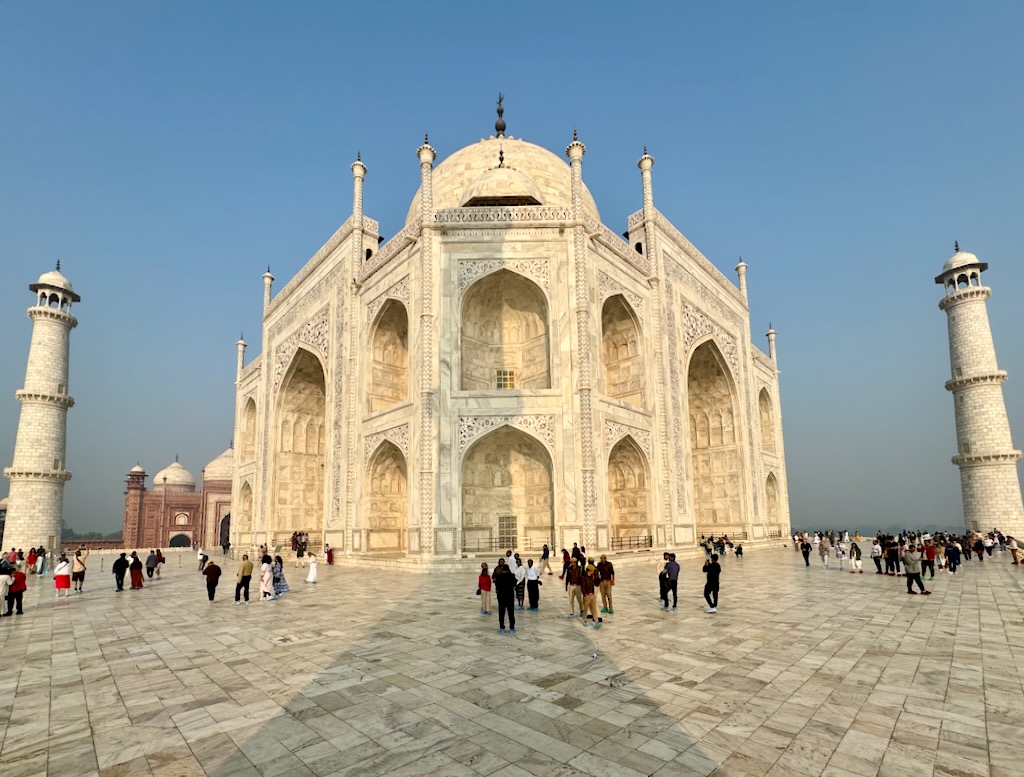
Photograph the Taj Mahal in its Many Colors
Since the Taj Mahal is made of white marble, it takes on different colors depending on the light of the sky and the sun. If you’re able to stay at the Taj Mahal for a few hours or the entire day, you will see the changing colors of the Taj Mahal. As you walk around the Taj Mahal, you will see different colors based on the angle of the sun.
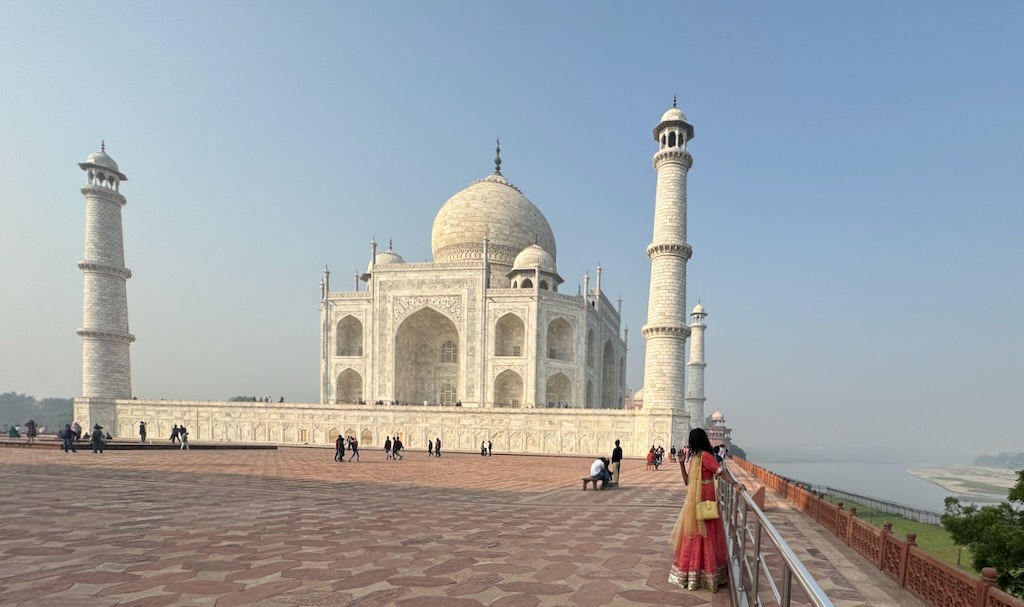
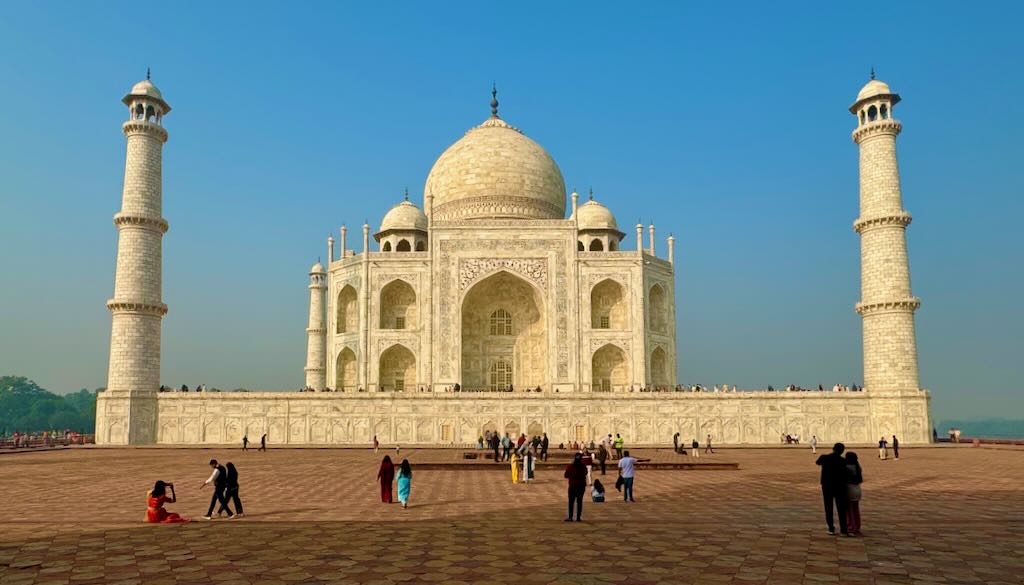
Don’t just view or take pictures from the front, walk around and find different colors and angles of the Taj Mahal.
Bonus tip: Watch other people for creative inspirations.
Photographs Structures around the Mausoleum
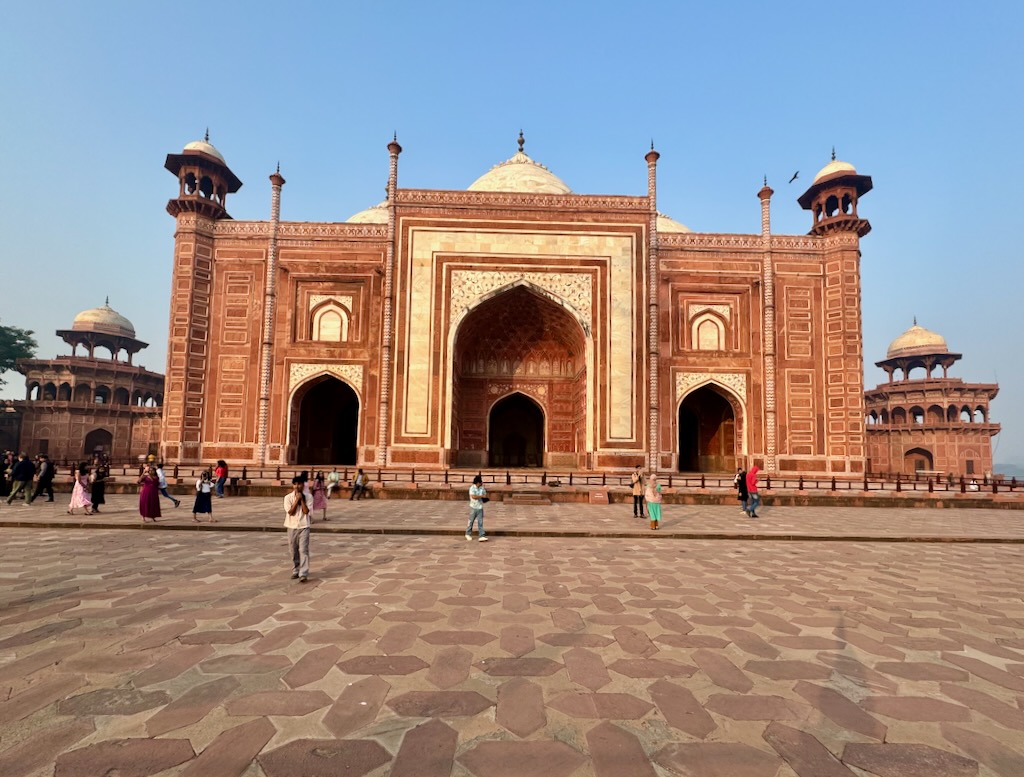
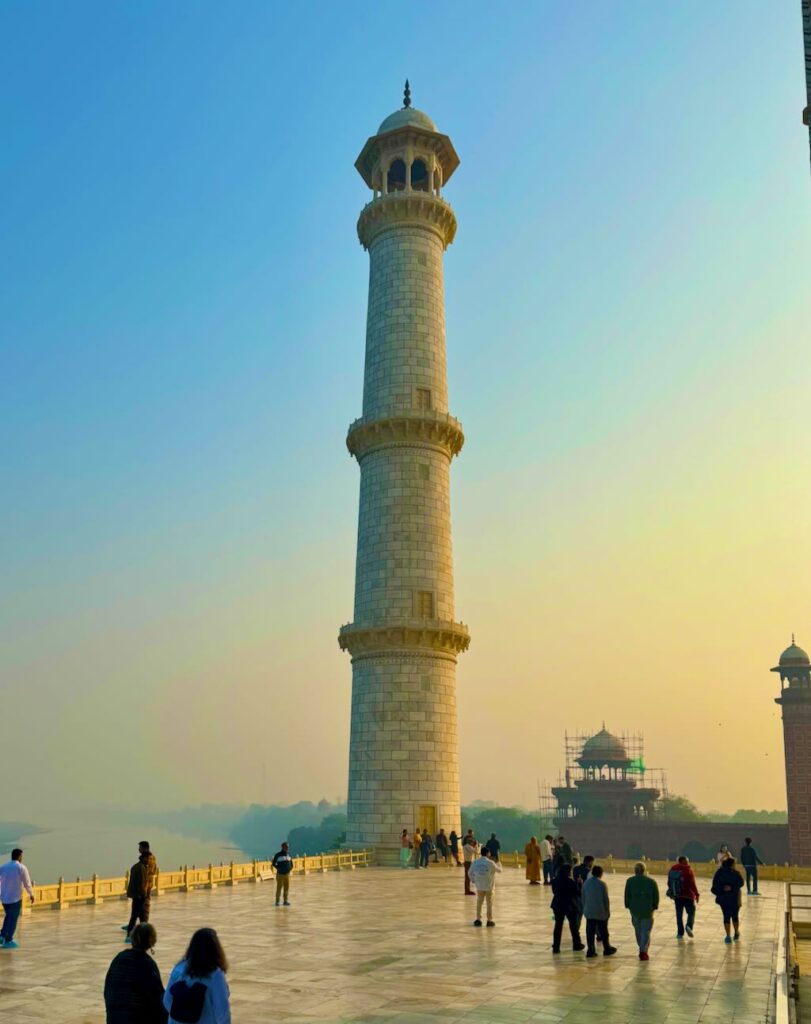
In awe of the Taj Mahal’s beauty, it is easy to forget the surrounding structures, such as the mosque, guest house, minerets, darwaze-i-rauza (the entrance), gardens and so much more.
Photograph the Taj Mahal Up-Close
While we can not photograph the most exquisite and detailed art that lies inside the main mausoleum, there is incredible detail in every nook and cranny of the Taj Mahal complex. Every inlay design, every flower petal, and every arch is crafted to perfection. It still moves the heart, hundreds of years after it was chiseled in the ivory-white marble of the Taj Mahal.
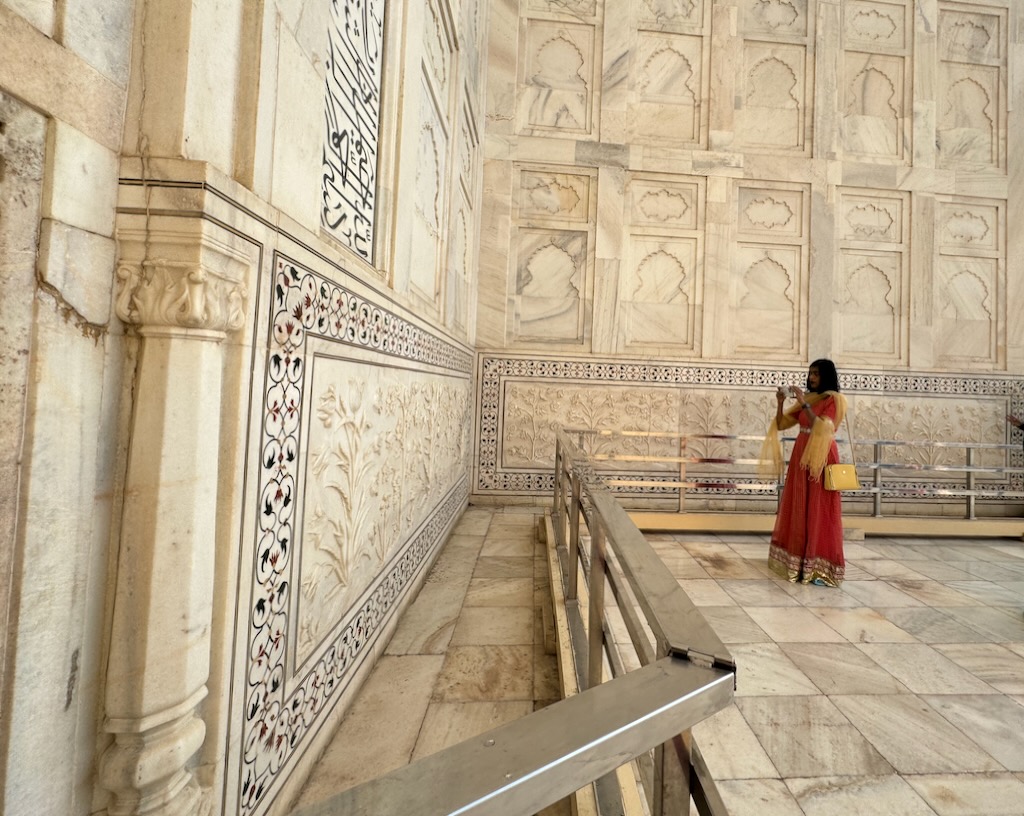
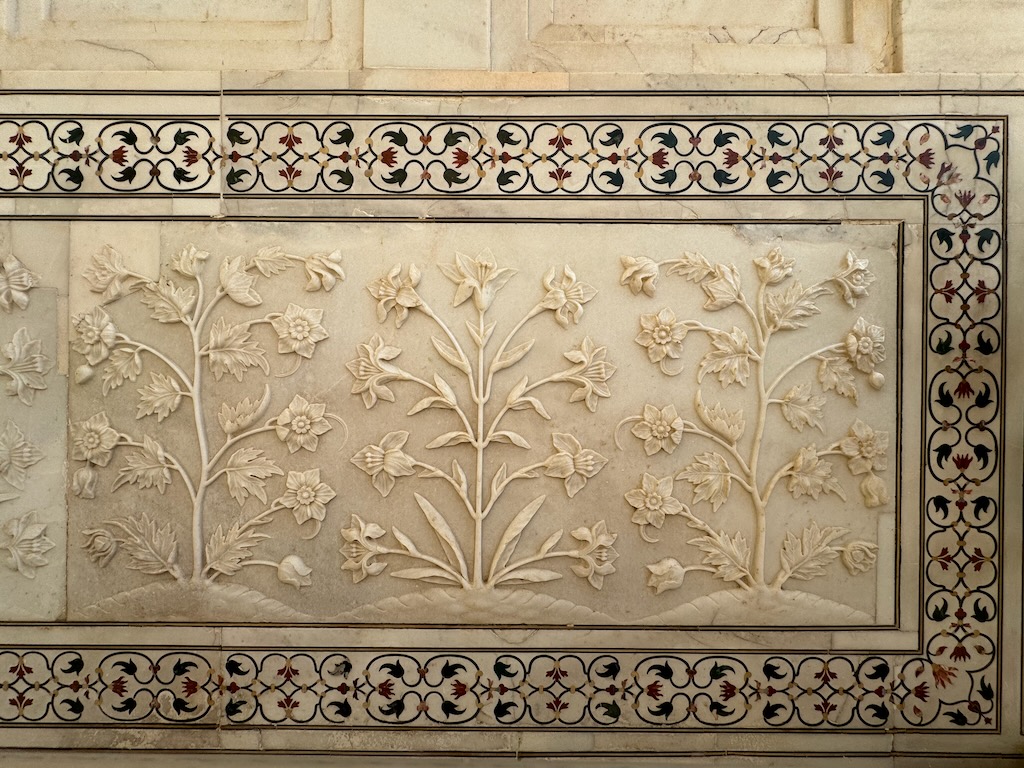
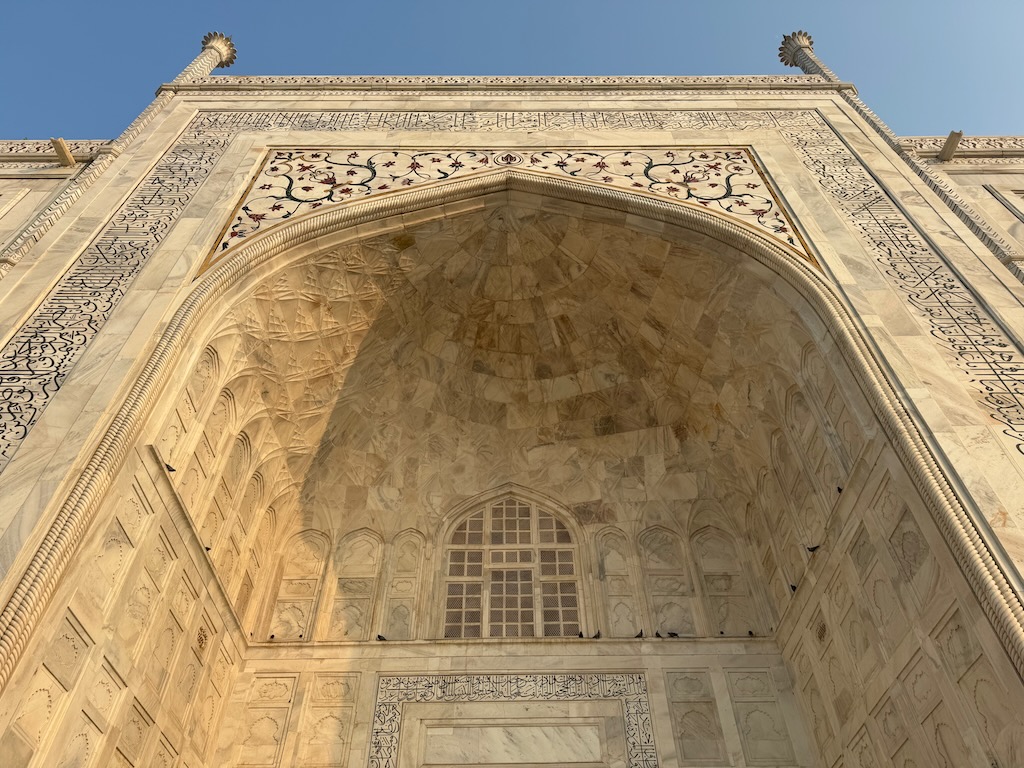
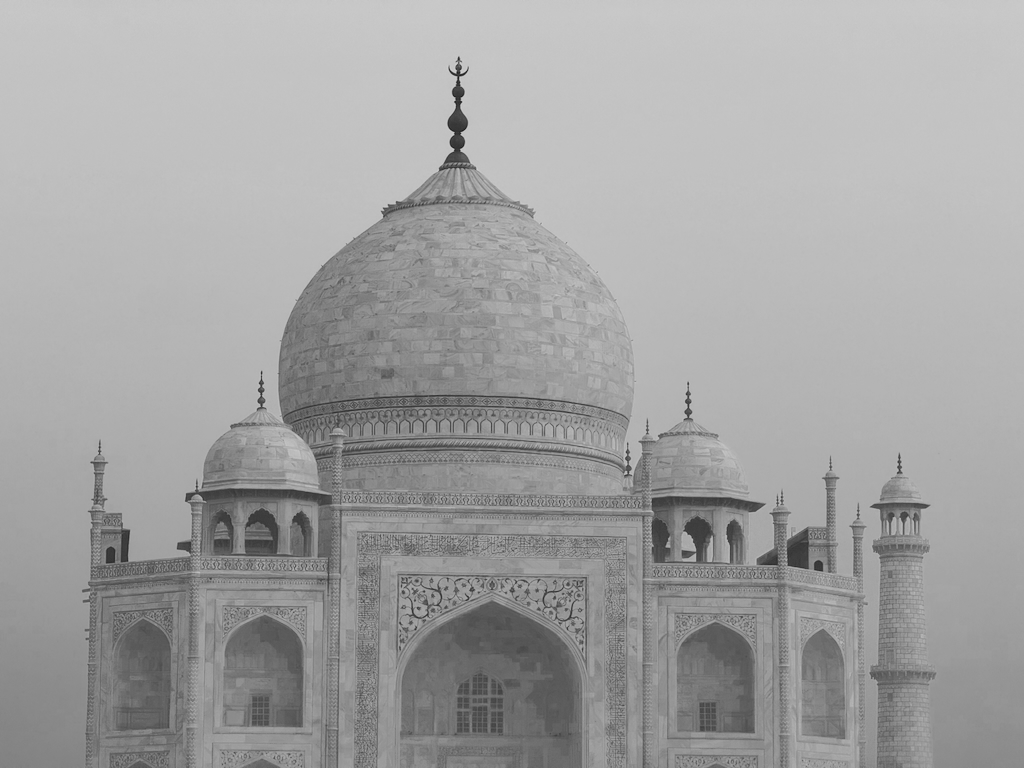
Have fun with People Photography
The Taj Mahal is visited by some 70,000 people every day from every part of the world. That in itself makes it a wonderful place for people photography, along with the most incredible backdrop. If you have the patience, all you need to do is find a spot and watch the magic of human emotions and connections.
Bonus Tips
Here are some bonus tips for you to make the most of your time in Agra and the Taj Mahal
Visit Mehtab Bagh
Visit Mehtab the garden on the other side of Yamuna, before visiting the Taj. It gets very few visitors and great views of the Taj Mahal. There are several other sites in Agra for incredible views of the Taj Mahal.

Honor the 3-hour time limit at the Taj Mahal
When purchasing the ticket, you get to choose a 3-hour timeslot. While the average visitor spends 35 minutes at the Taj Mahal, I think that’s a ridiculously short time for this spectacular monument. We arrived at opening time and stayed the entire 3 hours. But you can’t just stay all day. Choose a morning timeslot for sunrise or an afternoon timeslot for sunset. At the nighttime viewing, the timeslot is just 30 minutes.
The guards check the ticket at the Taj Mahal exit so if you overstay your time window, you’re expected to pay for the next timeslot too. That way, you can stay the whole day.
Tickets for International vs Domestic visitors
The entrance price for Indian visitors is ₹50 per person as of 2026, and visitors from SAARC/BIMSTEC countries pay ₹540. Children under 15 enter for free. The international tourist price is ₹1,100, which I think is a steal compared to admission prices at major monuments or museums around the world. The non-Indian price includes a bottle of water and a shoe cover.
An additional ₹200 will grant access to the main platform and the mausoleum. Daytime tickets can be purchased online at asi.payumoney.com and www.asiagracircle.in. Please check these sites for the current ticket prices.
The Taj Mahal is open for night-time viewing 5 nights a month – on full moon night, two nights before and after. Nighttime viewing is from 8:30 PM to 12:30 AM, with each visitor allocated a 30-minute slot, and if the full moon period falls on a Friday or during Ramzan, nighttime viewing is suspended. Tickets can be bought here.
Know what and where you want to shop
All guides and drivers will push you to go shopping or hire experts at places that give them a commission for bringing tourists. They will have all sorts of excuses for not taking you to any other shops, even when you ask them politely. Best to know where you want to go and insist on going there. If you don’t know the best hops, ask the hotel or locals.
In the guide’s presence, the driver will not push you to go to a particular store because the guild handles the commission distribution. But in their absence, the driver will also sneak into shopping stops. They’ll trust you to not tell anyone, even at the risk of losing the hotel contract.
At the Taj Mahal entrance, the guide instructed us to not make eye contact with the stores along the Taj Mahal path instead, we had to walk fast, for the risk of pick-pockets. I have a hunch that he made us rush through because he doesn’t get commissions from those stores.
Explore beyond the Taj Mahal
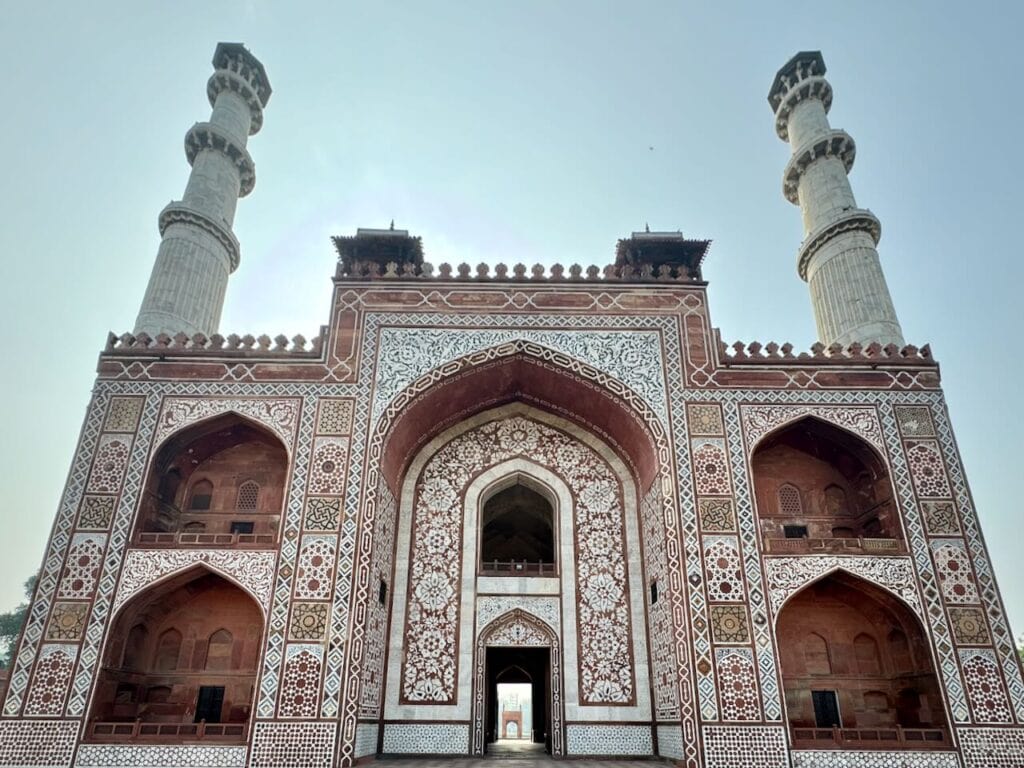
Beyond the Taj Mahal, the Agra Fort, Akbar’s mausoleum, and Baby Taj (Itimad-ud-Daulah) are an absolute must if you’re visiting Agra. I’ve visited the Agra Fort and Akbar’s mausoleum twice in my adult memory, and they are beyond impressive. The “Baby Taj” (Itimad-ud-Daulah), often called the draft of the Taj Mahal, features intricate marble inlay work and is considered a close stylistic precursor.
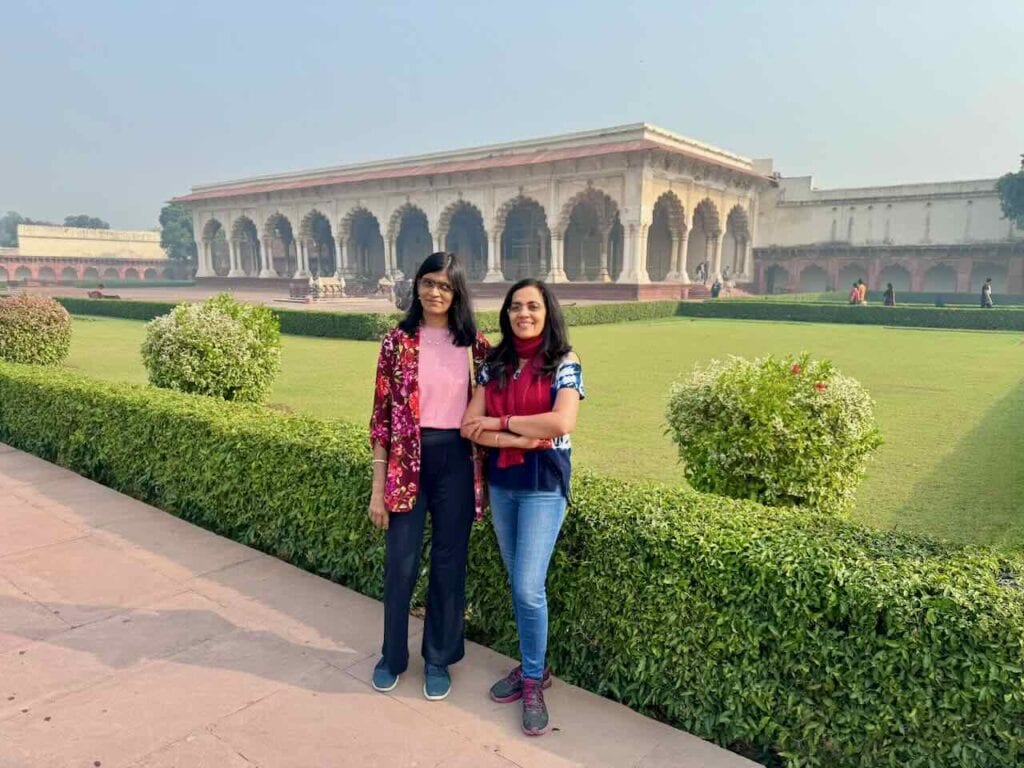
You can take heritage walks listed on the Taj Mahal official site. Our guide or hotel staff never mentioned the heritage walk, and we only learned about it when it was too late.
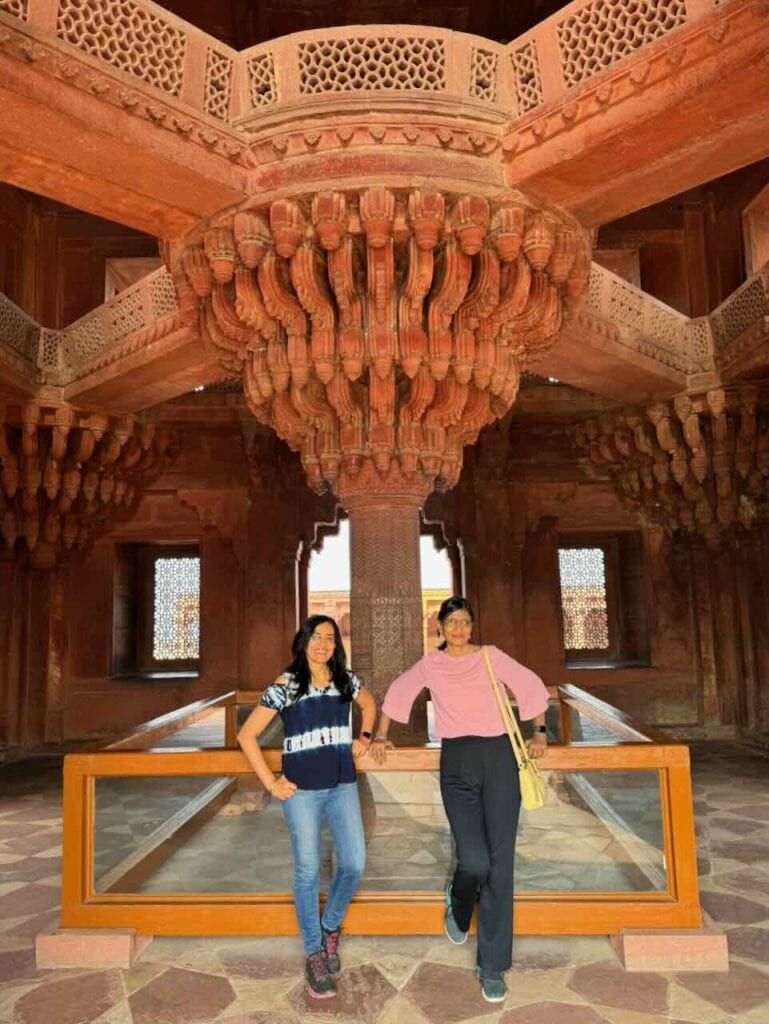
If you have additional time, Fatehpur Sikri is a very important historic site from Akbar’s time. If you take a guided tour, you can hear the local spicy stories. The guides can be spicy or annoying. The official information is written on signs. Some important sights include –
- Buland Darwaza is said to be the highest gateway in the world. It was built to commemorate Akbar’s victory over Gujarat.
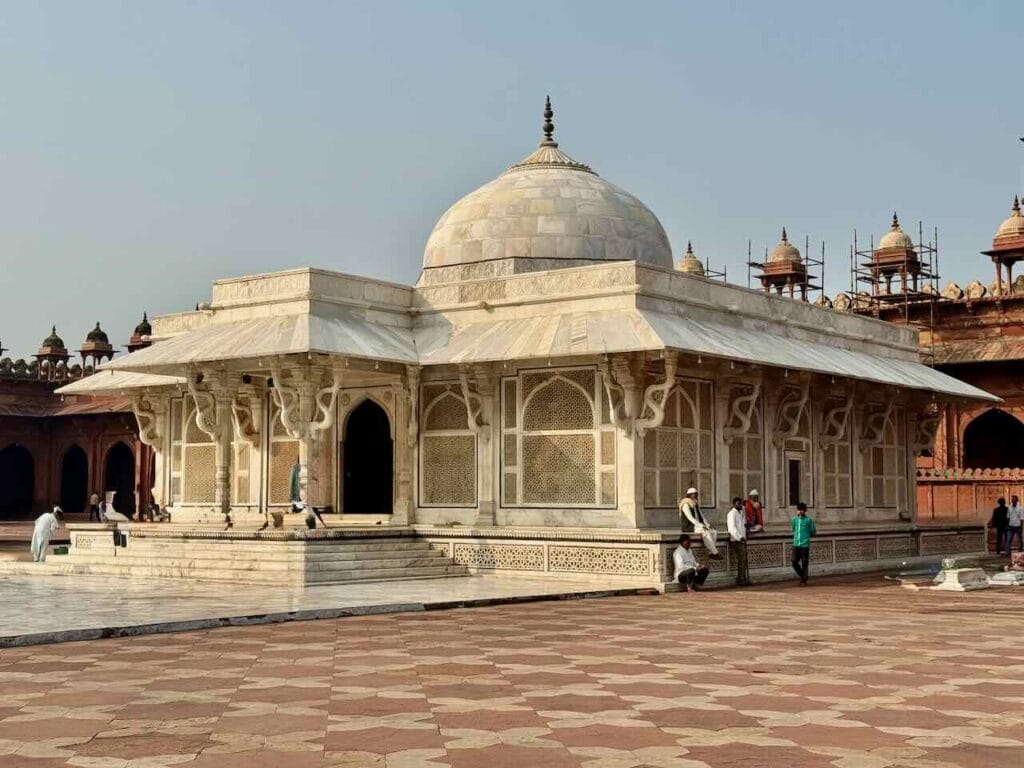
- Salim Chishti’s Tomb is a stunning white marble shrine built in 1580, located within the Jama Masjid courtyard. It is the Sufi saint Salim Chisti and is regarded as one of the finest examples of Mughal architecture in India. Beware of people selling overpriced offerings. A guide will surely take you to their favorite vendor.
- Jama Masjid: This is one of the earliest buildings on the site and is often referred to as the Mosque Friday. It is highly revered by the local muslim population.
- Panch Mahal is a stunning five-story palace composed of 176 carved pillars. Located near the Zenana quarters (Harem), it was used as a pleasure palace. It is an extraordinary structure inspired by the design elements of a Buddhist Temple.
- Diwan-i-Khas (Hall of Private Audience) is famous for its central pillar with a decorated capital that supports a platform.
- Jodha Bai’s Palace is the largest residence in the harem, a remarkable example of Mughal architecture with Rajput influences from her heritage. Similar to what we saw in Meherangarh fort. The famous kitchen supposedly prepared her vegetarian Rajasthani meals and served the Emperor Akbar.
- Diwan-i-Aam (Hall of Public Audience) is an open, multi-pillared pavilion where Emperor Akbar saw the common people.
FAQs: Your Questions Answered
What is the best time of day to visit the Taj Mahal?
Sunrise, without question, is the best time to visit the Taj Mahal, and not just for the photographs. The Taj opens 30 minutes before sunrise, and in those early minutes, the light is extraordinary. The fog in winter creates an almost dreamlike unveiling, and the crowds are thin enough that you can actually stop and absorb what you’re looking at. Our local guides actually advised against sunrise on our third visit, telling us the early risers would be leaving by 9 am and that there’d be no visibility in winter anyway. We ignored them, checked the fog forecast, and arrived before dawn. It was the most magical experience of our three visits. Trust your research over the guides on this one.
Which gate should I use to enter the Taj Mahal?
Use the East Gate. It’s the most convenient for tourists arriving from the hotel area and generally has the shortest queues, especially early in the morning. The West Gate tends to draw longer lines, predominantly with domestic visitors arriving later in the day. One important update: the South Gate is exit-only as of 2024. Several older travel guides still list it as an entry option. It is not. Don’t plan your arrival around it.
How long should I spend at the Taj Mahal?
The average visitor spends 35 minutes. I think that’s a tragedy. Your ticket gives you a 3-hour time slot, and I’d use every minute of it. That’s barely enough time to walk the complex from all four sides, spend time with the details up close, sit in the gardens, visit the mosque and guest house, and still have a quiet moment to just absorb the fact that you’re here. If photography is part of your plan, three hours go quickly. You can also pay for the next time slot and stay longer. The guards check your ticket at the exit.
Do I need to buy tickets in advance?
Yes. Always buy the ticket online. Tickets can be purchased online in advance, which saves you from the ticket queue, and it comes with a small discount. You need to choose both your date and your time slot (AM or PM). Critically, you need two tickets: one for the complex entrance and a separate ticket to access the main mausoleum platform. Do not skip the second one. The close-up views from the platform are where the Taj really reveals its detail. For foreign visitors, the online ticket includes a bottle of water and shoe covers. For Indian visitors, bring shoe covers or pick them up from stalls on the walk-in. Check the tickets section above for where to buy tickets and the cost.
Is there a dress code at the Taj Mahal?
No official dress code, but this is a mausoleum. Not a tourist attraction, and it deserves to be treated as one. Cover your shoulders, knees, and everything in between. Wear walking shoes you can move comfortably in. On our third visit, we dressed properly for the occasion, and it changed the whole experience. It felt like honoring the place rather than just passing through. And honestly? The photos are so much nicer too.
Can I take photos inside the Taj Mahal?
Photography is allowed throughout the complex, but not inside the main mausoleum, where the cenotaphs are. No videos anywhere on the grounds. No tripods. No drones. The rules also prohibit twirling or pulling at scarves and dresses for staged shots. Guards will ask you to delete the footage immediately, and they mean it. Work within the rules: there is no shortage of extraordinary shots to be made in the gardens, from the archways, along the river side, and from the mosque and guest house angles that most visitors skip entirely.
Should I hire a guide at the Taj Mahal?
It’s a personal call, but I’m glad we did on our third visit. Our guide served as storyteller, bag carrier, shoe cover organizer, and photographer all at once. At ₹600 per monument (about USD $7 in 2023), it’s one of the best-value decisions of a trip to Agra. The historical context he added to the story of the construction, the craftsmen, and the political aftermath made the visit more meaningful. The one caveat: guides earn commissions from photographers and shops, so they’ll push you toward both. They will also prioritize their convenience and discourage sunrise visits. Decide in advance which you want, be clear about it, and you’ll have a better experience.
Do I need to hire a photographer?
This is a personal decision. They take photos at the famous spots and angles, so it’s a good insurance. But from my personal experience, they charged a lot, rushed too much, and the photo quality isn’t the best. They didn’t take any creative angles or positions. Afterall, they have to get to many more clients as quickly as possible.
Is the Taj Mahal worth visiting even with the crowds?
The Taj Mahal is one of the most awe-inspiring structures ever built, a true wonder of the world. I would highly recommend it. However, it draws large crowds and can be a disaster, like our 2017 visit. I wrote this guide after my third visit, so you can have a fabulous experience. It will make for a visit you will remember for the rest of your life.
What else should I see in Agra beyond the Taj Mahal?
More than most people realize. Emperor Akbar’s mausoleum is the hidden gem in plain sight. It is enormous and magnificent nd almost no one visits. Agra Fort is often quieter than the Taj and provides beautiful distant views of the monument itself. The garden across the Yamuna River offers rear views of the Taj with almost nobody around. We went before our main visit, and it set the mood perfectly. The Baby Taj (Itimad-ud-Daulah) is a short ride away and considered the architectural precursor to the Taj, with extraordinarily detailed marble inlay work that’s easier to appreciate up close than the main monument. And if you’re in Agra on a Friday when the Taj is closed, all of these are open. If you have a day Fatehpur Sikri is a historical gem.
Is night viewing of the Taj worth it?
Night viewing runs from 8:00pm to 12:00 midnight, with visitors given a 30-minute slot. The maximum number of visitors per night is 400 people in batches of 50. Tickets must be purchased a day in advance from the ASI office in Agra, and night viewing is not available during Ramadan. We haven’t done the night viewing ourselves, keeping something for the next visit inshallah.
Chill and Enjoy
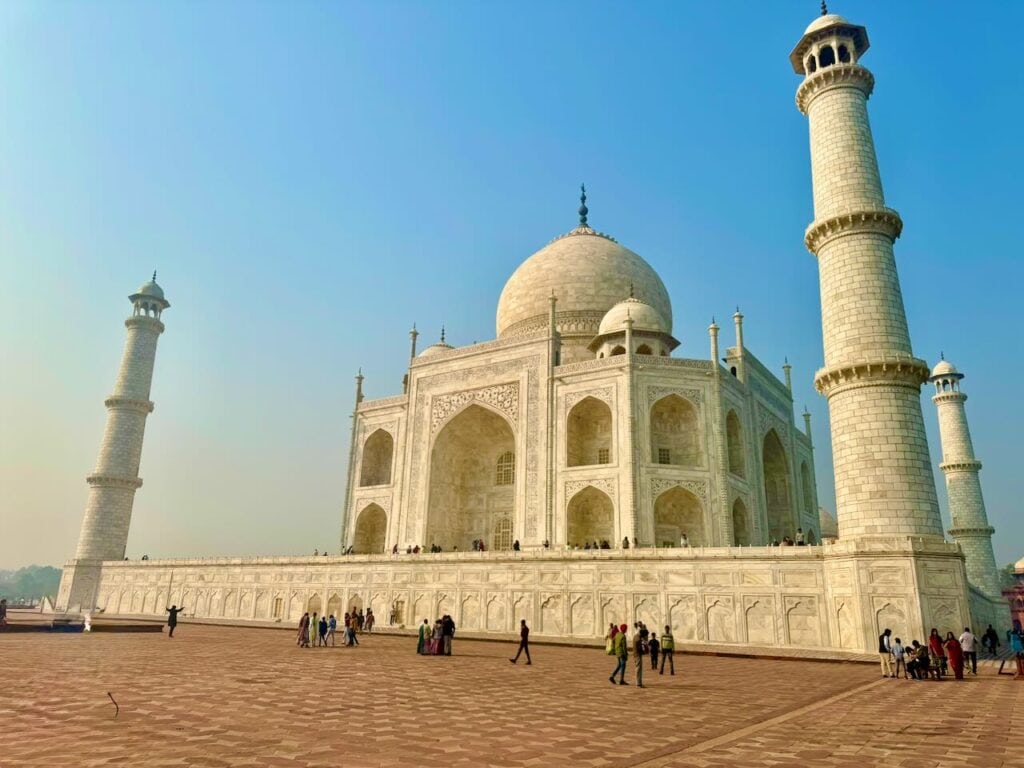
Plan for time to sit and soak in the sights. The Taj Mahal is India’s dazzling monument of love and loss. In person, it is even more spectacular than one can imagine. So allow for time to sit and soak in the beauty in a way that is etched in your memory forever. I remember each of my three visits as clear as day, even the one in 1981 as a little kid on a school trip. You will never forget the Taj Mahal, so make the best memory ever.

Continue Reading about Destinations in Rajasthan
Last Updated on March 30, 2026 by Jyoti Baid