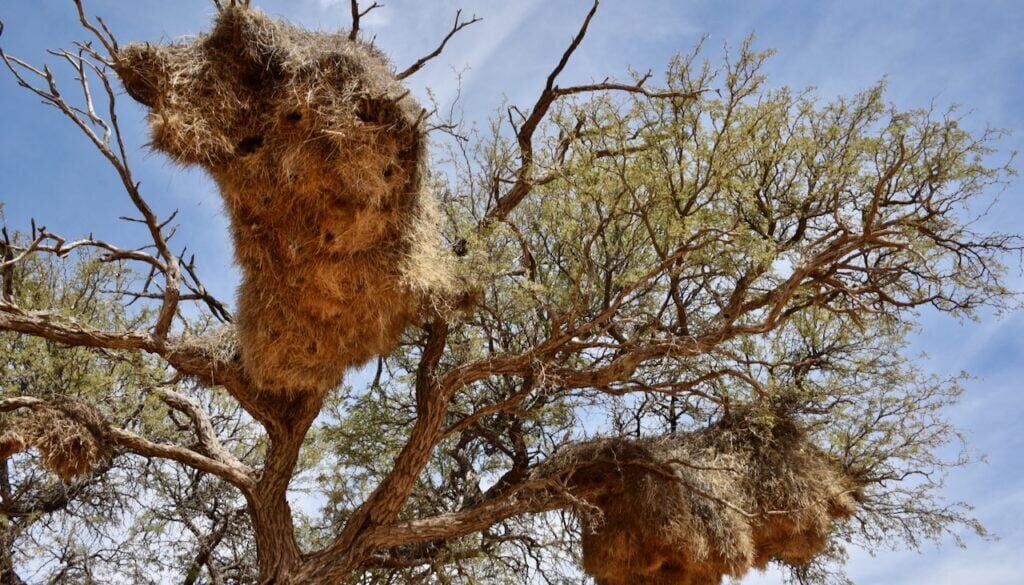
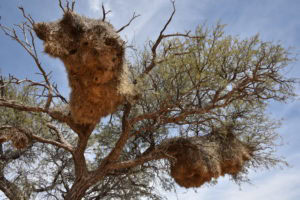
I stood under an enormous haystack perched high in a camel thorn tree, the wind rattling its spiky leaves. Above me, a cacophony of bird calls hijacked my senses. How could such a massive stack end up twenty feet off the ground?
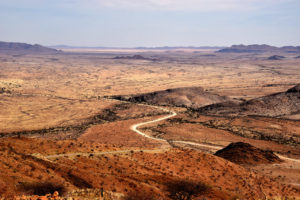
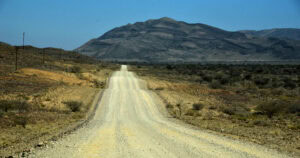
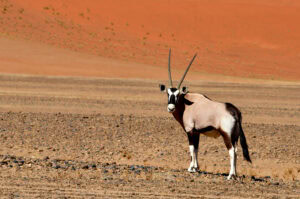
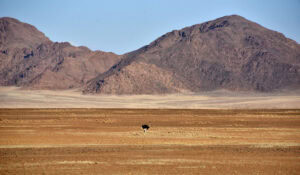
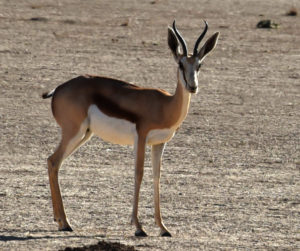
That morning, my husband Nirmal and I had left Namib-Naukluft National Park after a relaxed breakfast in the morning sun. We had six hours to drive from the red desert to Windhoek, Namibia’s capital. The sky stretched clear blue, streaked with thin, passing clouds. The road ahead was mostly empty, and when another car did pass, its dust plume trailed behind it for several minutes. The ground beside the highway was dry, rocky, and dusty. The sparse brush barely held lone ostriches, oryx, and springboks grazing in the vast emptiness.
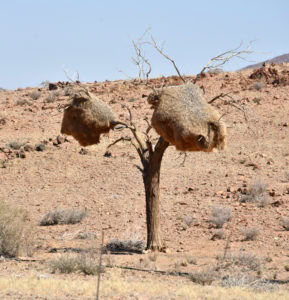
Then, every so often, a tree.
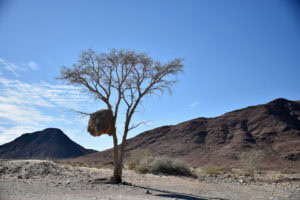
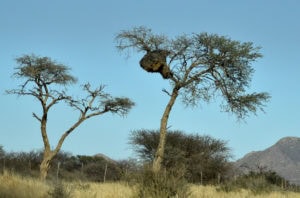
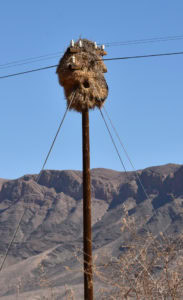
They weren’t ordinary trees. Something very odd was going on. A dense mass sat wedged in the high branches, matted and heavy, as if someone had tossed a hay bale into the canopy and it had caught on the way down. Or as if wild grass had gathered into a massive ball. But we were far from the African savanna, with barely any grass in sight. Miles later, we saw another, and then another perched atop a telephone pole with no branches to collect the hay. After spotting six or eight of these enigmatic shapes, I asked Nirmal to pull over.
Normally, he’d hesitate to stop on a highway, but that day he pulled onto the dirt. Maybe it was the emptiness of just us and the open road, or the relaxed morning, or the sheer oddity of the sight pulling at his curiosity, too.
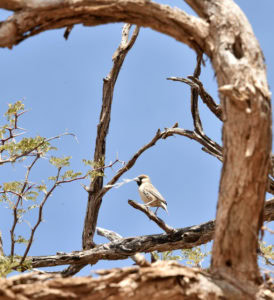
I jumped out of the car into the robust wind, loud with the clatter of dry leaves. I stood staring up at the mass, some eight feet long and four feet wide. The top of the mass was dark brown, weathered by years of rain, while the underside glowed a lighter gold, sheltered from the weather. It hung too high to touch. Just then, a cacophony of shrill, loud birds whizzed by at torpedo speed, so fast that I could not even see them, one second on a branch with a long twig, the next second gone. I started filming so I could watch it in slow motion. Why were the birds here? Why were they so agitated? What was this haystack to them?
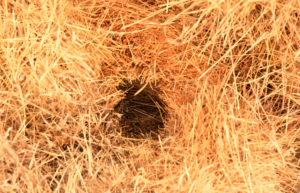
I stared for several minutes and asked Nirmal if he also thought the birds were coming from the haystack. The idea felt absurd at first, then less so, then undeniable, unfolding one layer at a time like a mystery working itself out. The pattern of small circles on the underside of the mass was not a pattern at all. Tiny birds were moving in and out of them so fast we could only make them out in slow motion. These were not circles. They were entrances. The haystack was not a stack of hay at all. It was not even a nest. It was an avian apartment complex, home to hundreds of birds, built and added onto over years. It was a multi-generational dwelling.
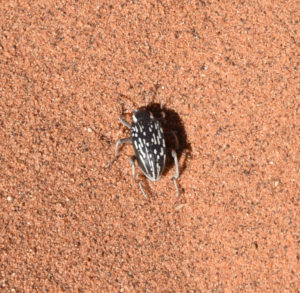
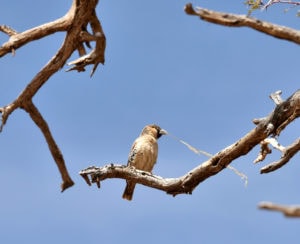
In a desert where survival usually meant a solitary existence, a solo oryx, an individual ostrich, a single darkling beetle, a solitary house with its own windmill, here, perched in a tree, was a bustling metropolis with hundreds of lives packed into one structure. I looked up later. These are ‘Sociable weaver birds‘. They had figured out a secret of survival in one of the harshest places on the planet: high-density multi-generational community living. Their shared fortress provided comfort and buffered against frigid nights and blistering days. It allowed them to raise offspring, share food, maintain housing, and defend against predators as a collective.
Once I saw this pattern, I couldn’t unsee it.
The more I read, the more I appreciated these ingenious creatures living in one of the harshest deserts on the planet. I started seeing the pattern everywhere.
In 2025, we saw Emperor penguins on Antarctica’s Snow Hill Island. They survived because fathers created tight, rotating spiral clusters as a shield from the most terrifying winter blizzards.
In 2024, our guide Mbarak told us about his family as we drove through a desert storm in Morocco’s Sahara. His grandmother had passed recently, at 105. His father, 85, still worked the farm every day, and many of Mbarak’s relatives lived past 100. Multiple generations of his family shared one kasbah, each contributing according to their age and ability, with no concept of retirement. Mbarak had gone to college and built a life guiding travelers like us, yet he still drove hours out of his way at every opportunity to eat and sleep at home.
I thought of my own mother’s childhood in a traditional haveli in Rajasthan, where her grandmother ran the household as matriarch and roughly fifty family members, aunts, uncles, cousins, and visiting relatives who sometimes stayed for months. A maharaj ran the kitchen. The women could chop vegetables but were not allowed to cook, so they filled their days with embroidery and other hobbies instead. Full time servants, some who stayed for generations, handled the cleaning, the laundry, and the daily grooming. The haveli itself was built around a central courtyard open to the sky, with a smaller outer patio near the sitting room for male guests, bedrooms upstairs, and a rooftop where people often slept because it was cooler than indoors. My mother remembers it as a full time racket of children running through the courtyard, adults working, and constant, unfiltered family drama. Today the haveli stands mostly empty, home to one uncle and aunt.
Nirmal’s own family has run a shared business for forty years. His brothers now live in separate apartments in the city, mostly because their grown children needed more space, but the business, and much of the daily life around it, stayed joint. Nuclear families were the exception in both our families, not the rule, and I do not want to pretend the arrangement was easy or without cost.
While living under one roof comes with friction and compromise, it is no accident that the most resilient communities, from the Namibian desert to Morocco to my own family’s history, solve life’s harshest pressures through togetherness.
The research confirms what nature demonstrates: the landmark Harvard Study of Adult Development identified social connection as the single strongest predictor of health and vitality. Similarly, Blue Zone studies reveal that where centenarians thrive, deep social connection is woven into the fabric of daily life.
Modern society often equates independence with success, yet loneliness remains an epidemic. Standing beneath that noisy sociable weaver nest in 2018 taught me an unexpected truth: self-sufficiency is an illusion. Survival, long life, and vitality have come naturally to those who build togetherness.
Last Updated on July 31, 2026 by Jyoti Baid