
Tanzania says the Maasai are straining one of Africa’s most celebrated ecosystems. The traffic, the government’s own numbers, and a wide body of international documentation tell a more complicated story. Knowing the best time to visit Ngorongoro Crater and understanding what drives the crowds gives safari lovers more power to make an impact than we realize.
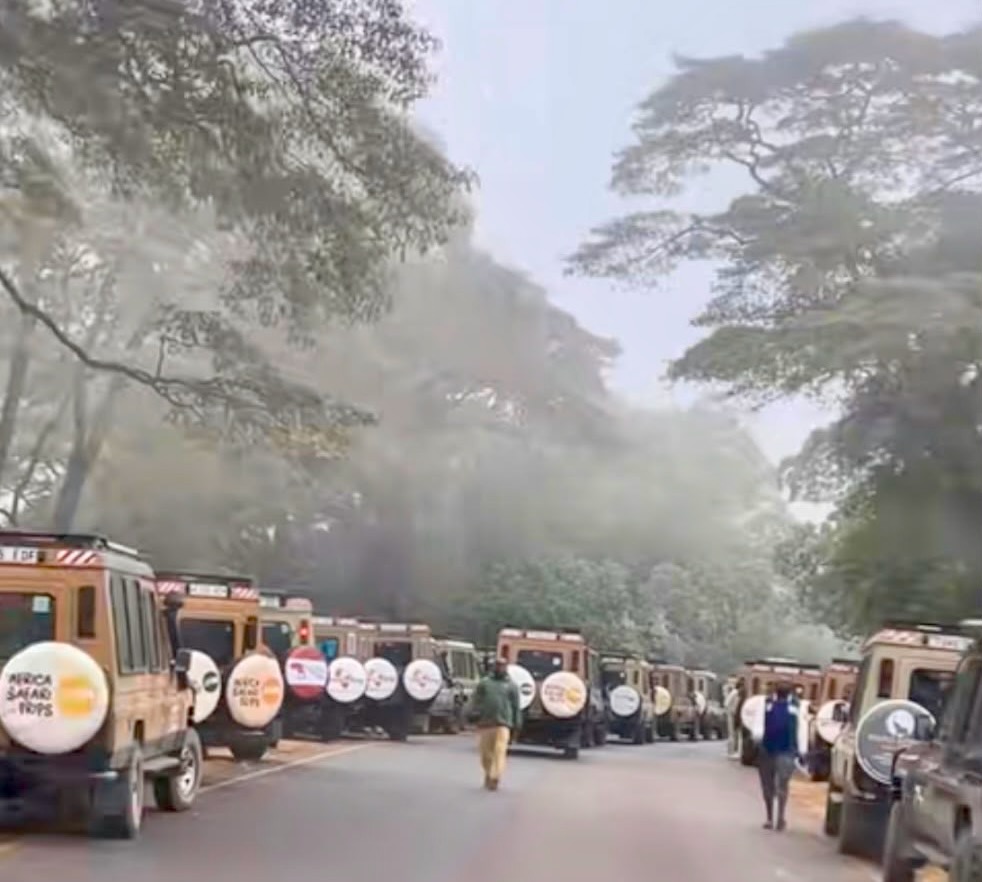
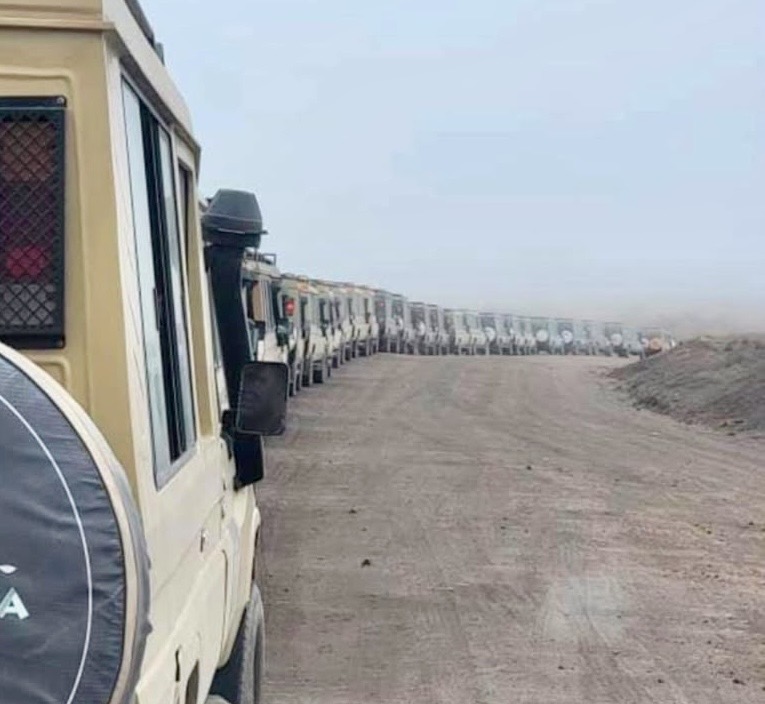
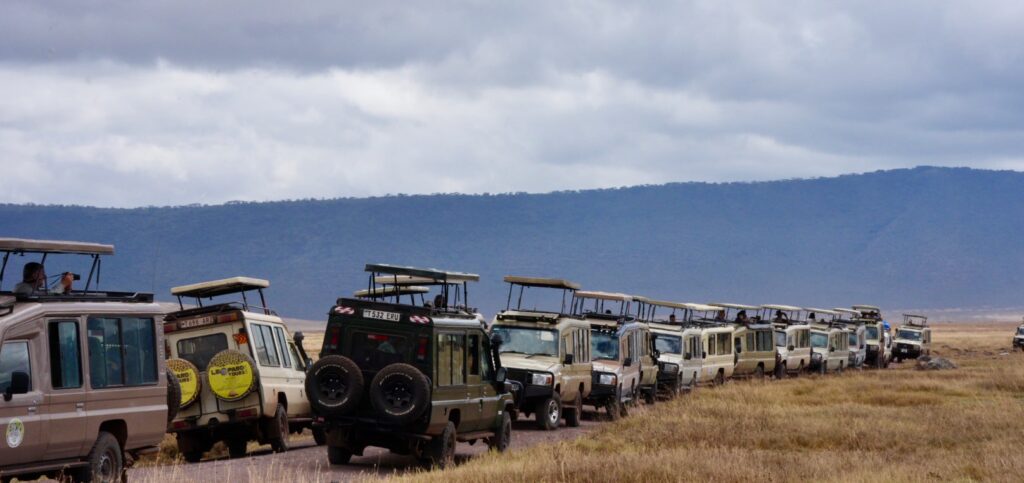
By six thirty in the morning, over a hundred safari vehicles line up at Ngorongoro Crater’s gate. Over a thousand trucks will descend into the crater in a day in peak season. Land Cruisers and Land Rovers idle nose to tail on the switchback road down into the caldera, engines running as the descent takes time. Diesel exhaust hangs in the cold morning air over grass still wet with dew. To put that in perspective, imagine a holiday weekend’s worth of Yosemite Valley gridlock, minus paved lanes. All crammed onto a handful of dirt tracks. When a rare animal is spotted, dozens of 4x4s converge bumper-to-bumper, transforming the ancient caldera into a dusty, motorized scramble.
Meanwhile, across the country, government-produced films explain to Tanzanians why the Maasai living inside the Ngorongoro Conservation Area (NCA) are being asked to leave. The films describe population growth, pressure on the land, and a relocation package the government says will improve people’s lives.
Beneath the scramble, 3 forces collide. An economic engine with traffic that has grown beyond the land’s capacity. Institutions have the tools to manage growth, but are they prioritizing what’s right? The native people, who protect the ecosystem, keep getting crushed by both.
The question worth examining is whether one of the world’s most celebrated conservation landscapes is under strain from the people who have lived there for generations, or something else.
A History of Broken Promises
Ngorongoro’s story is that of promises, broken promises. In 1959, Britain’s colonial government moved the Maasai out of the Serengeti to create what became one of the world’s most famous national parks. They promised that Ngorongoro, the crater and its surrounding highlands, would be the Maasai home, permanently. Not long after, the Maasai were asked to move again, this time out of the crater floor and into the highlands, once more in the name of conservation, once more with the promise that it would be the final relocation.
It was not.
In 2017, during an eviction attempt, authorities burned down more than 180 homesteads in the area [8]. Four years later, in 2021, the relocation program picked up steam – yet another promise-shattering eviction of the same people.
The Government’s Case
When the Greater NCA was established in 1959, an estimated 8,000 to 20,000 Maasai lived there. Tanzania’s 2022 census and a Human Rights Watch report say that the number has increased to 100,000 to 120,000 [1]. The increase is real, driven largely by longer life spans and improved health care.
Tanzanian officials have been loud and clear about this reasoning.
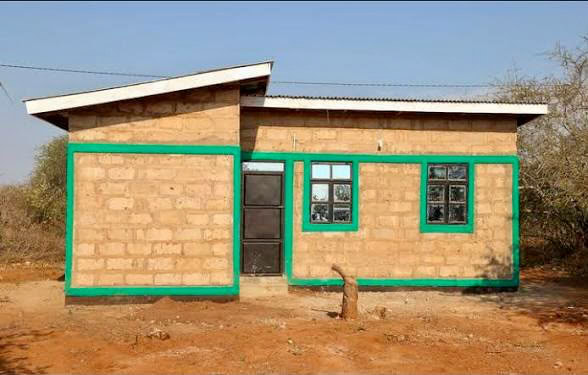
Ngorongoro District Commissioner Colonel Wilson Sakulo has described the relocation program as “entirely voluntary,” saying residents have “the freedom to choose the relocation destination… without any coercion” [10]. The government’s compensation package, according to Project Manager Flora Assey, includes 10 million Tanzanian shillings (TSh) (about US$3,780 in 2026) per household, a three-bedroom house on 2.5 acres, a five-acre farm, and eighteen months of food provisions [11]. It sounds good on paper.
Pulitzer Prize-winning journalist Stephanie McCrummen noted in her 2024 investigation for The Atlantic, ‘This Will Finish Us,’ that invasive species and water access issues exist in parts of the ecosystem [5]. Tanzania’s conservation authorities have real, legitimate reasons to think carefully about environmental management. But do the reasons and methods make sense?
Not every relocated resident describes the experience as coercive. For example, Merinyo ole Koilla, born and raised in Endulen inside the conservation area, moved to Msomera with his family and told The East African that conditions there are better. “Some of us were already interested in farming, but we had no land,” he said. “So, we are happy to be here.” Crop cultivation is prohibited inside the NCA. Another resident, Elibariki Lengida, cited a different reason: “We could not walk at night in Ngorongoro for fear of attacks from wild animals, but here, everything is fine” [7]. But such stories are rare. According to the government’s report as of March 2026, under 8% of the roughly 23,000 households have availed of the program [12]. A rate that suggests satisfied migrants like Koilla and Lengida are the exception, not the norm.
Tubulu, a Maasai Activist Fighting for Ngorongoro’s Land Rights
My interest and research grew out of conversations with Tubulu Lerug Sokoine, a Ngorongoro-born human rights and land rights activist. He is one of roughly twenty children his late father had with five wives. He has protested conditions in Ngorongoro since 2020. In 2020, he ran for local office as a CHADEMA opposition candidate. He was arrested and detained for several days after a candidate’s murder disrupted that election. In June 2021, the case was resolved in his favor.

In 2023, he barely escaped arrest for photographing the forced conversion of Loliondo village into a new game reserve, fleeing to Kenya. As one of the Ngorongoro activists, he participated in a case the Pan African Lawyers Union (PALU) filed in 2017 in the East African Court of Justice. The case, Ololosakwan Village Council & 3 Others v. Attorney General of Tanzania, was brought by villages evicted from their homelands despite having legal title. The court dismissed the case in September 2022, ruling that the villages hadn’t proven the evictions occurred outside Serengeti National Park’s boundary, a ruling their lawyers immediately appealed [22]. His account aligns with McCrummen’s reporting [5].

He says his activism has made it difficult to get a government job despite his public health qualifications. Yet, “We have been like the voice,” he says, “to be the voice of our people.” It has come at a cost he describes without bitterness, more as a fact of the work.
Independent Research Findings
Human Rights Watch interviewed nearly a hundred people between August 2022 and December 2023. They concluded that the government did not obtain free, prior, and informed consent from residents or properly consult community leaders about the relocation plan, compensation terms, or conditions in Msomera. The organization assessed that reduced access to health care, education, and grazing land amounts to what international law defines as constructive forced eviction, even when individual departures are technically voluntary [1].
In March 2026, a review ordered directly by President Samia Suluhu Hassan corroborated resident and rights-group accounts, not the program’s official framing. The commission found that only 1,678 of roughly 23,000 targeted households had relocated, under 8% of the target. It also found that many completed houses in Msomera sit empty because they were built one per registered household, a structure that does not accommodate polygamous Maasai families in which each wife traditionally maintains a separate home. President Samia’s public response was, “I wish to assure Ngorongoro residents that the government will continue working with them for the best interests of the country. Ngorongoro is our heritage and the country’s precious material” [12].
The Salt, and a Paper Trail
Before the relocation program accelerated, a dispute unfolded over grazing rights inside Ngorongoro Crater. Maasai cattle had grazed there seasonally for generations, drawn partly by natural salt licks important to livestock health. In 2017, the government banned that grazing and began supplying the community with processed salt blocks. Cattle began dying in large numbers, an estimated 77,000 by December 2021, according to Human Rights Watch’s documentation [1]. One man said his father lost 185 of his 200 cows. His uncle lost 470 of his 500 cows after the switch. In a community where cows are a source of currency and wealth, this was devastating.
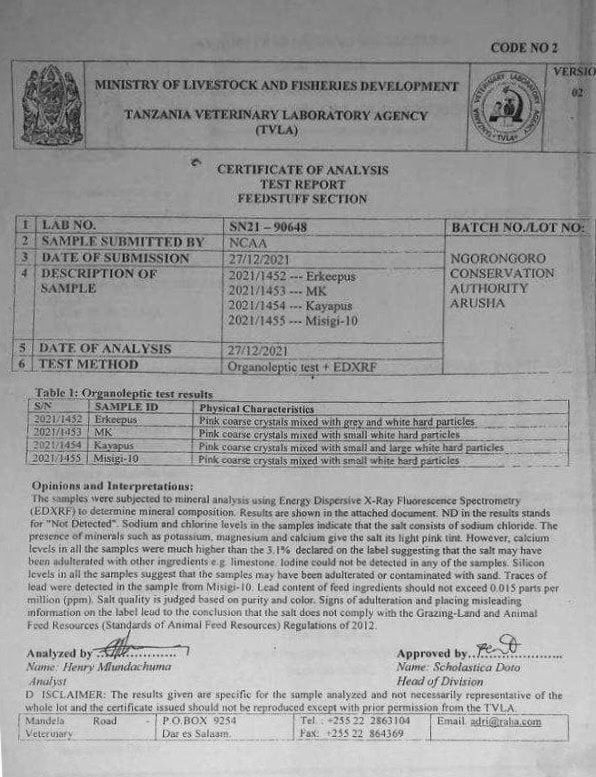
Community members had the substitute salt tested. A Tanzania Veterinary Laboratory Agency certificate of analysis, dated December 2021 and submitted for testing by the Ngorongoro Conservation Area Authority itself, found that the salt did not meet Tanzania’s 2012 Grazing-Land and Animal Feed Resources Standards: calcium levels far exceeded label claims, no iodine was detected, and lead was present in one of four samples tested. The laboratory did not characterize the product as poisonous; its finding was that the salt was adulterated and nutritionally deficient – a significant quality failure in a government-supplied substitute.
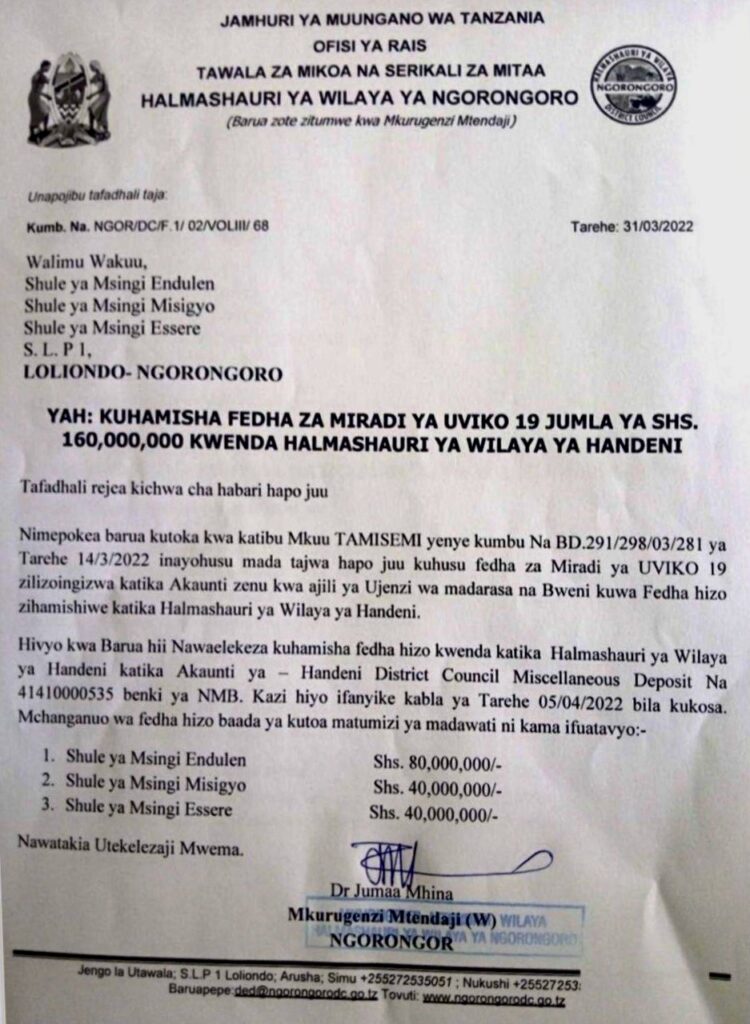
A separate document trail surfaced in March 2022, when the Ngorongoro District Council directed the transfer of roughly 355 million TSh (~US$134,172) in COVID-19 education relief funds, originally designated for six schools inside the conservation area, to Handeni District, where residents were being asked to relocate. The transfer letters are official government correspondence, signed by the district’s executive director, and clearly describe the redirection.
What “Suffocation” Really Looks Like in Ngorongoro
Tubulu describes the years since 2021 as a slow suffocation. They’ve seen a steady withdrawal of life’s basic necessities – water systems, health clinics, electricity, grazing restrictions, and education funding. “We are just living by the grace of God,” he says.
In August 2024, that pressure extended into political rights. Ngorongoro residents were removed from Tanzania’s voters’ register. Onesmo Olengurumwa, national coordinator of the Tanzania Human Rights Defenders Coalition, said nearly half of Ngorongoro’s population was left off the list [15]. Thousands of Maasai blocked the main road into the conservation area in protest, in peak safari season, with thousands of tourists as witnesses. Some travelers pulled over to ask what was happening; several joined the demonstration. One banner read: “We are required to move with pass cards in our own land. Like Apartheid SA.” Police arrested 16 protesters, who were later released [15].
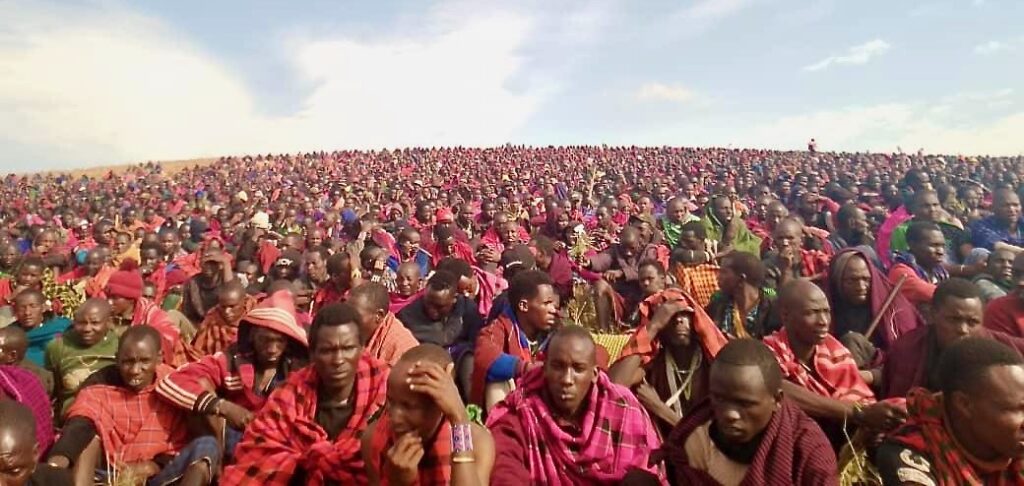
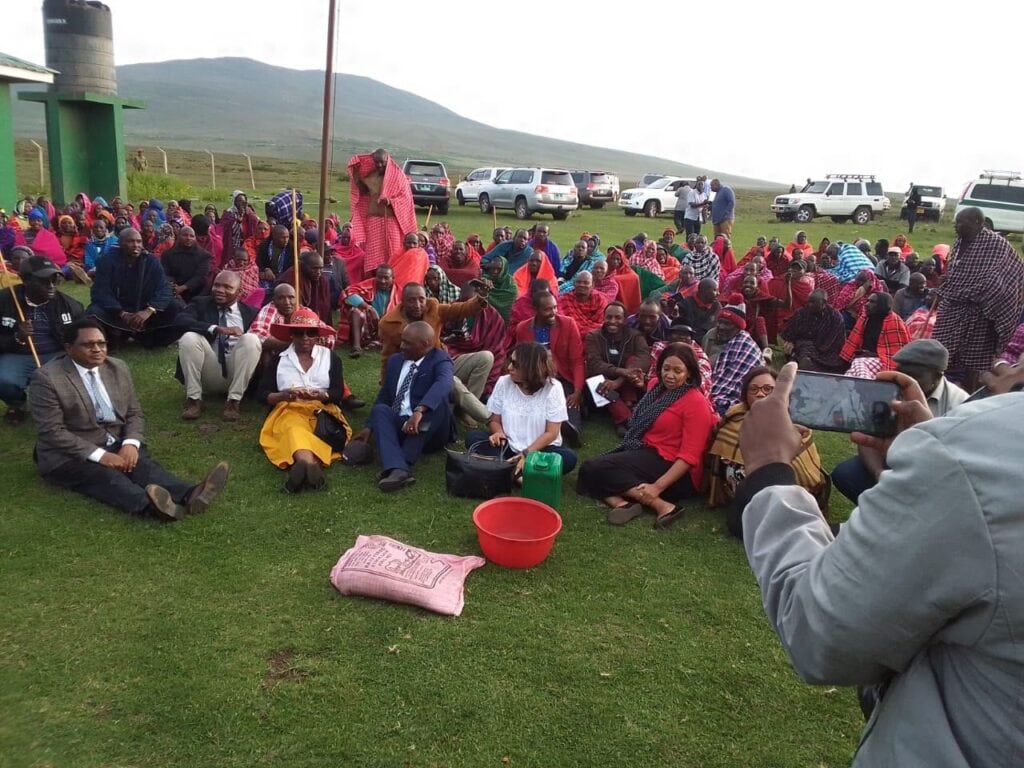
Four months later, in December 2024, President Samia met with 150 Maasai leaders at the State House in Arusha. She acknowledged past human rights violations and ordered her generals to stop the evictions [16]. The voting rights issue was subsequently resolved. The service cuts were not. According to Tubulu, schools inside the conservation area remain in disrepair from years of deferred maintenance, and water and health services have not been restored to pre-2021 levels.
Maasai: Guardians of the Ecosystem
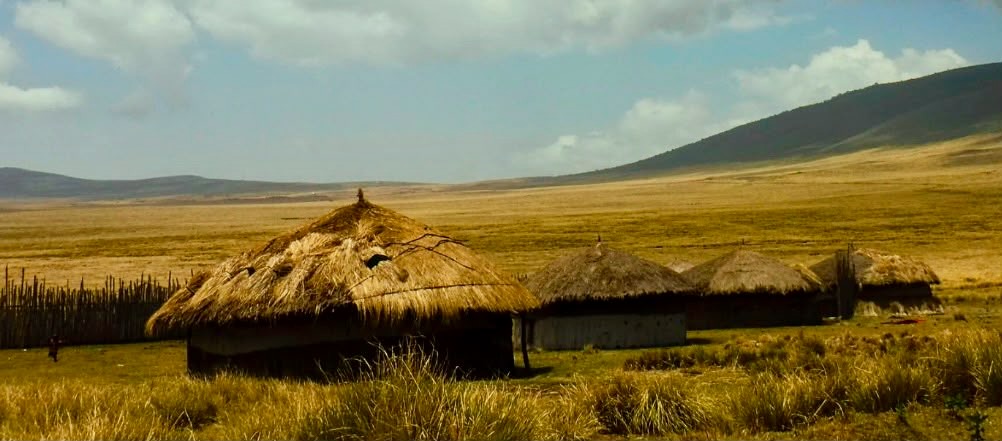
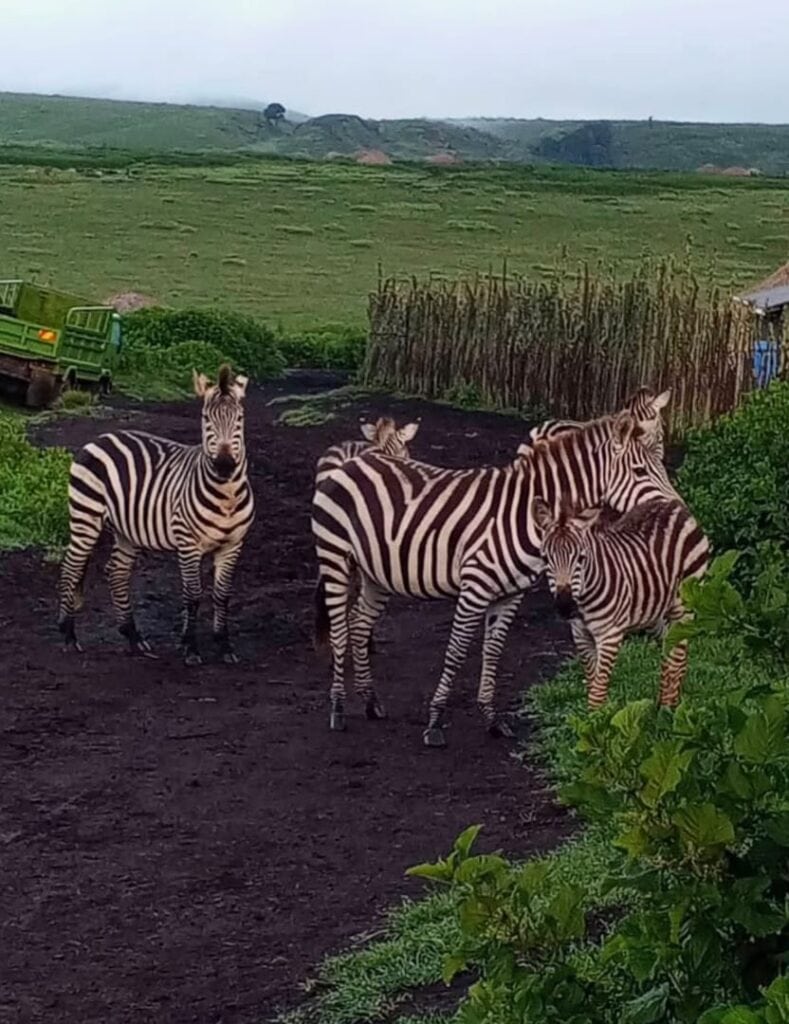
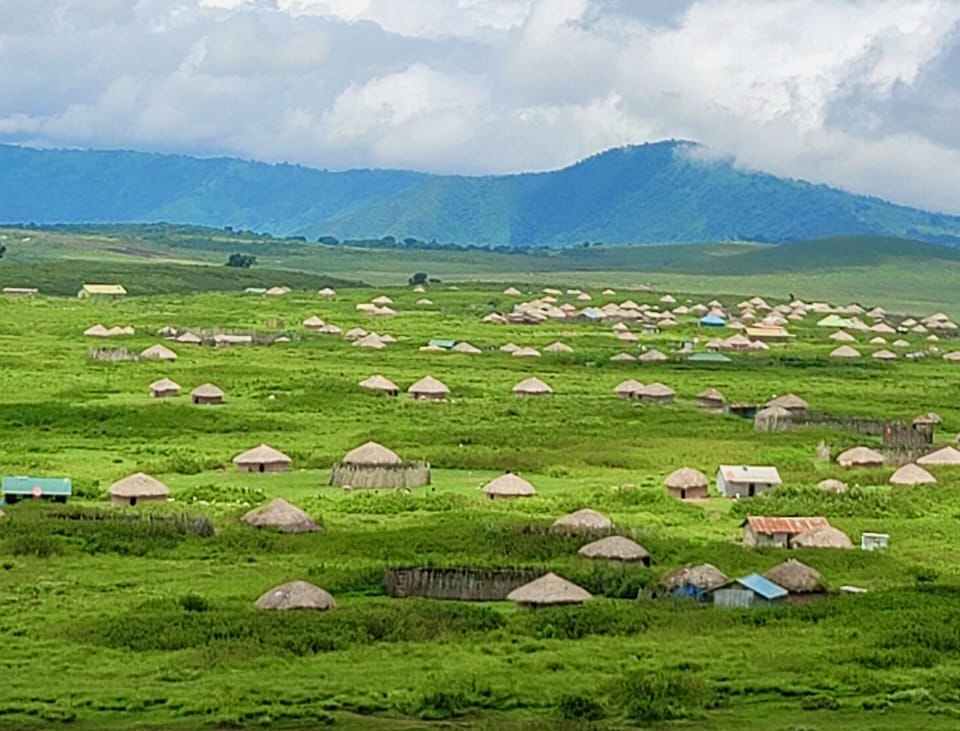
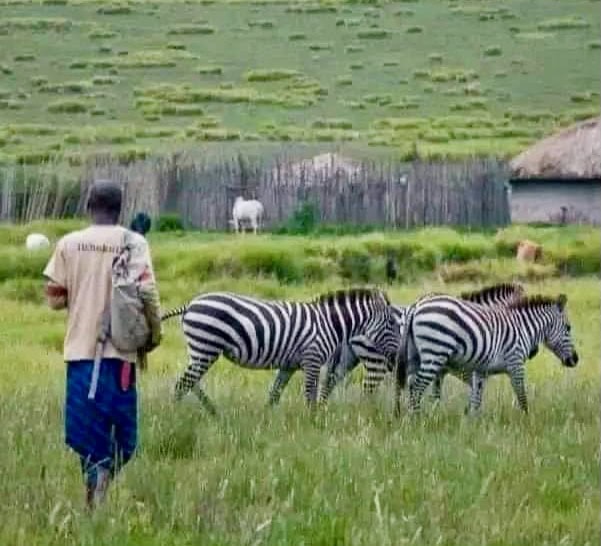
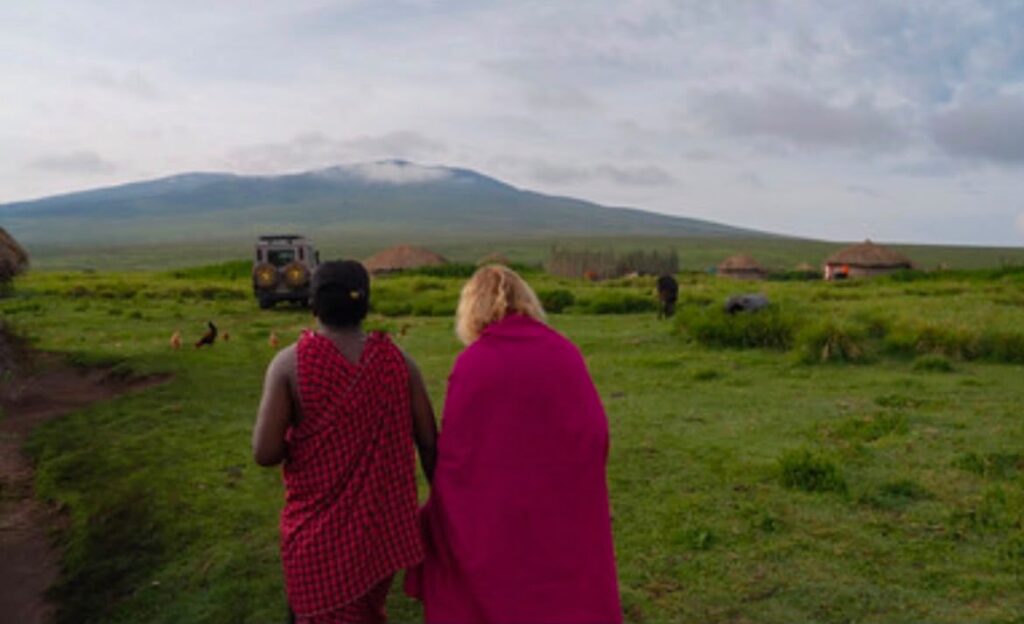
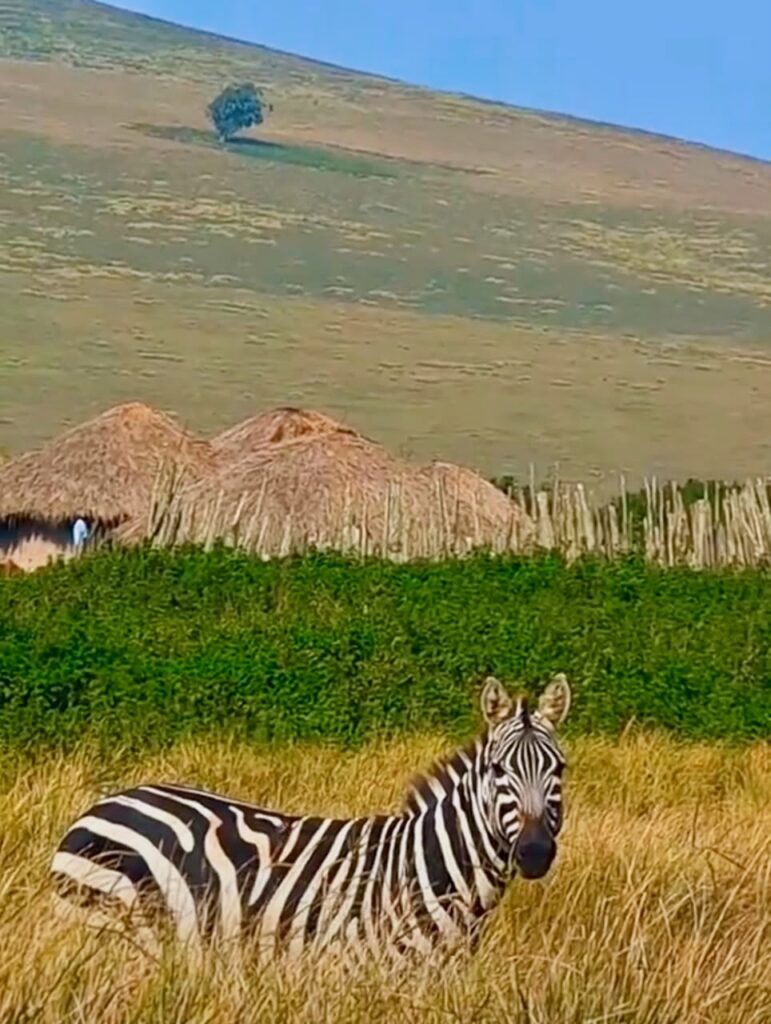
Tubulu describes a relationship between the Maasai and the wildlife around them. He says the government’s messaging completely omits this. “We are so friendly with wildlife,” he says. Maasai custom does not permit eating wildlife. Certain animals are traditionally associated with specific family clans. At night, he says, wild animals, including zebras, move closer to Maasai settlements because proximity to a boma (a Maasai house) offers safety from predators.
He adds, Maasai kids receive rigorous training from their elders to understand plants and animals and how to live in harmony with their ecosystem. They don’t even kill a wild bug or cut down a tree. If another person kills wildlife, they chase them down. If they need wood, they cut a branch while leaving the tree healthy. They live entirely off of their cattle for sustenance, wealth, and social status.
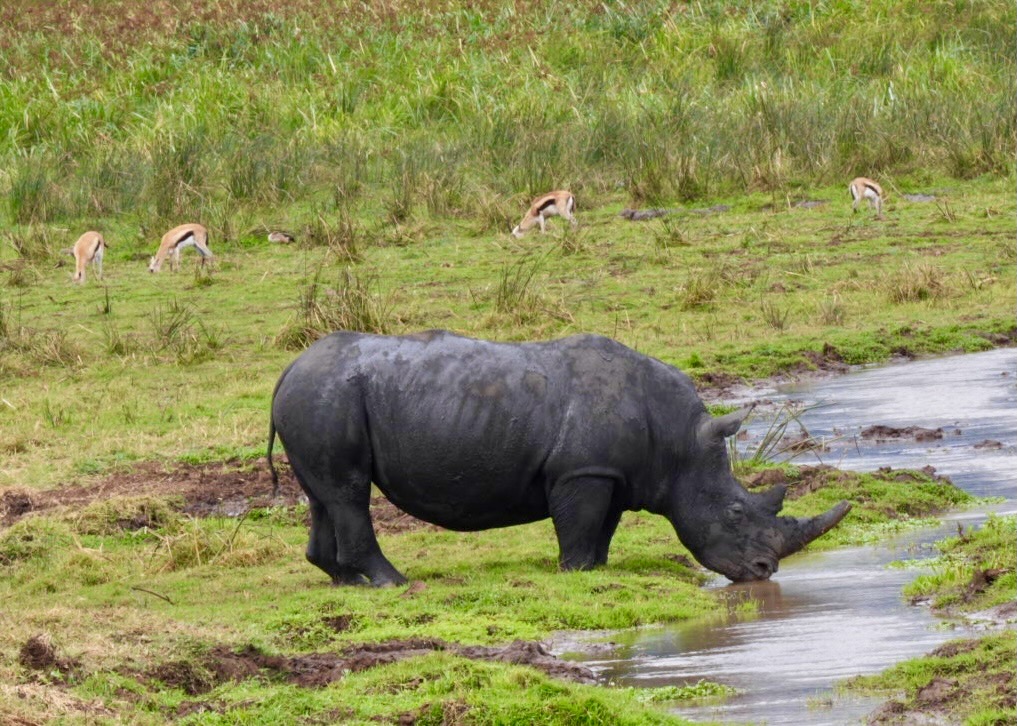
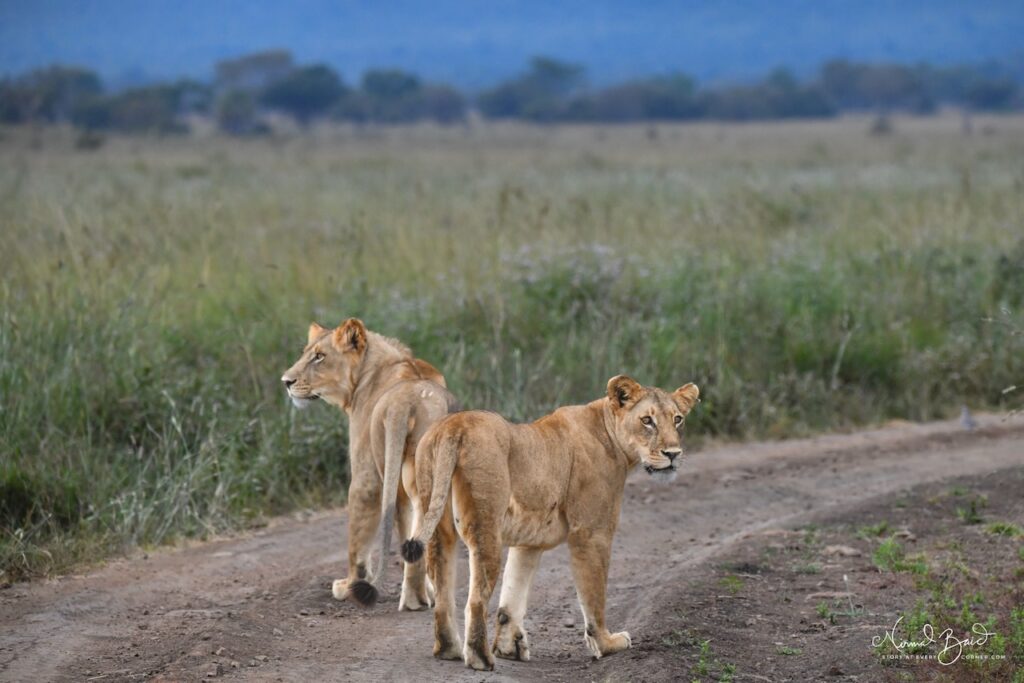
The government’s wildlife data supports the title “Guardians in the Ecosystem”. Tanzania’s tourism authority reported in early 2025 that the region saw a 40 percent increase in wildlife populations over the previous four years. The lion population has grown to 188. Elephants rose from 800 in 2020 to 1,300 in 2024. Thirty-six white rhinos were introduced during the same period [4]. Whatever pressure exists on Ngorongoro’s ecosystem, it does not reflect an ecological crisis under current Maasai stewardship.
What Residents Say About the Terms of the Deal
Beyond the question of whether relocation is voluntary, Tubulu and others describe specific ways the program’s own stated terms have not held up in practice.
According to Tubulu, some families who agreed and relocated say they received compensation well below the promised 10 million TSh (about US$3,780 in 2026). In some cases, households got 4 to 5 million TSh, and in others, nothing at all. Essentially, families must sign paperwork and complete their relocation before payment is disbursed, with the understanding that funds will follow. They have no practical way to dispute a shortfall from 600 kilometers away, and most lack the resources to travel back to register a complaint.
A second issue involves the land they are being resettled onto. Human Rights Watch found that new settlements for arriving Maasai were built on land already owned by existing Msomera residents, without their consent. If the landowners objected, authorities labeled them as “trespassers”, despite their official land registration documents. Authorities arrested a Msomera resident after a dispute with a newly relocated woman over cultivation rights to land they both considered theirs [1]. This has created ongoing tension between original Msomera residents and newly arrived Ngorongoro families. The relocation program’s public framing ignores the friction.
A third issue is about who gets to decide. The relocation program registers and compensates by household. The male head of household typically makes the decision. According to Human Rights Watch, this “may also create decision-making power in men, reinforcing restrictive, harmful social and gender norms.” One Pastoral Council member put it plainly: “in the Maasai society, if the husband decides, even when wives do not agree, they all have to move.” HRW documented a case where a wife who was not consulted refused to relocate. Her husband and the other wives moved anyway, splitting the family. The organization identified seven other women across NCA villages who described the same experience [1].
Once a Ngorongoro resident has relocated, there is no clear path to return, even if conditions are dire. As a useful historical reference point: Between 2007 and 2010, 159 families were relocated from NCA to Jema village in Sale division. More than half eventually moved back [1]. It’s unclear if a comparable return path exists for the current, much larger program.
UNESCO and a Wider International Response
At the 48th UNESCO World Heritage Committee session in Busan, South Korea, in July 2026, a man named Isack Lekisongo Meijo spoke at a side event on Ngorongoro, describing the conservation area as an “overloaded aircraft” in need of a planned population reduction. Nine days later, nearly a hundred Maasai signed a formal document stating that Meijo and a second representative, Lekoko Lepilal, held no traditional leadership standing and no ancestral ties to Ngorongoro. They vigorously objected to their presence as community representatives. Signatories included Tubulu and Joseph Oleshangay, a Maasai human rights lawyer whose name has appeared in international reporting on this issue for several years, and who fled to Kenya in March 2024, citing safety concerns [13].
The same document alleges, though this has not been independently verified for this article, that Meijo was connected to a violent 2022 operation in the neighboring Loliondo division. The UN Human Rights Office reported that authorities converted 1,500 square kilometers of Maasai village land into the Pololeti Game Reserve that year (formally, 1,502 km², declared under Government Notice No. 281 in June 2022) [22]. Security forces used live ammunition against residents, injuring roughly thirty people [3].
This dispute has not stayed confined to Tanzania. The Maasai International Solidarity Alliance delivered a statement in Busan arguing “no conservation without rights, no World Heritage without people” [13]. The Oakland Institute has published extensive documentation arguing that Ngorongoro cannot simultaneously function as a World Heritage Site and an active eviction zone [2]. In December 2023, the European Parliament passed a resolution on the treatment of Maasai communities in Tanzania by a vote of 493 to 29 [14].
On August 28, 2026, the UN Committee on the Elimination of Racial Discrimination, the treaty body that monitors 182 countries’ compliance with the International Convention on the Elimination of All Forms of Racial Discrimination, formally demanded that Tanzania halt the evictions. Acting under its Early Warning and Urgent Action Procedure, reserved for situations the Committee considers to be escalating, it cited reports of “racial profiling and racially motivated excessive use of force by law enforcement officials”. It said restrictions on grazing, water, and cultural sites, combined with reduced health care and education access, have “pressured them to relocate from their ancestral lands.” The Committee also demanded that Tanzania publish, “without delay,” the findings of the two presidential commissions discussed above [21].
UNESCO’s sustainable tourism specialist, Peter DeBrine, acknowledged to the BBC in June 2026 that when residents feel tourism or conservation policy is harming them, “we don’t really have a mechanism for that” [9]. This candid admission comes from within UNESCO, which oversees Ngorongoro’s World Heritage status. Its review process has no formal channel for this kind of complaint.
Overtourism: A Factor Worth Studying
All parties agree that Ngorongoro’s ecosystem is facing real pressure. But the Maasai population is not the only thing that has grown since 1959.
Ngorongoro drew roughly 191,614 visitors in the 2020/21 fiscal year. By the 2022/23 season, that figure had climbed to a record 752,232 [4, 20]. In early 2025, an Ngorongoro Conservation Area Authority (NCAA) official told Tanzania’s Daily News that the region was on track to welcome more than a million tourists within the year [4].
Lodges and tented camps have grown from a single property in 1939 to eleven permanent lodges and roughly forty-nine camps today, with plans to nearly double total bed capacity again [19].
Overtourism Management and Tanzania Rules on Paper
Ngorongoro is not an isolated case. Researchers have estimated that more than 250,000 people across 15 countries were evicted from protected areas between 1990 and 2014 alone, a pattern serious enough that rights groups have given it a name: “fortress conservation,” the idea that landscapes are protected by removing the people living in them.
Tanzania regulates tourism volume at Ngorongoro in some ways: no more than five vehicles are permitted around any single wildlife sighting, only certain vehicle types are allowed onto the crater floor, permits must be arranged in advance through registered operators, and a separate crater service fee of US$70 to US$83 per person is charged in addition to a daily fee. The restrictions don’t seem to be applied on the ground. For example, if a lion, rhino, or other rare animal is spotted, it’s common to see dozens of cars crowding all around it. Unlike other places that suffer from overtourism, they have not extended a meaningful framework like
- Vehicle emissions standards or electric vehicles
- Total visitor or vehicle caps
- Higher entrance fees for the crater, etc
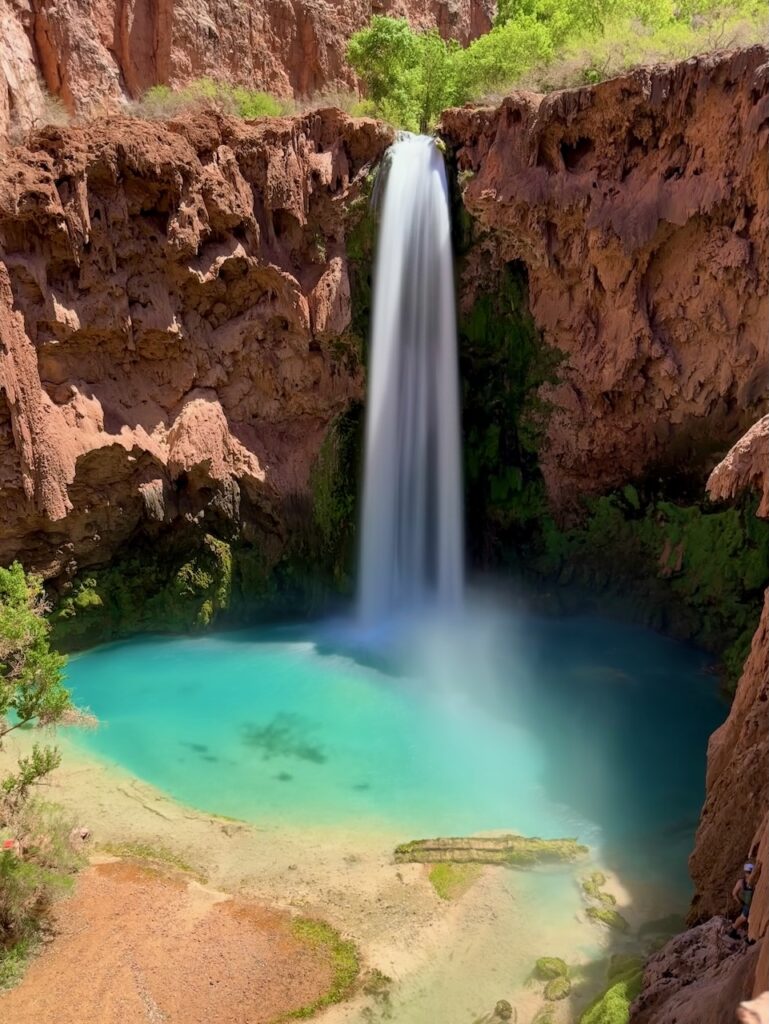
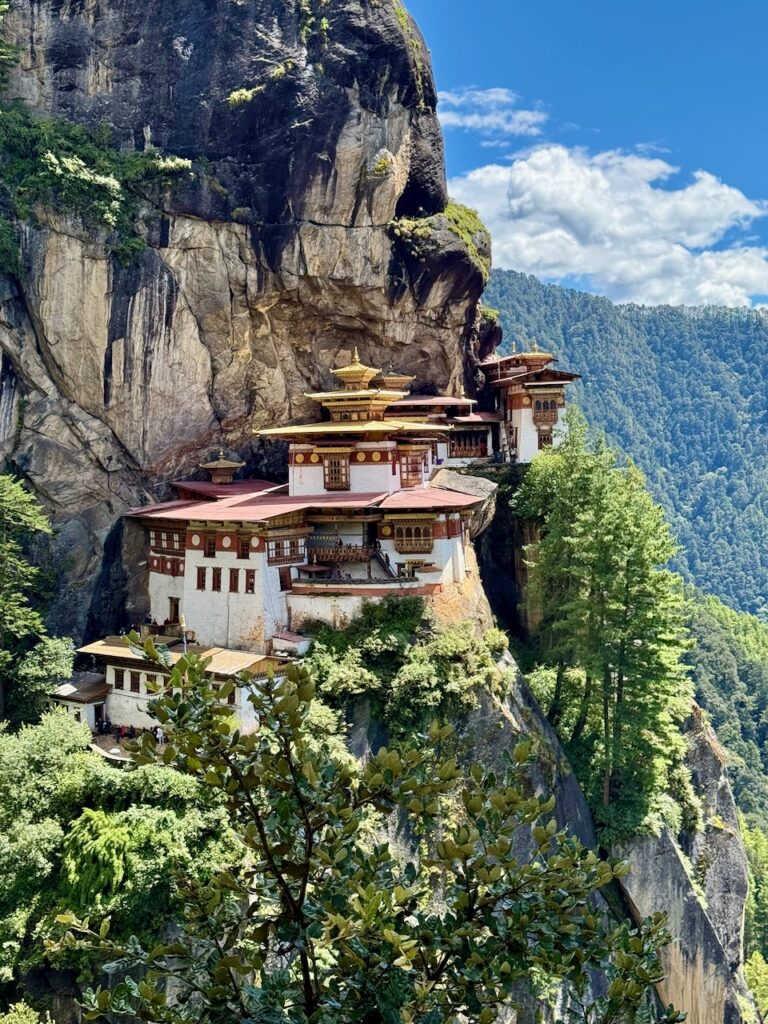
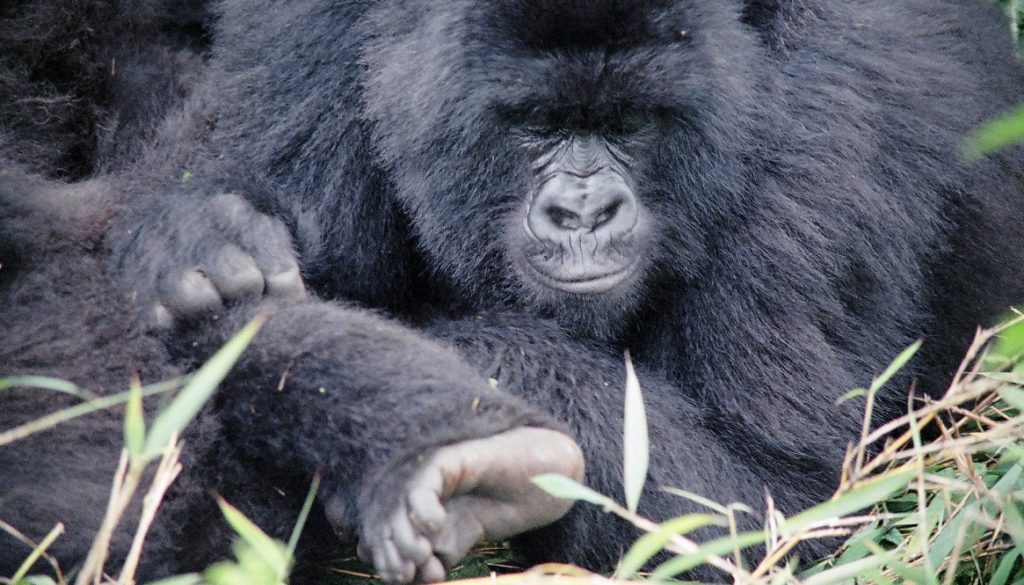
At Havasupai Falls inside the Grand Canyon, heavy demand led to a capped, first-come, first-served permit system rather than relocating the Havasupai Tribe. Bhutan charges a Sustainable Development Fee, currently US$100 per person per night, designed to keep tourism “high value, low volume.” The proceeds fund health care, education, and conservation. Rwanda caps mountain gorilla trekking groups at eight visitors per habituated family per day and charges US$1,500 per permit, a model that has held even as global demand has grown substantially over two decades. Each approach manages pressure through pricing or capacity rather than resettling residents.
What Travelers Planning a Safari Can Do
Most people booking a Ngorongoro safari have no idea any of this is happening. Visitors simply don’t have this information when planning their iconic safari. A few concrete choices can make a real difference, both to the experience and to what a trip supports.
The Best Time to Visit Ngorongoro Crater
Consider the timing of your visit. Peak season, when the thousand-vehicle crater mornings happen, runs roughly June through October. It’s the dry season, and wildlife concentrates around water sources, offering the best visibility. Traveling during the shoulder months, particularly March through May or November, means smaller crowds, often lower rates, and significantly less pressure on the infrastructure. Wildlife viewing remains strong outside peak months, minus the crowds.
Check if Locals Benefit
Ask specific questions before booking: Does the operator employ Maasai guides, and do they compensate them fairly relative to the trip cost? Does any portion of trip revenue return specifically to Maasai communities, beyond standard park fees to the government? Has the company taken any public position on the relocation program, or does it avoid the subject entirely? Is the operator oblivious or considerate about preserving the ecosystem?
Consider Other Safaris
Consider parks beyond the northern circuit’s most famous names. Ngorongoro and the Serengeti draw most northern-circuit tourism, leading to excessive overtourism. Tarangire, known for its elephant herds and baobab-studded landscape; Ruaha, Tanzania’s largest national park and one of its least visited; Nyerere National Park (formerly Selous); and Mikumi, roughly four hours from Dar es Salaam, all offer strong wildlife viewing with a fraction of Ngorongoro’s visitor volume. Spreading demand across Tanzania’s full park system eases pressure on its most crowded sites without compromising the wildlife experience.
Beyond Tanzania, Uganda and Kenya have their own alternatives. Masai Mara Safari has all the Big Five, and Eswatini’s Hlane Royal National Park is home to rare horned rhinos. Southern African countries offer a variety of safari experiences.
Protect the Ecosystem
Expect your guide to follow existing rules. The five-vehicles-per-sighting limit and the crater floor’s vehicle restrictions exist for a reason. A guide who breaks them for a better photo angle is prioritizing your photograph over the ecosystem. If they’re breaking the rule for you, they’re probably doing it for others.
Be the Informed Traveler
Read further before you go. Human Rights Watch’s full report [1], the Oakland Institute’s documentation [2], and ongoing coverage from outlets tracking this story closely are all publicly available for anyone who wants the fuller picture before their trip touches this region.
Common Questions About Visiting Ngorongoro
Is Ngorongoro Crater overcrowded?
Yes. More than 1,000 safari vehicles descend into the crater on a single peak-season day, and the region is on track to welcome over a million visitors annually. Tanzania already caps vehicles per sighting on paper, but enforcement on the ground is inconsistent.
What is the best time to visit Ngorongoro Crater?
Peak season runs roughly June through October, when crowds and vehicle traffic are heaviest. Traveling during shoulder months, particularly March through May or November, means significantly smaller crowds, often lower rates, and strong wildlife viewing.
Is it ethical to visit Ngorongoro right now?
There’s no simple answer. Tourism revenue funds a government program tied to Maasai displacement, but responsible operators, thoughtful timing, and informed travelers can meaningfully shift where that money goes and what it supports. Visiting with awareness matters more than avoiding it entirely.
Why is Ngorongoro controversial?
Tanzania is relocating tens of thousands of Maasai residents from the conservation area, officially calling it voluntary. Independent reviews, including the government’s own, describe coercion, suffocation, and broken promises. Meanwhile, tourism, not the Maasai population, has driven much of the pressure on the ecosystem
The Real Question
Whatever Ngorongoro can or cannot sustain was never going to be decided by the Maasai population. It is being decided by whose growth counts as a threat and whose counts as progress. Instead, it depends on whether safari-goers understand enough about what the visit supports to ask better questions before they go.
Three forces are still colliding here: The economic engine keeps growing. The institutions with the power to redirect it keep using the wrong lever. And the native people, the ones who protected this ecosystem for centuries, keep getting crushed by both.
By Tubulu’s account, the zebras already know who kept them safe. It’s a fair question why Tanzania’s government hasn’t reached the same conclusion.
Articles Referenced Above
- Human Rights Watch: It’s Like Killing Culture: Human Rights Impacts of Relocating Tanzania’s Maasai, July 31, 2024
- Oakland Institute: Tanzanian Government Continues Violent Repression of the Maasai in Loliondo Despite Worldwide Condemnation, July 2022
- United Nations Human Rights Office (OHCHR): Tanzania’s Indigenous defenders call for human rights in land conservation, 2026
- Tanzania Daily News: NCAA fetches 693.96bn/- in four years, visitor numbers soar, March 2025
- The Atlantic: This Will Finish Us: How Gulf Princes, the Safari Industry, and Conservation Groups Are Displacing the Maasai From the Last of Their Serengeti Homeland, by Stephanie McCrummen, May 2024. (The NPR Fresh Air interview below covers much of the same reporting for readers without a subscription.)
- NPR Fresh Air: Journalist says a ‘land grab’ in Tanzania is forcing the Maasai off their land, interview with Stephanie McCrummen, April 11, 2024
- The East African: A leap of faith for Maasai, a giant leap for mankind, November 2024. Note: Published by Nation Media Group, which operates under documented press restrictions inside Tanzania and has had its Tanzanian subsidiary’s platforms suspended by regulators for critical coverage. As of March 2026, NMG’s ownership passed to a businessman with close ties to Tanzania’s ruling party.
- Al Jazeera: In Tanzania, the Maasai fight eviction over state conservation plot, June 2022
- BBC Travel: The sites fighting to be removed from the Unesco World Heritage List, June 12, 2026
- The Citizen: 600 more residents relocated from the Ngorongoro Conservation Area.
- The Citizen: Tanzania: Sh16 billion distributed to households relocating from Ngorongoro Conservation Area.
- The Citizen: Ngorongoro relocation flaws exposed as Samia vows action, March 2026
- REDD-Monitor: Why is the World Heritage Committee failing to uphold Indigenous Peoples’ rights in the Ngorongoro Conservation Area? by Chris Lang, July 27, 2026
- European Parliament: Resolution on the situation of the Maasai indigenous people in Tanzania, adopted December 14, 2023, 493 votes to 29
- REDD-Monitor, “Like Apartheid.” Maasai in Ngorongoro Conservation Area protest against forced evictions and loss of basic rights, August 2024.
- Pulitzer Center, Tanzania’s Maasai People Facing Government Pressure to Leave.
- Thomson Reuters Foundation (Context): Tanzania’s Maasai protest eviction in the name of conservation, by Kim Harrisberg, August 2024
- Kashwan, P. (2017), cited via a peer-reviewed review in World Development, “Cornered by PAs: Adopting rights-based approaches to enable cost-effective conservation and climate action“. Note: The figure (250,000 people, 15 countries, 1990-2014) is being cited as reported by this secondary academic source. The original 2017 Kashwan analysis was not independently accessed for this piece.
- Southern & East African Tourism Update, “Can conservation and community co-exist in Ngorongoro?“, by Harriet Akinyi, July 2026
- Daily News, “NCAA sets new tourists, revenue records,” February 2024
- UN Human Rights Office (OHCHR), Tanzania: Maasai Indigenous Peoples face forced evictions, law enforcement abuses, UN committee warns, 28 August 2026
- Pan African Lawyers Union, East African Court of Justice Delivers Judgment on Loliondo Case, October 3, 2022.
Research and drafting for this piece were assisted by Claude; all reporting, sourcing decisions, and interviews were conducted by Jyoti Baid.
Last Updated on September 2, 2026 by Jyoti Baid