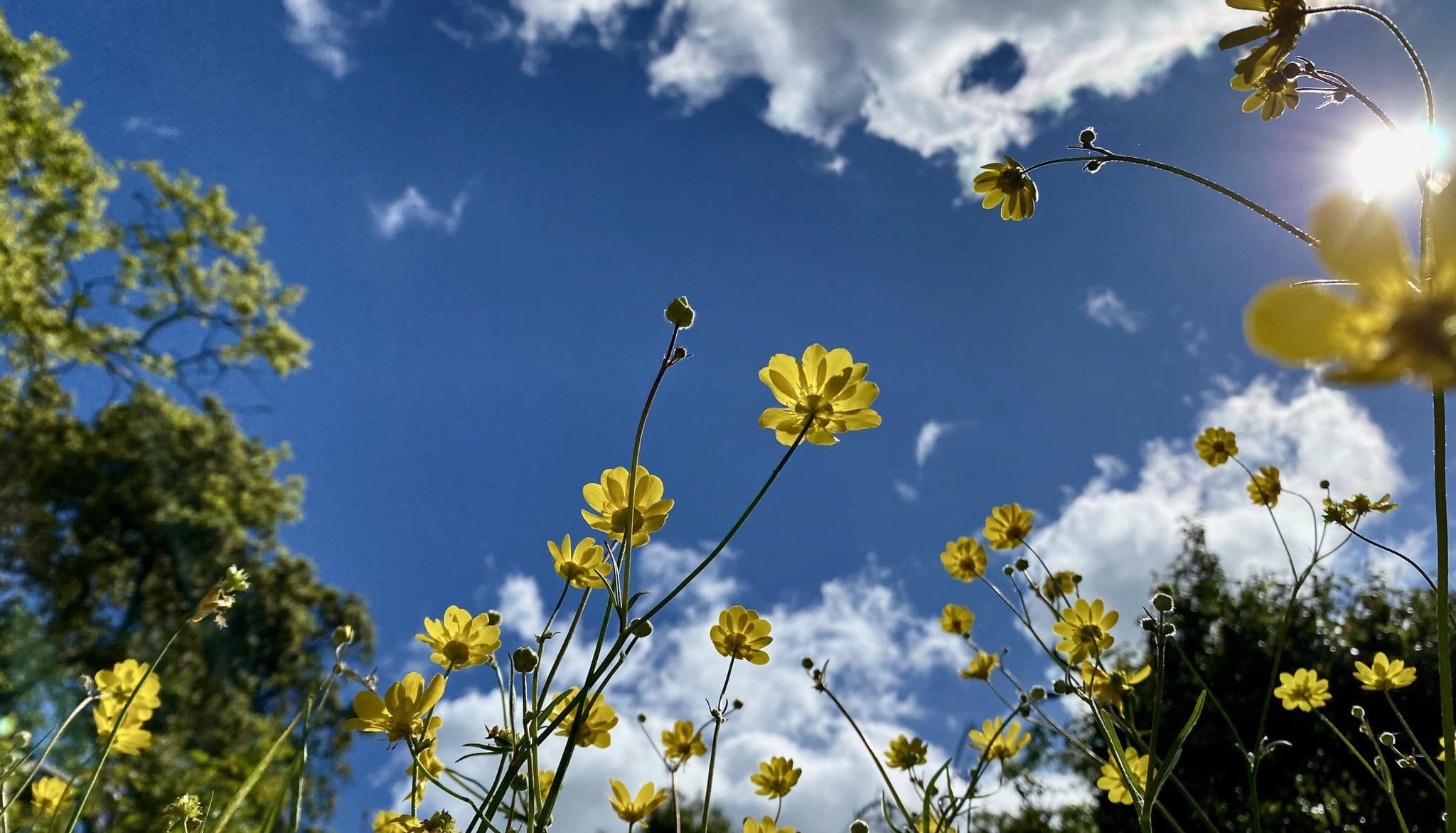
We headed to California’s Central Coast for a slow road trip to see California wildflowers in full bloom. But we found so much more! A bobcat up close, sea otters goofing around, elephant seal weanlings learning to swim, and sand dunes that glowed like the Sahara at sunset. No wonder this stretch of coast keeps pulling us back.
From our home in the San Francisco Bay Area, the coastline is just a few short hours’ drive. In spring, it’s a beautiful drive with rolling green hills and quintessentially Californian fruit farms loaded with pink and white blossom the entire way. I can’t even count how many times we’ve driven this way, and yet every time, it wows us, and fills us with gratitude.
This trip was Nirmal’s idea. He had been watching the wildflower reports for weeks. California had a wet January and February, and the bloom at Carrizo Plain was shaping up to be one of the better ones in recent years.
The flowers were there. They were beautiful. But they were not the only story.
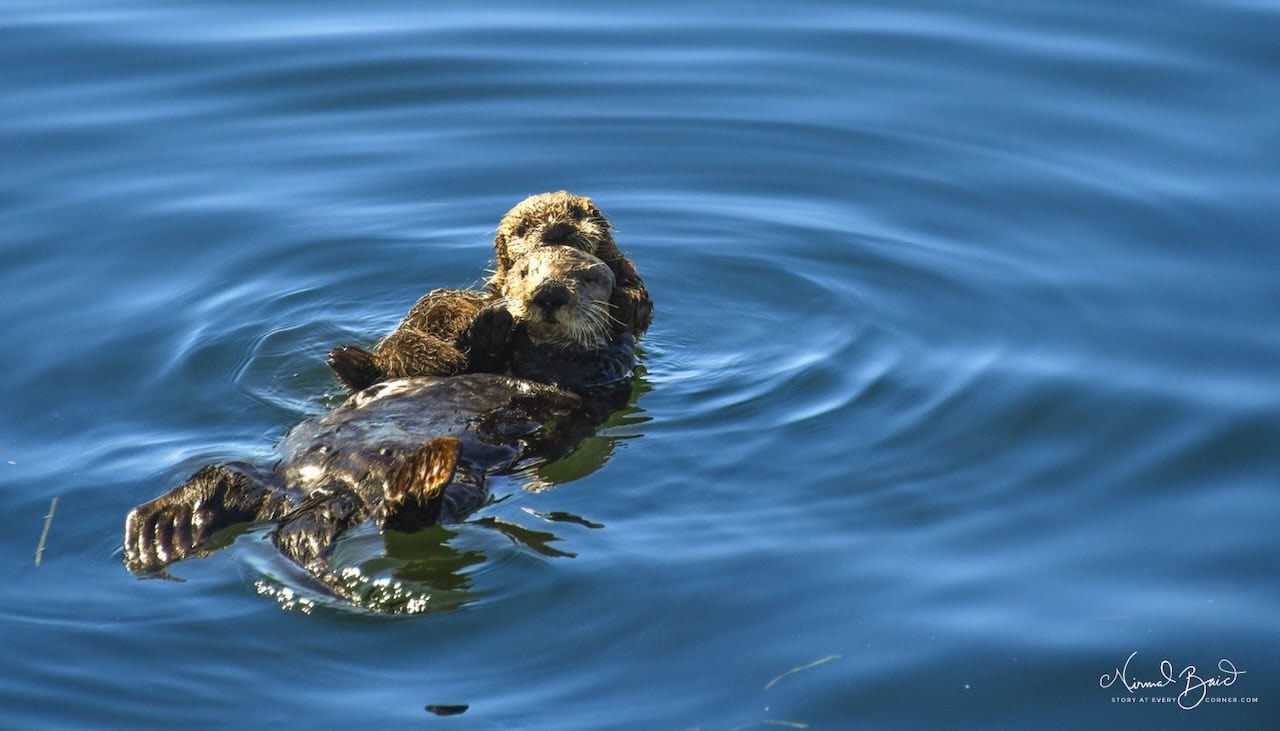
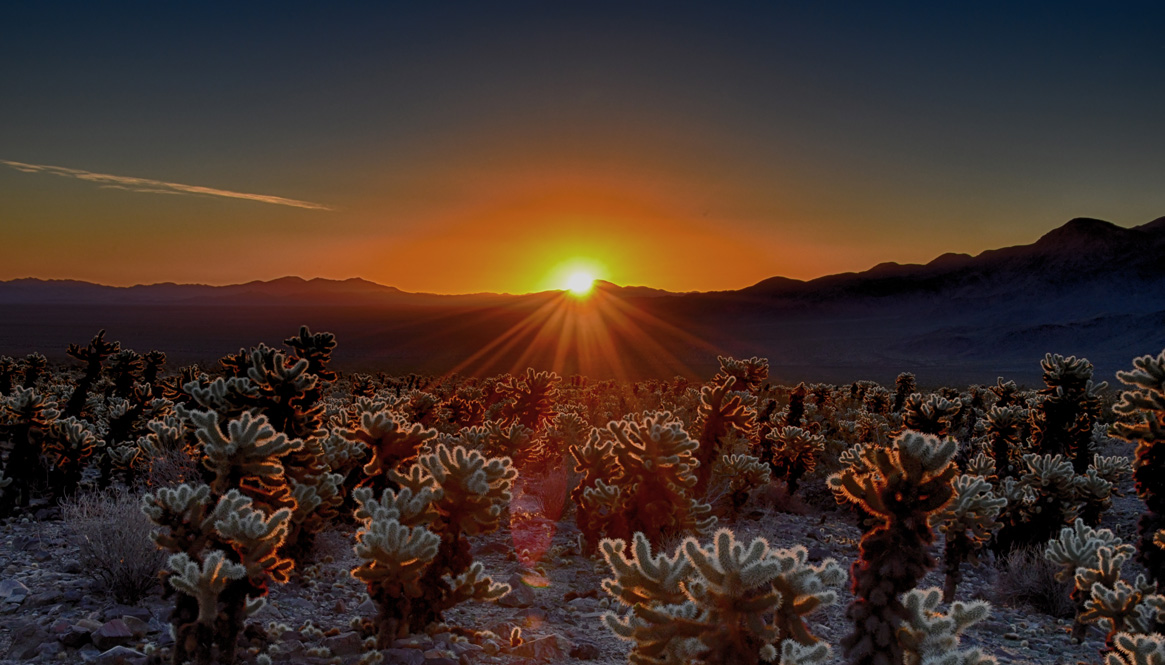
The story was a bobcat crouching five feet from the trail at Montaña de Oro, watching us with complete calm. It was a sea otter mommy-and-baby pair napping in Morro Bay, entirely unbothered by the world. It was the Oceano Dunes turning deep orange at sunset, with the blue Pacific Ocean as a backdrop. It was standing on a beach at San Simeon, watching young elephant seals practice their first swim, knowing that in a few weeks this beach would be completely empty.
The Central Coast keeps its own calendar. Come in any season, stay curious, and it will show you things you did not plan for.
Here are a few memories and photos of these special little towns along our very own California Central Coast.
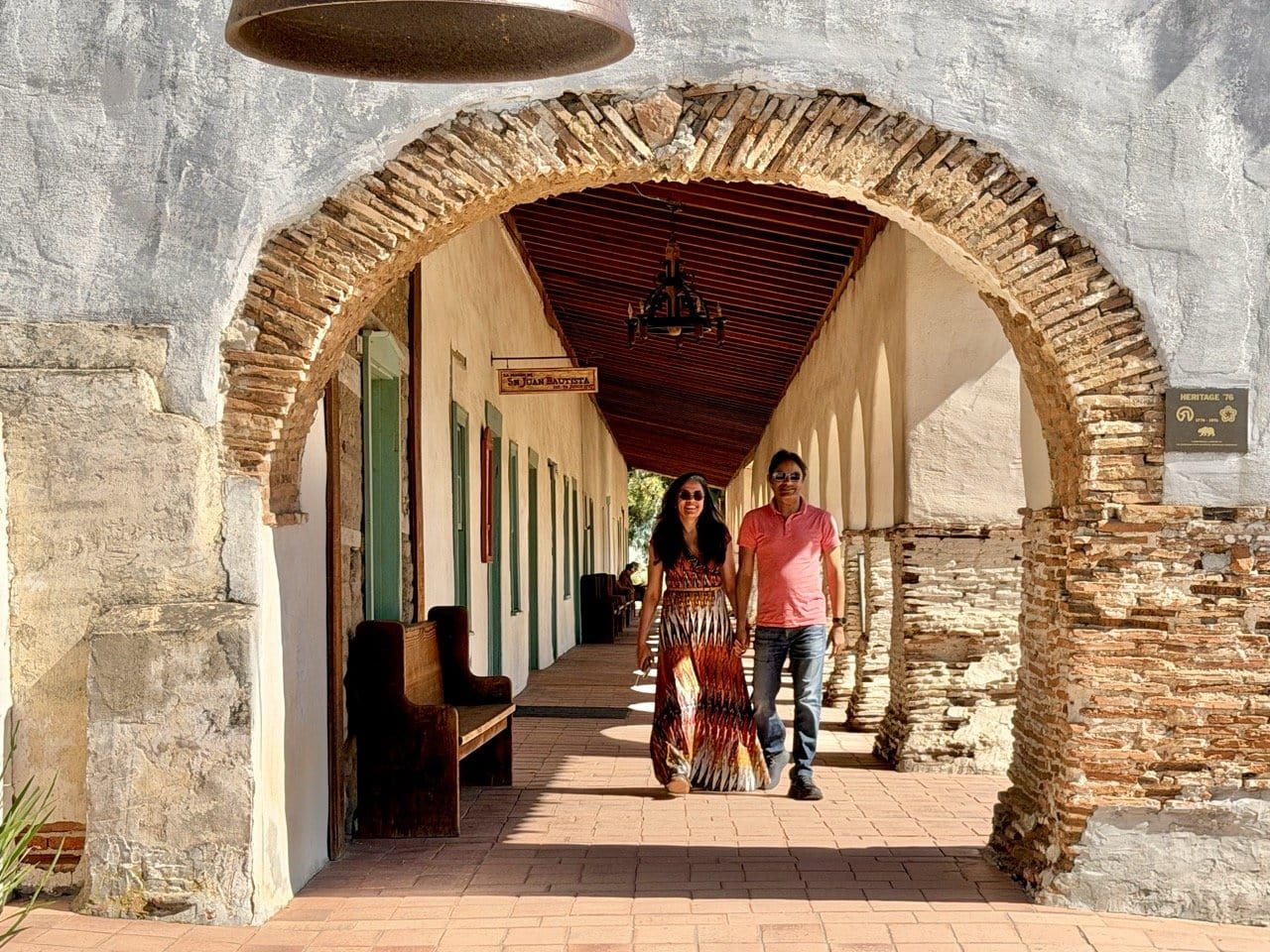
Mission San Juan Bautista
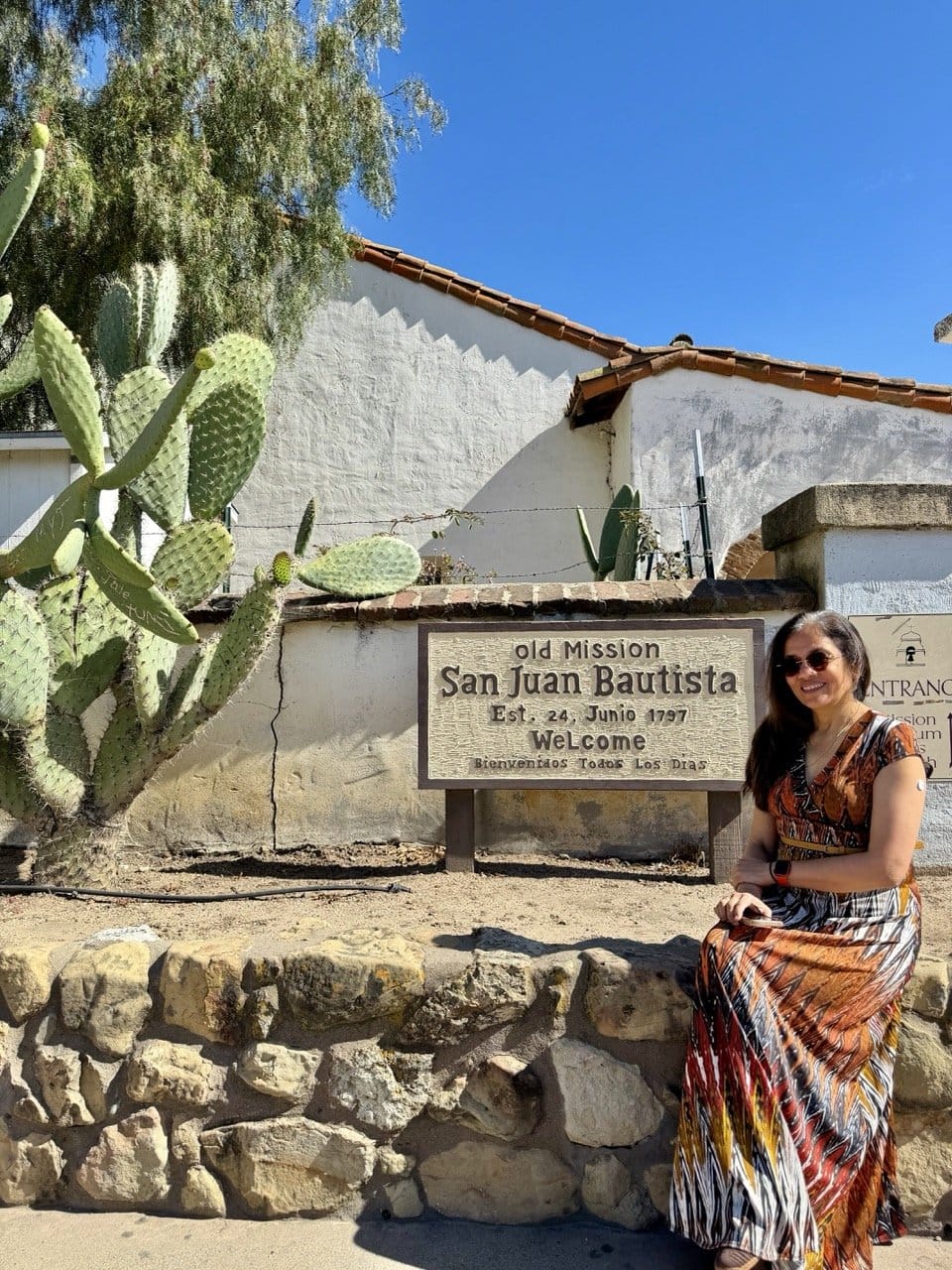
Founded on June 24, 1797, Mission San Juan Bautista holds a rare distinction among California missions: it has been in continuous operation since its founding. The mission sits on a small hill above a historic plaza where time seems to have stood still. The Plaza Hotel, dating back to the 1840s, still faces the green; the old jail and stables are still standing, and the whole scene has the quality of a place that time has largely left alone.
This was our first stop on our drive this Monday morning.
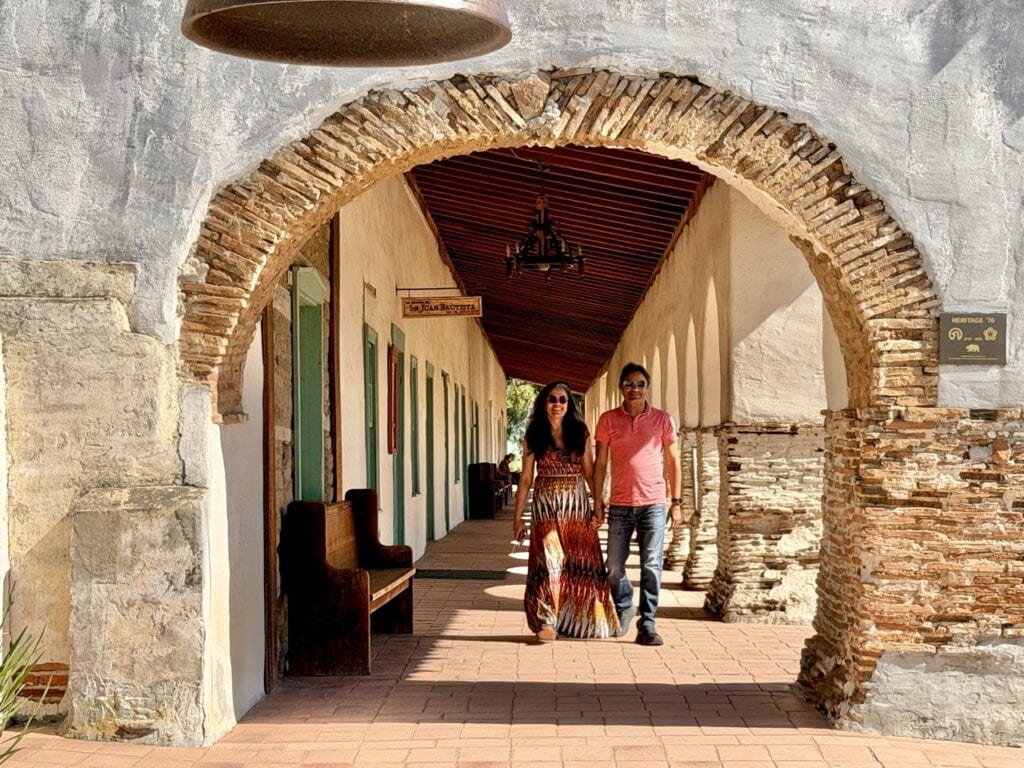
We arrived to find the mission itself closed. The interior is only open Wednesday through Sunday. Google made a mistake on the timings, even though Claude told us up front. But the grounds and the plaza are always free and open, and an hour wandering them is an hour well spent.
The plaza was particularly quiet on a Monday morning, with a handful of other visitors and a resident cat asleep in a patch of sunlight outside the mission door. The friendly groundskeeper started talking to me in Spanish while Nirmal was filming me walking down the stunning archway. I smiled warmly and nodded, so he kept talking. Later, when Nirmal started speaking Spanish, he smiled and switched to fluent English.
Nirmal photographed the stonework while I read the plaques. The missions have a complicated history in California, and San Juan Bautista is fully aware of it. I would usually be sad at the thought of life on these grounds for the many natives. I choose to see beauty in the continuity of the place: the same bells, the same courtyard, the same buildings that the first padres and the Mutsun people who built would have looked out on.
Piedras Blancas Elephant Seal Rookery, San Simeon
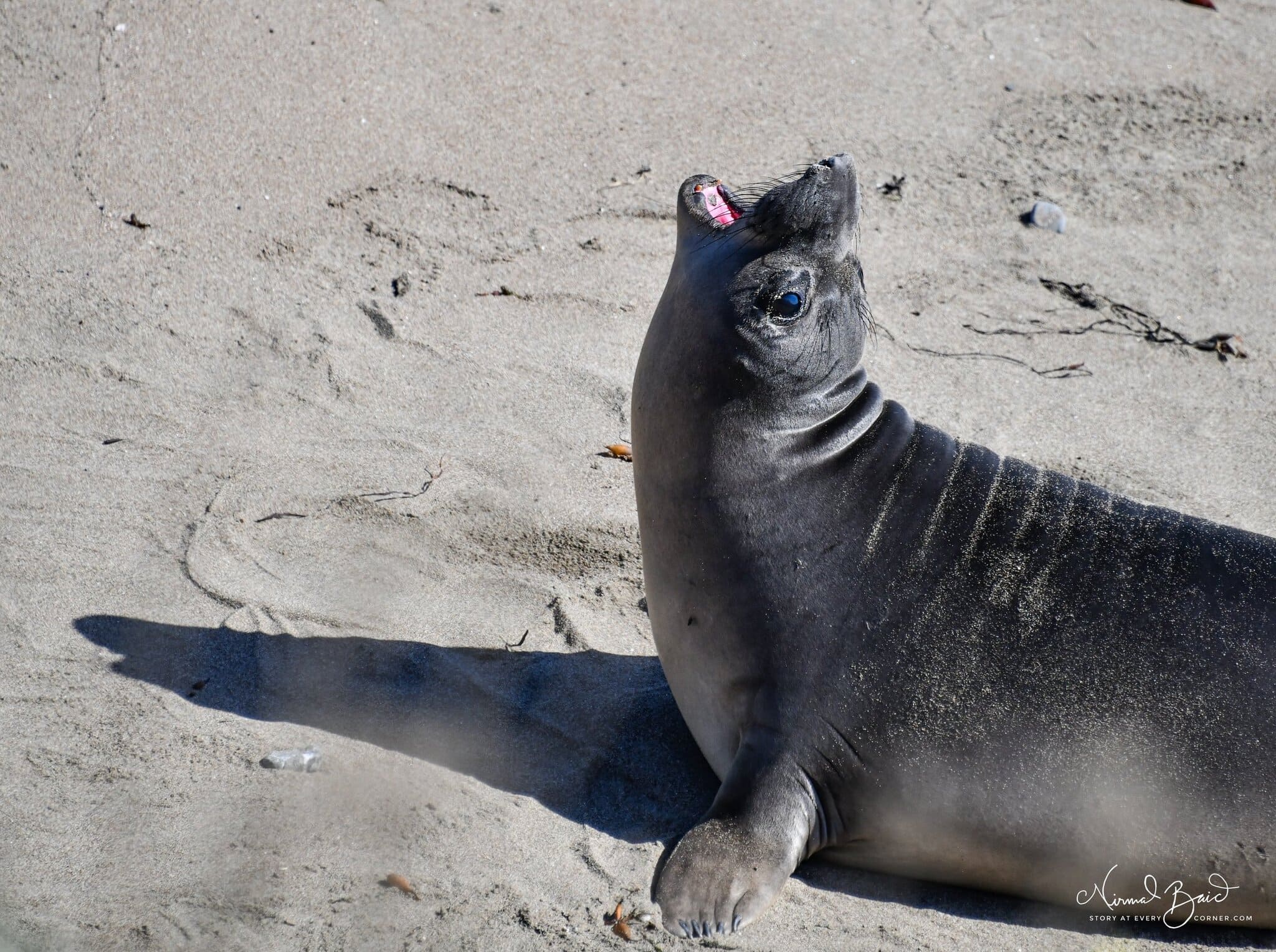
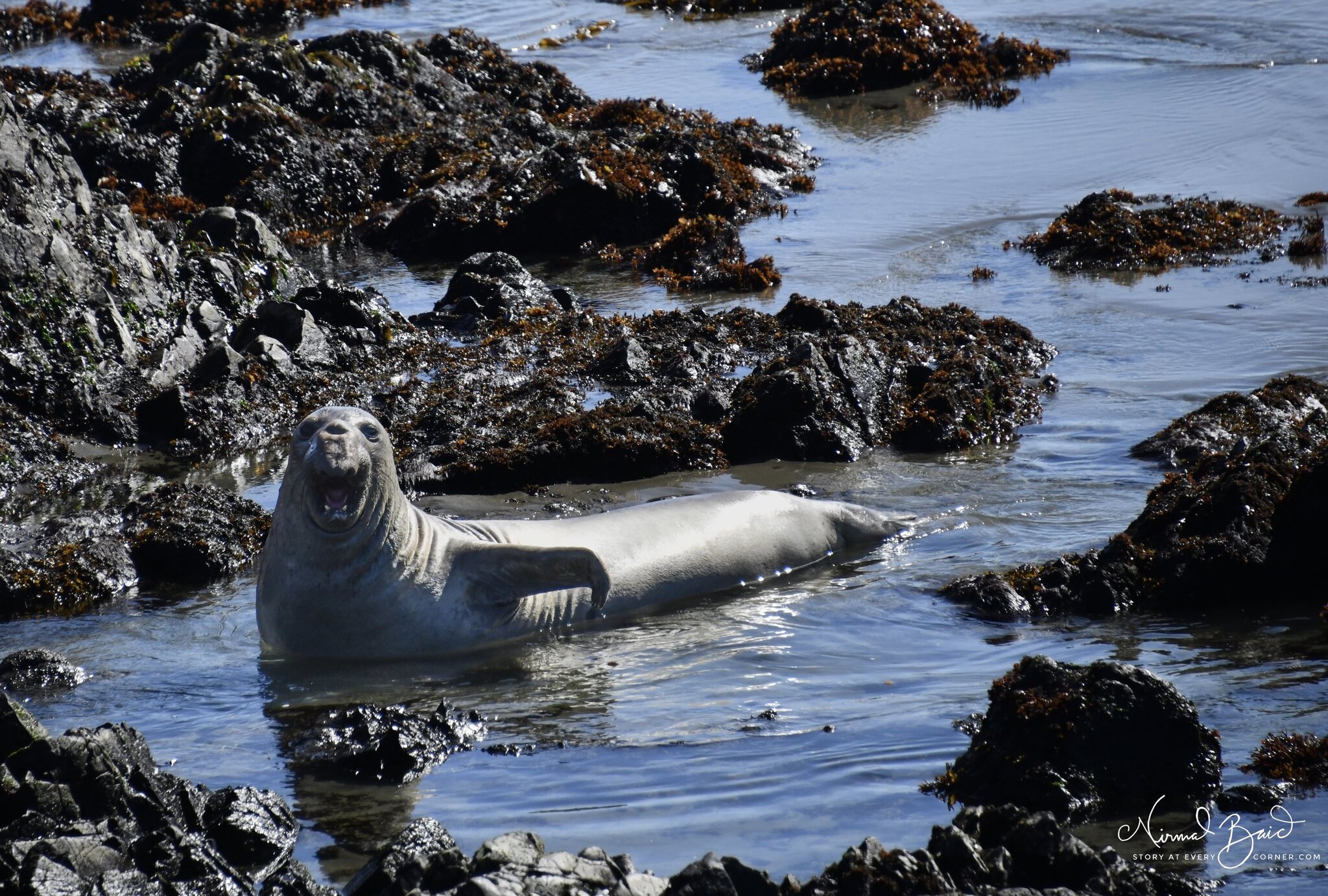
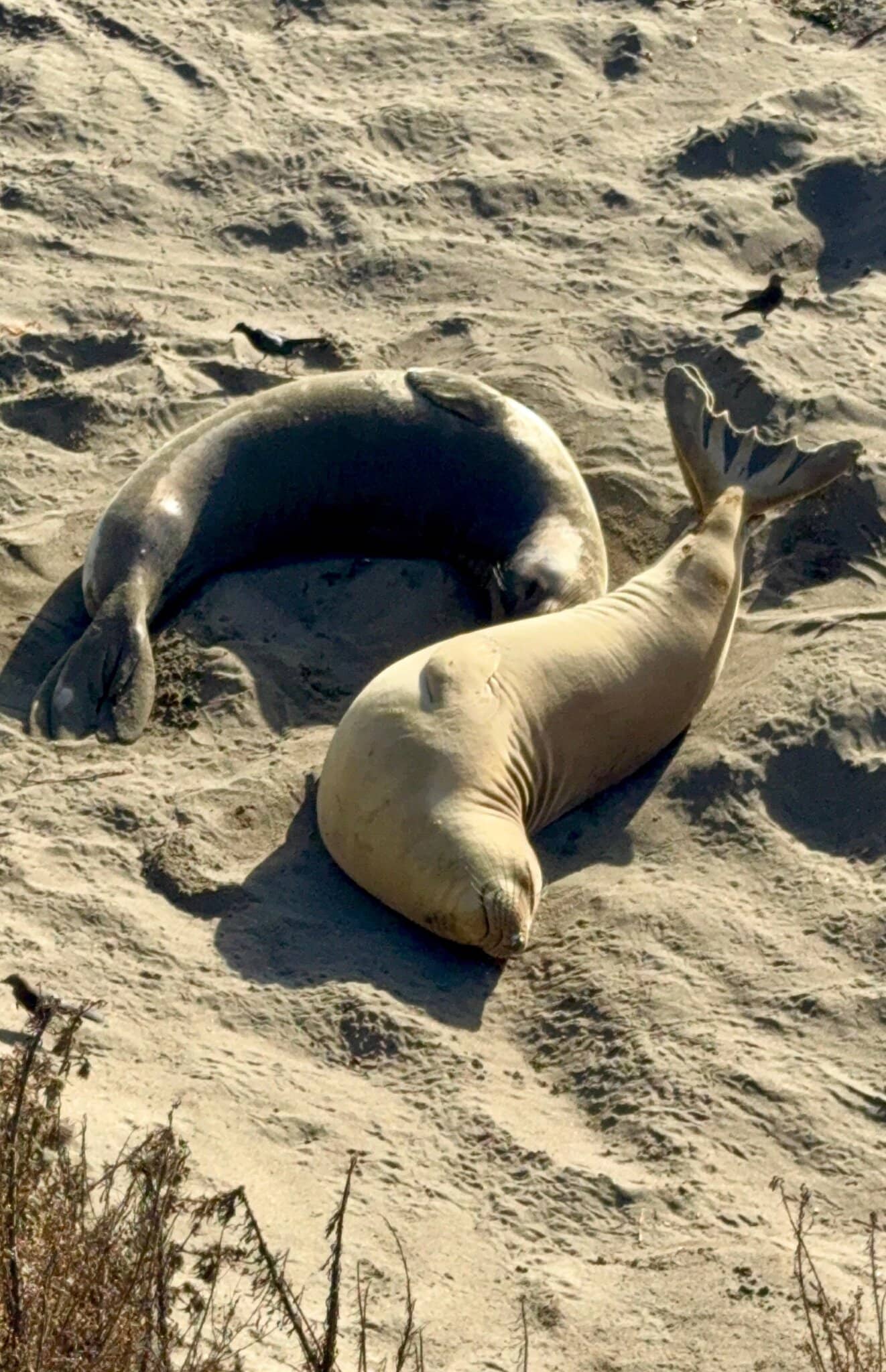
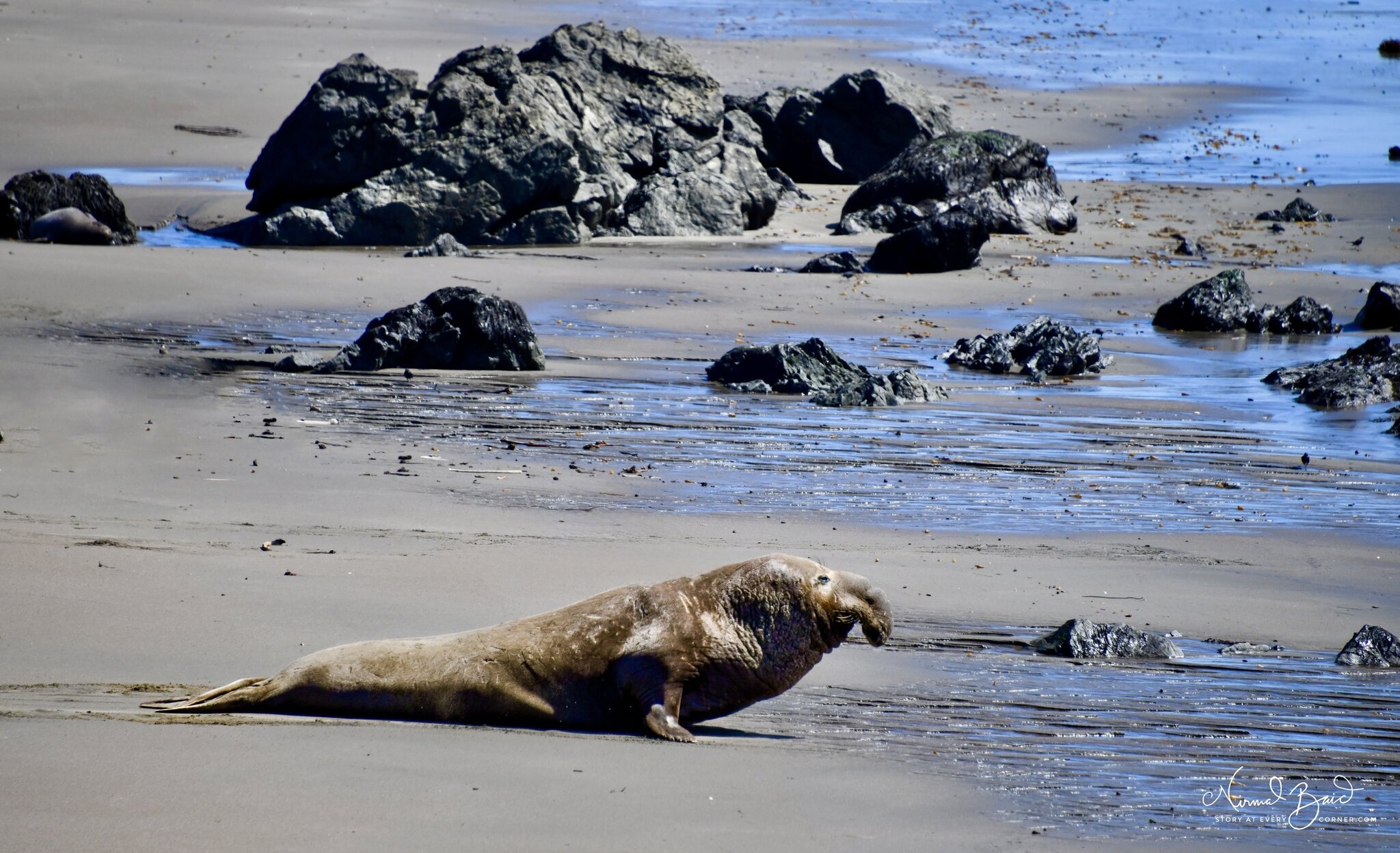
A few miles north of San Simeon on Highway 1, a long stretch of beach hosts one of the most extraordinary wildlife spectacles on the California coast. Northern elephant seals return here every year to give birth, nurse their pups, and molt. The entire life cycle can be observed from a public boardwalk, free of charge. Each season tells a different story. I’ve met visitors from around the world and locals, admiring the rare event.
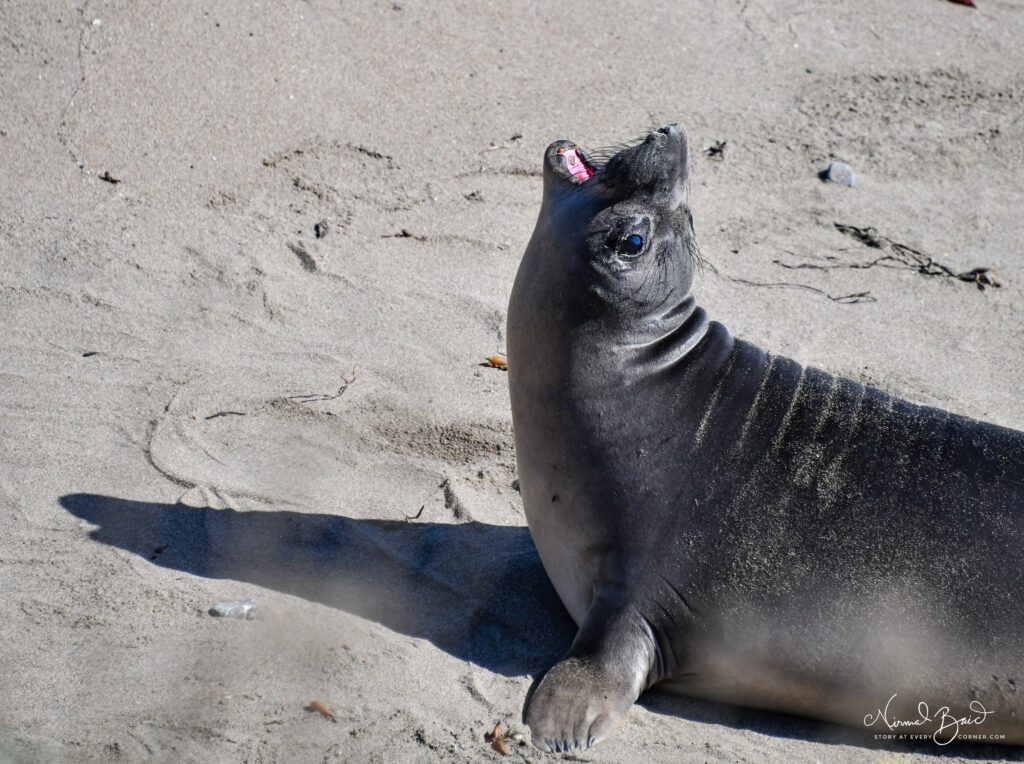
We have visited this rookery twice now, four months apart, and what struck us most was how completely different each visit was.
In December, the beach belonged to the newborns. Adult females had been arriving for weeks, hauling themselves up the sand to give birth within days of landing. The first pup we saw was just a couple of days old, still learning the sound of its mother’s voice, still learning to latch on and nurse. Without the rich, nutritious milk from mommy seal, it has no chance at life. A few large males had already staked out their positions, their size and distinctive inflatable proboscis making them look like something from an entirely different evolutionary era. The air was loud, the beach was crowded, and everything felt urgent.
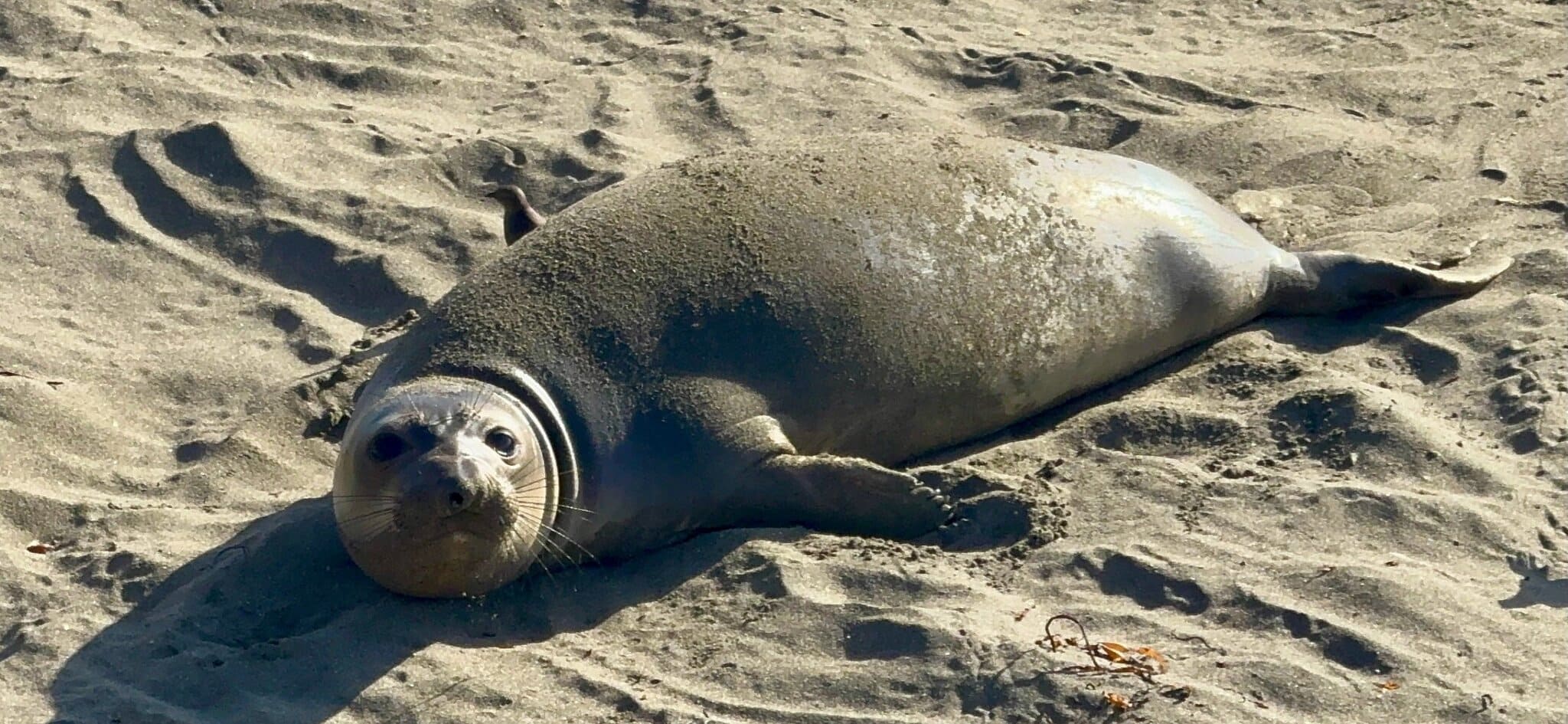
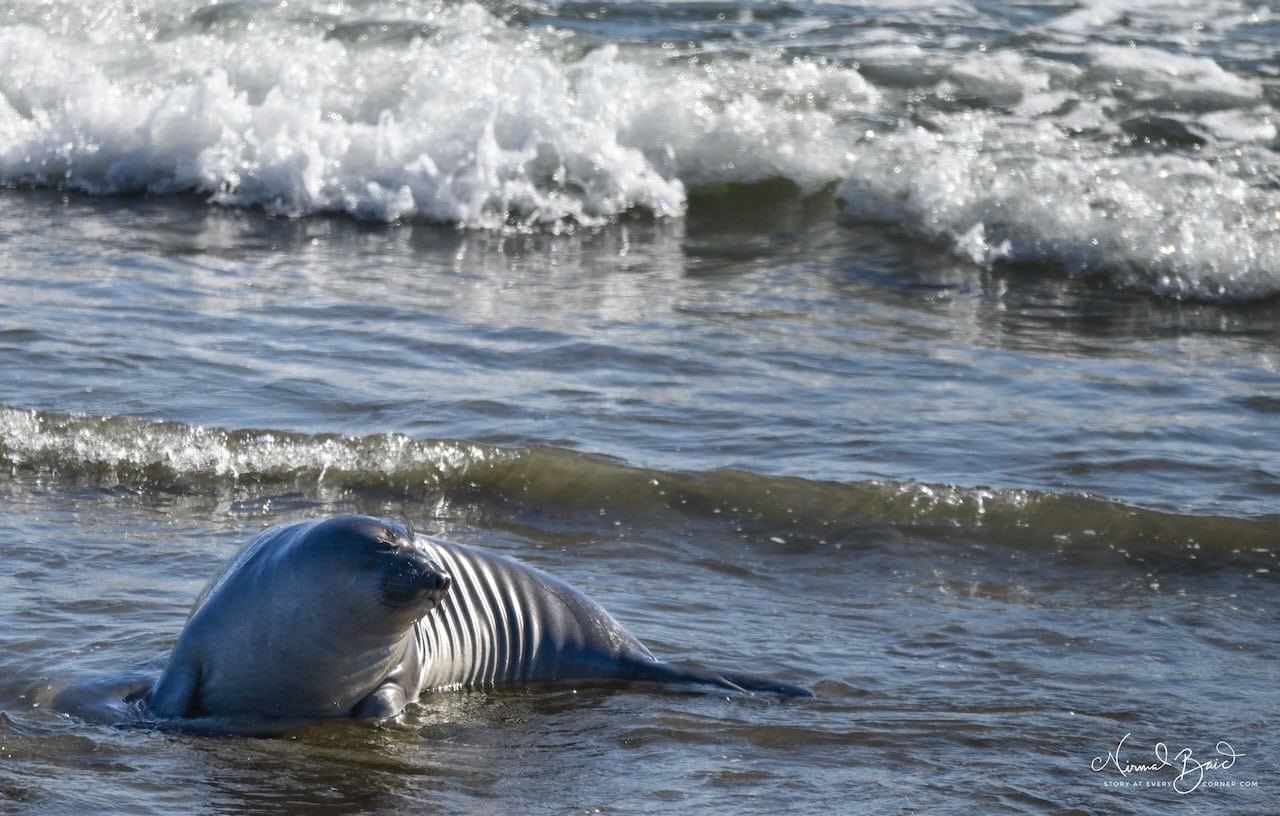
In March, the mood had shifted entirely. Most of the adults were gone. The beach belonged to the weanlings, pups now two or three months old, impressively large from weeks of nursing, suddenly left to work things out for themselves. They were practicing in the shallows, figuring out how to navigate the surf, how to dive, how to be the ocean creatures they were born to be. A few adult males lingered at the edges, waiting for the last female to complete nursing and get ready to mate.
In a few weeks, this beach will be empty. The weanlings will have made their first solo journey north toward Alaska, navigating entirely on instinct, without an adult to follow. They have never been to Alaska. They have never been anywhere. And yet they go. By May, the sand will be blank and the season will be over until the females return in early summer to molt, then vanish again until December.
The raised wooden boardwalk along the entire beach made it possible to see the seals so close without disturbing their rhythm. The volunteer docent was filled with information. He talked about the babies’ rapid growth and sadly pointed to the browned, dead carcass of one that died this season, possibly because it could not latch. As a mother of two, I know the struggle, but we humans have so many more resources. My heart goes out to the baby and the mother who came all the way to San Simeon to give birth.
One detail that surprised us on the drive: across Highway 1, the rolling hills are home to a small herd of zebras. They are descendants of animals brought here by William Randolph Hearst in the early 20th century for his private zoo at nearby Hearst Castle. The herd has survived for generations, now entirely wild. We did not spot them on this visit. Instead, we kept some excitement for next time.
Montaña de Oro State Park
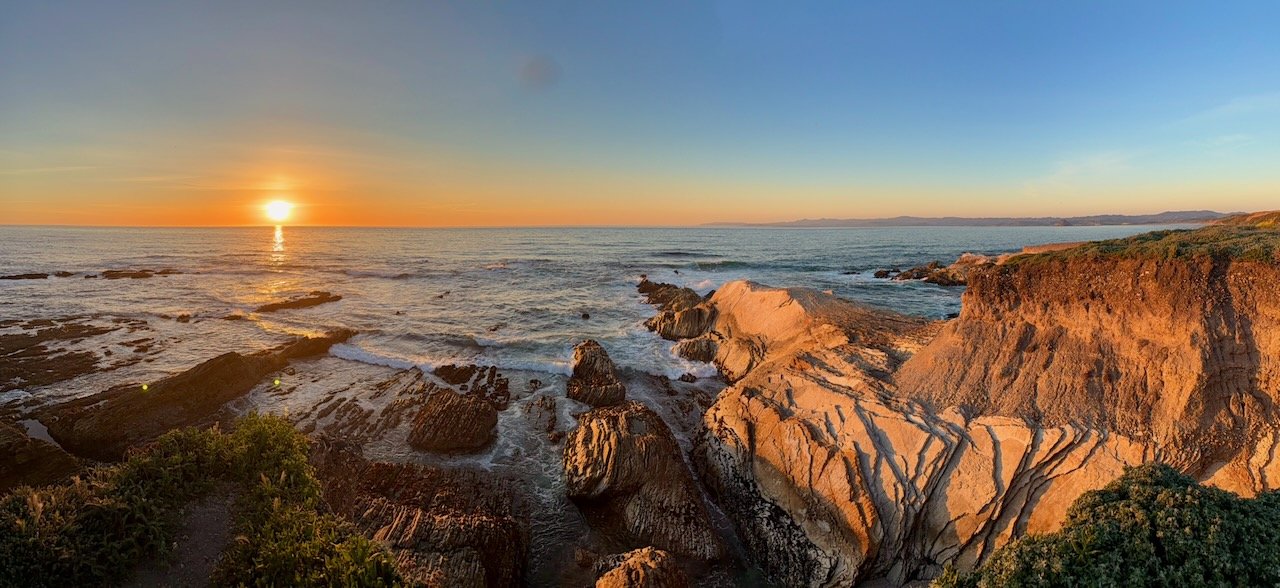
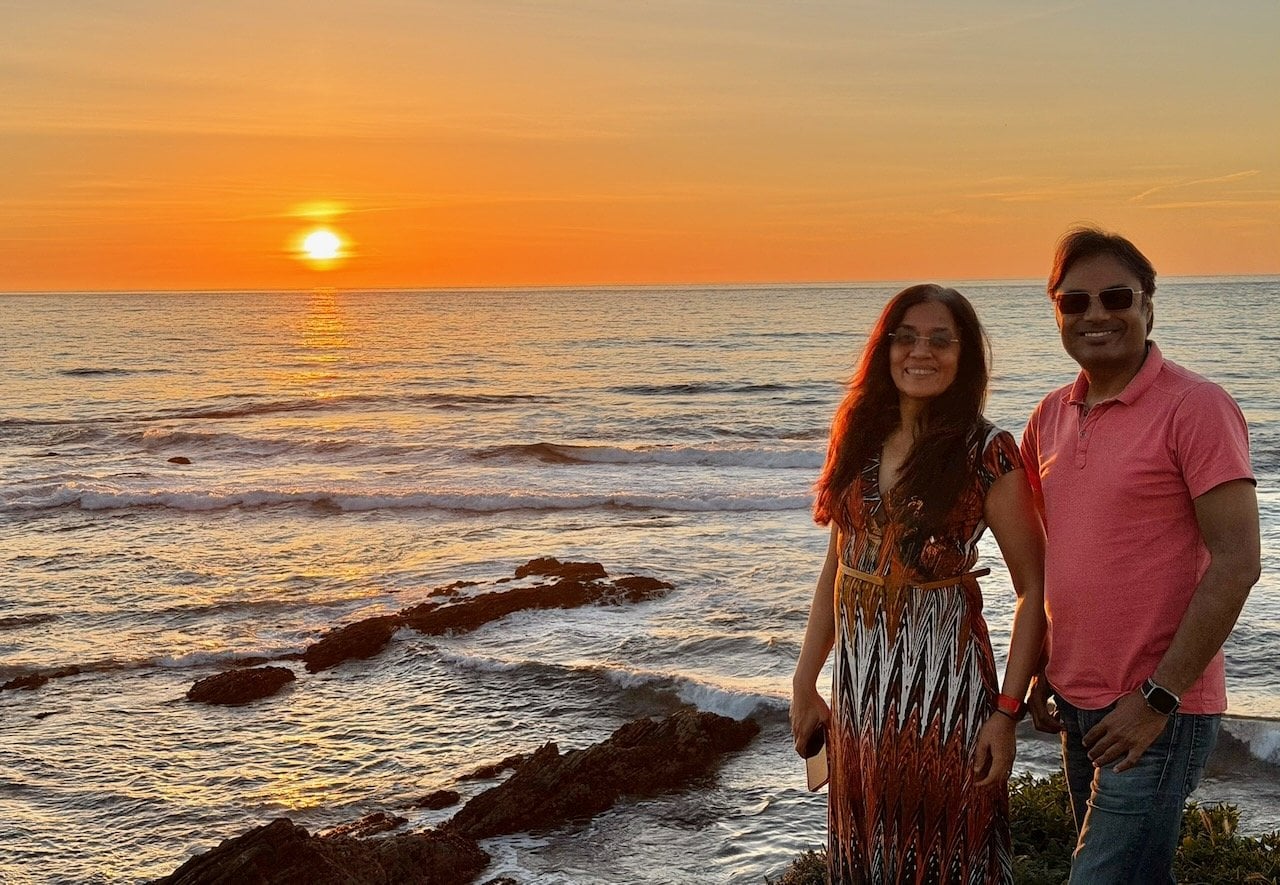
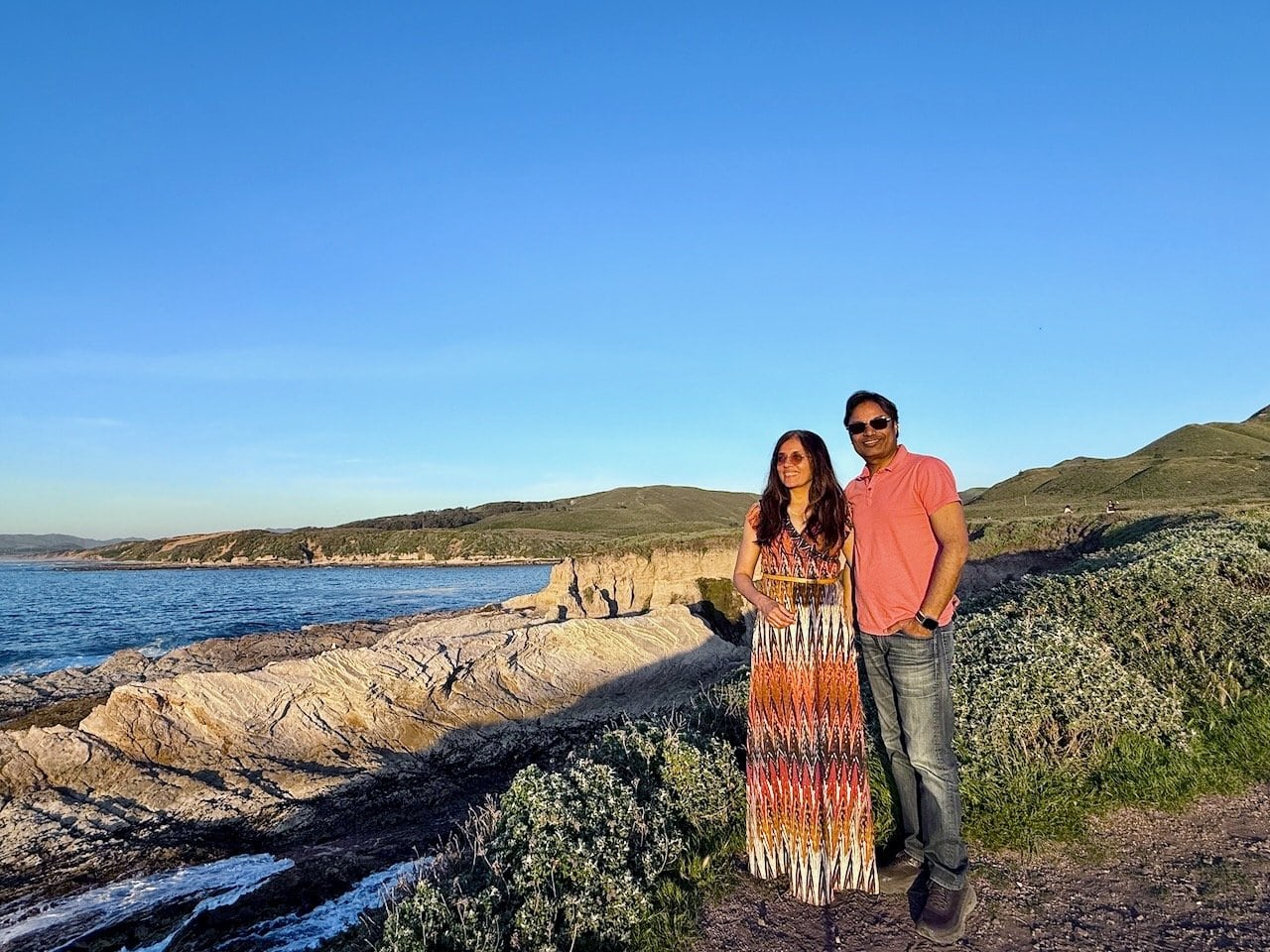
The name ‘Montaña de Oro State Park’ means Mountain of Gold. On an evening when the cliffs catch the last light, you understand it immediately. Montaña de Oro is a sprawling coastal state park near Los Osos, south of Morro Bay, with rugged sea cliffs, bluff trails, and an almost complete absence of crowds even on weekends. There is no entry fee.
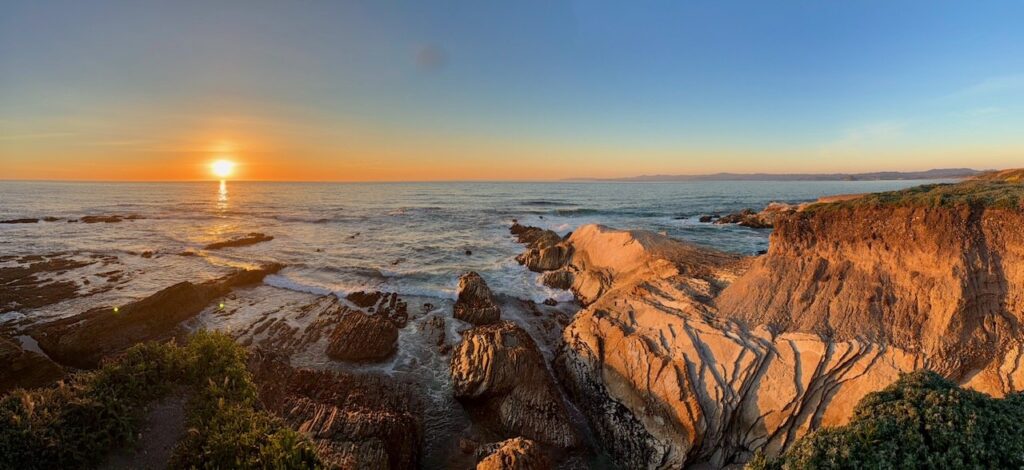
We walked the Bluff Trail. Two easy miles along the clifftops, with the Pacific Ocean fiercely and persistently smashing on the rocks below. The geology here is remarkable up close: the cliffs are layered in colors from cream to rust to deep brown, folded and compressed by millions of years of tectonic movement. In good spring light, they were glowing. These cliffs are home to many species of birds, like Black Oystercatcher, Brandt’s Cormorant, Pelagic Cormorant, Pigeon Guillemot, and Western Gull. Each occupies a different layer of the rock strata.
We were not expecting the wildlife on land.
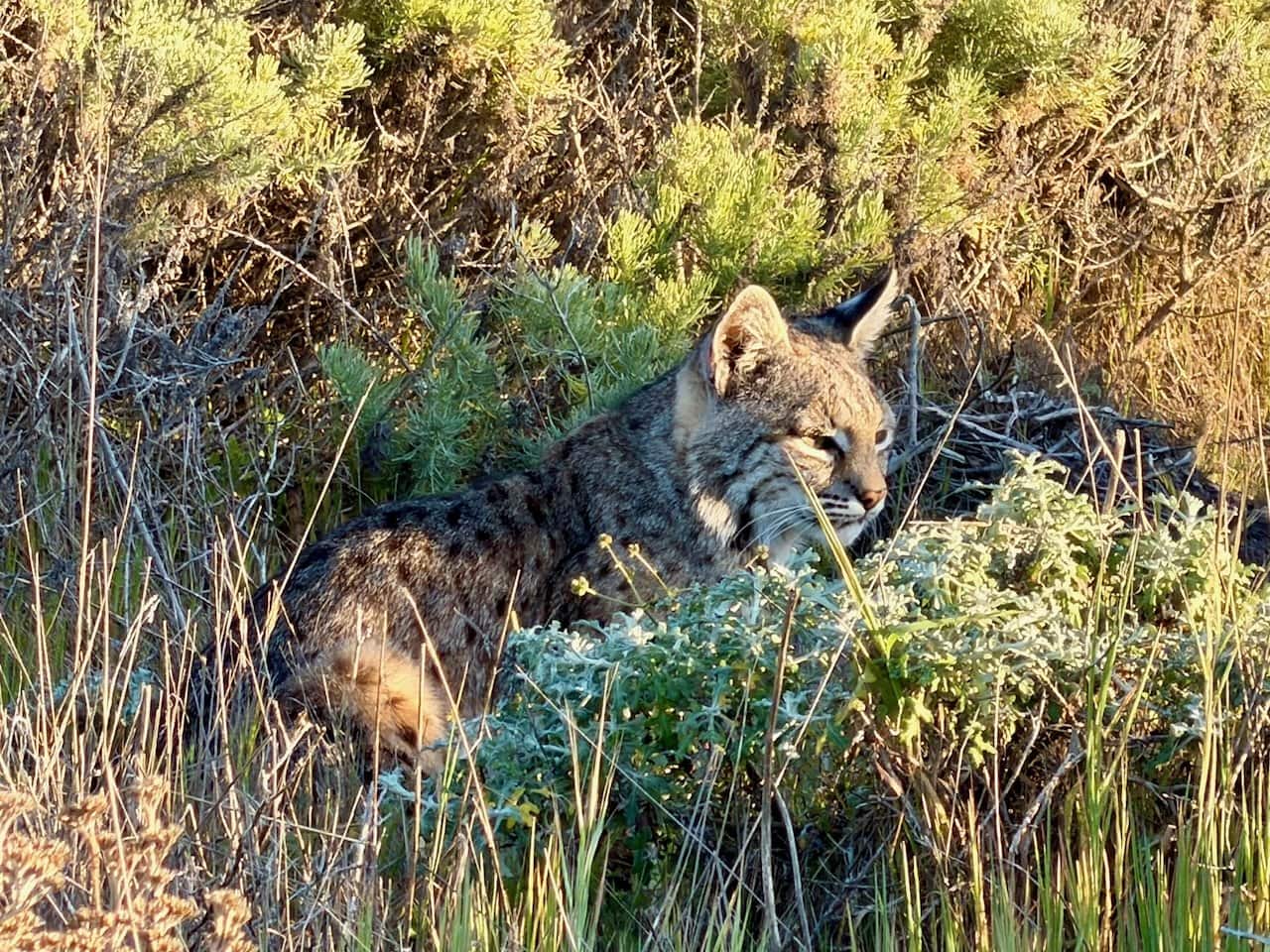
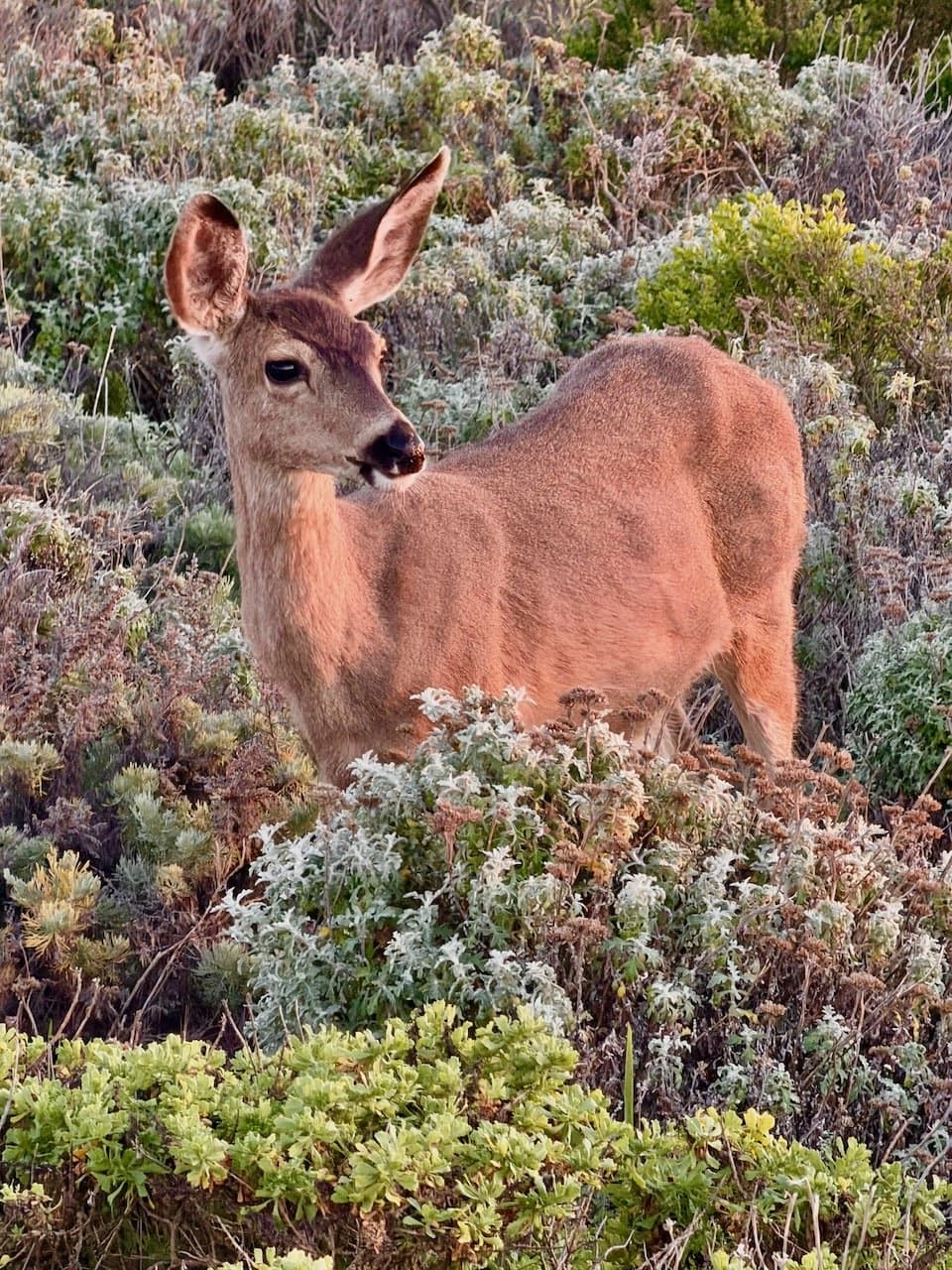
A deer appeared first, standing in the coastal sage just off the trail, close enough that I could see the light in its eyes before it moved on. The deer and three other friends looked at me, locking gaze. And then, a few minutes later, something else entirely.
A bobcat was crouching in a scrub no more than five feet from the path, looking straight at me. I almost missed it. The spotted coat blended so completely into the dried grass and sage that my brain initially processed it as a rock. Then it moved its head, and there was no mistaking what it was. It looked at us with an expression I can only describe as mild professional interest. It held that position for what felt like 15 minutes. Nirmal was also awestruck and gently captured its gaze as it looked up. Then it simply turned and dissolved back into the tall brush.
We stood on the trail for a while after, not quite ready to move on.
Carrizo Plain National Monument
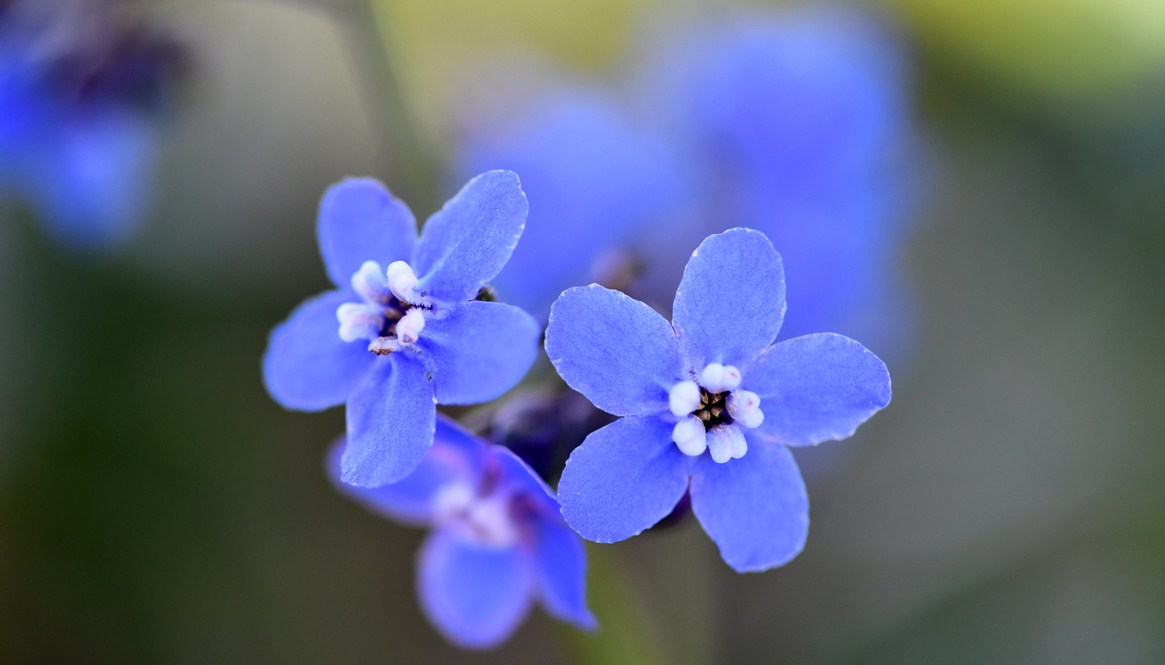
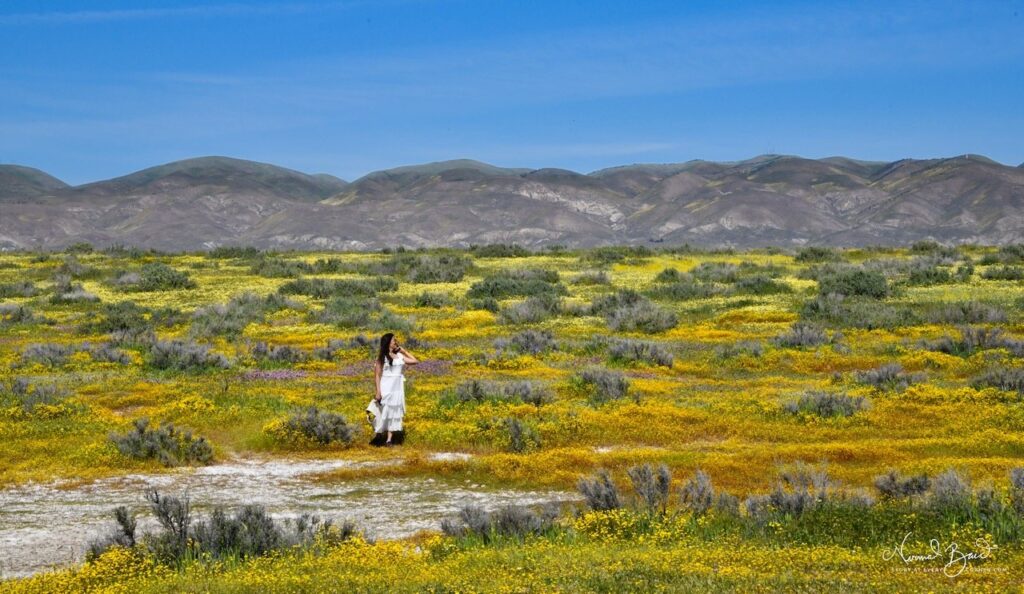
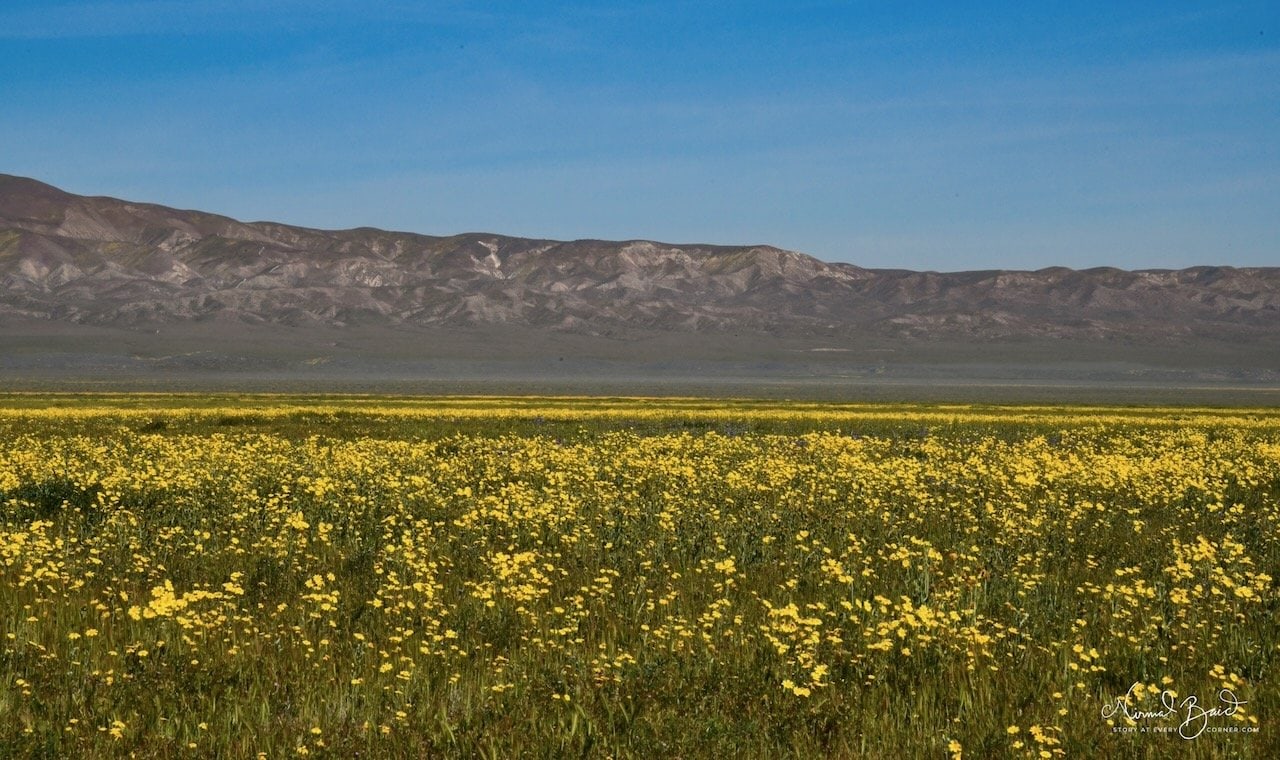
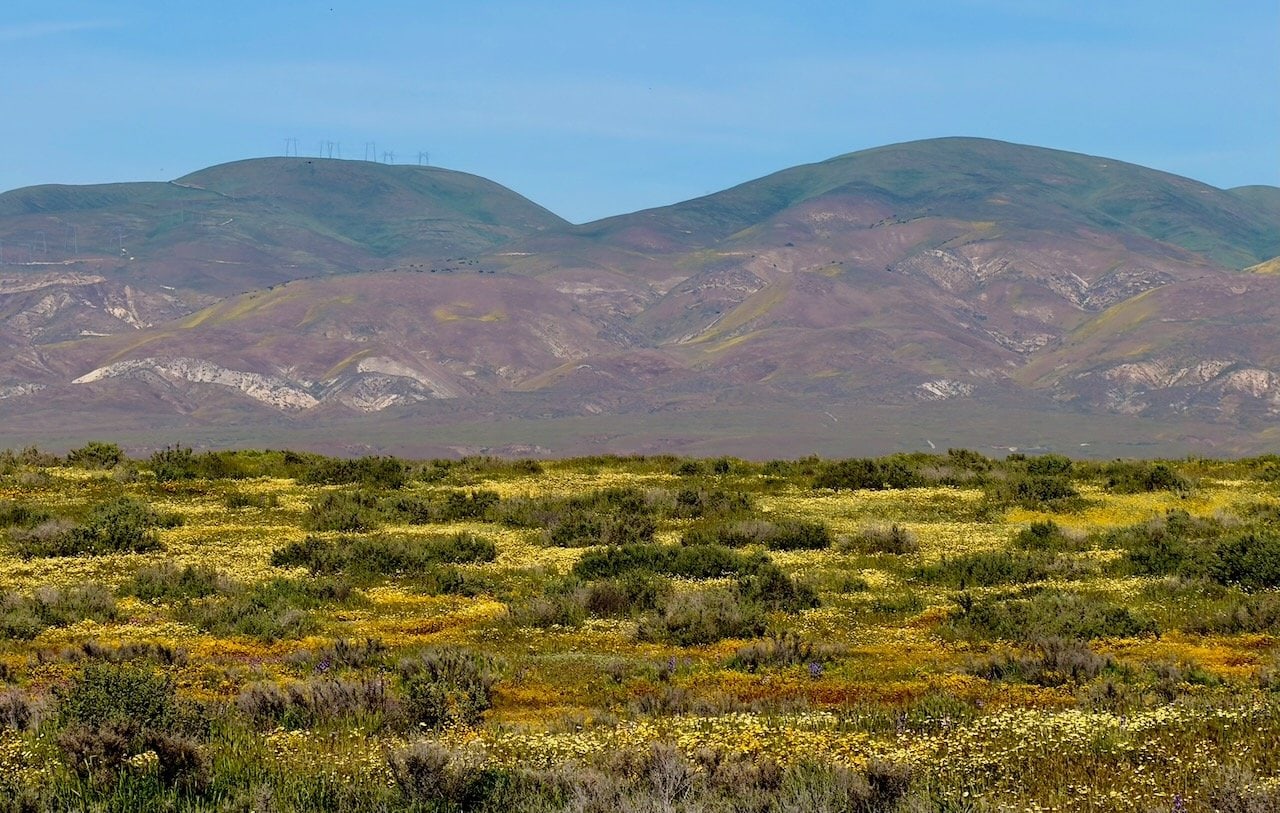
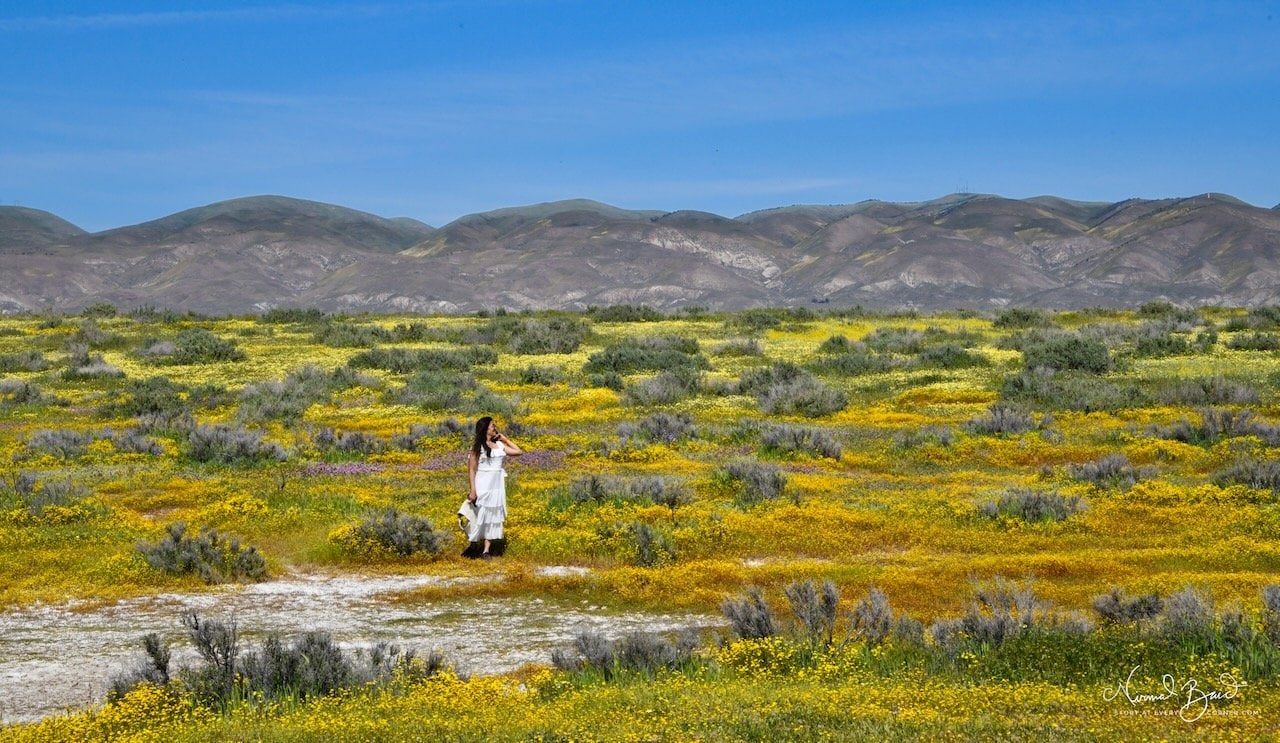
Carrizo Plain is the largest remaining native grassland in California. 250,000 acres of open valley floor ringed by two mountain ranges, remote enough that we lose cell service well before arriving. In a good wildflower year, the valley floor and the slopes of the Temblor Range turn yellow, purple, and orange in sweeping bands of colour that look almost painted. This was a good year.
Getting there requires some planning. The nearest fuel, food, and water are in towns like Santa Margarita or Taft, both over an hour from the monument. The visitor center is only open Thursday through Sunday. The roads are unpaved in many sections. If you are driving an electric vehicle, as we were, charge to the very max and watch the range very carefully.
We loaded up the charge to over 280 miles at the famous Madonna Inn supercharger, for a 70-mile drive to the Goodwin Education Center at Carrizo Plain. The central California heat and slopes at times eat 4 miles for each mile driven. We were losing charge too fast. By the time we reached the visitor center, we had barely 140 miles of charge left, and the afternoon was getting hotter. We tried charging at a nearby house. It was charging at four miles per hour. Four miles per hour! That’s a net negative. We knew we could stop at Soda Lake and make a few stops on the way back, but it would be too risky to go any further.
Our Vipassana practice kicked in. No panic. We made quick decisions and enjoyed the rest of the day. On the way back, we opened the windows, switched off the AC, and arrived with enough power to avoid a charging stop.
A lesson learned about desert driving in an EV: the heat is a variable that matters a lot. Don’t trust the number on the dashboard.
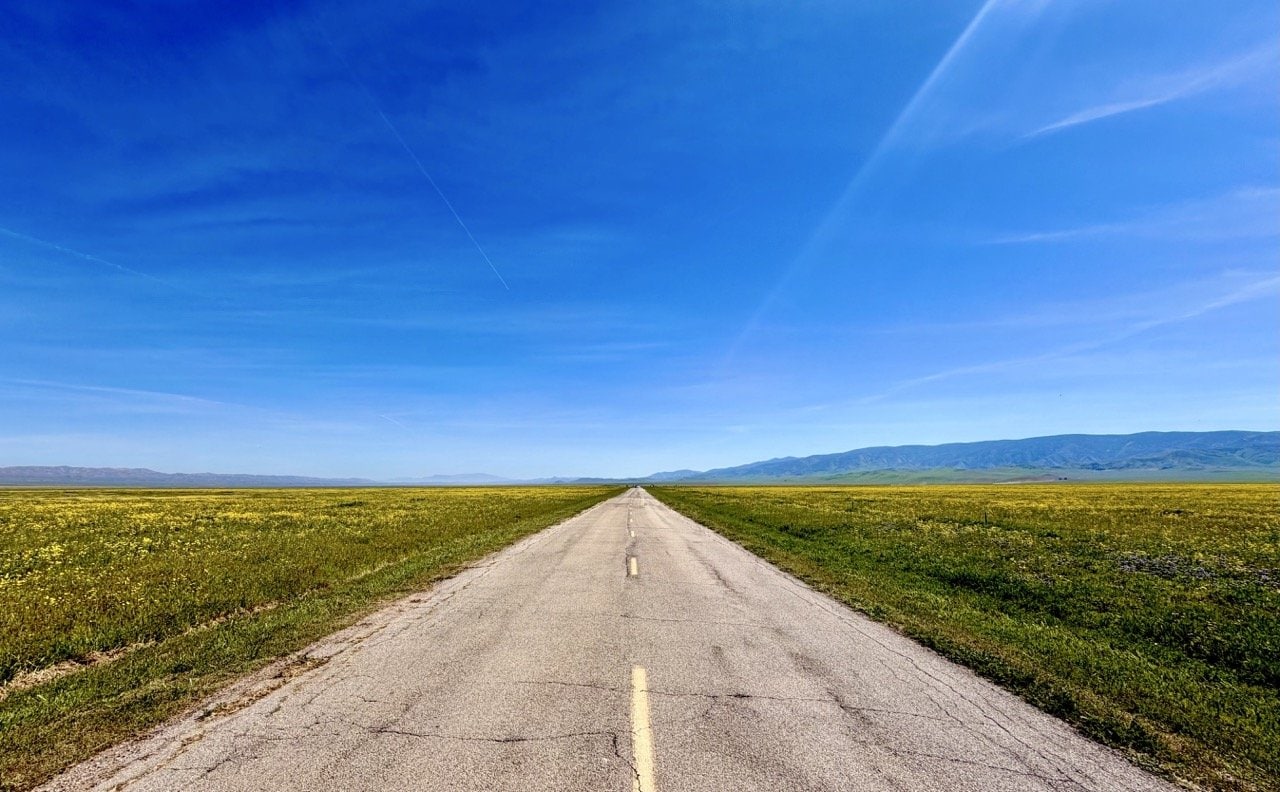
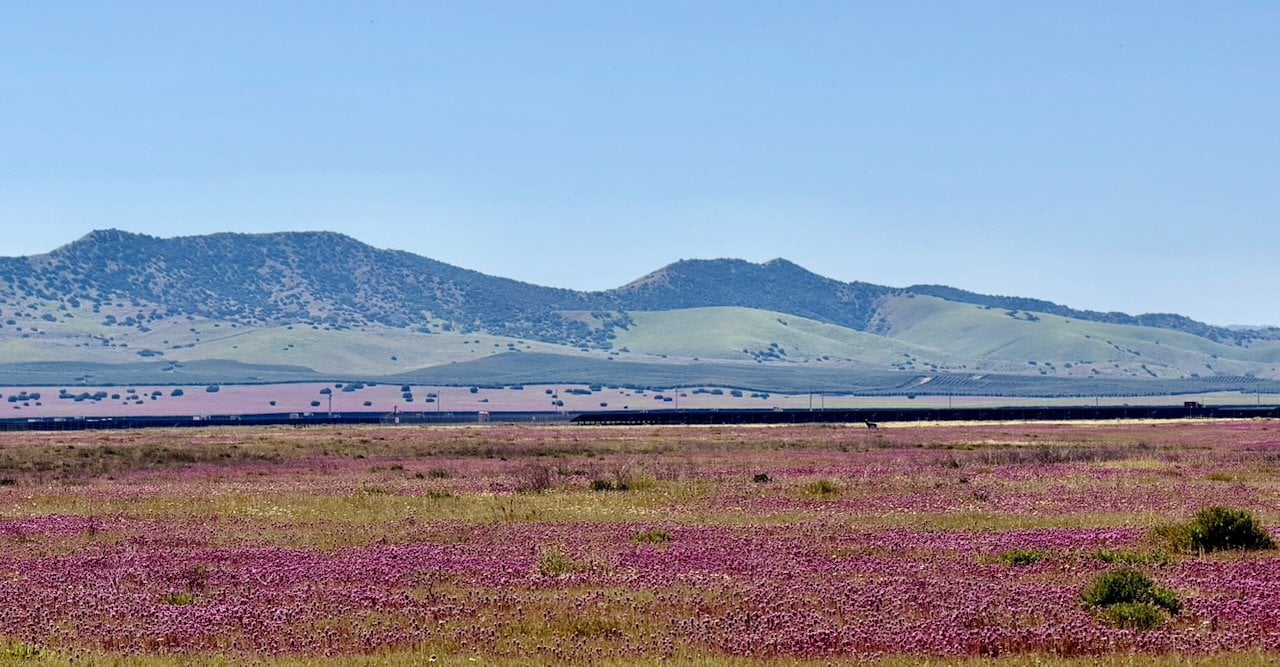
What we did see was beautiful. The valley floor was covered in goldfields and owl’s clover, the Temblor slopes showing broad stripes of yellow and purple. Soda Lake Road runs perfectly straight through the middle of it all, flowers on both sides, mountains at every horizon. On a Tuesday morning, we had nearly all of it to ourselves.
Not a superbloom. But real, and vast, and worth the drive.
Morro Bay
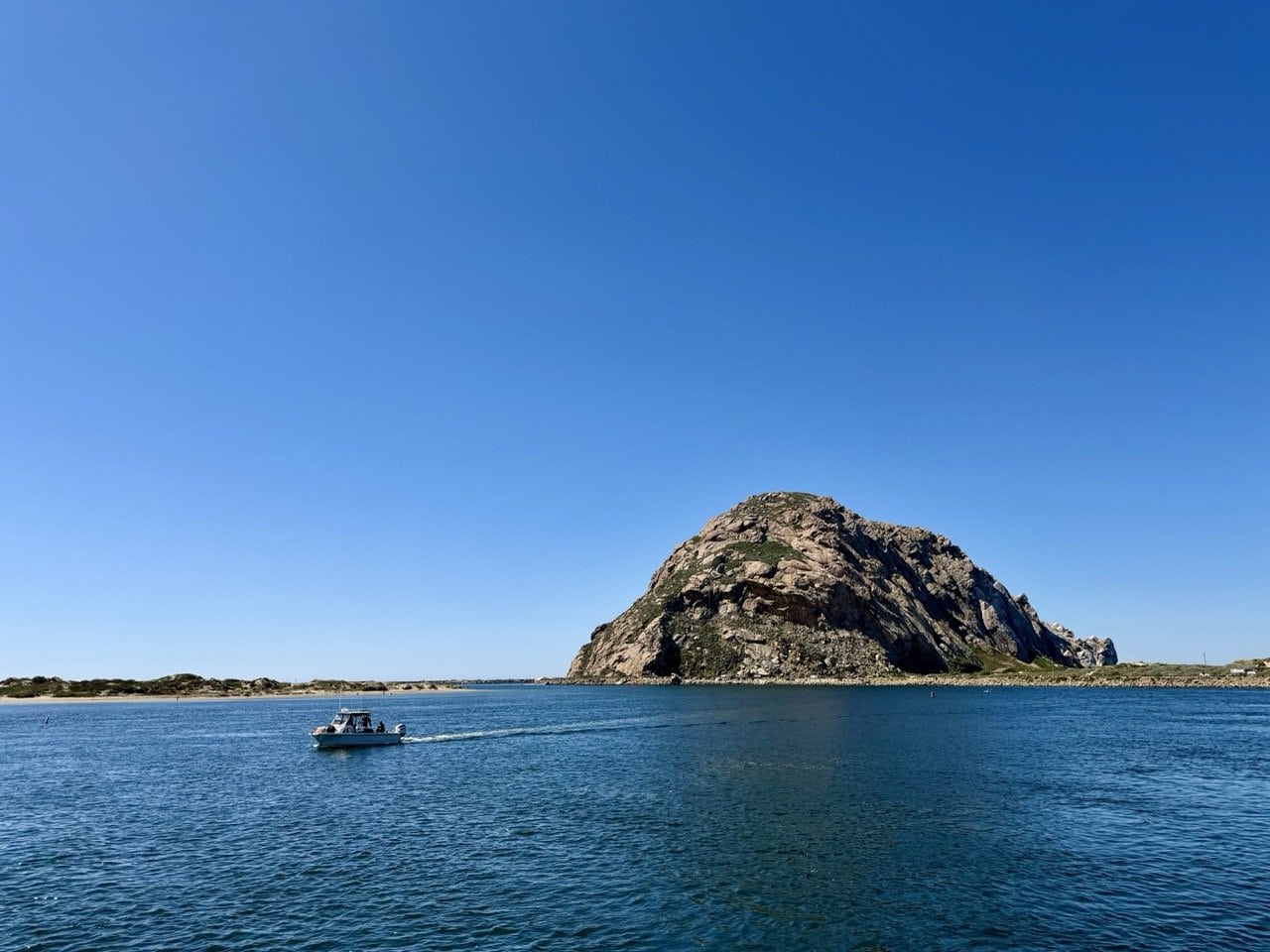
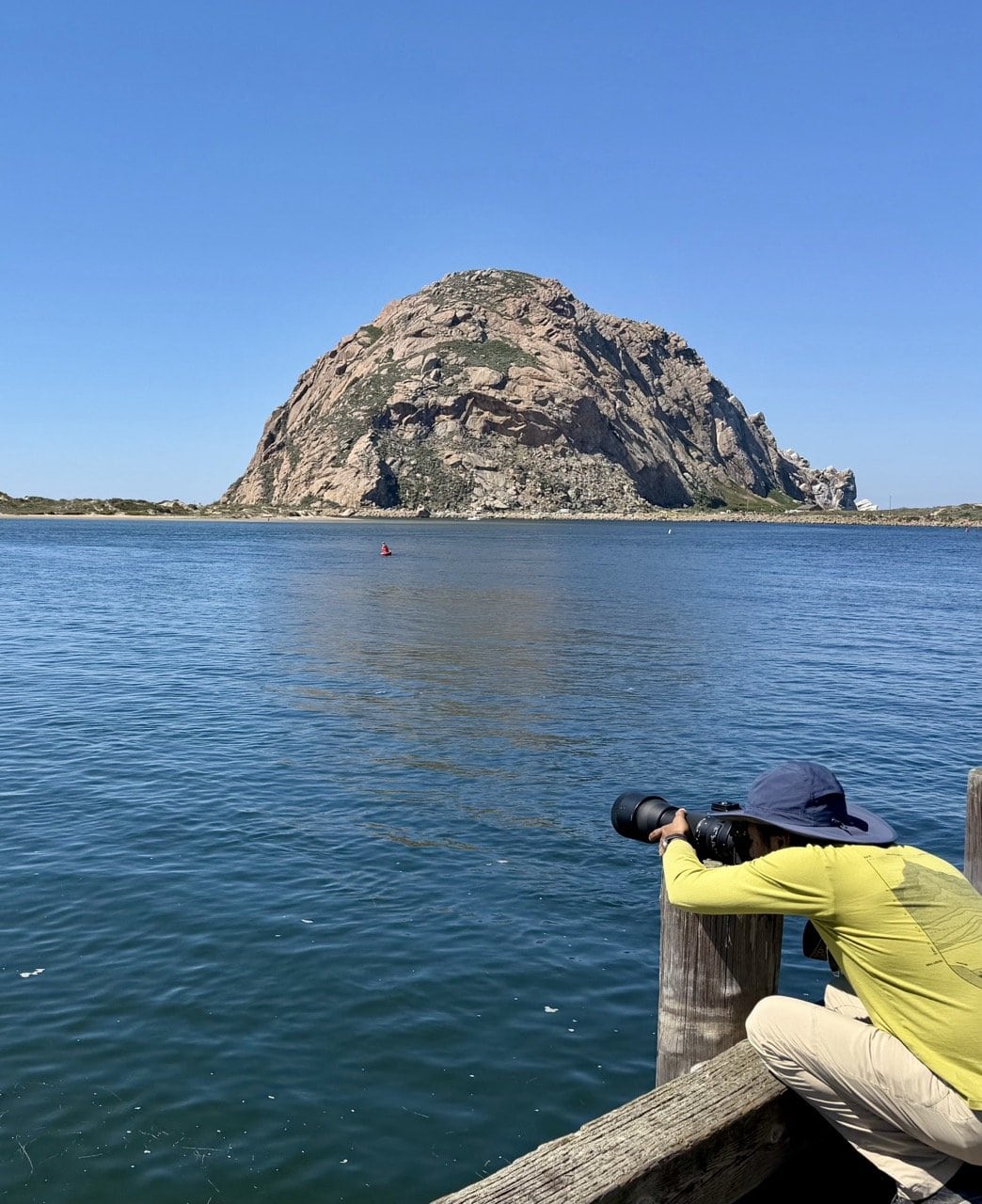
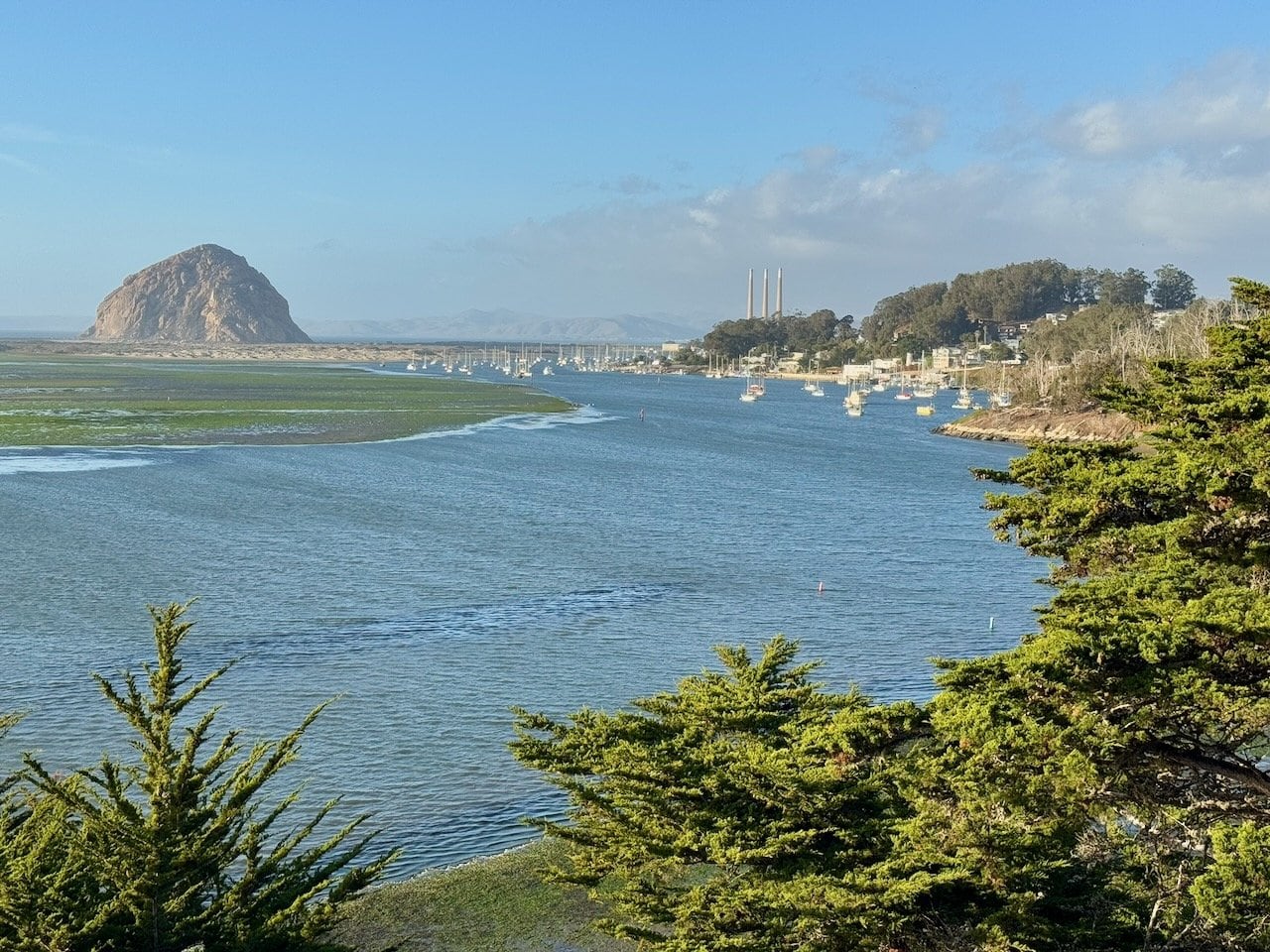
Morro Bay is named after one of the most recognizable landmarks on the California coast, a 581-foot volcanic plug called Morro Rock, rising from the water at the mouth of the bay like something left behind by a different geological era. The town wraps around a calm estuary, one of the best places in California to watch sea otters. The state park that surrounds it offers hiking and viewpoints that most visitors driving through on Highway 1 never stop to see.
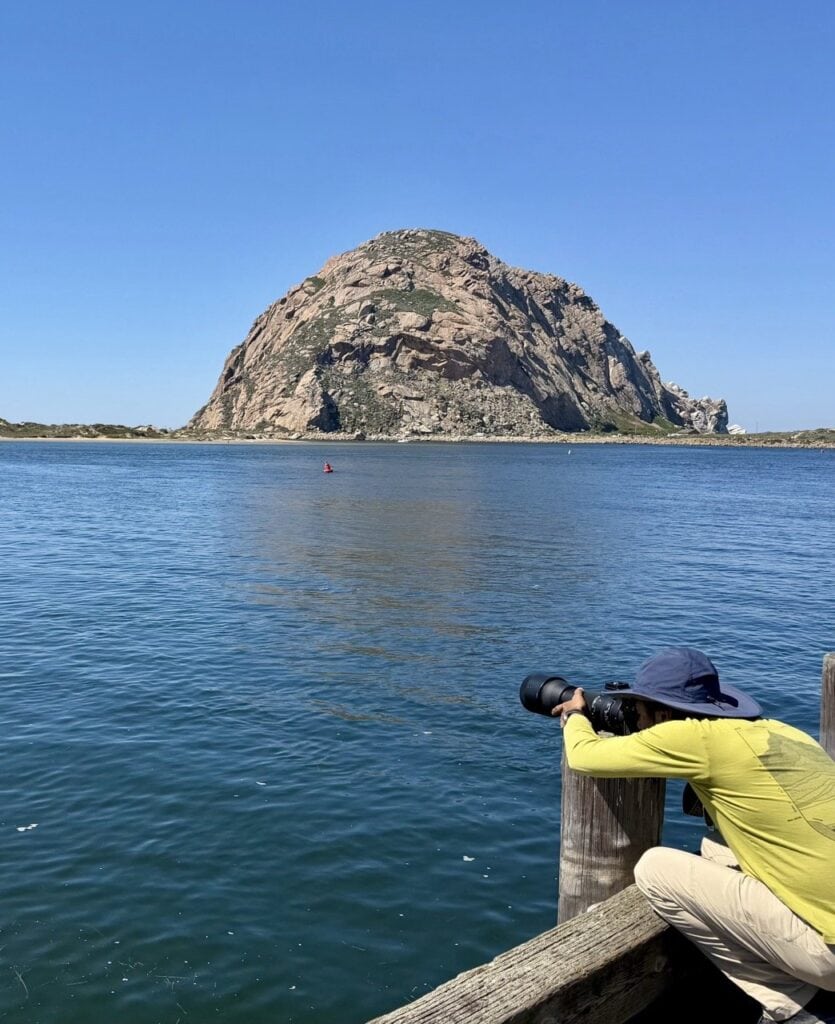
I walked up to the viewpoint near the natural history museum. It’s a short climb above the embarcadero for a view across the entire bay in one frame: the estuary, the sandbar, the rock, the town, the hills behind. Most visitors stay at the water level and miss it entirely.
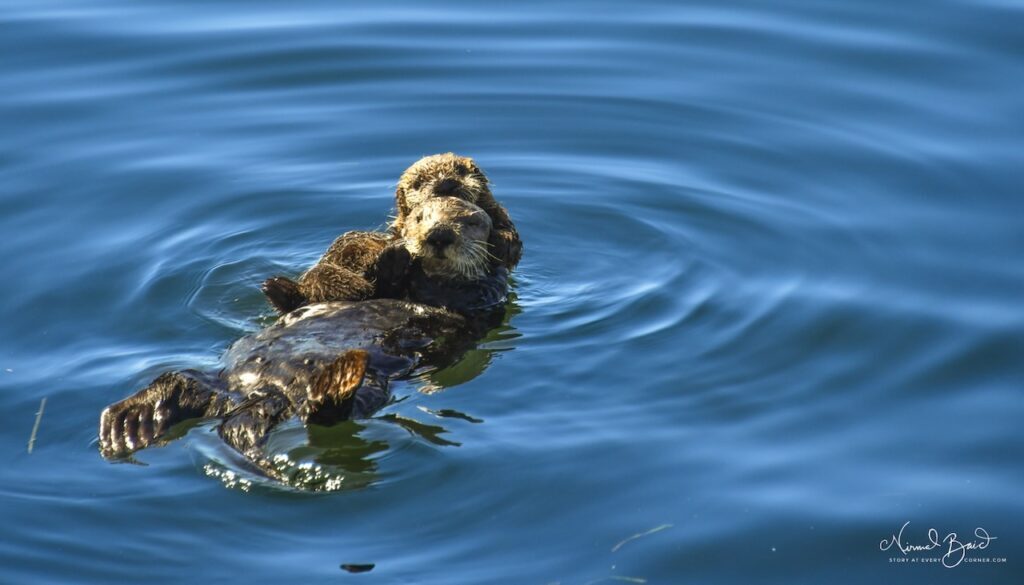
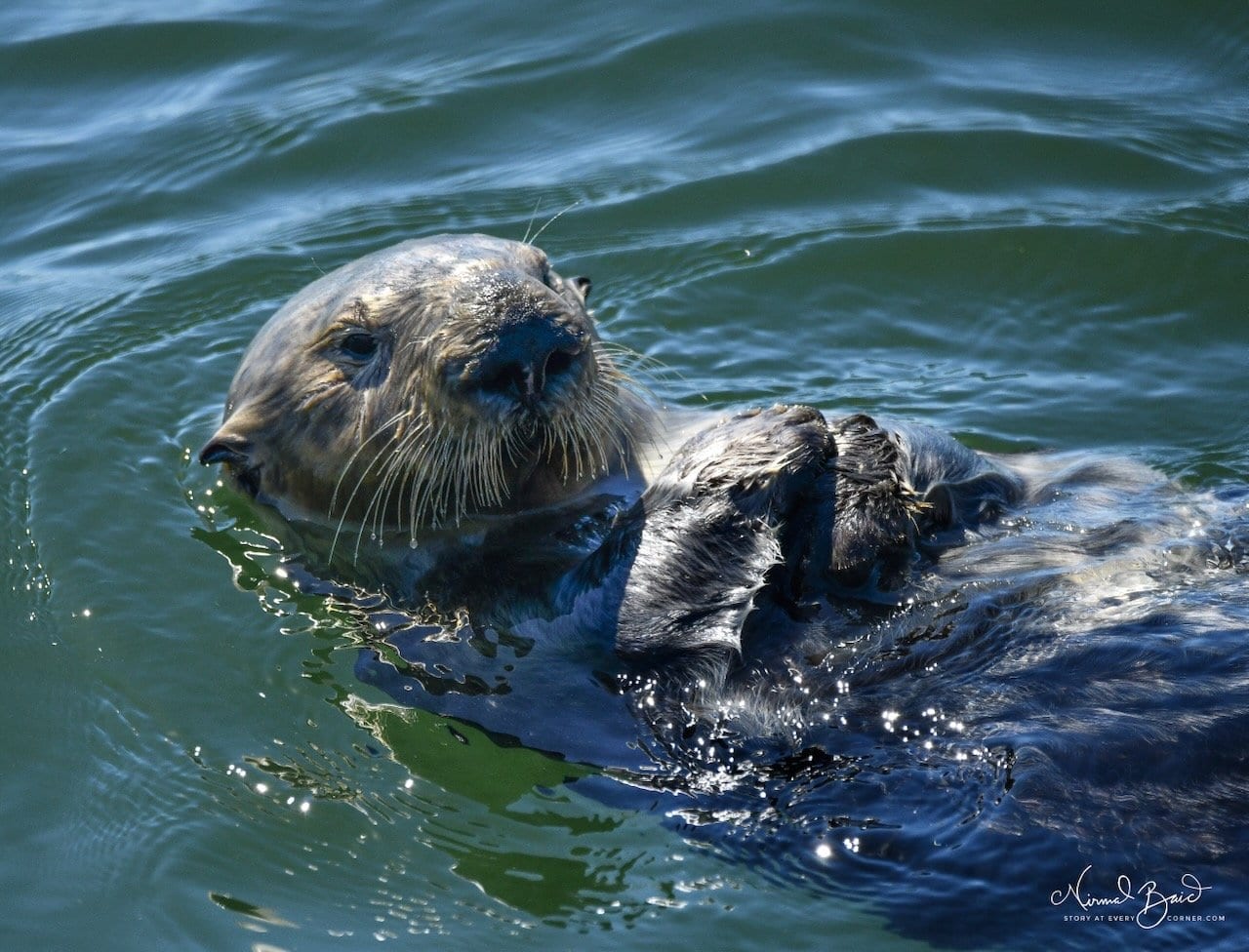
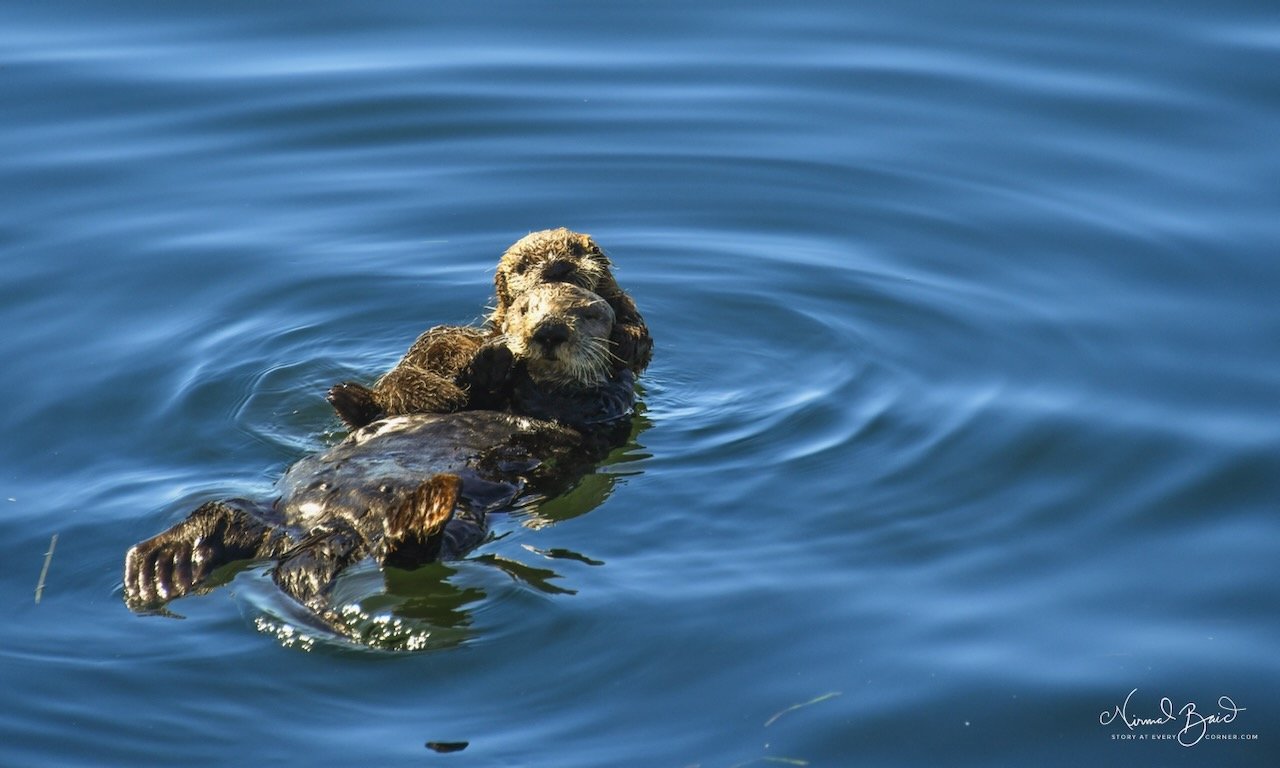
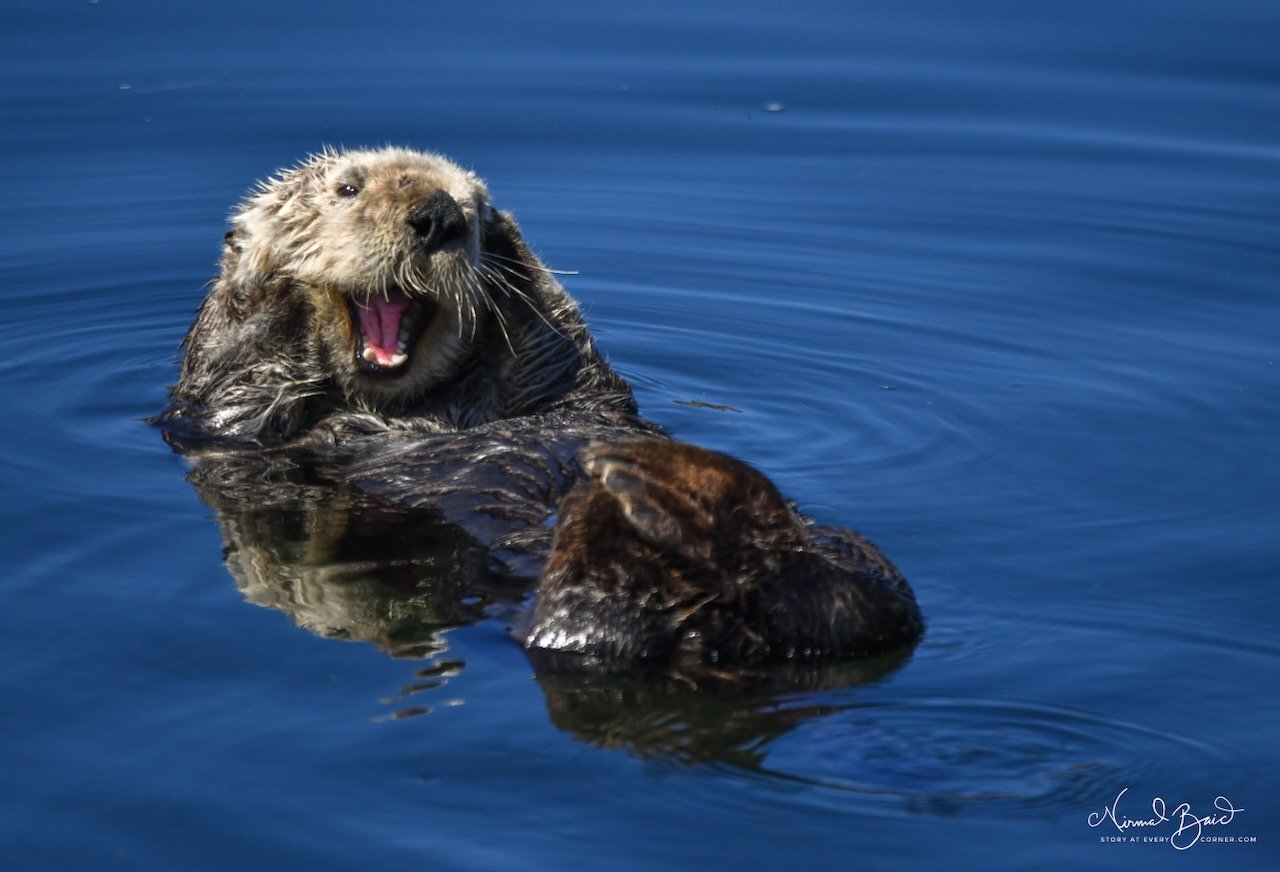
The bay and wharf are home to California sea otters, which were plentiful. Clearly, they feel safe and unthreatened here, thanks to conservation efforts and the respect modern visitors show for nature. A sea otter’s relationship with time is something to learn from. They spend a large part of their lives simply floating on their backs, grooming, resting, and cracking shellfish open on their chests. They are complete professionals at being present.
When we visited in December, the nursery on the south T pier had several young pups with their mothers. In March, we saw only two large babies with their moms. But there were plenty of adults all around Morro Bay. Most people skip the north pier, but on multiple occasions, I’ve been surprised by these goofy creatures spontaneously popping out from under the pier, right under my feet. I wonder if they knew I was looking for them.
A caution for vegetarians and vegans: I did not find any food there. We had to head back to SLO for dinner.
Oceano Dunes
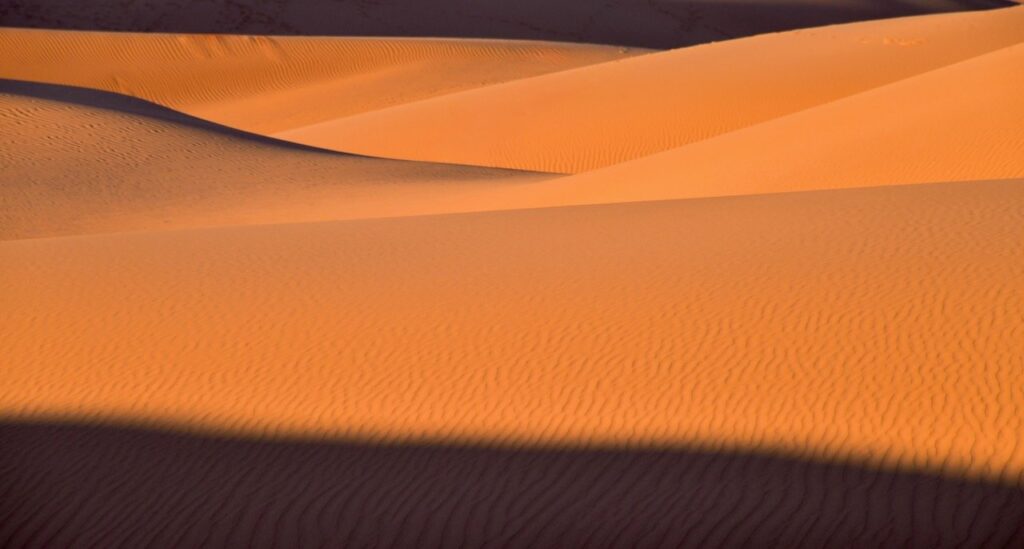
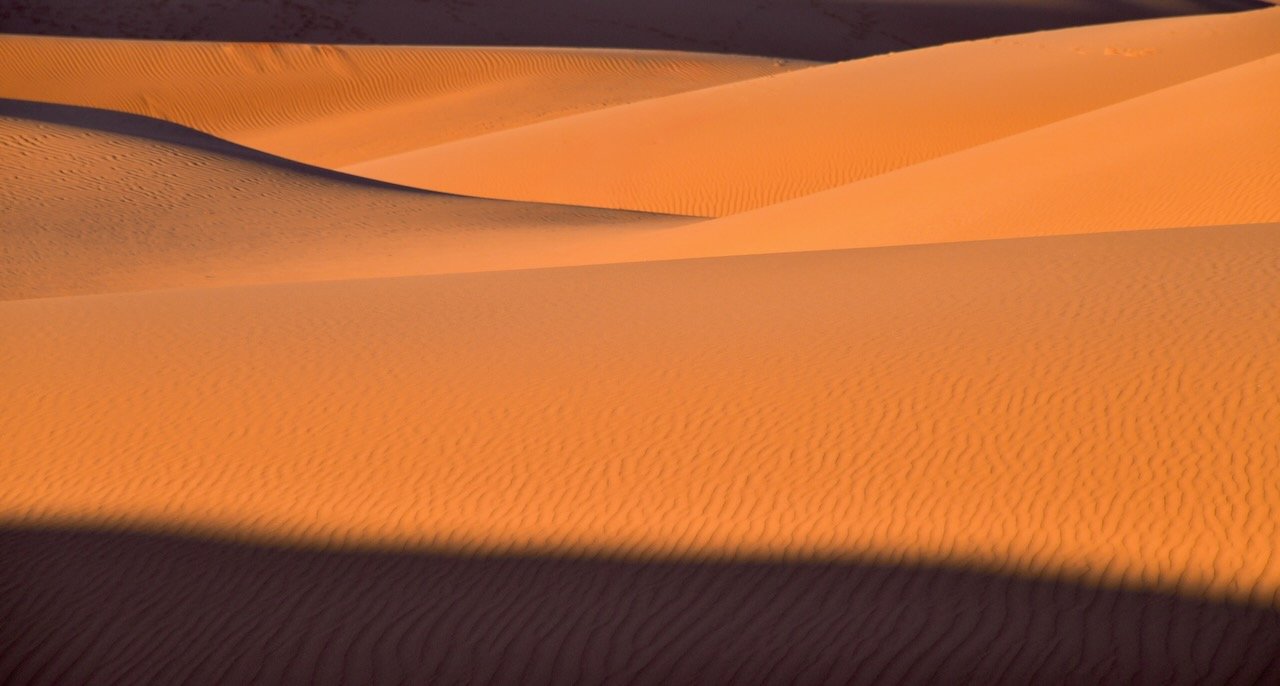
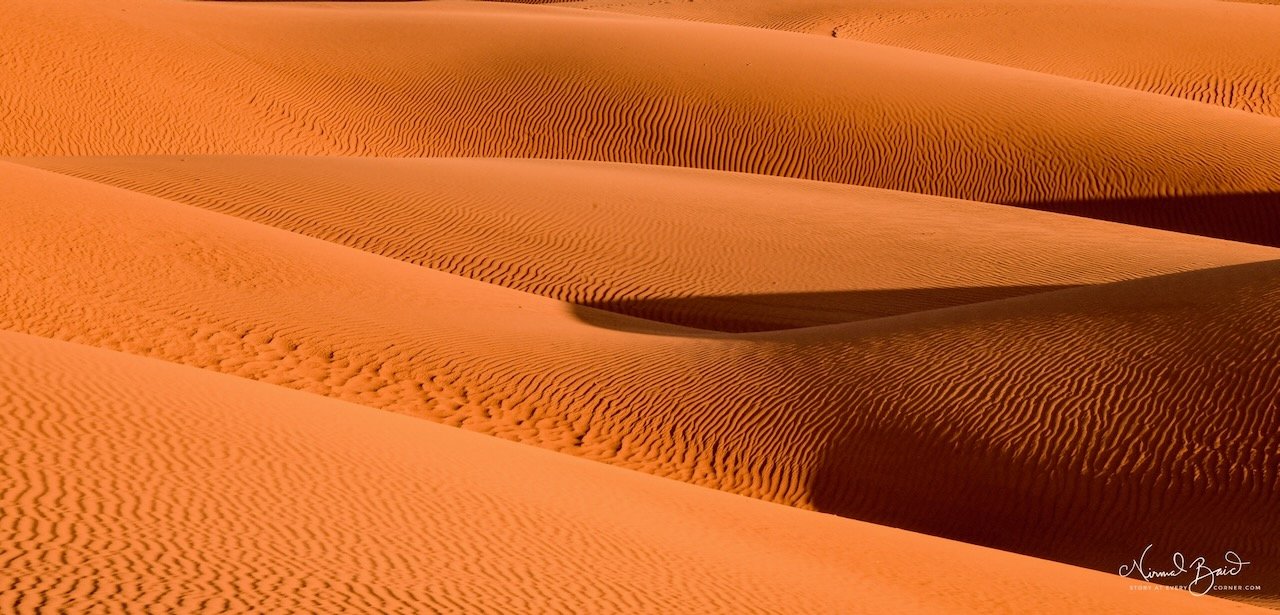
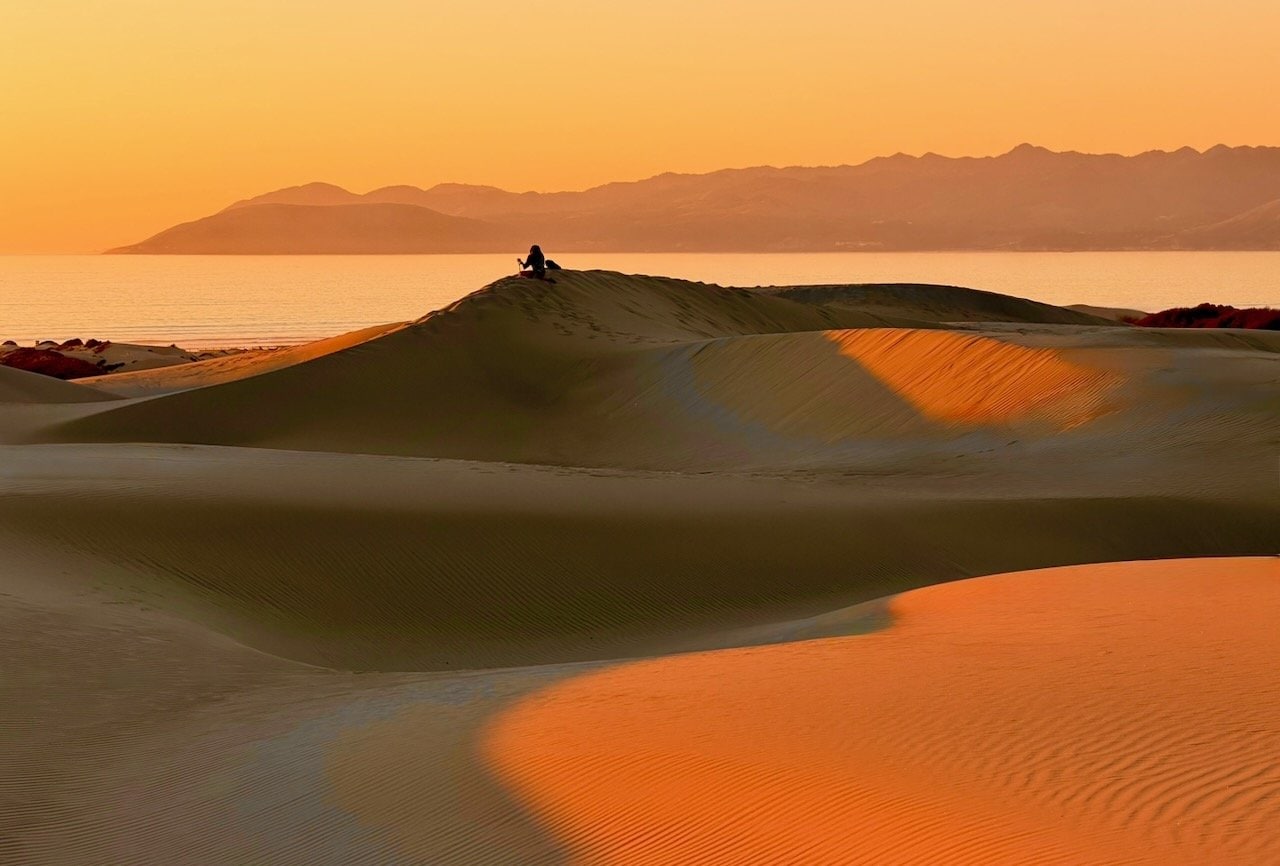
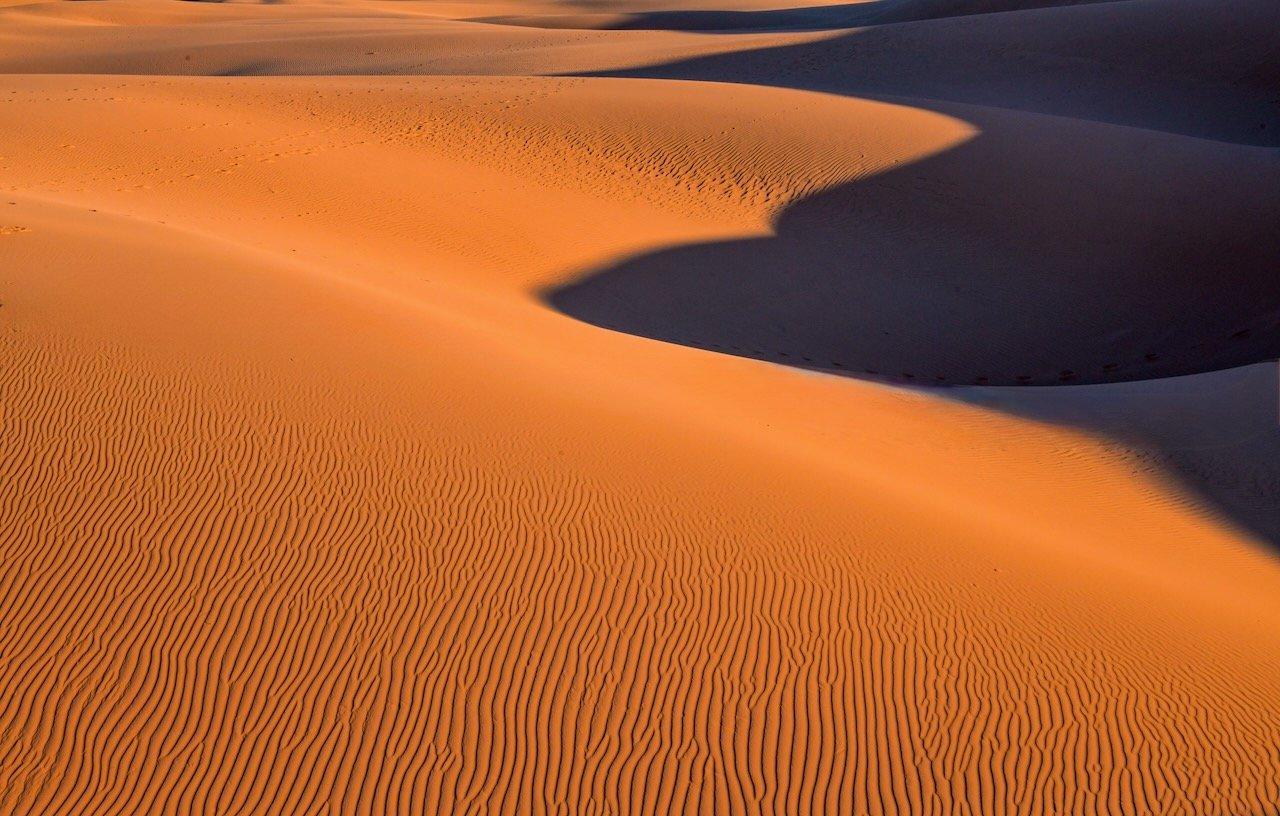
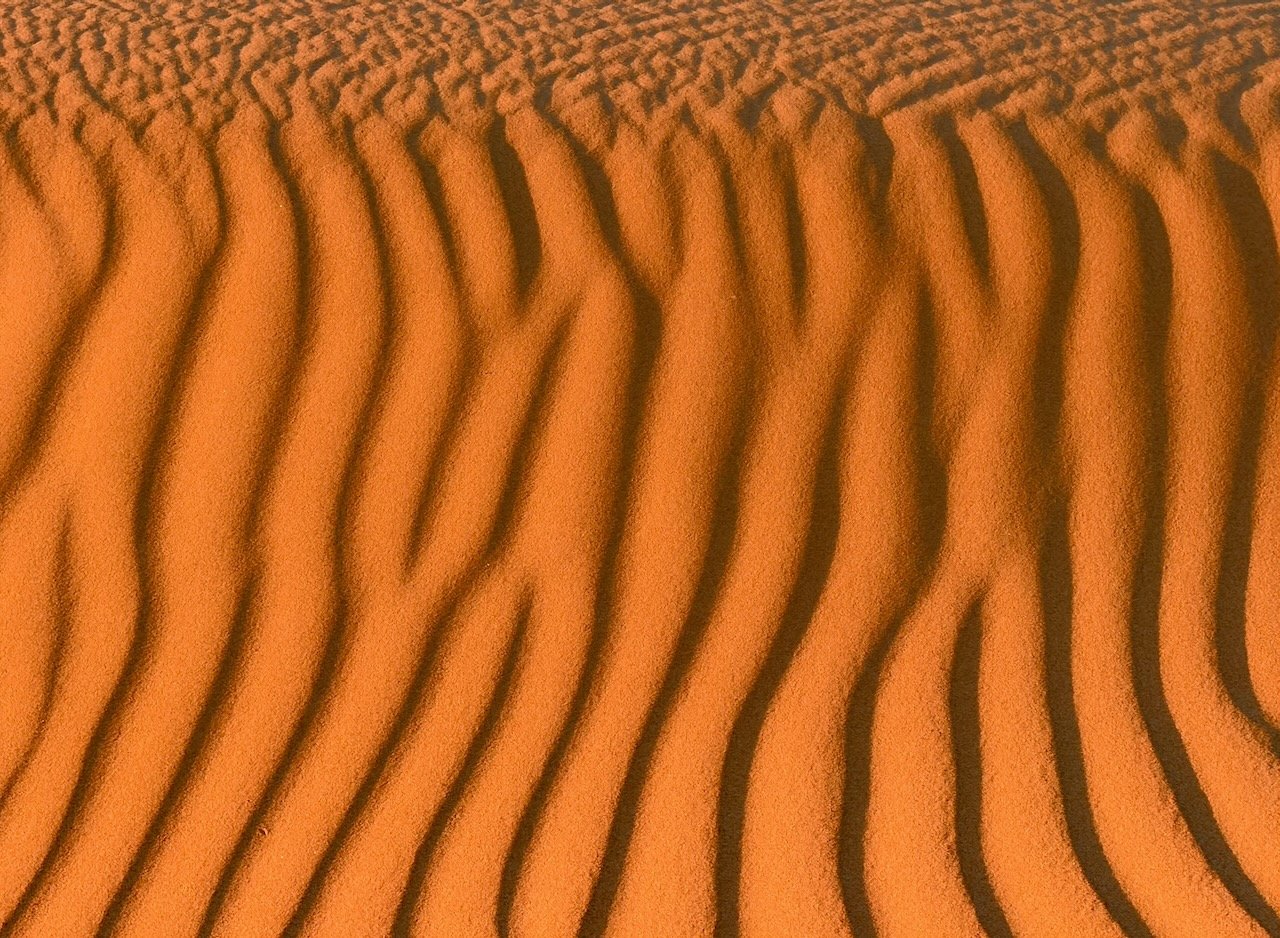
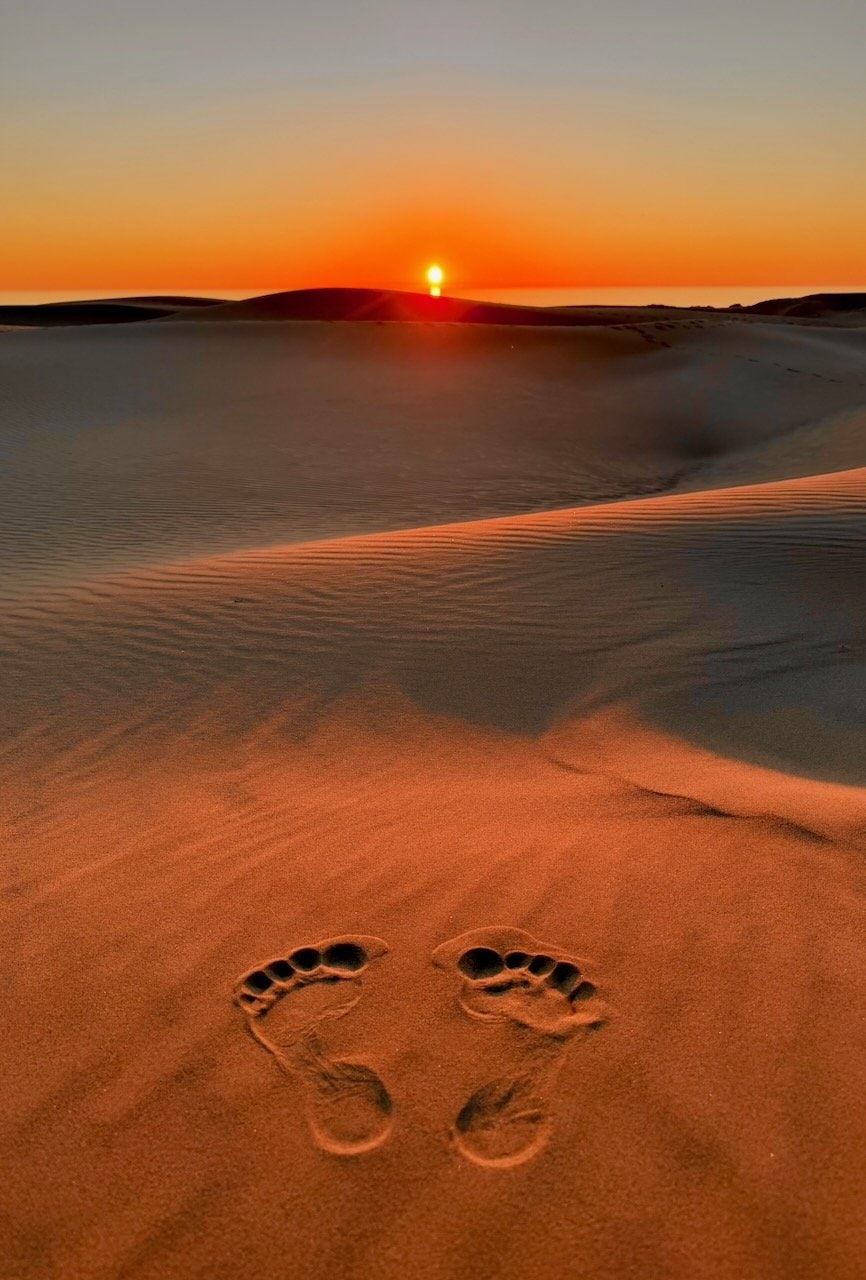
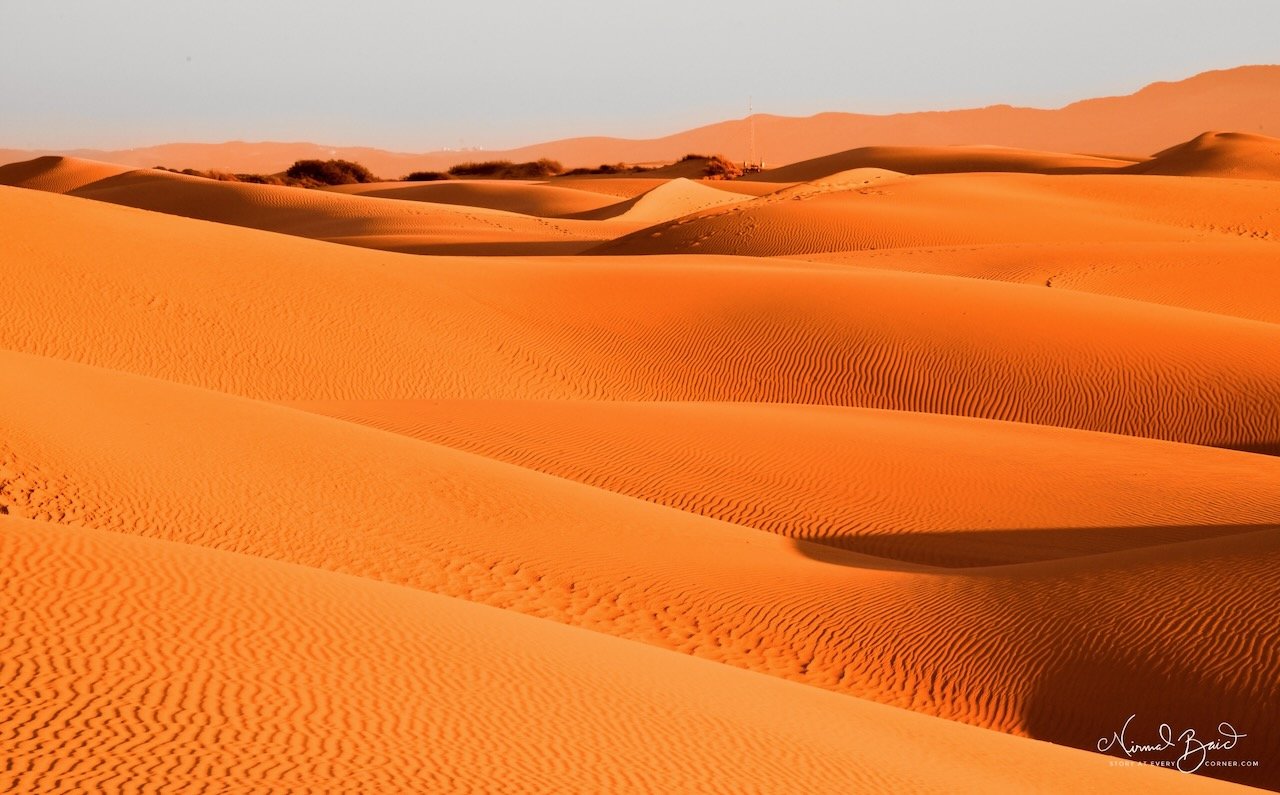
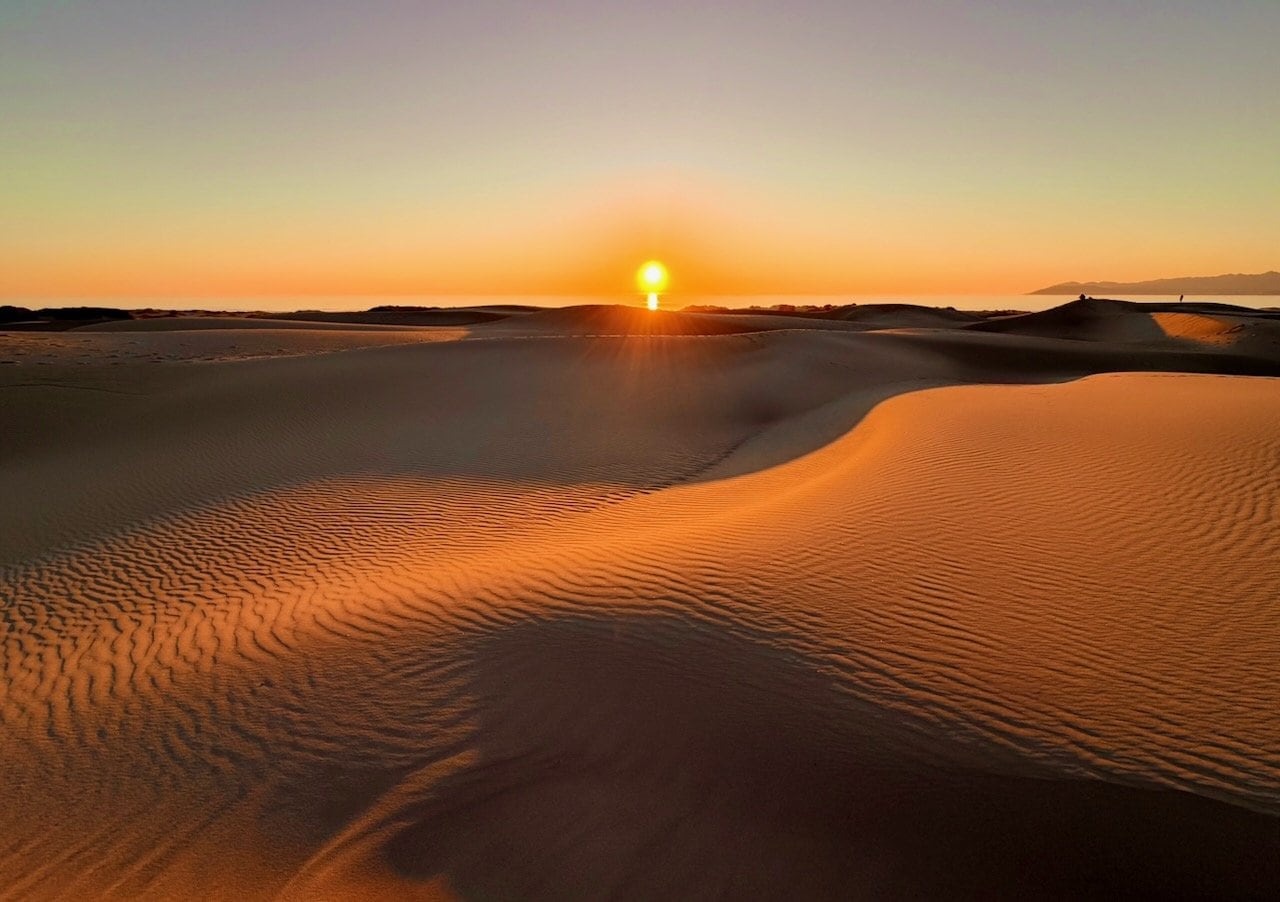
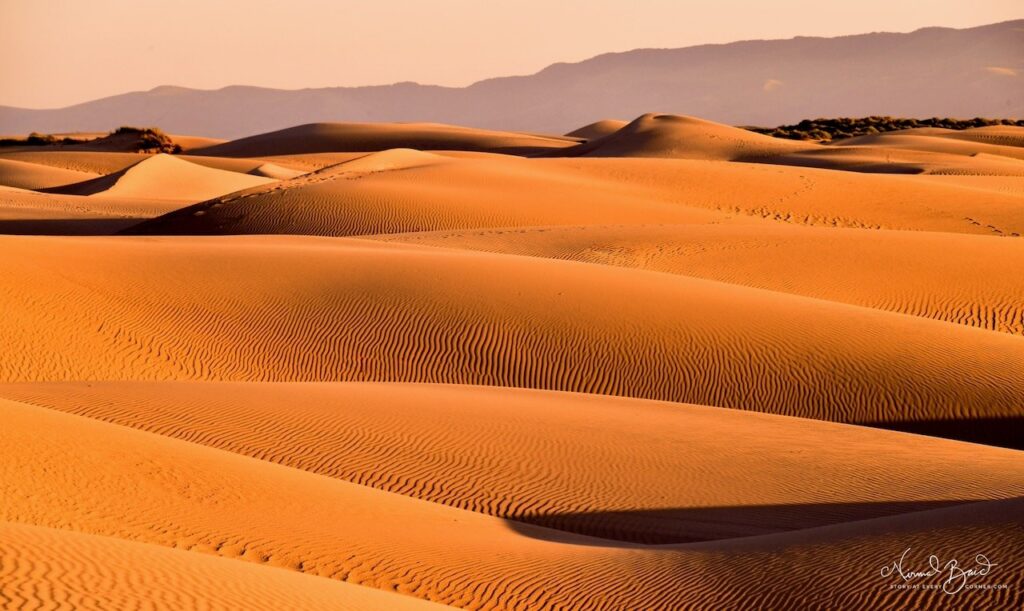
Most people know Oceano Dunes as the place in California where you can drive ATVs on the beach. But, most people do not know that farther away, the dunes become something else entirely: vast, quiet, and in the right light, genuinely otherworldly. It is like the famous red dunes of Namibia’s Namib-Naukluft National Park or the Sahara Desert.
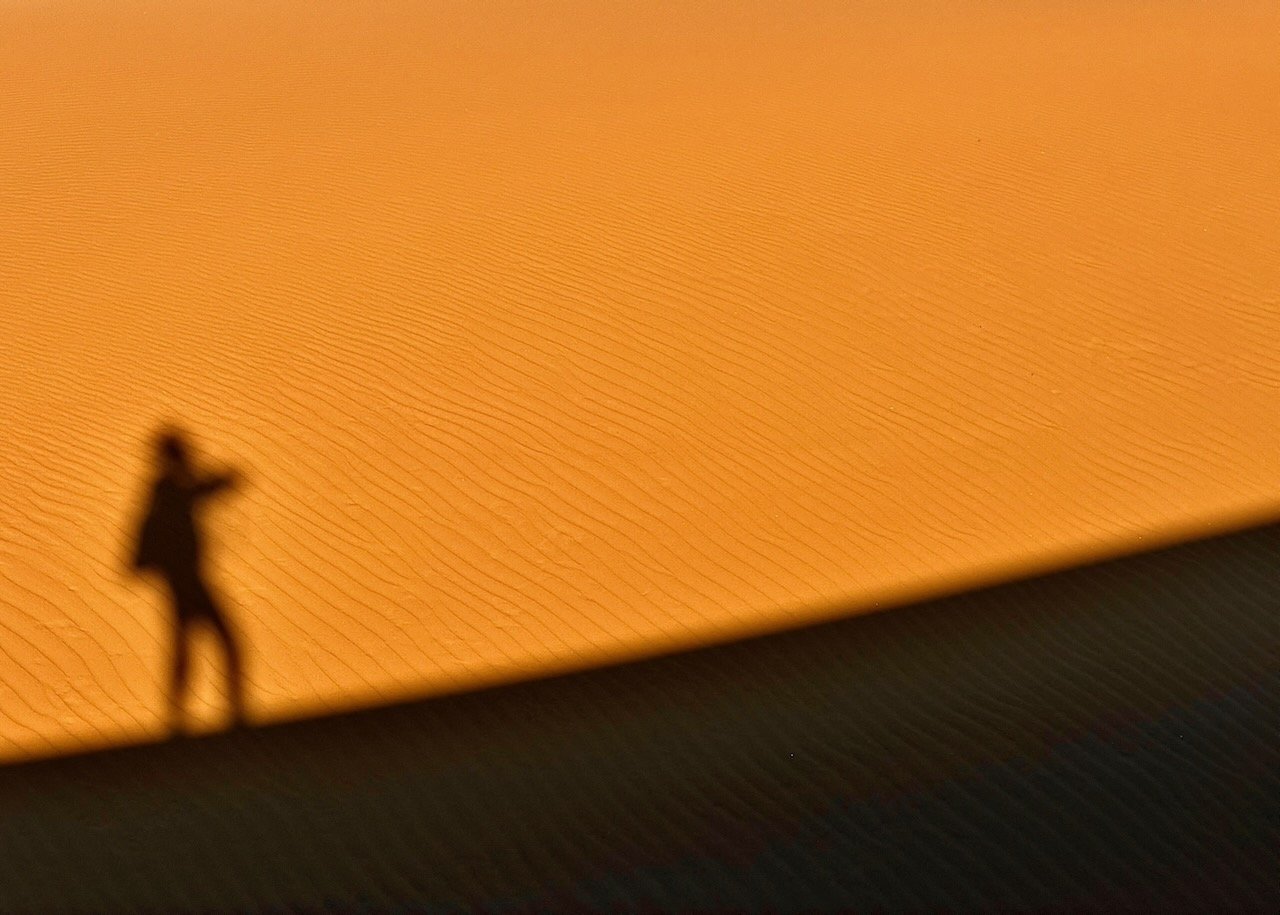
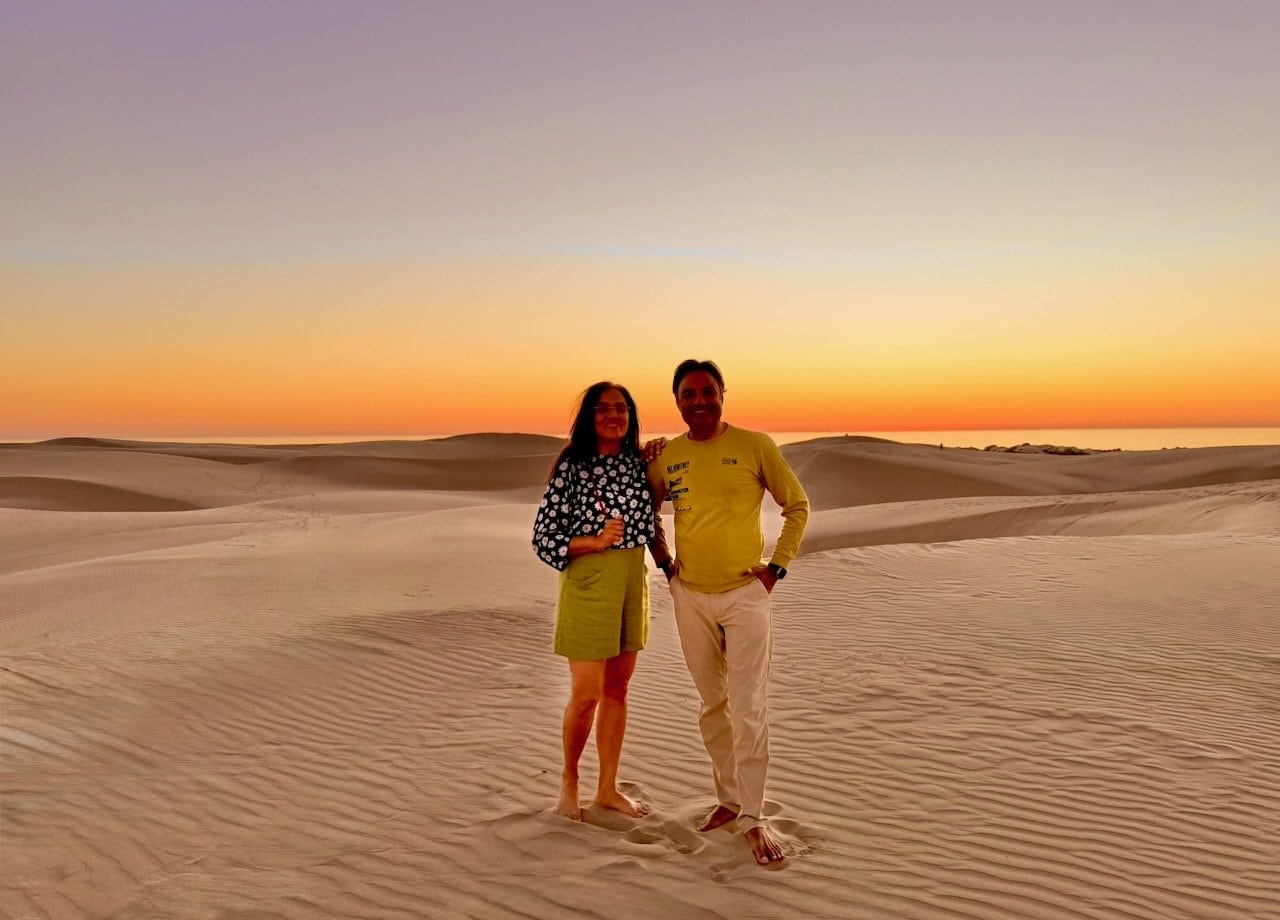
We parked at the Pismo Ranch RV park on Dolliver Street and walked through the campground to a small pedestrian access at the far diagonal end. The bushes opened onto the empty dunes. From there, we walked maybe ten minutes before the dunes opened up into empty space overlooking the Pacific Ocean. No vehicles, no noise, just sand and wind and the Pacific light turning everything gold.
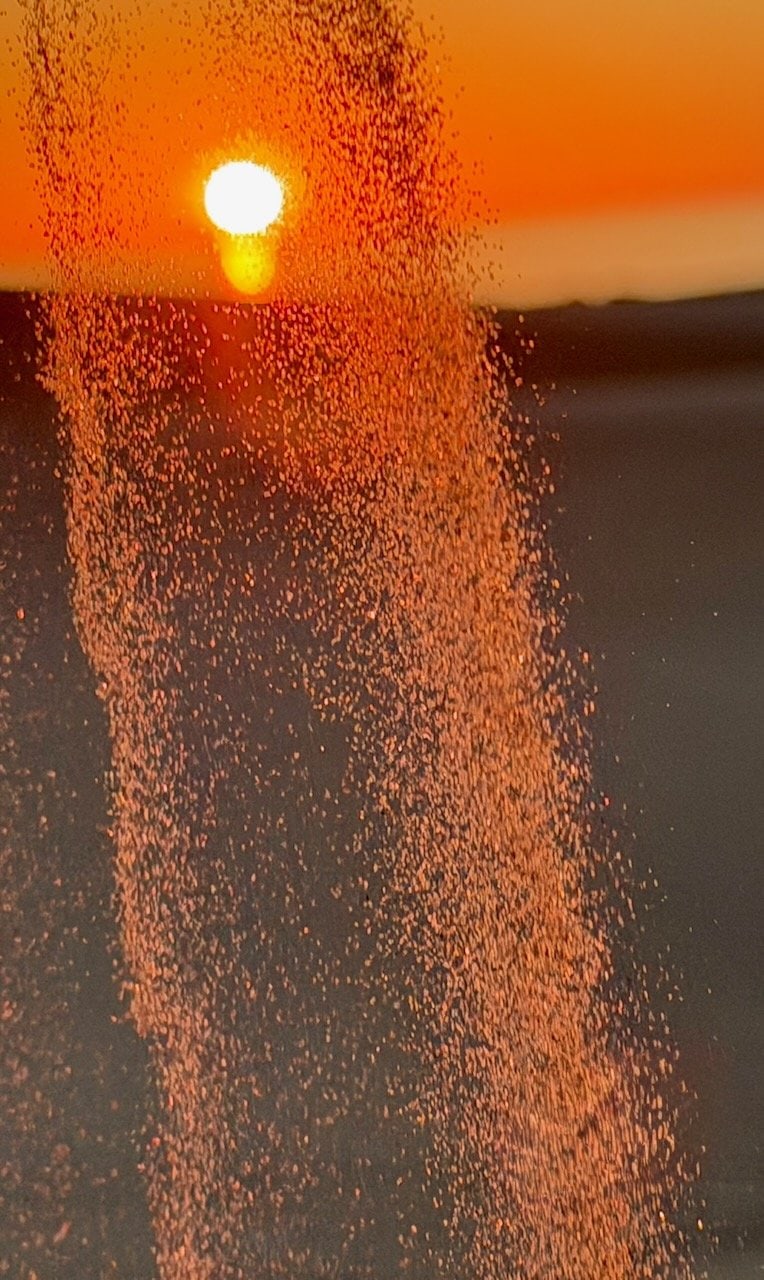
Dunes do something to me that I find difficult to explain fully. We have stood in the Sahara at sunrise, walked the red dunes of Namibia’s Sossusvlei, and seen the frozen ripples of drifted snow at the edge of Antarctica. Each time, the same response: something slows down, something opens up. It is not the scale alone, though the scale is part of it. It is the way that sand holds light, absorbing it, transforming it, giving it back in colors that shift every few minutes as the sun moves.
Nirmal disappeared with the camera as the light changed quickly, from gold to amber to deep orange with the setting sun. We stayed until the last light was completely gone and the dunes had turned the color of embers. The dunes are so vast that it can be disorienting in the dark. We had the Maps app open, so we followed our pin like our north star.

Pismo Beach
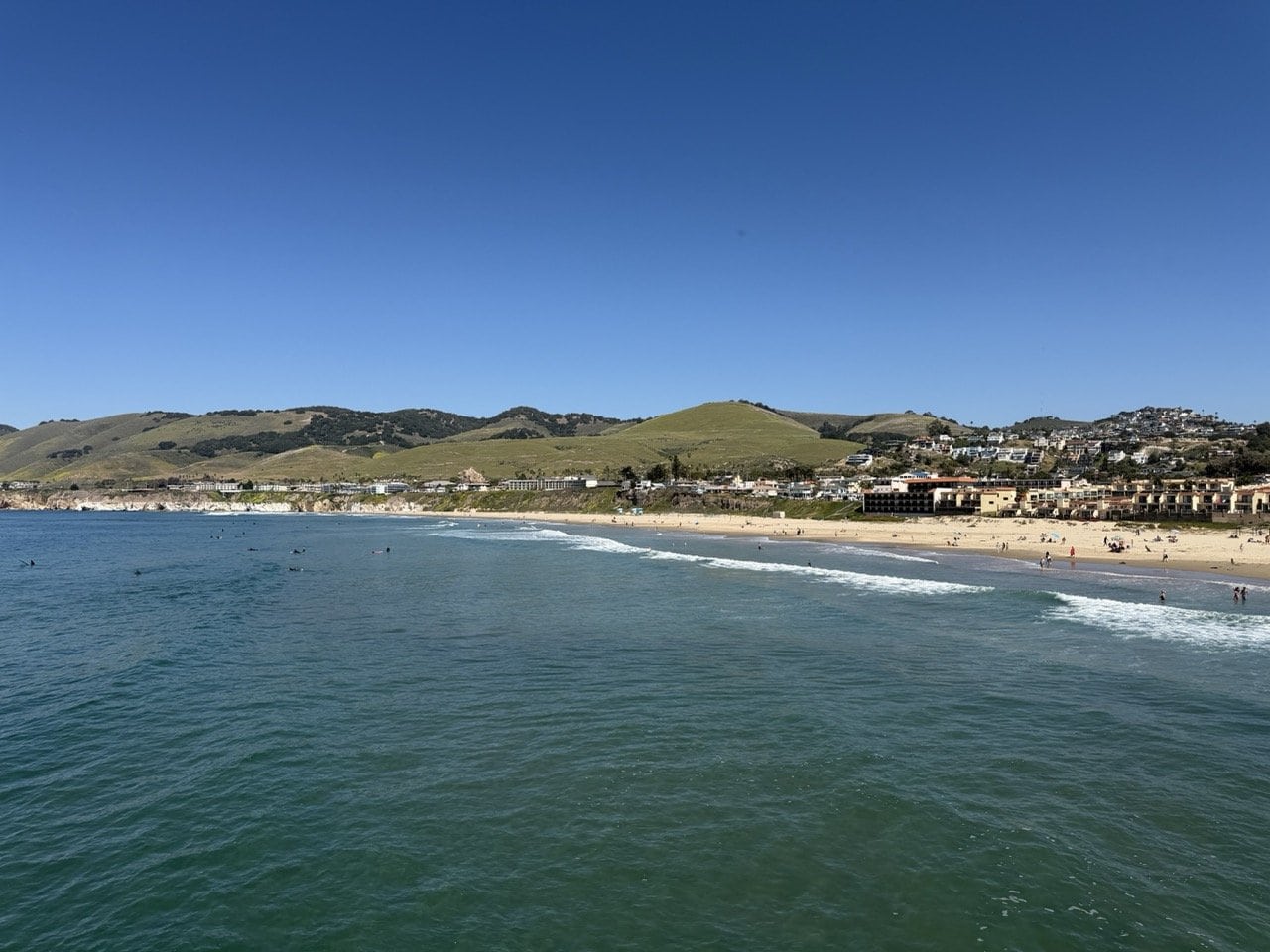
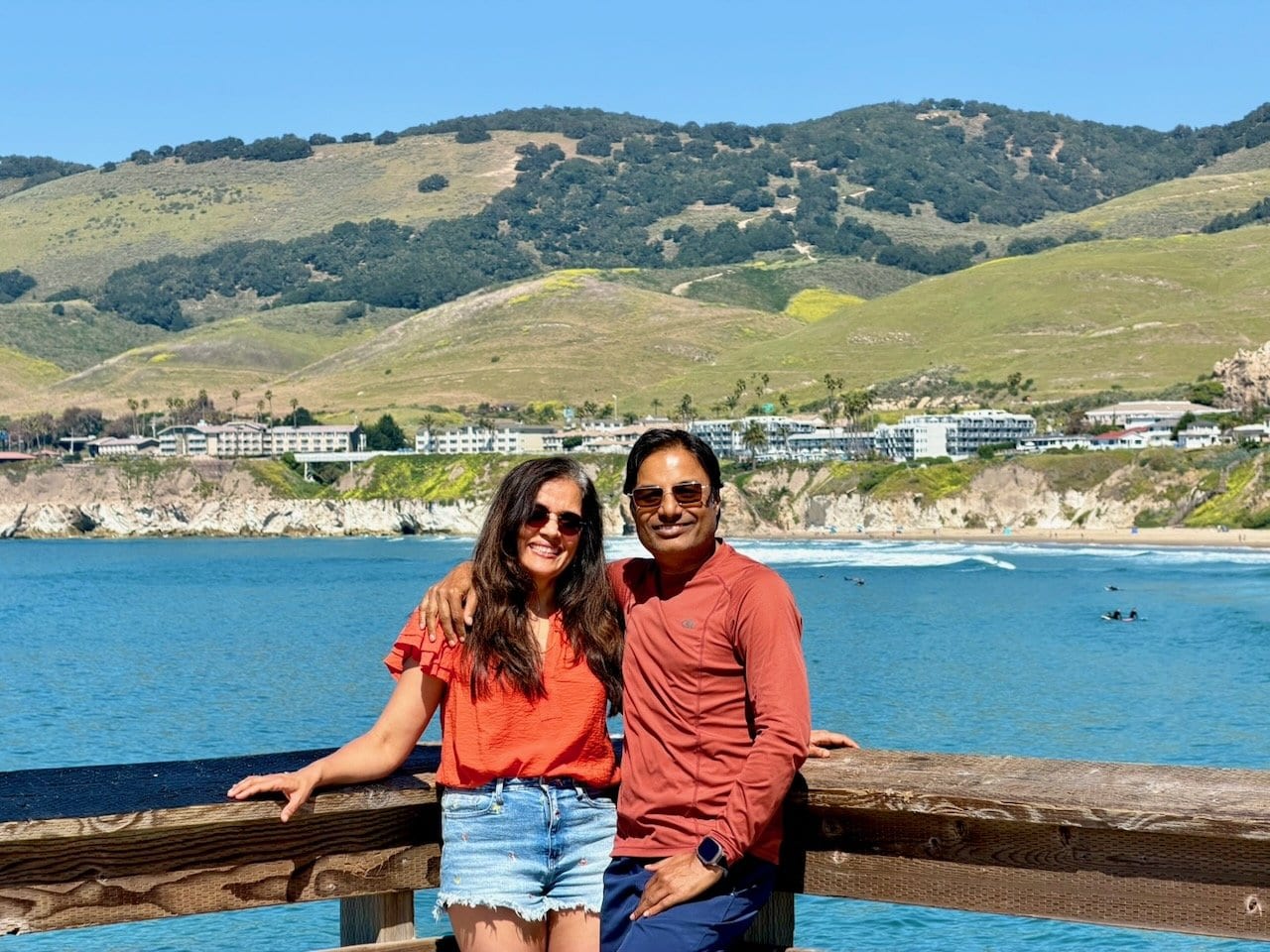
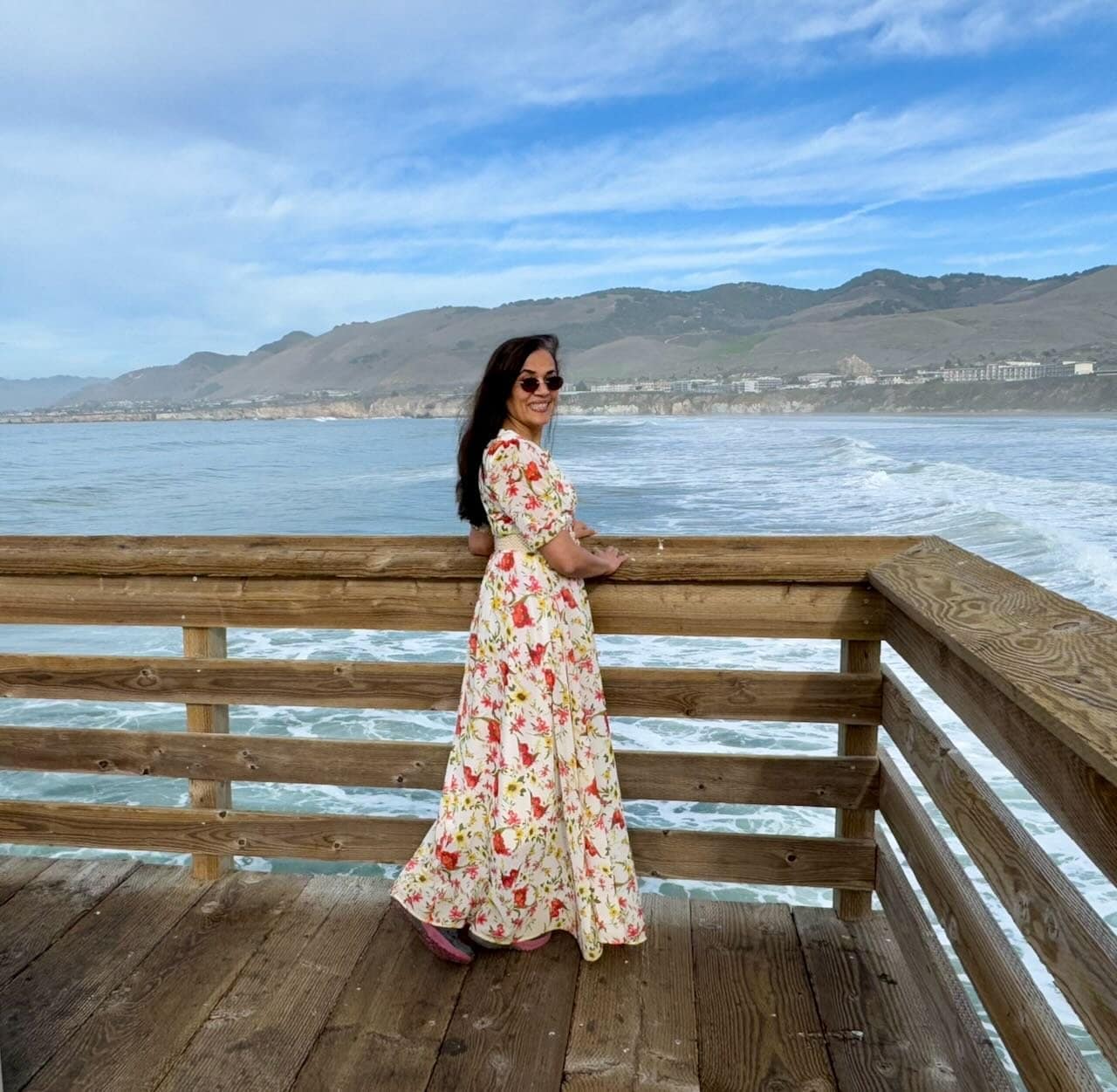
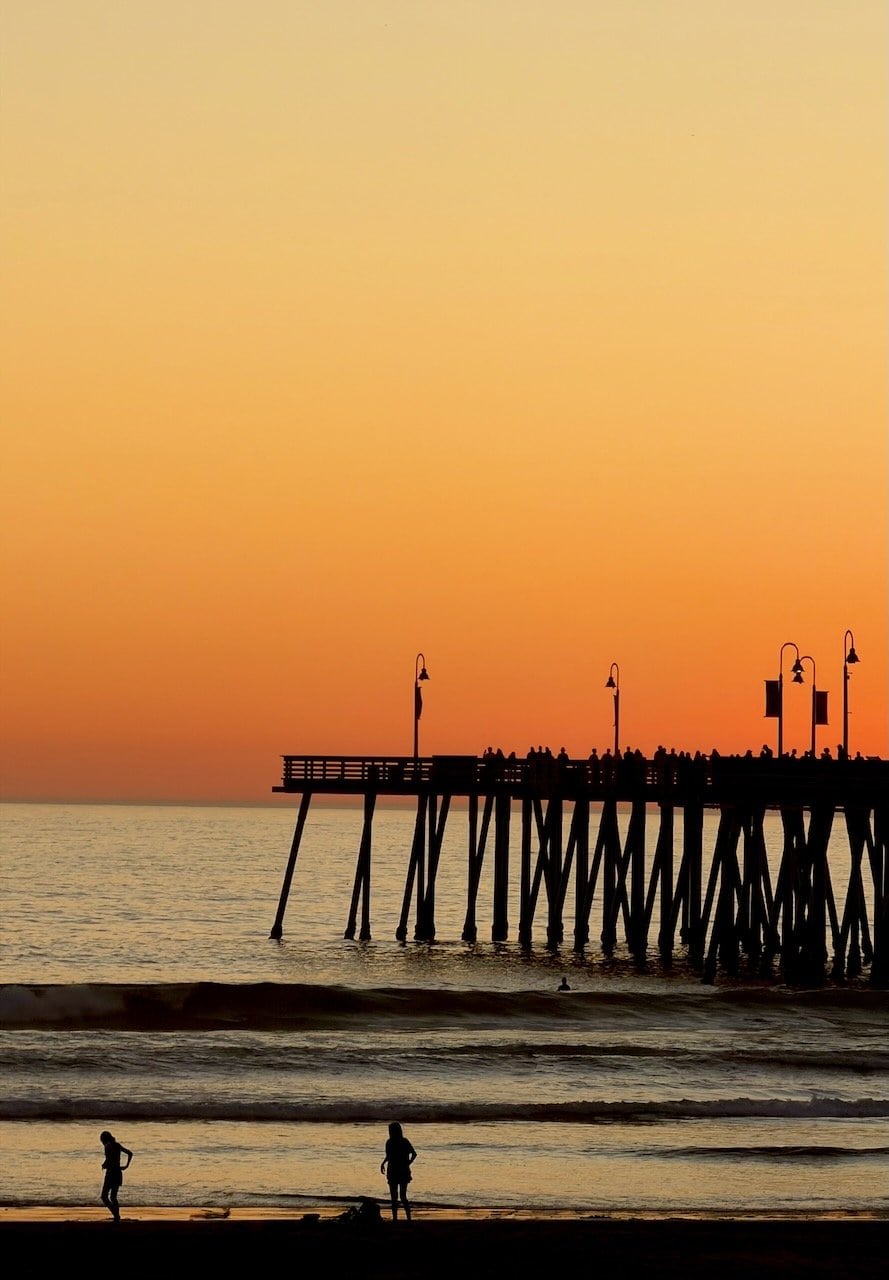
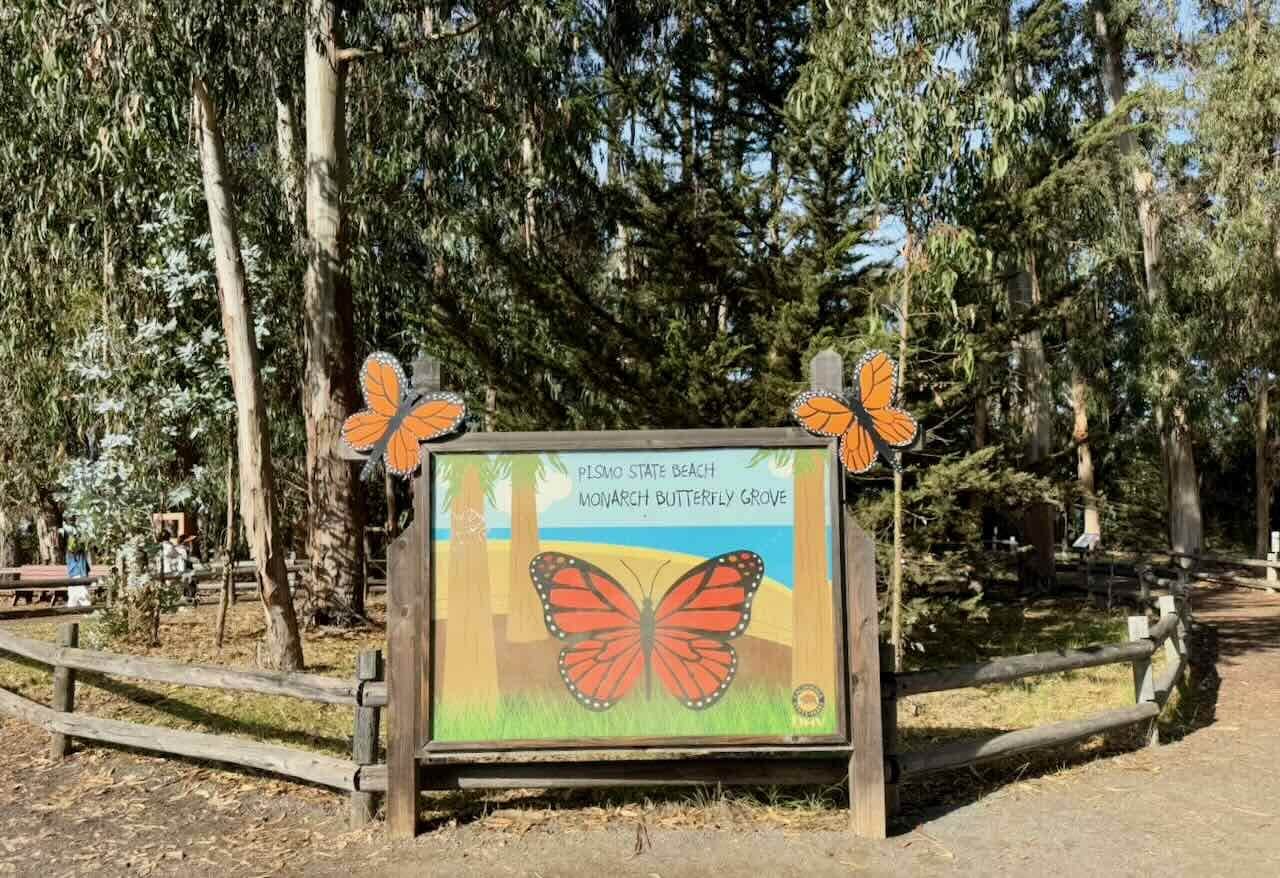
Pismo is an easy town to underestimate. It has the look of a classic California beach town with a long pier, a boardwalk, surf shops, and clam chowder restaurants. But it also has the Dinosaur Caves cliff, one of the more dramatic coastal walks in the county. It has the Monarch Butterfly Grove, where western monarchs overwinter in the eucalyptus trees from October through February. And it has an amazing beach for surfing or for watching surfers from the pier, which extends far into the ocean. This is where people spot the migrating whales or resident dolphins.
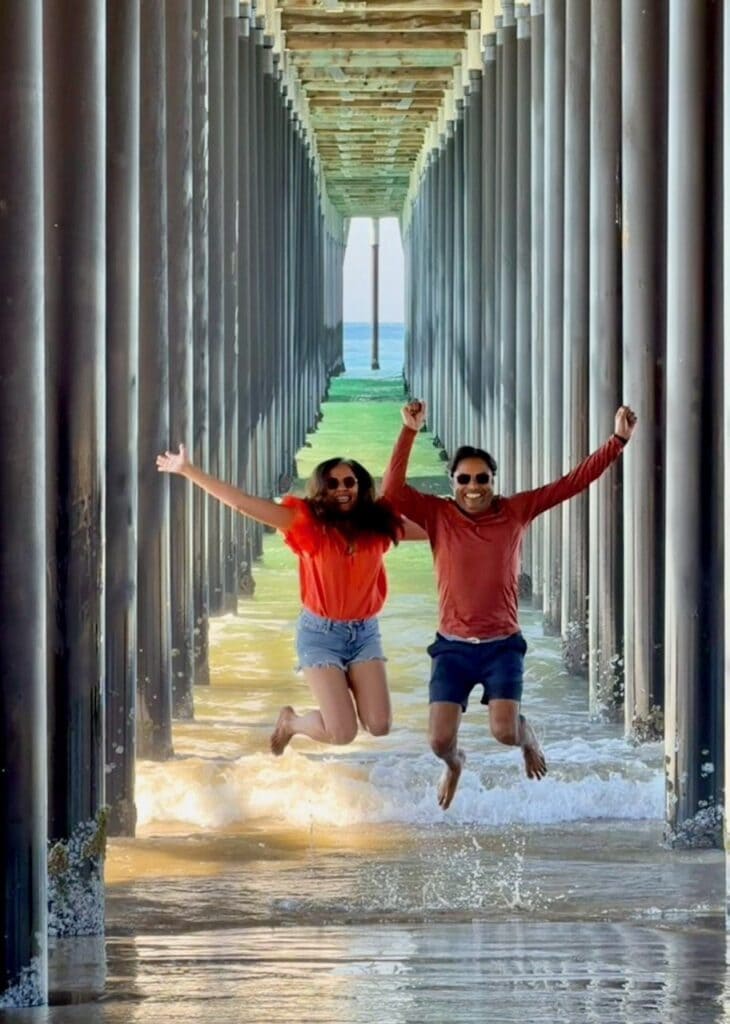
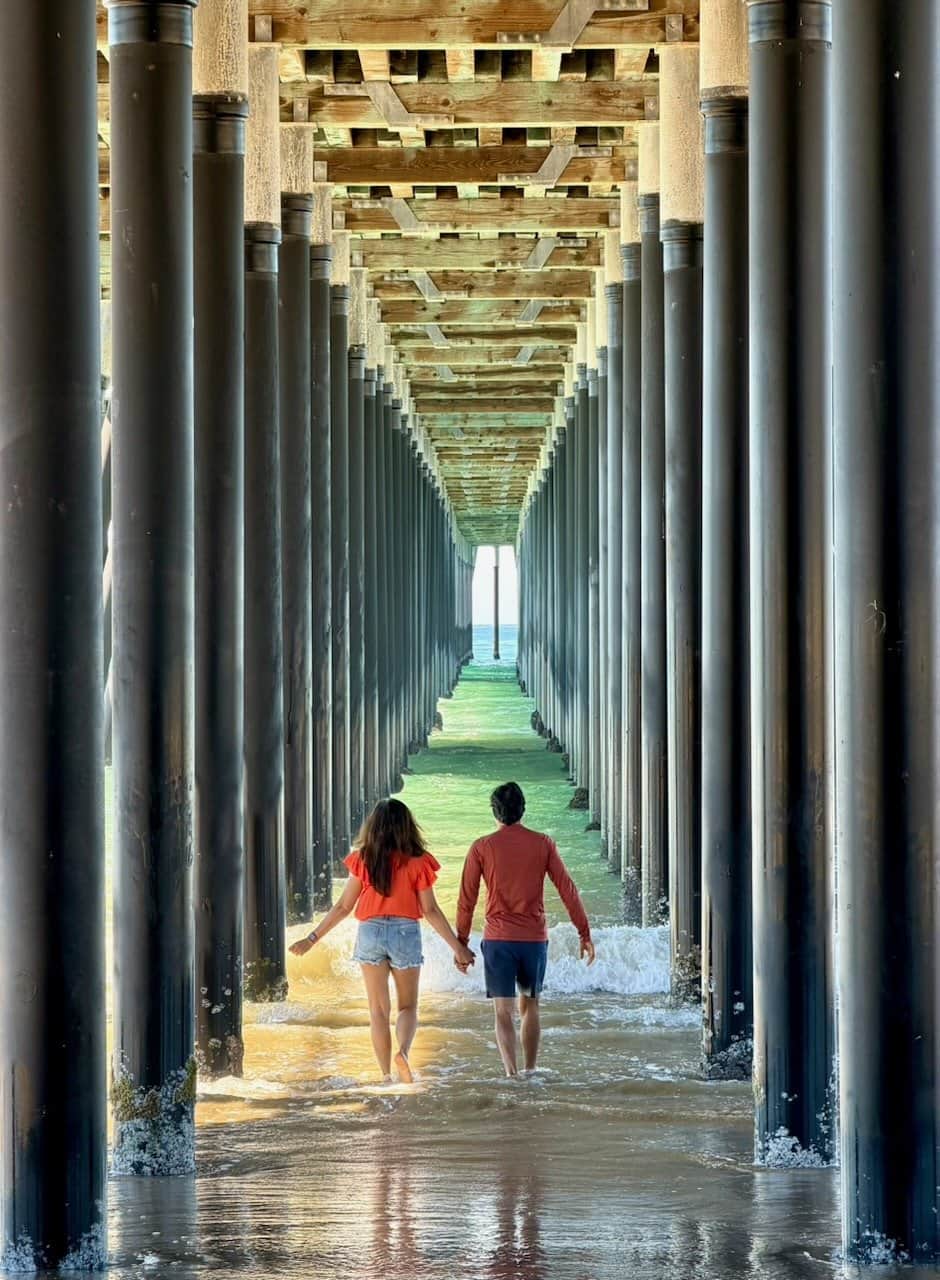
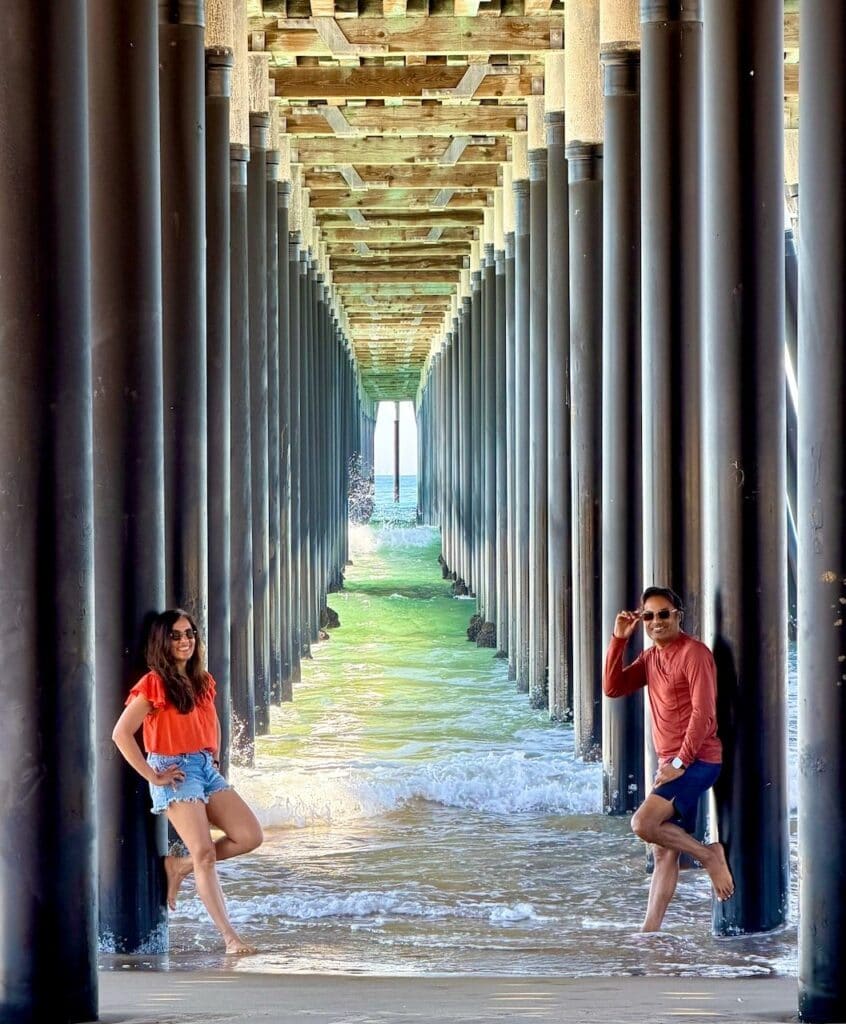
Under the pier is its own experience. At low tide, the sand is mostly dry, and the perspective through the columns is like a photoshoot set. Rows and rows of columns recede to a bright rectangle of ocean at the far end, something Nirmal could not walk past without photographing. We played in the waves barefoot until it was time to check out and head home.
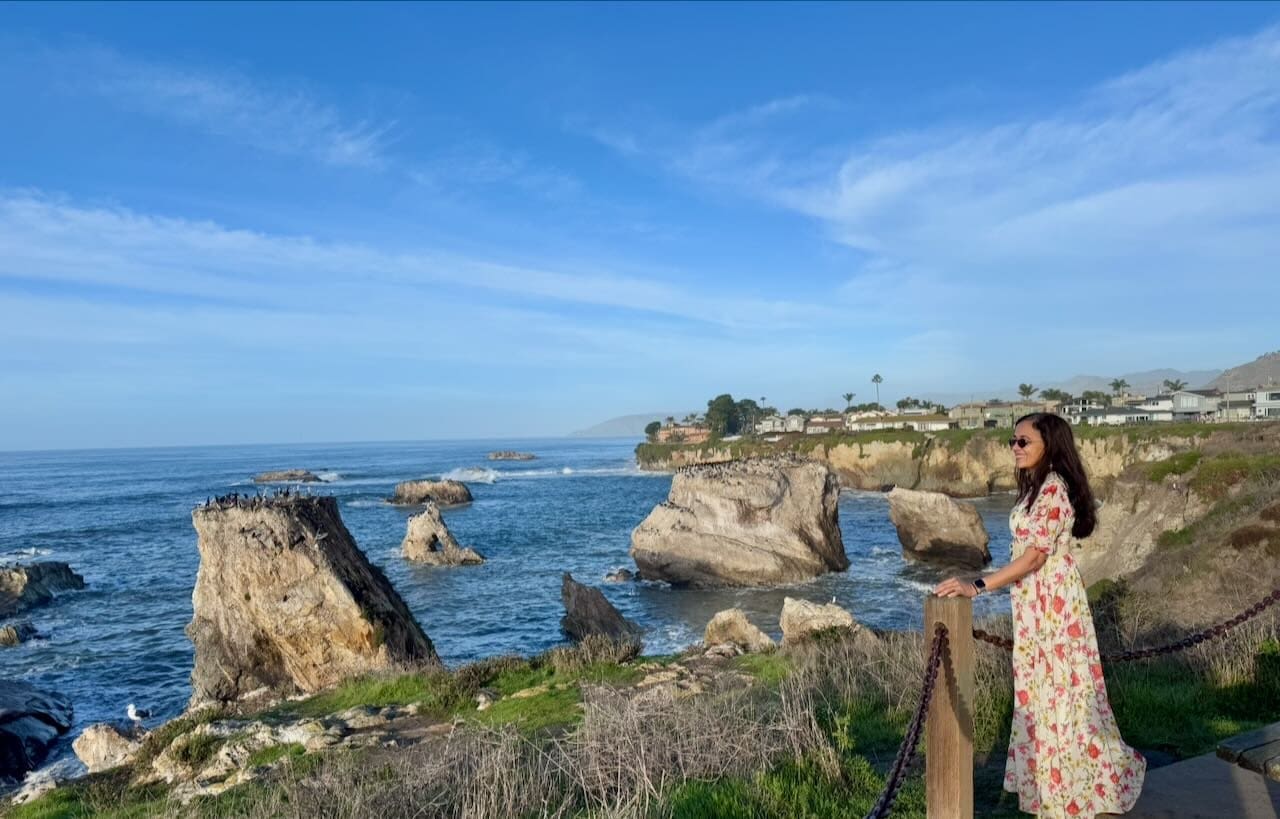
The Dinosaur Caves cliff walk, a five-minute drive from the pier, is absolutely gorgeous. The sea stacks here are covered in nesting cormorants year-round, and the path along the cliff edge offers views north and south that justify the detour on their own.
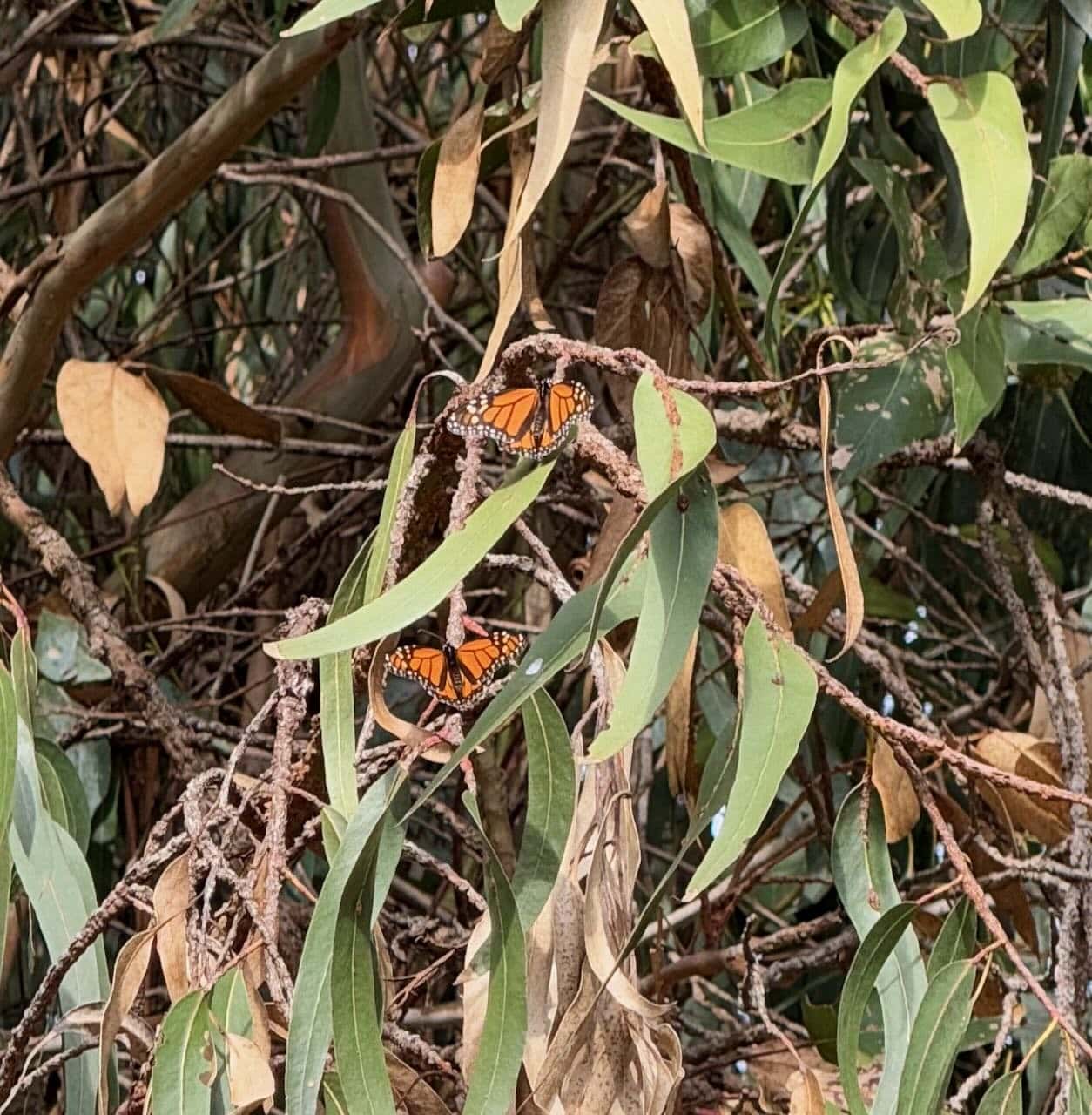
In a previous December, we visited the Monarch Butterfly Grove. It’s a free, short walk through eucalyptus trees. Peak season ends in February, and by mid-March, most of the colony has departed. We found two late-season stragglers clinging to the branches, their orange wings still vivid against the grey-green eucalyptus.
The key takeaway: the monarch butterflies that fly in from Colorado have no food on the way, and the weather is hot. So many die on the journey. We can all help by planting milkweed in the San Francisco Bay Area and along its migration path so they can rest and feed on the nectar.

San Luis Obispo
San Luis Obispo, or SLO as locals call it, is a genuinely likeable California college town with a walkable downtown, and one of the most reliably enjoyable weekly events in the county. It sits at the junction of Highway 1 and Highway 101 and makes a natural stopping point on any Central Coast road trip.
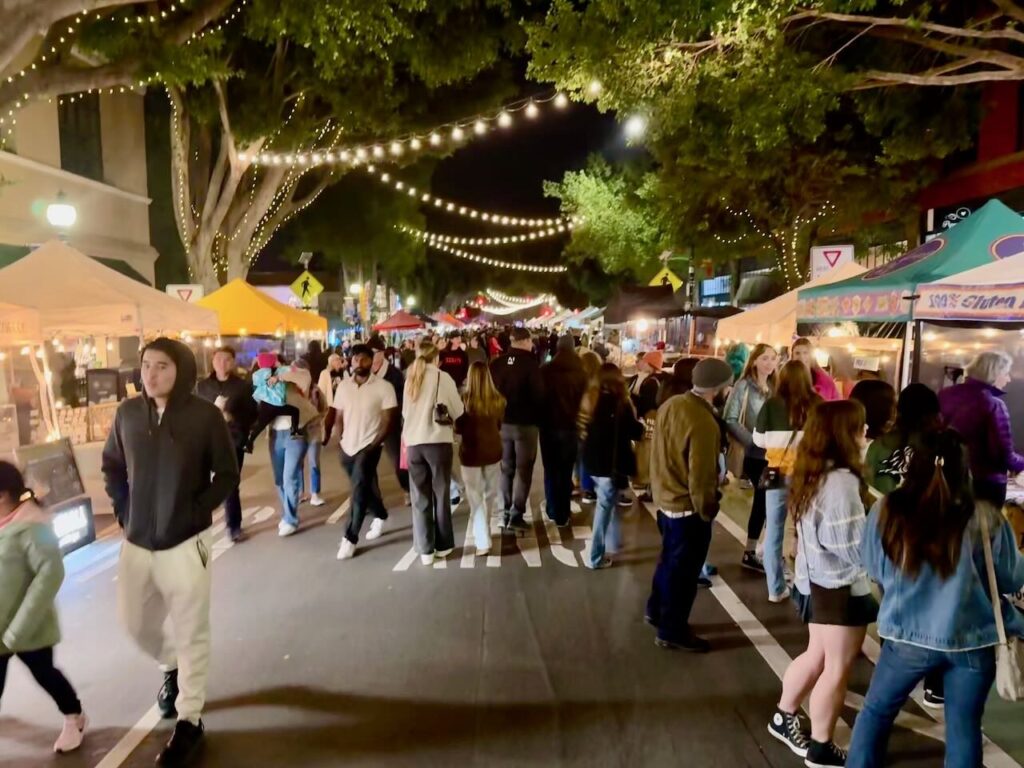
A couple of years ago, I was lucky to be in SLO on a Thursday night. Every Thursday from around 6 pm, the main downtown street closes to vehicles and transforms into a vibrant farmers market: vendor tents line both sides, string lights in the trees overhead, and the entire town apparently decides that Thursday evening is the best time to be outside. Among the young and energetic college crowd, we grazed our way down the street – spicy boiled corn from one stall, warm roasted nuts from another, tacos, fresh fruit.
There I met a family – a young Medjool farmer, his wife, and his six-year-old daughter. Their dates were so sweet, juicy, and fresh that I bought 40lb for my friends and me. I’ve ordered them every year during harvest time. Dates are the sweetest thing we eat as part of our plant-based, whole food diet, every day, as we learned from the Berbers of Morocco. Crazy nutritious too.
On this March trip, we ate dinner at Shalimar Indian, which had a dedicated vegan section on the menu, including vegan lassi and chai. A reliable find for plant-based travellers passing through SLO.
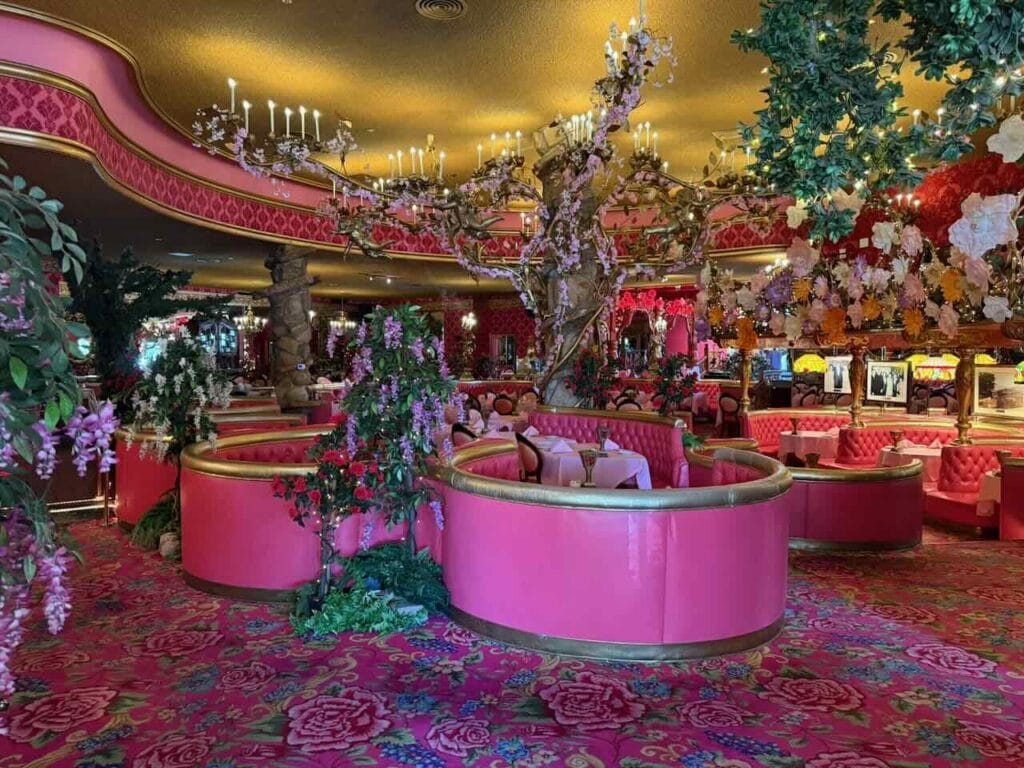
If you are passing through at any time, the Madonna Inn is worth a brief stop purely to see the dining room – a baroque explosion of pink velvet, gold ceilings, artificial trees in full bloom, and circular booths that have to be seen to be believed. We stopped for a restroom break while charging the car and stood in awe at the entrance for a few minutes, our expressions probably visible from across the room.
Eating Plant-Based on the Central Coast
The Central Coast is fundamentally a seafood destination. The fishing boats come into Morro Bay and San Simeon; the restaurants in Pismo serve clam chowder in sourdough bowls; and the markets overflow with the local catch. For vegans like us, it requires a little more intention than most destinations in California.
Our approach, as it so often is in places that do not cater naturally to plant-based eating, was to anchor our meals around Mexican and Indian restaurants. Both cuisines can reliably accommodate a vegan diet with a brief conversation with the kitchen. One thing that caught us off guard: neither of the Mexican restaurants we visited served vegetarian rice. Worth knowing before you order.
| Restaurant | Notes |
|---|---|
| Shalimar Indian, SLO | Full vegan section on the menu, vegan lassi and chai. Reliable and good. |
| Las Cambritas, Cambria | Mexican, next to Fermentations wine bar. Plant-based options available. Specify clearly and check the rice. |
| Taqueria El Guero, Pismo Beach | Mexican, casual. Plant-based options available. Same rice caveat applies. |
| Ynot Organic, Pismo Beach | 100% vegan and organic. One of the only fully plant-based restaurants in San Luis Obispo County. We had smoothies and juice and loved the menu. Dining is on the list for next time. |
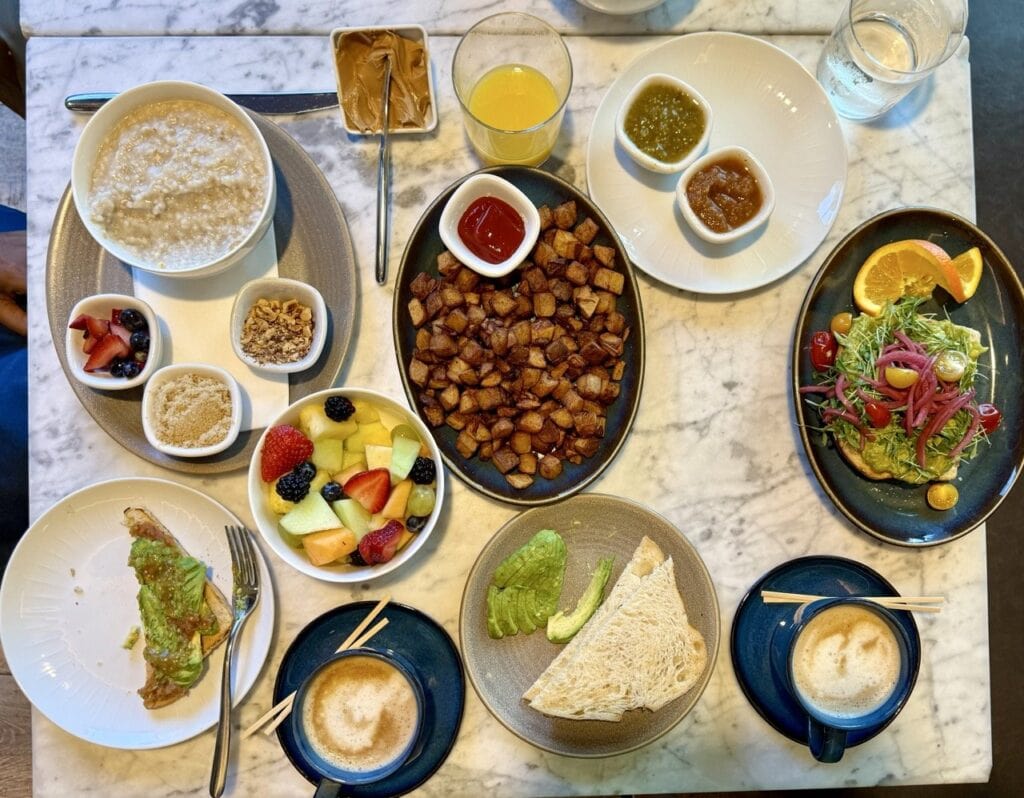
| Vespera Resort breakfast | The breakfast was genuinely plant-friendly without any special requests needed – oatmeal, avocado toast, fresh fruit, roasted potatoes, and good lattes. A pleasant surprise. |
Still Surprised, After Everything
After 128 countries on seven continents, people sometimes ask us whether anything still surprises us. Whether the accumulated weight of so many places has made the world feel smaller, more predictable, and easier to take for granted. The answer, always, is no. But the Central Coast this week reminded us of something specific: that the capacity for wonder is not something you protect by going further. It is something you practice. A Tuesday morning at Carrizo Plain in a year when the flowers came. A bobcat five feet away on a coastal trail, entirely on its own terms. An otter floating in the bay, eyes closed, teaching nothing and everything at once. Just three hours from home.
Our hearts fill with gratitude for the wonder our planet holds. I truly believe that each place and each experience is unique and joyful in its own way. If one can be present in that very moment.
As we learned in the middle of Carrizo Plain, Vipassana practice, with its deep-rooted equanimity, can convert any challenging moment into a non-event,
At a Glance
| Destination | California Central Coast, San Luis Obispo County |
| Duration | 4 days |
| Best time to go | March and April for wildflowers, wildlife, and green hills; elephant seal weanlings are at their best in March before the beach empties in April |
| Trip type | Self-drive road trip |
| Getting there | Drive south from San Jose on Hwy 101, approximately 3.5 hours to Pismo Beach. Pick up Hwy 1 at San Luis Obispo for the coastal stretch. |
| Getting around | Car essential |
| Plant-based dining | Manageable with planning. Mexican and Indian restaurants most reliable. Watch for non-vegetarian rice and beans. |
| Where we stayed | Vespera Resort on Pismo Beach, Marriott Autograph Collection. Comfortable base, generous included breakfast, walking distance to the pier. |
| EV note | Charging is fine in the main towns but essentially absent at Carrizo Plain. On a hot day range drops faster than expected. Don’t trust the dashboard number. |
| Visited | March 2026 |
| Last updated | March 2026 |
Practical Information
Piedras Blancas Elephant Seal Rookery
Free, open daily year-round. No booking required. Boardwalk viewing only. Do not approach the seals. December through March for the full breeding and birthing season; March specifically for weanlings learning to swim before departing in April. The Friends of the Elephant Seal visitor center in San Simeon has current information on colony numbers and activity.
Montaña de Oro State Park
Free entry, opens at 6am. The Bluff Trail trailhead is off Pecho Valley Road just beyond the visitor center, near Los Osos. Two miles, easy terrain, open year-round. Go at golden hour if you can.
Carrizo Plain National Monument
Free entry. Goodwin Education Center is open Thursday through Sunday, 9 am to 4 pm. Closed on weekdays. Bring water, food, and a full tank of fuel before entering; there are no services within the monument. Cell coverage is unreliable. Roads are unpaved in some sections and can be impassable after rain. EV drivers must plan range conservatively, particularly in warm weather.
Oceano Dunes on Foot
Park on Dolliver Street near Pismo Ranch RV park and walk through the campground to the pedestrian access at the diagonal end. Walk fifteen to twenty minutes away for the best views from the tallest dunes. Free to access on foot.
Morro Bay
Sea otters and birds are best seen from the pier and a walk to Morro Rock. The hillside viewpoint near the Morro Bay Natural History Museum (State Park Road) gives a great overview of the bay. Short walk from the road, no fee, often empty.
SLO Thursday Night Farmers Market
Higuera Street, downtown San Luis Obispo, every Thursday from approximately 6pm to 9pm year-round. Free to attend.
Where We Stayed
Vespera Resort on Pismo Beach, Marriott Autograph Collection. Well located on the Pismo Beach pier, comfortable, and the included breakfast handles plant-based eating well without requiring special requests.
Continue Reading About United States
Last Updated on March 23, 2026 by Jyoti Baid