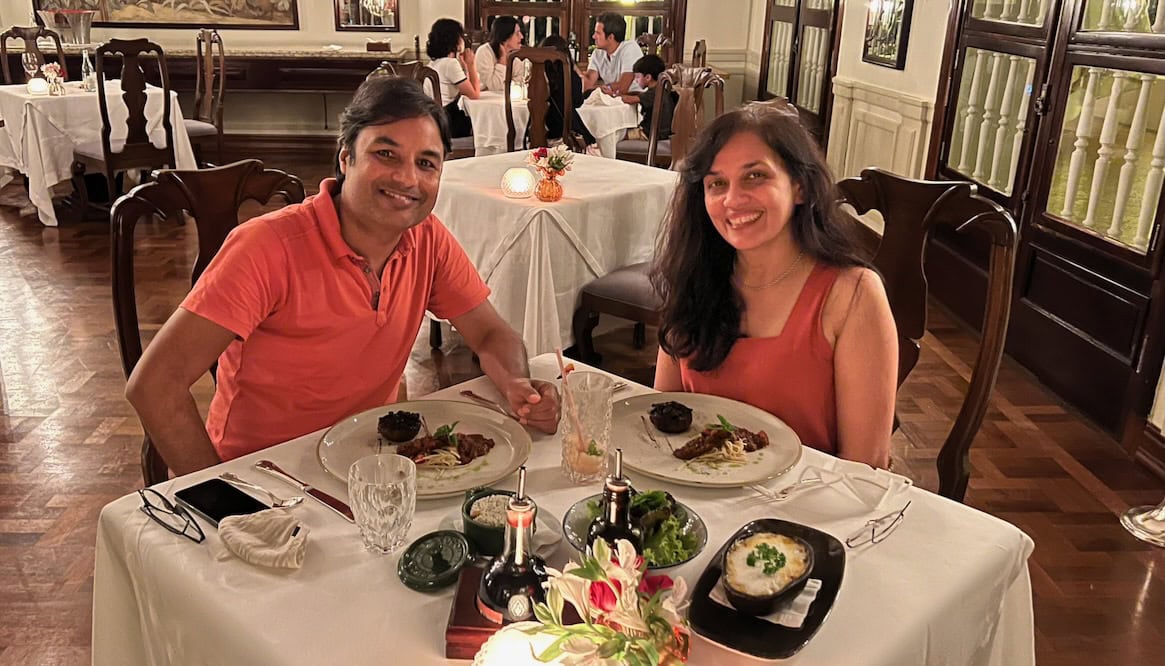
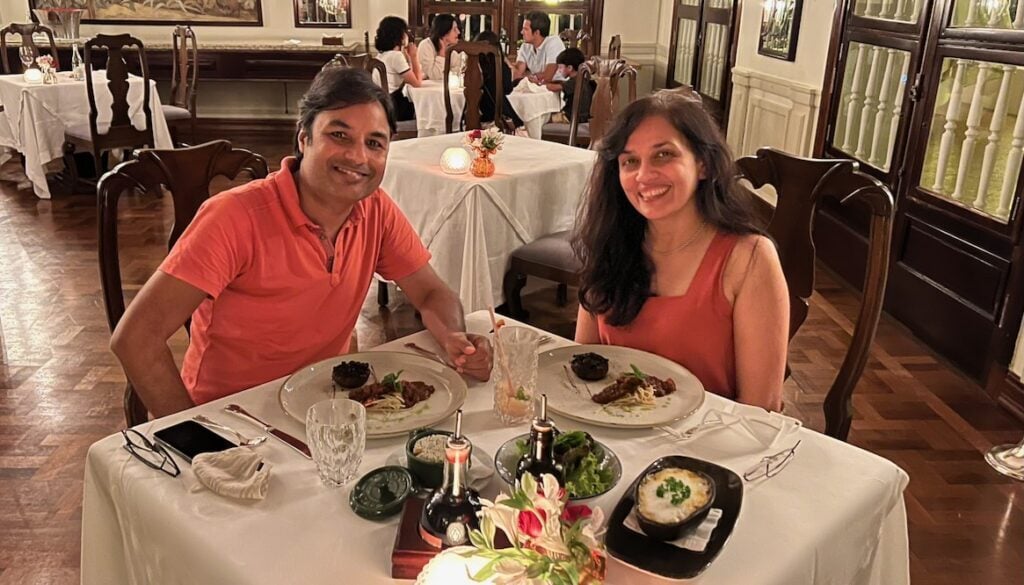
Growing up with Rajasthani food in our DNA means every single meal is gourmet, featuring a variety of grains, vegetables, curries, salads, lentils, rice, chutneys, and desserts. Each item is an explosion of flavors in harmony that hits just the right spots. A plain meal for multiple days is truly unpalatable. That DNA has traveled with us around the world, on a plant-based diet for many decades. This plant-based travel guide is everything we have learned in our decades of travel globally.
We practice what is formally called a whole food plant-based diet, or PBWF. No meat, no fish, no dairy, no eggs, minimal oil, minimal processing. We don’t compromise on our foodie DNA because flavor is the essence of life itself. The question we get constantly is: how do you manage? After three decades, the honest answer is that we have become very good at it.
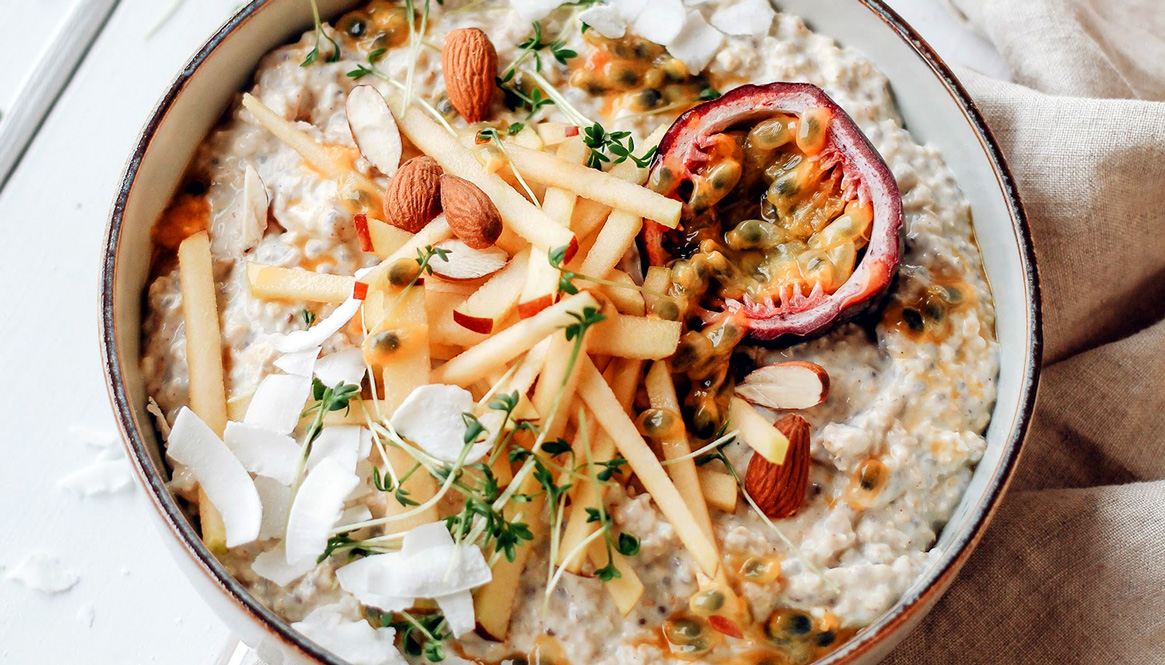
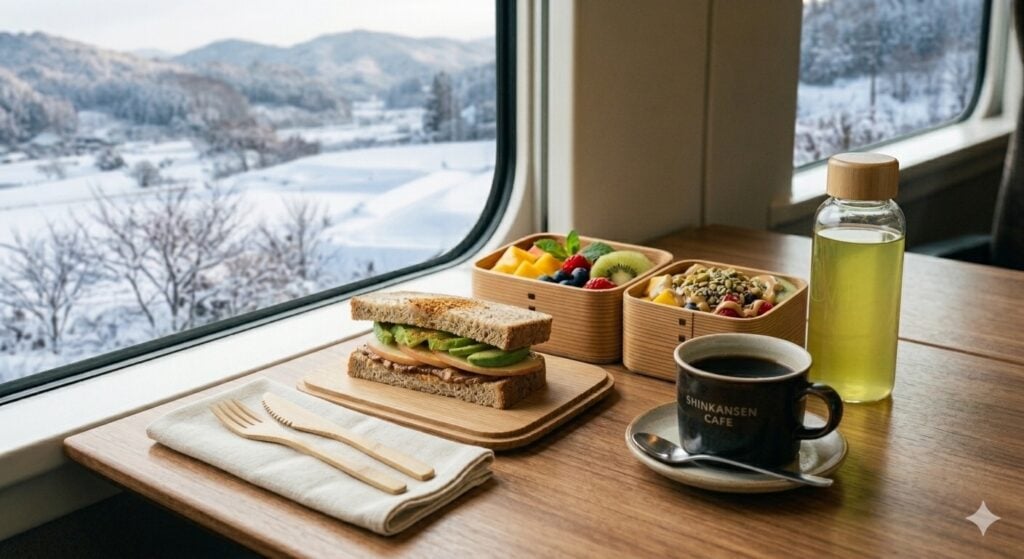
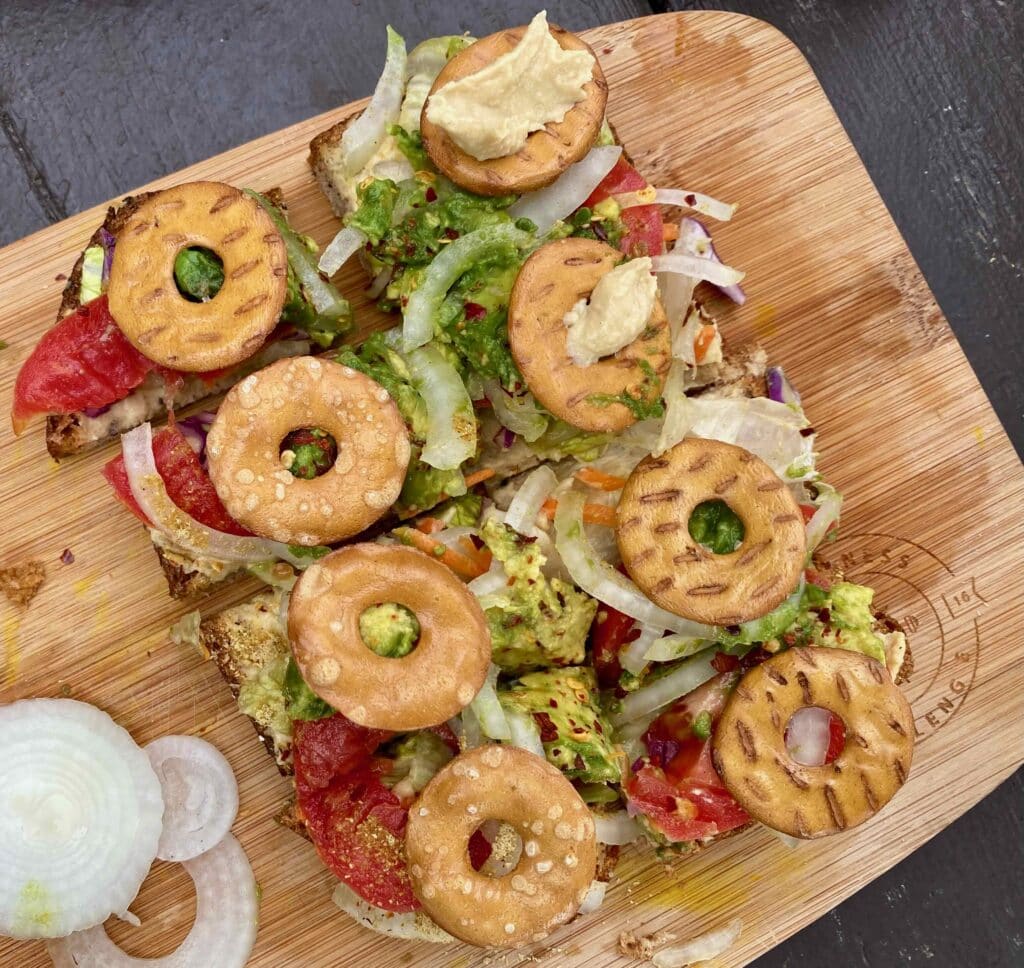
When traveling on the Shinkansen on the JR pass, almost daily, we took a gourmet breakfast pack from our apartment, with a sandwich layered with crunchy almond butter, creamy avocado, sweet & tangy Fuji apple, and a generous drizzle of spicy peanut chutney powder. Accompanied by a box of fresh fruit, roasted nuts, and creamy cashew butter. A piping hot cup of coffee and a Japanese green tea. Every morning on the Shinkansen started with a lavish spread, followed by a fun and active day of exploration.
One note on terms: when we say “plant-based” or “vegan” in this post, we mean the full PBWF approach. This guide will be equally useful to all vegetarians and foodie travelers.
Research the Food Culture Like Your Trip Depends on it
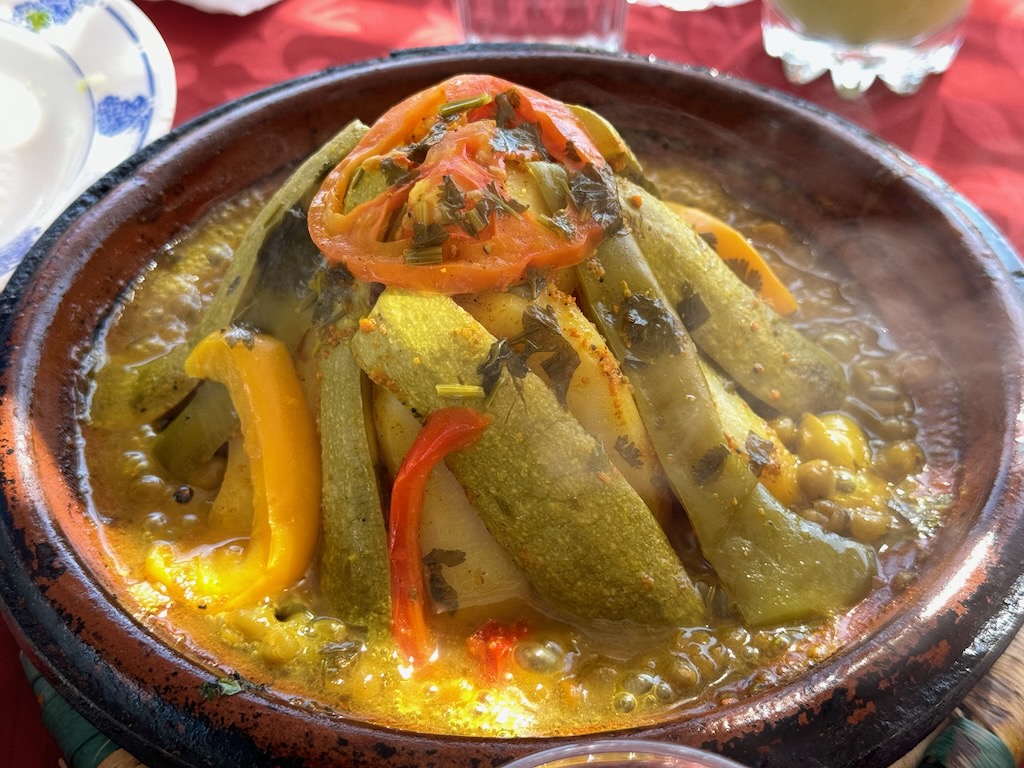
Would you arrive at a destination without planning flights, hotel, transport, or attractions? Of course, now! The same applies to food planning.
As soon as we’ve booked flights and hotels, before attractions, we research what the local people eat. This is as exciting as anticipation for attractions and experiences. Maybe there’s a special restaurant or a rare Michelin-starred restaurant you need to book in advance. Maybe there isn’t.
Research these questions before any trip:
Is there a naturally plant-based food tradition? India, Bhutan, the UK, Ethiopia, Taiwan, much of the Middle East, Japan’s Buddhist temple cuisine, and the bean-and-rice cultures of Central America all have native plant-based eating culinary identities. What do ordinary people eat daily? For example, Kenyans are not vegetarians, but the common daily food is ugali (corn, water, and salt) with sukuma (curry of leafy greens). An ask for ugali with sukuma will delight any local. Essentially, you just need to know what foods to ask for.
Are animal products used as flavoring rather than the main ingredient? This is the trickiest situation. Fish sauce across Southeast Asia. Lard in Mexican street food. Chicken broth is a cooking base across Eastern Europe. Bonito (fish flakes) in Japanese dashi stock, the base of miso soup, noodle broths, and most sauces. A dish may look plant-based but is not. Having this knowledge in your back pocket is everything.
Is there an active vegan travel community writing about this destination? If yes, your research is easy. Use HappyCow, travel blogs, and Reddit’s vegan travel threads. If you find almost nothing written, that is useful information too. It means you need to be better prepared. We’ll talk about it in this article.
Is there a special restaurant or food event at the destination? Check if there is a famous chef, a Michelin-starred restaurant, a Michelin guide restaurant, or a food event in town. That is how we discovered Gaggan had just opened his new restaurant in Bangkok, while booking flights in 2023, not from a food magazine months later. His 14 seats sell out the moment they are released. Early research got us to the most coveted chef’s table a plant-based traveler can find.
Communicate Your Diet Precisely, in the Local Language
“Vegetarian” means different things in different countries. In much of the world, it means no red meat. In others, no beef specifically. Eggs and fish are considered fine by some. The most valuable preparation for any new country is getting the exact phrase for what you eat translated correctly. Not “no meat” but “no meat, no fish, no eggs, no dairy, nothing from animals.” Then have a local verify the translation actually says what you mean.
- Japan: Asking for shojin ryori immediately identifies a kitchen that understands exactly what you need.
- China and Taiwan: The character sùshí (素食) is universally understood as Buddhist plant-based. Show it on your phone.
- India: Specifying sattvic communicates a rigorous standard instantly, without a long explanation. ‘Jain food’ is an odd one. The original definition of the Jain diet in the agams is the same as that of modern-day vegan. Unfortunately, now it implies vegetarian minus onion, garlic, or some random veggies, for irrelevant reasons. Oddly, it includes dairy, which was banned in the sutras/scriptures. (I say this is an annoyed Jain myself).
- Bhutan: Like many languages, Bhutanese doesn’t have a word for plant-based food. Ngachha or sha ma zey implies vegetarian or meatless. Datshi ma zey implies no cheese. Mar ma zey implies no butter. Since we visited Bhutan with a guide, he arranged for Indian or Chinese vegan food everywhere.
- Iraq: I got away with a few terms like be-gosht and be-labaniyat, and others detailed in my Iraq travel guide.
Apps and Tools to Find Vegan Food
The landscape for plant-based travelers has changed dramatically in recent years. Almost every city now has vegan restaurants, often excellent ones, that simply did not exist a decade ago. Finding them has never been easier.
Maps: Search Smarter
Maps is our first go-to app for vegan food research, even though it is massively underused by plant-based travelers. I use Apple Maps and save everything to Collections before any trip. Nirmal is a Google Maps person. Between the two of us, every destination is covered from every angle. The good news is that the search terms work well on both.
In any city, try searching for these phrases and you will be amazed what comes up:
- Vegan restaurant or plant-based café to start
- Breakfast bowl, avocado toast, or grain bowl. These items imply a kitchen that caters to a vegan diet
- Acai bowl, smoothie bowl, or juice bar are reliably plant-based and often serve full meals too
- Taco, falafel, hummus, are cuisines that naturally work for us (more on this below)
- Indian, Thai, Mexican, Ethiopian, or Middle Eastern restaurant searches work great. If all fails, Indian restaurants will almost always serve a good vegetarian meal.
PRO TIP
Apple Maps tip: Create a Collection before a trip. Name it something like “Tokyo – Food”, separate from “Tokyo – Sights”, or have a combined collection named “Tokyo”. Add every recommendation from friends, blogs, or apps. Lookup your collection when you’re on the go and hungry, or when planning the day.
Google Maps tip: Save your finds as starred locations in Google Maps. When you are on foot in an unfamiliar city, open your map and see which saved restaurants are nearby.
HappyCow
HappyCow is the gold standard for vegan or vegetarian travelers. It is the most comprehensive global database of vegan and vegetarian restaurants, with user reviews and photos organized by country, city, and neighborhood. You can download the app or use the website for free. Even in places that surprised us, like smaller cities in Eastern Europe or towns in Central Asia, HappyCow turned up options we may not have found otherwise.
TripAdvisor and Yelp
Both are useful for reading reviews from other plant-based travelers. Search within reviews for the word “vegan” to filter for relevant experiences. Especially helpful for smaller cities where HappyCow coverage is thinner.
Yelp has richer data in the US, and TripAdvisor is more popular internationally. Some countries have very vibrant TripAdvisor groups, with passionate locals and recent visitors. They generously share advice and answer questions on food, sights, activities, experiences, weather, or anything needed for the trip.

Instagram and Local Facebook Groups
Search location hashtags like #[cityname]vegan or #[cityname]plantbased for recent posts from locals and influencers. These are often more up-to-date than apps.
Local vegan Facebook groups for major cities are an underused treasure. Post your question, and locals will answer with specific, current recommendations that no algorithm surfaces.
Google and Apple Translate Camera
Point your phone at any menu, and the Translation app’s camera reads it in real time. It is not perfect, but it is remarkable. Download the language pack for offline use before you arrive.
I use translation apps all the time in grocery stores to find products and read descriptions written in the local language. As a die-hard ingredient checker, translation tools have saved me more times than I can count.
The Vegan Passport App
The Vegan Passport explains what you do and do not eat in 79 languages. Essential for destinations where English is not spoken and where gesturing at the menu only goes so far.
Cuisines That Feed Plant-Based Travelers Well Anywhere
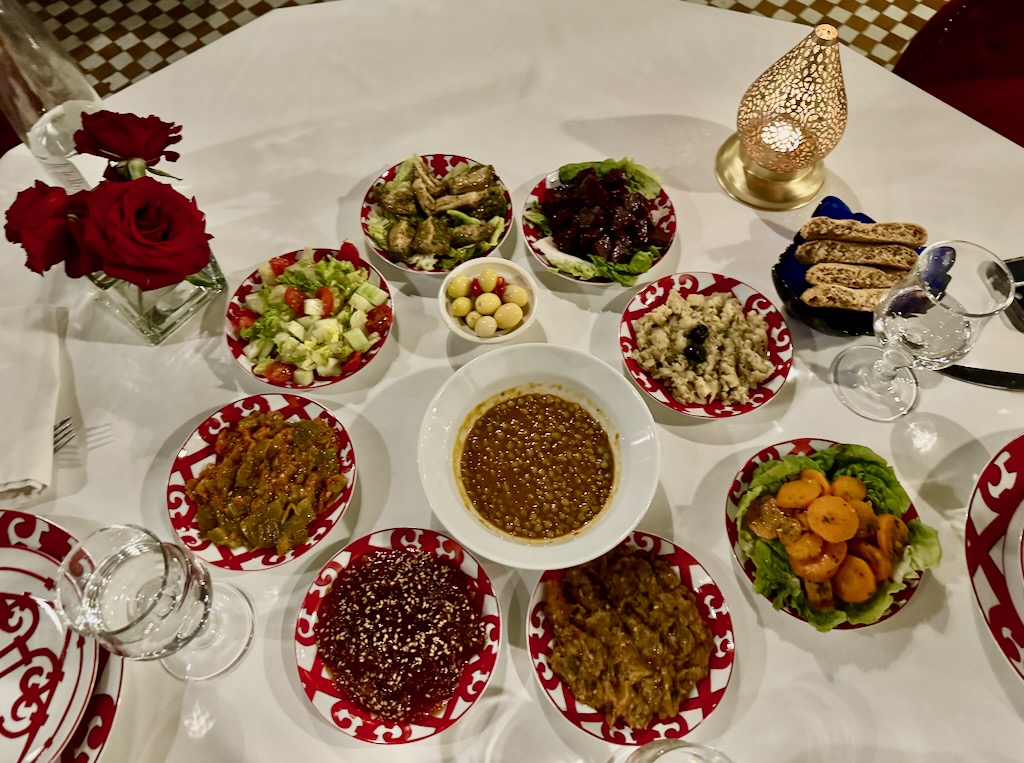
Many ancient ethnic diets, like Morocco’s Berber diet, are mostly vegetables, partly for health reasons and partly because animals were precious, hence expensive, for the people.
We prefer to experience the local cuisine whenever possible, even vegan versions of local non-vegan dishes. But sometimes it’s not possible, so here is one of the most practical things to know: certain cuisines are reliably plant-based-friendly wherever in the world you find them. In cities, especially, these are your anchors.
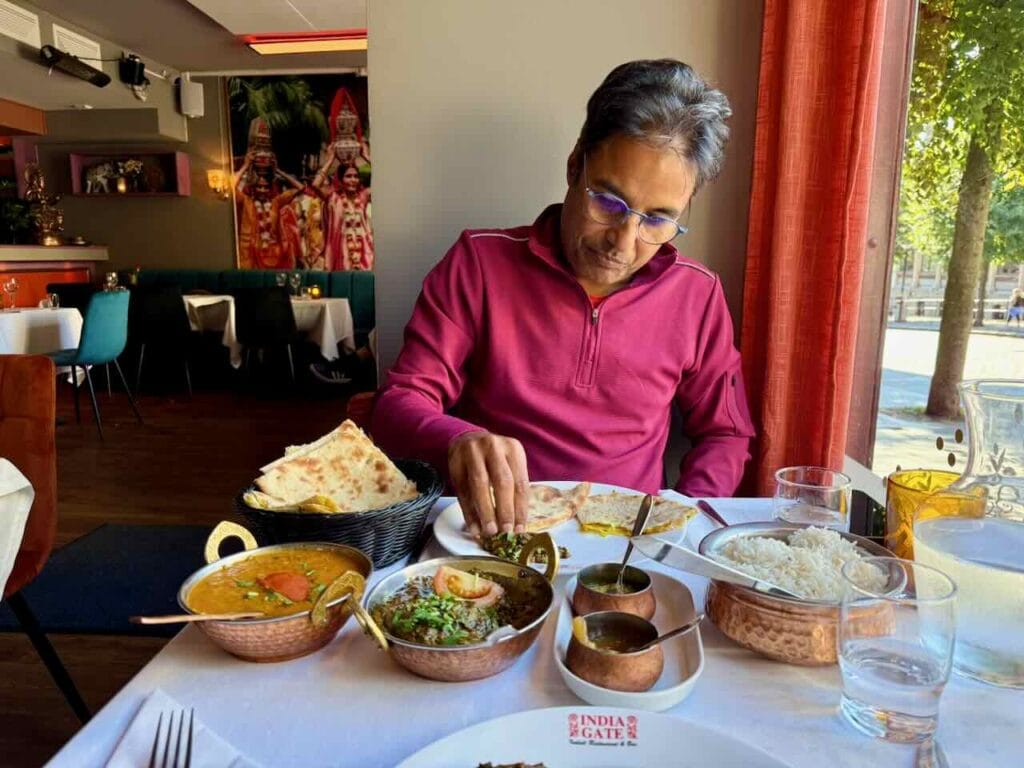
Indian
The most dependable option on earth for plant-based travelers. Indian cuisine has centuries of vegetarian tradition and naturally produces dishes that are completely plant-based or easily adapted. Our standard order in any Indian restaurant, anywhere in the world:
- Dal: ask for it cooked without visible oil or ghee. Most kitchens will do this without any fuss
- Tava Roti or chapati. You can ask for ghee, butter, and oil-free
- Saag or palak (spinach) dish, typically made with paneer but easily made with potato instead. Just ask. Any Indian kitchen will know exactly what you mean and will do it happily. This dish covers green leafy veggies for the day.
Chana masala, rajma, aloo, okra, and eggplant dishes are also reliably plant-based. In Indian restaurants outside India, double-check that butter is not used in the cooking base. They can replace it with oil, but it is nearly impossible to avoid all oil, butter, and ghee.
Mexican and Tex-Mex
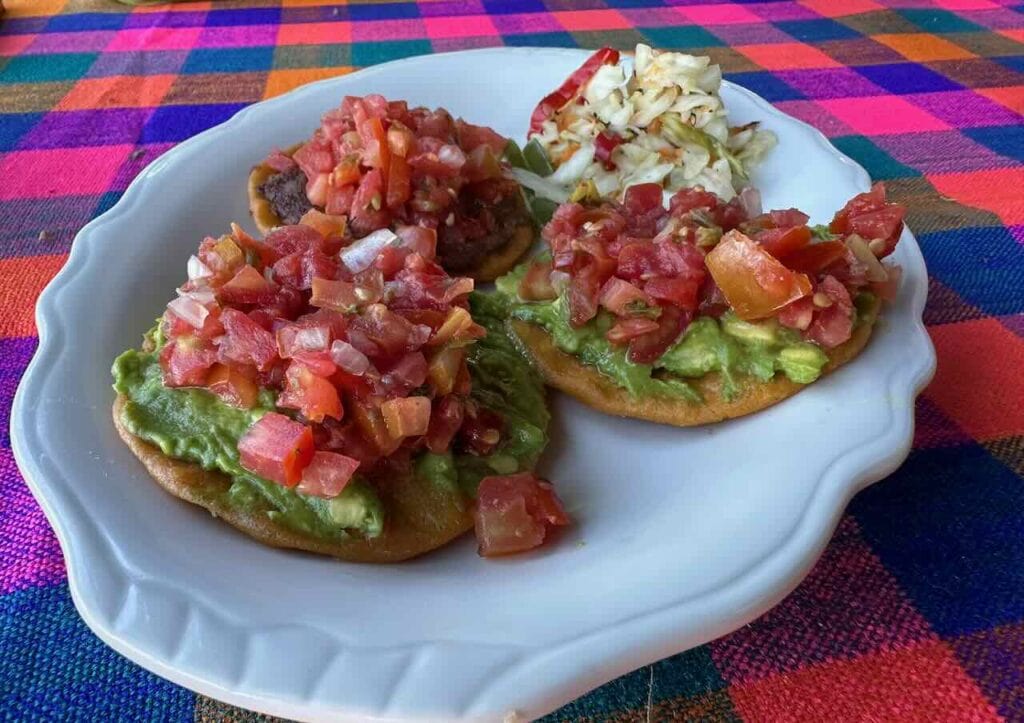
Rice, black beans, pinto beans, salsa, guacamole, corn tortillas – the building blocks of Mexican food are naturally plant-based. A plate of rice and beans with avocado and salsa is a genuinely great meal. Specify corn tortillas since flour tortillas sometimes contain lard. Ask about the beans, too. They are occasionally cooked with lard in traditional preparations.
Middle Eastern: Lebanese, Turkish, Persian, Israeli
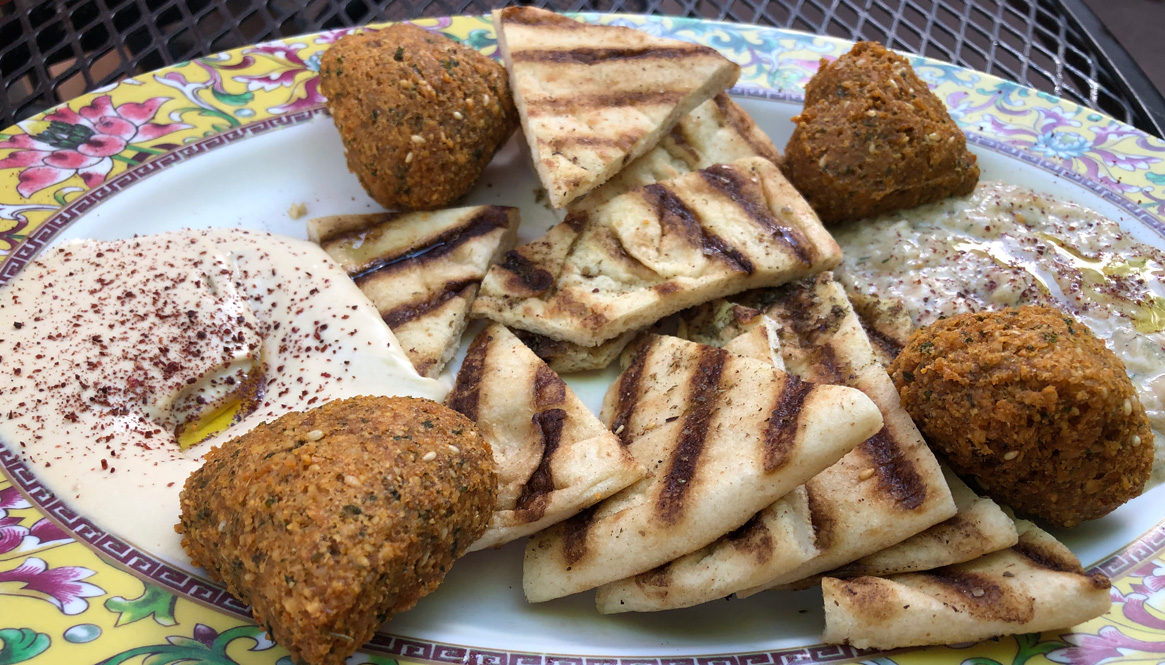
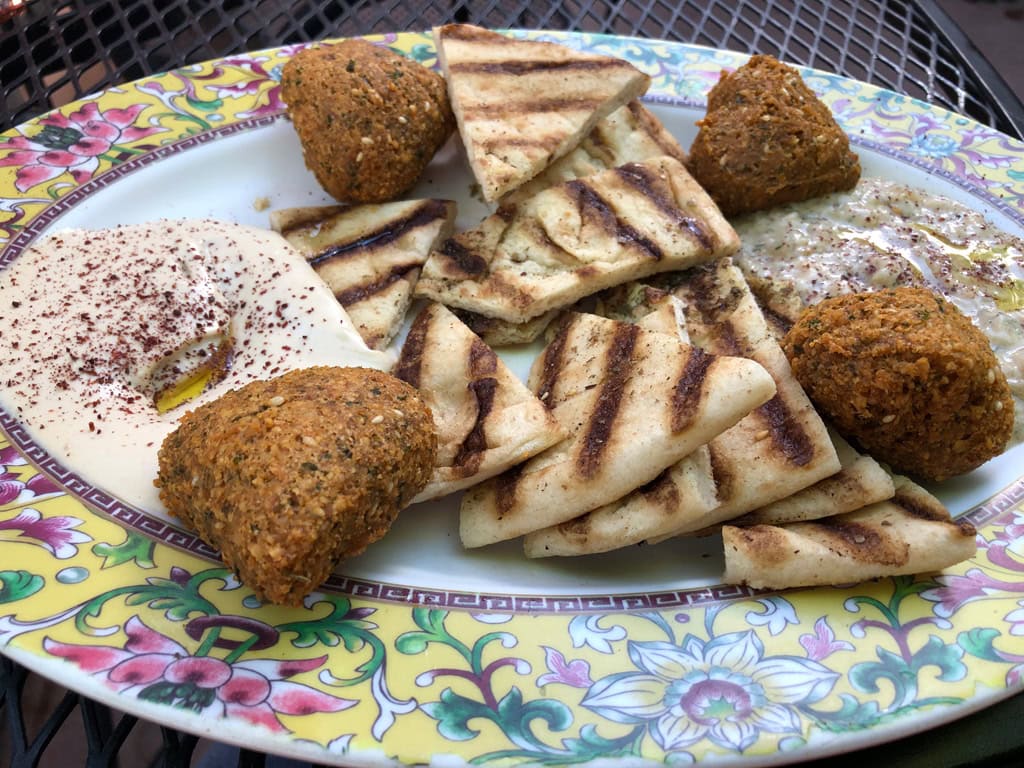
Middle Eastern food is excellent for a plant-based diet. Hummus, falafel, tabbouleh, fattoush, baba ganoush, lentil soup, stuffed grape leaves, and roasted vegetables with tahini are delicious and nutritious. This is some of the most naturally plant-based cuisine in the world, and it travels beautifully. You will find it on every continent. A Lebanese mezze spread is one of the great plant-based meals anywhere.
Ethiopian
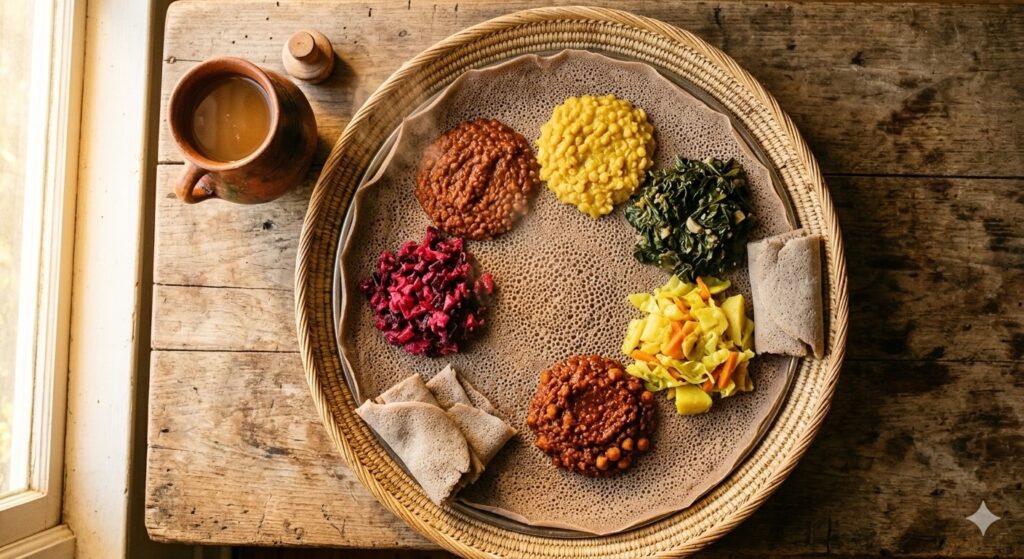
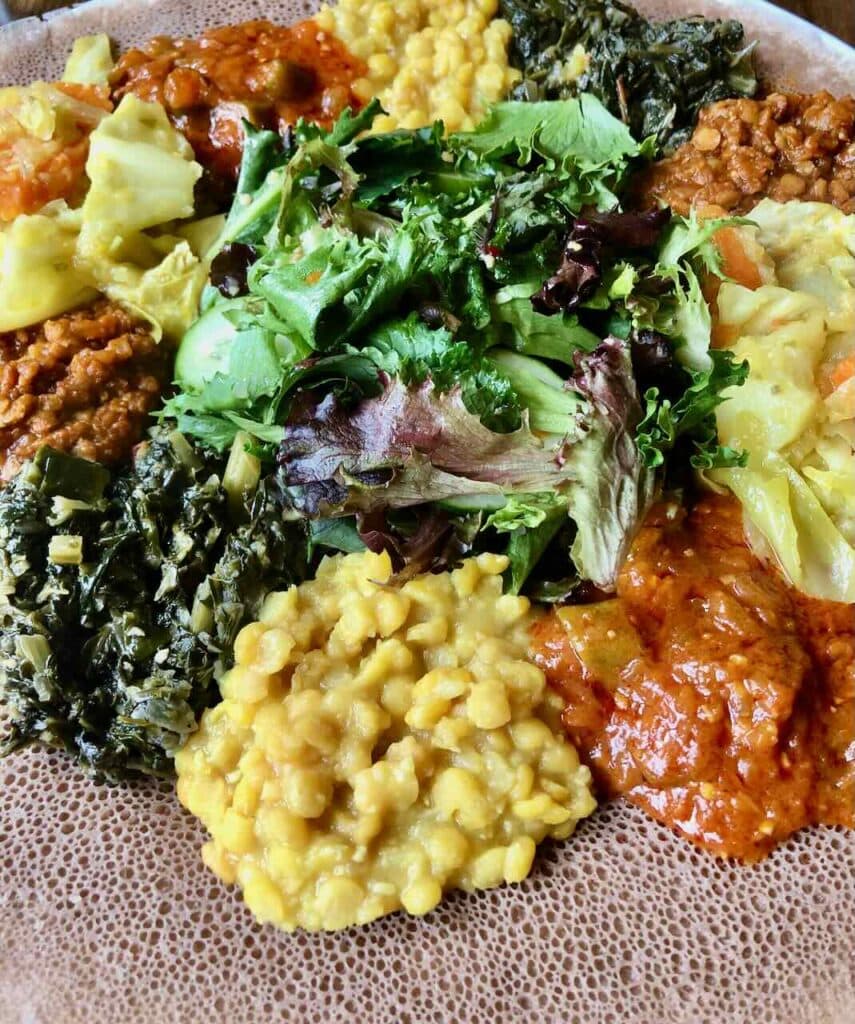
Injera with lentil and vegetable stews is one of my favourites and possibly the world’s greatest plant-based meals. Ethiopian Orthodox fasting traditions mean a large portion of the menu is inherently vegan. Ask for the fasting menu, called tsom, and you will eat exceptionally well. It is also naturally oil-light in fasting preparations, making it a rare PBWF-compatible restaurant option.
Since Ethiopian Airlines joined Star Alliance in 2011, the airport has completely transformed from a tiny, primitive one into a large, modern hub for Africa, and it’s still growing. During our visit, Addis Ababa had a few nice hotels, but food was never a problem. Now, the modern city is catering to tourists and is worth a 2-day trip to visit Addis Ababa, and even the airport lounge has a section of the buffet dedicated to traditional Ethiopian vegetarian cuisine.
Japanese: Shojin Ryori and Beyond
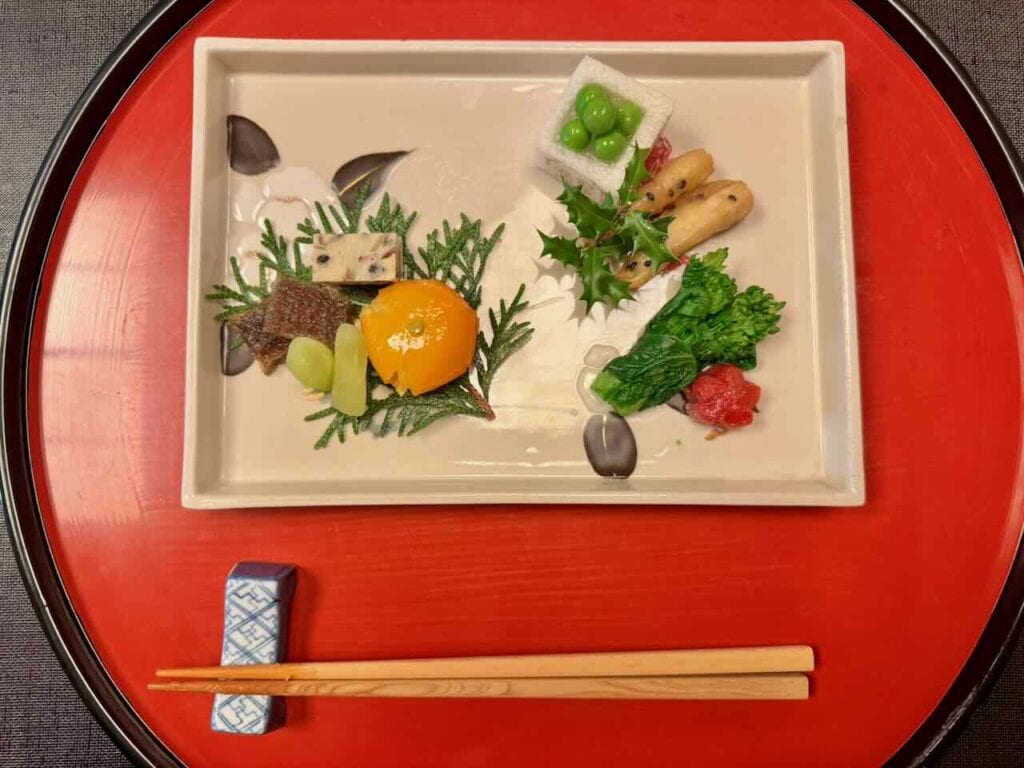
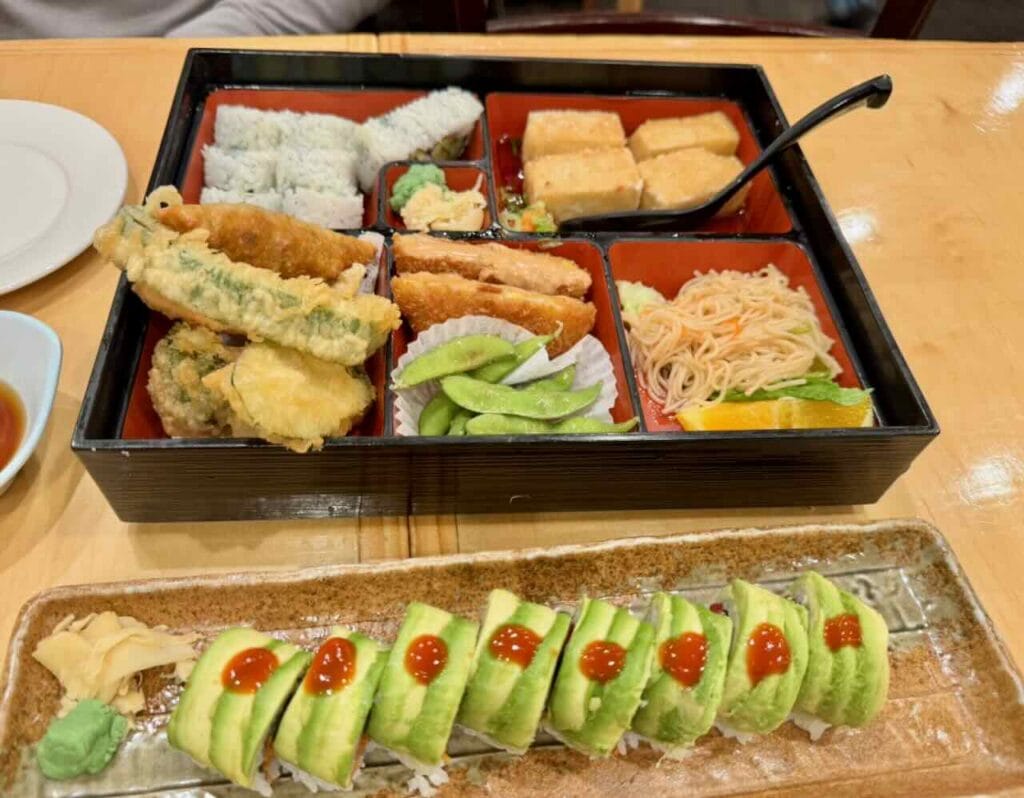
Ask for shojin ryori, Buddhist temple cuisine, and you will get a rigorously vegan meal based on centuries of tradition. Available at many traditional restaurants, not just at temples. Even outside dedicated restaurants, edamame, vegetable sushi, certain noodle dishes, and tofu preparations work with careful ordering. Japan rewards the prepared plant-based traveler enormously.
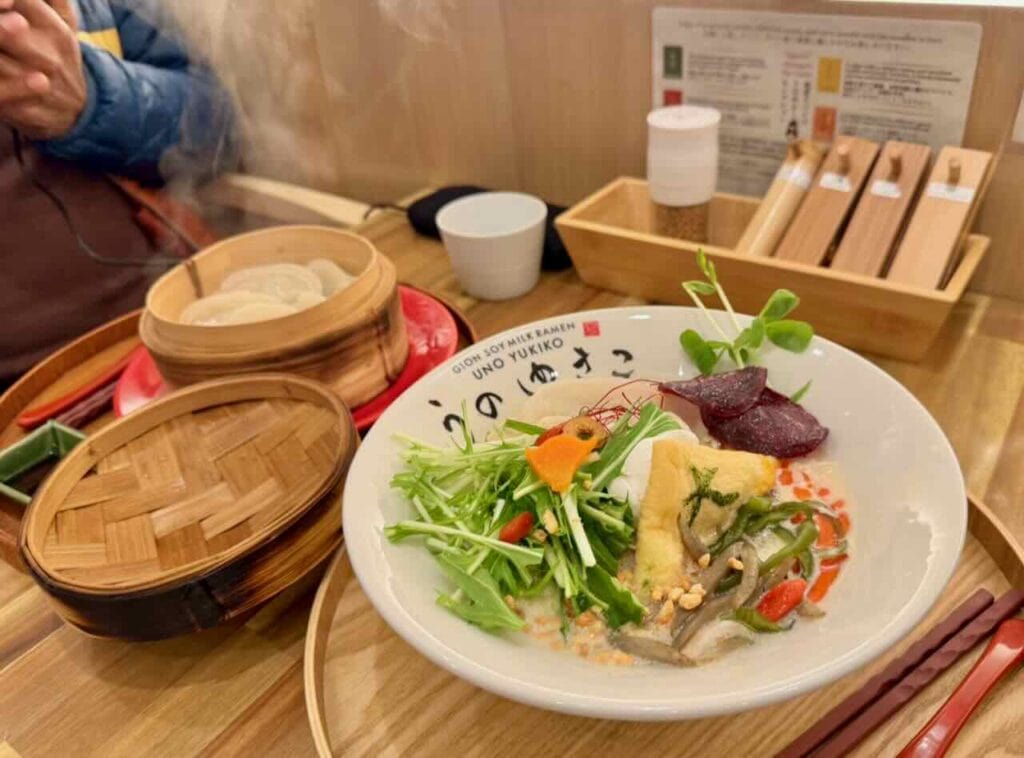
Beyond upscale restaurants, Japan has incredible ramen places like T’s Tan Tan, and Indian restaurants near almost every station. The convenience stores have some healthy, ready-to-eat choices, like edamame, ume onigiri (rice balls), and veggies. Delicious roasted sweet potatoes, miso soups, veggies, and rice can be found anywhere.
Chinese and Taiwanese Buddhist Vegetarian
The character sùshí (素食) identifies Buddhist vegetarian restaurants in China and Taiwan. These are entirely plant-based by religious tradition. In Taiwan especially, this restaurant category is widespread, and the food is exceptional. Worth learning to recognize those characters before you arrive.
Mediterranean
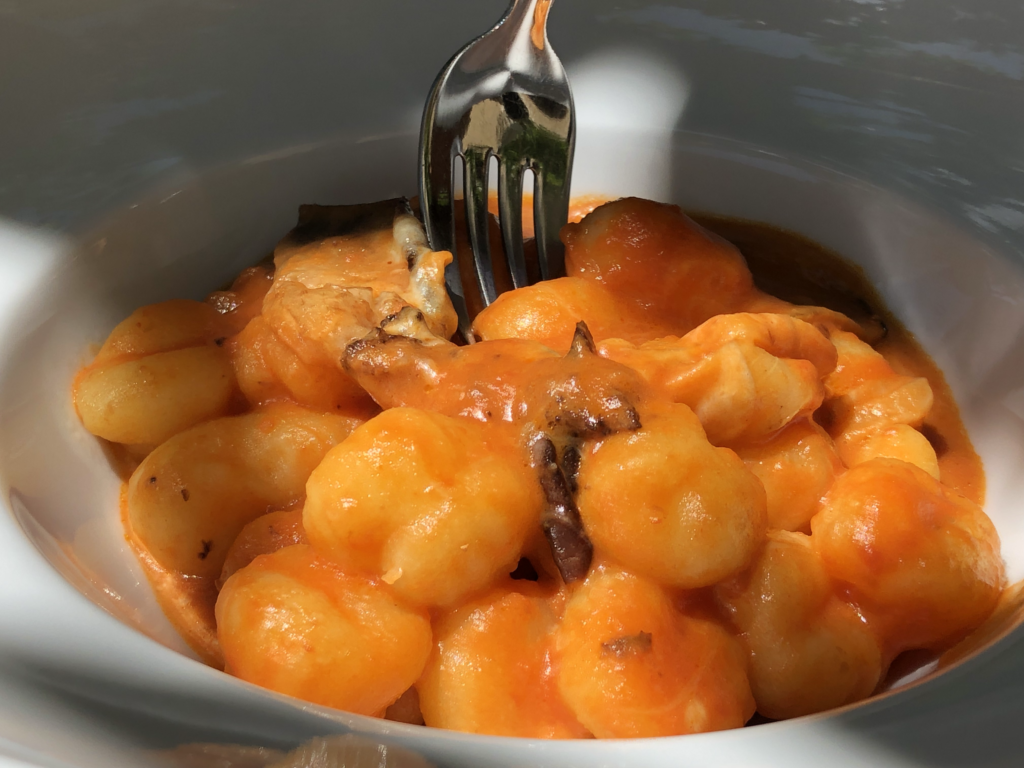
The Mediterranean diet is respected as a pillar of longevity in the Western world, for good reason. Greek, Spanish, Italian, and Southern European food offer grilled vegetables, legume soups, fresh bread, and market salads. The challenge is hidden dairy and fish in sauces. Ask specifically. Pasta in Italy is the very best, with scrumptious tomato and vegetable sauces.
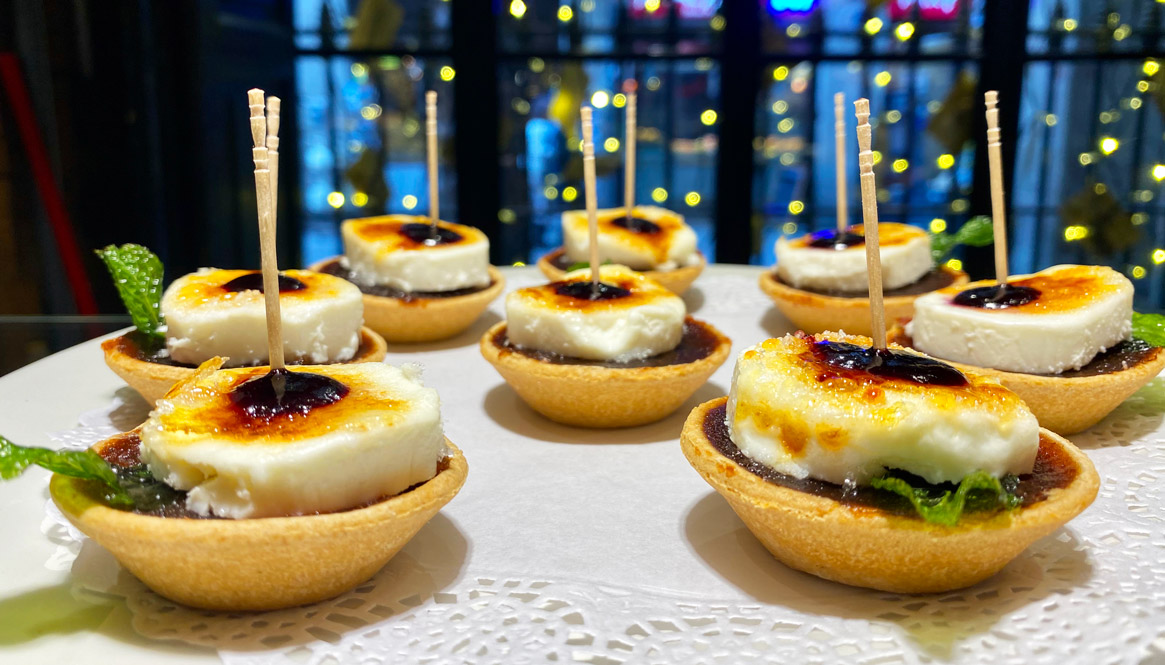
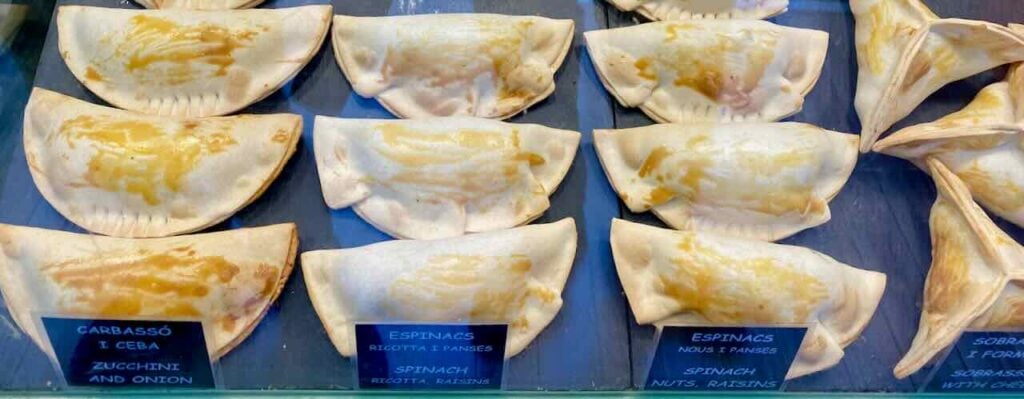
In Spain, the pintxos and tapas culture in cities like Barcelona makes plant-based eating genuinely enjoyable. Euskal Etxea Taberna in Barcelona’s Born neighborhood is a favorite stop for vegetarian Basque bites. Order, settle in, and let the evening take care of itself. That is the Spanish way.
We stayed in Barcelona for a couple of weeks over New Year’s Eve, just before the COVID pandemic unfolded. Great food and celebrations were in full swing with traditional Spanish foods made vegan and some adaptations.
Farmers Markets, Food Markets, and the Produce Stall on the Side of the Road
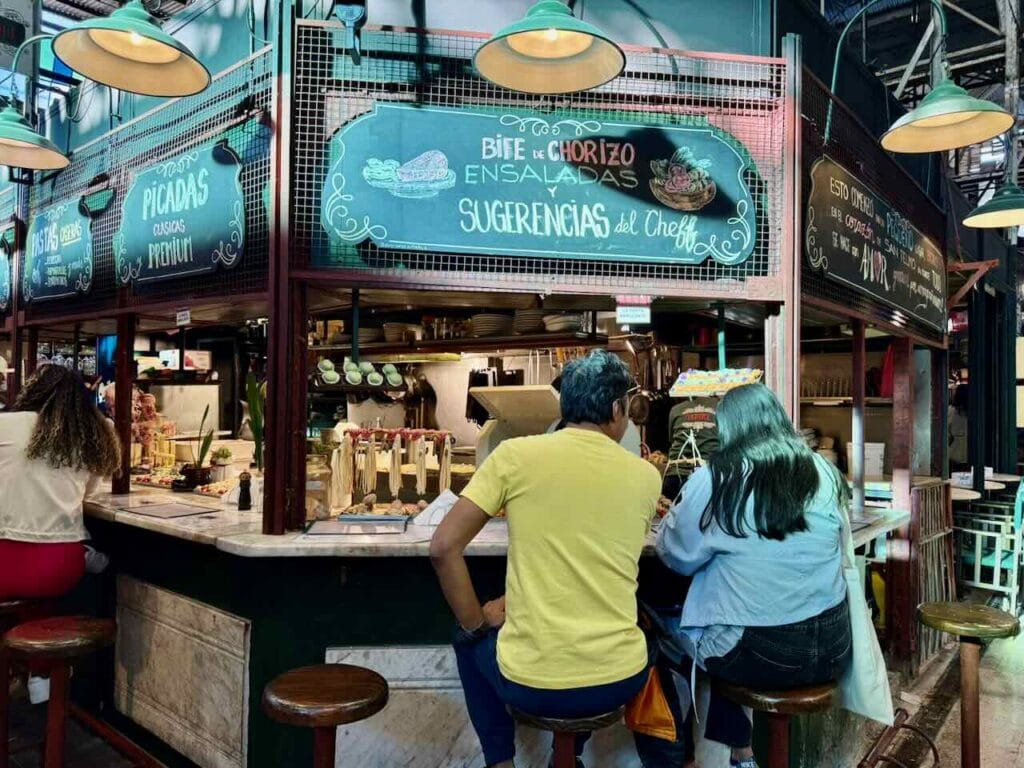
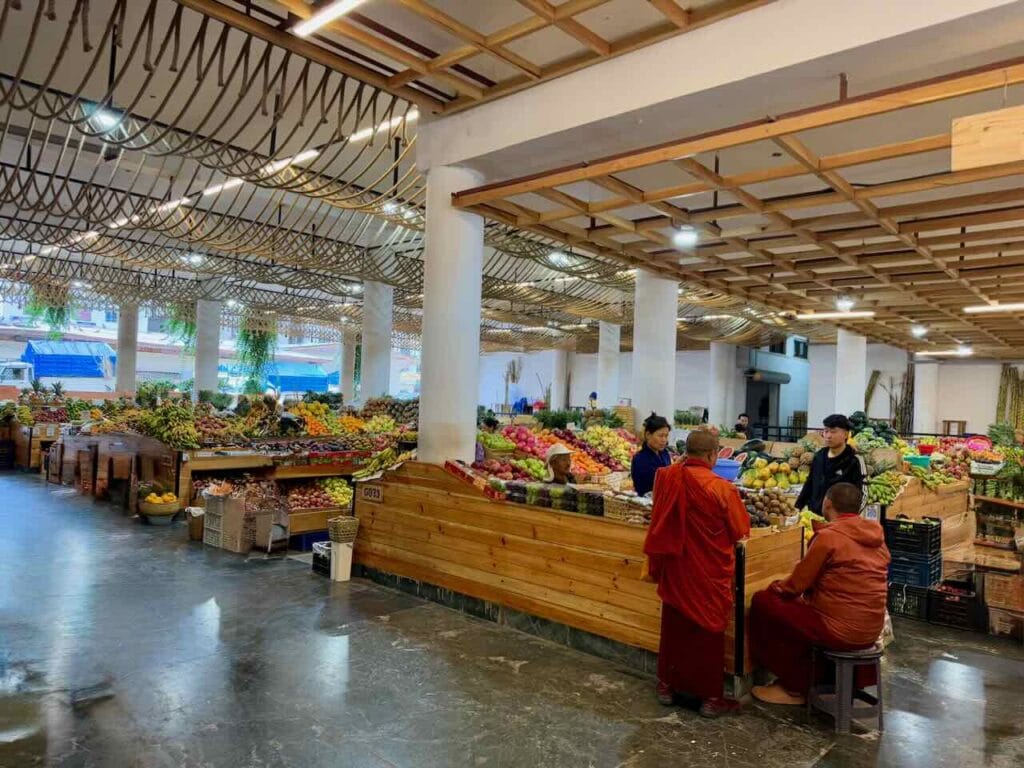
Some of our freshest and most memorable meals while traveling have been at food markets, farmers’ markets, and weekly pop-up markets.
Farmers Markets for Breakfast and Provisions
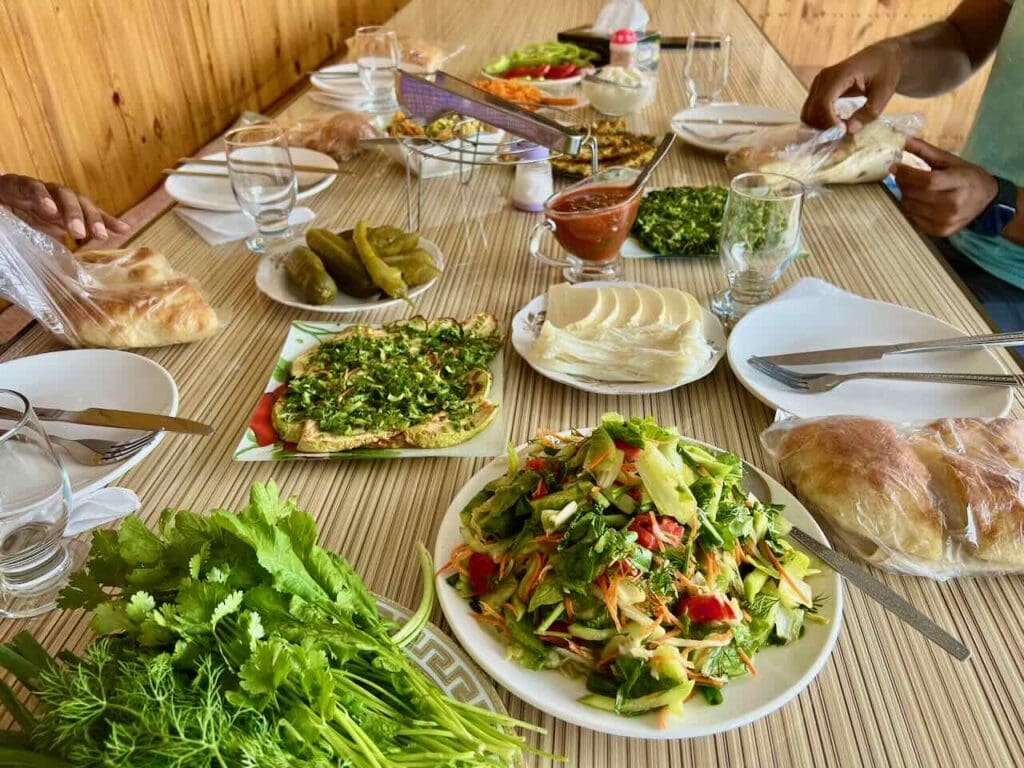
We love farmers’ markets for morning fruit and produce. Local, seasonal, eaten simply. In Eastern Europe, the produce stalls that appear along highways directly at the farm are extraordinary. Tomatoes are still warm from the sun. Cucumbers picked that morning. Stone fruit at peak ripeness. These are not curated market experiences. They are farmers selling what they grew. We stop every single time we see them.
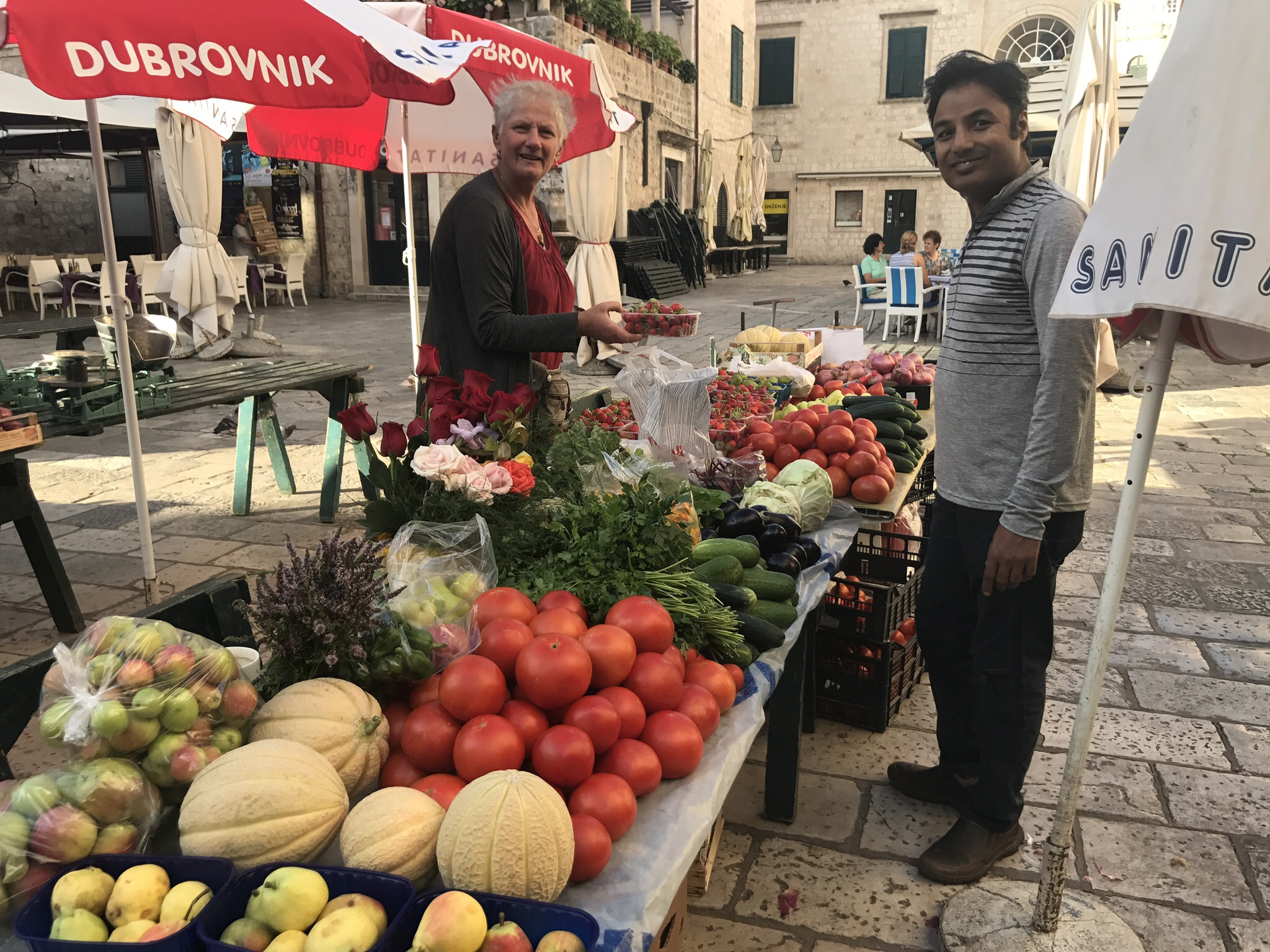
Local Farmers’ Markets are also the best place to stock up on fresh produce and fruit for a day of travel, packed meals, or apartment cooking. It is also a great way to meet locals and support the local economy. Which brings us to the next point.
The Great Food Markets of the World
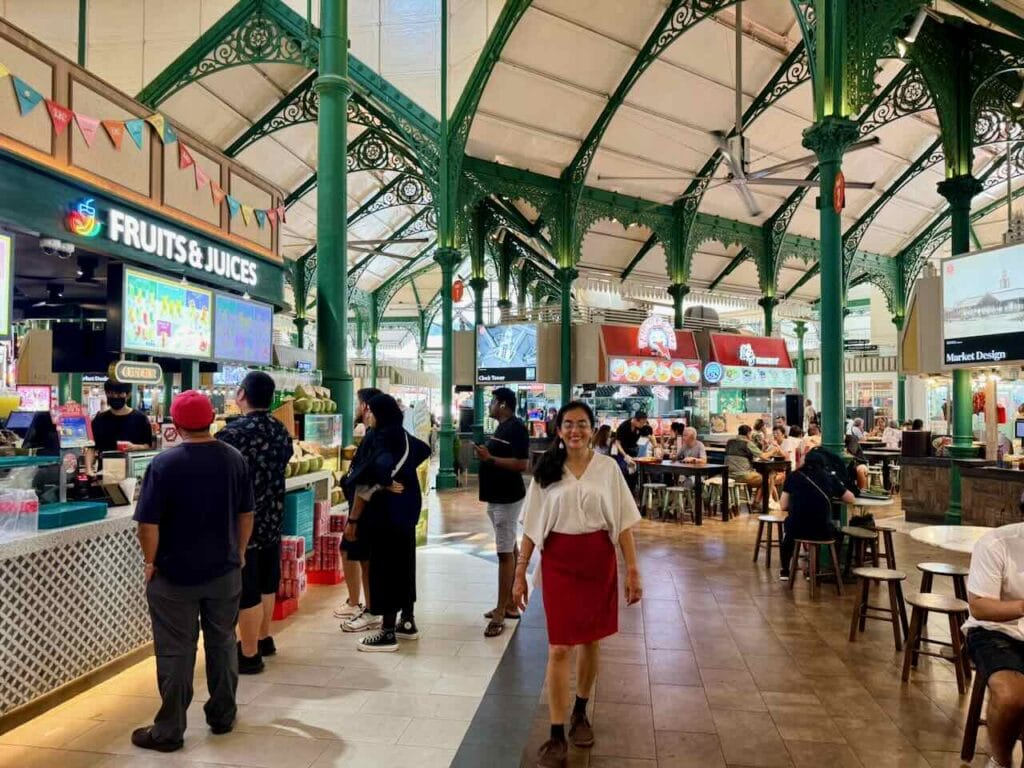
Food halls and market complexes have become some of the best places for plant-based travelers to eat well, browse freely, and choose from dozens of cuisines at once. In some cities, the food markets are a top attraction. Here are a few that we’ve loved dining at –
- Time Out Market, Lisbon, Portugal’s best chefs, multiple plant-based options, and a beautiful atmosphere
- Lau Pa Sat and Maxwell Food Centre, Singapore – Hawker culture is deeply rooted in Singapore’s culture. Fruit, bowl, Indian, and many stalls are reliably plant-based-friendly.
- Oranjezicht City Farm Market, Cape Town, had outstanding produce and creative vegan food vendors
- Mercado de San Telmo, Buenos Aires – navigate the Argentine meat culture here with great pasta, produce, and international stalls. We loved the Italian stall and the scrumptious piping-hot empanadas.
- Borough Market, London, is one of the world’s great food markets with excellent plant-based options and many cuisines from around the world.
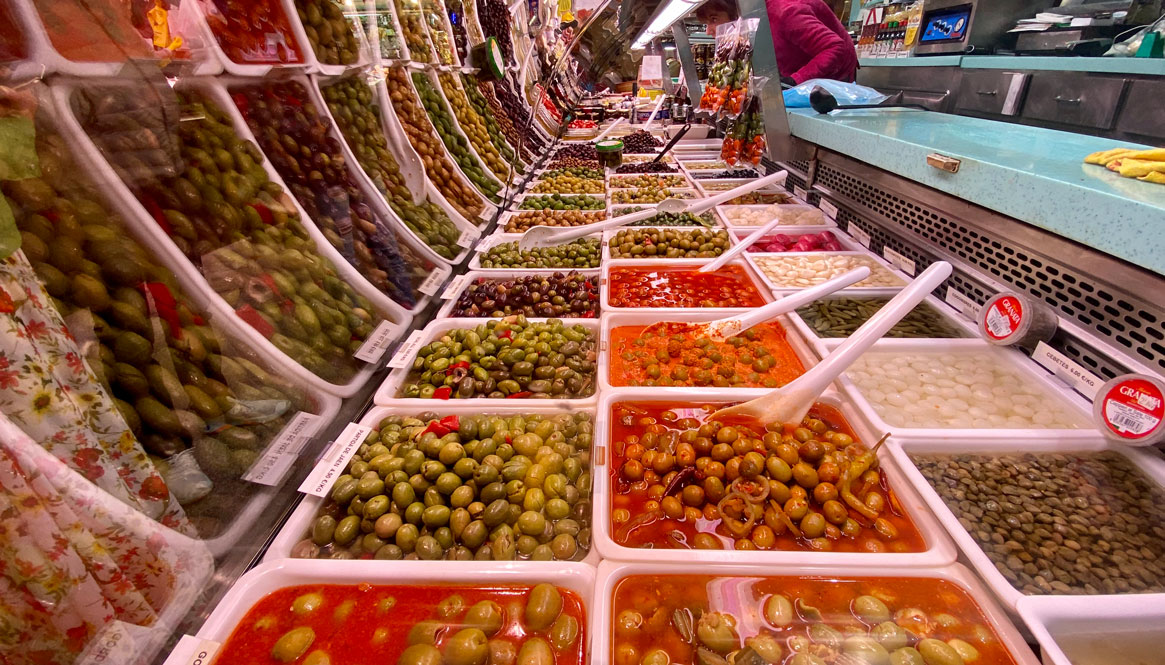
- La Boqueria in Barcelona is the go-to place for fresh fruit and produce, but also has many stalls that accommodate plant-based requests.
Pack Plant-Based Food for Days When a Restaurant Is Not Easy
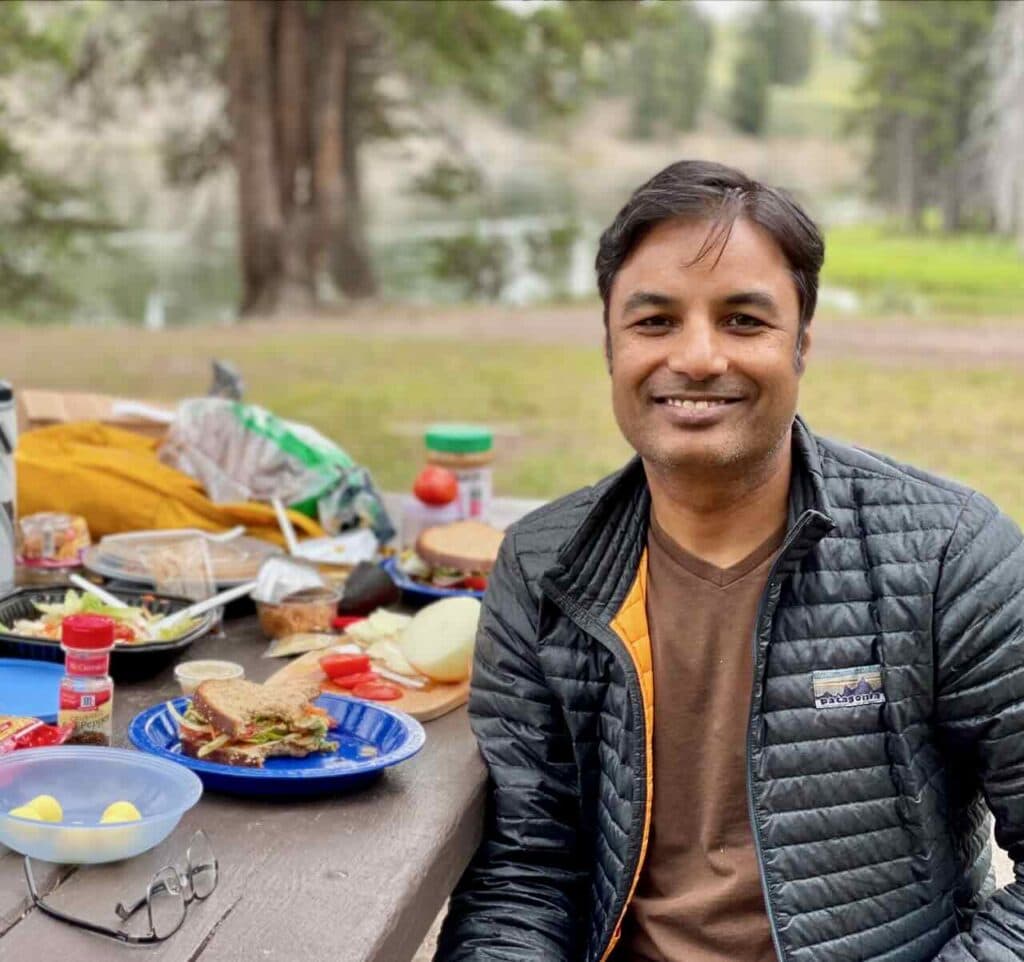
When we’re staying in an apartment in a country where plant-based restaurant options are limited or time-consuming to find, we prepare food for the day before heading out. This is not a compromise. It is smart travel.
Some of our go-to packed meals are:
- Sandwiches with avocado, sliced apple, and nut butter. Easy to make, travel well for hours, genuinely satisfying.
- Pasta salad made the evening before, dressed simply, packed in a container with whatever vegetables are available.
- Pulao, rice cooked with local vegetables. Holds well, packs compactly, tastes like home.
- Fresh fruit from the morning market. Always.
During the COVID pandemic, we travelled extensively. Lodges that are usually nearly impossible to get (like those in Yellowstone National Park) were readily available. Flights were going empty, so upgrades were a given. We were determined to stay uninfected, so we prepared all our meals and didn’t eat in a restaurant, except for the occasional takeout. We bought supplies at a grocery store near the airport, brought an Instant Pot or electric pan, and pantry staples from home. We were free to cook safely as we pleased.
For longer trips, we pack snacks that travel well from home (check customs rules per country):
- Dehydrated fruit, nuts, and nut butter in individual packets. An absolute must are Indian cashews and Afghan raisins.
- Roasted chickpeas and dry Indian snack mixes
- Homemade energy ball made of nuts, dates, and cacao
- Light paratha as backup or for jet-lag arrival days
- Khankra and Thepla last longer than bread but have more oil content
- Roasted and flavored rice puff (or murmura) for making bhel on the road
Long-haul flights are one of the hardest situations for plant-based travelers. We cover exactly how we handle in-flight food, hydration, and fasting in our natural jet lag protocol.
Places That Surprised Us: The Easy Ones and the Hard Ones
After 30+ years and 140+ countries, we have learned not to pre-judge a destination based on its food reputation alone. Some places we expected to struggle turned out to be effortless. Others humbled us completely.
Antarctica: Plant-Based Travel was Easier than Guessed
The assumption is that an expedition ship sailing to the most remote place on earth would be a plant-based nightmare. The reality was the opposite. Expedition companies like Quark and Hurtigruten attract environmentally conscious crews, and plant-based passengers are common enough that good operators come fully prepared. On both our Antarctica expeditions, the ship provided excellent plant-based food at every meal. Every course had a well-curated vegan option, a vegan station, a set of salads, and a new soup at every meal.
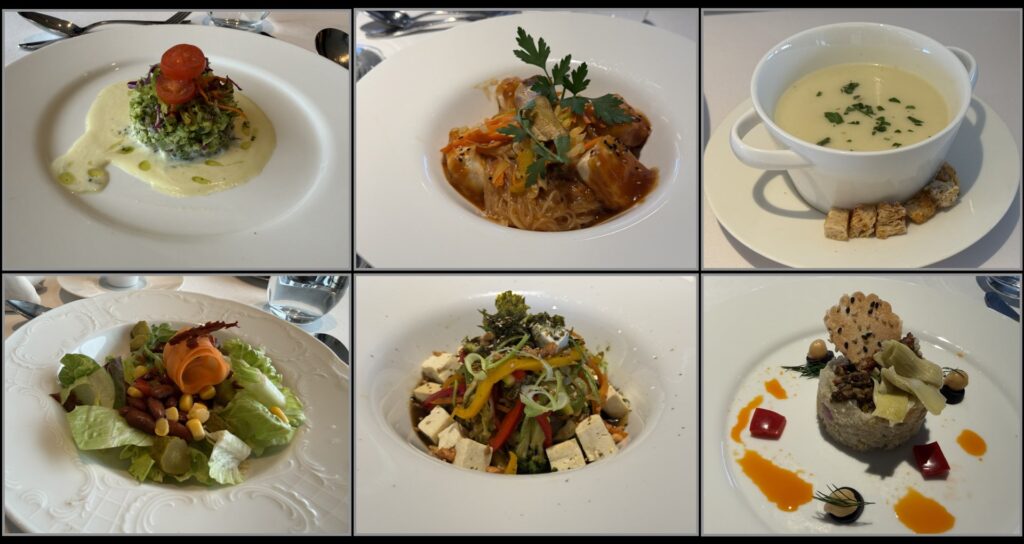
Our chef went further. He prepared dishes specifically for our palate. It was some of the most attentive food service we’ve experienced anywhere on earth. Nirmal once craved an Indian daal and curry; our daughter craved barbecued tofu; and I once craved gobi paratha. They had an Goan Indian chef on board who made it all happen. They truly understood how food was an essential ingredient for a successful expedition.
The lesson: The traveler demographic visiting Antarctica is usually educated, health-conscious, and environmentally aware, which pulls the food supply in a very specific direction. The ships know their passengers.
Read more: our Antarctica expedition itinerary and our Drake Passage guide.
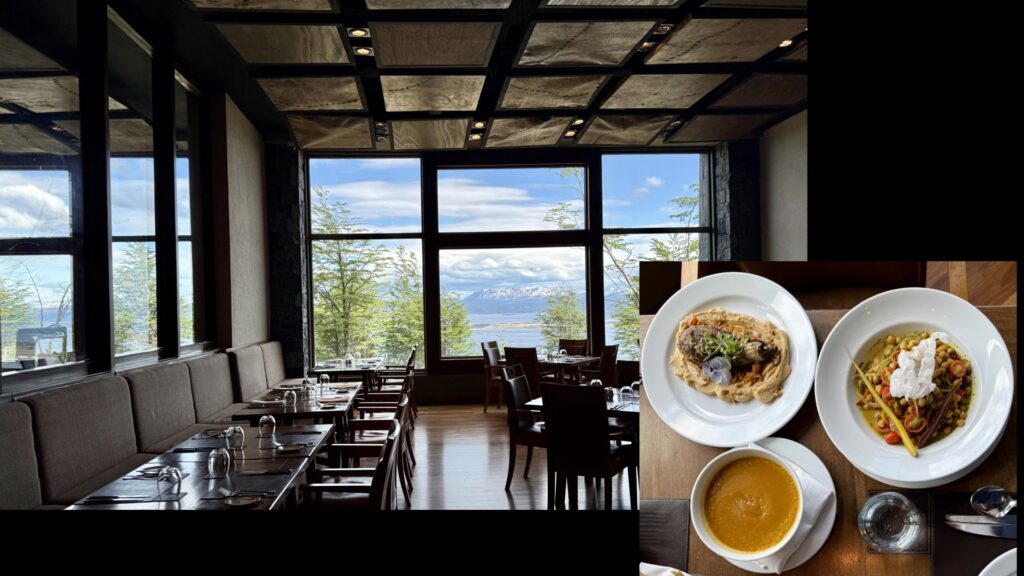
Ushuaia, the Argentinian port city where most Antarctic expeditions begin, also surprised us. Downtown has an excellent plant-based café, Isla Vegana, worth seeking out before you board. The Arakur Ushuaia hotel, where we stayed for three nights, at the top of the mountain above the city, had genuinely good food options throughout. For a city whose identity is built around Patagonian lamb and king crab, it exceeded every expectation.
Madagascar: Our Humbling Experience
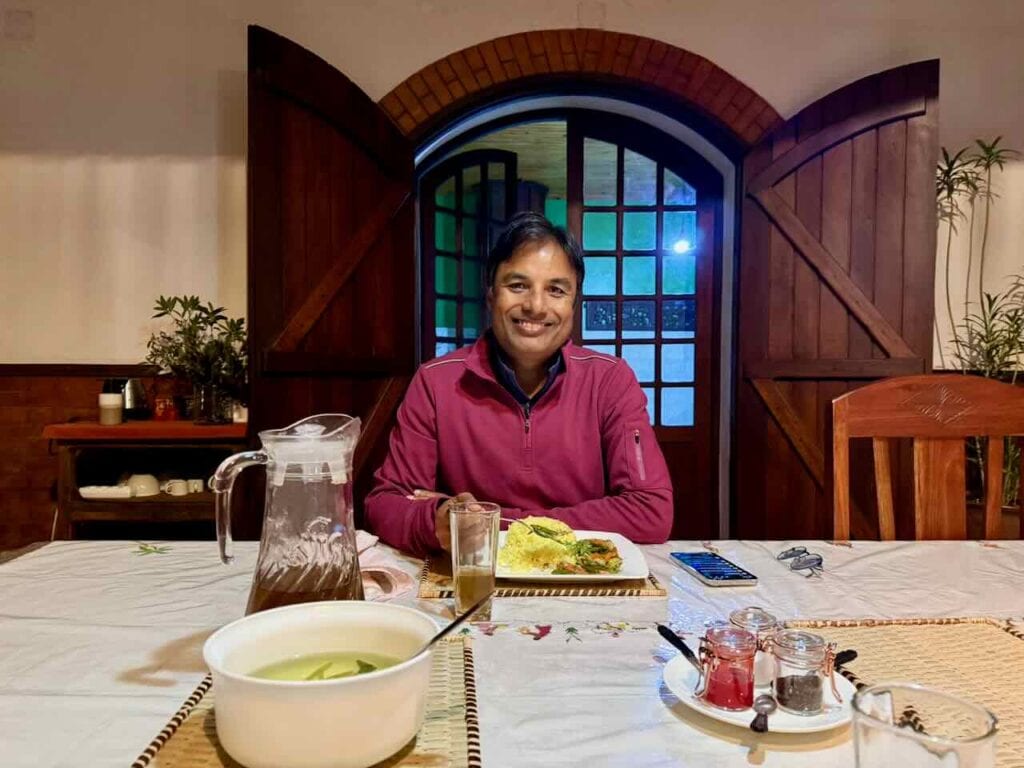
Madagascar is predominantly meat-eating, and outside the capital, plant-based options at even the best lodges were limited to rice porridge at breakfast. Dinner was always rice, steamed vegetables, and soup. Day after day, across the country. Nutritionally fine. Gastronomically soul-destroying. I say that as someone for whom variety is the spice of life.
We traveled with an electric cooking pot, loads of snacks, and ingredients specifically for situations like this, but a voltage difference burned it out on first use. That eliminated our main fallback. By the end, eating had become a chore rather than a pleasure. A few pounds lost were welcome.
The rescue came in Antananarivo, the capital. Our first stop was dinner at a home-based vegan private dining experience. Then we stayed at the Radisson Blu, and happened to have an Indian chef and a proper buffet. After weeks of repetitive blandness, it was an almost emotional experience.
The Madagascar lesson: Always identify a reliable backup in the capital city, carry more food than you think you need for long stretches between cities, and check the voltage before you pack any cooking equipment.
Namibia’s Namib-Naukluft National Park: Remote and Prepared For

The Sossus Dune lodge in the National Park had essentially nothing for plant-based travelers, and the nearest town was hours away. Our solution was simple. We brought a large duffel bag of food from home and consumed every bit of it over the days we were there. It was not glamorous. But we ate well, and the landscape more than compensated for any inconvenience at mealtimes. After all, if the sociable weavers can survive this harsh climate, we can’t complain.
Windhoek, the capital, was a completely different story. We found one of the yummiest pizzas ever. Not in Italy. In Namibia! Which is exactly the kind of discovery that makes this whole approach to travel worth it.
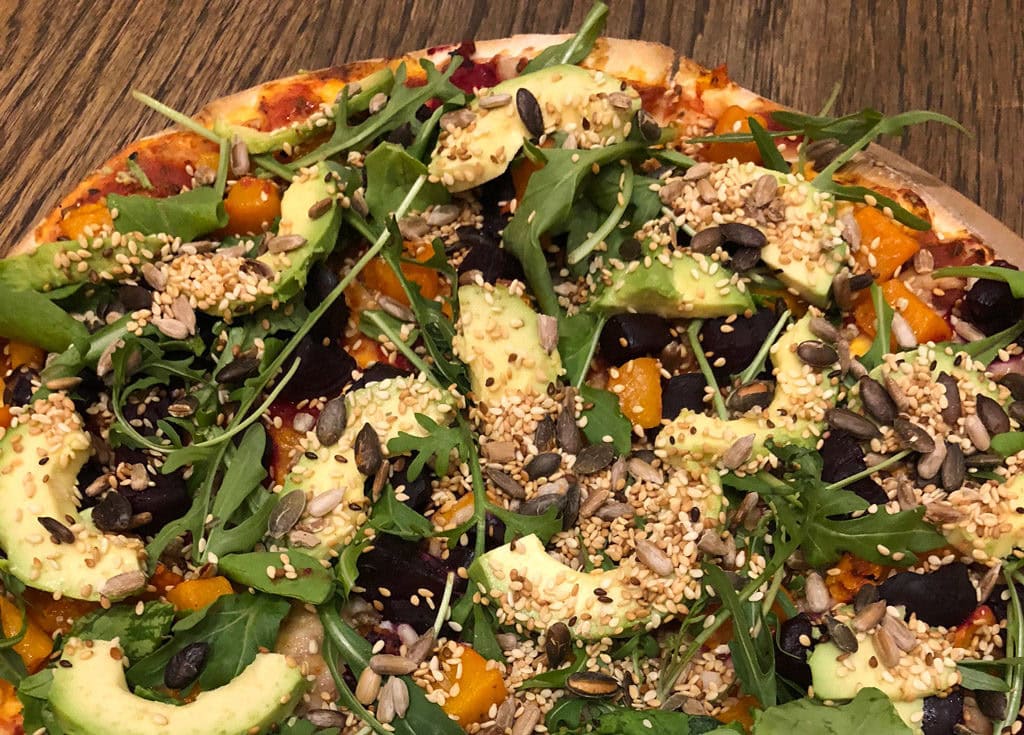
Closer to home, California’s Central Coast is a surprising one to navigate. It’s a seafood destination at heart, and even Mexican restaurants may not serve vegetarian rice.
PRO TIP
For any remote national park or wilderness area, research the food situation before you arrive. If it looks uncertain, pack food before you go in. It is that simple.
Why We Look for Accommodation with a Kitchen in Tough Destinations
We have become deliberate about this. In destinations where the food will be challenging, or we’re staying for over 4 days, we actively look for apartments or guesthouses with kitchen access. Not to avoid local food. We still eat out for most meals. But having a kitchen removes food anxiety from the trip entirely and gives us a reliable fallback. It also saves time on busy days by making a meal. The upscale apartments offer a well-staffed lobby, a rooftop lounge, restaurants, a gym, a spa, and are sometimes even combined with hotels, as we used in Quito, Ecuador, where the apartment tower was part of JW Marriott.
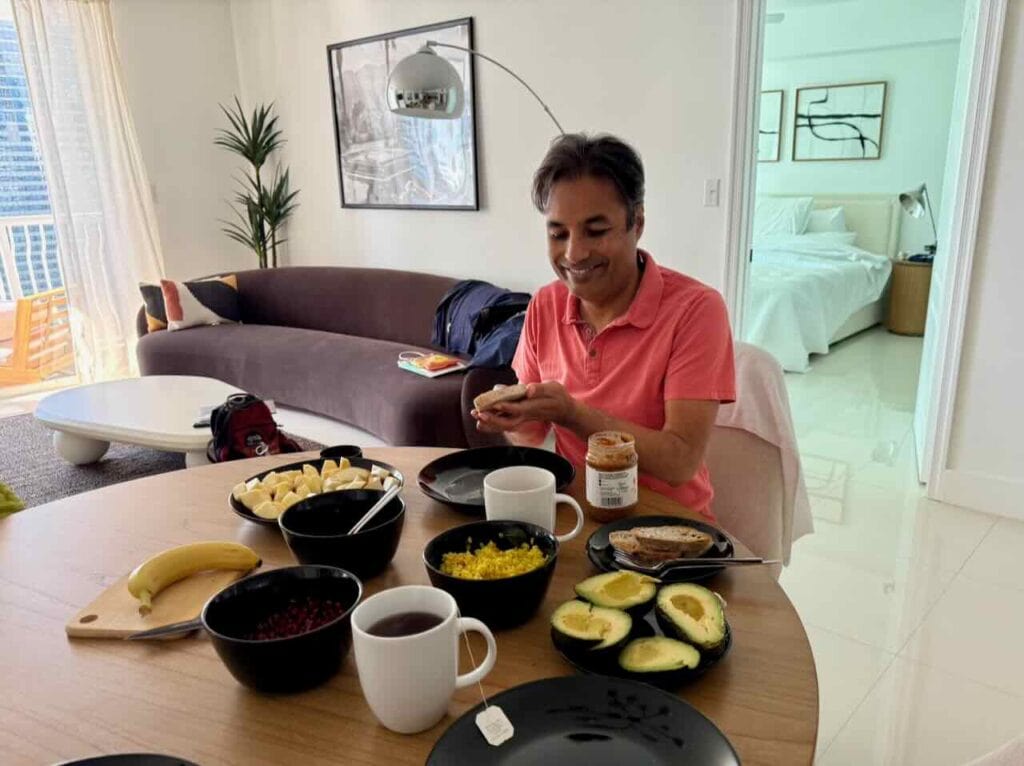
The unexpected benefit: having a kitchen usually means shopping at local markets, which is often where the most interesting food experiences happen anyway. Learning what is in season, incorporating local spices, experimenting with unfamiliar ingredients, and asking a vendor how something is traditionally prepared. This is travel, not a compromise, but rather a deep cultural connection.

One hot summer morning in 2015 at Plitvice Lakes National Park, during what turned out to be one of Croatia’s hottest summers in years, we went for an early-morning horseback ride. We returned to find the entire town was closed for a national holiday. Not one restaurant, not one café, nothing. Luckily, we had a full kitchen. The corner store had some bread, onions, garlic, and tomatoes. So we made bruschetta and improvised a pasta dish with whatever we could find. After a morning on horseback, that simple meal tasted extraordinary. Sometimes the best travel meals are the ones you had no choice but to create.
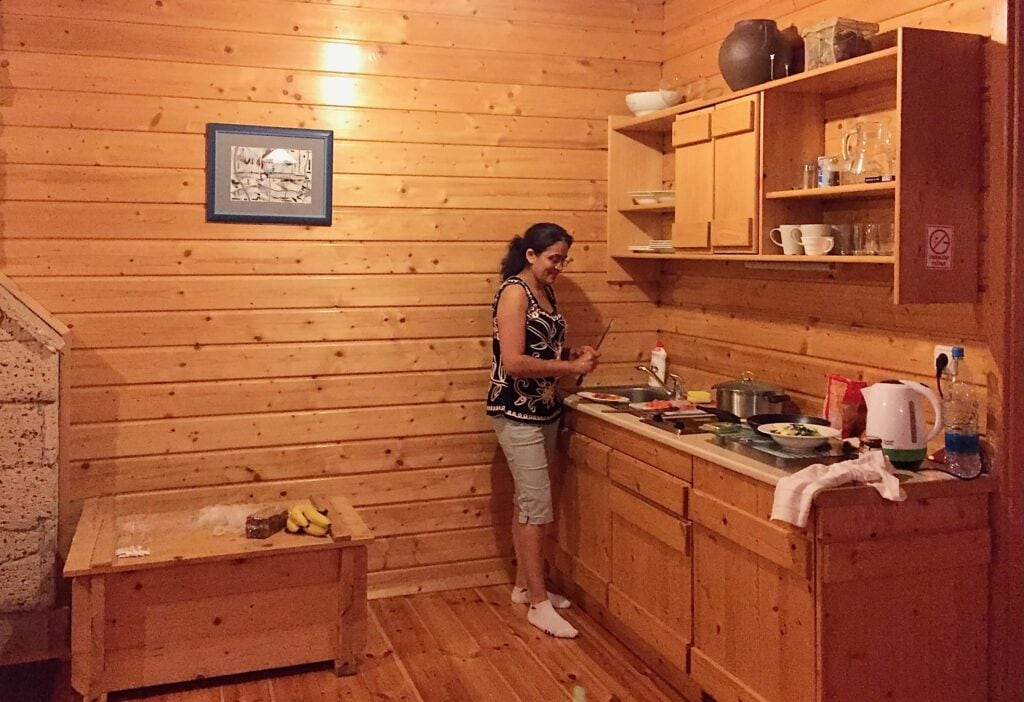
Airbnb and VRBO both make it easy to filter for kitchen access. It is worth the extra step when visiting a destination that is not in your apps.
What to do on Tours and Expedition Travel
On our first major trip in 2003, traveling through Peru and Bolivia with two young children, we had confirmed our dietary requirements with the tour operator before booking. On the day of an all-day bus tour and border crossing, no arrangements had been made. No meals, no alternatives, nothing. We were not going to accept that with two hungry kids. We found the restaurant at the stop and spoke directly with the kitchen. They cooked something. It worked out, but it should not have needed to.
The tourism industry has become significantly more informed since then, and we have become significantly smarter travelers. For any guided tour with included meals, communicate your requirements at the time of booking and confirm them in writing.
For expedition travel for two or more weeks with no alternative, research the operator’s food policy before you book. The Antarctica section above shows what a well-prepared operator looks like. Not all of them are.
Other Ways We Explore Plant-Based Food when Traveling
Food Tour
Food tours are one of our favorite ways to understand a place through its food. We have done a self-guided food tour of Rome, a private food tour in Barcelona, a vegan food tour in Mexico City, and a Chinatown group tour in San Francisco with friends. Each one taught us something a restaurant alone never could. A word of warning, though. After the extraordinary vegan food tour in Mexico City, I was sick for two weeks. The food was that good, and I didn’t exercise control. Pace yourself in a way I did not.
Cooking Class

Cooking classes are one of the most underrated ways to understand a food culture from the inside.
In Lisbon, we took a private vegan pastel de nata class through Foodie Bookings to learn how to make Portugal’s most iconic pastry entirely plant-based. That a chef was offering a vegan version of something so deeply traditional tells you everything about how much the food world has shifted. The result was outstanding. We filmed the whole class. Watch it on our YouTube channel to see exactly how it comes together.
In Morocco, a tajine cooking class gave us an entirely new appreciation for a dish we had eaten across the country. Incorporating the layering of spices, the slow cooking process, and the way a simple clay pot transforms humble vegetables into something extraordinary helped us learn to buy supplies to incorporate the dish at home.
Look for classes that focus on traditional techniques rather than tourist-friendly shortcuts. The best ones are often held in someone’s home or a small studio. Increasingly, a vegan version of a classic dish is a class of its own.
Private Chef
For special occasions, hiring a private chef to cook in our apartment through Airbnb Experiences has been a revelation. On a girlfriends’ trip to Puerto Vallarta, we booked a local chef who created an amazing plant-based menu for the group. Everyone talked about it for weeks afterward. The combination of a beautiful setting, a talented chef focused entirely on your table, and food designed specifically for how you eat is hard to beat.
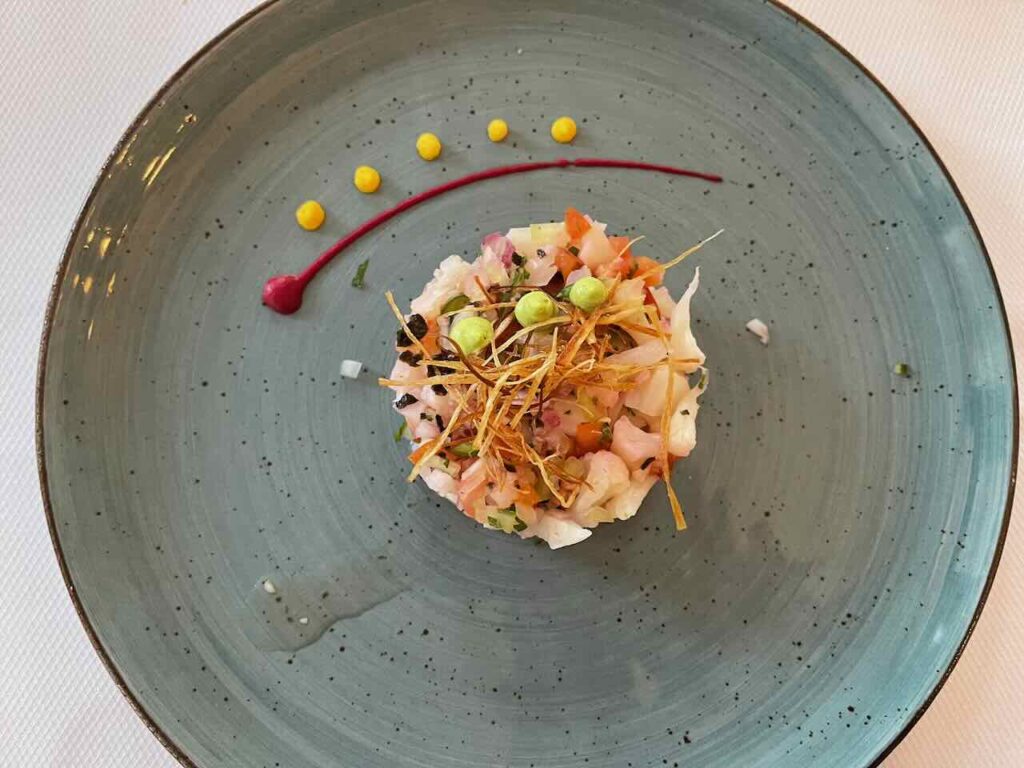
Michelin-star Tasting Menu Dining

And for the most memorable food experience we have found anywhere, we love challenging Michelin-starred restaurants to create a vegan tasting menu. Some chefs light up at the constraint, like Gaggan in Bangkok, Pujol in Mexico City, and Californios in San Francisco. What arrives at the table is often the most creative food of the entire trip.
The Most Underrated Strategy: Talk to the Chef

Of all the strategies in this guide, this is the one most travelers never think to use. Passionate chefs chose their profession for the creative challenge. A genuine dietary constraint is not an inconvenience to them. It is an invitation. We have lost count of how many times a chef has come out of the kitchen to have a conversation, and every single time it has led to something better on the plate.
This works everywhere except fast-food and cookie-cutter chains. Upscale restaurants, boutique lodges, expedition ships, guesthouses with a set menu, anywhere there is a real chef behind the food, the conversation is worth having. Do it early. Do it warmly. Express genuine curiosity about what they can create rather than presenting a list of restrictions.
Recently, on Hurtigruten’s northbound coastal voyage from Bergen to Kirkenes along the Norwegian fjords, the early menus leaned heavily on vegetables and carbohydrates with little plant-based protein. We were not the only ones who noticed. A few of us gave the kitchen the same feedback, and they adjusted beautifully for the remainder of the trip. Speak up early, speak constructively, and good operators will respond. You are not being difficult. You are helping them serve you better.
For our first dinner in San Pedro, Belize, the server couldn’t suggest a vegan dish, so we spoke with the wonderful chef. He put together incredibly delicious dishes for us. Overall, San Pedro, Belize, completely surprised us with authentic Mexican, Indian, and Italian cuisines. Check the full guide to vegan food in San Pedro, Belize.
FAQ: Your Questions Answered
Is it hard to eat vegan while traveling internationally?
Less hard than it used to be, and much easier than most people assume before they try it. The growth of plant-based eating globally means most cities now have dedicated vegan restaurants or menus. The genuinely difficult destinations, like certain remote areas, some national parks, and parts of Central Asia and Southern Africa, require preparation. But with research, the right apps, and a willingness to get creative, we have maintained a plant-based diet across 140+ countries while enjoying the food.
What is the best app for finding vegan restaurants while traveling?
Google and Apple Maps with smart search terms like “breakfast bowl,” “avocado toast,” or specific cuisine types are our first stop. HappyCow is a highly respected global database of vegan-friendly dining. TripAdvisor and Yelp are useful for reading reviews specifically from vegan travelers. For non-English countries, the Vegan Passport app covers dietary explanations in 79 languages.
What do you eat in countries with very little vegan food?
A combination of strategies. Seek out Indian, Ethiopian, Middle Eastern, or Mexican restaurants in cities since these cuisines are reliably plant-based-friendly everywhere. Shop at local markets for produce. Carry prepared food for challenging stretches. Stay in an accommodation with kitchen access when possible. In genuinely remote areas like national parks or wilderness lodges, pack a bag of food before you go in. We did this for Namibia’s Namib-Naukluft National Park and consumed everything we brought.
How do you communicate a vegan diet in countries where you don’t speak the language?
Apple and Google Translate’s camera reads menus in real time (download the offline language pack before you arrive).
The Vegan Passport app provides pre-written dietary explanations in 79 languages.
Learning a few local terms, like shojin ryori in Japan, sùshí in China and Taiwan,
or sattvic in India signals a level of knowledge that gets immediate respect
from the kitchen staff.
What are the best countries for plant-based travelers?
Europe, North America, India, Thailand, and Japan, particularly for Buddhist temple cuisine, are the easiest in our experience. The Mediterranean broadly, including Italy, Greece, Spain, Lebanon, and Israel, offers abundant options. Southeast Asia rewards careful research. Ethiopia is outstanding. The countries that require the most preparation are parts of Madagascar, Central Asia, and remote areas of Southern Africa.
What food should I pack when traveling as a vegan?
Dried and packaged foods travel best and clear most customs checks. Nuts, nut butters in individual packets, dehydrated fruit, roasted chickpeas, and dry snack mixes are compact and calorie-dense. For jet-lag arrival days when navigating food sounds impossible, a thepla or paratha that just needs brief heating is a lifesaver. For day trips in uncertain destinations,
pack a real lunch: sandwiches with avocado and nut butter, pasta salad, or rice pulao travel well for hours and keep you genuinely fueled.
Can you eat plant-based on an Antarctica expedition ship?
Yes, very well in our experience. Expedition ships attract environmentally conscious crews, and plant-based passengers are common. On both our Antarctica expeditions, the ship provided excellent plant-based food at every meal, and our chef prepared special dishes specifically for us beyond the standard vegan options. That said, quality varies between operators. Research the food policy before you book and confirm your requirements in writing at the time of reservation.
Are farmers markets and food markets good for plant-based travelers?
Among the very best options, especially for breakfast and provisions. Farmers markets connect you with seasonal, local produce at its peak. Food hall markets like Lisbon’s Time Out Market, Singapore’s hawker centres, Cape Town’s Oranjezicht City Farm Market, and London’s Borough Market offer multiple cuisines in one place with genuine quality. And the roadside farm stalls in Eastern Europe, where produce goes directly from the field to a folding table on the highway, are some of the best eating experiences we’ve had anywhere.
Is plant-based travel possible as a foodie who doesn’t want to compromise on taste?
This is the standard we have held for 30 years. We come from a food tradition where a mediocre meal is a genuine disappointment and we have never accepted that plant-based travel means eating poorly. The best plant-based meals we have eaten, Buddhist temple food in Koyasan, injera spreads in Addis Ababa, mezze in Beirut, hawker food in Singapore, and an extraordinary pizza in Windhoek of all places, are among the best meals we have eaten, full stop. The foodie’s approach to plant-based travel is actually an advantage. You research harder, you explore further, and you almost always eat better as a result.
The One Thing That Makes Plant-Based Travel Work Anywhere
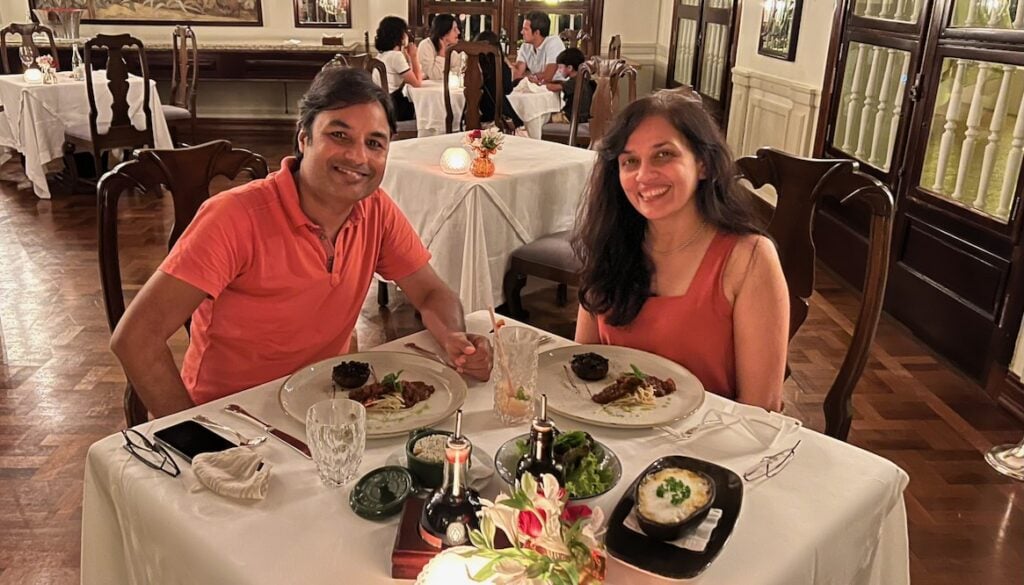
The practical strategies matter. But after 30 years, the thing I am most certain of is this: the curiosity and standards you bring to food on the road shape the experience more than any app or preparation ever will.
Approach every food situation as someone who genuinely loves food, because if you are reading this, you do. The meal that does not fit your ideal is often the one that teaches you something. The cook who goes out of their way to feed you well despite not fully understanding your diet often becomes the story you tell for years.
We have found vegan haggis in a pub in the Scottish Highlands. We have eaten shojin ryori in a Koyasan temple that tasted like nothing we had encountered anywhere before or since. We have improvised bruschetta in a Croatian town where everything was closed for a national holiday and the corner store had almost nothing. We have eaten the best pizza of our lives in Windhoek, Namibia.
Coming from a tradition where food is taken seriously, we have never been willing to accept that traveling plant-based is a compromise. In 140+ countries, it has not.
Continue Reading
We are working through food notes from 140+ countries. Here are some destinations we have written about in detail
Last Updated on September 8, 2026 by Jyoti Baid